How Sam Parr Builds Businesses (like The Hustle)
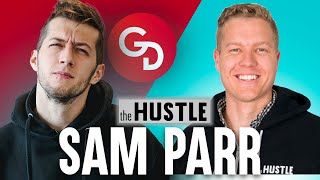
Sam Parr built The Hustle from hot-dog sales to a HubSpot acquisition by scaling deal size progressively, cold-emailing 50 people at a time, and obsessing over copywriting. He prioritizes rapid execution, says no to distractions, and treats every stage of growth as a sales problem with different tactics.
Chapters
I cannot stand when people use that they need a certain type of technology in order to start. I think that those people are losers, and that's a loser attitude, and you really need to get out of that attitude.
Hey, what's up? You're gonna love this interview with Sam Parr, the founder of The Hustle and the host of My First Million. We discuss the stair-step approach that Sam has taken to selling consecutively larger deals throughout his career. And a little bit about the scatterbrained, all over the place entrepreneurial mind and how to lasso it. Enjoy. So do you have the easiest name to pronounce of like any entrepreneur ever?
I do. It's good. Sam, Sam Parr. My full name is Samuel Joseph Parr. Very Catholic. Very Midwestern name.
Literally like the only error that one would make is giving you one R instead of two on the last name, right?
It doesn't happen a lot. It doesn't happen a lot. But yeah, I've got a, I've got a good easy name.
I feel like that's, that's definitely an advantage. It's not like I know another Sam Parr, but it's simple and distinct enough that everyone gets it right. That's good for branding standpoint. I struggle. There's a country singer by the name of Aaron Watson who's like considerably larger than me, so I have to start figuring out. I can't even wear like a crazy hat. And I'm just like the Aaron Watson that doesn't wear a cowboy hat.
No, I'm lucky. I don't know the only Sam Parr I know of. There's a state park in Illinois called Sam Parr State Park, but the guy was like alive in the 1800s. So I'm good.
Nice. So we have a concept on the show. We'll call it deal climbing. You know, other folks have different names for the same idea, but I feel like it's a really helpful framework, particularly for people that are just ambitious. They're trying to climb, and if they're climbing from doing $10 deals to $100 deals, or they're climbing from doing $10,000 deals to $100,000 deals, it's the same stair-step approach that everyone has to go through in some way, shape, or form, whether or not they're even in a sales position, position, which is learning how to not only deliver more value, but get someone to say sign on the line that is dotted at a higher ticket price. You started off selling hot dogs and to my knowledge, the biggest deal that you recently closed was the selling of your company for tens of millions of dollars. And I don't know if you remember, you actually commented on our video where we like speculated on how much you sold the company for when that happened.
But what did I say?
We were like trying to back into like what the minimum was and you were like, Not wrong, but not right.
Like you're like basically like you're, you're in this, this, what was, what was the minimum? What number did you say?
Um, I think we had said that it was over $20 million and then like shortly after I saw Tucker Max commenting on a Twitter thread that someone had made the same speculation. He was like, that's not quite right.
It was for sure over $20 million. So that's, I'll say that it was. And yeah. And also I own a lot of HubSpot stock and the stock market is really shitty today. But, um, at its peak, it had tripled, uh, from when we— or well, uh, maybe 2.5x from when we'd sold. So, and it— but it like did that like within weeks or like months of us selling. So the, the price kind of almost changed rather significantly.
So, um, we're going to get into that because it's, it's an amazing thing. I'm not particularly technical. I'm not going to write the code that like builds the next software product, but having a substantial stake in a technology company is a way to kind of draft off the trends of technology generally. But let's, let's go back. You were selling hot dogs. You had to figure out how to get someone to, you know, how much were you selling hot dogs for in the early days?
So my prices in the afternoon were different than my prices in the evening.
Surge prices.
So evening prices, you double because it's drunk people. So evening prices, $8 to $10, $10 for a quarter pound puller, no, a third of pound puller sausage. With a drink. So $10. And then in the day, half that.
And so you were, you know, after you decided to really make the jump and try to start a company, you were— before getting to The Hustle, what were you selling? Were you selling yourself as a freelancer? Were you selling yourself as an employee?
No, I, um, so when I was in college, I started tinkering with the internet and I made like an online store that was making like $1,000 a day at one point. But I didn't like do all the things correctly. Uh, like I didn't like, like I didn't know anything about filing taxes, getting business license and like things like that. And so I kind of shut it down. The lawyers at my college were like, yeah, you, you kind of need to start over and get this thing right. But like, I was like, well, all right, feel you. But that's kind of cool. I learned how to make like tens of thousands of dollars, uh, selling stuff on the internet. And so, um, I basically left school because I cold emailed this guy who owned a company called Air Bed and Breakfast in San Francisco. And I was like, I think this thing's gonna be huge. How can I come and join you? And he said, yeah. And I got a job offer at Airbnb, but back then it was like brand new. And I get there and I dropped outta school, moved out there, and I got the offer taken away because I had gotten in trouble. And had been arrested before. I used to be not the most awesome person and I did some stupid stuff that I regretted and they— I lied about it. I didn't tell them that I'd been arrested and they're like, dude, you just told us like we would have, we would have— it's okay, but you lied. We can't hire liars and they're totally right. So I got out there and I had nothing. So I met a guy and we started a company and we sold it. We made, I made like $100 grand from it. Nothing substantial.
What were you selling at that company?
It was a roommate matching app. It started as I did it in like in person, I would basically host like roommate parties. And so everyone at that party had the same preferences. You know, they were like a single person by themselves in San Francisco, but getting a one bedroom was prohibitively expensive. And so they would, we would help people team up in groups of twos, threes, and fours and get an apartment. And we made money from that.
And what, like, what was being charged for that service?
I don't remember entirely, but in the ballpark of $300 or $400 per room.
So that's a step up from selling hot dogs. What was similar and what was different from those two sales?
Uh, the, uh, $10 and $300. Uh, is mostly the same. Um, in my experience, um, it was mostly the same. The difference though is the value that— what I learned is like, it's all— it's about value given. So the value you get from one meal isn't significant. The value that you get from finding a place to live is quite high. So the name of the game is provide as much value as possible and still just take like a small take of that, and your take will be higher if it's it's a higher value thing.
And theoretically a roommate's going to be impactful for a year, whereas you're saying the meal is going to be impactful for an afternoon or an evening.
Exactly. Yeah. Yeah.
Yeah.
Yeah. So it was about how much value you can provide and you just take a fraction of that. So the reason the sale was easy was because $300 was like a no-brainer, like people, and we kind of had an honor system. We just said, find a place. And afterwards, if you find it through us, call me and we'll come pick up money. And it was so simple. But then we, as we made money, we transitioned and we made it an iPhone app. So it was kind of like Tinder, but for roommates. And this was right when Tinder was like barely starting. And like, which is stupid, we should have just done Tinder for Tinder, right? But we did Tinder for roommates. And yeah, it was, it was, it was hard, but okay, of a, it was a good first swing, I think.
So if you sold that company, you made $100,000. About $100,000 or so, you probably sold it for—
I basically got like a good job and I, and with bonuses and I saved my money and I was there for 1 year and that was pretty much it.
So selling that company, that's a substantial jump up from selling something for hundreds of dollars. What was the difference or what was the kind of gap there in terms of selling a company?
Um, I think I was devalue— undervaluing myself, I think. I started thinking in terms of hundreds of thousands of dollars and I was like, oh, that's a ton. What I didn't understand until actually like this year is that big companies need people like me, people who move quick and make stuff because big companies struggle with that. And I didn't understand how valuable that was. And so the biggest thing that I did then was I probably didn't do a good job of like negotiating. I was pretty bad at negotiating and probably still am. So now I have people that do it for me, even if it's just like my wife, she's good at it. But yeah, I undervalued myself, I think, for a long time.
And then did you start The Hustle shortly after that?
No, I left that place after 1 year and 1 day. I was 20-some age between 23 and 25. I think I was 20. I don't remember. It was in 2010. 14. So it was '24. And, um, I was like, I need to find something to do. I don't know what I'm going to do, but I'm going to run this event called HustleCon. And HustleCon was like non-technical entrepreneurs giving talks. And I was like, at work, at best I'll break even, at worst I'm only going to lose $10,000 hosting this event, but hopefully I'll meet someone who I could partner with or something like that. And I hosted this event. I decided to do it. I made the decision to host it on May 1st. And I launched it, like it became an event on like June 14th, or I forget the exact time, but it was 6 weeks. So I had 6 weeks from decision to it going live and it made like $60 grand in profit. And it made profit because I would, I created an email list and I would write cool stories about the speakers. And I was like, huh, that's kind of cool. I didn't expect that to happen. So I basically just lived off that $60K for like 8 months and traveled the country on a motorcycle. And then I did it again. And I did the same strategy of just creating a newsletter, writing about the speakers. And this time it made like $200,000 to $300,000 in profit. And I was like, all right, cool. I dig this. Um, I'm not going to be a conference person. I don't like running this business. This is hard, but I've been able to get a lot of people to notice my writing. Let's create a media company because I, I, if you see on my walls back here, I've got my heroes. Uh, like 3 or 4 of them are media people. And I've always liked those guys. I was like, well, fuck, they could do it. I can do it too. So I decided to start a media company and I just researched what the best way to do it was. And I settled on starting with email. And that was, um, the email thing went live, uh, uh, basically 4/20/2016.
And so you were selling tickets to those events, but you had to also be selling sponsors, I would imagine.
Uh, yes. And you were also selling sponsors on the newsletter as well. Well, it took like a year to like get real sponsorship revenue. The way sponsors work, they want to see it, you could pull it off. So I was just living off the ticket revenue, to be honest. But, uh, yes, like by the time we had done, maybe like once we got to like our third event, we were doing $300,000 or $400,000, I think, in revenue. And it was like half sponsors, half tickets. And then we launched the newsletter and we had, we got That newsletter already had like tens of thousands of people just from the conference and we just kind of switched it over. And then through a bunch of blogging, I got us to 100K really quick. So basically we went from like 0 to 100K in like a year and we started adding ads. Uh, I, I'm gonna ballpark the numbers. We started having sponsors in the newsletter, some number between 50,000 and 100,000. I don't remember exactly, but I do remember, uh, I was, my goal with staff and all the events that we were hosting, we were spending like $25,000 a month. And I was like, I'm gonna go out and get sponsors for $30,000 a month and that $5,000 profit will give us enough profit to hire a salesperson. And so I did that. It took me about 2 months and I did that. And then we hired a salesperson and like within 2 months that went to like $100,000 a month in monthly ads.
So it's great to hire someone who can move the needle like that. But as you were just selling enough to keep the business afloat, what was the same about all these past sales? Hot dogs, tickets, uh, roommates, and what had to— what was new that had to be learned?
Um, the same was I always kept things real casual, and as you grow and get bigger, you actually— they're not, they're not casual. So we've closed multiple 7-figure deals at The Hustle. Those are not casual. Those are process-driven, and those are really hard. But when, when I was— I would sell, like, when I first started, I would sell something for My first sponsor was LawTrades and Wealthfront, and I charged them $1,000. And it was just like, kind of like hood. Like I was like, kind of like, it was kind of like done like a street style deal where I'm just like, dude, just gimme a grand. And if it works, you advertise again. If it doesn't, you've only lost a grand. Just like Venmo me. I, we like, it was like really like not done the right way. And maybe they even sent a check. I don't remember. But they like, were like, yeah, whatever, fine, dude, we'll give you a shot. And we did that. And then eventually, I was like, alright, what, what's an invoice? They're like, alright, send us an invoice. I'm like, what's an invoice? So I had to Google it. And I like got some invoice software. And it said like, invoice 001. I was like, oh, screw that, put like 0035. Like, so it's like, this is our 36th invoice. I don't want them to know this is my first time I ever sent an invoice. And then like learning like, all right, great, you ran the ad, we'll pay you in 30 days. I was like, wait, what? You don't pay me right away? That's crazy.
So like learning about that was different, but I feel like that's the only way to do it. So I almost have, I have a very similar story. In the first year of my company, one of the Fortune 500 companies here in town reached out to help with producing their like internal corporate comms podcast and literally the exact same thing. They were like, send us an invoice. And I literally like, it's invoicegenerator.com or.net or something. And exact, literally like the exact same thing. It's like, look, this can't be, you know, 001. We're gonna like put a, you know, 123 or something there at the beginning.
Yeah, that's what I had to do to, to look more legit. And then at first, even to get sponsors, I put like Ford in there as a sponsor, even though I've never talked to them in my life. But I was like, man, if they see Ford, so they're, they're gonna know we're legit. And that's probably illegal actually, but I definitely did it.
Yeah. So, but so maybe not recommending that to someone getting started, but the the like pure hustle of like, just get a deal in the door that is legitimate, that is paid for in some way, shape, or form, even if it's not super process-driven.
And it was not process-driven.
Having also conviction that like there's something there about like, it wasn't like you had a pretend tens of thousands of persons list.
You had a real list. And we were under, again, undersold hard. So early on I was like, I don't care. Like, I'm not gonna, I'm like, guys, I even said to them, like, We're gonna send your email to 50,000 people. Pay me whatever you want. Pay me 2 weeks after you could see the clicks, whatever's fair, just do it. I don't care. And that's what they did. And it came out to be like, oh, I could charge like $20 to $30 per CPM. So like after like the first 10 clients, the next one I was like, all right, it's $25 per CPM. And the results for our past clients are here. You could see them. So that like, it was like really like the, the early folks, And this is actually good if you're an advertiser. You find people like me who are early and you take advantage of them because they're going to take it, you know, it's a mutually beneficial relationship. I'm getting someone to trust me even though like there's no necessarily a good reason to trust me because I'm a noob and they're going to get a good deal. So it's like a really mutually beneficial relationship. So I was happy that they were willing to do that and they were happy that I gave, they got underpriced advertising. So it worked out really well. We both won.
It's kind of rare that you— but that's a really good framing of it is, you know, a venture investor or some, just any like, uh, skilled investor in financial markets is looking for those young upstart companies that haven't necessarily been realized or appreciated yet. It's rare that you think of media buyers in that way, but it really does that. It really is kind of what the elite at the job are probably doing.
If you're a good media buyer, that's what you do.
You find something that has a small following and you buy one year's worth of ads and then you get it on the back end with all the growth that they're going to experience.
Exactly. It's, that's one of the best ways to do it. You get screaming deals that way.
I think that you would be fantastic if that was like the position that someone just put you in, because from listening to My First Million, like you put me onto, uh, Huberman and Hormozy, who are literally like my two favorite, uh, shows. They're like must-listens now. You definitely have, and it probably comes from producing media, uh, ability to appreciate when someone's kind of got it before the rest of the market.
For sure. Yeah, yeah, yeah, yeah. I definitely have that and a lot of people have that. But when you, when you see something that is like interesting and dynamic, I mean, if you look at the people we've hired, we've, we've hired a ton of nobodies and they are now very much somebody. We have about 5 people that are like big shots now. And when we hired them, they didn't even have a Twitter. So we've done a really good job, I think, at spotting talent. And so, but a good media buyer should be good at that.
So after you started getting advertisers for The Hustle, the next things that you sold in my recollection were the Trends groups. That was a kind of research paid community.
Yeah, but that didn't happen for like 2 years. So like our ad business was doing like, I don't remember exactly, $500,000 to $1 million a month. And I hate the ad business. I hate it because they limit, they limit what you can say. And I don't mind losing money in order to have free speech. But the problem was is that my coworkers who were selling the ads, We're quota carrying. And if I said like, you know, F Goldman Sachs, I'm writing whatever I want. I have no problem hurting Goldman Sachs. I've got no problem hurting myself, but it pained me that Katie was now gonna lose money. So I was like, ugh, I'm in this conundrum. So I really didn't like it. And so we decided to launch Trends like 2 or 3 years into the business. And that was a paid subscription and a paid community. And that took off like that, did really well right away. And I mean, it did kind of well right away.
And, and what was new about that sale? Because it's recurring subscriptions, which is different than a lot of the other things that you've articulated, although I guess an advertiser relationship could be similar, but it's, you know, a consumer sale. What, what did you have to learn to be effective there that wasn't necessarily true in the other past sales?
So with selling big ad deals, you know, we would I started selling a $1,000 deal, then my team started selling tens of thousands, hundreds of thousands, and then millions. And the time it takes, the bigger the deal, the longer it takes. And, uh, that's what I learned. So like if it's like a $500,000 deal, there's like many meetings, many process. You have to use a lot of jargon. You've gotta fill out RFPs and you've gotta fill out, you gotta become an official vendor. You gotta get approval for this thing and that thing. And that is hard. Enterprise sales are hard, which is what we were doing. With a $300 deal. Um, I learned a lot about pricing. So two major things there. One, copywriting, I think is the most important skill, not only in business, but life. A good copywriter, if you learn copywriting, you'll, they'll help you meet a wife, a husband. Like copywriting basically means understanding what motivates people and manipulating them to do what you want them to do. So like, um, I want you to, I want, I want, I want I want to convince people slavery is bad. I'm going to use like what motivates other people and I'm going to like make them feel and agree with me that it's bad. I want them to buy this product, then I'm going to appeal to their emotions and appeal to their logic and get them to buy this, you know, whatever. I want to meet this woman, I want her to like me. I'm going to figure out like what motivates her and I'm going to try and get her to like me. That's what copywriting basically is. So I think everyone should learn it and I am a hardcore copywriter and I use that for trends. And so Trends was just copywriting. All that's what sold it. And we actually had $50,000 in presales just from like a Word document that explained what it was and it killed it. And the second thing that I learned was pricing. So the $299, we charged $300 at first. I should have charged either $99 or $2,000. $399 or $299 is no man's land. That's, that's bad. You wanna charge either cheaper because $299 is not an impulse buy. But the person paying $299 very likely would probably be willing to spend $1,000 to $2,000. And so it was a bad pricing, but we scaled that business nicely regardless, even though that was a pretty huge mistake. That was almost a— that's almost a game changer mistake.
And when did you realize that? Because I've looked at trends and it's still roughly in that price range.
Yeah. And for two reasons. Well, one, when we sold, like HubSpot doesn't care about revenue that we make. So frankly, I think we should, I actually am gonna talk to Matt for this. I'm like, dude, make it $99, just make it cheaper. But yeah, if I owned it, it would be different.
And then was there another big sale before selling your company to HubSpot or is that the kind of coup de grâce here?
No, we had this thing that we were about to launch called Trends Guides, and we were charging, uh, I forget the exact price, but it ranged from $2,000 to $10,000, and it was a research thing. And so basically companies who wanted to know— so Trend, uh, The Hustle tells you about news, Trends tells you about specific trends and businesses, and then Guides was one level up, and that was like, we're going to tell you about very specific niches and, and one very specific business model in that niche. So if you want to— if you're a media company, You pay 10 or 20 grand a year and we're gonna break down like how the hustle's doing blank. So you big media company at Warner can just like know exactly what they're doing and stay on top of it. And then you can meet the other buyers of that. So you can meet like the cool young media companies, you can meet the older media companies, your peers, and we could all talk about the tactics that we're learning. So, um, and it's almost like a Gartner model. And so we actually pre-sold a bunch of those. We had probably, I don't remember exactly, tens of thousands or $100,000 in presales on that. And that was mostly the same as selling a $299 thing, except the only difference is, is that the buyer had to get some type of approval.
So I guess, I guess we should tell this story of selling to HubSpot, and then I have a question that'll come back to this trends thing, cause I think that there's some meat on the bone there. Selling your company, second time selling a company, biggest sale that you've ever done. You're not gonna gimme the number here, but we can say tens of millions of dollars and a life-changing personal sum of money. What, yeah, you know what, in what ways was the culmination of these past sales? I'm sure it was very process-driven like these 7-figure advertising sales that you did. What, to what degree did you have to, I don't know, utilize those versus learn new skills?
I made one huge mistake early on, and I benchmarked the price. Someone was like, what number are you looking for? And I said, these companies typically sell for 2.5 to 6 times revenue. Obviously they're going to start at 2.5. And right when I said that, I was like, fuck, fuck, fuck, I can't believe I said that. So that was the big mistake. But I did one thing really well, which is I've been courted a little bit to sell and they emailed me and I was polite but blunt. And I said, they sent me an email saying, hey, we wanna partner with you. And I'm like, I don't, but, and in the title, the person was in corporate development. And I'm like, hey, look, let's just cut to the chase. Are you wanting to buy us? If yes, say yes. If no, you know, oh great, we could talk about something else. But if yes, I'm gonna email you a list of all the reasons why you shouldn't buy us. And if any of those are red flags, we can continue talking. And they go, yeah, we wanna buy you. And I go, great, here's a document that explains everything that's bad about us because I know you, you most likely know what's good about us. I'm gonna show everything that's bad. And if that's a deal breaker, no, no problem. And I sent that to 'em and they go, no, these are none of these are deal breakers. So I was like, boom, got 'em. And so after that I was like, they, they're gonna buy us. The only thing is pricing.
And that also takes their potential negotiating leverage off the table for later when when they'd be like, oh, well, we just found out that you guys, you know, don't wear hats when you write or something.
Exactly.
Got it. That's a good one.
I showed that, I get like, like, I like showed them all the bad stuff right away and there nothing was that bad. Um, but I like, I was like, I wanna get any, I wanna make you say no fast.
Where'd you get that strategy from? Cuz you study all the different entrepreneurs, you read the biographies. Where'd you get that?
I made that up because It's kind of like when you're dating in your 30s, like you got friends that date in their 30s, like on the third date they're saying like, hey, so do you want to have kids? And do you see me as the woman or man that you want to have kids with? And when you have like, when you got, you know, it's not, you're not 22, you know, you can't just like kind of, yeah, spend 6 months and like, oh, I hope it works out. When you're, you know, like 37 years old and you're trying to meet a mate, it's like on the second date you're like, hey, so are you looking for marriage? Are you looking for kids? How many kids? Like you get down to business, cuz you both like, you're both active. And so I was like, I'm gonna use that approach. So I'm just gonna be like, hey, cut to the chase. You trying to buy us? Okay, great. Here's why we suck. Does you still want us? And I just wanted to, I didn't wanna waste time.
So going through that arc, this is something literally light bulb only came on as I was talking with you. There's all sorts of stories like this through business history where someone will build a company, they will sell it to a larger company. And then, and I'm not saying that HubSpot is mismanaging the hustle, but they're not focusing on trends as a business. And, you know, Michael Rubin, who, uh, you know, as a minority owner in the 76ers and started Fanatics, like sold his company and then re-bought it back from the company that acquired it, or re-bought back part of it to run the company when he—
I would, I would buy back, I would buy back the hustle, the, the entire hustle, or specifically trends. Whatever they would let me, whatever they'd be willing to sell.
Interesting. Cause I, I have to imagine that if Trends revenue isn't particularly meaningful for the bottom line and they're selling like CRM ops software, so there isn't a super linear, like cross-selling connection between those two communities. I have to imagine that if you could almost like step away from the Not step away from the newsletter and the podcast, but know that that has this whole infrastructure behind it and just hone in on the repricing, the copywriting, the thinking through the strategy there. That seems like a, like a, if I was, you know, placing a bet, I don't know, above 10 to 20% probability for Sam Parr's future.
I would, I could crush that business and I'm still going to launch that one day, like a research business. I can make that into 9 figures in revenue for sure. And our advertising revenue would've been tens of millions of dollars this year as well. Um, I don't regret selling though, because given the information that I had at the time and the mindset that I was in at the time and the goals that I had for myself, it was the right move. But yeah, we would've been way bigger now in terms of revenue. Um, and, uh, I could crush trends. I could run that business really well and I'll do it eventually.
So, uh, what is, uh, a major takeaway from Ted Turner? I know he's one of the media icons that you've got. What's something that that you've just internalized from studying him?
Move really fast. I think that like small companies, we really only have two advantages over big companies, which is speed and focus. And he would move really fast. He also was an outsider, so he was from Georgia, but he, you know, Time Warner is, the Time Warner Center is like in the heart of Manhattan. And so I think people dismissed him because he kind of talked with a twang and he was from the South. And so I was really inspired by the how this outsider can just do it. He also just kind of clawed his way up. He started with billboards. He owned a really small billboard business, and then he bought a small radio station, and then he bought a local TV station. And then after like 25 years, he created CNN. And that took like 10 years to work. So it took a long time. So the biggest thing is, If you're going to do something, it's a pretty good competitive advantage to be willing to dedicate 30 or 40 years to it.
I've, uh, so I've done hundreds of podcast interviews like this. I've spoken with so many different entrepreneurs, all sorts of different industries, um, devouring that information probably to a fault, probably to the fault of like taking as many actions as I needed to, particularly early in my career. Um, but that's just like the way I don't know if it's school or the way I was parented or whatever it is. How I've tried to figure out the lay of the land so that I could make good decisions. And I'm not saying that you didn't take action, but you are similar in that you have, like, your whole show is just, hey, I was like researching this obscure business in order to try to understand how these things work. Do you get bamboozled when you talk to other entrepreneurs who don't— that doesn't even like really cross their mind as part of their process for getting things going?
Not exactly, because for two reasons. One, I recognize that there's a lot of ways to get it done. And number two, I think a lot of the people who say they don't, they do a lot more than they, they, they, they think. Interesting. And I have a whole, my, here's, I have a very strong philosophy on that. And, and so it's, there's a few things going on here. So I research and read like crazy because A, I wanna, I wanna not repeat the same mistakes that they, that they've made and you could actually find recurring mistakes and it's like, all right, boom, don't do that. So I'm like learning a strategy. Two, there's this phrase that you are the average of your 5 most friends or your 5 best friends. I feel like I'm the average of the 5 people I read and think about most. And so that definitely helps me. Three, if I study how other people do things and the, and the big things that they've done, really innovative things that done, done, it breaks my mental frame. So for example, When Roger Bannister broke 4-minute mile, people were like, oh man, you did it. And then like within 5 months, like 4 other guys did it. And there's a reason why, which is when one person sees what's possible, they have faith and they have hope and they work a little bit harder, and it, and it makes it the norm. The reason why I lived in San Francisco, I have a bunch of friends that are like huge deals in terms of business, and at this point it's regular to me. And so when I think about what I can achieve, it's no longer Can I do that? It's more so just like, do I want that? If I want that, I, I, I can do that. I can pull that off because it's just normal. You know, it's like, uh, it's just normalized. And so that's why I research like crazy and learn from other people. Um, and also it just inspires me, which is like a little fluffy, but I, I get pumped up and I get inspired. It makes me feel good.
And we're probably speaking to the, I mean, anyone that's stuck around this long into the interview is to some degree, shape, or form similar in that they're trying to figure out what other people are up to.
But do, do you also, it's, it's fun. I find it fun. It's just fun for me. Yeah.
It, but when you, so you said that you think that folks that say they don't do that or don't acknowledge that maybe just don't realize it or don't think about it that way. Can you elaborate on that?
Yeah. So my friend Gagan started this company called Udemy and now he has this new company called Maven.
We interviewed his, his co-founder Wes on the show.
Wes. Yeah. She's lovely. She's great. And Gagan used to tease me. He is like, dude, you research so much. And I was like, bro, I go, what did Udemy's competitor, I forget their name. It's a big course company, but I was like, hey, what was Teachable's revenue? And he told me and I go, why did they do so good? And he told, or I was like, what, you know, what were they different than Udemy? And he told me and I go, what about Udacity? How are they doing? And he was, and he like knew exactly like how they were doing and what the revenue. And he goes, he was like, but the reason they're different from us is they're going after this. I'm like, well bro, you're like researching like your competitors. Like, you know, like you're, you're on top of it. Like, you know what's going on. So like we're kind of doing the same thing. And he was like, well, I didn't think of it that way. So I was like, well, it is, it is the exact same way. So like any, a lot of founders, they like, if you're Beyond Meat, like, you know, like what Impossible's doing and you know why it's good, why it's bad, why it's different, why it could be great, whatever, you're, you're on top of it.
So one of the time—
and so it's the same thing.
So one of the, the timeless lessons that most entrepreneurs have to learn at some point is to focus and to not be trying to like do these 10 different experiments and get all these things, these things done when one thing is working. And if you just quadruple down on it, your revenue's gonna grow. Sales cures all, all those kind of things. Inevitably you had to learn that lesson at some point over the last decade as you were building companies. But now, you know, you have the podcast, you have whatever the kind of earnout is or structure is within HubSpot that, that has you sticking around. But how have you tried to manage your focus in a situation where there isn't maybe the same financial impetus to have to get it figured out and you actually have like the resources and time to go run all these different experiments and explore stuff?
I don't do that many experiments, even though I know a lot of people think it seems, they think it seems that way, but basically When I was running The Hustle, we didn't even have a, like a Twitter page for like the first 2 years. We had a meeting every single week. It was called the numbers meeting and it was just, let's talk about, did our email list grow by 3% this week? If yes, why? If no, why? It's like all I cared about. That's all I cared about for 4 years. I was very, very good at focus. I was like, nope. We're like Herb Keller, the guy started Southwest. He was like, we're gonna be the cheapest airline. And someone came to him and goes, hey, should we offer a salad? And he goes, Is that going to help us be a cheap airline? And they go, no. Then he goes, then no, we ain't doing it. Like, we're— it's all about the low-cost airline. So I got really good at saying— you just say no all the time, to be honest, um, and you just focus on that one thing. And, uh, that worked really well because if you look at it, for a lot of people, there's a lot of people now like Warren Buffett or something like that, or whoever, some tycoon who is wealthy and they've got their hands on lots of different stuff. But if you try to like— if you backtrack and look at how a lot of people made the first amount of wealth that they were able to snowball, I mean, getting that first nut is like really big deal. That first thing, typically it's like an 80/20 thing where it's like maybe you accumulate a little bit from this other thing, but 9 out of 10 times, most, most all of it came from one thing. Um, and so I recognized that and I was like, all right, I just gotta focus on this one thing that will give me enough money where I don't ever have to worry about money again. And after that, then maybe I can like spend time exploring and having fun, and then I'll find the thing I really like and then go all in and focus on that. Just anything that's worth doing, it's worth overdoing. I think that you've gotta focus. Um, and you just basically have to say no to everything.
And after you'd accomplished that though, so, so we, uh, interviewed, uh, uh, entrepreneur who had a very similar story. He built a robotics company over 8 years and it was day and night. It was everything. It, it was the focus to the point that he made it, it was like some crazy thing, like 6 years without losing a single employee because of just the culture that he'd built and the maniacal commitment that he had given to what he was building. And then he sells the company and is adrift. Like, it literally feels lost because in your case, like, didn't have the 3% meeting where I know that it's this number that maybe doesn't define whether or not I have a good week, but like significantly influences whether or not this was a good week for us. Like, did you experience any part of that? Even though it was like, he, you know, I think he sold the company for $275 million or something like that. Like it's still this loss of partially how your identity was structured, partially how you kind of—
well, I still do it. So like the first year after, it's only been a, it's been a year and a month or something since we sold. The first year I was like, I'm just gonna focus on my body. And so it was all about, um, like I had body goals. So I did the same thing. I just transferred it to a new, um, I, I was like, I'm not gonna focus on business at all. All I'm gonna do is the podcast. And all I'm gonna do is, um, my body, fix my body. And then I started angel investing, and then I set goals. I was like, all right, we got to deploy this much capital within. And so I did the same thing and the same thing. Now I'm in explore— exploration mode a little bit, where I'm just like following my heart. I'm just doing whatever seems fun. If I like— it's like a dog walking down the street, they like catch a smell. I, I explore it. So I'm reading a lot, so I'm chilling because I know that I'm, you know, like, have you ever met a veteran? Like a soldier?
Yeah, I've got some in my family.
And a lot of times the people that I've hung out with, at least they'll say it was really hard. It was scary, but man, I miss it. And that's how I feel where I'm like, I was exhausted. I was tired. I needed time off. I needed a break, but real soon I'm going to go to war again. Just because I need that. I just like to fight. It's just fun, you know? So I'm gonna do that eventually. And now I'm just plotting, I'm plotting, I'm reading, I'm consuming, and I'm just preparing. And so I don't have too much focus now except on that.
And it's also probably to some degree, you know, that you have the operational executional abilities and identifying the, you know, 10 outta 10 opportunity as opposed to the 2 outta 10 opportunity where there's the leverage to make that happen is a big part of it.
And I'm still doing little 2 outta 10 opportunities just to keep my skill set sharp. So for example, I launched like a little copywriting course. It's only like $89 and it's killing it. So I'm making like a grand a day and people are like, why are you selling this $89 thing? And I'm like, I gotta stay sharp, you know? So I'm like doing little things like that.
What did you have to either get reminded of or learn in order to sell that $89 course well?
Uh, I wanted to get back into copywriting. You could find it if you go to, uh, trycopythat.com. Um, I basically taught myself how to become a copywriter by this, using this learning methodology called copywork, which isn't very popular, but I think it's the best. And so I just teach people that methodology and by the end of 2 weeks they become much better at writing. And you can see the landing page, it's like just text. And I wanted to see if I could do that. And I was like, let's see if I can get this to be a 4% conversion rate on this landing page. And it is. And I get so much joy out of that. I get more joy out of that than selling a company for a lot of money.
That's funny. I think that that's edifying and relatable for a lot of other folks out there. That's, it's about the journey and the tinkering and the, exploration there.
Yeah, I'm like that. Like, I get— I wake up in the night just to check the Shopify conversion rate just to see what it is.
One of the things that paralyzes people from starting new projects is worrying about the tools. So like, I want to start making videos, but like, what camera? Or I didn't want to start a website, but like, what provider? And you've seen the tools that it takes to scale to millions of subscribers to The Hustle's newsletter and things like that. Um, so, and you reference Shopify here, which is a super robust, large platform for, for selling things online nowadays. How do you think about the tools that you use when you're building something? And what are you optimizing for in terms of like, this really matters and like this stuff really just doesn't move the needle?
So I have a disdain towards people who do that. And so like, for example, people who collect domain names, they piss me off. People who say like, I can't do this without this domain name. So the copy that thing that I showed you, I made $20 grand at first off it. Um, and I didn't tweet it. I just went to Facebook groups and I posted it. People didn't know who I was and it was on a Gumroad page with no custom URL and it made $20,000. Um, and so I do that on purpose because I'm like, I don't need fancy tools. I don't need any of that. It's completely irrelevant. Now, if I'm starting a company and I know it's going to be big, and I know that because I have a little bit of experience, and things like that, then yeah, selecting the right tools early on is important. But for the vast majority, and it's even not that important cuz you can always switch out of it. Most of the times you could switch out of it. But for the vast majority of people, basically everyone listening to this, I would even say that it doesn't matter what you use. It doesn't matter if you use ConvertKit, MailChimp. It does, it matters not one single bit. It doesn't matter if you record with your iPhone or with this fancy camera that I'm using. It doesn't matter at all. And in 9 out of 10 cases, I would say use your cell phone. Don't even use a camera because my goal is 2 things. One, I want to reduce friction. So if I can't figure out how to upload video from this fucking camera, which I don't know how to, I'm just never going to record. I'm like, this is too much. I don't know how to do this. I had to pay a guy to come and set this up. I don't know how any of this works, but what I do know is I know how to use my phone and I know how to say cool shit to a camera and I've done that. And so like, I'll get views because there's zero friction between me and creating. So I look for zero friction. The second thing is momentum. So I'm like, if I have an idea and I want to do it, I got to pursue it within minutes. And if there's any type of things that get in my way about momentum, I ain't doing it. So sometimes when you buy a domain name to get it set up on WordPress, it takes like 20 minutes. Like, no, no, no, screw that. I'm just going to use like, you know, genericname.squarespace.com. That's just all I'm gonna use and it's gonna work just fine. So like, I, I'm, I really force myself constantly to reduce friction and to create momentum. And I cannot stand when people use that they need a certain type of technology in order to start. I think that those people are losers and that's a loser attitude and you really need to get out of that attitude.
Amen to that. Sam, this has been awesome. I wanna aim towards wrapping up before I ask my standard last questions. What were you hoping to share today that I didn't give you a chance to?
You guys can follow me on Twitter, @TheSamParr. Follow me on Instagram, @TheSamParr. I just did that thing, Copy That. So trycopythat.com. Let me know what you think. I'm promoting it. Nothing. Oh, oh, duh. Listen to My First Million. That's my podcast. That's like my biggest thing going right now. Me and my co-host Sean, we're killing it. We're doing a really good job. Listen to that podcast.
You, uh, have said that that was the one of the hardest things you've ever had to grow. Um, what would you tell Sam of 2 years ago about growing a podcast that you know now, other than hiring Ben?
Yeah, so, um, I don't— the reason, like, I don't know why it's grown. So like, if you ask me how to get big, it's like, we're at 2 million monthly uniques now, monthly downloads, which Um, I have to think it's like top 5 most listened podcasts, business podcasts. And I don't know what we did. I have no idea why it worked. There's a couple things that did work, but I don't know if they actually moved the needle. I think what would work and we're starting to do now is you buy ads on other people's podcasts and you spend a lot of money and do it with a lot of people. And I think that's the, a surefire way to grow. The problem is, is that if you're not good, you're not gonna retain people. The thing about podcasts is it's the hardest thing to bullshit. I can bullshit a D2C company by creating really cute photos and copywriting and getting you to give me your credit card information. You may not buy again, but I can get you to buy it first. With a TikTok video, I can make a 30-second video. That's pretty good. With a video on YouTube, I can make a 5-minute video. It's pretty good. But to create 3 podcasts a week that are each an hour long, you can't really hide bad, you know what I mean? You, so you gotta be on top of your shit and you gotta be really talented and really skillful and, and good. And I think that we are. Sean, my partner, is very, very, very talented. And so that's why it's hard to grow because you can't fake it, which you can fake a lot of other things.
Do you think that that's also tied to the copywriting thing where you're being a good copywriter in written form translates into your skill as a podcaster?
Yeah, definitely. 100%. That's, that's why I think it's the best thing people can learn. It's basically what you're all you're trying to learn is how to influence people and we're all trying to influence someone. So yeah, it's really important.
Well, we're gonna link all those digital coordinates that you referenced in the show notes for this episode. People can check it out. Uh, but before I let you go, Sam, I'd like to give you the mic one final time to issue an actionable personal challenge to the audience.
What time of day does this episode air typically?
Uh, Monday mornings.
Great. By Monday night, you have to have this whole thing completely done. If you're listening to it by Tuesday, you gotta get it done, completely done by the end of the night. Make a list of 50 people, no less than 50, of 50 people who you wish you could get in a room with, whether you wanna learn from, you wanna do business with, you just wanna become friends with, you wanna date, it doesn't matter. Make a list of 50 of them and do it in a spreadsheet. And on column 1, put the names. Column 2, put the emails. Column— and find their emails and find their Twitter handle. It's really easy. You can use like EmailFox, Email Hunter. Just do like email finder plugin. It's so easy. Find their email. And then in the second, uh, sorry, the third column, put messaged. And then do that like 8 times. And what you're gonna do is you're gonna cold email these people and DM them on Twitter. And you're gonna put an X if they didn't reply. And then if you did get a reply, you put replied, and then you like put notes about what happened. And you're gonna do that with 50 people and you're not gonna stop following up with them until they basically tell you to F off or just no. And so if they don't reply until number 8, doesn't matter. Keep going. You keep going and you use that, put those Xs in that mark and you, and you start doing that today and you follow up with them every 2 days until they tell you to F off. And, uh, that's what, that's what you should do. It'll change your life, I think.
And when you've done that, so as to not waste the opportunity with these people that you really wanna get with, like, what's your, I guess it's wildly different if it's like someone you wanna date versus someone you wanna be in business with, but what's your strategy going in so that they're just not like, this is a, a weirdo?
If I don't have like a determined, um, outcome, like I want them, this person to give me money, I want, inevitably the answer for me in most, or in most cases, the answer is inevitably in some period in our career, I want to, I want this person to give me money. I want to give them money. Uh, I want to do business with them. I want to learn from them. So most of the time when I do this, I'm just trying to get on someone's radar. And you, if you're a young person below 30, you have a huge advantage here because people who are successful love and admire young people who are just trying to hustle and get shit done. And so if you write an email flattering an older person who's successful and you let them know, by the way, this is what I'm working on, things are going well. You know, I don't even need a reply from you, but I'm gonna send you an email every couple weeks with just an update on what I'm working on and maybe you'll, you'll dig it. And just getting a reply like, yeah, all right, sounds good. And then I've done that with dozens of people and by month 6, month 8, they go, hey, I'm, I'm in town. You wanna hang out? Yeah, I do. And now I'm great friends with a lot of these people. And then it's like, hey, so I did this with the guy who started Gilt, Business Insider, and MongoDB. And I emailed them all the time. I said, Kevin, what's going on, man? I gotta, I got a question I need to ask you. Or he'll say, hey, what's your opinion on X, Y, and Z? Now we're friends and now we're associates. I've done this with the founder of Pandora. I emailed him like 50 times before he replied. Now we go out to dinner with our families. So like, like it works really well.
Right on. Well, inside baseball, this is the year in which I've been the most systematic about the people that I wanted to talk to on the podcast. You were on that list, um, and we were continuing to knock them off through the remainder of the year. So, uh, we'll see that played out for folks that maybe this is their first time listening because of Sam, uh, you can hit subscribe here as well to check that out. But, uh, I think that's a fantastic challenge everyone should act upon.
Sick. Hopefully, hopefully it works.
Thanks for coming on the podcast, man. I appreciate it.
No problem. I hope it's a home run.
We just went deep with Sam Parr. Hope everyone out there has a fantastic day. Hey, thanks for watching to the end of my interview with Sam Parr. If you're interested in an interview with another top digital marketer, check out our recent past interview with Tucker Max, all about the concept of Doomer Optimist. Tucker was an initial investor in Sam's company, The Hustle, and has had his own string of entrepreneurial and writing successes. Check it out.










