How Tilt Started With James Beshara, the Founder of Tilt - Hustle Con 2015
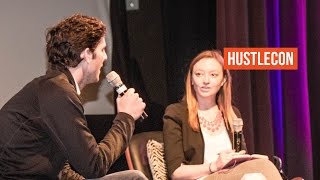
James Beshara built Tilt (formerly CrowdTilt) into a YC-backed platform for group payments. On college campuses, the average campaign invites 24 people and 18 join. He credits two things: finding a technical co-founder through a chance coffee in South Africa, and keeping the pitch simple: the easiest way to collect money from a group.
Chapters
Alright, great crowd. First, I just want to ask if everyone, um, if we could have a show of hands, who's familiar with Tilt, formerly known as CrowdTilt? Okay, a good number, but James, if you could just Give us your elevator pitch. Anyone who doesn't know, what's, what's Tilt, and what are some of the latest numbers you can give us?
Tilt is the easiest way— man, this is a sensitive mic. Tilt is the easiest way to collect money from a group for free. So it is, uh, in a lot of ways, to a startup crowd, one of the ways to describe it is, is really goes back to our Y Combinator application, which is, uh, what will crowdfunding look like in a mobile world, and what type of crowdfunding will translate into a mobile a context. I can go into more detail, but to consumers and to college kids, it's really just the easiest way to collect money from a group.
Yeah, for like a party.
Yeah, instead of like a $50,000 documentary or hardware project on something like Kickstarter, it's a $1,500 late night party on a college campus, $2,000 for a friend's 30th birthday, your fantasy football league, or it is $900 for a party bus up to Napa. All of those kinds of friend— friendly group objectives, we've just borrowed our favorite elements from crowdfunding platforms and provided it for groups of friends instead.
Great. And, uh, you guys have gotten really large, obviously, but I wanna kinda go back to the early days and talk about where this all began, because it wasn't just Crowdtilt in the earlier days. You even had an earlier iteration. Of that. What sort of inspired you to say, I'm going to graduate from college and just start my own thing and become an entrepreneur? How did that happen?
Well, I've been starting things for the last 10 years or so. In college, started a fly fishing company, for any fly fishing fans out there. I started a nonprofit, a fellowship grant program for research in the field of study that I focus on, development economics. And my senior year, I started to come up with this concept for grouping loans to micro-insurance organizations. So if you're familiar with kiva.org, it was essentially Kiva for micro-insurance organizations. Total mouthful, won't get into it. That was actually one of the biggest lessons I learned, was just a niche, niche application of the software was really hard to educate people on. But yeah, I think I always had this energy beneath my feet to start things, and really saw a big opportunity to apply this technology and the power of the connected web to the developing world. Started building that out. And actually what I realized was— this was 2009, 2010, before crowdfunding really had a name or was codified— and realized, wow, this little feature of this application, groups pulling their money towards an objective, I was basically like, holy shit, this is going to be so much bigger than just an application towards micro-insurance organizations. And felt like crowdfunding itself— was going to be the next layer of the web.
How did you decide that that one part of your first company was the most important part of it? Because I'd imagine that there were other parts of the company that you were passionate about. How did you focus and say, OK, I'm going to focus on this one and let these other parts go?
I think it was the only part we got right. We made so many mistakes. I still make so many mistakes every single day, I tell. We did so much wrong of we built this thing for 19 months, didn't tell anyone about it because we thought it was this secret we needed to just keep close to the vest, and did all of these things wrong. I was, at that point in time, with getting people on board, I was so young, 22, 23 years old, that I really wanted anyone that was willing to listen to me, I would— make them a co-founder, bring them on board. And it was kind of— when you're that young, you really look for validation at every turn. With Tilt, it was very different. It was, all right, I need to make sure that we're doing this with the right people. So I did all of these things wrong. The thing that stuck with me in the back of my head that kind of just I couldn't shake was, man, this identity-driven web, this connected web, if you add finances to it, if you add money to it, it can have such a massive impact on an offline world. That online communities and communication, you know, forums or Facebook or Twitter, just— it's amazing for communication, but impacting the offline world requires a lot of resources, oftentimes finances. So it was kind of— that was the little key insight that we got right. And I started to think about, man, how could this be applied in a more horizontal or much more broad sense than just micro-insurance or development?
OK, and when you decided to focus on Crowdtilt— at that time it was called Crowdtilt— how did you find your co-founder, your CTO?
The best advice I ever got as— and I still think about this pretty often— the best advice I ever got as an entrepreneur was— and I contend it's the best advice I might ever get.
Everyone write this down, I guess.
I was in a coffee shop in South Africa, in Cape Town, South Africa, where I was building the first crowdfunding application called De Vello, if you want to look it up. I was in a coffee shop with an entrepreneur down there in South Africa. And the entrepreneur told me the two most important things to build anything of significance is trust and a network. And it's those two things, trust and a network. And I've Googled this. I've looked it up. I don't see anyone that really talks about it in simplifying terms like this. But he said, you know, the idea isn't the most important thing. You'll refine the idea. You'll be wrong in so many points, as many points as you're right. The capital The capital isn't the most important thing. That can come with a network. The people and recruiting is gonna be so much harder than you really think when you're just getting going and it's just you and your dorm room or something. And so all of those things that you're going to need to build something of massive significance, it's going to depend on these two elements, trust and a network. And the key to it that he said was one is worthless without the other. If you have a big network, but you went to HBS, but no one trusts you, then it's more or less pointless. If you have a lot of trust, but it's only your mom, then it also isn't as valuable. So it's both of those things. And both of those things have resulted in so much good fortune for us as a company. Specifically, my co-founder was just through a network of investors down in Austin, a couple CTOs down in Austin. There's one specific CTO that really loved what I was building with Tilt, called Crowdtilt then, really loved kind of this crowdfunding for the everyman type of approach to this space, wanted to invest, and wanted it to be successful enough to where he said, hey, there's a guy that, one, you should have a co-founder, and two, there's a guy down here at Rackspace. He runs strategy. He's 26, very young, but really, really rare combination of technical and strategic thinking. If I was going to start my next company, he's who I would start it with. So see if you can rope him into what you're building. His name's Khaled. Come down and grab a coffee with him. And I heard that, and I was like, good God, I've got to get this guy on board. And it was really through that introduction. And typically it doesn't happen that way with co-founders, but that's how it happened with us.
How do you think about your network? When you say you've got to have a network, that can't just be everyone that you've ever met. And especially everyone here is busy. You're a very busy person. How do you maintain a network while you're also building a company?
I think it's hard to— it's really hard to articulate it or verbalize kind of a process around it. Because oftentimes, if you apply a process to it, you'll actually shoot yourself in the foot. It actually should be much more organic, mutually beneficial. But I think one of the things that I'd highlight is you build this network. And everyone— if you're here, then you're good at building networks, most likely. And that's one of the things that you have to hustle at most. But I would phrase it as you go into it knowing you will only need to actually call upon 2% to 3% of your network in some utility fashion. Really, you build this massive network, and most of the time, you actually won't need anything from them. And it's always a surprise where you do need something and who you end up needing it from. So you really can't go into it thinking a quid pro quo. Taking that type of mentality, you actually, much like a startup, much like a technology startup, you have to go into it thinking, I'm going to provide as much value as I can. I'm going to create as much value as I possibly can. I'm going to help this person, that person, this person, that person with whatever I can and create as much value as possible and not think about how can I capture value. How is this person valuable to me? It has just happened so many times. Granted, I'm a young founder with limited exposure, but it still has happened so many times in our career and my career that had I gone into it thinking a premeditated approach of how can this person help me, I would have missed out on the introduction to my co-founder, for example. That was a happenstance coffee with— I was at a conference much like this, actually, and Gary Vee was speaking. And I was trying to get in front of Gary Vee as, you know, 24-something thinking, I've got to get this guy. I was in Dallas building Tilt out of my bedroom and essentially felt like, man, no investors come through Dallas. I've got to get in front of this guy. Thought Gary Vee was like the most important person to get in front of in an auditorium very much like this right after the conference ended. And one of the other speakers, a guy named Bill Babbel, was kind of just off by himself and there was a line of 50 people trying to get in touch with Gary and get in front of Gary Vee. And no one was talking to this guy, Bill Babel. Arguably, that was the most important contact I ever made. And it was kind of not trying to quid pro quo optimize for gaining something. It was like, hey, this guy might have something really interesting to say. He had a good speech. Chatted with him. And now he's probably our most impactful angel that we have.
And Tilt went through Y Combinator, right? How was that experience? What kind of takeaways do you have from the incubator experience? Is that something you'd recommend to other founders?
Yes, I would. There's some irony in it in that going into it, we didn't know what the value would be. So we were out in Texas and really had so much confidence and overconfident that we were like, no, we don't need an incubator program, and thought Larry and Sergey didn't need an incubator program. Neither do we. But one of the things that I think it is so, so valuable, to tie it into a thread from a previous question, is that network that you can build through an incubator program is just so quick. You can fast forward. Y Combinator, for us, that accelerated 10 years of being out in the Valley, of a network that we would have had to build much more organically. I think it's stated enough. So it's not that it's understated, the power of that network that you get from an incubator program. But I know we still had doubts about it and really felt like what we were going to build was going to be on our shoulders, and we were going to have to be the ones to do it. And the truth is, every single day, I probably lean on that network in some form or fashion. That's part of, I'd say, part of the biggest reason that people, young founders, should think about it. Founders in general should think about it.
And Tilt has been in this category, in the crowdfunding category, which has been really buzzed about in recent years. So you guys were sort of fortunate to ride that wave in certain ways. But I wonder if that's a double-edged sword in any way when you're building a company that's part of almost a fad or something that's —like a buzz term.
Whoa, whoa, whoa, Colleen. Don't call it a fad. Not a fad. I'm going to quote you on that. In 5 years, Colleen Taylor said crowdfunding was a fad. No, but anyone could be—
right. Anyone could be building something now of the sort of technology of the month.
It's a very valid question. I think it is a double-edged sword at times. I think for the most part, We look at our approach to it, and if you download the app we just launched on Android last week, if you download the app, it doesn't feel like crowdfunding. I think it is kind of along those lines of borrowing our favorite elements from crowdfunding and applying it kind of in our own way to smaller groups and kind of a more everyday type of objective. The press does kind of toss it into crowdfunding. But for the most part, we're— Silicon Valley isn't really our user base. The early adopter set isn't really our user base. So I don't think it really affects us too much, mainly because if you are a fraternity social chair and you use Tilt and it works really, really well, then you don't really care what segment it's in. Or it's kind of like I didn't come across or find value in Facebook because it was a social network. I just used it within— a few weeks, I thought, I'm finding value in this product. So for our users, I don't think it really comes into play. But I think with recruits and things like that, it's something that it does— you've got to meet us to hear our different take on it. Or investors, you've got to meet us to hear our different take on it. It's one of these spaces where it's like blogging was 10, 15 years ago, where there's so much hand-waving about it. There's so much attention given to it. I remember, you know, 10, 15 years ago, everyone was saying, "What's gonna happen when everyone has ink by the barrel and there's no journalistic integrity and anyone can just throw up an article and people are taking it as fact?" And to be honest, you know, blogging and online publishing has been one of the most radically transformative things that our world has been improved by. But it actually took 6, 7 years for actually the second generation of these tools to come along and really bring it to the mainstream. The crowdfunding today only has a couple hundred thousand people across all the major platforms— Us, Kickstarter, Indiegogo, GoFundMe. There's only a couple hundred thousand people that have crowdfunded before. If you actually add it up. And you know, 10, 15 years ago, there's 1 to 2 million long-form bloggers in the world. You fast forward now with some Something like Twitter, there's 270 million online publishers. And it almost looks unrecognizable from the first generation of publishing tools. Or WordPress. I think TechCrunch is powered by WordPress. Perfect example. The second generation tools almost look unrecognizable from LiveJournal or Blogger. I think crowdfunding over the next 5 years is going to— it's going to show itself as one of the decade-defining phenomenons. But I don't think it's actually hit the mainstream. Like we hope it will.
And when you think about press and messaging and these kinds of things, do you have any lessons learned on that front? Since most of your users aren't necessarily in Silicon Valley, what have been some of the most valuable ways for you to get the word out about Tilt?
You just keep it really simple. That's the best advice I can give. And we kind of learned this. We learned this just by touching the hot stove and getting burned. Burned. Excuse me. I think it's keep it simple. For consumers and the messaging to consumers, all we stick to is the easiest way to collect money from a group. We don't get into the philosophy behind what we're building, why we're building it. And it's so easy to feel like you should. Around here, people will say it's kind of like Venmo for groups. We'll be like, sure. That's a very good way of describing it. And you have to be comfortable with that super, super simple, straightforward application or description for press, for consumers, and not get caught up in kind of this really grandiose thinking of why you're building what you're building. We would see that especially going through Y Combinator. You see that with a lot of YC founders. They really want to jump into why this is going to be the biggest thing ever. And sometimes you actually should be OK with, hey, this is just some simple little thing to make a tiny part of your life a little bit easier. So I think that's helped us with press.
So you just kind of have to trust that the people will know what to do with it, and you don't have to preach to them.
Right. You just— you trust that the most important thing is get their kind of foot— get the foot in the door. Get them to download it or understand how they can use it today. And as a company, you can actually harness it and feel very empowered by how big something can become. But one of the things that I would say in a group like this is I think crowdfunding will go from a couple hundred thousand people to a couple hundred million using and making use of crowdfunding in the next 5, 10 years. But to the kid on— to the Sigma Chi at UCLA's campus, he doesn't really care.
He just wants to get people to pitch in for the keg or something. Exactly. Right. And is there one or a couple of different press mentions that you guys have had that you've really seen an uptick from that you would recommend and say, hey, if you can get on the Today Show, get on the Today Show? Or something that you thought would be a bigger boost but actually wasn't?
Yeah, I'd say the— in today's world, it is, um, and you know this as well, it's just there are— there's more publishing happening every single day than, um, than I think the previous 2,000 years of human history as of 10 years ago. Um, so it's just so much is online. I think the biggest thing you should do as a founder, as, uh, early-stage employee is just focus on your product and your customers, not worry about press at all, actually. The best companies are often so misunderstood in their first few years. And even just trying to articulate in a few words what an app does, what an app, a really powerful app does, it really kind of misses the point. Because, I mean, just look at your home screen and try to describe to someone why an app is so cool. It is really, really hard. And now with the apps becoming mainstream, something like Facebook, you don't have to describe it. But rewind 10 years and try to describe Facebook to someone. Or just imagine you describing it to your mom. It is really, really difficult to describe it. And press often misunderstand it. So I think those products and those companies did a really good job of just focusing focusing on the customers, and not worrying about press too much at all. Great.
And we have a few minutes left, and so if anyone has questions, definitely start. OK, I have— I think there are microphones. Great. And so while we're getting the microphone, my last question is you now have 70-some people, and you've started with building these ideas by yourself in a basement for 19 months. So what's the biggest shift that you've had to make as a person when you go from being the CEO co-founder of a couple people to 70-plus?
I think the— one of the things I've learned is it is all about endurance and persistence. This is a game of endurance. There's a great book called Born to Run, if you guys are familiar with it, about a tribe in Mexico that would run hundreds of miles. And the author notes just how like the The modern world views running as— it's like childbirth. It's this very, very painful thing that once it's all done and over with, the sacrifice and the pain is worth it. And the truth is, you know, one of the things that the author cites is just how wrong we view running, and, you know, historically, and that this tribe in Mexico would run hundreds of miles and enjoy every single step, have fun. 25 miles into a run. And it is kind of— that was, I think, one of the things that I have gotten so wrong and thought so wrong about startups. You think about the idea or writing an equation on glass and on a window, and it's like, that's what it's about. And it is so much about endurance and loving every single step of the journey. And I think that is the biggest surprise. The cliché, the journey is the destination, is so friggin' true. It is so true. So you gotta love every step. That's great. Okay. Okay, I guess our first question: What issues have you had with regulatory compliance and navigating all that with crowdfunding, and especially with cryptocurrency? Cryptocurrency? Like Bitcoin. Yes, so we do have an open-source tool. It's the most popular open-source crowdfunding tool in the world that we kind of just released last year, and that has Bitcoin. You can actually plug in Bitcoin to it. But for the most part, we haven't implemented Bitcoin into our core app because it just hasn't been a huge request from our users. Internally, we are extremely excited about it. So it's a customer base issue basically for getting that rolled out. Right, it is. We will get tweets pretty often of, "When are you guys gonna add?" I'd say in terms of our company DNA, we're a pretty developer-centric, engineering-centric crowdfunding company. Maybe the most developer-centric crowdfunding company out there. So we hear it, we want it badly, but just pragmatically it hasn't been requested enough by our users. On the regulatory side of things, you know, we really make use and leverage things like Stripe, Braintree, Skrill, Adyen International, payment processors as we go international. And leveraging them, we don't have to deal with nearly the compliance or or regulatory issues that we would if we were doing it all in-house. So to a large degree, we just get to focus on building the social software on top of those layers. So outsource is the answer sometimes. Yes, big time. Big time. Division of labor and separation of concern. I'm a big, big believer in leaning on others to solve those hard problems when you can. Yeah. All right.
So you said the most important things are trust and a network, and you said that incubator accelerates a network. So that got me thinking, what, if anything, could accelerate trust?
Because that's the other side of the equation. That is a damn good question, Cory. Um, the accelerating trust— I don't know if you can accelerate trust I think one of the ways that you can kind of get to that result is in Silicon Valley, one of the things that you can just— is a pleasant byproduct of this part of the world is the hyperconnectivity of your network. And so if a certain subset trusts you, that trust can scale really quickly, at pretty unprecedented levels actually. I know from a user base perspective, from a fraud prevention perspective, we can know more about someone in just 5 minutes of cursor research online on that person that's collecting $20,000, $10,000, you know, high dollar amounts. We can know more about them today in 2015 than you could have known 10 years ago with meeting them 4 times and getting their, their credit score. I mean, you can know so much about people today that it probably spills into your personal network. If you have trust amongst 16 close friends or 16 really close mentors in the Bay Area, that can scale really quickly. And those intros and the connectivity can scale. But in terms of accelerating that trust with those 16 people, I think it's just one of those things you've got to approach every single day knowing that it's a constant investment. One of the biggest mistakes you can make is thinking that, "All right, this startup didn't work, this idea didn't work. Now I'm embarrassed that it didn't work, and now I've actually burned these bridges." We had a Nobel laureate as an advisor in my first startup, and I thought that. I was like, "Fuck, this thing is— I'm about to email all of our users that we're shutting this down, and all of my favorite professors, all of my favorite mentors." and this, the founder of microfinance, this is kind of, this is gonna be a huge bummer and probably kill this relationship. And it was the furthest thing from what actually happened. So that trust definitely, definitely traverses whatever you're working on to whether it goes well or whether it goes south. Just know that it's a constant investment.
Yeah, maybe we could say it's not something you can accelerate, but if you protect an integrous reputation, then You're good.
1,000%. And protect it with your life. Because as the Warren Buffett quote goes, it takes 20 years to build trust and 5 seconds to lose it. There it is. Awesome. Thanks. Thank you, buddy. Good question. Last question.
Hi. Thanks for doing a talk with us. I was actually really interested in the fact that you had mentioned it sounds like you have really good product market fit on college campuses. If you talk about how you've iterated on your process of basically user acquisition strategy. Maybe you could talk about some strategies that you've tried and didn't work, and maybe you failed fast, and what has worked for you.
So Paul Graham has a great essay that essentially comes down to this thesis of see randomness. Sometimes the world is just random. And more often than not, the world is just random. So the answer I'm about to give you I don't know if it's going to be as satisfying as fireside chat questions usually strive to be, but I honestly think it's the truth. We fell ass-backwards into virality. I knew nothing about virality. I knew nothing about product design around virality. And 11 months in, 12 months in, Sean Parker just comes busting through the door, and he's our largest individual investor, and just talked about how we nailed this viral coefficient. When you start a Tilt, you invite on average 24 people, 18 will join, and from that a subset will start their own Tilts. So by definition, you use the product, you start a campaign, and you have to invite others to use it. And because it's kind of this, you know, it's not a $50,000 documentary, it has this very everyday type of, everyman type of use case, that chances are of those 18 people, a subset are gonna split off and start their own campaigns. And then a subset are gonna split off split off, and split off. So our user acquisition was, and always has been, just that natural virality. When you use Evernote, you could really love it, but it takes, you know, a lunch for you to tell a friend, "Hey, I love this product." With Tilt, you start using it, by definition you have to invite others to use it with you. That virality was always really high, but when we looked at where the virality was highest, it was college campuses. And so we went from a product that just has— we've been fortunate enough to grow since day one to focusing on the user demographic where it was growing fastest. The activation energy was lowest. That is why we focused on colleges. But it actually took us a long time to find that that was the case. But sadly, we always had this— I say sadly because it's really hard to give this advice— have virality in your application. But that was just the truth of the matter. We just had virality, and we kind of fell ass-backwards into it. And then just really tried to work hard to iterate on it.
Great. Thank you. Sure. All right. Thank you, James.
That's all the time we have. Thank you.
Thank you, guys. Thank you. Thank you, Colleen.










