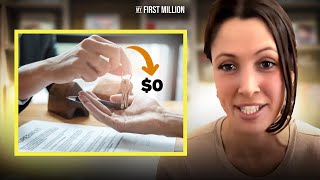
In this interview, Sarah explains how anyone with determination can purchase and run a small business without any cash down. She outlines the core financing tool—a seller’s note—using a 25% seller‑note and 75% bank loan structure, and discusses why keeping deal terms simple (avoiding earnouts) builds trust with sellers who may lack formal business education. Sarah describes the arduous process of finding a bank that treats the seller’s note as debt rather than equity, noting that most bankers are unfamiliar with such structures. She also shares the gritty “hustle” behind sourcing deals: scraping databases, recruiting interns via alumni networks, and even obtaining fake IDs to access library resources. After acquisition, she highlights early operational missteps, the importance of a long track record, and the simple, high‑leverage improvements she implemented to grow the business. Throughout, the conversation emphasizes a mindset of will over skill, the accessibility of the small‑business market, and the practical, numbers‑driven approach required to succeed.
Chapters
Anyone who wants to buy, and I really mean anyone who wants to buy and operate a small business, can do so. It is not a matter of can or can't, it's a matter of will or won't. That's a fact, because this is an industry where you can choose any type of business you want, any size business you want. You could be a cleaner looking to buy another really small cleaning business from a guy or gal that's looking to retire. You You can buy a dog walking company. There is truly no limit here, and that's what I love about it, because to me, it's one of the few areas left of the American dream where you can go out and just put in a ton of effort and elbow grease and make something of your life and actually make good money without killing yourself and not having to work, you know, 3 jobs. A seller's note to me was a substitute for getting equity, and I didn't want to get any investors involved. So the next step was, okay, are you willing to do a seller's note? And I phrased it a different way to make sure he understood it, but he actually did, and he was willing to do that. And so then I said, okay, let's talk now.
And just to define what a seller's note is. So define what is a seller's note for anybody who doesn't know.
Absolutely. I'll use an example. Let's say you're buying a house for $1 million. Rather than giving the seller $1 million upfront, this, let's say you have a 25% seller's note. You would give that seller at close $750,000 and then they would get paid the remaining $250,000 over time. And whatever you define those terms at, whatever interest rate you decide on and time horizon. Yeah.
The seller becomes the bank. They're sort of financing you to be able to purchase—
Exactly.
The rest of the business.
Exactly. And it was also great because the argument there is, okay, 'cause some sellers didn't wanna do it. And the argument is, well, you're telling me how great your business is. You're telling me that it's simple enough for me to operate. If those things are true, why would you have an issue doing a seller's note?
Right, right. This thing's stable, right?
Exactly.
And, uh, my friend— I helped my friend just buy a business actually kind of similar to yours, uh, recently. And he did a good thing, which was in the seller's note he said, look, here's the purchase price, here's the seller's note, but if EBITDA was to drop way below where it is today because, you know, I find some skeletons in the closet, or this thing turns out to have been built on some quicksand, then we're going to forgive the rest of that seller's note, right? And he was able to structure it accordingly. So it's a good mechanism for any buyer that's doing it. I don't know, did you do that or did you just do a seller's note as is?
I did it as is. There is something called an earnout, which is similar to what you're saying, and it's based on the performance of the business. And you choose, am I going to do it on revenue or profits? For me, I tried to keep this extremely simple because the devil really is in the details here. And these sellers, a lot of them don't even have high school degrees. But they're very good at business. They've been very successful. So I'm trying to do a deal here where these terms are extremely straightforward. And when you start doing terms like that, the seller freaks out because then it's, wait, I may not get this money. I don't even know you. All of a sudden he's skeptical of you. So I'm not a big fan of those.
Yeah, that was the other thing. One of your points of view was like, you know, industry is overrated. I like that point. Why? You know, because you're really looking for just actually just this rare, beautiful business that's stable and profitable. And you shouldn't, like, use industry filters for that necessarily. Or you have the thesis and walk in as this genius who has a thesis up front, you know, right? Be open-minded at the start. And then the second part is you were like, I try not to use any jargon. Like, no, even though you were at Harvard Business School, you weren't saying EBITDA. You would say, how much money are you making? Or income? You know, you were not trying to— or even in the structure, you were not trying to get super fancy in the structure because If you don't understand it, they're not going to understand it essentially, right?
Yes. And that's the biggest mistake too, because people think, well, I don't have a Harvard MBA or I don't know any of this. I honestly think ignorance truly is bliss here because the less you know, it's kind of better because you can keep things extremely simple for the seller. And I think that breeds trust.
And so you buy this business. How much cash did you put into the business to buy it?
You don't need to put any cash down, and I didn't have to because of the seller's note. So I did a 25% seller's note and a 75% bank note. And the idea there was when shopping around for a bank to do the deal, it was all about, and it took me, you know, 20+ banks to figure this out. It was all about how did they view the seller's note. Banks that viewed that seller's note, which very few did, as equity, I could, I could work with the ones that didn't. Not so much.
Because if they viewed it as equity, it's like, well, you're okay, there's 25% equity, we'll loan you the other 75%.
Exactly. Exactly.
And how did you get them to think that that was equity? Because it's not. It's kind of not equity.
Honestly, I wish I could have some, like, really savvy answer here. But to be frank, and I'm not trying to say this about all banks, but most bankers have no idea what they're doing or what they're talking about. Truly, I had to learn this the hard way. They think they can finance a deal. They have no idea how to finance the deal. They have no idea what these structures look like, what the details are of these structures. So a lot of it, I'm sorry, is just ignorance of them and their board.
Right. Here's the purchase price and then here's how much we need from the bank. And then they're like, oh, exactly, exactly.
And they didn't call it equity. They knew it was debt. They called it debt. But the way they reviewed it, like when they're looking at their ratios for these these banks, they have all these rules. It was whatever internal rules they were using to evaluate the debt ratio. And, and one big thing is this— the bank had priority over everyone else, right? So the bank was going to be paid before this seller's note.
And the business had many, many years of a track record of profitability.
Yes, that's why that, that is so important. You have to have— they're really banking on that business's track record and And then a little bit with you, it's a question of, okay, it's done well for 20 years. What could you do to make it not do so well?
Right, right. And so you, you buy this thing. You told me, you go, the only asset I had at the time, I had no money, no experience, no whatever. I only owned my car. I had a RAV4 and that's literally like all I had to my name. And you were able to buy a multimillion dollar business and then walk in and be the owner of it. Just by really hustle and a kind of a numbers game. So the— we didn't even talk about some of the hustle of this. So some of the hustle of this was scraping the database. Some of the hustle was getting people off Craigslist to be interns to sift through the database. Then it was, well, those interns need a place to work, so you got fake IDs to get them into the library. Is that right? Like, tell the fake IDs story.
Absolutely. We hustled for those IDs too. We hustled for those. That was hard work.
You said you, uh, What was it? You like went to alumni, you like, you're like looking at the intern and you're like, all right, which alum looks like this intern? And then can I ask them for their student ID?
Hours of that, truly hours. We reached out to hundreds and hundreds of people. Hundreds.
And so you've got these interns, then you realize, hey, we need to just be blasting this kind of like fake it till you make it email where it looks like we've researched them specifically and they'll sort of self-select. You end up doing this deal where you don't put any money down because you were able to shop 40 banks or something like that to get them to, to give you the financing for it. A lot of this, to me, the story here is like, uh, not counting yourself out because, yes, a lot of people, a lot somewhere along that way would have counted themselves out. I don't know how to do this. I, you know, uh, this is uncertain. I don't have the money. I don't have the experience. I don't have the time. They would find a way to count themselves out. You didn't do that. Uh, figure out a way to get it done. So like, you know, don't— all the rules are sort of imaginary. You can, you could sort of work around them. And the last one is it's just a numbers game. Like you said, like, it's like dating. We're just gonna need to look at a lot of businesses. We're gonna need to get a bunch of interns to find the good ones. We're gonna look at a bunch of businesses to find the good ones. We're gonna talk to a bunch of banks to find the one that will do this deal. Is that accurate? 'Cause that's what I'm hearing.
Yes. If there are two things I'm very passionate about in this world, it's obviously occurrence, but also it's this concept of spreading the good news, which is that anyone who wants to buy, and I really mean anyone, who wants to buy and operate a small business can do so. It is not a matter of can or can't, it's a matter of will or won't. That's a fact, because this is an industry where you can choose any type of business you want, any size business you want. You could be a cleaner looking to buy another really small cleaning business from a guy or gal that's looking to retire. You can buy a dog walking company. There is truly no limit here. And that's what I love about it because to me it's one of the few areas left of the American dream where you can go out and just put in a ton of effort and elbow grease and make something of your life and actually make good money without killing yourself and not having to work, you know, 3 jobs.
Right. And so you, since you took over the business, you don't have to share the exact numbers, but let's just say if the business was making $100 before, um, in the years since you've bought the business, what have you been able to do like how have you grown the— how much have you grown the business and how would you do to actually grow the business? Because the guy had been operating for whatever, 15, 16, 17 years, something like that. You come in as a beginner, but you've been able to grow the business. So I want to know kind of roughly like how much value were you able to create, how many multiples of what you bought for? And then also, um, what did you do? What, what were the new insights or techniques or, or operational things that you put in place to create that value?
Great questions here. So When I first bought the business, the first couple years, things may have been on the decline a little bit. I may have made quite a few mistakes, and so it wasn't looking too, too promising.
You're not getting invited on podcasts for that story at that time.
No.
Sarah, you bought a business and you are driving it straight into the ground. How does it feel? Tell us more. What, what's your secret? All right, if you like that clip, there's a full conversation with a lot more just like that. Just follow my finger. It is right here.