How To Have A Better Quality Of Life & What Tony Robbins Is Really Like | My First Million Podcast
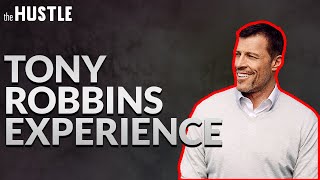
A guest shares what Tony Robbins seminars are actually like: the $1,000 ticket, the aggressive upsells, and whether they work. The real takeaway is simpler than the hype: change your physiology fast with cold exposure or exercise, redirect your focus to gratitude instead of pain, and reshape the story you tell yourself about your life.
Chapters
Like, it's like Michael Jordan, and then you go down to BJ Armstrong, and it's like, oh. So I've talked a bunch of times about Tony Robbins, how great he is, and blah, blah, blah. I like him a lot. I got a lot of value out of going to his workshop.
I was supposed to go with you, and I bailed because it freaked me out.
Yeah, and a lot of people get freaked out. A lot of people's preconception is just, this is like a cult. This guy's a snake oil salesman or whatever. Yeah, like, what am I getting myself into? And I gotta admit, like, when I went there, I was like, okay, cool, I'm going, but I'm not doing any of that dancing shit. I'm just here for the information. I'm gonna sit down, I'm gonna be quiet. I'm not gonna yell, I'm not gonna hug, I'm not gonna dance.
And you and your friends sat separately so you wouldn't be embarrassed if you didn't?
I went with my brother-in-law, and we just agreed beforehand, we're like, yo, we might end up doing the dancing shit, so you sit on that side of the room, I'm sitting on this side of the room. And let's see, we didn't see each other except for at the end of the night when the event would end each day, and we would get back together. But anyways, by hour 1, I'm dancing and doing all the good stuff too. But anyways, it was a lot of value. It cost me like $1,000 to go to this thing. I thought it was tremendous. And then in the thing, he upsells just like this guy does, right? So he's like one of the first kind of, I don't know, coaches, lifestyle coaches, business coaches out there, and he's been doing this for 40 years now. He went from audio tapes, to books, to infomercials, now the internet, like whatever the channel was, he wrote it and was like, I'm the business coach, I'm the lifestyle coach. And you know, I got a lot of value, and at one point he upsells his business mastery class, or his business mastery thing, it's like okay, if you like this, if you like how you're feeling right now, and right after he makes you feel great, he's like, you know, that table over there is for anybody who wants to grow their business, it's $10,000, you spend 5 days with me, and if you don't get $1 million of value from this thing, I will give you all your money back. And in the moment I was like, dude, I got $1 million of value today. Of course I would do that. So I didn't actually sign up for it, but our buddy Siema did and went to it.
He did?
I believe so. I believe so. And so, sorry Siema if I got that wrong, but I'm pretty sure he told me he did. And I have several friends who actually did it as well, and they're like, yeah, it's great. And if you have a business that's doing, you know, if you have a business your size, right? Your business is worth tens of millions of dollars. If you can get a sort of 2%, 3%, 5% lift in your business just through improving your own psychology, your own enthusiasm, your own tactics, it's obviously paid itself off, right?
So how does the infrastructure of this work? Like, I'm looking at it now. Does Tony Robbins literally have to be at all the things? No.
So, well, he does his live events, yes. So he's the traveling salesman that does the live events. And he probably does, I don't know, I'm gonna get it wrong, but like, let's call it 20 to 40 live events a year.
A lot, that's hard work.
Yeah, a lot. You know, every week or two he's somewhere. And then he has his sort of like army of like coaches that are trained under him. By the way, they all seemed garbage. And so he has this, you know, the people who are the actual coaches that will call you and do all this other stuff with you, They are, you know, like there's like a fleet of them, I don't know, 100 people that just do the coaching.
And your infrastructure is garbage, those people are garbage.
When I met them, I was not impressed. In fact, on the days, so Tony Robbins has been doing this for 40 years to the point where he's been public speaking on stages hyping crowds up for like 40 years, right? So he can't actually do 2 days back to back. So he does day 1 and he goes from 8:00 AM till 1:00 AM and there's no breaks. You can go to the bathroom, but you're missing the action when you go.
—just talking the whole time.
He's on stage, he's talking, and he's got 10,000 people in an audience. I've been twice now, um, actually I've been 3 times, so I should correct that. So the first time I was just experiencing it, the second 2 times I was observing it because I took a fleet of friends. I bought tickets for my family and friends. I was like, this is the best gift I can give you, and they loved it, most of them. And, um, so anyways, he holds people's attention for like 14 hours straight, which is incredible. Uh, you know, you can't— most people can't you know, listen to a 6-minute YouTube video and have their attention held. But then the second day, it's not him on stage because his vocal cords are shredded, so he can't speak the next day. And this, like, his number 2 comes up, and this guy's a good public speaker, but he's not like— it's like Michael Jordan, and then you go down to B.J. Armstrong, and it's like, oh no, I came here for Michael Jordan. And so literally, this guy just— he says stuff, and then he tees up a video of Tony talking 10 years ago when he used to do this, like he used to do all 4 days himself. Oh my God. He queues up the video of Tony and you sit there and you're watching YouTube videos with 10,000 other people and this guy's just moderating it. It's like this bizarre experience. That's crazy. I didn't really sell it very well, but I'll tell you this, that was probably the best money I've ever spent on anything self-improvement-wise. If you add up all the books or anything else, it's not even close. Maybe I should do it. You should totally do it. I took about 20 people, so I paid for 20 people's tickets to go. 20 grand? Yeah, I basically became an affiliate for him. I didn't get paid, I just, I believed in it so much I paid for 20 other people to go. And since then, it's been 4 years since then, and of them I would say 4 people were like me where they were like, uh, holy shit, life changed, that was the most valuable thing. So 4 out of 20, let's say. And then another, let's call it, I don't know, 15 were kind of like, that was amazing. And then I talked to them a year later and they're like disappointed in themselves that they didn't carry it forward. They're like, God, it was so good. And I had so much clarity and I had so much energy, but I'm kind of mad at myself. I just kind of let it fade from there. Like, I don't even really remember it now. I just remember what I felt then. And yeah, I guess I didn't really get too much value because I'm not doing any of the things I wanted to do. You know, after that weekend. And then there's 3 or 4 people that literally left. They were like, this is way too culty, this is pop science, I don't like this, I don't believe this, I don't like how he's manipulating everybody, I'm out. And I was like, okay, that's the spectrum. Anyone I know? Alex from Calm, the founder of Calm, he hated it, and so he just went for a bike ride, I think, in the middle of one of the days, because he was like, it's just too much for me. And he's like, I didn't feel good in what was going on, and so I left, I rode my bike around the city, and I had fun doing that. And then—
What was the number one takeaway?
For me? Oh dude, I have a notepad full that I call the Bible, 'cause I was like, this is the closest thing that I have to religion, right? It's like religion in as many ways— Oh my God. Religion is like an operating philosophy for life, right? That's what people use religion for in many ways, like, you know, don't harm your neighbor, blah, blah, blah. Like, it's an operating philosophy. So this was an operating philosophy. So I'll give you two of the nuggets, right? So the first one is, um, the quality of your life is equal to the quality of the emotions you have on a day-to-day basis. So what does that mean? It's kind of a mouthful, but like, we're both in a good position. We're very privileged. We're more successful than we ever thought we would be 7 years ago, probably. Like, the position we're in now, 7 years ago, us would have been envious of that. But your happiness is not like 10 times more than it was 7 years ago, right? Like, you're probably feeling about the same. And the reason why is that, you know, life is not about, you know, what you have and what you've achieved. It's about who you've become. And so what most people, what most people miss is that if you are— doesn't matter if you're rich, doesn't matter if you have a family, doesn't matter if you have, you know, if you're famous— if the emotions that you're feeling on a day-to-day basis are stressed, then you have a shitty quality of life. If you're feeling anger or upset, then you have a shitty quality of life regardless of everything else. And so then the question is, how do you figure out how to like change your emotions on a day-to-day basis so you're feeling good every day regardless of your situation? What's the answer? So like, so he gives you 3, 3 like tools. He's like, all right, here's the 3 ways you can change how you feel. The very first thing is your body, is physical. So if you change your, if you have a radical change in your physiology, he calls it, which basically means If you did a bunch of push-ups, if you exercise, if you ran, if you jumped into a cold pool, or why people like taking hot showers is to relax. The fastest way to change how you feel is to physically change your body. In fact, Emmett, who's the CEO of Twitch, was telling me this the other day, or he was kind of talking about this on Twitter. People have panic attacks, and when you have a panic attack, it's a really uncomfortable feeling. And most people with panic attacks really want a solution of like, how do I not get these anymore? I take medicine. And so some people take medicine and that's one way to change your physiology is chemically changing your physiology. Um, what most people try to do is like, uh, people try to help people think their way out of it. They're like, oh, just, no, don't be so anxious and you need to just relax. I'm like, as if that can help. Um, that's like, you know, that's, if that was that easy, yeah, we would all do it. And actually, what science has shown is that the fastest, most effective kind of quick and dirty way to stop a panic attack is to plunge your face into really cold water. If you do that right at the start of panic attack, it will stop it because your fight or flight will kick in and it'll override that.
And so one time, one time I accidentally ate brownies that my roommate made and they turned out to be edible brownies. And I don't smoke weed and I hate weed so much. Like I don't do any of that. And I ate a lot of these brownies and I was like, James, I'm flipping out. He goes, yeah, I'm sorry. Those were weed brownies. And I, I started having a panic attack and I went and got in a cold shower and that was the only thing that helped. Oh, nice. Okay.
Yeah. So that's fastest way to change the way you feel is your body, either through heat, cold, or getting your heart rate up and exercising. Um, and it doesn't have to be like, go for, go to the gym. It can be like, if you did 10 jumping jacks, you will feel different than you did, but right. Before that. The second one is focus. So what are you going to focus on? So you, you know, where you place your focus is going to judge how— what your brain is— what your brain is basically signaling to your body of how to feel. So if you're focused on pain, then you're going to feel shitty. If you're focused on how somebody did you wrong, how this guy cut you off in traffic, you're going to get outraged. But if you focus on things you're grateful for, if you focus on the if you focus on things that you can trust, that you can rely on, you'll feel different. And then the last one is, I think it's like language, language or story, which is basically the words you use and the story you tell yourself. The big idea, and I recommend this to anybody who's in business, which is the quality of your results is linked to your quality of your decisions, and the quality of your decisions is linked to the quality of the internal monologue you have. So the conversation you have with yourself ends up dictating the decisions you make, which ends up dictating the results you get. And that's kind of what I pulled away from the whole thing. And then it's a whole bunch of strategies to do that better. I think you just saved me $1,000. Well, you got to get up and dance, otherwise it doesn't stick.
This is awesome.
I like learning about this. Yeah, I always hesitate to talk about it because it's like kind of preachy, but I believe in it. I think it helps some people.
It's never preachy when you can make fun of it. So like, you, you do a good job of making fun of something and then you explain what it is. So that's never preachy.
Okay, sounds good.










