I Bought A Drink Nobody Wanted (And Sold It For $2 Billion)
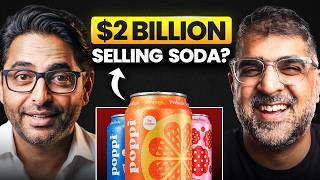
Beverage investor Rohan Oza explains how he helped build brands like Vitaminwater and Poppi, which sold for billions. His strategy: influence influencers, make the brand part of pop culture, and live it yourself. He admits his weakness is over-believing in products he loves, which can blind him to problems.
Chapters
Every deal on Shark Tank— that's a beverage. I know they're looking at me.
Nobody wins the lottery 7 times. You got sharks spitting out the product, you've got a terrible brand name, and you pick up 25% of that company. Sold for a billion and a half.
Is this just art, or is there some science behind it?
One of the biggest lines of Robert Woodruff was like, he wanted Coke to be within arm's reach of desire. Brand is creating that desire. 1 in 10 Americans influence the other 9. The goal is to spot that one.
Can you teach us more about how it's done?
It's actually 3 things. One is spotting stuff early. One is building the brands, and the other is actually—
You are— you're the brand father. You have been brand— you have been crushing it in the beverage space. I was reading the, like, research on you the last couple of days. I knew about Poppi. I knew about Vitaminwater, but I didn't know the extent of it. Can you, can you brag for a second? Give me a shout out some of the brands that you've been involved with.
I actually have started none of them. I only co-founded one, which is Poppi, and I'll tell you that story. But the rest, I just bought them early or I bond with founders. I think it was like Vitaminwater, Smartwater. They were tiny. Vita Coco. Even things I lost money on were well known, like Popchips. Vital Proteins, One Bar, Bulletproof, lost money but still well known. What else? We have Farmer's Dog, Once Upon a Farm, and then probably Poppy is my sort of most famous one.
That's an insane, insane roster.
It was funny, actually, one of our founders who you know, a guy called Gilles Rez, who's the co-founder of Jim Carner Fine Foods, was at our— we had an LP conference and, you know, we're so focused on like the brands and the teams and growing stuff. And like, you sometimes bury yourself in the weeds and you don't sometimes ladder up. And he's like, bro, when you look at the sheet of brands on Kavu, which is the, the fund that I have sort of masthead, it's insane, this ecosystem you've created. And I think you, do you need to do a better job of almost leveraging that ecosystem? And it kind of, the light bulb went off because he's a founder, right? Right. He's growing an incredible brand. And part of it is I focus on individuals and sometimes we've got to bring the whole gang in to realize the strength of what we have.
It's sort of amazing because when a lot of people say the word brand, it's sort of related to taste. And both of those are— can be pretty nebulous. But you sort of are like Paul McCartney or John Lennon where like you've made enough hits where you're like, okay, is this just art or is there some science behind it?
Nobody wins the lottery 7 times.
Yeah, I hit. I mean, that's quite high accolades to be in any conversation that used the Beatles' name. But there's always luck, guys. It's not like this. You can't—
you got to—
the dice has got to roll your way a little bit. But if you have a game plan, which I've sort of honed over time, the odds flow in your favor. And so I've, you know, I've created some mantras and some principles and so on and so forth that I actually created after the fact because you don't go in saying, all right, guys, I've got 5 mantras. You almost like you have a few hits. You're like, How did this happen? And then I rewind and go, okay, this is kind of how it happened.
Give us one. What's one of the first ones you realize, like, okay, all right, that this is one that matters. We got to put that concrete.
Couple of big ones. One is influence the influencer. So you got a pot of money, right? Whatever, $100 grand, $1 million, $100 million, whatever you want to spend on your marketing budget. Who do I get to?
Right?
I can't get everyone. It's not Boston, you know, unless you're Amazon has the budget to get to everyone. But most people, when they start a company, don't. So from my perspective, it's 1 in 10 Americans. And I say America because 90, 100% of my career actually is America in terms of success. So this is the greatest country in the world to be an entrepreneur. I say that everywhere I go. I truly believe it. So in America, 1 in 10 Americans influence the other 9. The goal is to spot that one. And that has evolved over time. So when I first started doing this, Honestly, and I'm aging myself here, but some of the biggest influences, and I'm talking about back in the day with like Sprite even, and even vitamin water, was radio DJs. Now radio is dead and you guys are the heroes online, right? But before you podcast kings came along, it was radio DJs. And so at one time in Vegas, I picked an award show annually and I would fly in the top 25 cities and the top 2 DJs from every city. So you have 50 people coming in, and every single artist that came to that award show would want to go to this place because you could hit 20 cities in 2 hours. It was almost like the cities came to you versus you traveling. And back then, you're releasing an album, a new product, whatever it is, you're right there. And I did it back in the day on a brand called Sprite. It was corporate brand, but we did something cool. And then I did that with Vitaminwater where I took on all the DJs in the local markets and I hired people on my team that felt that vibe. Because in order to bond with a DJ, if you're a dork, it's not gonna work. So I hired people who kind of, in my, which is my next mantra, who lived the brand. They didn't market the brand, they lived Vitaminwater. That was their vibe. And so that's now evolved today to like the Alex Earls of the world or the You know, if it's in music, it's the 50 Cent is having an amazing resurgence, but now it's digital social media influencers that were the early DJs and the keys to spot that 1 in 10. So that's been a big sort of philosophy of mine with every company we go into is who is that 1 in 10?
Hey, I wanna tell you about something pretty cool. We have a database of all of the unsexy business ideas that have been discussed on this podcast. So hundreds of episodes, the team at HubSpot went through They pulled out all the unsexy ideas, so not the super high-tech ones, but the simple, relatable, interesting, profitable, uh, ideas that we have brainstormed, and they're all available for download for free. Just click the link in the description below. Thank you to our friends at HubSpot for sponsoring this podcast and putting together this free resource for you guys. Back to the show.
Can you define what a brand even is?
I think a brand is something that allows a consumer to have an emotional connection with a product. So this is just a can, gratuitous, you know, product of Satan. I drink it. I like the product. Liquid's great, but I got to create an emotional bond with people so they request a Poppi, they reach for a Poppi. And I worked for Coke back in the day, and one of the biggest lines Robert Woodruff was like one of the godfathers of making Coke what it is today. He said he wanted Coke to be within arm's reach of desire. Brand is creating that desire, right?
And then the distribution is putting it in arm's reach.
You nailed it.
Exactly.
Sam sent— texted me a clip this morning of when Poppy walked into Shark Tank. And at the time, they're not called Poppy, they're called like Mother or Mothers or something like that. They're not a soda that tastes good that's like prebiotic. They're apple cider vinegar. So it's amazing because it's like, you know, when there's these documentaries and it's like the dude who followed Kanye around 10 years before he became famous at all, and you're like, I can't believe we're so lucky that this guy happened to just follow this young artist in Chicago who happened to become Kanye West. And so there's this thing where it's like you see them come into the Shark Tank. I think they have something like $250,000 in revenue, some, some 200 to 400K of, of annual revenue at the time.
Yeah.
Different brand, different drink, no revenue. All the other sharks go out. So it's, you're, you're in a bidding war with no one.
Yeah. Nobody. Nobody.
They, uh, they go, all right, sharks, taste this healthy drink. And they make people take a shot of apple cider vinegar and they're like, this is horrible. And they're like, yeah, it is horrible, but it's great for you. Now what if it could be great for you and also taste good? That's our product, which is— it was a really good actually pitch.
Yeah.
The title of the video is Sharks Disgusted by the Poppi. Like, they were.
I think Kevin may have spit it out. I can't remember.
But so you got, you got sharks spitting out the product. You've got a terrible brand name. Mother's in cursive and it looks like an old, like sparkling wine or something like that.
Yeah.
Totally different formulation. And you pick up 25% of that company. I think Poppy sold for $1.5 billion or something like that.
No, no, come on. North of $2 billion, buddy.
Oh, north of $2 billion.
Okay.
Unbelievable exit. What happens? And it's amazing that the whole thing was captured. What happens between the time you see it? What are you thinking then? And then what were the things that actually transformed that business? Because I think that's a perfect, like, case study.
Yeah. Let's go to phase one. So these guys come out, like, every deal on Shark Tank, That's a beverage or food, but really beverage. Like, I can do the range, but beverage is kind of my wheelhouse. I don't know, DNA gifted with that. So beverage comes out and like, I know they're looking at me like Cuban's a bigger name than me. Kevin's a bigger name than me. You know, Lori's the queen of, you know, digital and QVC. But beverage, they look at me and then these guys come out. I'm like, here we go again. Because I'm now 3 seasons in. I'm like, you know, someone's going to hit me up with some nonsense beverage, you know. And we had some real dumb ones along the way. But this really good-looking couple comes out, you know, husband and wife, like straight out of central casting. Like they look like Sam, you know, like this chiseled, good-looking, you know, white boy.
And I'm friends with Steven, and we became friends because I DM'd him and I just said, we look alike. Yeah. What are we, friends?
I swear to God.
But he does look a little bit like Steven.
I'm not kidding. So these bloody two good-looking guys come out. A guy and a lady. She's like, I don't know, 8 months pregnant. She could deliver any second. So immediately I'm like, they've got hustle. So what? Then they pitch the product and I'm like, horrible packaging. I don't like the brand name. You know, I like the word mother, but everyone has a mother. You can't trademark it. It's not really a trademarkable thing, but like, let's try it. So that's, that's the trains running on that track. Okay. In the separate track in my head, I'm a soda kid. I've been looking for soda. I grew up in Zambia in Africa, right? So in Zambia, we only had 3 beverages: Coke, Sprite, and Fanta. That's it. But I came off sodas because sodas, shit ton of sugar. They're not good for you. They're no value. But in the back of my head, I've always been looking for soda I can feel good about. But I didn't go into the show thinking that. But in the back of my head, that's the running track. I try this. Actually, it was this one. Ironically, it was the orange one. And so for me, that is still— this is my top two. Orange is my favorite and cream soda is my second. So funny, the two flavors I drank when I was a kid. It's amazing what 40 years later it's throwing back to the 9, 10-year-old Roman. Crazy. Anyway, so I try the orange one and I'm like, oh my God, this is Fanta meets Orangina. If you guys— and I'm like, this liquid is in my head, takes me back. This is my modern soda. But I don't get excited because I know the minute I get excited, these guys get excited.
And so I think you were the last one to talk, at least in the edit. I don't know if that's actually how it was, but I thought that was incredible patience to let the other Sharks play out before you chimed in, because obviously you would influence them.
Exactly right. I did not. I specifically remained mute because the minute I seemed vaguely excited— and by the way, Even then, Cuban and Bethany both turned to me and said, Ro, should we split this? And I'm like, kind of in a nice way, no, because if this works, which it did, why would I want to split it? And if it doesn't work, I'm fine to lose it. But in the end, I'm betting on myself, right?
Right.
I liked them. Like, I like Steven Allison, but that's a very short like. Like, you know, we go for dinner the next day. I'm like, oh, God, they're horrible. The first thing I did when we got— when we became partners, I shut it down. I shut down Mother, and it was a tough conversation. And then basically Steven, Allison, me, and a lady on my team called Stevie, we basically co-founded Poppi. There was no Poppi. And in my mind, I wasn't focused on an apple cider vinegar beverage. I was focused on making this modern soda for today's youth. And so I'm like, okay, If I love soda and everyone else loves soda, this is modern soda. And so we kind of created the whole modern soda category, but I wasn't thinking apple cider vinegar. And so we shut Mother down. Stevie, myself, Alison Stephen, and Stevie took charge of the packaging design, actually. We then all debated which is the best one to go with. We voted on it, and that's where Poppi came into play.
What about the name? We had David Placid come on who named BlackBerry and Swiffer, and he gave us like a masterclass on naming product. Poppy is a, is an incredible name, right, for a soda pop brand, uh, to find that super easy to say, recognizable, fun. It almost feels bubbly in the name.
Like, yeah, here's it. So I'm strategically creative, right? Stevie and my team is what I call tactically creative.
That sounds like something I would say when I don't want to do work.
It's exactly that. Yeah, she works much harder. Yeah, good one. So So it's a triangle offense, right? Alison and Stephen had created the product. It's a great product, but their insight was apple cider vinegar, healthy beverage. My insight is I want soda. So what's America for soda? It's pop, right? So that's what everyone— In England, it translates less. All the poppy's exploding in the UK now. And Stevie's goal was how does she take what they had created, what my strategic game plan was, and create a name that rolls off the tongue. And we had a bunch of them. At one point I even liked Mom and Pop because I'm like, it was a throwback to like mom and pop stores and all that. And people told me it was stupid and they were right. But, but then when they came out with Poppy and Stevie presented, I'm like, okay, right.
Can we go? All right, let's go back because you only invested, I think, $250,000 or $400,000 into Poppy. And so it was really small business. You shut it down at half a million in revenue and you rebranded it and restarted it as Poppy. Do you remember what was the revenue growth up until you exited for $2 billion?
Yeah. So at this point, I give Alice and Steven full credit because Mother was their baby. And to go to a founder and say, good news, bad news. Good news, you know, I'm your partner. Bad news, we're shutting down Mother. You know, we're now co-founding Boppy together. That takes a lot of faith on their part. And we launched in March of 2020, right? We're all sad. I said, guys, I don't want plastic 'cause plastic's bad. We can't do glass 'cause it's inconvenient. We're gonna go back to cans. OG Telegraph soda. That's what I drank. You know, I'm sitting here drinking out of a can. We launched March of 2020. What happens in April?
COVID.
The world shuts down.
Yeah.
So we had started to be a more digital company because that's just the nature where life was. But we turboed that because then suddenly all retail was dead and everything became digital and so on and so forth. So in our first year, we did like a couple million bucks only because the world shut down, which is still incredible for that. But then we went from like a couple of million to over half a billion in the next 4 years. So from '21 to '25, we, we exploded.
And did you put more money in in the beginning to push marketing or did you guys raise? What'd you guys do?
Yeah, we kept raising. I mean, there's, I mean, beverage is expensive, by the way. Like I put more money in, my fund, Kavu, came in. So my business partner, Brad, was like, look, I believe in you. I don't get beverages early. If you get it, Kavu's gonna back it. So we, everyone went in, right? And so we kept backing it. We raised a chunk of money, but everyone got a great return because of the exit number. It's not really what you get in at, it's what you get out at.
How much did you raise in sum?
I mean, all in? $40 million, maybe.
Wow. Well, that'd mean— that's amazing to go from that. I didn't realize you guys were that new. So 20— roughly 2021 to 2025, '26, $0 to $2 billion exit.
Yeah.
What was the most satisfying win you had? Was it Poppy or was it something earlier? Was there something where maybe even it wasn't as big financially, but just you just were proud of kind of the way you made it work?
No, Poppy, hands down, because Poppy, everything else I went there and someone else had a product that I helped build here. Steve and Allison had created Mother, and it was brilliant. Without the liquid that they had created, we wouldn't be anywhere, right? But I got in early enough to basically co-found Poppy with me and Stevie, added to Allison and Steven, and it was amazing. And so I think that was satisfying because I, I had the vision from the beginning. I had a great team with Steve and Allison, Stevie, and then we brought in a CEO because at some point I'm not an operator. Allison and Steven, super smart, but also realized they weren't operators. And so once we got to like 30, 40 million, we brought a guy called Chris Horlen, and that guy's a legend. I think one of the other lessons you have to learn as an entrepreneur is having a, a founder and creator mind doesn't always align with having an operator mind.
Sometimes more, more often it probably doesn't.
More often doesn't. The one guy I think was really good at it was a guy called Kurt from Vital Proteins. I don't know if you know him. Kurt founded Vital Proteins. We partnered with him as well. And that guy was, he was actually a rocket scientist, like legit. So he was a founder and a brilliant operator. So that's, you know, it's a unique rarity. But in this case, we brought in Chris Hall and Chris ran Sparkling Ice. So I had to spend a lot of time like coaching and begging and then convincing and a combination of all of the above to get him over. But he was a game changer because you need to operate and he helped take it from like 50 to 500.
Man, it's still amazing how good you are at this. And I think we should talk about that because there's a handful of skill sets that are—
you just—
I call them ATM skills where you just become like a moneymaker, you know, like if you can create an audience, you're probably a moneymaker. If you could sell, you're probably a moneymaker. If you could do good branding, you're probably a moneymaker and you've done it many times in a row. Where did you learn how to do this? Because I know you worked for Mars, you worked for Coke. Is that where you learned how to do this? And, and can you teach us more about how it's done?
Actually, it's interesting you bring up that point. It's actually 3 things. One is spotting stuff early, right? One is building the brands, and the other is actually how to sell them. And it's— people forget the last part because there's a big graveyard of brands that have got built, got to scale, but never fully exited. And there's a bigger graveyard of those who just didn't go anywhere. And I think part of it— so take my learnings. My learnings on Mars were less so because I was in manufacturing operations. So my learning there was almost like the importance of supply chain operations, gross margin, like the boring stuff that people forget. If you don't have good gross margins, you cannot make money. And if you can't make money, you go bankrupt. And by the way, I've still made that mistake. I had an incredible product called Chef's Cup. It was a jerky before Chomps. Like, my buddy invested in Chomps, and he and I would joke. 'cause we were like neck and neck and Chef's came out first and I just didn't have great gross margins and I should have focused more on that. Chef's got shut down or got sold for nothing and Chomp's became a juggernaut. And so he keeps laughing at me. But I think from that perspective, I learned from Mars a little bit, you know, and you still make mistakes. With Coke, I really, I learned how to do disruptive marketing and branding 'cause I was lucky. I was in Sprite back in the heyday when we, you know, signed Missy Elliott and Kobe Bryant. And I did like a bunch of hip-hop stuff. And it was, it was really cool. And then I was at Powerade where Coke didn't care about it. So they said, do whatever you want. So I learned creative disruption early, even though I was in a corporate environment. And then they fired me because I was a little too disruptive. And so I went to Vitaminwater, and that's where I really started to learn how to— and that's my second mantra. Is how to make brands part of pop culture. There's a lot of guys who report the news, very few people make the news. And so for me, with Vitaminwater, Smilewater, I started by making the news, and that those brands became part of pop culture.
That sounds cool. But what does that mean, make the news? I don't know. I'm too dumb to understand that.
So make the news. So the first influencer, mega influencer ownership deal I did. Because remember, everything before 50 was very much a sponsorship deal, right? You sign a celebrity, they get in, that's the deal, right? The equity ownership— arguably Michael did it in a different way with Nike, so— but that has come up later, and it wasn't really well known then. But with 50, I didn't have the money to pay 50. He was huge at the time, right? And so I met with Fif and his manager Chris Lighty, and actually there's two guys I was looking at for Vitaminwater, because Vitaminwater was a great brand. It was a kind of little bit Upper East Side, you know, New York preppy brand. It wasn't like nationwide cool.
It wasn't getting shot in the face 9 times cool.
It wasn't getting shot in the face cool.
Rap about it.
Yeah, exactly. Although it was only 8 times because one bullet went through twice.
But anyway, of course.
Sorry. So I wanted hip-hop, and the 2 biggest names in the world at the time were Curtis Jackson and, uh, the Hova. It was Jay-Z, right? So those are the two guys who were like the biggest names. And so I called my buddy Seth Rodsky and I said, Seth, you're more connected in this world than I am. Who can I get to? Seth could have got to both, but he had a much better relationship with Chris Lighty, 50's manager. So he put me on text with 50's manager. A lot of this also for artists, it's their managers getting it. So Chris got it straight away. He got the product, he got Fif, He said, we've not done a deal. We're about to do a deal with Reebok, but I'll kill that deal. I'll do this with you. That's how I got connected. And 50, as we see today, is clearly an entrepreneur. Also, don't mess with him because he will come after you with a vengeance. So I think that he got it. And I said, I don't have money, but I can give you skin in the game. And he immediately said, okay, I'm in. And I thought I was going to make him X. I kind of think he made 10x. Because I did the math wrong, basically.
He got what, like 1-2%, something like that, in the company?
I can't tell you exactly what he got, but he— because we have a deal, I don't give the exact number and he doesn't kick the shit out of me. But, um, but he made a lot because honestly, I gave him enough equity for him to make good money if we sold the company for $400 to $500 million. That was our goal of Idemwater. Like, I remember Mike Rapoli was the co-founder of Vitamore was like, bro, put it up on his board. If we get to this, this, this, we're going to get to $150 million in revenue. We're going to sell for $450.
Without— you can't reveal it because Curtis Jackson will Curtis Jackson you. But is it like, would it be crazy to give someone 10% of a company like that?
Yeah, 10% would be too high. But we sold for $4 billion. So you can do the math on, you know, what he would have made.
It seems like that, you know, the kind of the influencer influencer thing obviously works, obviously makes sense, but also obviously goes wrong sometimes, right? You know, for example, this podcast, we got bought by HubSpot. HubSpot was like, yo, we want to reach entrepreneurs, we want them to use our software. So they went to us because we influence a lot of entrepreneurs. If we influence a million entrepreneurs, we're valuable to them and many other brands. And so, but there's many people who get that partnership wrong. You know, celebrities are busy, they're, they're divas, they don't really care. Maybe you didn't make an incentive enough and it's hard to claw back. So like, I guess, how confident were you and what made it go right versus go wrong?
I think what makes it go right— it happened with 50, uh, it happened with Jennifer Aniston on Smartwater, and I think it happened most recently for me with Alex Earle on Poppy, uh, and the connective tissue that 50, Jennifer, and Alex all share is belief in the brand, creative connectivity— like, they creatively got the brand and connected with— they believed in it, they creatively connected with it, and they went above and beyond. Those are the 3 things when consumers— because consumers are smart— know, okay, that's the real deal, right? Like, Alex loves Poppy. I see the cool shit she's doing with it. And honestly, she's probably the smartest 24-year-old I've ever met. Who actually knows her brand, knows her DNA, makes me feel old. Like she is on it, you know, love of the brand, cultural, um, creative connectivity, and then going above and beyond.
When you're looking at these deals, what would you say are the traits that the winners have in common? And what would you say the traits are of the losers? So for example, we had this guy named Chad who started, um, Groons on and he sold it.
Yeah, yeah. Chad's great.
Yeah. So he sold it for $2 billion. I think $1.2 billion in 35 months or something insane. And we were like, and he was like, basically he was like, I called my shot. I worked at a PE firm and I realized that the TAM needs to be big. My CAC to LTV needs to be 1 to 3. Like, he's like, I kind of had it down to a little bit of a science. He didn't say it that way, but that's how I interpreted it. What's the science in your head of not for investing, but for building a winning product?
Yeah, it's similar. I mean, one, let's start with big categories, right? I, at Carvu, our game plan is we're basically trying to, in a nutshell, upgrade the products that every everyday Americans are using with better quality, right? So I'm not recreating the wheel. I'm just giving you a better wheel, if that makes sense. And so take the biggest tabs in food, in beverage, in beauty, in pet. At CAVU, we're like, okay, well, you like soda? Maybe a Coke or a Fanta is not good for you. We're going to upgrade you to a Poppi. Do you like pet food? Burnt extruded kibble that has very low nutrient value ain't good. We're going to give you Farmer's Dog, right? The goal is how do you give Americans what they're used to but elevate it so they can feel better about themselves.
What are the big TAMs that are left where you're like, we still haven't found the winning kind of brand or product in a certain category? Like if I go to that grocery shop or I go to the supermarket, where do you see the opportunities right now? Which aisle?
Everywhere. Let me explain why. Go down every aisle. Next time you go to the grocery store, by the way, my wife gets super pissed with me because she sends me out to get stuff in the grocery store and like 2 hours later She's like, where the hell have you been? I'm like, honey, this is my business. Like my dumbass wandering around the grocery store figuring out what's broken. But that's the scenario. Go down and say, okay, would I buy all these products? And my guess is if you go to a traditional grocery store where most Americans shop today, you would probably say, mm, no, no, no, no, yes. So you have 7 nos before you get to a yes. Go down the candy aisle. Okay, I have an investment in a brand called Skinny Dipped. Have you heard about it? Have you heard of it?
Yeah, I love this. Yeah, this is so addictive, right?
But the Almond Tam is, is okay. It's chocolate. Is this almond? Almond Tam is this big. Creating sweet treats that don't have guilt, right, is this big. So Skinnyhead Chocolate-Covered Almonds, the brilliance of the founder was after X number of years, she's like, this shit ain't working. It's doing fine, but my tams aren't big enough, right? To the point you made with Chad. She pivoted. She created peanut butter cups, she created coconut bites, and she created wafers. You want to name me the 3 products that do that? Reese's, Almond Joy, and Kit Kat. By the way, all 3 of these products sub 2 grams of sugar. So now I can have— and I do— a coconut bite every day with my coffee or after dinner because I need it. I have a sweet fix, but Zero shits given because it's 2 grams of sugar. You don't care. It's 2 grams of sugar. You give your kid, you'll have it. 10 grams, 20 grams. Your mind starts clicking a little bit.
Is it possible to even be more specific when you're walking around the aisle? Is there a spot where you're like, this product should be right here on this shelf and it's not?
Yeah. So go, go to the confection shelf and say, what will I eat? And I look down, I'm like, almost nothing because everything is fully loaded with sugar. And it's really highly processed. So now take the process down. There's a lot of good stuff that's less processed, better ingredients. Can we agree on that? There is. However, the sugar content is still high. So now I've evolved from horrible stuff to maybe like an Alter Ego chocolate or a Hu chocolate. They're great, but they still got a high sugar content. So you ask me what I do, I go to the entire confection shelf. I put my arms up like this and look around. What would I eat? And the only thing that I can eat is Skinny and maybe one, one other product because I feel good about it.
So let me ask you a question. You had this great line where you go, the shelf space is the original algorithm. The same way that content creators are constantly trying to figure out how to get on the YouTube shelf or the Instagram shelf, how do I get discovered there? It's even harder, arguably, because there's a very, like, mafia-like business practices that occurs in behind the scenes of these shelf spaces. Like, I've walked through one of our events that we do, guys have like brands at Target or Safeway or whatever. We walk through and we do store walks and then they explain, you know, MrBeast, he'll explain how the candy aisle works and he'll explain Mars and Hershey's and the tactics they use and how the color— you're color blocking your section, etc., etc. So you get this sort of PhD in each aisle. I think his market's a little bit different. So, you know, you sell like, let's say, Skinny Dip, just a little higher price point. Better for you is like the bigger angle. Whereas, you know, he's, I think, the number— like the one of the fastest growing brands in Walmart. Right? And so his price point has to be a big constraint. So he has to play a slightly different game. But he's doing a lot of stuff with like his better for you isn't in the ingredients, it's in the business practices. So like we don't use child labor in the cocoa farms and, you know, things like that, which is, you know, he cares. He's trying to get everyone to care. Will it change people's purchasing decisions? I think it's a question. But I guess the thought process is like, how do you get the shelf space?
Well, I think— so I'll reverse engineer. What are the advantages I bring to the mix, right? We talked a lot about influencer and so on and so forth. The second influencer, and probably as important, is retail buyers. And I have now established, because I've brought up a run of great products and exits and scale, I have great connections with the top people at Walmart, Target, and Albertsons and Kroger, et cetera. And just maintaining those relationships are key because when I bring a product that I've invested in or Kavu's invested in, They will give us a shelf space. And I think that's— a lot of entrepreneurs come to us because they're like, okay, great, I can do X, Y, and Z, but if I just get one meeting with the top guy at Walmart, that could inflect, you know, inflect my business in a way that's unique. So I have the relationships now. However, retailers are smart and they are actually closer to the consumer. Than big corporations. So they are seeking the products of tomorrow while maintaining what I call the brands of yesterday, because you can't eliminate the brands of yesterday. Too much money, too much revenue. At the same time, you then also have to bridge to the brands of tomorrow. And Sam, to your point, I mean, take Bobby. I mean, a regular soda is probably a buck for a can, right? A poppy is probably a buck 60, 70, 80, depending where you buy it, 90. Would you pay the extra 50 cents, 60 cents, 90 cents? Probably. I'm not— it's not like I'm buying a, you know, a BMW versus I'm buying a Toyota. It's like a $20,000, $30,000 difference there. Here it's a 30, 60, 90 cents difference. So a big part of what I do also is when I go to retail, is whilst the product might be premium, I still want to try and appeal to a large amount of Americans in their ability to reach those products where they're attainable. And so I think that the, the retailers are looking for brands that are attainable, even though it's a slightly premium, that are the future brands.
You said something earlier that was, that was kind of important. You go, the third thing I do is how to sell it. And there's a huge value swing at the end.
Yeah.
When me and Sam sold our companies, it's kind of amazing. You work 6 years, 7 years, 8 years, and then 50% of the value is going to be how good you are at this M&A thing at the end.
It's crazy.
Which you've never done before, but it's the biggest deal of your life. And so I've seen that firsthand how important that is and how it is a separate skill set for an entrepreneur that you're very low repetitions in. So it's hard to even get good at it.
Yeah, it's, it's, it's a really unfair advantage because a reputable buyer has done this many times and it doesn't matter. It doesn't matter to them necessarily if it fails, they'll just get fired. Worst case scenario. But for you, it like changes your life completely.
Yeah. So, so how do you go get Coke to buy a company for $2 billion? What do you, what do you go to? What do you do? How do those conversations happen? How do you negotiate those deals and why do they buy them for so much?
So, so that's again why I mean, I've established and I have relationships everywhere, but, you know, I have a relationship with a lot of big CPGs, right? Coke, Pepsi, Hershey, Mondelez, you know, KDP. So I, I've done that over time. A lot of these guys I've either worked for, worked with over time, cuz I've been doing this now for 25 years in the industry, right? Maybe longer. And so relationships with the top guys is critical. And so, you know, uh, with OneBar, I walked them in back in the day to Hershey, to the CEO of Hershey at the time, right? I didn't negotiate the Vitaminwater deal. Uh, the founder of Vitaminwater, Darius, did. Brilliantly. And I learned from him, by the way. So I'm on the sidelines watching this guy go to town. I brought Coke to the table, so I call Coke because I used to work for them. Sandy Douglas, the mentor of mine, he brought the CEO. He was the president, and they negotiated with Darius. And I saw what he did and I learned from that.
Out of that negotiation, what was one thing you picked up?
If you have a great brand, it's okay to be slightly unhinged. On your expectation. Like when he said the number starts with a 4, I almost fell off my chair. I'm like, did he just say 4? And I thought 4B, and Coke came back at 4.1. I'm like, all right, guy. He, you know, I, sometimes you get nervous because there's a fine line, guys. This is, Sean, you made such a great point. You spend anywhere from 4 to 10, 15 years building your baby and then The finish line is where the, where the money's made. And so sometimes you get scared because if you overreach, which I've also done, and you fail, you might be catching a falling knife. But if you underreach, then you keep kicking yourself with how much you left on the table.
Dial in on that. That's interesting because, A, knowing if you have a great brand is actually a bit challenging, but overreach and underreaching, that is also very nuanced. Is there like, is there like some more specific details that you can give on how you know like, for example, do you look at comps and you say we're just going to be the top quartile? What do you do?
Yeah, it's a very good question. Timing is everything, by the way, right? Like, Poppi sold for half of what Vitaminwater did, except Poppi grew faster than Vitaminwater, is a bigger scale brand than Vitaminwater ever was. But timing was different, right? At that time, there was a willingness and the money was more— liquidity was greater and greater to pay more. Right. So, and risks were different. So I think the same with tech valuations, right? People were investing in 2020, 2021 at bonkers valuations, then slowed down and now AI is also not. So there's a, there's a timing mechanism. So you should have belief and faith in who you are, but do not always benchmark against the biggest number you've seen. And that's a danger entrepreneurs have. They're like, oh, this company sold for 7 times revenue. I'm going for 7. And if I don't get it, I'm out. I'm like, bro, hey, take it easy. Beauty's in the eye of the beholder. And at some point when you're ready, you're going to have X number of beholders. And if they say your beauty is $600 million, that's your beauty. Now you can take a risk and pass and wait for a bigger number, and that's okay. But the groups that pass and wait for a bigger number are few and far between, and they don't always work out. Some do.
I also think that there's, there's definitely like a je ne sais quoi. There's a, there's a showmanship that is involved here. It's very— I've only— I've known you now for 57 minutes. You have it. You have a likability, a charisma, whatever it is you want to call it. Are you in the room negotiating these deals?
In some, I am. So with Poppy, we brought it. It's also good to— you have to have a banker, and bankers have done this, right? So get a good banker. You know, get good rep. So we had Goldman Sachs with, with Poppy. I built a great relationship with them. They actually brought Pepsi to the table initially. And without getting into it, the number and the offer was inadequate. So I did what I said is a risky move, which is I walked because I didn't like the construct of the deal. And then someone else came to the table. I also walked because I didn't like the construct of the deal. And if you probably speak to Steve and Allison, they were probably getting nervous at this point because I was blessed to have had exits before. They hadn't had any. And even Stevie was losing it at one point because they're like, this is life-changing money that Ro's saying no to. But I just didn't like the construct because it wasn't a full buyout. The earnouts weren't. And so third time's a charm. So when Pepsi came back, I ended up negotiating that directly with them.
Did it change your life too?
Yeah, it's, you know, when you have a massive win like this, you always have to step back and realize how blessed you are, not take it for granted, see what you could do for others and those around you. And a good thing for me was I let a lot of people into the deal. So it wasn't just me. I had family, friends. One of my closest childhood friends was in the deal. And so when you affect other people beyond yourself, that's, that's huge. Yeah.
You said a bunch of things earlier that I want to ask you, like the same question but with a different caveat. So sometimes I'll be like, hey, how do you sell this company? You're like, well, I call the guy, I know him. How do you get on the shelf? Well, they know me and I know them. And like, that's true and great and an extreme advantage today. But two, two problems. One, you didn't wake up, you weren't born with that. Earned that somehow. And the second is it's not, you know, most entrepreneurs don't have that advantage if they don't partner with you. You know, just in general, people have to figure out how do you survive. No one's going to come save you. Do you have an insane hustle story from the beginning? Because that's what gets me excited. After this, I'm going to go work and nothing fires me up more than a good hustle story.
You have to have hustle at every stage, by the way. So I'll give you a Poppy story, which is later. I've had a bunch of exits, but I'm still hustling. Because guess what? People change out of roles in corporations. So when I say I know people, historically I've used bankers, I've used brokers, I've used people in the industry, which you have to use as an entrepreneur. You've got to build a relationship with everybody so that they get you in the room. And then when you get your shot, you make it work. So I'll give a shout out to my buddy Danny Stepper. I don't know if you know Danny. Danny's kind of a legend of the beverage industry. I went to the Beverage Forum. Just finished yesterday. It's probably the best beverage conference in— any beverage entrepreneur should be there. It's the best beverage conference in America. And I went there 2 years ago, and Danny said, bro, would you speak? I said, yes, I'll speak. But there's a but in this thing. I need a Walmart and a Target meeting while I'm at your conference. And he had some of the lead guys from Walmart and Target. They don't know me, like, at me. They know of me, but it's not like just because I walk in, they're still Walmart. They're like, bro, screw you. We're Walmart. And so I went in and I danced. Me, Allison, Chris Hall, the CEO, and I danced. And I danced the Modern Soda dance because we were sucking wind at Walmart. We were doing everything else. And I'm like, this is my one shot. And I came in and I painted the vision. I said, guys, This is not prebiotic soda. This is modern soda for tomorrow's generation. And I made a full story and the light bulb went off in Walmart's head and the head buyer, Will, amazing guy, went away, believed in the vision, got behind it. His boss Melanie was a rockstar at Walmart, accelerated it from 2025 into end of '24. And Poppi did this. That was the moment Poppi went into explosive growth mode. And I'm doing the hustle, I'm doing the dance. And by the way, I've been very successful. But if you come in with an ego and you're not willing to dance with retailers, regardless who you are, they don't give two shits.
I know that Kavu is incredibly successful now. I know that, I believe it's many billion dollar funds. You've had multi-billion dollar exits. And I know that you started like in the Mars factory, like I think you said counting M&Ms. The show is called my, sorry, Twix. The show is called My First Million. I don't know, like, The middle ground. What did you do to make your first million? Because was it investing your own money in brands? Was it because you got equity in Vitaminwater?
My first million. So I got fired from Coke, um, too creative, disruptive. And I went to this no-name company called Vitaminwater. In fact, I sent a bunch of product to my friends and they didn't even drink it. That's the power of brand, by the way. They didn't drink it. And 2 years later, the same jackasses called me. Bro, Vitaminwater is huge and my kids love it. I'm like, dude, I said that to you 2 years ago. You never said shit to me. Anyway, so I put my own money in. I borrowed from my dad. So I'm broke as a joke and I borrow from my dad and I get equity. And so I went from, you know, fumes in my bank account because I was basically spending everything I was making to the Vitaminwater exit. And that was my first million or more than that. But it was putting everything that I had. And I think that's honestly where you make a big bet. You put everything into it, and if it works out, that's kind of where you get your biggest paydays.
Did you raise money for a fund right after that where you're like, no, I did my own thing.
So I did Vitaminwater, Smartwater, I exited, I had my own money. So what's the phrase they say? You invest off your balance sheet. Some bullshit finance phrase. So anyway, yes, I invested off my balance sheet, meaning I went in solo. Rohan into Vita Coco, into Bai, into Popchips. And Stevie was my right-hand wingwoman in this case. And so she was my— she learned marketing from me. We did it together. And now she's the head of marketing for Carvoon.
That's really interesting. And what I'm asking is really personal, so you can avoid it or you can give as much information as you want. But I find that to be cool. And there's a lot of people listening who are like, I would like to make a little bit of money and spend a little bit of money doing what this guy's doing. That's badass. I don't want to start a fund yet. Are you able to give any type of numbers as to what you had when you started investing in PopChip and all these companies?
Yeah, I can give you a range. I was investing anywhere from probably $500,000 to $2 million.
That's a shitload for an angel investment.
Yeah, I wasn't that smart, dude. I was a little bit unhinged. I, you know, long term I've worked out great. I don't advocate you go that heavy.
Were you really rich?
No, I was just— I was a— I think I bet on myself a little too much. So yeah, I had a lot more money than that, but I think you have to be willing to lose if you're going to win.
Did you tell yourself, like, okay, I'm willing to lose $10 million, but I'm going to bet on myself to go make a few concentrated bets? Did you sort of mentally partition, like, this is losable money, or you were just going and you didn't even think about it?
There's a lot of stress. So basically, I was kind of doing the math. I'm like, okay, I'm in for this, I'm in for this, I'm in for this. And then like, you know, X years later I'm like, well, you know, I mean, you know, I'm in for 10, but I've made, you know, 10 times that. So I think I'm good. You know what I'm saying? So it's like, it's organic, like, you know, what, what, what?
Great man math. I like it.
What percent, what prin— for, for the principal, not the markups, what percent of your liquid net worth was in private deals?
Yeah, a lot. I also, I really should have done a better job with my publics. I was very like into my privates cuz I had made my money on private, so it's far too high.
Was it like, was it like all?
No, no, it's probably about a third though.
I mean, okay, okay.
I don't know, like, I don't know, it was a decent amount. I can't remember exactly. I was rolling heavy. I was like in my 30s and like Popchips was a great brand and I bet on that, but I didn't understand the importance of a pref stack.
So you were just like making bets and then like going out and hustling on your behalf. You're like, hey, I'm going to Beverage Forum and I'm just going to figure out how to wheel and deal a little bit.
Yeah, I was working with these companies. Like I would help the Popchips guys with influencers, you know, or with marketing or team. Like I'd bring in the head of sales, the head of marketing, or you were free.
You were like a free hire a little bit.
I was. Yeah, I was like, I'm like, let me in, I'll help you out. Sometimes I got equity for helping. And so the good news is my hits in, in Vita Coco, the coconut water, by Vital Proteins and Poppy, far outstripped whatever.
And so the, the, the order of winners was Vitaminwater. You did that with, you did it with Smartwater. And then what was the order? The next 5 deals?
Uh, I did Vitaminwater, Smartwater, then I did Vita Coco, the coconut water, which is great. Kerbin's an incredible operator.
Did that exit?
Shit, the guy's got worth, the company's worth $2.5 billion on the public stock, stock market.
Oh wow. I didn't know that.
Okay.
Wow.
With a thing like coconut water. Right? Like my, my business partner Ben, he's been trying to get me to drink freaking banana water. He's like, oh, banana water. And it's nasty. Can't believe he likes it. But he's like, banana water, that's the next coconut water. I'm like, I don't think it is. How do you spot the real trends versus the false trends? Are you just trusting your own taste buds, or is it some research you're doing? Are you watching what high schoolers are doing? Like, what are you doing to figure out real trend versus fizzle out trend?
Yeah, taste buds and time. Coconut water wasn't a coconut water time. It was a hydration time. Taste buds. Maybe it's bad because I'm of Indian origin. I like coconut water. But look, let's be honest. I got in early. I got out at a $700 million valuation. So I got in at, I don't know, $30. So I made 20 times my money. The thing's now worth north of $2 billion. So I didn't have the vision that Mike has, who's the CEO founder, that this could be north of a $2 billion public company. No chance I had that vision. I was— because to me, the TAM was limited by the taste of coconut water in America. So I sometimes— knowing when to hold them, knowing when to fold them. So I got out, I made good money. I will never begrudge the money that I could have made, but I got it so that I was out on that one. But then, you know, but then I got into Bai and I rode Bai all the way. And the founder, Ben, is super smart. And he— I got him introduced to KDP. And he built a brilliant relationship with the CEO of KDP and then sold that for $1.7 billion. I think one of the great tests of marketing is can you sell water?
How do you sell water? Right. What's the— there's a marketing genius about figuring out how to sell water and not just once, how to sell it many times in many different ways.
And so I've only done one water, by the way. I've done many beverages, but only one water.
Okay, well, so Vitaminwater, not a water.
Yeah, Vitaminwater is flavored, right? Poppi is flavored. Vita Coco, Bai, they're all flavored. Like, when you just straight water, I still don't know how the hell I did that, but I'll take a crack. The founder, Darius, created Smartwater with a really good story, which is vapor distilled water. It's how water is made in, in the world, right? Water evaporates from the ocean, goes up, hydrogen, oxygen separate, all the impurities fall out. It comes back to Earth, that first drop of rainwater. Before it enters the atmosphere, before it hits the ground, that's pure water. So that was the initial vision behind Smartwater. The packaging was not great, it was invisible. So I redid the package. The current package was me and my team, which sits on shelf today. Then we did the influencer strategy and I felt that Evian was the only player in America that was in premium water, but it's a French company and it was in plastic being shipped across the ocean. It didn't make sense and neither did Fiji. Being shipped from basically Fiji. Like, why can't we have a premium American water that has— and the thing is, your water is a badge. When you walk around with the water, more than anything else, it's a little bit of a reflection of you, right? That's why at home, who cares? You buy the case packs at Costco and 24-packs for like $2. But when you're walking around, you want a little bit of a, a different badge. And I think with the team I had Jennifer Aniston became the face of the brand. The new packaging we did, Smart became this like go-to accessory, particularly for women. And the brand took off. And I think when Coke bought Vitaminwater, if you ask them today, the brand that has worked out for them is Smartwater, not Vitamin.
And is there something to this idea of placement? So like, I remember when Beats by Dre came out and it was this headphone brand. Just like many other Bose and others. But instead of going for audiophiles, everywhere you saw it was basically hip-hop artists and athletes walking into the stadium. And it became like synonymous with like the pregame lock-in associated with the coolest athletes and, and artists. And, uh, like, that was amaz— they created billions of dollars of value by, by that association, that placement of the pregame or the walk-in, at least for me. Um, and I think that, uh, I've read stories about Grey Goose and, and some of the liquor brands where they would put it in the limousines at the afterparties of the Oscars. And just where it was seen was almost just as important as the story of how it was triple filtered and distilled, because nobody actually ends up knowing that shit. They just see where it's seen. Did you ever use that tactic, or what is that?
That was huge for me back in the day. So now this strategy is done really through social and digital, right? So digital influences when, when All top sororities are running around posting Poppi and having it at the sorority kickoff parties. I have an army of amazing college ambassadors, and Poppi is the number one drink on college campuses.
Modern-day, like, Red Bull playbook, basically.
Yeah, but it's kind of a better-for-you, feel-good vibe, and definitely works better for women than, you know, like, from a connection standpoint. So, but back in the day, I did this with the Oscars, with the Golden Globes. Smartwater was the first water on the table at the Golden Globes before they were pouring out of just the— and so I did a deal with them. So suddenly every table you go to, you're seeing a Smartwater there. And then Vitamin, I used to sponsor mainly because I wanted to go to the parties. So Patrick Whitesell, my friend Patrick, he's too big time now, but Patrick—
Endeavor, right?
He used to throw the coolest post-Oscar parties, Oscar and VMA, Golden Globe parties. In LA. So just for me to get access to those things, I would sponsor them. But the good news is all the— like, I remember going to one, and it was back in what I call round one of J.Lo and Affleck dating. And I was at the party, and like, J.Lo and Affleck are there, and everyone was drinking Vitaminwater back then. This is like 2003, you know, 2004. So I think you're dead right. In the early days, the— especially with products, they've got to appear in people's lifestyle. Areas, both physically and digitally.
You're a hustler. I didn't realize how big of a hustler you are.
If you lose your hustle, you lose your edge. Like the guy who Sean and I know, Gulrez, who is the CEO of Gymkhana Fine Foods, he's like, bro, you are bloody intense. When I get in sessions with him, he's like, I thought you would have chilled out.
You're a father.
You're successful. I'm like, bro, it's go time. We're building your empire. You got to have a hustle mode. And I think also founders respect that.
So I want to ask you a little bit of a different question. I'm obsessed with brands that last a long time. I'm also a massive American history buff and some of the best brands in America, you know, they've been around for over a century. Coke, Snickers, M&M's, like brands that you've worked with. I think Mars is like a $50 billion a year business that's family owned. Hershey's is run, I think, run by a family trust. I think they do something like $10 or $20 billion a year in revenue. And these brands, you know, everyone talks about getting healthy, but like Reese's probably isn't going to go away for the next 50 years. Coke. It's probably not gonna go away for 100 years. And also you've worked with startups. Is there anything that I or Sean or the listener can learn, uh, from these old big companies that have been around for 100+ years?
Yeah, look, they do a very good job of two things. Uh, they're managing their installed base, so they have fantastic retail presence and they do, in my opinion, when I, great marketing to maintain relevance for their brands. It's almost— I'm shocked how well they do it in a world where technically you shouldn't be eating or drinking any of those products. However, where they are smart, and I give Pepsi credit for this, they do go out and buy the future as well. Like Pepsi bought Poppi, not because it's an apple cider vinegar beverage, because they're seeing the vision. And this could be right up there. And they've said it to me, is between like Pepsi, Mountain Dew, Poppi. That should be their, their, their soda lineup. And choose what you want. If you feel like having a Pepsi, great. And by the way, the growth is all coming, Sam, from their zero sugar product. So it's not coming from core Coca-Cola, Pepsi. It's Pepsi Zero. Yeah, correct. Pepsi Zero is crushing it. Coke Zero is crushing it. And so Poppi fits into that realm. So they see that you still maintain your legacy, but you have to make sure you pick up the future otherwise you will get left behind. And so I think you're seeing it, like Unilever bought your boy Kroon's, right? Like that, they're buying the future. There's a lot of M&A. Hershey just bought Lässerival. Like that, they are buying the future. And I think they, but they're getting a little savvier and a little wiser in how they do it. Before they would build, get brands that I don't think were built to last. And now to your point, Sam, I think they're trying to find brands that are built to last. And for me, If we look at all the exits we've been a part of, whether those brands continue growing 40% or just maintain a good scale—Vitamin, Smart, Poppy, Vital Proteins, Bai, Farmer's Dog, like all these are still—Once Upon a Farm, you know, we IPO'd that brand. We see they're all still there and they will be here if managed right for the next 10, 20, 30, 40 years.
Sean had a good question that he was telling me that he had for you, but I'm going to ask it. And, uh, he has a guy— he hasn't gotten to it yet.
Kind of guy I am.
He hasn't gotten to it.
He's a gifter.
Yeah, I'm gonna steal it from him. And, uh, it was basically, um, if a young guy were to go and shadow you, what would they be, uh, surprised about how you spend your time?
Shadow you for like a day or a week? Yeah, it's a great question, Sam.
So a few things. I think what allows me— I think they will be a little surprised of how I can change lanes so rapidly. So part of my success and part of my failures are around my ADD. So I can go from 5 different company conversations with different founders to then figuring out the plumbing problem in my house to the new house that I'm trying to buy, but getting screwed on with the price. Like, I can change lanes and gears very rapidly and be fully engaged, but by the end of it, I'm I'm exhausted, right? My brain shut off and then I have to watch TV to unlock, to, to sort of calm it down. So one of the things they'll find is how I rapidly able to change, change lanes. The second thing is, even though I personally don't operate at a detailed level personally, they'll be surprised how detailed I get with the brands and founders I partner with because I have great recall. Of information. And so they're surprised sometimes. The founders think I've forgotten something from like a month ago when I asked them about it. You can ask Gil Rez. He's a classic where I'm like, 3 weeks ago we spoke about this. Where are you on this? He's like, shit, how did you remember that? He thought because I forgot to come back, he could ignore me. And so my ability to recall and retain info, because you have to go deep with founders, because if you go shallow, you're not helping them out. It's got to be meaningful stuff that helps impact their business. And the third thing is I'm blessed to be living a great lifestyle. I'm living the American dream, right? I'm an immigrant that came here and did well, but I also am able to do high-low, right? So from where I eat, I mean, I'm the taco stand or where I go, I go and do the grocery shopping. I'm not sending someone. I'm like, I'm there, I'm picking stuff up. Because I think if you don't live in reality, you then can't operate in reality. You kind of end up in this 1% world, which doesn't help when you're dealing with products that deal with all Americans.
I was talking to a buddy of ours who's a brilliant marketer, you know, probably sold $1 billion of products online. And he— I opened up my laptop and he saw that I had ad blocker on and he's like, how could you? He's like, you're a marketer. He's like, you have Study your craft. Sit through every ad. He logged in, another guy logged into his Facebook and he's on Facebook. He's a woman. Like his profile is his, but he told Facebook, I'm a woman because he's like, I want to see what they're marketing to a 40-year-old woman in America. That's, that's the prime target. I need to see who's— what's the messaging? And I was like, there's levels to this game of intensity and detail.
What do you stink at? Where's your weakness in business?
I think sometimes I may have too much belief. You know when you love a product and you like, you kind of have faith that blinds you a little bit to the, to the, whether it's the, whether it's the founder you, you think is amazing or whether you love the product and you're not overly focused on the gross margins because, you know, I'm a big Field of Dreams guys, build it and they will come. But if you don't build it correctly, I feel the dream won't come. And sometimes when I love something a lot, I end up ignoring some of the red flags. So I think passion is a super important element, but passion at all costs can be dangerous.
Let's leave it with this. While we're in the business of stealing questions, Patrick O'Shaughnessy has this great question he asked the guests at the end of every one of his Invest Like the Best episodes. And he asked the guests, he said, what's the kindest thing anyone's ever done for you in your career? And I'm just curious, what comes to mind when I say that? Like, what's the kindest thing anyone's ever done for you?
Kindest thing anyone's done for me. Shout out to a guy. It's probably two of them. I've been adopted a couple of times. One time was at Coca-Cola when I was about to leave because they gave me a brand called Box Wood Beer. You know that? Like, remember I told you I have a few mantras? One of my mantras is influence the influencer. The other is become a part of pop culture. The third one is live the brand. Well, I can't live Boxx root beer. I don't understand it. I grew up in Zambia. I bloody hate root beer. So I was on Sprite. Someone demoted me and I ran Boxx. And two guys, and I was about to leave and my career would've been toast 'cause I was going to some travel.com bullshit site that ended up folding. And two guys, a guy called Todd Putnam and a guy called Darrell Cobbin, kind of heard that I was leaving, saved me, said, we'll give you something different. Don't leave. They put me on Powerade and that changed the trajectory of my career once. And then when I got to Vitaminwater, I was doing great. I took over all the marketing, but the founder and I kind of had different visions on how to market. And I don't think he liked my approach, but I was what was bringing the heat to the brand. And I think he wanted to fire me at one point. And so Mike Repoli, who was the president of the company, changed reporting structure and put me under him so that, 'cause he and I got along great. He said, Ro, look, take ego aside. Either you wanna report to the CEO and get fired or report to me and I got you. 'Cause now you're my guy. And so I said, I want money, I don't want ego. So I reported to Mike and I still ran marketing, but had the founder could have fired me, right? I was an employee at will. That would've also changed the trajectory of my career.
So this is only the second podcast that you've done, is that right?
Yeah, correct. Dude, thanks for coming on. Where should people go find you if they want to follow more or, you know, get more of what you're doing?
You know what? It's a really good question and it's a horrible answer. You actually can't go anywhere yet other than you guys.
And wait, so you don't have social media?
Subscribe to this podcast if you want to see him again. The last one that was like that was Brian Johnson. He came on and he was just hacking on his own body in his own privacy of his own home. And then he came on this podcast. And so maybe you'll have a Netflix documentary soon.
Maybe I can reverse age by 20 years. My wife would love that.
We were his first podcast. And, Sean, I don't know if I ever told you this. Called me last year and he goes, hey, I just wanted to thank you because you were the first podcast that I ever did. And you guys asked me a lot of really hard questions that I never even, I never even thought about. And so, A, I'm thankful for you for doing that. And B, when I saw the response, I was like, oh, I should do media, right? And I should go hard. This works. It's crazy.
And look what he's done. So you guys are the influence. But remember the 1 in 10? You are the 1 in 10, guys.
My, my contrarian belief about Brian is that Brian Johnson is the greatest marketer alive right now. It's possible. I think he understands social media at a level that, uh, I don't know anybody else does.
It's kind of cool, maybe, but yeah, yeah, exactly.
Well, thanks, man. Thanks for coming on. You're awesome. Pleasure.
Thanks for taking the time.
All right, that's it.
That's the pod.










