I Started WordPress at 19... Now It Powers 40% Of The Internet
Matt Mullenweg turned down $200 million at 24 to build WordPress, which now powers 40% of the web. He explains why he acquired WooCommerce, how Automattic runs on open-source principles, and why he's fighting to protect WordPress from companies that profit without contributing back.
Chapters
All right, today's episode is special. We've got Matt Mullenweg. Matt founded a company called WordPress, which is used by something like 45% of all websites on the internet. So it's this huge thing. And we talked to Matt about a bunch of interesting things. Sean, what do we talk to him about?
He had an offer to sell his company for $200 million when he was 24 years old. He turned it down. We asked him what that was like. We talked to him about some of the recent drama that they've had. We talked about how they've been acquiring companies. They bought this small company in South Africa and how it turned out to be a huge thing for their business, like, you know, a billion-dollar-plus win. And he's just a student of the game. He's been doing it for like 20 years. This guy started this company when he was 19 years old and is still doing it, and it's become this absolute juggernaut. So enjoy this episode with Matt Mullenweg.
Right, because this sounded like almost too good to be true. But I'd read that in 2008, you had an acquisition offer. I think you were only 24 years old for $200 million. At that point, I think you'd only raised $1 million. And I think you raised $1 million at $3 million valuation, something like relatively— like you're 24, you're going to be worth 9 figures, something crazy like that. You turn it down. But then you talk about how you didn't have control of the company because you were young and you maybe just like made some mistakes with funding, something like that. What's the conversation like with yourself when you're like, I'm turning down something that might make me worth over $100 million at the age of 24?
You talked about, and you're, you know, your name, The First Million. It's kind of funny, like, I guess technically on paper, my first million was that first funding round, right? In theory, I owned like half the company that was now worth $4 million. But as you know, like that's paper money. Like I was still, you know, eating ramen and Mountain Dew and pizza, like living, you know, a very broke San Francisco life. San Francisco, sort of college kid life. But it was in 2008 that we had this acquisition offer. And you're right, it was about 2, 2.5 years in this company, someone tried to buy us for $200 million. And the investors at the time did something which now is quite common, but at the time was pretty forward-looking, which is a secondary. So they said, I said, wow, we're 20 people, we've been doing this for 2.5 years, a $200 million exit would be pretty amazing. And like I said, I would walk away personally with a lot of money, but we think this could be actually way bigger. So let's build that. And so we took that acquisition, made it a valuation, and took, turned that into a funding round where we put a lot more capital into the company so we could really build things out. And I sold some stock myself. So that was my first million liquid, was kind of in 2008. I think I was 24. And that was a step change. I was able to pay off my credit cards and buy my mom a house and all that sort of stuff that you want to do, that you dream of. and it sort of removed some of those, um, sort of early economic things. And I was really able to focus on just the business and swinging for the fences, which is what they wanted me to do.
You know, I hear these stories like Zuck turns down a billion dollars from Yahoo or whatever. This story about you at such a young age turning down, you know, the opportunity to exit and have this huge payday. Um, I think you're a better man than me. I don't think I would've been able to resist that. Uh, Was that an easy decision for you? Was that a hard decision? Like what? And like, you're like, I think this could be bigger. Let's go for it. Is that just like blind, not blind faith, but just like an extreme amount of self-confidence and faith? Like, how do you even, or did you even want to do it?
And the investors were like, nah, too bad.
No, it wasn't an easy decision at all. Of course. Like you have to, uh, you have to really seriously consider these things also as a fiduciary, you know, like you have a responsibility to shareholders. To consider every acquisition. And we've had other acquisition offers and people trying to buy Automattic, you know, as recently as this year. I think you have to ask yourself with any acquisition, like, will the mission that we're doing be accelerated by this transaction, or will it be hampered?
Hey, let's take a quick break to talk about our sponsor today. HubSpot has put together a list of 200 AI business ideas. These are business ideas that you could create using AI, and it's a list of 200. They did a huge brainstorm, so you could check it out. If you just click the link below, you can get access to these 200 AI ideas. I'll give you an example of a couple of them. One of them is you could build an AI dressing room. So let's say you go to an e-commerce site and you wanna see what something would look like on you. You could use AI to actually take a picture of you and show you what the clothes would look like on you or what the makeup would look like on your face. It's pretty cool, right? Or AI tools for real estate brokers, maybe something that takes their listings and makes them more, more fancy, more, more, more beautiful, and attract more buyers. So check it out. It's a brainstorm of 200 possible AI ideas brought to you by HubSpot. You can get it free in the link below.
Like, we acquire a lot of companies. Like, WooCommerce, I think, did a lot better because we acquired it, um, than they would have on their own. Um, but there's probably other things that we tried to buy that we, that we didn't buy that did really well on their own. Reddit was one actually. We looked at Reddit at one point.
Did you look at them in their condé naisse? Yeah, like $10 million valuation days?
I actually really wanted to buy Reddit. I couldn't convince my board. They thought it was like too outside of our like kind of early stuff. So we never got that far in the discussions or anything. But yeah, there was a point when they were like 4 employees and for sale and kind of in the Wired offices on 3rd Street in San Francisco. And yeah, I just thought it was really cool. So obviously they've done very, very well.
But when you created WordPress, it seemed like it took off like within a year. I forget which year you started it, but like I said earlier, I think I was using it starting in like '10 or '11, 2010, 2011, like pretty early on. And I at the time was like a Tennessee college kid. So if I had heard about it, then a lot of people had heard about it. What was the first version of WordPress like?
2003.
Oh, wow. Okay.
I wrote a blog post on this because basically, like, what people see as overnight success is often 1,000 days of irrelevance, or people haven't heard of you. You know, at one point there was a joke that WordPress had more developers than users. The first few blogs were just ones I set up for my friends in high school, you know, because no one was using software, so I just kind of like would manually set it up for people. You know, early we used to do these upgrade parties where just I'd say like, you know, a new version of WordPress would come out. I just open up my apartment, you know, go to Costco, bought some booze, ordered some pizza and said, hey, just come to my apartment and I'll upgrade your site for you. So really, you know, the early days were very much bootstrapped and yeah, just doing the work, you know, just doing everything. So it looks like an overnight success later. We had some breakout points, you know, when Google typechanged our license and other things. I think fortune favors the prepared. It was because we had put in a lot of grind and a lot of work, a lot of community building, a lot of contributions, a lot of code, a lot of everything in the, you know, many, many days before that.
But what's crazy to me is, like, I remember like 4, 6 years ago, something I was looking at, like, it said that WordPress was used by something like 30% or 20% of all the websites on the internet. Then recently I went and looked at it, and now it's like 40%. Are you guys— and like the thing that struck me, I was like, are you the most under-monetized business on earth? Like how are you not like the biggest company on earth? Because I used WordPress and I used WooCommerce, which you also own, at my old company. My WooCommerce license, Sean, I think it was a $300 lifetime or $300 a year. And the product that I was using, it was making many millions of dollars. And I've got a friend, Sean, you and I both have a friend who made $100 million off of the $300 a year license or whatever it was. It was like nothing. You guys have to be like the least monetized company there is.
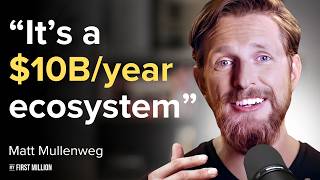
I think the way I'd put it is WordPress is almost like kind of the dark matter of the web. So, you know, when you build like a list of like what's the top website You know, we're not going to show up. I mean, WordPress.com will be in the top 100 or whatever, but like, uh, uh, the beauty of it is that, you know, the ecosystem of WordPress is probably like $10 billion a year at least, you know, um, of revenue. Now my company Automatic is, you know, 5% of that, uh, but if you add up all the companies and all the people, I'm not even counting like all the stuff that you talked about, like people selling things on WooCommerce, which we know is like, I think last year was over $30 billion of goods and services sold through WooCommerce. But actually more than half of Automattic's revenue comes from things that aren't just WordPress. So we have a variety of different businesses, some really cool mobile apps like Day One or Pocket Cast, a new one called Beeper.
What were like the top 2 acquisitions, right? Like even Buffett, for example, if you study Buffett's portfolio, it's like a huge amount of the gains came from like a couple of like really key acquisitions at key time, right? See's Candy at a specific time is given them over $1 billion, I think, of free cash flow over the years.
And what's the, what's the revenue number that you could say the whole company does?
We've publicly stated we're over half a billion in revenue now.
Okay, got it. All right. So yeah, to answer Sean's question, what brings it or what's been the surprising thing?
What are like the crown jewel, like best acquisitions that you feel proud of?
Our most successful is probably WooCommerce. And so this came a lot from WordPress as a platform. And so I did a lot of study of platform. And so that led me to do a lot of deep reading on Microsoft, actually. And it was funny, like, if you look at some of the press around Windows 95 coming out, they talked about how for every dollar that Microsoft made from Windows, there was $20 made by the Word— Windows ecosystem. By the way, that ratio is similar to what I talked about earlier, where Automattic makes about 5% of the money in the WordPress ecosystem. Um, so I sort of found that platforms often do this. They create a lot more value, a true platform.
Have you heard that story of Bill Gates talking about the, uh, when he meets Mark Zuckerberg, he talks about the Facebook platform? Have you heard this? There's like a quote I remember reading, which was like, Gates was like, this is not a platform. He goes, a platform is when the companies built on top of it generate far more value than the, the host platform. Whereas the Facebook platform at the time was like, Facebook was this gargantuan thing. All the small things on top. And Facebook was just sucking a lot of the value back in. And he, he kind of famously was like, that's not what a platform is.
I would agree with that assessment. And, and also, that's not a platform which now a lot of businesses are built on. And there were some that sort of came up in the early days, like Zynga or whatever, but like, or Spotify even, but it's now not something that like every business is built on because you can get rug pulled, right? Like a not true platform, they might give you some distribution early on when you align with their interests, but then they can easily pull the rug on you, which I think Facebook ended up doing to a number of companies. So yeah, I wanted to build a true platform. But of course, Microsoft famously had Microsoft Office. So they had an application built on top of Windows, which ended up being very lucrative. So it was like, what's going to be, you know, I have this platform WordPress, which is now becoming like an operating system for the web. We were obsessed about backwards compatibility and auto-updates and things like that, learning a lot from successful operating systems in the past. What's our Microsoft Office? And that ended up being WooCommerce, which was a sort of small company, like I think 40 people based out of South Africa, a plugin for WordPress. It actually started as a theme company. It's called WooThemes. They developed this, actually a fork of another open source e-commerce thing. And they started doing it just to sell more themes because themes were kind of the big business for WordPress at the time. And this e-commerce plugin took off a bit. Actually, we looked at buying it years prior, but the, you know, candidly, the code was really crappy. And so we were like, oh, this is like really crappy code. We're, you know, Automattic's very much like an engineering-led, like, technology R&D company. So we're like, oh, this is— but it just kept taking off because they did such a good job, like, building something people want. So even though the code wasn't scalable, well organized, they built something, they were really great at that product market fit, so WooCommerce was taking off, and so that was an early acquisition that we did. Funnily enough, the competitor there was, there was some private equity that was trying to buy this plugin, so we kind of won over the private equity because they wanted to join our culture and everything like that, and Woo, like I said, at the time it was 40 people, pretty small, they only had like 4 engineers, by the way. So a lot of those people were like customer support or other things. We were able to take what we were really great at, which is like engineering, scalability, all that sort of stuff, and apply it to what they had done really brilliantly, which is like create this thing that people love to use. And that's, like I said, I think last year did over $30 billion of goods and services sold. So that's definitely one of our best acquisitions that we've done. But I will say that e-commerce is an incredibly competitive space. And, you know, we're blessed to have an incredible competitor in Shopify, which is a company I have a ton of respect for, you know, the founders and entrepreneurs and the whole thing. They're actually a really, really great company. So, you know, Tobi and I think have a lot of mutual respect for each other and, you know, drive each other to be better.
So do you look at that? This is again, like, we're kind of giving you a compliment and an insult at the same time. So the backhanded compliment is in full effect here. So on one hand, we're saying, oh my God, there's 43% of the internet uses WordPress or, you know, y'all's products. There's 500 million websites using WordPress. Like that is just such a mind-boggling number. And so on one hand, that's absolutely incredible. And on the other hand, Sam was saying, are you the most like undermonetized? Given that, are you the most undermonetized? Because you look at like a Shopify, Shopify alone right now market cap is $150 billion. So one could say, the ruthless capitalist could say, Matt, you're doing all this work. Your whole company, including WooCommerce and all this stuff is going to be worth several billion dollars, but the closed source Shopify alt, like variant of the e-commerce side is worth $150 billion. Like what should I take away from that? And what do you take away from that? What meaning do you put on that?
There's definitely some things that are easier in a proprietary sort of closed ecosystem software model. You know, it's easier to, you know, Shopify is really great at forcing people to use their payments, for example. And WooCommerce, you know, you can use ours, but you can also use a lot of other stuff. I think their sort of average revenue per subscriber is like 10x what WooCommerce's is. How I think about it is very much sort of short-term versus long-term. So one, we have this philosophy of open source, which is, you know, I want all of the work I do, all of my creative output, to increase the amount of freedom and liberty in the world. It's just something I believe very morally. So that's why I've dedicated my life to open source, because open source software, you know, you sort of have a Bill of Rights attached to it. The freedom to use the software for any purpose, to see how it works, to modify it, to redistribute its modifications, the 4 freedoms of the GPL. And to me, that's a moral decision. You know, that is the software I create, I want not to have a proprietary license. Shopify is amazing. If Shopify changed their policies tomorrow, their customers are stuck with it. You know, they have no recourse, they're under a proprietary license. Where with open source, you know, we could change our policies tomorrow. I could become evil or whatever, and Automattic could be, you know, sell or be a terrible company. You would still own all the code. WordPress, WooCommerce, etc. belong just as much to you as they do to me. And that sort of freedom and liberty is, I think, better in the long term. So I'd say open source has a slow burn. So it often is kind of slower to start up, but then over time it builds sort of this compounding momentum that is a bit unstoppable and does two things. One, it can be very successful on its own, right, as WordPress has, you know, it's 10x the number two in the market. But two, one great thing it does is it forces the proprietary folks to be a bit more open. So I use proprietary stuff myself, a lot of Apple things are proprietary, and I, you know, I really love their products. I think Apple is probably a bit more open than they would be otherwise because Android exists, right? There's an open competitor, which is, by the way, open source. And so that kind of influences the market. So even if we don't make as much money as Shopify or don't have the market share of Shopify in the e-commerce space yet, although, you know, check in in 10, 20 years, let's see where we are. That we force the proprietary folks to be a bit more open with how they do things.
The short answer there is basically, I do it because that's what I believe. I believe in open source. I just believe that the moral decision comes first. And secondly, in the long run, let's see. In the long run, we'll see. Is that a good summary?
Proprietary— it's just as easy to have a failure of a proprietary company as it is an open source one. So I think, you know, being proprietary or open source is which is a little bit orthogonal, are not causal to whether you're a successful product or not. And so people get really attached to it. But I would say in the short term, it's definitely usually a bit easier to monetize a purely proprietary stack. But over the long term, you can create a much, much bigger thing if you have this kind of flywheel of an open source community adoption, etc. Innovation, you know, a ton of innovation happens with open source.
By the way, Sam, isn't it nuts that— so Matt is clearly like this thoughtful, almost like soulful entrepreneur who is— has been building this thing since he was literally like a kid, 19 years old.
Like a guy you'd call wise when he was 21.
Yeah, exactly. Like, oh, he's an old soul type of thing. Works on open source software. Like you said, it's widely used. It's like almost free. It's so, so cost, uh, so affordable. It's so like only good. All I hear is like only good. And then you had this like random villain arc that people tried to paint on you in the last, you know, year with this like drama that's going on. I couldn't believe it. I was like, if I was gonna put money on who's like the least drama-attracting founder, it might've been you. Um, so I thought that was nuts. Sam, quick, your reaction to that real quick, and then I wanna hear Matt's thoughts on it.
So I didn't follow it too much. I'm a WordPress user, but I just, and I'm friends with Jason Cohen, uh, of WP Engine. You guys had a, a fight, but I was actually shocked, Matt. I thought that some of the stuff that you said, I was shocked. You like, you were, you were, people were insulting you and you felt like insulted them back. And I didn't, and I was like, I was like, I've read a lot about Matt's work. I don't know Matt and I've listened to him. He doesn't seem like someone who would ever like insult someone. And I was actually surprised that you were going as hard as you were. And I guess your perspective is like, they're coming after everything I made or they don't contribute, whatever. But I was actually surprised that you were pissed off. And I didn't think that you would be the type of guy that would come off pissed off.
You know, a failure mode and a thing that can kill many open source projects is when they get taken advantage of. And so just like a schoolyard bully, like you kind of have to stand up for yourself. And so it's kind of funny because you say you don't think of me of doing this, but actually if you look at the history of WordPress, there has been maybe 4 or 5 times in the history where I had this kind of villain arc. People were like, we had a fight to protect like our principles and like the sustainability and like the future of WordPress.
Can you give the 1-minute summary of what happened? Because I even half followed it, and I'm sure there's a bunch of people listening that don't even know what we're talking about. Could you give like the 1 minute and try to be objective with this, like, like, not, not just the your side of the story, but what, what happened? Can you explain?
You know, it's an ongoing legal battle, so I can only say so much. But, um, basically there's a company called WP Engine. Started off like very positive in the community. Jason Cohen, I think, is awesome, by the way. Um, but in 2019, they were bought by a private equity firm called Silver Lake. And so over the subsequent 5 years, started becoming, I would say, more parasitic of WordPress. Also creating with how they were marketing themselves and branding themselves a lot of confusion in the marketplace in a way that was threatening our trademark, you know, the WordPress trademark. So people would sort of say, oh, it's WordPress Engine, and they wouldn't correct them, and they would think it was official. I even had very close friends who were WP Engine customers who thought that was my company. And I would frequently get support requests for WP Engine, like, my site's down and things like that. And, you know, for a long period of time, and, you know, 2 years prior to this fight started, you know, just doing our best to partner with them and resolve all these things and resolve the trademark stuff. And they just weren't responding.
Basically WP Engine is a web hosting service, mostly, or maybe only for WordPress sites. And, uh, the accusation I believe was that you felt they weren't contributing to the project as much as they should have been given that they make like a lot of money. And also there was a trademark, uh, people confused the two companies.
On the contribution thing, is that like, is I guess like, what's your leg to stand on on that? You know, for example, you know, like Does somebody have to contribute? Is that like a rule or is that a suggestion, right? Is this like you're at church, you should put something in the tray, but you don't have to technically, but you're— it's frowned upon? Like, what is the take there?
So WordPress, we do have this program we call Five for the Future. By the way, this is all voluntary. It's open source license. You don't have to do anything. You do whatever you want. But we say that if you're building a business on WordPress, If you can allocate somewhere between 1% and 5%—
Profit or revenue?
It doesn't matter. However you want to define it. It could be time, it could be hours, it could be whatever. But put that back into what we call core, core WordPress, which is something that belongs in the open source project. So it's accessible to everyone. It doesn't just benefit your company. That's part of what's made us so sustainable and allowed us to be a open source project which has really thrived more than, you know, some of, you know, other great CMSs that were open source that came up at the same time like Joomla or Drupal or something like that, which haven't had as much success as us. By the way, I think this is great self-interest as well. And WP Engine is fairly unique in that pretty much every other company in the WordPress ecosystem does this quite a bit. And in fact, if you look at old versions of WP Engine's website, they were very supportive of this and actually even say on their website they would dedicate 2 or 4 full-time people and everything like that. Fast forward to 2024, they had less than that on Core. So I think that's a whole like sustainability, health of the ecosystem, health of the product issue. It's not a legal issue. At all. The trademark abuse of not just the WordPress but also the WooCommerce trademark. So you could argue that WordPress, WP, whatever, but like they're also using the WooCommerce trademark, which is fully owned by Automattic. You have to protect that. If you don't protect your trademarks, you lose them. And so we're having discussions around that. We have trademark licenses with other web hosts. We have great relations with every other, and they're, they're just a web host. They're not a tech company. They don't really create a lot of IP. and they're a web host which people think is the largest, but they're actually, you know, probably the 6th or 7th largest WordPress web host. There's a lot of bigger ones, and, uh, they're a single-digit percentage of all the WordPresses in the world. You know, they probably have like 700,000, 800,000 or something. So people have made this into a bigger deal than it is. I, you know, some of these previous controversies that got mainstream media coverage, as you know, CNN I had this hot nacho scandal in the first couple of years of WordPress or a thesis fight or the Easter Massacre of themes. Like all these things I'm mentioning, you probably haven't heard of. It used to be like half my Wikipedia page. Now it's not. Today, if you go to my Wikipedia page, you know, their PR firm has a whole paragraph about this. I think in 5 years, maybe it'll be a sentence or not even out there at all. So it's not my first rodeo. Sometimes you have to fight to protect your open source ideals and the community and your trademark, by the way. But, you know, I expect this to resolve in the next few months. And now they're the sort of— although it's easy to find, like, if you go on Reddit or Twitter, I get a lot of hate.
A lot of people were pissed at you. I tweeted out that you were coming on to the pod yesterday. There was a lot of angry people. And I was a little surprised by that, to be honest.
Yeah. And, you know, some of the people are uncomfortable with us having to fight to protect ourselves. WP Engine took some very aggressive legal action. So it turned out when we thought we were sort of good faith negotiating, they were preparing a legal case to attack us because 3 days after I gave this presentation, they launched this huge lawsuit with Quinn Emanuel. It's kind of like one of the biggest, nastiest law firms. And private equity is so famously like goes in, hollows out businesses, extracts all the value, kind of kills it. There's this crazy story. I don't know if you saw it recently where one of the reasons there was shortages of fire trucks in LA was the fire truck manufacturers have been rolled up by private equity. They've been jacking the prices and that was like huge waiting list for new fire trucks and fire truck repairs. There's lots of examples. Not all private equity is bad. There's good investors and bad investors in every asset class.
Look, I didn't follow the story. In depth. I didn't need to. I'm not a lawyer, don't need to be. It's common sense to me. Uh, who, whose side am I going to be on? The, the private equity-backed company that's, that, you know, sounds almost like it's made by the, by you guys, but it's not? Or the founder who's been working on this for like, you know, 20-plus years of his life, open-sourced it, is, you know, used by everybody, it's kind of like a staple of the internet, and, you know, captures like a tiny bit of the value along the way? It was, it was pretty obvious to me, you know, which side I was gonna, gonna come down on. So I think it was, it was actually a common sense test, I think, for most people. And I can't believe how many people are like, you know, on the PE side. It actually reminds me a little bit of like the AI stuff right now.
Wait, Sean, we did a whole podcast about the founder of this PE firm though, and how like fascinated, fascinated we were with him.
We do profiles on ruthless killers and then we're at the end, we're like, isn't that awesome? I'm like, yeah. Do you want to be that way? Hell no. Like, that's not me. But like, I'm glad that these people exist. Like, you need all these people in an ecosystem. Like, it's not— they're not all bad. And there's impressive things about how— I think his name was Egan Durban or whatever. Like, I think that's the guy that we talked about. You know, it's impressive in the same way that David Goggins is impressive, but I'm not going to go out there and run until my toenails bleed. Like, I like that he exists. That doesn't mean I want to be like him or even that I think that's the right thing for most people to do.
I think it was on, uh, uh, on your blog. It could have been on the Tim Ferriss podcast. You wrote about how, um, I think WordPress or Automattic has like roughly 2,000 people. Uh, and I think you wrote about how you tried a bunch of different ways to hire people. You like did all these tests like Google does, like these like brain teasers, and you tried a bunch of other stuff. And you said two interesting things that stood out. You said, um, uh, what I found is that, uh, the people who are the best writers oftentimes are the best people who we hire, not PhDs, not master's degrees. It was a correlation between your ability to write and communicate via the written word. And then the second thing you said that was pretty wild, you said you now, or you used to hire people just by like emailing or texting, like it was like just through chat, not ever face-to-face, not phone calls, things like that. Do you still hire people strictly through text communication?
Yeah, for some roles we might do a Zoom. If it's a sales role or something like that, you know, obviously it's important to see how someone interacts. But basically, you know, for a lot of our roles, you know, written communication is going to be the primary thing. But also, like, people want to talk to someone, like, we're not going to be like, no, you can't. But yeah, a lot of our hiring process can be completely asynchronous and completely text-based. And for the first 1,000 or so hires, I did a final chat for every single person.
Is your chat like Slack or Gchatting or something?
Yeah, it ended up being on Slack when Slack was invented. You know, before that, I think it was on like Skype or AIM or something, you know, in the early days, or IRC.
I think the way you said it was, uh, we do auditions, not interviews. So what does that mean? How do you do auditions?
Well, we do a trial project. So we actually hire people on a standard sort of $25 an hour contract, and so we pay them to do, you know, we have screens with, you know, resumes and a little interview and stuff, but then we say like, let's actually do some work together. And there's various versions of this for different roles. We've done sandbox versions. We've also done it where they were actually talking to real customers, you know, like a support person was actually like answering real tickets. We've always been smaller than a lot of the big tech, but we compete with them, and so we need to have like the same caliber or better of talent. So part of, I think, Automattic's advantage is we've created an environment and also sort of a way of hiring that finds people who might be overlooked by sort of a Meta or Google or something like that. And we give them an opportunity not just to be hired, but also to participate in a company in a way that they can still be just as influential and have as much impact. Because even like, you know, there's other companies that might have remote workers, but if you're not at headquarters, you're not going to be close to the sun, you're not going to be next to the CEO, you're not going to be able to grow or have an impact. But we've tried to create it where our center of gravity, our headquarters, is really on the internet. I have colleagues in 90 countries. 90. Even though we're only 750 people. Another sort of innovative thing we do, we didn't do this in the beginning, but we moved to it probably in 2012, 2013. Is we pay people the same salaries regardless of location. So it's kind of funny because with all the like the equality, DEI stuff, whatever, so much of it I feel like is virtue signaling. Because if you ask these companies and say like, hey, you know, I'm not going to call anyone out by name, but let's say big tech company, do you pay someone in Pakistan the same that you pay them in California? Usually the answer is no. If they're doing the same job, you know, the same like code wrangler, engineer, or whatever like that. And they usually say no, and they usually have some reason like cost of living or local markets or whatever. But we sort of moved to where we said, "Hey, same work, same pay." It's kind of something that, you know, the past 100 years, that wasn't always true for men and women even, or racial things or something like that. So I think the same moral reasons why you say like same work for same pay of people of different skin colors or something like that, within a country, I think you should do that globally. And I think that's the future of work, actually, because to the extent that you can be equally as valuable and generate as much value for a customer wherever you are, you should receive equal pay for equal work.
Have you guys read American Kingpin, the story of Ross Ulbricht, the Silk Road? Have you read that, Matt?
I think I've read some of the long-form Wired articles, but I've never read the whole book. Yeah.
Oh, you got to read this book, man. I'm rereading it now because he just got released and it's like the best book I've ever read. It's like a total page-turner. The story of it for listeners, basically Ross Ulbricht was accused, and I think he did it, where he started Silk Road, which was eBay for drugs. In 2 years, it did like $2 billion in sales, gross sales, something like that. But what's crazy is like, it kind of sucks because this whole business was documented because he chatted with everyone. Like, he had 12 coworkers and he did two things that were interesting that I actually think are going to be common. The first thing is that he obviously, because it was an illegal enterprise, he never— they didn't, they didn't know the identity of the workers. It was just like their username. Like one guy's name was like Chronic Pain. That was his username. So he just— he didn't know this guy's real name. He just knew Chronic Pain as like the guy.
Ross knew everybody's name. They didn't know each other's names or his. He made them send a license so that he could basically have that, like, you know, uh, always have that in his back pocket, have leverage.
But Chronic Pain didn't know Ross's, uh, yeah, sorry, I forgot that was actually an important detail.
That's actually very similar to like early hacker culture. You know, everyone was sort of known by their username.
There's like interesting merits to that. And then the other thing was that they only communicated via messaging. And I was reading this book, I'm rereading it now. And I was like, those two attributes are kind of interesting for a company. Which is like, uh, like anonymous workers. And but you're still oddly friends. Like, he developed relationships with his coworkers.
This is a great LinkedIn post for you, Sam. Like, 13 management lessons I learned from the Silk Road. Here you go.
I believe that he did murder for hire 4 times. He did a lot of bad shit, but he was actually an inspiring leader. Like, when you read like some of his like, like stuff.
Well, he was very idealistic, right? Like, he had certain beliefs that drove him, right? He didn't intend— like, he didn't necessarily intend— like, for example, he wasn't super interested in selling guns on the platform, but he believed that people should be able to sell what they want. And therefore— and his team was like, no, no, you shouldn't do this. This is going to increase the target on our back. Like, you're cool with the drug side, but you don't care about this. So let's just ban it. It's going to cause problems. And he was like, well, no, that's not the ethos of what we're doing. Like, we wrote a creed of what we stand for and why we're doing this, and therefore we got to stand by it.
And they called him Captain. You know, it was very much just like, uh, like, uh, we are revolutionizing thing. And that's like a really interesting thing.
Matt has a, uh, you don't get called Captain, but what is your like benevolent dictator for life, right? Uh, BDFL.
It's a term in open source that's applied to like Linus at Linux or Guido at Python or something like that. David Hyman or Hanson at Rails. Um, but it's, it's sort of a joking thing and one that I think none of us like really attach ourselves to. Uh, just kind of like an internet lore thing.
Well, you do a couple other interesting things, right? Because you got this like multi-billion dollar company used by most of the internet, but you run your company in these interesting ways where remote work, I think, is— you're famously were early and heavy into remote work, and you've talked a lot about that. But you do a couple other interesting things. So we talked about auditions instead of interviews, but you also do, um, everybody in the company including yourself works customer support, I think, one or two weeks out of the year. Can you talk about that one?
Yeah, part of our hiring process is your first 2 weeks are doing customer support for every single hire, whether you're like our new CFO or Chief Legal Officer or whatever role it is. So, and then once a week a year you rotate back into doing customer support. Gosh, by the way, lots of companies have versions of this, so it's definitely not, you know, we weren't the first to do this or anything like that.
Why should a company do that?
If you look at every successful business, the closer they are to customers, generally the more successful they are. And so it's very easy, especially when you're running something on the internet and distributed, for people to become numbers or stats or something on your Looker dashboard or something like that. And so getting back to every individual, every number of your signups, you might have 5,000 signups in a day. But each one of those people is like, has a story. You just learn a lot about your product. And it's, I think, the best way to sort of do iterative customer development. I think Eric Ries talked about this or Steve Blank, you know, the kind of like get out of the office and go meet the customers. And I'm very inspired by like leaders at Salesforce, talk to Marc Benioff or someone like that. They'll typically spend a quarter to a third of their time with customers. Even at that scale.
Is there a story or any epiphany you had from doing this? You've probably done this now, you know, for decades. So is there like an insight that came from this?
Just the other day, a few days ago, I spent like 30-45 minutes with the gentleman who kind of checks expenses at the company. You know, because we have like these ramp cards and people expense things and stuff like that. Sometimes we say, you need a receipt for this, or we question an expense. I just wanted to understand more about this and also make sure that the way we were doing this was—
The most hated man at the company, by the way.
Well, I had gotten some feedback from folks. They felt some of the questions they were getting felt a little aggressive. And so we want to talk about— one, I just kind of want to see the tools he used and how the work did and stuff like that. So some of that was just shadowing. So I was like, okay, because I want to understand the interfaces. This was also really helpful, like going through support. I realized that some of our internal tools don't represent best practices in design or usability. Sometimes the internal stuff doesn't get the love that your external stuff does. But then also, we just sort of talked about the culture of Automatic, bedside manner, if you will. How can we hold these principles. We need to really enforce our policies and make sure we do. We get audited and everything. So we need to have these things from a good accounting principles point of view, but also doing it in a way that when we have these conversations, we're talking about the principles of it and the reason why. So it's not just like I'm giving you, Sean, a hard time because you didn't have a receipt, but like, hey, if we don't have this receipt, you know, our, our, you know, external audit firm might question this. And then, you know, that might create an issue for XYZ or something like that.
When I first moved to Silicon Valley, I came to work with this guy, Michael Birch, and he was, he represented everything I wanted. He had already built like successful tech companies and he had made it. And I was a 23-year-old kid who wanted to make it. And so I'm super excited to go into the work the first day. And I'm like, I'm going to learn so much from this guy because he'd not just done it one time. He's built like 4 successful companies. And so I, I'm ready for him to teach me kind of like the dark arts. I'm like, what's the strategies, the growth hacks? What this like super like high-level strategic thinking? And the very first week he puts me on, um, not the new shit, like the oldest company that he had started, something he started back in 2001.
Was it like Birthday Calendar or something? Or—
Yeah, Birthday Alarm.
Is that still going? Birthday Alarm?
Still going. And so I, as like 25-year-old company now, so I, At the time I was like, oh man, like I gotta do this, like whatever. And he tells me the story. So I actually learned this really valuable lesson in it. I go, so what's the, I got curious because instead of just like being bored at doing like Birthday Alarm, which, you know, seemed like this old outdated product at the time, I got a little curious. So I started asking him like, where did this come from? Like, how did you even come up with this idea? Why did you build this product? And what he told me was, he goes, my very first startup, I had quit my job. I wanted to like, build a successful tech company, like do an internet company. Internet was like the new thing back in '99, 2000. And he quit a high-paying insurance job while his wife was pregnant and was like, I'm gonna make it. So he tried to create something really fancy. So he's like, oh, with the internet, he tried to create something that many people have tried, like Sean Parker tried to create this, a self-updating address book, which is like, you know, I have your information, I have your name, your address, but you move, Matt. Now I don't know that you moved. So wouldn't it be cool if you could just Update your info in one place and it updated in all your friends' address books. So we now have your latest and greatest address. So that's what he wanted to build. And he's spending like 9 months heads down, like doesn't leave the bedroom coding this thing and it's not really going anywhere. But because he was a one-man show, he was also doing, you know, he was the designer, he was the developer, he was the ops guy, he was the customer service guy. Like he did all of it. And he was like, it's the customer service that was actually the key because he was answering support tickets and he's like over and over again, He's like, I spent like, you know, 7 hours a day banging my head against the wall trying to figure out why nobody wants to use our product. I think it's so cool, but nobody wants it. And then in the hour I was doing customer support, he's like, I noticed that a bunch of people kept thanking me for the birthday reminder feature I had built in. Like just the one feature, which was like a throwaway idea, which was just if, you know, forget the address. If it was someone's birthday, I would just tell you, you know, hey, it's their birthday today. Remember that? And this is before Facebook existed, right? So you didn't have Facebook or a bunch of other ways that people could do this. So he just threw away the whole product and renamed the company birthdayalarm.com. And he's like, I expected to go nowhere. And that was the thing that took off. And, you know, at that time, Birthday Alarm had generated for him and his wife personally, like probably $20 million of pure profit by that time because it was just every year was just generating a few million dollars of profit. And it's still to this day generating a few million dollars a year of profit. Like it's this incredible business. It's just the gift that keeps on giving that only came because he was answering the support tickets and he got curious like, huh, like why do they keep talking about this birthday reminder thing? Is that, is that actually, maybe I should do that. And he did it on a, on a whim. And then in 2 days had built the product that actually people wanted, you know.
That's awesome.
I have one last question for you and it's on AI. So there's a lot of stuff you could talk about with AI, but I just, I'm curious on your quick take about Deepseek because it's also, you know, they came out with this open source thing that there's a lot of people on either side of how much they believe about the story. But what's your quick reaction to what you saw with Deepseek?
Deepseek is a really cool model. So every model has a kind of a vibe and the way it's tuned and everything like that. And so it's a really fun one to play with. And I would say, the thing I tell people with all this AI stuff, just use it, play with it, because it's such early days. And there's kind of a the way to prompt it, the way to interact with it, there's a skill there that you'll learn. And the vibes of the DeepSeq model are very cool. I think what I'm most excited about as an open source guy is that they actually open sourced the model, wrote really amazing papers about how they built it, and they opened weights. So, for example, at my company, I would say don't use like Deepseek.com, you know, for various reasons. That's hosted in China and stuff like that. But like, we can run the model ourselves, you know, locally, and that's pretty cool. Or you can get it through Perplexity, which is hosted in the US. So like, there's lots of ways to access it. And it's a really fun model. So all these models are like good at different things. They have a coding version. They just released a cool image thing. And so, like, think of these as like little entities that you can interact with and run and spin up and boot. And you should just learn the nuances and kind of flavors of each one.
Matt, do you guys actually believe that they've only taken the amount of funding that they've said? Didn't they say something like $5 or $10 million?
They said that's what it costs to run the final training.
That might be true for like some something. But obviously, like, I'm sure they've spent, invested a ton in other things. So, and I know there's kind of this theory that maybe that's like a PR or psyop or whatever like that.
When I started reading about them, I got fearful. It was pretty insane, right, that the market reacted the way it did, that, you know, it wiped out $1 trillion of value in 24 hours. It was pretty wild how big that announcement was. I didn't think, I didn't think that was going to happen. And I think you called it, Matt, didn't you like tweet about this during Christmas time?
Well, Andrej Karpathy, you know, so full credit, like tweeted about this like the day after Christmas, and I saw his tweet and retweeted it. So that's when I first learned about DeepSeq and started playing with it. But yeah, I think that with all these things, there's some You can verify all the things. They made some amazing advancements in how they train things and how they run things and how they did memory interconnects and working within constraints. They had some really cool engineering breakthroughs and they shared it. And this is stuff that I think OpenAI had also figured out, but they hadn't shared it publicly. And so what I love about the DeepSeq guys is they're open sourcing it all. And it's all available under a true open source license. It's not like the Llama license where it's free until you have 700 million users or something, or I think Qwin, Alibaba one, which is also a really great model that people are sleeping on. So check out Qwin and some of these other models coming out of China. They're really, really good. But it's a true open source license. So.
That's awesome. Matt, thanks for coming on, man. It's good to see you again. And thanks for, thanks for sharing everything you did about WordPress.
It's been a pleasure.
Yeah, we appreciate you, man.
All right.
That's the pod.










