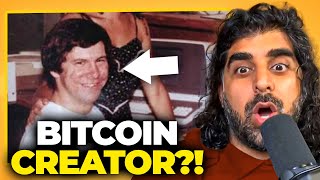
In this informal YouTube conversation, Sam Parr and a guest explore the controversy surrounding Craig Wright’s claim to be Satoshi Nakamoto. They outline the Kleinman v. Wright lawsuit, where a jury ruled that Wright’s former partner’s estate was not entitled to a share of the alleged Satoshi fortune, while awarding $100 million to the estate for alleged misuse of funds. The discussion references Vitalik Buterin’s public criticism, which argues that Wright could easily prove his claim by signing a message with Satoshi’s early wallets—a step Wright has never taken. The speakers then shift to the leading alternative theory that Hal Finney, a pioneering cryptographer who received the first Bitcoin transaction and died of ALS around the time Satoshi vanished, is the most plausible Satoshi. They speculate on the fate of Satoshi’s untouched early coins, possible inheritance scenarios involving Finney’s wife, and the broader implications of a known creator for Bitcoin’s decentralization. The conversation ends with both participants expressing interest in producing a deeper research episode on the topic, while briefly touching on the Silk Road case.
Chapters
So recently, this Bitcoin thing, Craig Wright— I don't know much about it other than like one article I read. I guess he's an Australian guy and he was being sued by this person who wanted a share of the money for— what's the story?
I don't know about his lawsuit, but I know about Craig Wright and that he basically for a long time has been claiming to be Satoshi Nakamoto. So, well, so he claims to be the creator of Bitcoin, and then people who are smart in the community are like, there's no fucking way.
So people— but this lawsuit, basically he's being sued sued by the spouse of someone. This man, this Craig Wright, had a partner. The partner died, and the spouse of the partner sued Craig Wright, and Craig Wright won the lawsuit. And in winning, for what, uh, she said that you owe me money because of this reason and that reason. We created this, you and my husband created this thing together, you owe us some money. And in winning, I forget exactly how it worked, but in winning the case, the jurors said, well, no, you're Satoshi and you worked on this alone. And so, uh, like in order for him to win in a weird— I don't know the exact details, but in order for him to win, they were basically saying, yes, we believe you're Satoshi and Satoshi worked alone.
So, okay, here's the, here's the story. So, uh, Kleinman versus Wright, uh, the jury ruled that David Kleinman's relationship to Craig Wright did not constitute a business partnership, meaning the estate was not entitled to a share of the Satoshi Nakamoto fortune. Which Wright claims to have control over as the self-reported creator of Bitcoin. The jury ruled against Wright on the conversion count, awarding $100 million to Kleinman. What? Ruled against Wright? Yeah. So they got $100 million out of it?
I don't know, because I thought he was celebrating. It was a little confusing. But the point was, is that this legal team—
Okay, they wanted billions. They didn't get that. But they got $100 million against him for the unauthorized use of funds from Kleiman Wright's shared venture W&K Info Defense Research LLC. Okay, I don't— this is from something else.
So did— is this guy the guy who started it? That's what I want to know.
So basically, um, so he claims to have invented Bitcoin. Then, um, there's a great clip, by the way, of Vitalik Buterin, the creator of Ethereum, uh, co-creator of Ethereum, uh, on stage. And he goes, uh, there's— they were talking about it, and usually people like, you know, like in a conference panel, people are usually pretty like, you know, they don't take shots at people like live there. And he just, he just pipes up because you want to know what I think? And they're like, yes, we'd love to know what you think. He goes, he goes, um, he gives this like quick like 2-minute rant that just destroys Craig Wright where he's like, I think if you're the creator of Bitcoin, you have a very— and everybody was saying you're not and you keep trying to tell people you are. All you have to do is one simple thing. You just have to sign something with Satoshi's wallet, and that will just show that you're him. And the fact that you're not doing that, like, you know, he calls some, like, some, like, you know, Occam's razor or whatever, like, just some term like that. He's like, the simplest explanation here is that you're not Satoshi, because if you have a simple way to prove your claim and you do not prove your claim using the simple way, you cannot prove your claim. And so he kind of just, like, shit on him right there.
So who—
crowd went wild.
So who is this? You think that— is he— he's died, or he's still quiet?
Um, the best theory is that it's, uh, that it's this guy Hal. I forgot what his name is. Hal, uh, Hal Finney. Um, this was, so Hal Finney was like a cryptographer. He received the first Bitcoin transaction. He was the, like the second wallet. And normally, like, what does a developer do when they test something? There's like, oh, I sent it from like Sean A to Sean B, like my test account, basically. Like that's how I do the first transaction. And he was like very active in the forums, and then he died right around the time— he got ALS and died around the time that the last known time that Satoshi ever posted anything. So, you know, it seems like—
why wouldn't he tell? Do you think he— why wouldn't he like tell his wife or his family, or, you know, like, because it looks like he has a wife on these pictures?
Yeah, well, A, maybe he did, and B, like, you know, some people are so mission-driven in their thing and their thinking and like, you know, there was a, there's a real genius of the idea of being like, I'm going to have this as a pseudonymous name, Satoshi Nakamoto, not going to use my real name, which means I'll never get the credit for being a genius if this works. But also it like, it's kind of like the parent dies so the child can survive. It's like the only way a currency like this could have really worked is if you couldn't point to the creator, because then they would just attack the creator. They would say the creator has too much. They'd say this guy has ulterior motives, he has control, he is— he's too powerful to, you know, he's just the new, the new bad guy, you know. Okay, you're bad at the Federal Reserve and the governments, uh, yeah, now you're bad at this guy for, for a private citizen being in control of this.
So you think this is him?
I personally think it's him. Um, like, I've looked into a couple times about like what— who are the most likely candidates You know, is it a group of people? Was it the government themselves? Was it one person? And it does seem like it was— like, you know, I guess like I shouldn't say it does seem like it. There's really no evidence of the existing evidence that's there. This is kind of like speculative data points you have. Hal Finney fits the story in my worldview the best, so I think it's him.
God, that's— I love these mysteries. I, I—
which would mean that it's, it's sort of gone. Like his coins are locked up.
Um, unless he gave them to his wife, unless he gave her the keys.
Uh, and like, you know, and she— and told her don't touch it because it hasn't moved. No, not a single coin has moved, uh, ever. And, um, you know, I think if he did it, let's say he did give her instructions, how would I give instructions? I would say, um, I would probably not actually let her have it. I would say this file is going to be available to you on this date. 20 years from now. And I would say, follow the instructions inside. So I wouldn't even give her the opportunity to make a bad decision because I would say if these move before Bitcoin wins, then it'll be, this will be very destructive for it. If the creator of Bitcoin starts to sell Bitcoin, that will trigger a huge sell-off in the market because it'll be like, oh, the creator's alive. They don't believe they're selling their coins. Who is it? It'll create this whole drama. It'll hurt the project.
But has any money ever left his account?
No, not a single Satoshi has ever left his account.
So then he would have had to have created a different account for her to live on or something.
Yeah, which could have easily happened, right? You know, at some point. But I, you know, people can also see the ledger, so they know who all Satoshi sent the— they know which wallets Satoshi sent coins to. And some of them are like known identities, like the other people that were in this like crypto, like the Cypherpunk community that wanted to test out the project early on. But like, you know, he very easily could have just had her set up mining, a mining rig, so it didn't even have to come from his account. He could just say— because he didn't give himself the coins, he mined the coins. Sure. It's just that mining was so easy at that time. So, you know, she could be miner number 8, you know, that mined some coins and that's it.
That's— she can live off that.
Yeah.
God, how—
well, we should see like, you know, how's Phineas— what— how's she living? Is she like in a and a $40 million home in Venice.
I don't even know if he— I mean, there's a woman with all these pictures with him, like, it looks like a wife. I don't even know anything about her. I just Googled. It doesn't say anything about the Wikipedia about his wife. But oh yeah, his wife raised— yeah, so he does have a wife. Yeah, I'd be curious. I'm looking at pictures of his house when he's dying, like pictures of him dying, and he's in his home. It does not look fancy.
Yeah. Yeah, also ALS just looks so brutal, man.
Yeah, it feels like the worst.
Completely debilitated. That's really tough.
Yeah, so anyway, that's fascinating. We should do like an entire episode on that. That's— this shit is so interesting to me.
Yeah, I agree. We should, we should just do the research of like, okay, what is all the research that's out there? And like, what's the conclusion? I think people are— I'm fascinated by like this story. I think it's one of the coolest fucking out of— straight out of a movie, but it's actually real life things that has ever happened.
You know, I like that and Silk Road, but I think the Silk Road case is far more cut and dry than anyone thinks. I think Ross did it. I think Ross did everything right.