In this Hustle Con 2017 interview, Jen Rubio, founder of Away, explains how she turned a mundane luggage market into a coveted lifestyle brand. She describes the origin story—personal frustration with broken luggage, consumer research, and the decision to create a single, thoughtfully designed suitcase with a built‑in USB charger. Rubio outlines the brand’s early positioning, emphasizing storytelling, context, and a “thoughtful luggage” identity rather than a purely functional product. To generate buzz before the suitcase launch, Away released a high‑priced travel‑themed book with influencer interviews, which landed in hundreds of gift guides and sold out quickly. She details the PR and earned‑media tactics that followed: turning product features (e.g., hand‑painted monograms) into news hooks, forging collaborations with celebrities, charities, and brands, and creating low‑cost experiential moments like a bicycle charging station at Art Basel. Influencer and user‑generated content are cultivated through dedicated team members, turning customers into brand ambassadors. Rubio shares growth metrics (over 100,000 suitcases sold, $30M raised) and future plans: retail flagship stores, pop‑up experiences, a podcast, a magazine, and a TV series, all aimed at expanding Away from a single‑product DTC company into a broader travel lifestyle ecosystem. The interview concludes with a focus on selling travel experiences, not just suitcases, and blending luxury‑fashion branding with lean tech‑startup operations.
Chapters
Let's give it up to Jen Rubio, the founder, and she's going to tell us her story. So what we're going to do is Jen and I are going to have a little conversation here where I'm going to ask some questions, and I've actually asked some of you in the audience what you guys think, and I've got a bunch of questions from everyone. But we're just going to have a little bit of a conversation here. So let's start it off. Jen, what's interesting is that luggage isn't particularly a sexy industry to start in.
It is now.
It is now, but it wasn't. Why? Why start a luggage company and why start there?
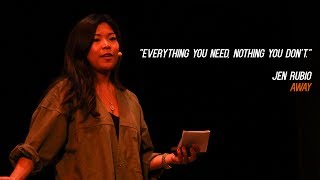
Yeah. So we started working on this in January of 2015, and we like to say we have a thoughtful luggage brand, not a smart luggage brand. And at the core of what we're doing, it's pretty simple. We're a direct-to-consumer company that sells one product, which are the rolling suitcases that you see here. And when we started working on this, it was a time when there was, you know, a lot of like— everyone was making all of their home goods and objects smart. You know, there's like a big push in the Internet of Things. And we just decided to take a step back and take a little bit of a different approach. It basically started when my luggage broke, and I was like asking my friends for recommendations, and there just like wasn't anything out there that anyone was really passionate about. Like you said, it's just not really like a sexy thing to think about. You know, people love thinking about travel, but they don't actually want to think about what they're packing their stuff in. And everything out there was either really like cheap and flimsy or super expensive and cost $1,000 for a suitcase. If you've ever been in a luggage store, probably looks something like this. The luggage buying experience just completely sucked, and we knew there just like had to be a better way. So what we did is we dove in, did a ton of consumer research, like focus groups. We used to like sit in people's houses and watch them pack, which is really creepy now that I think about it. But we really just got to the core at the core of how people travel, what their pain points are, what they really need in a suitcase, and that's how we came out with, you know, the one perfect suitcase for everyone. Everything you need, nothing you don't. And it— last year we launched with really just one suitcase. It just came in a carry-on size in 4 colors, and it only had one, like, tech-enabled feature, which is a USB charger built into the bag to charge your devices while you're on the go.
And what's interesting, what is interesting is that, so you came from Warby Parker, which they did something almost kind of similar where they took glasses, which isn't incredibly sexy, and they made the brand extremely sexy and really cool, and everyone wants a pair of Warby Parkers. Luggage is the same thing. It's pretty boring. Not a lot of people really, like, you don't exactly Instagram your new luggage, but you guys have somehow managed to get people to give a shit about something that was typically so boring. And people love this. And so how did you—
People get a lot of shits now. I'll show you.
How did you define your brand early on?
Yeah, so I mean, I think, you know, context is everything. We started out, you know, this started out with an idea for a luggage company, but really early on we realized there was just a huge gap in the travel space. You know, everyone loves going on vacation, taking trips, but the actual companies involved in the travel space pretty much suck from a brand perspective. Whether it's like, you know, they just don't care about the experience, and there's just a big gap for a brand that thinks and talks about travel and experiences the way we travel, the way a lot of you people in the audience probably like to travel, and who care more about experiences than things and ratings and reviews. And that's kind of how we thought about starting the company, and we just, We wanted to build a travel brand and we started with luggage. Since we've launched, we've kind of been called what is the holy grail of marketing buzzwords, a lifestyle brand, and it's because from day one we've really thought about context and storytelling. If you think about other luggage companies out there, they'll have imagery that's all about zippers and wheels and materials and doesn't give you any context on what this luggage is supposed to help you do better or what it enables you to do. So from day one, we wanted to take a different approach, even if it was just starting with our first photo shoot and our imagery, which you can see here. There's also, you know, in terms of starting a lifestyle brand, the first product we ever sold wasn't actually luggage. It was this book. So we knew back in November 2015 having worked for direct-to-consumer brands and fashion brands, that holiday was a big moment that we didn't want to miss. The holidays were coming up. We knew there were a lot of big press moments we wanted to hit, and the luggage just wasn't ready. We were working with our factory and they were making it as fast as they could, but we didn't want to rush that process. So we thought to ourselves, how do we get in front of all these people? How do we get into these gift guides that we know would make a huge impact on our business? And how do we do it without crowdfunding or doing preorders? Because we wanted to be a brand and not just like a one-hit product, it very much wasn't part of our strategy. It works for some people. It's not something we wanted to do. So we did what probably all of you would do in here. We decided to write and publish our own book. And we hired a writer. We interviewed 40 influencers. And these weren't celebrities or household names, but people at the top of their fields. In fashion, in art, in music, in food, interviewed them about travel. The book is called "The Places We Returned To." We packaged it up in this beautiful gift set, and we sold it for $225, and inside there was a gift card for our luggage that was set to launch in a few months. So we were like, "OK, this is either brilliant or just a really weird, convoluted idea and definitely not going to work." But that Christmas we were in over 100 gift guides in all the top publications. You know, it was the perfect gift for every traveler in your life and we sold out of thousands of these books and gift cards in a few weeks before our luggage had even launched.
And speaking of starting out, so to give everyone the full perspective here, so you guys were around for about a year when you were tinkering with the idea and testing and then you raised a seed round like about 15 months ago. And starting around that time, I started noticing that you guys were in a ton of different outlets and you were— a lot of journalists were writing about you. Can you talk more about how you were able to get all this press so early into the company?
Yeah, definitely. It's just about, you know, I think having a great product isn't enough to keep the keep the good press going. I think we were really lucky. We had really solid PR and press around our launch, but someone can only write about the suitcase once before it gets really boring. So once we had kind of gotten all the big publications, we realized very quickly that you have to consider every single moment a storytelling moment. So, you know, one example of that is a couple of months after we launched, We started thinking about launching monogramming, which is pretty standard offering when it comes to luggage. You know, just putting your initials on your bag. And we were thinking about, okay, how do we make this a press moment? So we hired 3 Brooklyn-based artists who did all of their own monogramming styles, and for 1 month only, we said that we were gonna offer monograms hand-painted by these artists in our studio. The New York Times wanted an exclusive on this story. All the fashion magazines picked up on it. And here we were, I mean, if you really think about the concept, we did not optimize for scalability or operational ease. You can just ask our ops team who still hates me. But we optimized for the story and for something that people would talk about. We actually tried to end this after a month. but it was in such high demand from editors, from influencers, from customers, that to this day, we now have a hand-painted monogramming studio in New York with like a dozen artists just painting initials on bags all day long. And that's just thinking about, you know, what are the features that you guys are putting out there, and can you make it a bigger story around that? Can you make it more exciting? It doesn't have to be something that that you build out with your company as we did with monogramming, but it's definitely a big part of something that gives people something to talk about. Another huge part of our growth has been collaboration. So, you know, we're lucky travel's a field where— that spans across different industries, and what we do is we look into each of these verticals that we want to hit who have who have people that we want to engage with, and we find, you know, kind of the best people and the best companies to work with that have loyal, engaged audiences. This year, these are a few collabs from the beginning of this year. We launched a pink suitcase with Suki Waterhouse and Poppy Jamie's accessories line. We did a suitcase for Charity: Water. We launched one with Madewell. Just this week, we did a yellow suitcase for Despicable Me 3, which was actually an inbound request from the studio because they'd seen all of the other collaborations we've done. And I think at the core of it, it's great. These collabs, all of these collabs have sold out within a few days. But what we really see is just the spread in awareness. So even if someone's not going to buy a yellow suitcase or a pink suitcase, they see the press, people are talking about it, and we actually see sales of our number one product, which is a navy carry-on, go up when we launch these collaborations. Some other press-worthy moments. We use a lot of data to find these key business moments for our company. So luggage is a big— there's a big gifting moment in luggage for holidays, for birthdays, and we decided to capitalize on that in a really brand-led way. So we actually now with an in-house editorial team for this Father's Day wrote another book, got a lot of influential dads talking about their trips as fathers for the first time or with their fathers, published it in a book. We partnered with Harry's to provide a shave set for every piece of luggage purchased for Father's Day. Again, tons of gift guides, tons of press, like big events, like lots of mentions from influencers, perfect Father's Day gift, and just really capitalizing on those moments that we know as a business work for us, but that we need to make a little more exciting for our consumers. And then lastly on that end, I think there's a lot of kind of big cultural events, whether it's, you know, South by Southwest, Coachella. This is from Art Basel in Miami. I think a lot of companies think that you need huge marketing budgets to go to those events and be relevant. When we decided to go to Art Basel in Miami last year, admittedly, we didn't really have the experience or the connections or the budgets to come in and make a huge splash the way a traditional company would, but we did know two things. We knew that there would be cool people there, and we knew that their phones would die. So we built this bicycle charging station. We parked it around, you know, kind of the best parties, and people were talking about it. And that was like a pretty low-cost, super effective way to get people talking about something. It was more effective than just putting like a charger in a gift bag, and way more effective than just throwing a big party with our logo on it. But if you kind of take utility and then create a moment that's cool enough for people to talk about, they will. Basically, if storytelling is what's driving you and your business and your activations, it means that people will write about it. People will write about your company, your product, your tactics, yourself. We've been lucky enough to be in hundreds and hundreds of top-tier publications in less than 2 years. A lot of our growth can be attributed to word of mouth and earned media. And you know, and we don't take that for granted. We know that if we just kind of stop what we're doing, there really won't be anything to write about. So it's just thinking about how can you make your company into something that people will want to talk about when they're out to dinner with their friends.
And you didn't have a PR team for that, did you?
We did. So actually that was one of the biggest investments that we made early on. We knew that even before we spent a dollar on like paid marketing, we knew that we wanted to find, you know, kind of a great PR agency to partner with. We drove our strategy in-house and kind of decided on what stories we would tell, and then use the PR agency to seed those to their kind of editor relationships.
And earlier, you've actually mentioned this a few times, but one example is earlier when you were talking about the book, you were talking about influencers, and I mean, selling that many books in itself is a pretty cool feat, and that came from getting people to share and getting influencers to help you guys out. And I know that you still do that with the luggage. So can you talk more about how you've been able to get people to share so much?
Yeah, I mean, when you've done all of these things to kind of create a brand that people want to be associated with, it organically creates brand ambassadors for you. So kind of at a higher level, We have tons of celebrities who have come to us inbound or have been seen with our luggage. We also have celebrities who pay for their luggage. And, you know, it's been seen on everyone from Karlie Kloss to Adrienne Brody, Jessica Alba. And I think something that we do is we look at who's actually using our luggage or who's asking for it. And now we're thinking about, you know, now we're in talks with them to to think about ways we can partner and work together instead of what a lot of other brands do, which is maybe throw some money at a celebrity to walk around with your product when they don't really give a shit about it. But I think the most important thing for us has really been kind of our customers and the other influencers we engage with. You talked about this earlier, but we've really created this culture and this community that loves to travel, takes incredible photos, and will photograph their luggage in some pretty unnatural situations. I think if you look at some of these things, I just imagine whoever had taken that picture probably had to take it a million times before they got the right one. But 99% of our Instagram is user-generated, which breeds more amazing content. And we've actually seen the power of all of that influencer and customer content and have 2 full-time people on our team now dedicated to just building those relationships, finding out when people are going on these cool trips, making sure they have the latest luggage, and getting content back from them. So it's like a cycle that kind of continues to fulfill itself.
Great. Well, you guys have come a whole hell of a long way in 15 months. Now what's gonna happen in the next 15 months or so?
So we just raised $20 million in our Series B funding. So that's a total of a little over $30 million that we've raised. And one of the things we're gonna do with that, surprisingly to a lot of people, is retail. So last year we launched pop-ups as data points in New York, London, LA, and Berlin. And that gave us a real sense of how and where and why people want to interact with Away offline. I think a lot of people mistake direct-to-consumer for online only, but the physical experience and the offline experience is a huge part of what we're doing. Even though our luggage is relatively affordable and has a high quality to price ratio, it's something that people still want to see and feel. And more importantly, they come to our store to interact with the brand. We have events and workshops and classes classes and talks in all of our locations. And this year we're opening an East Coast flagship, a West Coast flagship in New York and LA, as well as stores in San Francisco, Austin, London. We're also expanding into a lot of content. So right now we are just a one-product company, but because we've built this product in a really thoughtful way, people are asking for more from Away and want to want to hear more from us. So last month we launched a podcast called Airplane Mode. This month we're launching Here Magazine, which will be digital, in print, in every Away suitcase, in specialty stores. There's a TV series in the works. So I think people have come to trust us as a real travel brand and are looking for more things from us in that sense. Cool.
Well, any final words you want to— say to the audience?
Yeah, I mean, these numbers have been really humbling and really exciting. And you know, it's what you said in the beginning, over 100,000 suitcases sold, 20 million sales. This time last year we were like 5 or 6 people, now we're almost 70. So we've actually hired more people since we made this slide last week. But I think, you know, you need to be more than your product. You need to focus on what your product can enable people to do. We're not selling suit— well, we are selling suitcases, a lot of them. But we're selling travel, and I think that's the most important part. And people, as we launch more products, as we go into media and content, I think that's at the core of it. It's a company for travelers made by other travelers. And our approach to building our brand is we approach brand building the way luxury fashion houses do, but we run our company like a lean tech startup. And that coupled with like our obsession with the customer and the experience is what's really driven our growth so far.
Well, thank you for telling us the story.
Yeah, thank you. Thanks, guys.










