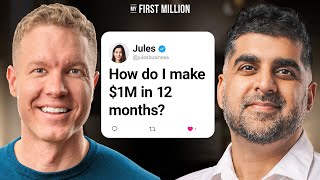
Sam Parr and Shaan Puri discuss why newsletters and short-form content are underestimated business models. A 20-year-old built a street-interview agency in New York to $30-40k per month selling footage to brands. Shaan shares how he used Dr. Becky's parenting framework like a growth experiment when his kids wouldn't listen.
Chapters
All right, you want to do a little intro? Here's a little behind the scenes tips, or look, as you can see, I can't talk that well, so I asked Sean to do all the intros.
Yeah, today when we're live is a bold choice to do the intro yourself this time.
Yeah, I'm not the intro guy.
I've got—
I say I got a thick tongue. I can't say certain words.
All right, what's up? Let's say what's up to people in the chat. We got RJ Odoboy, Azam, Ryan Hoover, what's up? Dude, Ryan Hoover, my guy, always supporting, always supporting us. I really appreciate that, Ryan.
I was with Ryan the night before he launched Product Hunt and I thought it was a horrible idea and I was like, a social network for products. It sounds so lame. And he launched it and he totally proved me wrong.
Not only that, a few weeks before that, he had been interviewing at our company. I wanted to hire him. It didn't end up working out. He launches, he tells me he's launching Product Hunt. After it launches, I call him 2 weeks later. Um, and I was like, hey, like, you know, I don't know how you're feeling about that whole thing, but I got this new idea for a role. I tried to recruit him again and he was like, no, I think I'm gonna see this thing out. And then it exploded and became the coolest thing in Silicon Valley for like 2 years.
It was awesome to see firsthand. Um, Ari, someone just said you're a smoke show.
This is why we don't, this is why we don't, we don't let Ari on camera. She, she shows us up. All right. So what are we doing? We're doing a live AMA. People have been tweeting us questions. There's people in the chat. We're, we'd never do this live, but we're gonna do it today. And, um, let's see how it goes. So Ari, you're gonna read the questions. Me and Sam are gonna answer. Let's pop.
This is so distracting, by the way, with all this chat in here. It's gonna be really challenging to like look at this chat.
So distracting that I just said, let's pop. That's not even a phrase. Like I'm the Pringles man. Let's pop.
Uh, all right. First we're gonna do some role play. So this comes from Paulo. He said, hey guys, so I'm 16, rejected a $600K offer for my $25K a month agency and launched an AI B2B SaaS, which hit, uh, about 6.5 MRR in the first 31 days. I'm curious, how would you guys go about reducing churn for an AI SaaS? This is a, we're starting off with a, you started with the worst question.
I'm sorry. All right.
First of all, all right.
You said you were ready. All right. There's a doc where we said yes to questions. Those are the ones you're supposed to read.
Sean, you under that, you said, I'm ready for this one. No, wait, no, that was the one. Okay. Scrap that. We're going to say, okay.
Yeah. We've got to start with the new one.
Also that question, by the way, that's like at those conferences where somebody raises their hand to ask a question, but actually there's no question. It's a statement and it's a brag. He's like, I'm 16 years old. I'm already rich. I just rejected an acquisition offer. Oh, my side project MRR is up. My question is, what's up? Okay.
We're gonna, we're gonna dumb it down. If coding is no longer a skill to master, what would you advise an 18-year-old to focus on learning?
And this question comes from Dinesh Pupala, which is a hell of a name. Um, all right. So Sam, do you wanna go first or you want me to go first?
My, I gotta think of a non-stereotypical answer that I'm gonna say. What, what would yours be?
Okay. So the question is basically, if he said, if coding is no longer a skill to master, what would you advise an 18-year-old to focus on learning? Okay. So to me, here's, here's how I think about it. First, I would zig when everyone else is zagging because I reject the premise of the question. I don't think it's true that coding is no longer a valuable thing to do. And if that's what smart people think, I would be really excited right now.
Have you got, have you guys tried to use like Replit and all this stuff? You, you need to know how to code.
Yeah, exactly. You go on there and you could kind of half make something that doesn't work, right? Go open Cursor and see what happens. It's not like you just magically one-shot your dream app. That's not how it works. And even if you project 5 years down the road, let's say it's true that you can basically command the AI to build things. It's not going to be perfect. And, you know, I think what that actually says is if you actually know how to code, maybe it's not about typing all of the syntax, but it's about understanding how to think in programming terms, how to build things. But you're gonna have an army of robots, a fleet, a fleet of robots at your command. It made you 10 or 100 times more productive. So I think that's the first, first thing I would do. I would also say like, look, if you're 18 years old, it's not about picking the right thing. If you're 18 years old, all this is about is figuring out what are you interested in? Going at it really hard and learning how to learn because the world is moving way too fast for any one thing to just stay king. Coding might be automated in the future, might be partially automated in the future. You just gotta get obsessed with being adaptable. You need to master the mental models that run the world. You know, I, I would focus on the things that don't change. So if technology's changing really fast, humans and the human brain doesn't change very fast. So if you understand human psychology, behavioral economics, if you understand how to sell to people, how to persuade. Those are the things that are not going to change. And if you're 18 years old, I think that's where you want to sharpen up your skills.
That's exactly what I was thinking of saying. There's a book called Influence by Robert Cialdini. Sean, have you read that book?
I have. And it's a classic.
I read that book when I was around 18 or 19, something like that. And it honestly changed my life. Like a lot of like 16, 17, 18-year-olds, I was trying to just like meet girls and I was like, how do I persuade them into going on a date? Don't hate with me, but I read that book and I've used that book more for a business than anything that got me into copywriting, things like that. I would read that book and then a hard skill that I wish I knew all the time that I'm like struggle with. I wish I knew how to design webpages, like landing pages, like literally like, like make the pages look great. I know how to persuade people with my words. I always, regretted that I didn't know how to like do at least some type of front-end code and some type of light design work. Were you ever in that boat?
Oh, 100%. And I, you know, I taught myself Photoshop and Sketch and Figma just enough to be able to annoy the designers. But now if I was doing that again, you know, you don't need those anymore. You could basically skip to Lovable or one of these AI tools. In fact, if you're 18 years old and you said, how do I spend the next 4 years of my time best preparing me to be successful in life, which arguably is what college should be doing, right? I think you would get way better bang for your buck if you just spent 2 years obsessively playing with all the AI tools, trying to build little prototypes, trying to solve little problems for people, and you, you would get way further ahead. It's just that you don't get the fancy degree and you don't get a stamp on your resume. Um, but you would actually learn some pretty ridiculous things.
So let's go to this next question, Sean. It says, let's imagine your kids are hitting college in the next couple years. Forget degrees. What set of experiences would you encourage them to collect to be the most AI resilient when they graduate? And yes, for mere mortals, do not say starting an AI company or winning a Thiel Fellowship. Can I tell you something that I realized? You did an interview with Joe Lonsdale that was really, really great, and I loved it. And I've noticed a pattern amongst our favorite, my favorite guests on here is they're not just thoughtful, but many of them have a philosophy background. And I used to think that getting a philosophy degree was kind of silly. I thought, what are you just going to teach philosophy? But looking back, I was trying to connect the dots the other day of all the people who I like. Dude, they're really fascinated in philosophy. Have you noticed that?
Who comes to mind? So Joe is one.
So I was listing out people who I think are unique thinkers and who are really thoughtful, and I made a list and, uh, Peter Thiel, Joe Lonsdale, uh, Karp. These guys are all in the same, like, crew, which makes sense. But like, the way that they're thoughtful, but also the way that they go against the grain, and they are very logical about things, which is important because I think as humans, uh, we're emotional beings and we should lean into the emotion sometimes. But in order to like get past certain fears, uh, you have to be very logical and you have to think, it's no big deal if I'm made fun of or if I'm mocked for doing this because If you look at like, you're like, you can like logic your way into like starting something. Do you know what I mean?
Yeah. I, although I think that you can't just go into something saying, oh, I think this is what successful people do, or this will make me successful because it's what other people did. I think other people, what they actually did was they followed their interests and they didn't care what other people thought. And I think the job of the individual is to first dabble and date. To figure out what are you actually into. You might think you're into something, but you need to dabble and date. Do you like blondes? Do you like brunettes? Do you like people who are wired this way? Do you like people who are wired this way? Do you like this type of video game? Do you like that type of video game? The only way you know is by first going and actually like trying out a bunch of things and being really broad with that. And then the second job after you dabble and date is to double down regardless of what it looks like to the outside. So, you know, if your thing is that you love Um, you love League of Legends and you really want to get great at League of Legends, great. Get— let yourself get obsessed with something for a period of time. Um, and of course there's some healthier obsessions than others, right? Like fitness is a really healthy obsession people can get into. Um, but I think more than anything, just become the type of person who figures out what they're interested in, figure out your taste palette, and then double down on them. And then let things, um, let things play out as they naturally would. I think if you're trying to, trying to do what Peter Thiel did That worked for Peter Thiel. I don't think that's necessarily what you should do for yourself.
Did you— I think you just created something. You said dabble and date, double down. Now we need to— we need one more D and then we're going to have your whole philosophy completely lined up.
Sean's Double D philosophy. Yeah, yeah, that sounds right.
So you met— so you met Logan Ury, our good friend. She's my, my wife's best buddy. And so she's like family to me. She did a podcast, The Diary of the CEO, and she was talking about dating and, uh, you know, I'm not gonna like brag or anything, but she explicitly named me as a good example of how to date a successful person and, uh, you know, marry above your league. So I'm just stating the facts that I was this dating expert's example of how all the nerds can effectively do this.
Should I go endorse you on LinkedIn right now? Is that what this is?
Yeah, I told you to read Robert Cialdini's Influence book, so like it worked. Okay, what about another one, Ari?
All right, this one Sean said he was ready for, so here we go. This is from Ruta. If you had to make $1 million in 12 months starting from zero, but here's the catch, you're only allowed to use your phone, no laptop, no network, no investing. What steps would you take?
Sean, how many of your followers are Indian?
I mean, that's a tough question.
Have you ever looked on Twitter demographics?
No. Let's just say 20%. Why? Where'd you get that?
20%? That's it?
I don't know. I think— Does it tell you how many? Is there a Twitter analytic of how many of your viewers are Indian? Because that'd be amazing if there is.
There used to be. Yeah, there was like, which country are they in? Because I think you're incredibly popular in India. I think, I think you're the type of guy that many young Indian boys like want to be like when they grow up.
I can't tell if you're complimenting or insulting me, but I'll take it either way.
It's a huge compliment. People, people look up to you.
Okay. So then what, uh, is that just, I just noticed that the question, all the best, all these questions are Indian guys. All right. So Ruta's asked, what is he asking? He said, basically you want to make a million dollars. In a year and you have no existing network, no connections. You can't just invest the money to get there and you're only starting with a cell phone. Is that right? Sam, you hate this type of question. Do you even have an answer? Otherwise I'll give you the answer.
Dude, I hate these questions.
It's just— All right. Nobody wants to hear you whine about it. I, I know.
Dude, do you like these questions?
Yeah. Cause I also would've asked this question when I was younger. So like, I get it. Like I get it. People want the, you know, it's like called My First Million and we talk about everything except for, except for how to make, make a million dollars. So I understand the frustration there.
It's, it's no, I'm frustrated because you're, you're Sean's interest in skillset is so different than Ruta's. You know what I mean? So like, how are you supposed to like do the same thing?
Sure, sure. That's true. I think there's many ways to do it. Okay. So here's how I would do it. Let's just put it that way. Okay. So the question is, how do you make $1 million in one year using just one cell phone? You don't, you don't have any, you can't use your existing network or reputation. I think that this is one of those riddles. Where the cell phone is a red herring, right? It's like, you know, you think about, oh, I have a phone, so I have social media. I guess I should try to do things on TikTok. And you suddenly end up in some corner of the world you don't want to be in. You're suddenly doing dance routines on TikTok. Have you ever done that, by the way? Have you ever secretly not uploaded but tried to do a dance trend?
No, man. Do I seem like I would do that?
Yeah. Yeah, you do.
Like, I do a lot of really lame things. I mean, I collect denim. But I do, I will not dance in front of a camera.
Bro, you've privately texted me your skateboarding trick, trick videos. So, you know, listen, I will do that. You're only one step away.
But I'm not, I'm not there. But yes, I, I, I have my flaws, but dancing is not in front of a camera is not one of them.
All right. So I'm saying ignore the phone. The fastest way to make $1 million is to make somebody else $20 million and then try to take a 5% fee, right? Because you're not gonna be able to build a business or, or let's say you could build a business, but you're taking a lot of product risk, market risk, et cetera, along the way. What I would try to do is I would target people who are doing big deals and I would try to broker a deal with them. So what I'm thinking about here is people who are doing real estate, people doing private equity, people who are owner trying to sell their business, somebody who's doing a $10, $20, $30 million deal. And I would go to them and offer them a no-risk structure. So like, hey, I know you're trying to sell your business. If I can bring a buyer to the table and you actually end up doing the deal with them, would you cut me a commission on the sale? Same thing with real estate. Hey, if I was able to find you a property and underwrite the deal, do an analysis, and it's a deal you actually end up doing, would you pay me a finder's fee for doing the deal? Because it's pretty shocking how much, you know, a broker or a salesperson will get as a commission for big-ticket deals. And so I would spend a year hustling my ass off trying to broker a deal for someone. I would try to find what that person is looking for, somebody who's already playing in big dollar amounts. You could do this very easily, by the way. You could look up in your area who are the most successful real estate developers, and you could go and you can meet with them. You could find out what's in their buy box. So what do they look for? And you could say, you could offer this, say, hey, you don't have to pay me anything. I would love to learn this industry. I'd love to bring you deals. And if you do a deal, I would love it if you would cut me a commission in that. Would that be something you'd be open to? And by the way, somebody did this for me. Uh, a 15-year-old did this for me back in the day. He said, I'll show— I'll go scout for venture deals. And if I find a deal that you do, would you cut me a finder's fee? I said, yeah, sure. If I, if I end up doing a deal because I really like it, fantastic. And you're going to go work for free? No, no problem. Um, and look, I think your odds of actually doing this and pulling this off are still pretty low. I think you're a 10 to 20% chance. You know, 1 in 10 or 1 in 5 chance of actually making $1 million doing this way in a year. But that's better than most. And the good thing about this is that you still— you might have only a 10 or 20% chance of making $1 million, but you have 100% chance of building a really good network, learning how really smart, successful people think, what deals they like, what deals they don't like, what they're looking for, to learn how to hustle, how to do research, how to do sales, how to write deal memos, how to, like, think in a logical, structured format. And you're gonna find some rich guy who ends up liking you and looking at you and being like, I wish my son My son was this motivated. And you're— they're going to take you under their wing. And so I think you have 100% chance of good things happening in your life. And you have a small but, you know, possible chance of actually, actually cutting a deal and getting a fee of maybe it's $250,000, $500,000, or $1 million.
So go to Modernize.com. So Modernize.com, it used to be called something else. I forget what it used to be called. But basically, it's a website for— they say empowering professionals and homeowners from inquiry to install, meaning you need an HVAC company. They have reviews for them and you are a homeowner. You submit your information to their website and then an HVAC company will contact you and the HVAC company pays Modernize $200 for giving you that information. So listen, this is to play off what you were saying about making someone money. Do you remember that time I was— I told you this time about I had this like 20-year-old over to my house to like set up my camera. And he had— he was charging companies, I think he was charging them $500 a month or $1,000 a month in a retainer. Then he would get a portion of all the sales that he sent to a company. And it was like a— it was like a— it was like someone who would repair driveways. And my buddy built websites that said something like, you know, we'll repair your driveway or we'll like send you a contract, send a contractor your way. And he bought an ad on Google. So if you Google San Jose driveway repair, you know, he would contact, you know, to the driveway company that he had contacted and would, you know, they would pay him $100 per lead. He was at my house and this woman named Rosie called. He goes, hi, you know, I'm, I'm Gabe. How can I help you? He goes, hi, this is Rosie. I need a driveway repair to come. And he goes, all right, hold on, let me patch you into the other person. And he like dialed it on his iPhone and merged the calls and then put his phone on mute and put the thing in his pocket. He was making $20,000 a month doing this. And this company called Modernize— I knew a guy named Gabe who did this exact same thing in San Francisco where he went door to door and he found out what type of services each person needed. And he would spend 8 hours a day going door to door. And eventually they made something like $500,000 doing this manually. And they used that money to turn this into this website called Modernize that makes millions of dollars a year. And so It's exactly what you were talking about of like taking a small cut of business that you create. You don't even really have to create a service. You don't have to create a product, but you can just grind your ass off and make it happen.
Yeah. I like that. You could even just go on Craigslist. You can just farm Craigslist for services, gigs for interesting businesses, and then go and try to solve their problems if you, if you really wanted to. So, um, all right. I think that's a good one. Uh, here's a fun one. This is kind of a, a hard one maybe, uh, to answer, uh, or maybe it's a little bit of a longer one. Actually, here, let's do this. Let's do this one instead. Jay Yang asks, what is your worst self-sabotaging behavior?
Oh man, mine's easy. I make—
sometimes I need to choose from—
yeah, I mean, like, how much time you got? Uh, like, uh, but I would say that I tend to make decisions quickly in emotional states and I should probably like take 24 hours to think about things. Like something will happen and it will piss me off or make me happy and I make the decision right there and I call it getting dug in. I say, I am dug in. I will not change my opinion any further.
And by the way, it's not a figurative speech. You've literally told me that phrase.
Yeah.
You've literally, you literally say those words out loud.
I go, I am dug in. And so I struggle to change my opinion once I've already made it. And I tend to make my opinion quickly when I'm being emotional.
What's an example? Give us an example. Let's, let's, let's be real here. People showed up live. Let's give the people what they want.
For example, if someone, uh, a candidate will interview for, uh, to, to work at my company and recently they had bad facial hair and they looked sloppy in the interview and they had told me they had just moved, but I was like, I don't care. Like I, I, in my head I just like, this person was sloppy when they showed up. They are dead to me. I can never work with them. And my team was like, like, I just will make these like really fast decisions. I just, I, it's really hard for me to get past a certain impression and I just will not change. And so we didn't hire the person. Like, and that's a really specific example.
Or is this self-sabotaging?
Yeah. Or here's a, here's like an example where it hurts me. It helps me a lot of times. It hurts me where an employee will make one screw up and I'll be like, they're done. It's over. Like, I'd be— I'm pissed off at them, they are done.
Quick to judgment. Quick to judgment. And do you think that super fast costs you because, um, that judgment, that quick judgment is not correct?
Yeah. Or you don't make certain opinions when you're— you know, you don't, you don't go to the grocery store when you're hungry. So when you're pissed off, you don't make like decisions.
Hmm. That's good. I like that. Um, yeah, I think also it kind of gives you a lens, right? Like, let's say somebody starts off on a wrong foot. Then you have this filter over everything that they're, they're doing where you're sort of scanning for that evidence of, uh, and, and you're trying to confirm that bias. All right. Uh, my most self-sabotaging behavior would be, I mean, I got simple ones, dude. I like, I have a private chef, I have a personal trainer who comes to my house, I have a food coach, and then I'll DoorDash Taco Bell. So like, come on, you know, there's something deeply wrong with me when these things happen, right? That's a self-sabotaging behavior. But the real ones that I would say, because that's, you know, not that often. And I guess not that— yeah, it's not that common. It's just silly when it happens. The big ones I think are really— your most self-sabotaging behavior, I think, is always the shadow of something that's your real strength, right? So I think a real strength of mine is that I'm a good salesman. I'm a good storyteller. And that's great when I point it outwards. But when I use it on myself, I could talk myself into all kinds of bullshit. Right. And so I have to be really, really careful that I'm not just—
Wait, can you sell yourself?
Yeah. I persuade myself all the time. Cause I'm a persuasive guy, but like, yeah, of course. It's kind of like, I actually just really wanna do that. You know, I really wanna quit doing something cuz it's hard, but then I'll talk myself into why this is not the right thing to be doing rather than just being honest and saying it's really hard right now and I don't really know the answer and I'm not comfortable in the discomfort. And therefore I just want to stop. Actually, that's just an impulse. But I'll, I'll make it sound great. And I'll convince myself.
That's so funny.
This can happen for simple things. Like, you know, last night, you know, I was like, I wanted to just stay up late. And I was talking myself into why this is the perfect time I should— I'm having inspiration right now. I should strike while I have inspiration. I should do this. It's like, actually, just go to bed. Just get it. Just go to bed. It's easy. You could do this tomorrow. No problem. Um, and so like I could talk myself into bad habits. I could talk myself into doing deals where I know I, I could make it happen, but that's not really one I should do. Um, and really it's all about the, the most costly version of this is project selection. If I talk myself into or out of a project, cuz a project has a really long lifespan, like, you know, a year, 2 years, 3 years, 5 years. And I have to be really careful that I'm not gonna convince myself to do something, um, that I don't actually really truly know is the right move for me.
Have you used ChatGPT to combat this? Combat this? Because I have, and it's like amazing, where I'll be like, be cynical and point all the holes in my thinking.
Exactly. I do that. I say, you are my, you are my friend who has my best interests at heart. You understand me, and you are ruthlessly honest with me. And I'll say, force me— so I don't ask ChatGPT questions, I force it to ask me questions. I'll say, force, ask me questions and force me to structure a logical argument as to why I should do this. And if I have any logical flaws or logical fallacies, you can push back on it or simply ask me, is that true? Um, and then I, by the end of it, and I keep having it play back the logical argument. So it's saying like, point 1, point 2, point 3. And then I can read that and be like, all right, do I, do I agree with this or not?
You have, you tweeted out, uh, something that was funny. You said, um, The reason I love ChatGPT as a therapist is because it doesn't judge, which is like one of the very few things.
I got clowned on for saying that.
Dude, it's one of the cringiest things you've said, but it's also incredibly true. I do that.
The bad part is I, I, you know, so usually, you know, when you're doing something cringe, right? It's like when someone's about to like, you know, poke you in the stomach, you could flex real quick. So, you know, you know, you're, you know, something's about to happen. You can just tighten up.
Yeah.
I wasn't aware, dude. This is a blind spot. I had to question myself like, why did I not see that this would read as lame? I thought I was being just honest.
Look, I thought it was useful. It was just a little bit Naval-y, you know what I mean? It was like a Naval thing and you are not—
Wait, Naval's cringe? Oh no, I'm way off now.
Well, you aren't cringe because you're funny. That was a non-funny thing. But you also, in your 5-tweet email, you said you shared about how research is showing that cognitive in-person therapy and having an AI therapist are, I don't know if it was that they're having similar results or if the AI therapist has been proven to, help people. And I completely agree, man. I've been using ChatGPT this way, and it feels embarrassing to admit this, but it's incredibly helpful for solving these problems.
Yeah. I don't know why that's embarrassing. Oh, I mean, dude, it's just like, to me, it's obvious. Would you ask out loud everything that you Google search? No, of course not. Why do you— so the— so why is that? Well, partly cuz it's faster and other part is because You can ask a dumb question and Google doesn't judge you. ChatGPT is the same thing. But I guess what I was pointing out was that people think AI is so useful because it's super intelligent, but actually, that's great. IQ is great, but there's an EQ benefit also, which is that you could be comfortable being a little bit stupid or asking or being really honest with it. And you don't feel judged, or I don't feel judged at least.
All right. Well, it's What's the second question or the third question?
Um, okay, let's do another one. Oh, here's a, here's a fun one. So it says Max, who's @couchmoneymax, great handle. Uh, Max asks, you can only connect the dots looking backwards. He's talking about the Steve Jobs, uh, philosophy that you can only connect the dots in your life looking backwards. He says, what dots led to the positions that you and Sam are in today? I like this question. I don't know if this is gonna be interesting to anybody else, but I honestly felt like thankful that he asked this question. 'Cause like, what a, what a great question to reflect on.
This is actually a really good ChatGPT prompt. Like a, like a, this is like a whole hour-long session. Exactly.
This is like therapeutic in a way. And I think I did the exercise and I actually think everybody should do this. This is an interesting exercise. You take the things that you're most happy about your life today and you sort of trace the creative, the lineage, the roots of that, of where you are today, to the key decisions or events or lucky breaks in your life that got you there. I think that's just like a great thing people should do. Did you do this?
Yes, I did. And I was trying to boil it down what it was. So basically, there's only been a handful of decisions that I've ever made that, you know, how Warren Buffett has like, you know, he has a 70-year career, but he's like, You know, most of the value has come from like 6 or 8 decisions. I kind of feel the same way with my life and probably most people's lives where it's like there's probably just like 3 or 4 good decisions. And I think the trait that has helped me most, and it's not a— I don't do it for the reason that people think, but I've always been pretty good about focusing on something for a while and getting that one thing right. And that unlocks so many other things versus having a wide focus. So for example, when I started my first company, The Hustle, it was— I didn't have income from other sources. It was like, this thing must work. And I was all in. When I was dating my wife, like with, like, right after meeting her, I was like, I'm all in on this. Like, and so within 3 weeks, we were very serious and we were going to get married. Versus like having like a certain business partner, my most successful business partner relationship is with my partner Joe, we were very thoughtful about it. And then I made, we made the decision. I am all in. I will do everything with you from now on. And so just like, uh, not having a bunch of different options and choosing one thing and only doing that and saying no to a variety of other options.
That's, uh, that's great. Um, here's how I would answer this. So if I think about the 5 kind of best things in my the best things I have going for me right now. And I look back at them. So the 5 I would say are my family, like my, like my house, my household, which is like my wife and my 3 kids and my dog. Then I have—
by the way, you never talk about your dog. Is your dog to you like a rodent or like a family member?
Shame on me. No, dude, our dog is the queen.
He's like your family member.
Oh my God, dude. Like, I, I will take, you know, I'll ignore a lot of people. I'll ignore your text message. But if I walk by, like, my dog will be laying on the side and she just flaps her tail without getting up. But that means like, get your ass over here. You give me a little 3-minute belly rub. Like, I will go there. You know, I'll crawl up to her and just hang with her. Like, she's amazing. As all dogs are. Dogs are incredible. All right. So my family, this podcast, I would put there. So I would actually say this podcast is very different than like career in general. I think this podcast is like an outlier of a cool thing. Like, I get to talk to my buddy 2 hours a week. We get to be rich and famous because of it. It opens up all these other opportunities. It lets me just kind of be interested in life because my job is just to talk about what's interesting to me. Like, that, that's such a life win. Uh, 3 is health, which I couldn't figure out, like, if there's really any decisions I made that, like, to connect the dots. It feels like a lot of it was God-given, and then maybe the decision to, like, find a trainer who I really like to work out with.
What was the God-given? What did God give you?
Oh, just like I don't have any like health problems inside, right? I'm good. Like I don't have cancers or anything in my body like that. I couldn't control that. Would obviously be like kind of nuking my life right now. Um, and then I would say my fourth of— so I got family, podcast, health, outlook on life. I think that's actually like one of my best attributes is I have a very good outlook on life, which lets me deal with any situation that comes my way with like kind of just like laugh and roll with it. Uh, and then the last thing I wrote Just a little bit romantic to get romantic on you guys. You can light up a candle, write up a couple, light up some candles in the chat here. Ben, uh, Ben is one of the best things in my life. And so, and then I looked back and I was like, is he a good kisser? There's a question on here of have you and Sam kissed? I think we need to finish with that one, so we'll save that for the end. That's a cliffhanger. All right, um, so I took each one of them and I just looked backwards, so like, you know, family. It's like, I remember how I met my wife. Like, I was helping somebody move their apartment. So I just said yes to that, saying yes to being helpful. Let me meet her. I had the courage in the meetup to like ask her on a second date, basically. Um, and then, you know, we broke up at a certain point. So the decision to, you know, like give it a second chance and actually believe that people can change. Like, oh, like, yeah, we were fighting a lot. We were arguing a bunch. Honestly, I was probably kind of skeptical that that wouldn't continue to be the case, but then it totally changed and it was actually like, oh wow. So you can give people the benefit of the doubt that that they'll actually like, you know, um, change their behavior, which I think a cynical version of me wouldn't have, wouldn't have believed.
Um, dude, I have a phrase that I say to my, my team. Like, I'm like, people don't change.
Yeah, I know, but that, that behavior, that belief will get you some places in life. It'll defend you from a bunch of traps, but it'll cost you some like really great opportunities, you know. Um, having kids and going on with them, or like, you know, outlook on life. I think the decision to just pick up and buy a ticket to a Tony Robbins seminar in New Jersey when I really didn't know anything about Tony Robbins and I thought self-help, self-help was a little bit corny. I mean, that was like a pretty like huge moment in shaping, giving me a philosophy for how to do life. Um, health, I would say a decision to hire a trainer who does, uh, like functional patterns and mobility. I think to— I think me in 20 years will look back on that dot and be like, oh, thank you. You know, me in 20 years in some, like, deep squat position that feels comfortable will be like, oh, thank God you started doing that then when that wasn't in vogue, when everybody was doing weightlifting and just running, you decided to do that. And then the podcast one, I think, is a useful one. So I decided to do this podcast the day after our deal closed to sell Twitch to Twitch. So we sold the company, they signed the paperwork, it was officially closed, diligence was done, and I knew I had like a life-changing amount of money coming my way. And I went on a 4-hour walk with my buddy Suli through the Mission in San Francisco. And we just walked up and down the street, almost like walking ourselves. We just like walked ourselves into a frenzy. And we were just like, I'm feeling good. You feeling good? Let's walk. And we didn't sit down. We didn't do it when I was tired. And I think making a decision when your gas tank is low leads you to make certain types of decisions. But I got into an energized state where I felt super optimistic. I was walking around with my best friend and I, really just felt, uh, enthusiastic about the future. And in that moment, I committed to being like, I'm gonna do a podcast. I should go for it. I had wanted to do it for years, but I had never really, like, gone for it. And I— the reason why I told myself at the time, oh, it's because I'm busy. Oh, it's because I don't have the time or the money to do whatever. The truth was I was scared to just do a podcast that— yet another podcast that nobody listens to. And when I was on that walk, The key thing was it didn't change to suddenly I thought, oh, everybody's gonna listen to us. No, on the walk I decided, you know what, eff it, I'm gonna do it because I wanna do it and I don't care if nobody, nobody listens to it. It's still worth doing. And I got comfortable with doing it even in the scenario where, uh, it was embarrassing that nobody was gonna end up listening to my podcast. And that's how this podcast started.
What month was that in year? Was that June of 19?
2019. Yeah.
Yeah. So that was, uh, it's coming up on 6 years. Isn't that crazy?
Yeah, that's wild. I really haven't done much for 6 years. You know, like 6 years is a long time for me.
That's insane. That was 6 years ago. And the first episode, it was you and Suli. And that launched, I forget when, I think either September or late summer, it got 64,000 downloads, which was like, looking back, that's a, that's a home run. And then it peaked really fast. The next one got like 50,000. And then it and then it went down to like 10,000 and it's been a slow, very slow climb. And that's been 6— that was in 6 years. That's amazing how long that's been.
Yeah. By the way, the whole chat is just talking about how cute Ari is. This is amazing. Why are we even here? Let's just put Ari on the camera for an hour a week. What are we doing?
Ari, how does that make you feel?
I'm like pouring my heart and soul into the start, into the story, the decisions that changed my life. And then everybody's like, can Ari see us? I wonder if she smiles. She's cute. Why don't they show her more?
Someone, someone like, they're using words, like they're using phrases that I'm not sure exactly what they mean. Like talking about racial slur could be a compliment.
Yeah.
Like she's locked in.
Uh, she is the mogger, bro.
What does mogger mean?
Oh, I have no idea.
Yeah, you do. You have a lot of ideas. That's so funny.
Hold on, hold on. Let's find out. Chat, what does mogger mean? I Googled it. One who moggs. Okay. That didn't help. What's going on?
Yeah. People are saying they've fallen in love with you, Ari. Yeah. Okay.
Never doing this again.
Or we're gonna do it all the time. Yeah.
Don't make, don't make Ari uncomfortable. Okay.
Where do you want to do this?
Do y'all wanna do the retirement or do you wanna do productivity tool.
Let's do the productivity tool. What's the, what is the question there?
Oh, that's a great one. All right. Uh, we could bring that thing up, but here's, uh, here's the question. What tool? Sorry. All right, go ahead.
Say no, you go ahead. You go ahead.
All right. So it says, what tools do you use to stay productive? One, uh, from one task to the next, as well as day to day, week by week, et cetera. And how do these keep you on task and moving forward?
I got a very kind from Zach Lee at Zach Lee Music asked that.
Yeah, Zach, you got a great mustache. Uh, you want to— let me show you what I started doing, Sean. I've been doing this since like December.
We got an answer on mogger. Mogger is when somebody is drastically more beautiful than the others around them. Ah, that's why I've never heard this word before.
You're usually the one mogging.
Nobody's ever said that to me. Got it. Life is about either being the mogger or getting mogged, and I've been getting mogged my whole life.
What, what's the root of that word? I've never— who—
is this like the spelling bee? Like, uh, can you tell me the root language of the word?
But what I mean is, I don't even understand. Like, rizz is charisma. Uh, what is— where's mogger come from?
I think it's like a noun. I think you are, you are the mogger.
Meaning you're the—
she doesn't need to do it, she just is.
So she's— when you are the mogger, you are the one that is way ahead of The, the others?
I mean, if, uh, Mr. Mysteries in the YouTube chat is to be believed, then yeah, that's true. Okay.
All right. Sorry.
So productivity tools. So Zach wants to know, what do you use to stay productive from one task to the next? Do you have anything that's non-obvious?
Yeah, I, uh, all right. You wanna share the screen or no? I basically have this. It's very simple, dude. And this works. I've always done this. So I've, dude, I just use notebooks most of the time. I always have a notebook with me. But now I do it in a Google Doc and it's very simple. I say what my Q1 goals are. I say what my strengths and what my weaknesses are.
And can we zoom in on this?
It's hard to read. So this was an old, this is an old one.
Uh, can I read this out loud?
Yeah.
All right. So Q1 focus, it says get myself out of MoneyWise and transition it to video to grow Hampton. And it's scratched out, assuming you did it.
We did it.
Perfect this weekly routine to stay focused and avoid distractions. Run a 21-minute 5K and bench press 300 pounds. Crossed out, no big deal. Tell Sarah how much I appreciate her every day. Didn't cross that one out. Man will bench 300 before he tells his wife how much he appreciates her. Don't use my phone at dinner. Also not crossed out. Write an essay on menswear. Achieved. I don't think you intended for this to be as funny as it is. The difference between the goals you did and the goals you didn't do is so funny.
I wasn't always on top of crossing out the things that I accomplished. You know, use EOS at Hampton.
Crossed out. Did that implemented a whole $25,000 productivity system. Have fun and less stress about unnecessary things. Nope. Didn't do it. That's amazing. And then it says, remember your strengths and weaknesses, Sam.
Hold on.
Phone's going crazy. You're a big thinker, great at creating bold visionary ideas. You have energy and drive for starting new projects. Once committed, you move fast and decisively. Weaknesses. You can be easily distracted by notifications. That pull your focus. You dislike routine details and prefer strategic work. You sometimes feel restless with too much time, uh, too much free time or lack of structure. And then it looks like there's some maybe just to-dos on—
So every week, every Sunday, I make my important things that I need to get done through for throughout the week. And I'm all, I'm always referring back to, is this helping me achieve my goals? Is this, you know, like, am I using my strengths and weaknesses? Things like that. It's so simple. It, but this honestly like is game changing for me. Just really simple stuff. And then what I'll do is on my calendar, I map out time when I want to accomplish those things the week before. Very simple shit.
That's great. So you've been doing this for a while or what?
Yeah. Yeah. A long time. I mean, previously it was just on my notebook, but it would be every Sunday I would write it out.
What's the most useful part of this that I wouldn't, um, I wouldn't appreciate at first? First glance of hearing how it works?
Planning, planning your week, not just doing things, planning your week and setting, setting aside time on your calendar to actually get it done. If you don't set, if you don't set the time for, for example, uh, like if I ever, what I've noticed is if I ever take a flight or something happens where I can't get my workout done, or I have a lot of free time throughout a day, I will not get up early to get my workout done. But when I am saying like, oh, I gotta take, catch a flight at noon, meaning I gotta be at the gym at 6:30 and I got to be home by 7:30. So that's 6:30 to 7:30 time. Because it's scheduled, I know exactly like I need to get after it. When I have too much time, it just will never happen.
Gotcha. I would say this word might be getting— this word might be in that cringe zone that I'm not, I'm not aware of, but love— you said planning? No, no, you said planning. I would say being intentional, right? So it's not even that you planned it, but just being like, all right, I have only so much focus and time. I'm either gonna just improvise and shoot it at whatever thing pops up, or I'm gonna focus my laser beam at the thing I want. I'm gonna choose. And the tip I would give is not a tool for productivity. It's not a system. I'll just give like the one new thing I've been doing that's gonna sound very stupid, very simple. A little bit hippie dippy, but honestly has been paying pretty big dividends for me. And that is trans— working on the transition between, uh, between things. So I have a day, I have a like crazy day, right? I'll wake up and I get my kids on a bike and I bike them to, to school.
That kind of— what time do you wake up?
I wake up at 7 usually. Um, and so I'll get them to school by 8. So I kind of get them ready, get myself ready and get them to school by, by 7:40 roughly. Drop them off at school on the bike, and I bike back. So I'm back home at 8, and then I do the podcast. And then after the podcast, I switch into like, do my one big thing, usually my new creative project that I'm working on. I'm doing that, totally different than the podcast. And then after that, I'm doing a call. Maybe it's about taxes, or maybe it's one of the companies we're working on a deal, and I'll do some like CEO shit for one of the different companies. All right, cool. Then I'll switch and I'll go back to kids. Then I'll switch and I'll work out, right? I'll do different I have like all these switches. And what's helped me in my day has been literally just take like 5 to 10 seconds in between activities and transition, transition between them in a like more thoughtful way. Because I was blending them together, right? If I was working and then it was time for lunch, I'd be still thinking about work while shoving food in my mouth. And now I'm like sort of stress eating in that process. Um, or if I was going from work mode to kids mode, I still have one eye on my phone and I'm still thinking about that while my kid is like so excited and for me to play with them and do another thing. And so my, it's actually the food coach. She was like, hey, I want you to do one little practice, which is in between transitioning between things, literally take 10 seconds, take a deep breath, like kind of give yourself permission to go into that next mode and just like leave one and go to the next. Be ready to leave one and go to the next mentally. And that simple thing that sounds kind of stupid has been really, really helpful for me. I realized like how much of my life was just blurring together. I think partially cuz of my phone and partially cuz of my own, like just the way my mind was working is just like con— like full, my brain was full of stuff. And, um, doing that, I don't know, it's like 100 times easier than meditation and it just like makes an impact in the moment itself.
Have you ever done a chore or even like walked from the grocery store parking lot into the grocery store and you're zoned in on your phone and then you look up and you're like, wait, how did I get here? Yeah. Has that, that feeling? Dude, it's time. Like, it's crazy how that feeling—
I don't know what that show Severance is about. I'm pretty sure it's about me walking to the grocery store and be like, wait, how the hell did I get here? That's what that show Severance is. That's season 2.
I hate that feeling. And whenever I feel that, I get so guilty where I'm like, 3 minutes of my life literally just did not exist. I don't remember how I got here. And that's, that's insane. What else am I missing? Isn't that such a weird feeling?
Yeah. And by the way, the trick to this is you're not just like, uh, you're not just about, it's not just about being present, which is obviously a superpower. Like the core of most philosophy is just be here now. So it's not even just about the presence, but you could kind of choose like how you're going to walk into that situation. You could choose your mood, basically. So you're like, all right, I'm about to go play with my kids. Let me bring them a bunch of energy. I'm about to see my wife. Let me have that honey, I'm home energy right now. And you just sort of get to choose like how you're going to do it, not just what you're about to do. Little, little life hack. So I'm practicing that right now. That's my new— that's my current practice.
All right, you want to do one or two more?
Yeah, let's do another one. So let's do— which one's a fun one? If you could pick one person, have 10% of their future earnings, who would you pick and why? Elon Musk.
Easy.
Next.
How about one of your friends though?
I think I'd pick my buddy Suli. I think he, uh, he rolls outta bed and makes money. Like, it's just, he's, it's in his blood. It's in his zone of genius. He can't help but make money and he's just demonstrated it over and over and over again. And you know, the test here is when I have a business challenge, he's the guy I go to. I, I just trust his judgment.
I trust his judgment and his generosity, meaning like, dude, I don't know how he does it.
He has my best interest at heart and I think his judgment is in, it's the highest signal judgment of anybody I know. And so if that's how he, if he helps me with my business stuff, then, you know, having that judgment every day on his own business stuff is obviously a winner. The only trick there is just, I think he's past caring about money. I think like at some, at some point he's just not as hungry for money. So if I'm only getting their future earnings, I'm basically compounding, you know, I'm banking on their compounding of what they are, which is obviously pretty good.
What I've, I've tried to figure out his attributes and it's really hard because it's sort of like watching Like when you watch like a professional MMA fighter, you're like, this looks easy. Or if you watch a professional runner running a 5K, they're flying, right? But because they're so smooth, it looks really easy and you're like, oh, that's all you're doing? This seems really simple. That's a little bit of my problem with him is that he makes decisions seem no big deal and obvious and things like that. But there's definitely mastery behind it. There's something behind it. What attributes?
It's super hard, dude. I was at dinner with our buddy Ramon, and Ramon is probably his best friend. Like, Ramon, I think, spends the most time with him.
Ramon can't even tell.
We were both laughing like, God, how does this guy do it? Like, what is his secret? And I was like, Ramon, you know him better than me. Because when he tells me, sometimes he makes it sound like, I don't know, I just, I just did the thing. I was like, I can't tell. Is he withholding? Is he like kind of sandbagging and withholding the information? I was like, Ramon, I know he doesn't withhold anything from me. I know he doesn't sandbag you. So he's totally honest with you and you spend 5 times more time with him. So what's the answer? And he also couldn't do it, which is a very frustrating thing. But I think, you know, at the end of the day, it's like, all right, the thing he's great at is judgment. I think his judgment on people is really good. Um, like, you know, we were hiring an exec for my company. I did all these interviews. I was like, I think this is the guy. He talked to him for 15 minutes and sort of identified like, this guy's full of shit about this thing. And then I verified it and he was full of shit about that thing. Um, so I think his judgment on people is very good. His judgment on what products are going to hit and succeed and fail. Like, he just kind of, kind of zero in on a business really quickly and see its business potential. And also like deals, like doing investments and deals. He has a very good judgment on those. And so how do you develop that judgment? That I wish I had a great answer for.
He's one of the few people that I've met. A lot of reps. Well, with him, I truly felt that moneymaking was a talent, you know what I mean? Like Usain Bolt was built this way and he refined it. there's some people I think who are built to earn and he had that, that skillset. But it was one of the few times where I met someone, I'm like, oh, this is just natural. And also you work, but it's natural.
Yeah. Yeah. All right.
Let's do this one. Um, you guys, uh, you're, you're 36. You can't, I don't think, you know, you're too old to use that phrase. Uh, but we could try.
I'm just mogging right now.
All right. Yeah.
By the way, they, they gave us the root. Somebody's actually looked up the root word. You wanna know what it is?
Yeah.
So Mogger, which Aria is the mog of the group, is based on AMOG, alpha male of group. So if you're mogging, you're just being the alpha of the group.
Yeah.
You're just mogging on everybody. So we're the betas and she's the alpha.
All right. That— all right. Now I understand.
We're not doing any livestreams anymore, right?
You guys meet a lot of people. Out of all these interactions, what's the sentence or phrase that has never left your brain? It doesn't need to be motivational, man. Mine is, uh, Amjad from Replit, just talking about how he was like, uh, he was telling a story. I forget exactly what the story was, but it, but the, but the crux of it was he, there was some illogical thing like move to America and try to apply to YC or something like that where the odds were small. And he just asked himself, what would be the best story? And he decided to do it. And there was many other examples where there was an illogical thing, but he was like, yeah, but this is just the best story. I should do that. And, uh, I have thought about that oftentimes. Hmm.
This is a really hard one. There's so many. Um, all right. I'll tell the one that was most useful for me at that moment in time. And this actually came from my dad and I was at a crossroads where I didn't know what to do. Should I go in the left path or the right path?
Path.
Um, should I do this thing or that thing? One of them was the one I was doing at the moment that was fun and interesting, but I had no idea where it would lead, and it kind of looked on the surface like it wouldn't really lead anywhere. And the other path was way more well-defined, but I was just less excited about it. And my dad made it very easy, and he goes, um, motion, not direction. And he goes, you know, there are many times in your life where if you have direction, fantastic, easy, no-brainer. It's like you have checkmate. If you have direction, fantastic, just go. Um, but there are many times in your life where you don't know the direction to go. And in those moments, don't get stuck with analysis paralysis. Don't get stuck overthinking the situation. Focus on motion because motion actually can create direction or reveal the direction. So, you know, imagine you're on an island, and you want to get to paradise. You know it's out there somewhere. You're standing on the beach. You can't see it. It's foggy. And, you know, you could just sit there waiting for the fog to clear. But guess what? The fog is not magically just going to clear for you. And the better bet is to get in your boat and start rowing, even if you're kind of rowing in the wrong direction. Once you're in motion, it's actually not that hard if you're intentional about it to shift directions. If you get more clarity, you get more, more direction from there. And so this idea of motion, not direction, was just like a very valuable thing for me at a key point in my life. And, um, and I've since used it many times since then, cuz I'm, I'm somebody who, I love having clarity and I seek it out, but there's a reality that sometimes you're just not gonna have it up front and it's just gonna look too hazy and too foggy for you. And the mistake I make in those situations is when I, um, I just wish that, you know, I wait and I wish for things to be clear. When in actuality I just got to get moving. And once I start moving, um, the clouds start to part and I can figure out my way.
There's been about 3 to 5 stories about your parents that have actually stuck with me. Um, that one's a good one. The story that you told about your mom coming from India to America, I've repeated that story and I think that I've like changed it. Yeah, but like, because I could— like, you, you, what you told it, you'd made jokes, but I was like, I don't know if he's joking or not. Like, for example, you said that like was unfamiliar with forks, or you're like, she said that, like, you said the airplane, that she called it a bus in the sky.
Uh, like, you just told these, like, none of these are true, but let's not let the facts get—
but you like, but you were telling—
I think that the way that you described that, yeah, where you were like, the truth was she got on the plane and didn't, like, you know, like an airplane buckle seatbelt isn't like— no, if you've never been on an airplane, you've never seen that object before, and it's not obvious how those two things actually connect. It's like a kind of— so she was very confused by that. And she happened to smash it in. And then the person next to her was like, ah, you must fly a lot. She was like, what? And she stayed awake on a 14-hour flight because she didn't want to miss her stop. She thought that the airplane was a train. And like, she was gonna miss her stop if she blinked. So she stayed awake for 14 hours.
Well, you just told this way— you told this story about your mother where it was like going from the opposite of America to America. And it made me admire her, but also like all like immigrants where I'm like, I cannot believe this person did this. And now her son and now your kids or her, you know, her grandkids are going to grow up these like yuppie, suburban, California, wealthy, privileged. Like, it's pretty crazy. Like just that, that transition, you know what I mean? And she should be very proud. And that made me proud. You know, I I took this photo of my— my wife's grandmother is from Haiti, and I don't know exactly how she grew up, but it was not nice, you know, like it is here. And then I took a photo of my daughter with her great-grandmother and my great— you know, the grandma was like this dark black woman. And then my little girl was not that. And then also, like, my little girl is like a Connecticut suburban person. And I'm like, can you imagine, like, telling this Haitian woman, like, your grandkids are going to be like that? And I don't know, it's kind of like a proud moment, I think. Or imagine this. Imagine telling Obama's grandparents, your kid, you're in Kenya, run the free world. Your kid is— your grandkid is going to run the— this little baby is going to run the free world. He's going to be the most powerful person in the world. And you're— they're living in Kenya, you know what I mean? Like, anyway, that transition, like, I find very inspiring. So I loved hearing that story about your mother.
You know that movie, uh, what's it called? Phone Booth, where the whole movie just takes place with the guy in the phone booth.
Love it.
Yeah, Colin Farrell. Somebody needs to do that just of my mom's plane ride trip to America because there's like 15 parts in it that are just like so funny. And it's just following this one person. Not saying it's gonna be a hit, but I would love to see that movie.
No, I love that story. That's one of my favorite stories. And, uh, that has— that's stuck with me. And I, I joke about it, but in reality, I, I left incredibly inspired.
All right, somebody says you got to answer your YouTube question, not a Twitter question, because you guys are on.
All right, yeah, someone said, uh, hey Ari, could you please mute Sean?
Tell me how you really feel. That's so—
that's hilarious.
All right, let's, let's get a question here from YouTube before we jump. All right, ask your questions.
I think it's on a slight delay. Yeah, a little delay. Someone's also like, Sean just disrespecting Twitch so much by streaming here.
Do people think I make these decisions? I show up and Ari does everything. We don't decide a lot of this stuff.
Sam laughed. Sam said that people laughed at him when he said that newsletters could be a big business 10 years ago. What do you think? People are laughing at today. I'll give you a good, a very concrete example. I'm building a company with Hampton that I think people are gonna be really surprised about the size in 10, 20 years. That's one business example. What do you—
And why would people underestimate it? Because it sounds just like a community.
Because typically, so both newsletters and communities are side projects within a large company, not the main thing. You know, it's sort of like laughing at someone for saying they're gonna create a restaurant that just sells fondue. It's like, dude, the side can't be the main. And I think that like the math does not suggest that that is true.
I think one that fits this bill today that I think— what is something that sounds silly, sounds unserious, sounds like something you'd be underestimating today, but it's going to be— but people underestimate it, I would say is learning how to make short-form UGC content to sell products. So there are people today that are on TikTok that do this. They make products, they make, they make little TikToks. They could spend their whole day making a TikTok. And I don't know if anything sounds like less serious than that. Sounds like a waste of time. Sounds like you spent your whole day working on a, 30-second or 1-minute little TikTok video that might not even become anything. Um, I personally know people that make $10,000 a month, $30,000 a month, $100,000 a month as TikTok sellers, and they don't even own the brand.
They don't own it.
They don't own the brand. They don't have an official, like, they're not an influencer. They're just really good at creating little content that convinces people to buy stuff. And I think that more and more, that's how people are gonna learn to buy stuff is through little videos that show off the product quickly. And in 30 seconds, you gotta do what, you know, previously people used to, you know, spend millions of dollars on TV commercials doing. But now a person with their cell phone can make a more convincing, more effective ad than what the best ad agencies in the world did with TV commercials.
Dude, listen to this.
And I think that sounds pretty unserious today, but I think a lot of people are, are doing great with it.
What I'm going to— I'm going to tell you a story that had I told you 3 years ago, you would have laughed at. So Ramon came and visited me the other day in Connecticut because he was in New York City. And one of the reasons why he was in New York City was for his company. He hired a 20-year-old who I think is now a college dropout, but this 20-year-old now has employees. And he hired this guy and he paid him thousands of dollars to basically go to Washington Square Park and interview, like, you know, those videos that you guys see on in New York City where it's like man on the street. Man on the street where it's like, what's your opinion on this topic? He paid someone to make videos so Ramon can post them not only on his Twitter or whatever, his Instagram, but other people's Instagram, basically giving him the creative assets. And I think this kid might also have owned a bunch of Instagrams that were popular. But basically he paid this kid thousands and thousands of dollars to go and make like 20 of these interviews that you could— and that he would go and chop up. And this kid had employees. I think he was only 20 years old. I think he had just dropped out of Syracuse University because he was making like $30,000 or $40,000 a month doing this. Isn't that insane?
Yeah, that's, that's what I'm talking about. Like, I think that doesn't even sound like a job today. Um, you know, to the average person, I think that doesn't even sound like a job today. And I think it's a very lucrative job actually. And it's a very valuable skillset that that will serve people well in the future. All right. Do we wanna do more or are we done?
Is there one that sticks out? A fast one.
Um, there's a parenting one with everything you've learned from business, which lessons are you applying to your parenting methods and why? I have a simple answer to this. My kids are currently going through a, uh, a phase of just not listening to anything like, uh, You tell 'em to do something, they just don't do it. And my old, you know, whatever worked 6 months ago isn't really working anymore. Like I threatened to take away a toy or something like that.
That doesn't work.
And then I just feel like I'm constantly bribing or threatening my kids. And I just been kind of frustrated with that for the last, I don't know, month. I don't know. Didn't really know what to do with it. And I just thought, all right, if this was my business and I had a business problem like this, what would I do to solve it? And the main thing was, I would go read from thought— like, I'd go read what the smartest people do. I, I know that no problem I have is unique to me, uh, no matter how much I feel like a victim in the moment. No problem I have is unique. Everybody's had this problem before. It's been solved before. And there are people who are amazing at solving this. There are coaches that are great at solving this. And so I went and I YouTubed this problem. I said, Dr. Becky, kids won't listen. And I watched this video yesterday while my kid was not listening. I just kind of tune about and watch this video for a second. And she basically brought up several points and I'm sitting there like taking notes as if this is like a study session for me, as if like I'm watching some growth hack video. Right. And she was basically like, well, like, you know, here's like the situation. Like you're basically telling your kid to stop doing something fun, to do something less fun to them in the moment. Like, how would you feel if you were doing something fun and somebody tells you to do something less fun? Like you also don't really like it. And she had this like, you know, little framework of like 3 things you could do in order to help your kids listen better. And it was very useful. And I was like, why don't I invest the same way I'm willing to invest in reading books, going to coaching seminars, hiring an executive coach to be a better CEO? Why does it feel like I'm an abject failure or a loser to do that in the parenting realm? And like, that's a little dramatic, but the reality is I wasn't doing it. And, um, So I'm now applying that more to the parenting realm to get better when I need it.
You know, she's got a company called Good Inside that, like, you can pay like some amount of money, a small amount of money, and you use their app where it's all like AI and shit and you can ask Dr. Becky a bunch of questions. It's pretty awesome.
That business crushes. Do you know how well that business does?
I've talked to her. Yeah, it does. You know who the co-founder is? Scott Belsky's wife. And so, like, it's— they— it's a very dynamic like good co-founder team. They're going to kill it.
Yeah, that's amazing.
I'll do a quick one. Well, let me do a quick one really quick. Mine is having my energy, knowing that energy is contagious. So I used to get yelled at at my company for like being frantic sometimes when I was in a bad mood and I could tell that it made other people anxious. And so I had to change my energy because it was contagious. But you know what really taught me more about raising kids? Raising a damn dog, dude. Like, like, you know what Cesar Millan says? He's like, there's different type of assertiveness. There's like hectic assertiveness, which like is not like cool to use. And then there's calm assertiveness, which is when you're with your dog. And I had an 80-pound pit bull who was not well-behaved when I first got him. So I had to like learn how to train a dog. Learning how to train a dog was so helpful for learning how to raise a child so far of just like making sure your energy is on point, making sure you're being calm, assertive, not anxious, assertive, things like that. And that's probably the biggest change that— the big thing I've implemented from learning how to run a business and raising a dog for my children. Is that it?
That's it. Ari, you want to mog us one last time for the road?
Have you guys kissed? I mean, we didn't get to that one.
Cliffhanger for next time.
Yet. I think one time we made a deal that— One time we made a deal that if we got to a certain amount of followers, we were going to do it because there's this one YouTuber that did it. It was hilarious. But like, I don't think any of the subscribers that that person had stuck around. I, I couldn't even tell you what it was called. So like, I don't know.
The fact that we don't remember what their name is means absolutely not worth it.
Yeah. So I don't know if it's worth it. Um, all right. That's it. That's the pod.










