Lu Zhang | Founding Partner at NewGen Capital
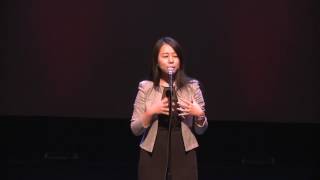
Lu Zhang, founding partner of NewGen Capital, grew up in Inner Mongolia with entrepreneur parents and later founded a diabetes diagnostic biosensor company before launching her VC firm in 2014. She discusses navigating FDA regulations as an immigrant founder, the stark gender imbalance in venture capital (6-7% female partners), and why authentic self-presentation matters more than hiding who you are.
Chapters
Hello everyone. Nǐ hǎo. Oh, nǐ hǎo. Yeah, I speak Mandarin. I don't know how to speak Cantonese, so thank you for that hello. This is Lu. I'm Lu. I'm the founding partner of NewGen Capital. I'm so glad to be here to share my story with you. So I was born and raised in China. That's the reason I speak Mandarin. And also I'm not from the big cities. You normally heard about, for example, Shanghai, Beijing, Chengdu. No, I actually from a place called Inner Mongolia. It's an independent province in the northern China. It's kind of similar province to Tibet. So we have our own president in the province. They also have lots of different minority nationality lives there, and I actually belongs to one of the minority nationality. When I think back, when I thought back, I kind of realized my parents was the first generation of entrepreneur in China. They was working in very big government-owned corporation. At that time, all the corporation, good one, are owned by the government. But they quit their job. They want to do something by themselves. So a young couple, they quit their very good job, live in Mongolia and went to a big city next to Beijing and start their first startup. At that time, we don't call it startup, we call it small business. But looking back, yeah, it was a startup. But unfortunately, they could not get VC funding. They could only sell their house, get a loan, and really get the thing working. So I really look up to them. And also, when I look back, I kind of feel like I inherited this personality from my parents that always be a risk taker. That's also the reason after I graduated from my college, I decided to come to United States for my graduate school. So I came to Stanford, continue studies engineering. That's also the starting point that luckily I got this opportunity to interact with the whole innovation ecosystem here in the Valley. I was with engineering school, majoring in materials science engineering, and I did lots of— oh, lots of materials science engineering here. We used to have a joke saying that I met so many, like, material scientists in the VC industry, and we said, oh, it's good and bad, which means it's really hard to find a good academic research direction in this field. So all of us change our career path, become a venture capitalist. So I was majoring in materials science, so I did lots of research. Still in that field, I did research in nano-thin film, biosensor, even lithium-ion battery. That's the reason I don't like Tesla's battery. So luckily, I— one of my patent technology got supported from university. So this encouraged me, maybe you could do a startup by yourself. To me, that was brand new. Although there are so many undergrads and graduate students at Stanford from engineering school, they did startups. Start up, they drop off, and they start something really cool. But as a Chinese, I still grew up from a pretty traditional family, although I choose some different route. But I don't know whether it's the right way to go to, to at such a young age to start my company. But I mentioned earlier, I was a risk taker. I feel excited when there's a huge risk and huge opportunity in front. So I took it. I started my company. I was thinking, how hard would it be? Turned out to be super hard. It was super, super hard. Not only because it's a startup company, also because I was working on— one of my biosensors has application in diabetes diagnostic. So I was working on medical device company. I don't know whether we have founder here working in healthcare industry or running a medical device company. To me, it was super hard. Not only the product and technology, That's the part I could totally handle, 100%, no problem. The problem is I was an immigrant. That's the first year, second year I came to United States, and I was dealing with this most complicated system in United States, which is healthcare. They have insurance company, they have big pharma, medical device company, they also have this PNS, the FDA approval process. So I have to start, Not only run the company, I also kind of refresh myself, try to learn all these new things every day. There was lots of like this very experienced FDA regulator, and I made lots of mistakes. And luckily I kind of make them up and push things forward, and the company work, the product work. And that was a miserable time frame that I went through for that many years. And, but luckily, yeah. I got lots of luck. After I graduated from Stanford, I also got my company acquired by a big medical device company. Although I had, as I mentioned, I had a miserable time when running my company because so much work, and also I got lots of challenge. I literally got challenged every day, I think. I really don't have time to question myself whether I could do it because I don't have time. When I woke up, I just have to get things done. That's a life. But when I sold my company, I still feel a little bit sad because it's like your baby. No matter it's a good baby, it's a beautiful baby, it's a naughty baby, it's your baby. So when someone took your baby, not a very good feeling. So now when I become a VC, like when I talk to our founder, when they got an offer for buying their company, I kind of understand why they it's really hard for them to let it go. So, it was a really interesting experience. So after that, I also want to give myself a break. So I went to a large corporation, BaoRui Semiconductor Company, doing product marketing. Meanwhile, I also got the opportunity to become a venture partner at a Silicon Valley VC firm doing emerging technology, growth stage, late stage investment. Ironically, when I was a founder, I hate VC. I really don't like VC. I think, yes, I got some good VC support me. Meanwhile, I also met a couple of, like, many super mean VC. They interrupted my presentation. They challenged my gender, my age. They also tried to micromanage my company. So I hate them. But I become one of them. So when I start doing investment, originally I want to try to use this opportunity and platform to see different things. I think I did a lot of things with my comfort zone, like the technology area I was at. I also use this opportunity— I wanted to use that opportunity to see different innovation in different category. And along the way, it also kind of make me— because now at that time I start putting the VC hat into. Myself. I started thinking from the VC perspective, and then I gradually feel I kind of appreciate all the VC gave me hard time when I first started a company, because they stopped me, stopped me from like going to the wrong direction. And also they keep challenging me, make me become better. So I kind of feel like it's okay if I'm gonna continue doing this job, because there's a way that I could become an entrepreneur-friendly VC, especially because I have this experience as a former entrepreneur. So I don't— I know their language. I know the company's life cycle. I know there's no perfect startup. I know every day's mission is deal with problems. So I could be the VC, help founder deal with their problem, and also try to be the go-to person when they need help. And then I found, oh, maybe during late stage is hard, because late stage is capital war. You have to fight against, with partner sometimes, with founder sometimes to afford for their own interest. 2014, I got this good opportunity from the other capital support, so I started my own VC firm, Eugene Capital. So that's a starting point that I really could do a firm and also build up the team based on the same mission and same personality and also same momentum that we really want to help founder at early stage. So far we have 38 portfolio company. Under investment, under our management right now. And I remember 2 years ago, after I become VC, run my own firm, there's a journalist from New York came over to do an interview for me. And he told me a number which kind of surprised me a little bit. He said, oh, the ratio of female partner in VC industry is only like 6%. I think now grow up a little bit, like to 7%. And then it's a huge jump. So since then, I will start thinking about my life. I always kind of get used to be the not special one, but the fewer, small percent of the community. Like I choose to study engineering when most of girls got encouraged to do literature, accounting in China. Decide to come to United States and decide to continue doing a startup company. Very few female founder. That's the reason when I heard organizer told me most of the audience today are female founder, I was so happy. So happy to see so many female founder here. And when I started working on the VC, still same thing. I got this ratio number. So when I look back, I does have lots of very interesting story relate to this. For example, when I went to Japan to have a meeting with our customer, I have the team report to me locally, but I found I'm the only female in the room and they don't feel comfortable I was there. They just pretend I'm a shadow and they talk to each other and they want to bypass me. And when I went to the big semiconductor company in Europe and I told them "Oh, I want to go to restroom." And they said, "Ah, let me ask the front desk lady." And then I found out they only have one restroom in the first floor of this 5-story building. And I remember, after I become the VC, I always got the invitation to speak at the conference, become the speaker or panelist. It was so interesting that there was a panel, the moderator asked the first investor, "how do you think about the trend of technology?" Second one, "how do you help company with like Uber type of business model?" Then third one, "oh, like how do you think about the IPO of Snapchat, like potential IPO of Snapchat?" And to me, "how do you balance your life and the work?" I'm like, I'm not the only one have to have the work-life balance. Everyone have to balance their family and the work, why only me? But that's the thing, that's the stereotype they have for female, especially young female. No matter it's entrepreneur or investor, you have to balance your life. But there's no way for a founder investor to balance your life when you're running a company or when you're helping with a startup company. So I kind of start thinking like how I could better handle that. I did not do it very well when I first started. I kind of gradually For example, I try to hide my age. I don't want people know that I'm only 28. I want you to think I'm older. I try to dress like a semi-gender thing, like let them not realize, okay, I'm a female. But along the way, I think it actually did not work, and it should not work. And I remember last year when Forbes did an interview to me, and the journalist asked me, "How do you handle still time?" I think maybe I did not handle it very well, but what I'm going to do in the future is I won't try to argue with anyone who has a stereotype because it won't work. I will do something. I will get things done to prove them wrong. And also to myself, I start realize that I don't need to care about stereotype because some people, they use stereotype as a label to recognize the world and the community. They don't really have the bad intention. For people who really have the bad intention, no matter what you do or talk to them, they may change very little. But why should I care? That's their problem, not mine. So why should I do something for others' problem other than just be myself? So I start be myself. I just feel like I'm gonna just make all the decision and do all the work based on what I want. Who I want to be, and things I want to follow. So that's also the reason I'm so glad to see so many female founders here today, because in order to increase the ratio of female VC, we need more female founders. And when you get a big asset, please join us and join the VC industry. Let's get more percentage of the female VC in this industry, and look forward to that. Thank you.










