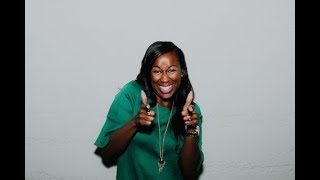
In this keynote‑style talk, Rachel Williams, Head of Diversity & Inclusion at Yelp, shares a personal narrative that illustrates how early conversations about race, schooling experiences, and a pivotal moment of negative feedback shaped her life trajectory. Growing up in the Bay Area in a large working‑class family, she was bused to a predominantly white school, prompting her mother to have early “race talks” with her. In high school, a creative‑writing professor bluntly told her she lacked talent, which silenced her writing ambitions for years. She later earned a psychology degree, entered the tech world, and rose to lead diversity and inclusion at Yelp, speaking at events like SXSW. A chance encounter with the same professor years later made her realize the lasting impact of words. She uses this story to urge the audience not to let others define their potential and to be mindful of the language they use, especially with children. She also mentions an upcoming book slated for 2018.
Chapters
Hello, hello, hello. How exciting. What a crowd. I'm Rachel Williams. I'm head of diversity and inclusion at Yelp. But that is not what I'm going to talk about because I do have several stories about that job. I am going to talk a little bit about an experience I had and how it impacted me. So I'm a Bay Area girl born and raised. Anybody else from the Bay? That's right. To all others, welcome to our town. I was born into a really big family, over 300 family members in the Bay Area alone. Right? We're Christian, not Mormon, don't ask. My parents are working class. My dad makes parts for submarines at Northrop Grumman, and my mom was a hairdresser. And like all parents, they wanted the best for me, which means better education. So they did what they had to do to make sure that I went to the finest schools San Mateo County could offer. So that meant being bused from my neighborhood to a predominantly white neighborhood. I'm going to let you guys in on a little secret. In black families, black parents have to have a race conversation with their children very early. I've had two such conversations with my mom. The first one, 5 years old. 5 years old, getting ready to go to kindergarten, real school. I was dressed in my red, red's my favorite color, still is. Red dress, red pigtails, I was matching, I was ready to go. She pulls me aside and she says, "So, I just want you to know that you're not going to be like "all the other kids." And I gave her this look like, "What in the hell are you talking about, lady? I'm ready to go to school." I grabbed my strawberry shortcake lunch pail and, like, ran to the car. She said she couldn't even finish the rest of the talk because I was, like, not having any of that. The second time I got that talk was as I was entering my freshman year in high school. I went to a very prestigious and elite private school in a little enclave outside of San Mateo, in a very prestigious neighborhood, and all of the students there had very well-known parents. And my mom says, "Well, you're going to go to this school because you're going to help bring diversity, and in exchange, you're going to get a good education." Which sounds like a fair deal to me. I can be myself and get a free education. No problem. Done. Easy peasy. So freshman year, easy making friends because what's not to like about me? Now the school part was a little bit rough. Very small classes. 10 people in a class, so there was no way to hide that you didn't do your homework. So, little rocky, but I made it through. Second year, sophomore year, I was really excited to take this creative writing class. I was like, "This is my jam. I love writing. I've been writing since I was about 5 years old." Saved all those books. If you guys ever want to read them, I'll send them around to you. But this is my thing. Like, this is where I can really shine. So I'm in the class, And the class is being led by a wonderful woman who I felt a kindred spirit with. She was lesbian and masculine with a short haircut and very different from the other professors at this very prestigious private school. So I was like, "It's my girl right there. I'm different, she's different, like, it's gonna be great." Definitely going to ace this class. So I remember staying after class one day and talking to her and saying, "Hey, you know, so I think I want to be a creative writer or, you know, a journalist or something." And she very plainly said to me, "You don't have that talent." Yeah, think about how I felt. Crushed beyond belief. 'Cause I had been writing since the little girl with the pigtails with the Strawberry Shortcake lunch pail. So from that moment on, I stuck to just writing my book reports. No more creative writing. No more thoughts of writing a play. No more writing poetry. No more writing anything extra. I go on, go to UC Berkeley, kind of fluttering around— Yeah, go Bears! Fluttering around, I end up with a psychology degree. Again, no writing involved in that. Really, not really. A little bit, maybe. And so I never thought again about writing because "you don't have that talent" is just ringing in my ears. I'm in this job, Head of Diversity and Inclusion at Yelp, and it affords me the opportunity to speak to crowds like this. And I was at South by Southwest last year chatting and talking about, well, diversity and inclusion. And a publisher came up to me afterwards and said, "I think, like, you should write a book." Haven't you heard? I don't have that talent. I can't do that. So I was flattered beyond belief, right? Because that's my ultimate dream, to write. It's what I've always wanted to do, but I don't think that's my jam anymore, really. Stick to this public speaking thing, this diversity, inclusion, belonging, equity, equality thing, activism. You know, that's my jam now. I don't want to write about that. I'm at my local Whole Foods over in Oakland, and I'm doing my usual, you know, in the line, chatting with everybody, blah, blah, blah, blah, blah. "What did you get? Have you tried this?" And I see this gray-haired woman with a very short haircut and masculine build, and she's chatting me up. She's like, "Hey!" "Um, you look familiar. Do you work here?" "No, I don't. But I'm here very often. I'm a loyal customer. Maybe you've seen me around." "Yeah, maybe that's it." So we're leaving, she's walking, we're going out, and she's still chatting me up, you know, like she can't place my face. And I could see her racking her brain. Where does she know me from? So we get to the parking lot, and she's telling me about the car She just bought her son, and she had just moved back here. And I don't know if it was the turn in her face or what it was, but it dawned on me that that was that professor from my high school who told me I did not have that talent. Right? This is the moment I have been waiting for. Like, I'm going to tell this woman what's up. So I said, "Um, did you ever teach a school class in San Mateo County around 1990?" I'm not going to tell the rest because you guys don't need to know that. She was like, "Yes!" I said, "Well, I was one of your students. And not a very good student according to you." And she said, 'Oh, I wouldn't have even remembered that.' And it was at that moment I realized that her words had such an impact on me, changed the trajectory of my career, but I had no impact on her. So lesson: do not let anybody tell you what you can and cannot do. Nobody. Nobody. Secondly, mind your own words. Be careful what you say to other people because you don't know how they're going to impact a child or someone's dreams. So I told her, I said, "Well, funny that we're meeting because I was just approached by a publisher to write a book, and it's going to be coming out." in 2018. What's your address? I'll send you a copy. So be on the lookout for my book coming soon. Thank you.