“Reddit For Moms” - A Validated Business Idea No One Is Doing
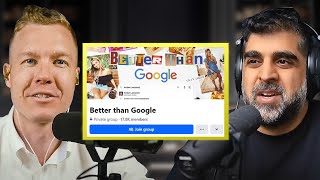
Amber Lancaster built Better Than Google, an Instagram community of 17,000 millennial moms answering each other's questions anonymously. The speakers see it as a Reddit-like business opportunity: moms trust peer advice on health and relationships more than Google, and they control significant household spending. Anonymous posting and influencer seeding create a troll-free environment competitors like Quora lack.
Chapters
the premise of this, there was an Instagram influencer. I think his name, her name's Amber Lancaster. And Amber Lancaster is an Instagram mom. She's got, you know, a million followers or whatever. And she had created this group and I think she kind of like created it, but she's very hands-off with it. It's not like a very calculated thing that she did. And so the group is called Better Than Google. And the premise is inside this group is like 17,000 kind of like millennial moms, like her audience, people who, you know, Cause I was asking my wife, I was like, what is the group? And she's like, well, it's just a bunch of moms who are like, we're all kind of like in our 30s. We all want to have a good life, be a good mom, be a good spouse, watch good TV shows, be healthy. Like we just have like a certain set of things. We're just trying to have a certain quality of life. And in doing so, if you put a bunch of those moms together, then they could really help each other out. It's better than Google. If you ask a question here, you're going to get better than Google type of answers.
Here's an example question. Has anyone found an effective way to get rid of cellulite? I'm pretty petite and I work out daily, but my leg still has cellulite. And it has 30 comments of people discussing how they did or didn't get rid of cellulite.
100%. It's like a media company. It's got juicy content, just like clickbait, like, you know, click-worthy content. But there's no editors, there's no writers. This is just people's real lives. So, so a woman went on there and she was saying, my husband was cheating on me. I found out, I confronted him about it. He got really defensive. and I wanna file for divorce. But then over the last few days, I noticed he was, he knew, he like referenced things that were in my private messages, like my messages to other people. Like, how is he reading my iMessage? And then the world's greatest tech support was in the thread where it was like, all right, you need to log outta your iCloud. You need to do this. You need to do this. You might have a second iPad that's connected to your thing, and that's how he's being able to read this. And they really helped her out. She's like, oh, thank you. I figured it out. He, there was this iPad and whatever. That's how he was reading my messages. And so now I can do whatever. That's a better answer than you would get if you just Googled the sort of same thing and it's more trusted and trust is the key word here. So when I originally came on this Drunk Ideas thing, I was just laughing. Better than Google is just like a, you know, what a funny way to create a Google competitor. It's like, what's better than Google machine learning artificial intelligence? It's like 10,000 moms who are bored and scrolling on their phone. And it's kind of true though, the wisdom of the crowds. Is actually, uh, you know, a very strong force. And the more I thought about it, the more I realized this is actually a really good potential business idea. Here's why. So I've long since had this theory that whenever one thing gets really popular, it creates a craving for the opposite. So we see this in many ways. I, a classic example of this was Facebook became the biggest social network in the world, and Facebook was basically, uh, photos, but it was permanent and public, right? You would post your albums there, everybody could see them and they stayed there forever. Well, as Facebook got more popular, it created the need for something like Snapchat where you would have photos that are impermanent and not public, private, right? And so Snapchat succeeded, but it wouldn't have succeeded unless Facebook had already shifted the way that culture was working and it almost created a craving in people for the opposite. And I think you see that today where the more the world got woke and, you know, you can't say this and you can't say that, and you have to use these pronouns, do this, do that. And then it creates a craving for a character like an Andrew Tate or even a Donald Trump or somebody who's, oh, he's a straight shooter. He is just gonna call it like it is. And those people become very popular because they're a counterpunch to the way that things are going or the, the, the other strong opposition. So similarly, I started thinking about this. I said, man, in an AI world, a lot of shit's gonna change. And if you're gonna just type into, you know, a box and it's just gonna give you the answer and it's gonna scrape the internet, it's just gonna give you some generic answer. That's gonna be big for sure. There's, there's definitely a market for that. But what's the opposite of that? What craving does that create? And what I realize is it's gonna create the craving for almost like the, the old village wisdom, right? How, how you can get answers from a bunch of humans who you could see their name and face and they could tell you things that are their personal experience rather than generically the right answer. And I think that if somebody made an app that was the same premise, the Better Than Google premise, and it was a community of, you know, 10,000, 20,000 moms who were going to answer questions, that would be a really powerful app. I think it would be really addictive because you would get the type of content like the Botox question. By the way, one key thing is you could share anonymously in the groups. You go anonymous and then you post about the infidelity in the marriage and that's, that's part of why it works. So I think you would need those features, but think about how valuable that would be for a second. Like if I could pick any one customer segment to have like a rabid community of, it would be moms. Like it would be people that control the household budget in America. That would be the most valuable audience segment that you could have. And I think this is the way to get it.
Do you remember ChaCha? ChaCha?
Was that like the old search engine that was kind of like this, like Yahoo Answers type of thing?
Yeah. So I'm just pulling this up right now. But basically I remember it when I was in high school. And so that was about 2008. So it was launched in 2006. It went bankrupt in 2016. And so basically it was a service and I didn't actually realize any of this, but it raised $6 million including from Jeff Bezos. And they had 5,000 freelance guides, meaning people who they hired. And I would send a text message to ChaCha. I remember. This was during the World Cup and I was like testing it out and I was like, what's the tallest and what's the shortest player on this particular soccer team? Because I was just testing it out and I think I paid them 2 or 3 cents or something like that. And they would message me back in like 3 minutes with an answer. And at the time it was amazing. And I'm just reading their, their page now. It looks like they actually had raised up to $60 million and the, and they had something like 1.7 billion questions. A month of people that, that people were asking. And it was like magic back then because we didn't have Google on our phone. I didn't have a smartphone and I remember this being amazing and eventually it went out of business because Google's just better. But I just don't know if it could ever make any money. I, I think I paid like 2 cents or something like that. I texted my sister.
Well, well, that's the, that's the beauty of it. You don't need to actually pay for an expert answer. So, so like here's some different answers. Analogs to this. So you have Quora, which is a bunch of more, I would call it tech nerd type of community. And then you have GLG, which is highly paid intellectual information, right? And there's a different customer for that. For the customer for that, it's going to be a hedge fund or some sort of investment banker or something like that. And then you have Google, which is the general search. And Google's market cap today is I think $2.3 trillion. And if you think about like search on the internet, so the big, the general search on the internet, Google was $2.3 trillion. And then you can like silo that into different things like searching for restaurants. It's like Yelp. And I don't know what Yelp's market cap is.
I mean, it's billions, but it just hasn't grown in years.
$2 billion, right? So, you know, the search for restaurants and handymen in your area became $2 billion out of the $2 trillion. And then Glassdoor, which was like search for you know, good places to work. And then you have search for jobs and then you have search for whatever. And there's 1,000 tiny search engines. And these are all like single-digit billions companies for the most part that got created. And so I think, and then we have DuckDuckGo, which is kind of like the, for the, you know, tech-savvy person who cares about privacy and likes to not be doing the mainstream thing. Here's DuckDuckGo. And we've talked about them before about how much insane amount of traffic that they have. So I think that while search and this kind of question and answer thing feels like a solved problem, um, and even the kind of community questions and answers, like you would think, well, why not Quora? Why not Reddit? Dude, my wife is not getting on Quora and Reddit. Reddit is just like, it repels women.
Like, dude, isn't it funny how Reddit works? So Reddit is, I don't remember what they are now, but 2 years ago, they were like the 6th or 7th most popular website. And yet if you asked people, do they use Reddit? A very common answer was like, what's Reddit? It's a very strange thing. I love Reddit, by the way. I use like—
I do too. It's made for dorks like us, right? Yeah.
Yeah.
Guys with body odor, right? It's not made for the millennial mom who wants to go in a high trust place and not get trolled and not get spammed and not get like, you know, made fun of and not like she doesn't get all the weird memes and they kind of like, it's just different. It's a different culture. And so I think that this kind of Reddit for moms angle, which you, you couldn't really, if you had pitched me that generically, I wouldn't believe it. As soon as I saw Better Than Google, I thought, man, if somebody really created an app that's supposed to do this and they seeded it correctly, the beauty of this was it was seeded with only followers of a certain type of Instagram influencer, which created a like-minded community of members and it excluded the general trolls of the internet. If you could find a way to do that again, I think that thing would scale. And I think that thing would be really, really valuable. The value per user would be really, really high. All right. If you liked that clip, there's a full conversation with a lot more just like that. Just follow my finger. It is right here.










