Rick Marini has been there and done that at Hustle Con
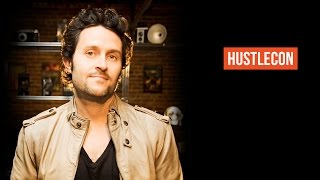
Rick Marini built Tickle.com into the 18th most-visited site and sold it for $100 million, then founded BranchOut with 800 million profiles. He shares his playbook: allocate 5% of your portfolio to angel investing, find great teams in large markets, and get a technical co-founder if you're not technical. He says the work is hard and resilience matters more than an MBA.
Questions this video answers
Allocate roughly 5 % of your total investment portfolio to high‑risk angel deals; start small, especially in domains you understand.
No. While an MBA can be life‑changing, you can learn by working in startups, building a network, and gaining hands‑on experience.
Marini lists: (1) financial return, (2) personal passion, (3) hiring people with intelligence, integrity, entrepreneurial drive, work ethic, and fun, (4) creating large‑scale impact (millions of lives), and (5) aligning with a mission that matters.
Be pragmatic: recognize the dependency, diversify, and quickly adapt product or growth strategy when the platform alters its policies.
Work harder than everyone around you, say yes to opportunities, and maintain a good attitude; these habits attract mentorship, projects, and long‑term success.
Chapters
But right now I want to introduce our guests for a little fireside chat. It's gonna be about 20 minutes long, and as we're talking, a few minutes in, if you have any questions or anything, make your way down here and you could ping your question to— or tell Eric your question, he'll grab our attention, we'll go from there. But I want to introduce the founder of Tickle and Branch Out, Rick Marini. All right, what's happening?
So I get to be the only thing between all these people and beers, right? Wonderful.
That's right. No pressure. So Rick's been kind enough to join us. I emailed him about in June. And when he said yes, I was just so pumped and so happy to have him. So we agreed to do this little chat. So let's just begin with a little bit of your background. Who are you? Why are you cool?
How about who am I, not why am I cool?
Oh, no, are you, sure.
So let's see. So I'm Rick Marini. Let's see, I grew up in a small town in New Hampshire. I've been a tech entrepreneur out in Silicon Valley for the last 15 years. Undergrad was UNH back in New Hampshire. Then started to work for a company called Fisher Scientific doing corp dev, corporate finance, not technical kind of stuff that we do out here. And then went to Harvard Business School and got my MBA there. And that really changed my life because I met my co-founder of my first company there, a guy named James Currier. And James and I at HBS took the Myers-Briggs test along with everyone. And that sparked the idea for our first company, which was called tickle.com. Tickle was the largest personality testing site on the web. And it actually became the 18th largest site in the world at one point. And we started that company back in Cambridge and moved it out to San Francisco back in 2000 and grew that company to a $100 million exit. Exit back in '04. Stuck around there for a couple years and with an earnout with Monster, started my second company, Superfan, which built Facebook apps and social games, kind of a digital agency for brands like CBS and Universal and Sony and others. And then had the idea for BranchOut. So pivoted the team over to doing BranchOut. And BranchOut at this point has over 800 million profiles. So that's grown into a big site. And other than that, I've also done a lot of angel investing. I'm in over 40 angel investments and advisory roles now.
So just for the record, I just realized this. We did not plan this, our outfits. Just wanted to get that out there. I just realized this.
Very similar.
Yes. Great minds think alike, I think.
Same socks? Yeah. No? Hopefully not. Close. OK.
If only I had the Patrick Dempsey haircut, we would just— So— I don't know if that's good or bad, but go ahead and move on. Oh, it's good. So before we— before we— we were hanging out a couple weeks ago, and we were chatting, and you said that when you started Tickle, you wanted to— you had two goals. You said you were not going to quit unless you either went public or sold it for $100 million. And when you think about it, for a quiz company, I mean, that's like— That's mind-blowing. Like, who on earth would think that? Most people would never think that's even possible. What made you think that was possible? I mean, did you have market validation? Was it a gut feeling? I mean, what made you— you were crazy. Why did you think that?
So it was more gut feeling. There was no magic around that number. It just felt like a big round number that two guys from small-town New Hampshire could strive to get there. You know, a billion dollars sounds too unattainable, but $100 million sounded like, hey, if the stars align and we work hard, maybe we get there. And, you know, when you've got a successful company, you know, your goal is always going to be to go public, right? Every entrepreneur wants to start a company and go public. And one of the lessons there is you've got to know when to sell and when to hold and keep going. And I think a good example of that is Mark Cuban, who started Broadcast.com. He was very smart to sell to Yahoo for $5.7 billion back in the day. And then Mark Zuckerberg was very smart not to sell to Yahoo for a billion and keep keep going, and now Facebook is worth almost $200 billion. So, you know, I think the lesson there is you've got to know when the right time is to sell. And for us, we had 7 different offers for Tickle, and the 7th one is finally the one that got us to $100 million, which we can go back to later. But once we got to that number, it felt right.
Which was way different than what Joel was talking about earlier. He was talking about lean methodology. And validating and market validation, but for you it was just a gut feeling almost.
Yeah, it was a gut feeling. It was a goal. Um, you know, you want to set high yet attainable goals and we got there. Um, but you know, there was also, um, when you, when you're in a position like that where you can, you can see the future, um, and you, you understand your business better than anyone else, of course. Um, when you've got a high probability of success, the way that I think Mark Zuckerberg saw his business going, um, that's when you don't sell. When you don't see a very clear path to be able to get to the next level, that's when you sit back and you say, maybe I should lock in some money now. And especially, you know, coming from, you know, I didn't come from money. So when you have the chance to do that, put some money away, which, you know, it can be rainy day money so you can go take some bigger chances later. I think that makes a lot of sense when you don't see a clear path to getting to the billion dollars. All right.
So since Tickle, you've done Superfan, you've done Branchout, and now you're an investor. I mean, you've done a bunch of different companies. When you are starting out, how do you judge between going after something that you're extremely passionate about versus something that is very clear that it's an opportunity to make a lot of money? How do you balance that? Because it seems like something that everyone struggles with.
So I think any entrepreneur starting a company should probably write down the 5 or 10 things that motivate them. And financial return should probably be one of the five, but hopefully not number one. And following your passion because you love a certain space should also be top five, definitely top 10, but maybe also not number one. A lot of people like me love sports or music and would love to build sites around that. The reality for most is that it's really hard to be able to attract a lot of money into that from venture capitalists. As well as to be able to build it up and get a lot of traction, because there's a ton of competition, and hard to have a big exit, right? So when you start to raise money, you've got to be realistic about, do I have an idea that goes beyond my personal passion? Is this an idea that can get VCs or angels really excited, and not just get me excited, but get, you know, the entire ecosystem behind this? You've got to hire people that would be potentially leaving their jobs leaving their high-paying jobs that pay their bills and support their families to also come on board with you, which again, your passion needs to translate beyond just what you're into and be able to support bringing investors in, bringing other employees in, and being able to give a good return. So it's not just about the financial return. It's not just about the passion. You want to bring all those together to be able to, to do something that gets you excited every day. And I don't just mean I want to do a music site because I love music, getting excited. I'm an entrepreneur that has started a couple different companies and they weren't my, like, passion. Like, online personality tests with Tickle wasn't, like, my passion. And with BranchOut career networking, recruiting on Facebook isn't my passion. What is my passion is the ability to create companies that touch the lives of hundreds of millions of people. So with Tickle, we had 200 million registered users. With BranchOut, we have over 800 million profiles. I would rather create companies that have a positive impact on hundreds of millions of lives than do a little niche site, music site, that is something that I'm passionate about. But that's me. And everyone's got to figure out their goals. But if you want to be realistic and attract revenue— attract funding and be able to have a big exit, you've got to think about what's going to get me there, and your personal passion project may not. By the way, I also want to go back to something earlier when I had said about, you know, $100 million was a good exit and I was happy, but you could go for the billion. A lot of people think that if they don't get to that billion-dollar exit, right, if they're not the next WhatsApp or Snapchat or whatever, that it's a fail. You know, if you raise a small amount of money, especially angel money, and you sell your company for $5 million, $10 million, $20 million, that's a big hit, and that changes your life in a big way. As long as you didn't raise too much money, where you still own a lot of the company. So, you know, if you guys are thinking about starting companies or getting involved early stage in a company, there's absolutely no shame in selling for 10, 20, 30. I mean, that's a big hit. Silicon Valley is really focused on the billion-dollar exits, A, because it gets headlines, and B, because that's what the VCs need to hit. But for most entrepreneurs, that billion-dollar exit is never going to come. But being able to lock in X millions of dollars is life-changing. And that's far more important than getting headlines in TechCrunch.
And by the way, as we're chatting, if anyone has any questions, we've got a mic over here. You can line up, and we'll try to call you so you can ask your questions as we're chatting. But you mentioned that you said there was 5 things that mattered to you when starting a company. You said passion and also the financial gain. Are there 3 other ones that you actually have for you?
I didn't bring my list with me, but I'll kind of make some up. So I think, you know, being a founder of a company, one really cool thing that you get to do is you get to pick who you work with. So for me, I like to hire people that are highly intelligent, people that have integrity, people who are entrepreneurial, they roll up their sleeves, they work hard, and people that are fun. So that's who I like to work with, that's who I like to be, and that's something that's important in running running companies, I think. And again, you know, I talked about being able to change the world in a big way. That's something that, that if I'm going to spend my time, you know, some people say, if I could just change the life of one person, it's worth it. It's not for me because, you know, I think a lot of us here in Silicon Valley are really lucky. We have the ability to touch millions of lives. I don't want to just help one person. I want to help, you know, 10 million, 100 million people.
Right. And so I, if I were in the crowd right now, I'd be thinking, Well, it's easy for you. You've had a $100 million exit. It's easy for you to say these things. Well, if you didn't have that $100 million exit, clearly you've started companies since then. How would you do it without that cushion? Let's say someone's out there and they're broke. Let's say that someone's an employee. They're having to work part-time just to pay for their living. What would you— if you were in those shoes, what would you do?
OK, so I'll answer it as an angel investor. I've done 40 angel deals. Half of them are probably from serial entrepreneurs, people that had an exit and they want to do another one, and maybe it's their second or their third company. Guys like Travis and Garrett at Uber, right? So I've been friends with those guys for 10 years. They had done 2 successful companies before, and then they did Uber. There's other guys that I've backed that are first-time entrepreneurs. I mean, look at Mark Zuckerberg. I wish I was a backer in Facebook, but look at him. Like, he started a company when he was 18 years old. Right? So it doesn't matter that you've been able to do it once and then it's easy street after that. The reality is if you're a passionate person, if you've got a really interesting idea, if you can execute on that idea, if you have a good attitude, and attitude goes a long way. I mean, life to me is kind of 10% of what happens to you and 90% of how you react to that. Right? So if you have a good attitude and you have all those other things lined up, you're gonna be able to attract great people around you as well as investors, people like me and other angels and VCs. So there's absolutely a path to being that next Mark Zuckerberg for people like that.
And as a non-technical guy, would you be following the lean methodology that Joel was talking about? I mean, that wasn't exactly the case with Tickle, but is that what you would do now?
Yeah, so I mean, it's a lot cheaper to start companies now than it was back in 1999 when I did my first company. So, but one thing as a non-technical founder, you have to find your tech soulmate. And if you don't find them, don't bother trying to raise money if you're in a tech company, because the first thing that the angel or the VC is going to ask for is, all right, well, I've got the idea, I know what you're going to do, now I want to understand the technology. Where's your CTO? Let me talk to him. So you absolutely have to find that technical soulmate when you're starting a company.
And that's something that you do now as an angel. I mean, you're always—
Absolutely, yeah. I mean, even as a non-techie, I've been around this for 15 years, so I can ask enough of the right questions. And if I'm not hearing the right answers, like I don't have a CTO, I mean, that's obviously a red flag.
All right. Do we have a question?
We do have some questions here.
What's going on, Rick? I'm from Boston, lived in New Hampshire for a while, so I love me some Kimball's orange pineapple ice cream. So here's my question. It's kind of two-part. One, I would love to become, to eventually become an angel investor. So first question is, what would you say is the minimum capital you need to become angel investor? And the second question is, do I really need to go to business school to get there? And I really mean that neutrally.
Let me—
Like, what did you gain from business school that you wouldn't have learned anywhere else?
I'm going to take the second one first because it's a shorter answer. No, you don't need to go back to business school, is the short answer. I loved my time at HBS. It was life-changing, literally. It was a life-changing experience because I didn't go back into corporate finance, where I expected to go back. I met my co-founder, and I became an entrepreneur. It changed my life. Now that said, I grew up in New Hampshire. I went to undergrad in New Hampshire. I went to B-school in Boston. I mean, that was my life there. I wasn't out in Silicon Valley. I wasn't going to conferences like this. This, I wasn't going to networking events and everything that everyone here has access to, it could be a waste of 2 years of your life to go back. And I'm a proponent of education, but you can educate yourself here, go work in a startup for 2 years, and learn a ton, especially if you want to be a founder. Like what I always tell people who want to be a founder is, if you've never been in a startup, you're jumping in too early. Go work for a startup, learn on someone else's dime, By the way, if you go to HBS, it's going to cost you, I don't know, $75,000 a year or whatever it is. Instead, here you're getting paid $100 grand or more, whatever it is, to work and to learn. So use that time here.
That's the money that I saved up to potentially be an angel investor.
Okay, good. So now you've got that saved up. And now on the angel question, angel investing is highly, highly risky, right? So whatever your percentage of your portfolio that you might allocate towards high-risk investments, I mean like super high risk, maybe that's 5% of your portfolio. You should not be doing more than 5% of your portfolio in angel deals because you should expect that many of those, at least half of those, will be a zero. And it's really hard to make up when you have zeros. So, you know, I mean, start small, especially with companies that you know something about. So for me as an angel, you know, I always look for great teams. Of course, that's always number one. I look for big markets and disruptive technologies, and that's really important. But third, I tend to invest in consumer internet and mobile and social and marketplaces, things that I know because of two reasons. One, I can understand what they're doing, and number two, I can be helpful. So try to stick to your area of expertise when you're doing angel investing, especially early days.
I have more questions, but I'll be respectful. Maybe we can catch up offline.
OK.
Cheers.
So we kind of skipped over a pretty fun story and a pretty important part of who you are, which was the story of Tickle. We kind of skipped over the part of the $100 million exit. And when we were chatting earlier, you mentioned— I mean, I was pretty amazed at it, at what happened, obviously, like I'm sure everyone here is. But you talked about when you were with— monster.com bought it. —when you were with them, you told me that getting there was 99% perspiration and 1% inspiration. And I think that's pretty wild, because really, the odds are not in your favor to have a $100 million company. So how are you balancing the idea of getting lucky versus working your ass off and getting the ability to even negotiate that deal?
Yeah, so the word lucky. So you guys have probably heard, the harder I work, the luckier I get. That is true. The other is you have to put yourself in a position to be lucky, and that's what we did with the deal with Monster. I mean, we worked our butts off. We started the company in 1999. We sold it in 2004, so there's 5 years there. We raised money in March of 2000, March 6th of 2000, which was the day the NASDAQ tanked and the bubble burst, and that was not a fun time. Luckily, we got the money in before that happened, and moved out here, and the first 2 years were really, really hard out here because it was a recession. I mean, it was, you know, Silicon Valley was impacted more than anyplace else in the country, and it was just not a fun place. 2001, we were 3 months away from going under. I mean, it was really scary. Our bankers and lawyers were telling us you should close up shop and, you know, pay off your bills, and we said, fuck that, we're not gonna do that. We've never lost in our lives, and we're not gonna lose on this.
And does going under even include your personal What you have? I mean, your personal worth?
Yeah, I mean, everything was in the company.
So going under means that you are screwed?
Yeah, I mean, big time. So not just the company, but you? Yeah. So we put like everything into it. And yeah, thank you. Yes, yes, yes. This shit is hard. Yes, it's— so we put everything into it. And I started— I picked up the phone and started doing deals because our sales guys weren't getting it done. Not because it was their fault. It's just nobody was buying ads. In 2001, and one of the tests that we had was an IQ test. This is a very long answer to your question, but I'm gonna get to it. It's a good story. So I started picking up the phone and doing what's called CPA, cost per acquisition deals for our IQ test, and we would charge $15 for the test, and then we'd give $5 to the company, the advertiser that promoted it for us, and it started taking off. And what happens is all these guys look at each other and look at the deals, and then everyone started calling me saying, "I wanna run that, I wanna run that." And it took off. And that saved the company. And in 2011, we went from 3 months away from bankruptcy, and— I'm sorry, in 2001. In 2002, we won the Webby Award for the fastest growing site on the entire internet. And it was— a lot of it was driven by that IQ test and all the traffic that was brought in. And that's when things took off, and we went from $1 million of revenue to $4 to $16, and then by 2004, we were at a run rate of $25 million, and that's when— now getting to the answer— that's when we put ourselves in a position to be lucky, for two reasons. One, because we had real revenue. We were doing $25 million of revenue at that point, on our way to $40 million the next year. And number two, because A friend of ours who was also an HBS classmate a year ahead of us had sold his company, his name's Chris Michael, to Monster about 6 months prior. And Andy McKelvey, the CEO of Monster, who basically controlled Monster, he was chairman of the board and could do whatever he wanted, he, Chris knew that we were about to raise money at $100 million valuation from Accel, who's now one of my main investors in BranchOut, and Chris also told Andy, This is happening, and if you're interested in these guys, Accel's gonna want 5x the return on their money. Therefore, you're gonna have to buy them for $500 million later. The market cap of Monster was too small to support a deal that big. So Andy said, no, no, we need to do this right now. So we told Accel, give us a week. James and I flew to New York to meet with Monster, and it was a very quick process. Because we had real revenue and we already came vetted by Chris. And then James and I found ourselves in Andy's office, and we had gone in there, you know, reminding ourselves we want $100 million. That's the goal. We sat down with Andy, and it was a 3-minute conversation. He sat down and said, "Guys, I'd like to buy your company, and I'd like to pay $80 million." James and I looked at each other and said, We'd like $120 million. Andy, who's a 75-year-old multi-billionaire, sat back, thought about it, and then said, guys, I'm going to offer you $100 million, and that's it. And James and I at that point knew this negotiation is over. This is not going any further. James and I in our best poker faces looked at each other. Andy, you have a deal. And a $100 million deal was done.
What's that feel like to hit a goal that you set out to do 9 years ago? I mean, you get a— what did you do? You get a little top hat and a monocle?
You know what? It's— is that our matching outfit next time?
I doubt if you are.
So you know what's weird about when you sell your company is that it's not like you just won the Super Bowl. It's like, 3, 2, 1, yay! You know, it's this process where— We agreed to it, and then you go through like 2 or 3 weeks of due diligence, and then the legal stuff, and all that stuff, and then you get paid when everything, you know, when all that's done. And then, you know, it hits your bank account, and then you kind of go to your co-founder, hey, we did it. But it doesn't have the same thing like you just won the Super Bowl, like that moment. But of course, I mean, it felt, sure, it felt great, and it allowed me to, you know, to do some nice stuff for my family, to do angel investing, and to have, some security for my family.
So it was kind of, all right, this is awesome. Let's get back to work. Yeah.
I mean, we also had an earnout. So we just kept cranking away with the business. And when someone offers you that much and they ask you to stay on, it was the right thing to do for us to stay on for another 2 years.
All right. Do we have one more question?
Hi, Eric. I'd like to talk a little bit about Branchout. Couple of years ago, social recruiting was very hot, and you were able to raise quite a nice amount of money. Recently, most of the players have their own challenges, and not only in social recruiting, but all Facebook-based businesses maybe. How do you see this going forward, and with mobile, and with Facebook-based businesses?
Sure. So, yeah, so Facebook made some major changes to the platform about a year and a half ago. And prior to that, Branchout was adding 400,000 new users a day with zero marketing. I mean, that's a big number, right? So those were the fun days of Facebook. They made changes right before they went public to be able to better monetize the feed with ads instead of free promotion for Branchout and Zynga and all the other app developers. So the lesson there is be careful when you develop on another platform that you don't control. So, you know, in many good ways we were able to do some wonderful things with BranchOut and build a very big database and raise money and do some awesome things in helping people get back to work. And then in other ways, when you rely on another platform, that is a risk that can really hurt your growth.
And we talked about this. So when Facebook made a change, BranchOut kind of got screwed for a minute. And you had a great answer. I was like, oh. Were you devastated? How did you feel? And you told me something really amazing, which goes along exactly with the title of this talk, which is "This Shit Is Hard." I mean, it'd be easy to be devastated and just freak out and be like, I'm screwed. I've raised $56 million. My business is— I'm fucked.
I mean, nobody's going to feel bad for me or should feel bad for anyone. I didn't feel bad. I mean, you just react to it, right? You make changes. You've got to adjust. And you know, you don't go home and cry about it. You figure it out. I mean, inactivity leads to doubt and fear. Activity leads to confidence and courage. And if you— you know, you've got to be active to be courageous. And we made changes based on the information we had and moved forward.
And you did not dwell on it. That was amazing. Of course we thought about, OK, what do we do now?
So we were pragmatic about it. But nobody wants to hear us crying or bitching. I mean, you just move forward.
Yeah. I mean, when you told me that—
This is part of being an entrepreneur. I mean, we called it, this shit is hard. This session because it is hard and that stuff's gonna happen. And things that are worse can happen too. You've gotta know what you're getting into being an entrepreneur because it's not all about great TechCrunch stories and meeting presidents and interesting people. Most of it is a day-to-day grind. And this stuff is gonna happen. And if you don't have the stomach to ride that roller coaster, you really shouldn't be an entrepreneur. And I tell people that to hopefully save them heartache later. I love being an entrepreneur. There's nothing else I'd rather do. I love it. I love the ecosystem. I love working with smart, creative people. That's why I do this. But you also have to know, especially as a founder, how much pressure is on you. You can never shut it off. You know, you're always on. You're always pitching your company. And bad stuff is going to happen. And I've had, you know, the highest highs and lowest lows all in the same day. And this is, you know, one example in a big way of stuff that happens as part of that journey.
So we're about outta time, but is there anything that you'd like to tell the crowd that you wish that you would've known or been told when you were just getting going?
I mean, the things that have helped me in my career from early days, and these are just general, not necessarily as a founder, but you know, I've tried to work harder than everyone around me. I've tried to say yes a lot. If someone gives you the opportunity to do something, say yes, whether it's a project at work or it's a business dinner or a networking event or whatever. Say yes and just get out there and do stuff. And then I talked about attitude earlier, but having a good attitude goes a long way, not just as a founder and kind of rolling with these punches, but also early in your career because people want to mentor the smart people that have a good attitude, that are willing to work harder than anyone else. You're going to stand out. You're going to get the best projects. You're going to get mentored by the best people. So just, I mean, those three things can take you pretty far.
Well, before we wrap up, we do have a cool little surprise. We've got, I think right now we should have one or two school buses outside. So once we wrap up here, Sales for Startups has been kind enough to provide us with two buses that will be waiting outside for us right now. So if you're interested in going to the after party, which is only about a mile away, we can all get on that bus together and head over there. So please check out Sales for Startups. Bennett and the guys here are awesome. They run a bunch of sales workshops. So we got that going. And I just want to thank you for coming. This has been really badass. And thank you, everyone, for stopping by. This has been a really, really, really great day.
Thanks, guys.










