Sam Parr from The Hustle Explains his Content Strategy
In this talk Sam Parr, co‑founder of The Hustle, walks novice‑to‑intermediate writers through the step‑by‑step workflow his team uses to turn an idea into a shareable article. He begins by stressing the primacy of the headline and its accompanying description, arguing that most readers only see these elements on Facebook or search. He then advocates dumping a horrible first draft to generate motion, followed by an incubation period (shower thoughts, walks) to break fixation. The core of the method is rigorous editing: creating a "slippery slope" where each sentence compels the reader to the next, cutting aggressively (often 25 % from the start and end), and simplifying language to a 6‑8th‑grade reading level using tools like Hemingway. He discusses optimal article length for social vs. search, the importance of concise sentences and paragraphs, and avoiding adverbs. Visuals and Facebook optimization are covered, including headline testing, image selection (unsplash vs. stock), and the dominance of Facebook traffic. Finally, he introduces "copywork" – hand‑copying favorite marketing copy or literature to internalize style. Throughout, he illustrates each step with the early Hustle story about a 30‑day Soylent experiment, showing how the process scales from a quick 30‑minute piece to a half‑million‑view article.
Chapters
Hey everyone, my name is Adam Ryan. I'm the Vice President of Media for The Hustle. I have the pleasure of introducing our next speaker who most of you probably know. If you're here, you definitely know the company that he's created. Sam Parr has been a lifelong entrepreneur. He started with a chain of hot dog stands in Nashville, Tennessee. And now oversees the entire Hustle operation in San Francisco. And Sam started the Hustle in his kitchen, creating content that was for the purpose of community. And since then, the Hustle has now grown to 500,000 subscribers in our email with industry-leading, industry-leading engagement, millions of people to our site every month, events like this one all across the country, and has had the opportunity to hire 17 people while keeping a profitable business. That whole time, what hasn't changed is the process of how we create content and how we do that on a daily basis. So without further ado, Sam Parr to teach you how we have done that for the last couple years.
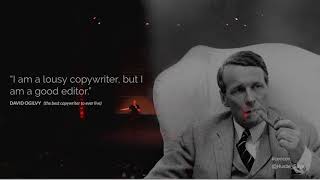
When I first started this company, I promised I would never speak at my own conference. But on Tuesday, Kara asked me to help her out and give a talk because a lot of people had asked about this topic. And so here I am. I'm breaking my first rule. So, but that's OK. So today what I'm going to talk about is the really, really boring stuff that everyone should think about and use if they actually want people to read their writing. And what's, what's interesting about this topic is that it's, like I said, pretty boring. but the results are what are incredibly useful. And so before we get into this, I'm gonna assume a couple things, and this is who this talk's for. First, it's for people who are novice to medium, novice to intermediate when it comes to writing. How many of you are doing content marketing because you have something else that you wanna sell? Okay, how many of you are in the media space where you're just wanna, That is what you're selling is your media. Okay, perfect. That's what I was hoping for. So most people are in here because they have a product that they're trying to sell, and they're trying to get traffic to convert those users. So that's perfect. And the last thing is that the assumption here is that you actually want to influence action and get people to read what you're creating. Now I have to— I have to do a quick disclaimer, which is, so when we started The Hustle, originally what we were is, we're now an email, that's what we do. We have half a million people on our email list. But when we first started, we were a blog. And the idea was we wanna create this blog in order to get a lot of email subscribers because we didn't have a lot of money, so we couldn't pay for it, so we just had to use our time. And I am not a writer, I did not study journalism. We have people who have at our company, but that's not me. And so I never considered myself a great writer, but what I was always pretty good at was captivating people's attention. And so I studied a ton of books, a ton of principles, and I thought, what makes people share? What grabs people's attention? How are the tactics? How does that actually work? And so what we ended up creating over the years is a process that helps people go from an idea to putting it on paper. I'm not gonna talk about how to get traffic 'cause a lot of people are gonna do that, but I'm literally just gonna talk about the idea of going from idea to paper, because it's incredibly important, because a lot of people have really good ideas, they just suck at going through the process. And although I hope that what you hear me saying makes me sound incredibly intelligent, but the truth is, I didn't make any of this up. I'm just stealing it from a ton of different sources, and we put it together into our process. Now, before we get into all this, I want to let you know that I always feel that the point of getting someone to read something is to make them feel an emotion, 'cause emotion is what causes action. I also love using first person. A lot of pe— who here works at a company that's over 1,000 people? Okay, cool. So it looks about a third of you. So if you are one of those people, a lot of times you're gonna get chastised for using first person for, quote, "sounding not professional." I think that's crap. I think that you can write in a conversational way while also being incredibly professional. When I think of content, I think of you're creating a journey, almost like you're writing an episode of Lost, and that's how I think of this style of content where there's lots of ups and there's lots of downs and you're leading people through this emotional journey because in the end that's how you're gonna get people to act. So here's the process that we've created. Now The Hustle, when we first started it was, we couldn't afford to hire experienced people, so this is the process that we used to train people who were pretty talented, but not refined. Now that we have some more experienced people working, things have shifted a little bit, but if you're going to implement this process, if you just do this, it'll work fine. It'll work very good, and you'll be good to go. After a while, then you can make your own process, but if you just copy this, it'll work wonderfully. And today what I'm going to do is I'm going to go through an example of one of our very first blog posts we ever wrote, was about a guy named Josh Helton who lived on Soylent for 30 days. If you Google "The Hustle Soylent," you'll see this article. You'll see exactly what I'm talking about. But I'm gonna use this article as an example of this process, and we're gonna write this— we're gonna rewrite this article. Has anyone read this? Cool. So basically the idea is Soylent's a new-age meal replacement, and it wasn't meant to live off of, but we wanted to make a splash, and so we said, We basically gave this guy $2,000 and said, "Would you be willing not to eat anything for 30 days and only drink this and blog about it?" And he said yes. So let's start with the headline. Like I said, I told you the idea of the article, which was— the one-liner was, "We're gonna get a guy to live on Soylent for 30 days." That's a fine place to start. Now a lot of people, what they do is they write something and then they add the headline. That's not the right way to do it. Because the fact is, is that most people find their content on Facebook or search. How do you find that? Through the headline. The headline is gonna be read by 95% of people, the actual content by 5% of the people. That's just the numbers, so let's put a lot more effort into the headline. So it all starts here with the headline. For the Soylent one, we originally said we're gonna go 30 days living only on Soylent. That's not gonna be the end headline. That's just where we're gonna start. That's the idea. So you're gonna describe what you're writing about in the headline in one sentence. Now, it actually goes a little bit further. We're gonna actually go through the description. If you guys go through Facebook, you're gonna see there's gonna be a photo, there's gonna be a headline, and then there's gonna be a one-sentence description. I think it's 190 characters, 150, but basically it's one to two sentences that describes a little bit more in depth what your article about. So, originally we were thinking about productivity. So a lot of people, particularly my nerdy friends who are engineers, They're always trying to maximize productivity. And so we thought, let's just take this to the extreme. And so in attempt to become the most productive person on the planet, we are going to give up food and live entirely off Soylent. This article is about how it went. I just, in 2 sentences, I got your attention with the headline by the high level what it's about. And I gave you a little bit more in the description. So what you can do is you can get a Google Doc. And you can literally just get a Google Doc. You write the headline. You write the description. Now it's time to write the first draft. This is where people really screw up. Writing something is— and putting it on the internet with your name on it is a lot different than writing code and putting it online, or it's a lot different than being a salesperson, because maybe only 1 or 2 people see it. Writing's incredibly scary, because potentially millions of people can see what you've done. And because of that, when people write their draft, or when they start writing their blog post, they get really stuck. Like, they'll write a sentence, and then they'll go back and they'll delete it, and then about half an hour goes by, and they really only have 2 sentences down, and they're like, "These 2 sentences are perfect. Now let's go through the rest." And that's just incredibly inefficient. And so what we tell people is, make your first draft horrible. So you literally just write. So you could say— this is verbatim what you can do. Verbatim what you can write. Right now I'm writing about Soylent and how it went. I'm not sure what I'm gonna say, so I guess I'll just start in the beginning. I started doing StoryLit for this reason and that reason and that reason. You literally can write that in your first draft. You just have to write anything. The reason being is, once you have motion, has anyone heard the phrase, motion creates emotion? This is what you tell salespeople on the phone. They say, like, talk like, walk like this when they're trying to sell something, because when you actually start moving, it gets things flowing. Same thing with writing. So you just want to start with a first draft, and you just want to write everything. It's gonna be horrible. Just accept that it's gonna be horrible, and accept that no one is going to see that first draft. Now, you guys are going to have access to the slide. I actually linked the Soylent Post first draft in the slide deck, so you can go ahead and see it. But you'll see it's really bad. Now, this is another part that is not intuitive to most people, which is the incubation period. Has anyone ever heard of, like, the idea of shower thoughts? Or you're in the shower and you're just, like, washing your hair or something, It just like hits you. You just have this, you have this thought. That happens quite a lot, right? There's actually a reason behind this. It's called, I believe it's called forgetting fixation. So basically the idea is, when you're like, your mind can only think of a handful of things at once. And you're incredibly, incredibly in-depth thinking about this one topic. It's really hard to deviate even a little bit, which makes it difficult to solve that problem, because you're going through the same solution. No, is this solution gonna work? No. Is this solution gonna work? And you're just thinking about the same stuff. In reality, The answer could be just a little bit over here, but it's really hard because you're so deep. And so what this incubation period does, it allows you to kind of expand a little bit and you can have all these other ideas flow through. And so what we do is you write your first draft. It's going to be horrible. If you have an hour, then take an hour and you literally just get up and you just kind of walk around and you just— you literally just walk around and think or you go and eat or if you're at home, you go take a shower. I mean, you can do whatever you want. Sometimes the incubation period, if you're on a deadline, it could be 5 minutes. Other times there's been people who have started writing movies, working on a script, and they come back to it 2 years later because they just like, they had a lightbulb moment. But just going through the incubation period is incredibly important. So we're gonna get to the editing. Now this is where the important stuff all happens. Has anyone heard of Ogilvy Mather? It's like a, I don't know, how big is it? Maybe 4,000 or 5,000, I mean it's huge. 4,000 or 5,000 people, I mean it's gotta be one of the biggest ad agencies in the whole world. Well, David Ogilvy has a very famous book, or many famous books, and one of my favorite lines is he said that, this guy's one of the most famous copywriters of all time, and he goes, "I'm a horrible copywriter, but I'm incredibly good at editing." Why? Because editing is where you take something that's crap and you turn it to gold. And so you can see here with the Soylent post, we actually, we start cutting everything. I mean, like, we'll have a post that starts with 2,000 words and it'll end at 1,000 words. I was talking to Michael from Quartz back there and he was telling me that sometimes they'll have someone do 5 paragraphs and they'll only actually use 1 of them for a story. And so editing is where the is where the real magic happens. Now let's dive in deeper into that. How do you edit? Well, the first thing that I like to do is I tell our writers, you need to create a slippery slope. The goal of the first sentence is always to get someone to read the second sentence. The goal of the second sentence is always to get them to read the third sentence. It's incredibly important that you get people to slowly go deeper and deeper and deeper into your story. That's why I said it's kind of like an episode of Lost. Have you noticed how like, on like an MTV, like my girlfriend watches this show all the time on MTV where they like, are trying to meet their like magic, or they're trying to like meet their boyfriend or girlfriend. I forget what it's called, but I noticed that they always end like right before the big reveal. There's like a commercial break. Why? They're getting people to go down their slippery slope. That's kind of what you have to do with writing. You want to get them to go deeper and deeper and deeper. So how do you do that? Well, with this Soylent post, the fact that, Soylent is basically like SlimFast, but for male nerds. That's not like— I love Soylent, by the way, so it's like I can make fun of it. It's OK. The fact that it's SlimFast for men, like male nerds, that's not really that interesting. But the idea of living on it, that's kind of cool. And so that's the start. And then actually explaining what it is. That's the second bit. And how do we do that? Well, we say like, here's what I'm going to tell you about today, but first, let me tell you about this. That's the first way in which we've created the slippery slope. And then we're constantly doing that. So you'll see that it'll say like, but here's the gist, or but first, or let me tell you this before we get into it. And then you like get some of the meat in there, and then you add a little more spice. Like, "Okay, now let's get back to the original question. Why would I do that?" So we're constantly adding these things in because if this article started out with, "Soylent is a new-age meal replacement that's pretty much SlimFast for young nerds, and people are drinking it. Now in this article, I'm gonna tell you about why I lived off of it." That's not gonna really punch you, and if you remember, we want to get people to feel emotions during this article. So the next thing we do in order to— after we've done the slippery slope is we want to cut. Like crazy. Usually the blanket rule that I give people is more likely than not you're going to cut the first 25% and you're probably going to cut the last 25% and you're going to have somewhere right in the middle. One of my favorite— like I said, I pretty much have stolen all my brilliant thoughts, but my— one of my favorite writers in his book called "On Writing," Stephen King, you guys should all buy that. It's called "On Writing" by Stephen King. He talks about how you need to cut— kill your darlings. That's constantly what we're telling our writers. You have to kill your darlings. And it's really hard for people because what they think is when they write their first draft, that's automatically what's gonna be in their article. But in reality, their first draft is they're just getting all the junk out in the open, and then they're gonna find the gold in there. And so you actually wanna cut most, or don't be afraid to cut a lot of stuff. And the reason being is the sharper your text is, the sharper your copy is, the harder it's gonna punch and the more emotion it's gonna make someone feel. And the more likely they'll do whatever you want them to do. So, how do you start cutting? Well, the first thing is you want to make your first sentence punch someone in the face. That's what I always tell people. It's got to be really sharp. If you noticed, when I started this talk, my title of the talk, it at least caught— it definitely caught people's attention, or at least I hope it did, and that was the goal. With the Soylent post, it was, "I spent the last 30 days eating nothing but Soylent, a new-age meal replacement." Why would I do something so stupid? Well, that seems like it's gonna grab someone's attention, as opposed to, "Soylent is a new-age meal replacement. It's important for this reason and that reason. I lived off of it." And one thing that I hate about— the reason why I never considered myself a writer is, I remember being in 8th grade, and my teacher saying, "You have to write an 800-word essay." And I want you to describe, like, the smell of this flower. And I want you to describe what the day was like. And I found myself just filling up space with all these ridiculous words that I never talked about or that I never used. Like, when I tell someone about a story, I usually, I'll say something like, so I said to the guy this, this, and this. I don't say, like, well, I stood up there and I stated. This, this, and this. I don't talk like that. Why am I going to write like that? That just seems silly. And so it's incredibly important to write simple. The New York Times is about in a 9th grade reading level. USA Today is about a 4th grade reading level. We always have our writers stick between 6th to 8th grade reading level. And how do you do that? Well, there's an app called HemingwayApp.com. It's totally free. You put your text in there, and it'll tell you what reading level you're at. Again, to quote On Writing by Stephen King, Any word you gotta look up in a, in a, I always struggle to say this word, so I'm embarrassed to say it out loud. Thesaurus. I don't know. Thetharth. Any word that you have to look up in that thing, don't use. So with the Soylent Post, well, this was actually in a 4th grade reading level. If you read the article, it's been shared probably 15,000 times. You don't sound stupid. Stupid at all. Or the article doesn't sound stupid at all. It sounds very insightful, and it's intelligent in the article. He talks about philosophy, stoicism, all this great, important, incredibly insightful stuff. But it's written in a way that I could talk to my mother, or I could talk to a 10-year-old, and they'll both grasp it. That's incredibly important. This is actually something that I learned from Quartz, and I talked to Michael about this before this talk, and he agreed, or he told me this is still what they do. Once you get much better at this, you can deviate, but most posts, I like to keep them below 500 words or above 1,500 words. Quartz has wonderful data that shows why this is the case. For shorter articles, they're not always gonna rank for search, but they're really, really good for social. Longer articles are a little bit better for search. A lot of people have different reasonings why they make their length. A lot of it, I believe, comes back from when you're in 8th grade and your teacher told you it had to be 500 words, so they assume 500 words equals quality, or they assume length equals quality. That's just not, that's just false, that's wrong. Just because something's long does not mean it's good. And I also like to use short sentences and short paragraphs. I'll get even more specific with this. I think that most paragraphs should be between 2 and 4 sentences, and most sentences, 25 words or less. One of my favorite books to read, it's incredibly nerdy, but it's Letters to Berkshire Hathaway Shareholders. So it's basically, when did it start, maybe 1965 or 1960s, in the 1960s, Warren Buffett, you can buy this big old fat book and it's Warren Buffett, it's all of his letters to shareholders. Warren Buffett, we can all agree, is at least incredibly intelligent, at most a genius, or at best a genius, so he's intelligent. And what I've, I actually spent time doing this, this is a very nerdy thing, is I documented the average word per sentence, and over the years it's gotten shorter and shorter and shorter and shorter. And so you've got a guy like Warren Buffett who's trying to explain people how the insurance industry works, 'cause he owns GEICO, and the average length per sentence is 18 words. And so the reason why is not only is it incredibly— you want things to be simple to read. Look at this text. Tell me which is gonna be more approachable. I keep referencing Michael, but his talk, he talked about readability. Which one of those is gonna be more intimidating to read? Secondly, or not secondly, but to further the point of being simple, and to make people feel, and I actually am a victim of this, I do this all, or guilty of this, I do this all the time. A lot of people use adverbs a lot. They do this because this is, again, another stupid thing that you were told to do in 8th grade. But in reality, it's, you don't need to do it. You can have some adverbs, for sure. But you don't want to have too many adverbs. The reason being is it softens your point. So, like, one of my favorite books, Great Gatsby, if you go and read that book, it'll say something like, "She felt great." "This made him feel wonderful." You don't need a lot of these L-Y words, because they make you, they make you sound, they make your point, they soften it big time. I think that, and I love quoting Stephen King, because the book had a big, big influence in my life. He, I believe it's, he's the one who said this, but it's basically, "The road to hell is paved in adverbs." So, now back to the headline. So what we've done in this process is we created our headline, we created our description, we wrote our draft, we went back and we edited it, and so we have a pretty good piece of work. Now what we're gonna do is go back to your headline. That headline that you originally wrote probably doesn't accurately describe article anymore, or maybe it does, but you could have made it a little bit better. But we're gonna go back to the headline. Similar to the draft of just dumping out a ton of stuff and finding gold, that's what we're gonna do with our headline. Write 25 of them. Literally, put in a doc, write up 25 headlines. Then you could do, like, there's software that you can do where you can post all 25 of them and someone will tell you which one's best based off like 1,000 people voting. You don't need to do that. Just write it all out, send it to your friend on Facebook or Messenger, what I always use, or to your peers sitting next to you. Turn your screen and say, pick one of these, which ones do you like? Do that to the person next to you. That's probably good enough. And so that's gonna be your new headline. So in the case of this, I wrote out 30 headlines and the one, number 7, so what happened when I went 30 days without food? That's the one who won. That won. I actually, in real life, I didn't, pick this one until like number 25, because when you have to do 25, you get past a whole bunch of crap and then you start getting more creative and then you get to maybe number 15, 18, 20, and then you start finding some gold. After a while, at this point, I'm pretty good with headlines. I can kinda write maybe 3, 4, or 5, but for a long time I really wrote 25 headlines every single time. Then we're gonna pick our image. A lot of people struggle with picking picking an image because they don't realize how important it is. So not every image needs to be a shirtless guy like this, 'cause that doesn't fit every brand. But you have to make your image great. A lot of people use really boring logos or they use stock images of like, you know what I'm talking about? It's like a woman wearing a suit next to a man wearing a suit with mugs and they're shaking hands. You know what I mean? Like, it's stupid. Don't do that. And so in order to make it better, a really simple thing is you can use Google. Basically, search Google, click Tools, click Photo Size, use large. The truth is, is that you could be breaking a couple copyright rules by using someone else's image, but you might get away with it if you're a little bit bigger of a company. Like, we have actually just started to go through this. Which we try not to use images because I don't want to get sued, but you can get away with it if you're small. But if you really want to do this the right way, go to unsplash.com. They have literally tens of thousands of wonderful images. They're all high quality. You'll see it. And in terms of traffic, I'm not going to touch too much on traffic because I know other people are going to talk about it, but Facebook is the most important. We have a joke— I have a joke at my office. I hope no one works there, but I call it Twitter shitter because we never get traffic from Twitter. No one gets traffic from Twitter. Sorry. Does anyone work here at Twitter? Okay. Sorry. It's wonderful for a lot of other reasons. For getting traffic, it sucks. Um, but hey, look, my— Twitter handle is down there, @thus_sam_parr. You can tweet at me and we can talk, but don't send me an article, 'cause like most people, no one's gonna click on it. So the way you optimize for Facebook is you have to have a wonderful image. We talked about the headline, then we talked about the description. You're already in the mindset of optimizing for Facebook. Ask some of these other people who are talking and they'll probably agree that 80% of their traffic, maybe 90% of their traffic that comes from social is coming from Facebook. And finally, if you need inspiration, one of my favorite things to do is called copywork. So the idea here being, when you— does anyone here play piano? Who plays piano? You play piano. When you learned how to play piano, did you start by writing your own songs, or did you start by playing Jingle Bells? Jingle Bells, right? There's a reason for that. It's really hard to, like, not know anything and then just start creating your own thing. Instead, you want to copy other people, because you start seeing the texture. You start feeling how things are done. So when you play Jingle Bells, you just kind of do it. And then let's say you want to play rock and roll, so then you start copying Foo Fighters songs. And then let's say you want to learn funk, you start playing James Brown, and you're like, oh my gosh, with rock and roll, I see this chord structure. It always goes from like A, B, D. Like, I see this pattern. And then you see this other pattern. You start seeing all these amazing patterns, and then you start getting the feel of it, and then you're like, I know the way in which a great song is put together. And so, same thing with writing. What I did one time, I locked myself in a room pretty much for 6 months. I found all of my favorite marketing campaigns. I spent about 2 hours a day. I wrote them all out by hand. This is called copywork. This is a very famous technique that is a proven way of learning. Humans are phenomenal at learning music, and this is the exact process in which they do. We don't do it for writing anymore, but they used to do it. In America, in the 1800s or so, in the— up until about the mid-1900s, this was actually a way in which a lot of people learned how to write. If you read about Judd Apatow, he's the director of a lot of, like, stoner movies, pretty funny stuff. He did this as well. He would write out SNL scripts. A lot of authors, I know a few authors that would write out Hunter S. Thompson books because they liked his voice. Not everyone wants to dedicate hours a day to do this. You don't need to, necessarily. But if you're stuck, find your favorite blogger, or find a great artist, or a great writer who you like. Or at least who you want to sound like, and just write a handful of their paragraphs or a handful of their sentences, and that's going to get you in the mood, at least, where you'll start seeing how it's done. If you want to become a world-class writer, or at least pretty good, do this for a long time. You'll see big differences. It takes a ton of work. It's incredibly boring, but it works. And finally, our final product. So this article, we posted it, I don't know now, maybe a year and a half. A month ago. You'll see the dates on there. But doing this technique, this article got seen by about half a million people. It gets viewed all the time. And this is the process that we do. Sometimes this process will take a day for a big piece. Sometimes it'll— I could do it in 30 minutes. But this is the process that we use for writing. And it works pretty well. So hopefully this has helped you guys. And I'll be around. We can talk about it later. Thank you.










