Sam Parr interviews Camille Ricketts from First Round Capital
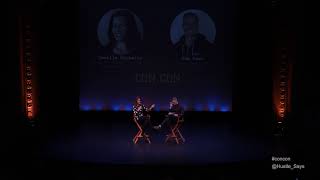
Camille Ricketts from First Round Capital explains how a two-person team built a content platform to 135,000 subscribers by publishing 3,000 to 4,000 word tactical interviews. She walks through the editorial workflow, the tech stack, and why long-form text beats video for their audience.
Chapters
How many of you have heard of First Round Capital? You have? Cool. A lot of you guys. So when we were starting our company, First Round Capital was a great place to turn to because they do these really in-depth blog articles about some of the problems that their founders are going through and how they've overcome them. And it's an incredible resource. And basically, if— and by the way, if you don't know what First Round is, they're a VC fund with about $170 million in assets. And they fund early-stage startups. And they decided a couple years ago to go really big with content because they wanted to be a huge— or they wanted to be a thought leader in the VC and in the startup space. And so that's why they launched their blog. And since then, they've kind of exploded where they have— something like 600,000 or 700,000 people a month coming to their site, mostly entrepreneurs coming to learn about how people have overcome this or overcome that. And it's become a really fantastic resource. And so we thought it would be a great idea to bring out Camille, who runs their blog. They're only a team of 2. And I'll ask her a couple questions. And I've got my phone here. And so I've got a few questions prepared. But I know that you guys probably do as well. And so you can go— just go ahead and tweet a question. And use the hashtag #concon. I don't think it's on there. Use the hashtag #concon, so hashtag C-O-N-C-O-N. And after about 5 or 10 minutes, I'll start looking at my phone, and we can answer some of her questions. So let's give it up for Camille.
Hi everybody. Nice to see you all.
All right, Camille, I've already kind of explained to people what First Round is and what you guys are doing, but can you give your 30-second background of what the site is, what the blog is, and what you do there?
Sure, absolutely. First Round is a seed-stage venture capital fund. We try to write the first check to a lot of promising companies out there. We're sector agnostic, so it really is across all sectors. And about 4 years ago, we got big into content with the first round review. That's when I joined. And our whole theory was that, what was it that founders really needed? What is it that they really wanted? They wanted to be able to go to coffee with the excellent top thought leaders in this particular industry who could tell them exactly what they had done to get where they were today. So we thought, well, how can we have our founders go to coffee at Skamper with this type of person, we can interview them and make that content available on a large scale on our site. So that was what we were trying to do, and we've been lucky to have some success so far.
And it's a team— how about— you're a team of two?
We're a team of two. It's me and my colleague Sean Young.
Yes.
And we write all of the content in-house ourselves, which has been challenging but a good experience.
And how many pieces of content a week do you produce?
We do 1 to 2 a week, usually 2. And they're all interview-based. So this is all us going, spending an hour with the people we're featuring on the site, asking them really in-depth questions, and then publishing what they say.
And what's the length of each article?
Average 3,000 to 4,000 words. And these are not transcripts of interviews. It's literally like reported, like lots of additional context woven in.
So I'm going to ask you a few questions about— the length, because long form is, is pretty difficult. But yeah, one thing that I've noticed is a theme of today's event is process, which I want to learn about. But actually, first, can you explain— you guys started in a unique way. Can you explain to me what your launch strategy was when you first got it going?
Yeah, so we had dabbled a little bit in content. Basically what we're doing is First Round was running a lot of events. Like, we had an event called Design Startup, or we'd have an amazing designer come and speak for like 20 minutes, and then we would write an article sort of based on what that person had said, and the more tactical that talk was, and the more tactical the resulting article was, the more audience we would get. So we thought, okay, people really have an appetite for like, this is exactly how you do said thing. And then the longer that we ended up writing about that stuff, like literally the amount of detail that we would include, the more popular those articles would get. So that's how we ended up with sort of this long-form strategy. And then when we decided, "OK, we are gonna go full bore on this strategy," we actually ran a launch around first round review where we reached out to reporters, said, you know, "This is a new type of publication for VCs." We got some coverage there. And then we also emailed about 30,000 people, which was like everyone that any of us had ever met. So you spammed them? We did not exactly spam them. Literally the language we used was, "You will never hear from us again, but this is a very cool thing that we think you'd be interested in. Please sign up if the spirit moves you." And we ended up getting 8,000 subscribers like in that first week.
Excellent. Yeah. And how many subscribers do you have now?
We have 135,000.
Perfect. So it worked. Yes. And the next question that I wanted to talk about, and I actually see a couple people are tweeting me about it. It's about freelancers, and we had a lively discussion about that. And someone asked about finding writers and finding specifically copywriters, and for early-stage startups, how they're— how can they actually afford to get the content that they think that they need? So can you tell me about why First Round decided to invest in it, how those What's the ROI been and how you would recommend other early-stage startups do something similar?
Totally. This is a question I get all the time. I end up advising between like 3 and 5 of our startups at any given time about content. And it's definitely a popular question. First Round's a little non-traditional because we're not trying to drive conversion necessarily. Our content is all about brand awareness.
Well, do you think this would work for a conversion-driven?
I think so. I think that— If you have a content platform that is high utility, like I'm really, I strongly believe that if you're doing branded content, it has to be like deeply emotional. And by that I mean like people are crying, they are emailing their best friend saying, "You have to see this piece of content," which is very hard to do. Or it has to be extremely high utility, which is your audience really wants to accomplish something and you are giving them the information they need to accomplish that. If you are doing that, then I think that your brand is gonna win with content.
OK, and what about launching a team like you have at a small company?
Yeah, I think in order to find the right writers for you, I'm a big advocate of bringing writers in-house if you're serious about doing content, just because they can really marinate in your culture, really understanding who your audience is on a greater basis, basically, than a freelancer is necessarily going to get exposure to. So if you do bring a team in-house, You definitely want to find somebody who can write in your style. Always give them an assignment during the interview process that is actually going to map to what it is you want them to do. See how that goes. That would be my top recommendation for finding someone.
And when we started, we used freelancers, and I've found that it does not work very well. I know a lot of people feel that way. It's actually really, really, really hard to get freelancers because it takes a long time to train them. So you guys do not use freelancers. You have, you know, you and another person, and I imagine you might be hiring more soon. I'm not sure. But you— can you tell me how you're able to train your new folks?
Yeah, I would say that editing, the editing process is the easiest way to teach somebody how to write in a particular style. It is very hard to describe a voice to somebody like, this is the way we write. And then you use a bunch of adjectives that people will nod and be like, Yeah, yeah, fun, frolicky, okay. But what you need to do is sit down with them after they've written something and then take the time, invest the energy in going through line by line and talking to them about the opportunities that they might have had to then write more in your voice and giving specific examples. So when Sean first joined me on the review, for the first 3 stories he wrote, we would sit down and like talk about past examples of stories that I had written, why I thought that this particular expression of an idea would be more successful. And now, People say that our writing styles are pretty indistinguishable.
Perfect. So it worked. And so how long would you spend going over each piece editing?
I think those first 3 pieces we would spend like 2 hours plus on going through them.
And you would just literally sit right next to them on your Google Docs or whatever and just be like—
And we would talk about every line of the piece. And then after that happened, we did an exercise where Sean would edit my pieces and I would edit Sean's pieces. And see what each other had changed. So now I write like Sean just as much as Sean writes like me.
That's crazy. Okay, cool. Um, and so let's go back to the, uh, um, the, the long-form bit because— okay, so 3,000 words?
Yes.
For every article?
Yeah.
That's way different than how a lot of people do things.
Yeah, I, I'd say that the vast majority, especially in technology, is very snackable, sort of short items.
Okay, what— I mean, and, and so Let's just assume that— I have no idea if this is true, but let's say that you make $52,000. So that's $1,000 a week. So it's like each article is $1,000. Yeah, that's a fair assessment. And then add in— although $52,000 isn't even— is not reasonable. Let's just go ahead and double it for cost of employees. So $2,000 per article. That's incredibly expensive. Can you tell me how you're justifying this and why you go the long-form route?
Gosh, that is another example in which I think First Round— we've been very fortunate at First Round because they kind of give us free rein to do a lot of what we want to do. And we don't have to produce ROI in sort of the traditional way. But we have just found that the long-form format provides outsized value to the audiences that we want to serve. And since that's really the mission of First Round, to be in service of founders, we found that this is the best way to get them the information that they need and desire.
Perfect. And so actually someone asked a question. I see, okay, someone asked a question that I didn't even think of, and it's super interesting, and it kind of goes back to the freelancer stuff, but how many of you out here have tried user-generated style content? So a fair bit. So a lot of people think, at least that I think they think this, that user-generated, it's almost like you're cheating the system because you're getting lots of free stuff.
Yeah.
Right? And it's like, well, we've got millions of users. It's only a small percentage of people submit stuff. Then we've got free search traffic, right? But I've found it typically doesn't work like that. At least in our case, it doesn't. How many people have tried to submit work to you guys, and why have you chose not to accept it?
We have had quite a few people submit work. And that includes CEOs of major companies saying, hey, I wrote something. Maybe it would be right for first round review. Are you interested? We are really committed to the style of the articles that we have set on First Round Review, which is to be very tactical. Everything that we run has to be actionable right away. And so usually we'll explain to the people who want to submit things that, you know, we like to write everything in-house in order to conform to those particular standards. I think that user-generated content can work, but it has to work in particular formats. So especially if you are looking for short-form content and you can give people enough specific parameters, then you can get submissions that will work for you. I have found that it is incredibly difficult. And this, we've really tried UGC also from like the people who participate in our mentorship programs or we have a workshop for product managers in New York. And these are extremely smart people, but a lot of it requires a lot of editorial support.
And speaking of getting tactical, what I like about First Round's website is that you guys, I mean, it's beautiful to look at, very readable. I mean, that's a content nerd in me speaking, but you have, and like your pop-ups are very noticeable, and they actually aren't annoying.
Oh, thank you. That's the nicest thing you could have said.
Yeah, that's my left-handed compliment. Can you tell me about some of, so, If you guys go to firstround.com, you'll see the site. And basically, you see all these— it's basically a big pop-up that pop-ups when you scroll about halfway down. It's pretty engaging. Can you tell me about some of the tools that you guys use on your site? Because it seems like it's working really well.
Absolutely. Thank you for saying that, by the way, because pop-ups are a huge point of concern for me. Readability is my number one priority when it comes to anything that has to do with First Round Review. And so anyone telling me that they were going to put a full-page pop-up in in the middle of somebody's reading experience, I think to myself, well, that better be a very nice pop-up. So we use, we rely on a service called Bounce Exchange to serve our email capture campaigns. They do an extremely nice job. And the real benefit that they provide is that they'll do all the A/B testing for you and then optimize tests along the way so that you're always getting the best possible content.
So what's that mean? You basically give them access to your website?
Yes, we have given them access to our website and our Mailchimp account. And so they're constantly testing language, and then they'll use the winning campaign and run a different test on top of that.
And you don't touch it? They literally do everything?
They literally do everything. I have a monthly call with them where we go through the winning campaigns, and I can kind of tell them, "Well, I like this, not that.
I like this, not that." Okay, so you use Bounce Exchange. What else?
Yes. The other tools that I rely on, we use MailChimp for all of our email campaigns. It's very user-friendly. I know it's not deeply sophisticated, but it works for us. And then also for my editorial calendar, I'm a massive, massive fan of Trello for editorial calendars.
So that's it? Only those 3 things?
Those 3 things. It's a pretty scrappy act over at First Round.
And the site's built on top of WordPress?
Actually, we work with a boutique development firm called Marquee. If anyone out there is looking for any sort of like custom-built, beautiful content destination type stuff, I highly recommend them. Go to marquee.by. They're an incredible team.
What about for posting to social?
We actually do that all ourselves, like straight on the platforms. Literally TweetDeck is the most sophisticated tool that we use for social.
And after you've created this 3,000-word article, which is pretty awesome, what are you guys doing after that?
Yeah, it's a whole— we have a whole regimen after we push publish on something. We will send out an email on MailChimp. To our 130,000 subscribers, and those emails are very focused, like, just go read this one article, all the links go to that one article. Really does funnel a lot of people in that direction. And then we will publish across our social media channels. LinkedIn and Twitter are the most impactful for us, so we focus on those. And we are constantly remarketing our content. So on the day that we publish, we'll probably promote on Twitter 3 to 5 times, and we'll do it the day after as well. And we will use— different pieces of content within each post, like the pull quotes or bulleted lists, and we will pull those and put those on Twitter to give people a sense of what they'll find.
We always called that— I think I told you this— the sawdust method.
I love that.
Where you invest all this money and time into this one big thing, and now you just break it up into smaller and smaller and smaller pieces and try to capture value. Yeah, give value in that way.
And honestly, like inspirational quotes or sound bites, like those are— they catch fire on Twitter more than anything else. So the more you have those in your content and are able to put those on Twitter and then have the link to the full post sort of piggyback on how catchy that quote is, the more successful that will be.
And another theme, which we're kind of talking about now, that people have talked about is the tools that they use to get stuff done. Now, similar to tools, what education services, what pieces of education or resources do you use to, to learn about how to become better at your craft or to onboard and train your people other than obviously editing?
Yeah, I am constantly learning because I think that we all work in an industry that is moving extremely fast right now. Like, content is becoming something that people are increasingly relying on and there's all this new knowledge all the time. So for SEO, you can't do better than Moz.com. If you read all of it, literally going back, you will know everything there is to know about SEO. And then for social, I rely on the Buffer blog. I think they do an incredible job over there. And lastly, for anything to do with marketing, I like this website that not very many people seem to have heard of called marketingexperiments.com, where literally they just showcase like experiments that other people have run and explain why a certain type of strategy ended up winning. Which is really helpful.
And speaking of that, what have you guys tested on first round that has worked that you thought was totally gonna fail or not make any big— not make a difference?
Um, actually we experimented recently with doing compilations of old articles. Like, we had only run totally original content for like 3 and a half years, and then one of my colleagues— or my colleague Sean, who I told you about— went on paternity leave. And left me to do this all by myself. And I thought, gosh, how am I going to extend my own capacity? I know, I'll aggregate my old content into new content by creating lists of it. And I thought it was going to do super poorly, and it turns out that some of them have done better than actual articles that I've written.
That definitely was going to do better.
I, I did not predict that, honestly. I was like, ooh, everyone's going to know that I'm kind of skimping here. And it turned out to be a winner.
Yeah, what were the headlines?
Oh, things like "6 Must-Reads to Scale Yourself as a Manager." That obviously is going to work. That one ended up getting shared like 8,000 times, which is like more than most of the actual original content. It kind of made me angry.
We have this guy who works with us and he like spent like hours and hours and hours working on this one thing and then this one long article, and then he wrote this other article where— this is before he worked for us— where he was like, the amount of money bands charge for a private performance. And that's literally— it was a headline and then just a photo, and that got a million views. And like, that's just how it works though. Like, typically I found the stuff that gets popular, you have no idea that it's gonna get popular.
Oh yeah, there are definitely posts where I'm like, this one is going to be amazing, it is gonna go viral, and then it totally flops. And then some very unassuming stuff has been totally incredible.
Yeah, it always— it seems like that's a trend. And so that's why we're always just like, just put it out and you never know. Like, we have an article that just talks about like what $1 billion literally looks like. Like $1 billion in cash. Like, what's it look like?
Who doesn't want to know that?
Yeah, it's like interesting. But like, because it took only like 10 minutes to literally— like, it literally took 10 minutes to produce. You think that's low value, but that's not always the case.
Yeah, that's definitely true.
OK, so Kathleen wants to know, when you were building your team out, did your manager, your boss, give you free rein to do whatever you want? And do you think that was actually the right move?
Gosh. I'm a little bit biased, I think, on the answer to this question. I definitely got free rein. It helps to have a boss who is not a content specialist or marketer at all. I'm lucky enough to report to one of the partners at First Round, so he, his expertise lies elsewhere. And whenever I come to him with any issue like this, like, "Oh, I'm gonna hire a teammate," he's like, "Well, you're the authority on this subject. Good luck with that." And I've actually really appreciated that. Like, he's a sounding board when I need somebody who has an outside perspective, but for the most part, he really trusts my judgment, which has been nice.
So you were trusted because you know your shit. Your new guy who worked for you, he wasn't— the guy who works for you, Sean, he did not know what he was doing necessarily. He was new to the game.
He was new to the game. He's not a professional content marketer.
Yeah. Did you give him free rein?
I did very soon after we did that editorial exercise that I told you about where we really got into the same rhythm with our writing. He inspired a lot of trust. The way that I found him was that we posted on Medium not just a traditional job description, but it really was a JD as a story, like, "This is the type of person that I'm looking to meet, and this is how I hope our relationship will go." And Sean ended up responding and writing a well-crafted and loving sort of note back to me that really demonstrated how artful he was in his writing, and it was clear to me that he was going to be capable of doing what we needed to do.
And so it really only took about 3 weeks from onboarding him and editing 3 times, you said, and then it was free rein after that. Did you help him select topics?
We definitely, uh, are each other's brain trust. So even with headlines, we will bandy back and forth some ideas. We sit right next to each other, so when we are thinking of topics, we will gut-check them with each other. So it is really, really collaborative. But for the most part, I really do trust his judgment to go after things that he thinks are going to be interesting.
Someone asked, looks like Matt has asked why, or not why, but how you do your interviews. And I know that you told me a little bit about the process and it was like pretty in-depth.
Yeah, the way that we've sort of classified this is a, it's a 3-tier interview process to make sure that we get to the level of granular detail and depth that we want, which is really important for our stories. So the first tier is whenever you ask anybody a question, they're likely to give you just a response. You know, you ask them like, "Oh hey, how do you do your social media?" And they're like, "Ah, we tweet 2 times a day, we post on Facebook 1 time a day, etc." The second tier is then to be like, "Well, what is the language that you use?" or "How do you do that?" Some question that sort of annotates or embroiders the answer that they just gave you to the first question. And then once you have that, you ask them, "Now give me an actual example of you doing that." And that's how you end up getting to a lot of really good, proven material.
And how long does that process take?
We usually have interviews that are just an hour long. Like we end up interviewing people who are like the CTO of Instagram or the CEO of Reddit, so these people don't have a lot of time. So we will tell them like, "It will be just one hour end to end, we promise." And we try to extract as much material as we possibly can in that hour.
And did you say, I don't think I heard you say this, you don't let them review?
We do.
You do?
We do.
You do?
Yes. But I would say that the most impactful part of the process in order to get quality content was sharing the questions with them beforehand. So usually part of our process is that we will do a pre-call with everybody where we actually decide on the topic that we're going to pursue together in tandem. And then based on that, I'll write a list of questions, send it back to them. But before I shared the questions with people, the interviews were not nearly as high quality. That like changed the whole game. For me.
OK, so we have a few more minutes. So make sure to tweet in your questions now. Oh, here's a good question. So a lot of the things that people have talked today, it's about tactics and strategies. And the tactics at least change quite a bit. You used to work at VentureBeat.
I did.
So you've been doing this for a little while. So you've seen a lot of different— cycles, what strategies have remained the same that you do not think are going to change for another 10 years?
I think quality content has pretty much meant the same thing this whole time. That content is either useful or it is not. It is either well-written or it is not. I don't think the definition of good writing has necessarily budged that much in a decade. How that content is packaged and how it's distributed, I think, is where the bulk of the change is happening and will continue to happen. But in terms of like, this is something good that I feel value— has value for me and is something I want to share, that in itself I think we all have like a good sense of because we make those decisions for ourselves all the time, every day.
So Deidra asked a question that I didn't even think about, but we get it all the time and I would love to hear your answer. Why text and not video?
That's a great question. So I've been doing content for a while, as Sam said, as a journalist, and then I also ran content for a nonprofit called Kiva. Where we were packaging all kinds of stuff—text, photos, videos—from 68 countries around the world. And so I got to test a lot of stuff side by side. And video is an enormous investment up front, and it actually doesn't perform that well. Because if you think about it, like, it's not a passive form of communication. Like, people can't be really doing something else while they're consuming it, like audio, which I'm actually very interested in. So you would spend a lot of time, maybe spend a lot of money, and get less bang for your buck on video. And that has still been the case in my experience. I do think audio is very interesting. Text, I think, is particularly useful for us because we want people to be able to refer back to it very easily when they are facing the situation in which that advice is relevant. And therefore, our articles serve as sort of an evergreen manual they're able to call back up.
We get asked that all the time. Video certainly serves a purpose, but we're all in on text at the moment because you just can capture a lot of value for a very long time. And when people read at work, people, when they, when you do shit at work, you're normally reading, right? Not watching like an 8-minute video. But you can like hide an 8-minute read from your boss, that's for sure.
Yeah, exactly, exactly, right? Alt+Tab.
Yeah, yeah, it's easier to hide a read than it is to hide an 8-minute video. Yes. Okay, last question. This is a very specific tactical one that I forget who the name is. Ethan asks, and do you guys— so a lot of what a lot of publishers do is they pay money to boost their posts on Facebook. Is all your stuff organic, or do you actually pay money?
We've been really lucky to have it be all organic. That said, for several of the startups that I advise, especially those who want to drive a lot of conversion with their content, and therefore need to run a lot of rapid experiments in order to see what's gonna work, I highly advise paid content because that allows you to drive enough traffic to actually get meaningful results to your tests. But we've been really lucky to have all organic from the beginning. Perfect.
Well, I appreciate you doing this and taking the time. And are you gonna be hanging out for a little bit? I think I will, yes. Cool. Well, oh, and the very first question someone asked that I didn't address yet, but they said that your dress looks awesome and they wanted to know where you got it.
Oh my gosh! Thank you to whoever said that. This is—
I think it was Christina. Who asked that? Margaret.
Sorry, Margaret. Margaret, that's so nice. ModCloth. ModCloth.
There you go. You got your answer. Well, huge thanks for doing this.
Thank you. It's really an honor to be here.
Thank you so much.










