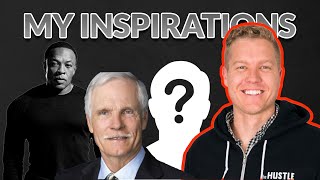
In this excerpt from the My First Million podcast, Sam Parr discusses the people who inspire him, focusing on individuals who were bold, rebellious, and succeeded against expectations while having fun. He starts with Steve Prefontaine, the charismatic Oregon runner who was the first athlete to wear Nike shoes and died tragically at 26, highlighting Prefontaine's "full‑clip" attitude and his quote about giving your best. Parr then moves to hip‑hop pioneers Eazy‑E and Dr. Dre, noting how Eazy‑E founded Ruthless Records as a young kid from Compton and how Dr. Dre reshaped culture. He mentions media moguls Ted Turner (founder of CNN) and Felix Dennis (a flamboyant media entrepreneur likened to Richard Branson). Parr also admires combat and music icons: Mike Tyson, for his ferocity and comeback despite many mistakes; Tupac, for his cultural impact; and Nate Diaz, for his bold fighting spirit. Throughout, Parr emphasizes a pattern: these figures were underdogs who pursued daring ideas, achieved massive success, and seemed to enjoy the journey. He describes them as “intimidators” or “bold rebels” who defied expectations, and he is fascinated by their mix of seriousness and fun.
Chapters
He's also like really good looking, so it's like easy to like admire him. I have a wall of people who I am inspired by. So yeah, so let me tell you who I have. I have Steve Prefontaine. You know who that is?
Never heard of him. Who's that?
There's a movie about him that's really great. You don't have to be a runner to like it, but he was a runner at Oregon. He was the first person to wear Nike. So Bill Bowerman, was the coach of Oregon track and field. His pupil, his athlete was Phil Knight. Together they partnered and made shoes together. Steve Prefontaine was probably the first person that wore 'em. He was, or one of, and he was definitely the first sponsored athlete. And he was kind of a badass runner where he was like, he was like kind of like a full clip. So he would say shit like, "To give anything less than your best is to sacrifice your gift." He said all this inspirational stuff, but he died when he was 26 and he was just kind of a rebel without a cause. Then I have—
wait, hold on.
How did that guy— uh, he was drinking and driving and flipped over and crashed his car and suffocated. Crazy. Okay, so pretty tragic, very, very tragic, but he lived fast, died young. And, uh, he, uh, it was real tragic because he got 4th at the Olympics when he was a favorite, even though he was only 23. Anyway, it was a big deal. He's also like really good looking, so it's like easy to like admire him.
Um, props to you for admitting that that's part of the appeal.
All right, great. Yeah, he's like, he's like, you know, romantic, kind of that type of thing. Like, you kind of look good. Then I have Eazy-E and Dr. Dre. Okay, they're interesting to me because when Eazy-E was only 23, 24, 25, something like that, he created Ruthless Records, which went on to become a huge business, like hundreds of millions of dollars a year in sales. And he was just like a kid from Compton who knew nothing, didn't deserve to be there, or, you know, like on paper, like, what are you doing here? Anyway, they achieved it. Dr. Dre fucking changed culture. In a variety of ways. Then I have Felix Dennis and Ted Turner. Ted Turner started CNN. I like him. Felix Dennis, he started a media company and he was like Richard Branson but more vulgar. Google him. And then I have, I've got 3 more. I've got Mike Tyson. I love Mike Tyson. He screwed up so many times in his life, but he's done a good job of being ferocious and kind of coming back. And then I've got Tupac. And then I think that's it.
That's amazing.
Great. Oh, Nate Diaz.
Nate Diaz.
Nate Diaz. Oh, yeah. All right.
So you have like—
I love Nate Diaz.
You have like the intimidators row, dude. Like I'd say like the majority of your people fight for a living or like should fight for a living.
Not intimidators row, but I'm incredibly fascinated with people who are bold, people who on paper should have done nothing and they did a— they were really good at having bold ideas, but then also were having fun along the way. Right. So that's what I like. Like Ted Turner, I think he had a— he was a Southerner. He stuck out and he had a bold idea and he laughed along the way. So I'm always fascinated by that. That.