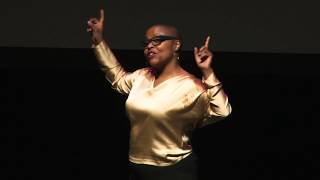
In this live talk, chef‑owner Tanya Holland shares how dancing shapes her approach to cooking, leadership, and entrepreneurship. She opens by admitting she’s a chronic procrastinator, but notes that the restaurant business forces immediate action. Holland then pivots to a central metaphor: dancing—its rhythm, improvisation, and awareness—mirrors the daily flow of a kitchen and the broader entrepreneurial journey. She recounts her childhood desire to be a dancer, the family push‑back, and a winding educational path that led to a Russian language degree before she discovered the restaurant world. Holland describes her formative culinary experiences in France, a stint at the Chicago Pizza Pie Factory where she was required to dance onstage, and years of cooking and dancing in New York. Returning to Oakland, a failed attempt to launch a French‑Creole bistro forced her to pivot, resulting in the “happy accident” of Brown Sugar Kitchen, now a decade‑old, community‑focused breakfast and lunch spot. Throughout, she emphasizes the role of music, diverse staff, and a culture of improvisation in creating a resilient business. The talk concludes with a call to the audience to learn to dance—literally and figuratively—so they can stay aware, pause, pivot, and move through life with grace and graciousness.
Chapters
Hi, everybody. Oh my God, the pressure. Share your intentions. Go ahead, share on, share on. I'm Tanya Holland. I'm the chef owner of Brown Sugar Kitchen. Thank you. Thank you. Restaurant in Oakland, California. I'm gonna let you in on a secret. I am a huge procrastinator. And what I love about the restaurant business is that I can't procrastinate, because I can't be like, oh, you know, I think I'll put that chicken in the fridge in a couple hours. You know, I'm gonna go to that guy's table in a few minutes. So the restaurant business forces me to just do stuff. So I was asked to speak to you guys months ago. But when do you think I started working on my speech? And I know that some of you know me and my story as a chef and an entrepreneur. And I've been speaking a lot out loudly lately about being a Black woman in this business, being a woman in this business, entrepreneur. I don't want to talk about that anymore. I'm actually really tired of talking about it. I mean, it's very important, and it's something I want to continue to do. But I want to do something different with you guys tonight. I want to talk to you about dancing and how much I love to dance and how important it is to me and how I think everybody should learn to dance. And it's such an important life skill because, I mean, I do it every day in my work. When I cook, I dance. The soundtrack at Brown Sugar Kitchen is so important to me. I'm always— listening for music levels. There's a lot of songs that are my particular favorites, but also reminiscent of the cuisine, soul food, soul music. But there's also some of my '80s stuff in the mix if you listen closely. And cooking and working in environments, it's all about dancing, pivoting, pausing, marking your next move, and just having a rhythm and a balance and being aware of your surroundings. I talk about this to my staff all the time. They don't seem to quite get it, but I think it's just— you know, too many of those, like, rage parties. You know, it's like, it's different. I didn't grow up— like, I danced differently. Anyways. So I also, like, you know, I feel more comfortable improvising than, you know, talking off script. I have my cards over there, like a little security blanket, just in case I need them. But I want to tell you guys that I really— I wanted to be a dancer. I asked my dad when I was a young girl if I could be a dancer. He's like, "Oh no, I'll never put a dancer through school." I was like, "Ouch, really? Okay." And, you know, this whole conversation is about kind of holding your vision. I mean, this is, you know, I consider myself a visionary and I've had this vision for my life for a long time, but you just— you never know where life is going to take you, so you need to know how to pivot, how to dance. And later on, I started going along, and I asked him if I could be president. And I did mean president of the United States. And he's like, well, you could be, which was amazing. In the '70s, he said, yeah, I could be, to this little black girl. He goes, but I wouldn't recommend it. He said, it costs a lot of money, and there's a lot of people blowing smoke up your butt. Like, verbatim, he said that. And I was like, ugh, OK. So I don't know. So somehow I found out what an architect was, and I said, "Oh, can I be an architect? That sounds exciting." He's like, "Nah." He goes, "You won't make any money. Be an engineer." So I applied to engineering schools, you know, good daughter, and I went to school for engineering, and I graduated with a degree in Russian language and literature. Right? And that's a longer story. We don't have enough time for that. But little did they know, you know, I was dancing all the time. So I graduate with this degree and then this ability to dance. What am I going to do? I'm going to work in the restaurant business. That's the only place you can go. I used to, you know, call it the land of misfit toys because it is. It's sort of like that place. It more so was when I was coming up of where people ended up where they didn't know what they wanted to do or be in life. Now people intentionally go into the business because it's all romanticized. With the TV and celebrity chefs. I'm like, "I'm a celebrity chef," even though earlier today I was unplugging the toilet and mopping up pig's blood. But, you know, celebrity. So I started working in restaurants, and I just fell in love with them. I became a Francophile when I started studying French in 9th grade, and my birthday is Bastille Day, so I'm like, "I'm going to France for cooking school." So I go there, And I'm in the château in the Burgundy, and it's wonderful, it's great. And then the school was split up into semesters, so I went to Paris, and my French wasn't good enough to work in a French restaurant on the front of the house, so I worked at the Chicago Pizza Pie Factory in a black A-frame dress with a name tag. And guess what? I had to dance. Part of my job description was to dance to Greased Lightning twice a night. That's right. And it was all choreographed by the manager. Whatever. I'm not going to do it right now. But I realized— but I got some of the best tips because I know how to dance. And it's just not being rigid. It's about not being rigid in your steps and your vision and your work and what you want out of life and just kind of going with it and that sort of— give and take of just the steps. So I finished up my time there, and I ended up in New York working and cooking, dancing on bars, always going to dance bars, just dancing, dancing, dancing. And then I ended up in Oakland, and I fell in love with it. I was going to open up a French Creole bistro. That was what I wanted. I love the intersection of African and French cooking. And I just thought like this community would embrace that. And I did not get the real estate that I was looking for. I didn't get the opportunity. So I had to pivot. I had to be really flexible and pause for a minute and figure out, what am I going to do? And I found this space in West Oakland. And I thought, OK, well, I guess I got to change up the concept, make it really accessible to this community. Brown Sugar Kitchen was born, a happy accident. And yeah, thank you, thank you. 10— oh, by the way, just celebrated 10 years in business. And yeah, I'm convinced that it's because, you know, I have had this ability to just go, you know, kind of in and out of situations and Dancing requires you to also be comfortable in your own skin. Or you can dance like nobody's watching is a statement that people say. You really have to feel comfortable. And I was going to do some dance moves for you guys, but I don't know. We'll see. If you're lucky. You know, I grew up— the arc was like R&B. My first concert was the Jacksons. Then I saw the Off the Wall. I'm really old, by the way. I'm 52. I'll be 53 this year. So I might make— I might make— some '80s pop culture references that you don't understand, but it's OK. And one of the reasons why I wanted to be a dancer, because I was obsessed with Fame growing up, which is like— now it's called Glee, but it was Fame. And I love this diverse population. There was a very diverse student body, and Oakland's very diverse. And it's just what I've been striving for my whole life, and I've been able to create that in my restaurant. It was like after the Jacksons, and it was the Off the Wall tour, and it was like, I wanna rock with you all night. So you guys missed out on being the original. I know you guys listen to it now, but when it first came out, it was great. And I still play that at the restaurant. And then I get to the restaurant, and I've opened my doors, and I'm looking around. I've created this very diverse environment. I did not aspire to open a breakfast and lunch place. I mean, I don't like getting up at 5 in the morning, but I'm there. But it was all that was available to me at the time. And I went in there and I improvised and I just kind of created something that I thought maybe could be sustainable for a while. And it has. It's lasted. And I realized one day, I'm walking around the And I'm like, "I'm president of my company, and I'm the architect of my environment, and I listen to the music I want to, so I dance all day long." So— I— thank you. I just want to encourage you guys to dance, and, you know, again, it's about being aware of your surroundings, pausing, Don't go rushing, trying to barrel through and like, "I know where I want to get to," because you don't know what life is going to serve you. And pivoting when you can and being, most of all, being graceful and gracious as you go through this world because we're living even closer together these days and we've got to just be more graceful with each other and gracious and polite and That's it.