The Business of Boy Scouts and Girl Scouts | My First Million Podcast
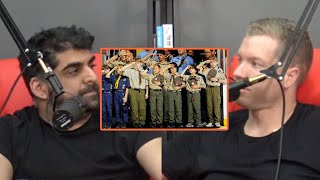
In this episode of the My First Million podcast, host Sam Parr and his co‑host explore the business models and cultural relevance of the Boy Scouts and Girl Scouts. They examine publicly available nonprofit financials, noting that Boy Scouts hold $1.5 billion in assets, have fallen to about 2 million members (down from 6‑7 million in past decades), generate most revenue from membership fees, and spend $120 million annually on insurance—their largest expense. Girl Scouts, by contrast, earn roughly $800 million a year from cookie sales, retain a larger share of revenue, and have lower dues. The hosts discuss how declining religious affiliation and the loss of traditional male rites of passage have hurt the Scouts, and they compare these organizations to AARP and the NRA, which monetize large member bases through affiliate deals and strong branding. Sam proposes creating modern, for‑profit “rite‑of‑passage” clubs for young men (and women) that combine community, rituals, leadership, and an “enemy” narrative, drawing on trends such as tech‑parent concerns about screen time and a growing demand for nature‑based programs. They also mention grassroots examples like a sister’s “Nature Kids” franchise. The conversation blends financial analysis, cultural critique, and entrepreneurial brainstorming for new membership‑based ventures.
Chapters
What's going on with Boy Scouts? Adam, look this up. So Boy Scouts, um, look it up on just Google. Uh, Boy Scouts, uh, it's a— everyone knows what Boy Scout is. Um, we actually have a lot of non-American listeners, which I, I just real— I remembered that.
And even me, I grew up in America but I didn't do Boy Scouts, so I have a very loose understanding of what the hell this is all about.
Boy Scouts and Girl Scouts, when you're in between the ages of 8 and maybe 18, it's just like an after-school program and a weekend program. And for Boy Scouts, it helps you become a man. It was, it's an organization that's been around probably since the late 1800s. It was rooted—
Did you do it?
No, I played sports. My joke was, you do Boy Scouts? No, I do sports. So my mom and dad made me choose between ice hockey and Boy Scouts. I did hockey, but a lot of my friends did. Like when I grew up, I grew up Catholic, so it's like altar boy, Boy Scouts, or sports. That's like what you choose. And so you dodged a bullet. Well, yeah, fuck yeah, I did. I got all my teeth. I got my teeth knocked out from hockey, but at least I didn't get that other shit happening to me. And so Boy Scouts and Girl Scouts, it's basically when you're a youth, it's a youth group. It teaches you how to be a man, how to be a woman.
All right.
We got knots and sell cookies and all that good shit. It's rooted in religion, though, which is controversial now that religion is not as popular in America. Boy Scouts, what happened? They recently got sued because of molesting boys. Is that right? Okay. Not just sued once.
Like, there's just like a litany of lawsuits, and they were like, what are we going to do with all this? They basically are declaring bankruptcy.
Yeah, it was a huge— very big deal. Um, and so I was curious, and so here's something that's interesting about Boy Scouts and Girl Scouts and any nonprofit. Um, all their financials are available.
Yeah, just look up annual letter, annual report, Boy Scouts, and it'll all be there.
Any nonprofit, you can go and see everything, see how they spend their money, what they own. It's really cool. And so I looked up Boy Scouts, and let me give you some stats here. So they had $1.5 billion in assets. Membership right now, they have around 2 million members. That's at an all-time low. In the '60s, '70s, and '80s, it was all the way up to 6 or 7 million members. They make hundreds of millions of dollars in revenue. I think in '18 it was $200 million in sales. Most of that revenue came from fees. So you pay a fee. Actually, Adam, look up how much it costs— how much does it cost to join Boy Scouts? Um, so, and then, um, they also, uh, make money from some merchandise and everything, but the majority of their revenue comes from fees. And then they make between $50 and $80 million a year in contributions and gifts. $60. It's called $60 a year.
So they, they receive $50 to $80 million in gifts or they give, receive, receive to donations. Yeah. And HQ, $50 million. What, what are they, what are they spending on here? What's going on?
Yeah. So HQ include, so HQ and programming and all that stuff. So basically their HQ— so they have 2 million members. So they have offices where their headquarters is, and then people volunteer to lead troops. And you probably give them a little bit of money, like an allowance or something like that, like a small stipend. And then they pay for all the programming. So maybe kids got to raise money to go camping. And I think Boy Scouts will contribute a little bit of that.
So what's interesting here for you? Is it you're interested in the business, the ideas, or the banking?
The business. And here's why. So Boy Scouts— I'm going to compare Boy Scouts to Girl Scouts and then and I'm going to show you the differences in financials. And then I'm going to compare it to one other group that I think is actually doing it right. And here's what I think. I think that you can— these new clubs, these young men and young women clubs, particularly young men clubs, I think could be massive and can exist in today's world. And so— and you want to know what Boy Scouts' biggest expense is? Insurance.
Insurance.
They pay $120 million for insurance. They pay a lot of money because they're taking kids out into the wild. Yeah. And that was wild to me. That's their biggest cost. Okay, so now let's compare this to Girl Scouts. This is timely because Girl Scout cookies just got released. Girl Scouts, they sell $800 million a year in Girl Scout cookies.
Unbelievable.
Fucking crazy, right? Crazy. 75% of that revenue is their— that's how much they paid. 25% take. They paid 25% to the bakeries. And I think they actually might at this point own the bakery bakeries. Yep. And then so that's their take. The majority of that revenue goes to the troops, is it called? Troops.
Chapters or whatever.
The chapters. And that pays for— they do— they give young women scholarships. They just teach them how to be young women. They do all types of programming and things like that. And so here's a few ways in which they're different. $36 million in dues. So way less. Their membership— Girl Scouts is about the same. And they receive roughly 10% of the gifts back that Boy Scouts donations. Yeah. So, but Girl Scouts is a way better business right now. I don't— I'm not trying to advocate that these types of things necessarily should be for-profit businesses. There is a place for nonprofit. But let's just say that we want to make this a for-profit. Here's what I would do. Yeah. Boy Scouts. They're fucked. The reason they're fucked is this whole, uh, so regardless if you're religious or not, religion in America is not as popular. It's still very popular, but it's declining, right?
It's not, it's not growing.
It's not growing. And Boy Scouts has a very religious component about it.
Extremely.
And America, like, we don't have like wars going on right now. And, uh, when you turn 18 and like could join the military in World War II, World War I, Korean War, Vietnam War, even up until the late, early '90s with the Iraqi War. I mean, there was, there was a little bit of a rite of passage for a man. You know, you get a job, you have kids, or you go to war. Like, there's like this, like, rite of passage that allows— that's like, all right, you're, you're the man. You're a man now. We don't really have that now.
Right.
And I think that's actually a huge problem in young men's lives. Women have it a little bit because biologically they get their period. I mean, that's like, you are by definition a woman. Men, that's why the whole thing of men, you could be like a 25-year-old boy or a 35-year-old boy, like especially in Silicon Valley, there's these guys that they dress like kids still and they don't act like men. And so I actually think that there could be a—
Rite of passage.
A rite of passage, some type of group of like, you are a boy, we're gonna help you become a man.
But you're thinking past the Boy Scout age, you're talking about 18. 18 or 19, or you're talking about younger?
No, no, no, I think that you can learn that from age 8 to 18 slowly.
Gotcha.
And so the best, How would you do it? So the best membership group I've ever seen, and I've done a lot of research on this, is AARP.
Okay.
And AARP, what it is, is once you become 60 years old— and I actually signed up for this because I want to see the marketing. I was really interested in this. Once you become 60 years old, they mail you a thing, an AARP card, and they go, you're in. And you're like, what? I'm in? Like, yeah, you just turned— they find out how they work with the post office and they find out when you turn 60 years old. They send you a card that day.
Nice.
And you get your card, and AARP has 38 million members. It's really cheap to become an AARP member, like $50, maybe less, maybe $18. It's really cheap depending on the tier you get. And so, but AARP makes $1.6 billion in revenue. So where's all that money coming from? It's not coming from fees. It's all coming from the back end. So once you become an AARP member, they go, all right, they partner with, I think, United Insurance and a few others. And, um, they make— what is it? What's it say up there? A billion dollars a year from affiliates, meaning you're now old. We're going to give you a discount on some insurance because we're pooled everyone together. You should use United Insurance. It's the best one. And that's when they get— they get their billion dollar cut.
It's a discount club. So as you, as a member, you pay a low fee, you make your money back in discounts pretty much from day one. They make their money by getting the vendors to offer them a cut for all these customers that they can drive to them.
Yes.
And, uh, yes, this is brilliant. The first time you told me about this, you were talking about, can we do this for millennials?
Yeah, I wanted to do this for The Hustle, and I was like, why didn't you do this?
I've always thought this was your best idea, but yeah, you must have learned something along the way that made you less bullish on it. What was that?
I'm not less bullish on it, but I'll explain that. Uh, I, I know, sorry, I am a little less bullish, but I still think it could be great. So AARP, it's like one of the— it might be the one of the largest lobbying groups ever. So if you want to become president, you have to like appeal to the— appeal to AARP. 38 million members. You got to like, you know, elderly, we're gonna make sure you're—
take care of you.
Yeah. And, and AARP is so big, they have like two— what does it say? Oh, sorry, three, three and a half billion dollars. They have a hedge fund. I mean, like, this is like a legit— like, this is how much cash they have. And so when you think about what makes like a group like this passionate, it's real similar to a cult, right? So I think what you need is you need like a common bond. So what brings you guys together? So for Girl Scouts, it's you're a young girl.
Yeah.
For Boy Scouts, you're a young boy. For ARP, it's we're all 60. And so it's like we have to figure out how to get through this together. You need an enemy, I think. So a good example of a really good group like this is the NRA.
Right.
And so the NRA, like, if they say they're going to take our guns, they're going to raise so much money off that. So you need like an enemy. Another thing is you need a leader, like a face. And so NRA had that. It was Wayne LaPierre was the leader. And like, it's— I'm not even a gun guy and I know his name. And then the other one was the famous actor Heston, Charlton Heston. And he had that phrase, "From my cold, dead hands." Like, you're going to take my— that's the leader. So you need that leader. And then you need this mentality of us versus everyone and we're the underdogs and they're going to come at us. Boy Scouts and Girl Scouts actually could have a little bit with that Christian vibe, but I don't know how you would do it without the Christian vibe. And then finally, you need like rituals. Girl Scouts and Boy Scouts all have that. They have like the pledge, you know, and I don't know what AARP does, but when I'm thinking about this, I totally think that you could create, recreate some of these. I think it would take a long-ass time.
Yeah, it would take a long-ass time. I don't think you need all those things. I think those are all like boosters. Those all strengthen the whole thing. And I think they come over time, but I don't think they're prereqs, right? I don't think they're prerequisites. You don't like, I don't know who's the leader of who's the charismatic leader of Boy Scouts. I don't know. Like maybe there was one, maybe there wasn't.
Well, I agree with you. You don't need it. But I think your point here is proving my point, which is they're declining and there is no good.
Sure. But I guess like they got to a certain size and mass. So what I think you just have to do is sort of align a common set of people who have a sort of similar desire or desired lifestyle, whether it's like, you know, Christian faith combined with, you know, learning life skills and will and being out in nature, right? Boy Scouts.
And, and actually, I think you can have this like Christian conservative group that can crush it, right? Because what I do every morning is I go to opposite news sites. I go to HuffPo and then I go to Breitbart. Breitbart, you know what that is? Yeah. Okay. They have a smaller audience, I bet, than HuffPo. Every article has 5,000 comments, right?
Super engaged.
Yeah, so there's a big enough group there, right?
So I think as long as you tap into any lifestyle that people care about, I think you can create a group like this as long as you have the sort of right combination of like benefits and like programming and rituals. All those things I think are good and helpful. I also think that these can happen— when I saw Boy Scouts was going out of business, I went and looked up biggest Boy Scout competitors, and they were all Boy Scout clones. So they were all faith-based nature programming for young men. And it's like, okay, well, it just seems like there are other people who will want, who have the same job to be done, as they say, like who want the same outcome, but they put less value in, let's say, the religion component, religious component, or maybe it's less value in the nature component. Like, did I tell you my sister runs a program? She has—
The daycare? Yeah, she has.
So she has two, like, childcare facilities. That are like, um, in-home childcare facilities. So she took, uh, she took a house, she turned it into a daycare, uh, and, or a preschool. So one's a, one's for younger kids, one's a preschool. So she wanted to do a third. The permitting was going really slow. And so she bought this house, but the permit's going slow. So she did kind of a genius thing. She created this program called Nature Kids. She's like, okay, I can't do the per— I can't get the permit for my in-home thing. They're just taking 6 months. But I have this huge waitlist of people who want you know, their kids to be a part of something. Um, what if I made a nature-based program? So she created Nature Kids. She, uh, now needs no permitting. They just go around through like the, you know, the parks and the, the nature out here. They do, they like learn about plants and animals and they do little exercises and they do outdoor painting and tree climbing and they're just out all day and parents love it cuz they're like, yeah, I want my kid to be out and not, you know, sort of cooped up or looking at a screen or all this stuff. And so I, I want my kid out there in nature learning these skills. There's no religious component to it. She has a waitlist out the door now. It can scale like she could just create a franchise out of this. Like this Nature Kids thing is like a tiny speck, but it's comparable, I think, to what Boy Scouts is providing, you know, providing a certain—
So here's the two trends that this is capitalizing on. The first is, I don't know about you, I bet, I bet you fall in the same category as me. But tech executives, people who have grown up with the internet now and phones, do not want their kids, do not want their kids doing this shit. I'm the same way. I bought, this thing that locks potato chips in a sealed, like a time locker, right? KitchenAid. And I put my phone in there. Okay. So like, I will— I don't want my kids using phones and stuff like that. So, so we're, we're, we're, we're— this trend's going to get bigger as you and me start having children.
Zuckerberg's like, yeah, we're going to limit this to 40 minutes a day or so.
Right. And so we're going to see that happen. The second trend that I don't know if it's trend, but I do think it's actually needed is we have to have artificial— we have to actually start creating these things that allow young women and young men to become men. Right.
And character building.
Yeah. And I've seen it too, where I've seen these things now for grown men where you can pay a fee.
Mankind Project is super popular and they're awesome.
I totally want to do it.
Yeah.
I went to an all-guys Catholic high school, which was pretty good because we got to— they helped us evolve and grow and everything. But I so wish that I had— my father wasn't like very hands-on. I wish I had more of like a hands-on, like, alright son, here's, you gotta do this, you treat people this way, you do like, you know what I mean? And I think that that can actually be way more popular.










