The Guy That Raised The AIDS Drug Price By 50x Is Interesting...
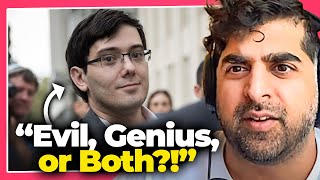
Martin Shkreli raised the price of the drug Daraprim by over 5,000%, went to prison for fraud, then became a viral sensation on Blab by hosting nightly broadcasts that built a cult-like following. Sam Parr examines how Shkreli's relentless attention-hacking and entertainment value made him impossible to ignore, even as he broke laws.
Chapters
So Martin Shkreli, if you just Google most hated man in America, I think he comes up as number one. Uh, at least he did at the time when I first heard about him. He is known for, or he's known and hated for, uh, being a kind of a price gouger with a drug. So what he did was he owned a pharmaceutical company that focused on like small, like less popular drugs that were like niche. And he would, and he bought them. So he bought this drug, this drug called Daraprim, and he increased the price from like $13 to like $500-something. I don't know what it was, but the percent was like, he increased it by 5,000%. And so people were, and then immediately the news picked this up, was like, oh man. And they started calling him the Pharma Bro because first he did this, they were like, how dare you? But instead of apologizing and walking it back, he was like, Fuck yeah, I did. I own this. I could charge what I want, you know, like, and, and like, this is America. That's the price of this drug. And, um, yeah, he doubled down. He doubled down. And he loves attention, and he's amazing at getting attention. A lot of the attention is hate, but he's amazing at getting it.
But, and he was only 33, 34 when he did this. And this was basically, he controlled two pharmaceutical companies that were each public at north of a billion in market cap, I think.
I don't know. I don't know. I can't— I can't confirm those. That might be right. But he also had a hedge fund before that where he invested in biotech stocks.
Yeah, just like he had done big things.
And he was— he's a very smart guy. Now, people think he's a crook. So some people said he was a crook because he raised the price of the drug. That's not a crime. That's just something you don't like. Then he actually got indicted and went to jail for doing something that was illegal, which I think was like He basically paid investors from one company with like the stock of his other company and then like didn't— wasn't clear or something like that. I don't know exactly what he went to jail for, but then he went to jail for 2 years back.
He went back to jail or his like, like he didn't get released early or something like that for threatening Hillary Clinton. He didn't really threaten her, but he like made like a stupid joke on Twitter.
Yeah. Yeah. Anyway, so he just got out last week. That's kind of the funny part of this. So he gets out. And it's like, you know, I don't know who's like a famous person like everybody wanted to be freed. It's like, you know, free Young Thug or who?
Like Martha Stewart.
Yeah, free Martha, like whatever. There was a group of people that were excited about his arrival. I was excited too because I enjoy reality TV. I enjoy, you know, the drama.
He's like our version of Kim— he's our Kim K. He's— that's exactly what he is.
Exactly. So I wanted to see it play out. And so he comes back and I just started thinking about Shkreli in general. So I have a couple ways we can go. We can go of things I find very interesting slash borderline admire about the way he does things, and then there's what he has been up to in prison and what's interesting there. Where do you want to go? I have both.
I like both of those. So what has he been up, up to in prison? And the backstory, you, you actually need to mention this. The backstory was he was an early user of your product Blab, and I spoke to him a couple times on Blab. And when The Hustle first launched, we were in our first office. So this was in the the first 6 months, we, um, one of our reporters was this young woman named Brina who was, you know, like a pretty, uh, like a good looking woman. And he, she DM'd him for a story and he was like, hey, do you just want to like fly up here and we could like hang out? And like, he was like asking her out. And, uh, so I had a, I have a little interaction with them as well.
So we, yeah, we had an app called Blab that was basically, if you've seen Clubhouse, it was Clubhouse before Clubhouse. And it had video on it, so it wasn't just audio. And it got sort of popular. We tried using it, we tried getting podcasters to use it. We got some kind of marketers to use it for their promoting their stuff. Then we started getting some bigger brands. The NBA started using it, UFC started using it, Oracle, but none of them could hold a candle to our number one power user, Martin Shkreli. Martin Shkreli came on the app and basically broke the app from day one. First time he came on, instantly the room filled up to 5,000 people. And it was more people than we had ever had in one room before that. Hit our max limit. We were like, who is this guy? That's when I first Googled and found he's the most hated man in America. And he was famous enough to draw a ton of people in, but he was not famous enough to have other shit to do, which was the perfect sweet spot, which as I said, he is the most lethal weapon in social media. He has since been surpassed by Donald Trump and Elon Musk as the most lethal weapon in social media. But before that, it was Martin Shkreli. And the reason I say that is because he creates a ton of content. So he would go on Blab every day from about 5:00 PM till 2:00 in the morning. He would be on that whole time. And he was the master at creating nightly entertainment. Like, you know, Jimmy Fallon, Jay Leno, you guys can't touch this guy in terms of nightly entertainment because he has no producers, no script, no nothing. He would hop on and somehow or another he would cause enough ruckus that this room would have thousands of people in it all night long watching it. They were hooked to it. And we would see this in our data. Like, people wanted us to kick him off because, again, he's a bad guy for raising the price of this drug. And like he said this thing that wasn't cool, but this guy was driving in hundreds of thousands of new users to us every single month. And so I was like, I'm not trying to kick this guy off. Like, this guy's like, you know, he's where the action's at.
This was 2017, 2018. Cancel culture wasn't a thing yet.
Yeah. And I was like, dude, I'm a startup. I'm going to do what it takes to get off the ground. Like, yeah, Bitcoin used the Silk Road to like get off the ground and like, you know, YouTube started as a dating site and Facebook, you know, before this he did Facemash comparing like which girl's hotter. Like, okay, not everything starts with like the most like clean cut, you know, thing. Airbnb started by like faking and scraping, you know, Craigslist sites and, you know, emailing them as fake people saying, I'd love to book your thing. Can you just list on Airbnb? Like, dude, people do what they have to do to get your project started. Started. And so we had Shreli. And I used to watch it. At first, what I noticed was everybody who came in came in to throw stones at this evil man who raised the price of this drug. But he did not sit there and apologize or whimper. He like fought back and he would give his side of the argument. He would invite you up for a debate. And that's when you saw how, how strongly held opinions could be with no logical backing, with no real rationale behind it. The argument was so hollow. And this was not just like average people. People who were like very successful business people would come on trying to like kind of stand on their high, you know, be on their high horse, you know, telling him what he should do. And then he would like dismantle their argument. Journalists from CNN and other places would come on. He would dismantle them. And he's doing a combination of like, A, making fun of them, B, hitting on them, and C, breaking down their logical arguments all at the same time. I've never seen anything like it. And I just thought, wow, this guy is very entertaining. I don't agree with everything he's saying, but I think he's very entertaining. And the data doesn't lie. He is very entertaining. He is.
And I think The one guy that later on, later on in some of the blabs, he would have like these like cute women in the background and they like, clearly I just met him on Blab and he was just like, hey, I'll fly you out, you want to hang out?
So this is what started happening. Everybody started off hating him. So after about 3 weeks, he developed an army of believers, of people who were— there was a guy who became—
Creeps.
Yeah, the creeps. And so this guy came on, his name was Young Shkreli. And when Martin was tired or had to go eat, Young Shkreli would go hold court and he would just be like an extreme knockoff version of Martin. And he would just hold court defending him until Martin came back to defend himself. And then all these women started joining and they loved him and they would just hang out there all the time. And they were like, when they were not like cam girls or model, they were like actual models, fashion models, cam girls, OnlyFans people, whoever. And they would get on and they would just be like, you know, Martin, just like, I don't know, I would date you. And they would just get on. They were— so the room was always filled with like his posse. It was like you go to like, you know, where a mob lord is at, and he's got his goons. And he had his goons, dude. And his army was just growing. But within a couple of months, the number of people who loved him outweighed the number of people who hated him. And it was like the most surprising thing. It was like watching a cult form in real time. It was fascinating. And I remember the CNN journalist came on and she was like, Martin, I know everybody kind of, you know, attacks you, but I don't want to attack you. I just want to ask you some questions. He's like, well, you're on my show. Let's go. She's like, no, no, no, I want you to come on CNN. He's like, this is better than CNN. He's like, you're on my show. You have questions. Let's go. These are my terms. You can ask any question you want, no holds barred, right here, right now. And if you're not prepared, come back and prepare. But you could do it right here on my show. And she's like, I'm not going to do that, Martin. I can only do it there. He's like— and he's like, he's like, all right, fine. Come with me to my fundraiser gala tonight. I'll fly you out. He bought— he goes— he screen shares. He buys her a plane ticket and he's like, what's your email address? I'm sending this to you. And she's like, I'm not going on a date with you, Martin. And he's like, who said it's a date? He's like, you know, he's just playing people perfectly.
And didn't, didn't they— didn't she end up quitting? One of the, one of the women who hollered at him from Washington Post ended up quitting the job.
And so this is part of what's remarkable. When he goes to jail, this woman from WashPo or someplace is assigned to cover him and cover the story, falls in love with him, breaks up— like, she has a family, she has husband, kids, I think. Leaves them for Martin, falls in love with Martin while he's in prison. And then Martin breaks her heart and she's heartbroken now and like, you know, whatever. She gave it all up. She gave up her career and her family for Martin and fell in love with him. This guy's got some cult leader shit to him. So anyways, he did some crazy stuff when he was on Blab. Like he would— he was so loyal to his army that he'd be like, I got a date tonight, but don't worry, I'm leaving Blab on. So he would leave it on in the other room and you could eavesdrop and overhear his date, which is again— oh my God, primetime entertainment. Is it wrong? Yeah. Is it entertaining? Yeah, it is. And so this guy was phenomenal anyway. So I found this guy interesting. He would also do things. So like from a marketing perspective, I was observing how is this guy staying relevant? Like that drug shit was years ago. Like what, how is he staying relevant? He would just do stuff. So like Wu-Tang Clan had an album that they were selling like a one of one for their biggest fans. He bought it for $2 million. And so now this guy that they didn't want, so they got in a feud with him. He had this thing and then on Blab he would play like snippets, like 10 seconds of the album. And no one's ever heard it before besides him, but he would just like tease it, dangle it. Like original NFT, when there was like some building for sale in Times Square, he tried to buy it for $10 million to like erect a statue of himself in Times Square. And again, it gets covered. So he was just newsjacking constantly. He was just hijacking the news and putting his own name.
Money. Did he have money when he got arrested, or like— because I think he was actually like— he, they— he showed a brokerage account that had like $70 million in it.
Yeah, I think he had like somewhere between $50 and $75 million, if I remember at the time.
But then he like had to declare bankruptcy.
Yeah. And I think at one point, ironically, his attorney that was defending him raised his price by 5,000% and started charging him $60,000 per hour. And like, I don't know if this is real or not, but Martin came out in the news like, this is outrageous. And like, people are like, dude, the irony of pot calling the kettle black. It's like, of course, this is just another article he wanted written about him. And like, he's just a master of getting attention. He did so many things like this. I can't even count the number of things he did like this. And I was like, wow, this guy just knows how to stay in the cycle and like constantly like reinvent himself because then he would like just when he pushes you away, he'd lure you back in. So like, for example, on Saturday, Friday nights, he would hold like, you know, his nightly Vlad thing where he's thousands of people and it's like a roast session and he's saying outlandish shit and like you just feel yucky for being in there. And then Saturday morning he would wake up at 8 in the morning and he would do a live finance like session where he would teach you how to analyze stocks. —and it was great, phenomenal. And I watched a bunch of them, they're still on YouTube, you can go watch them. He is so— he's very smart and he was so thoughtful and patient as a teacher. He's a, he's a fantastic teacher. And so anyway, so that's like the backstory. So anyways, he gets out and he said, they're like, how was prison, right? He immediately— he gets out, he immediately jumps on, um, on Twitter Spaces. Oh, by the way, actually, that's another funny story. When he had to go speak in front of Congress or the— yeah, Congress, I guess. He had to go testify. He goes there and he just with a smug look kept saying like, I will take the Fifth Amendment. You know, I choose to elect my Fifth Amendment rights to not speak. He just said that on loop for an hour. But he was— but smile. He was smugly smiling and just pissing them off. And he was drawing the whole time. And then he gets— as soon as he left the courtroom, he jumped on Blab from his phone on the train. And he goes, all right, who wants to see my drawings? He shows his drawings of like dicks and stuff like that that he was drawing on his piece of paper. And he's live— the hearing was still going on and he embedded it in one screen and he was just talking mad shit about the congresspeople in the other screen at the same time. Again, it was just like high-level social media usage. So anyways, he got on Twitter Spaces and they're like, how was prison? He goes, oh, it was awesome. He's like, he's talking about the prison system and like how unjust it is, how, you know, he's like, you know, 95% of the people that were in there, you know, had like traumatic childhood issues with parents and stuff like that. He's like, I hustled out like other people's lockers, you know, where I— so I could store more books. And, and he's like, he basically was like, so what was his like summary? So, so first he's been blogging. Have you read his blog from prison?
No. But what did he say about prison? He was— I mean, I bet you he was actually well-respected there.
Yeah.
He's like, probably because everyone's like, tell me some stories. Yeah, exactly.
And so he, yeah, he was kind of like, you know, had his, his crew there or whatever. He said he created a crypto study group. So what did he say? He goes, he goes, when everybody else was working out in prison, I would read because brain gains are all that matters, not muscle gains, because he's like Ross Carney. Oh my God. He's like, I created a group called Crypto Thugs in Prison and it was just me teaching crypto to, to the rest of my, like, my fellow, like, inmates or whatever. And he had a bunch of, like, interesting stuff. So he had a bunch of predictions about crypto that were in there. A bunch of— he read— he basically spent his whole time studying about crypto and artificial intelligence and like biohacking and stuff like that. So he's got this blog post with a shit ton of predictions about the future. I'll read you a couple of his.
I'm on his blog. It's just— it's MartinSquerelli.com, right? Yeah, I think so.
So I'm going to read you some predictions on here. So 2025, so about 3 years from now, uh, self-driving cars are the successor to mobile computing. They trend upwards. People spend 8 hours a day in your car. Um, Tesla nears $10 trillion market cap. Musk becomes the first trillionaire. 2026, an AI-generated, maybe GPT-4 song gets created with zero human editing and direct participation and charts on Billboard. Uh, 2030, 2030. Um, Virtual reality slash metaverse is ubiquitous, widely used. All you needed was a comfortable ergonomic optical interface. That's what was the limiting item. I think he's, uh, wrong on that one. 2030, vehicles, uh, self-driving cars reach majority penetration in the US. Car accidents drop by more than 50%. And he said he just keeps going. He goes out to like 2050. He's making predictions as to things like, you know, 2050, the lifespan for a newborn is now 100 to 125. 90% of non-surgical medicine is automated. Blah, blah, blah. Most contract law is automated on chain. And so he keeps going. Now, right or wrong, you could disagree with all these, but he's just a very interesting thinker, very interesting guy to follow. And he does these book reviews that are very hilarious where he's like, this book, 3 out of 5, first 3/4, giant waste of time. Last 1/4, interesting about this topic. It's like, oh good, you saved me a bunch of time reading that book. I kind of trust your opinion on these things. And so I don't know, his blog is worth a read.
We, uh, I, I tweeted out asking to get him on the pod, but I had no Twitter handle to tag. I didn't know who he was, or, you know, which— it was kind of hidden. We maybe found the right one. Um, yeah, but we, uh, we should get him on. I feel like we're big enough that we can get him.










