These Are Some Of Silicon Valley's Craziest Startup Scams
In this episode Sam Parr and Sean dissect several high‑profile Silicon Valley frauds and questionable ventures, using a conversational, investigative style. They start with uBiome, a biotech startup that sold at‑home microbiome tests, raised over $100 million, and was later exposed for lying about its founder’s age, billing doctors without consent, and committing securities, healthcare, and money‑laundering fraud before the founders fled to Germany. The discussion then shifts to QuadrigaCX, the Canadian crypto exchange that vanished after its founder’s alleged death left the private keys unrecoverable, prompting theories of an exit scam and a deep‑dive into black‑hat forum links. Next, they examine Fast.com (and its CEO Dom Prejak), a hyped one‑click checkout service that raised $100 million despite negligible revenue, highlighting red‑flag signals such as premature scaling claims and a shady founder history. Throughout, they critique Silicon Valley’s lax due‑diligence culture, the allure of contrarian investing, and the balance between bold moves and reckless folly, illustrated by side segments on Elon’s Twitter stake, Alex Lieberman’s putt‑putt idea, and Logan Paul’s WWE appearance. The episode also features a personal‑style segment spotlighting Twitter influencer Jason Hitchcock, who advocates a "treat‑yourself" wardrobe budget to boost confidence and presence, and Sam shares The Hustle’s internal "treat‑yourself" budget program used to spark creativity and morale. The episode concludes with practical advice on employee engagement and reflections on how storytelling, hype, and poor vetting enable scams to thrive.
Chapters
All right. Um, what's going on?
Well, besides massive technical difficulties, nothing. I'm good.
All right. Sean's recording on one AirPod today because we're having mic problems.
Yeah. There's no, you know, that's a man's last stand when he's down to his last AirPod. He's, it's like, remember the Alamo is what's going on right now in my ears.
I'm out here at Marathon Ranch, my ranch. How does this angle here— this looks good, right?
That looks good. And I really like how much you're trying to brand this as Marathon Ranch rather than just be like, I'm at my house, my ranch, my ranch house.
I have— so if people like this, they can go to marathonranch.com. It's not set up now, but I'll do it. Well, if you go to Marathon Ranch, it'll auto-direct to the Airbnb listing. I got my first guest, uh, they left the other day.
Did you like spruce it up for them and like kind of give them the 5-star treatment?
I didn't, but someone did. Yeah.
Oh, okay. All right. That should be good.
You want to— can I get into a story that interests me a ton? And I think, uh, you might know more information about it than is public, but I'm— but maybe not.
Okay, go for it.
All right, so I gotta give a shout out to Haley at Rock Health. I saw this on her Twitter. So it's about this company called uBiome. Which you probably know a little bit about it at a high level because it was in the press for, uh, kind of being like a Theranos type of thing. But I actually learned a little bit more information about it and this story is way underplayed. So check this out. uBiome was founded by this woman named Jessica Rickman and Zak Opti, who are the founders. And so basically what it was, was they measured different parts of your body and, uh, to tell you all about your gut and your biome and things like that. In other words, they basically measured your poop. So you poop at home. I think you could swab your vagina, you could poop, and then maybe swab your cheek, and then you mail it in and it tells you all about your microbiome. Which one did you choose? That's funny. Uh, that's the worst.
One AirPod, but I still got it.
So, uh, so anyway, you, uh, you could swab whatever you wanted and they would You mail it in and it tells you all about your biome, which I'm not sure what that tells you, but it's supposed to be really important. And so when they kick things off, they did a crowdfunding campaign. They raised $300,000. They also were backed by YC, which is a big deal. And then they raised over $100 million from a bunch of people, including Andreessen Horowitz. So tier 1 investors. This woman who started it, Jessica, she's this young woman in the tech space, in the tech, uh, medical space. And she's under 30. So she wins Forbes 30 Under 30. You see her all over conferences. If you Google her name, some of the first pictures, of course, you're going to see her on the TED stage speaking at conferences, whatever. But once they get a little bit of pop, once they start getting a little bit popular, people start saying like, you know, is this really right? And so the first thing is a lot of people are like, a lot of people in the, uh, in the space, the experts, they say something like, you know, the way they're tracking and, and storing your data. It's like, it's a pretty big deal that we know all about your, your gut health. There's a lot of like identifying information there, and the way you're storing that, that's not really good. Second of all, we've been trying to crack this whole thing where you can just swab your cheek or your poop or whatever and mail it in and get all these results. We've been trying to do that, and it's really challenging, and I don't know how you guys are doing it. And then about 2 years after they started, I think they started the company in like 2000 2016-ish, 2015, but 2017 is when they got all this press. Around 2017, this article comes out. Turns out she completely lied about her age. So Jessica— so if you scroll down, Sean, in the document, I have her picture that she actually had in Forbes. What is— what does she look like to you?
Uh, I would have said like mid-30s.
Okay.
33, 34, 35, something like that.
In that picture, she's like 42. And so when she won the Forbes 30 Under 30, she was actually 42, which is, which is crazy. And so people start, once people find out about that, they realize that, look, what else is there a lie? What else are they lying about? And so turns out that they were billing patients without their consent, meaning doctors would order this. After YouBiome would pressure doctors into, uh, ordering these kits and then they would charge the doctor, which would pay them $3,000. And then they would do like a recurring thing. So they kept charging the doctors, which then Medicare, Medicaid, whatever it is, they were footing the bill. And so in 2019, this is where you probably know the story a little bit. In 2019, the FBI raided their offices and basically weeks later the whole company shuts down and she goes to court. And there's like a 33-page indictment that says the founders, uh, committed tons of federal crimes, including conspiracy to commit securities fraud, fraud, conspiracy to commit healthcare fraud, and money laundering. Because by the way, at this point they had taken $12 million of shares, the two founders, off the table. So that went straight to their pocket of the hundreds of millions of dollars that they raised. And so they go to, uh, trial, they're guilty, so they go to jail, right? Definitely not. Turns out Jessica marries her co-founder, who's a German national, he's a German citizen, and they flee to Germany. And at this point, people can't really find out where they are. And because of the way that the law works, they— it's not really easy to extradite them back to America. And so as of now, they basically have gotten away with it. You know, reputation's ruined, but they're not going to— I think they face up to 95 years in prison. They're— they're— and they've totally gotten away with it. And this story, until I saw this tweet, I remembered it, but it's totally been downplayed. And this woman and her partner are totally— they totally have gotten away with it so far.
Yeah, they're at like Oktoberfest right now, uh, having a great time. Well, you know, there's some guy in jail listening to this podcast and he's like, you know, there for, for 15 years because he sold like 1.1 grams of weed and he's like—
and he's like making wine in his toilet.
Yeah, exactly. Guy making toilet wine. He's sitting in jail right now serving, you know, a double life sentence. And these guys are at Oktoberfest right now after defrauding the public, the patients, the medical system, and then running away from the country. Right. That's, that's pretty much what happened here.
It's a pretty crazy story.
And I remember when this happened, I knew somebody who was working there and then it was somebody who I think he had worked there and he was like, this ain't right. He kind of left really quickly. And then I remember, cause their, their office was I think in San Francisco and it just got raided and shut down like all in one day. And this was like a kind of like a hyped startup that was like a YC-backed biotech, you know, gonna save lives type of startup. And then all of a sudden, poof, gone.
Yeah. And we didn't talk about it, you know, it kind of disappeared for the last 2 years with the pandemic, but I was researching it and it's just, Pretty amazing. And then there's this other part, which is the lawyers who are representing them. America's like, hey, you guys, you guys got to come back here. And they're saying she can't travel because of some unnamed health condition. So they like got all these excuses as to why they can't come back to America. And as of now, bullshit.
I just—
yeah, yeah. I wonder if you could find that out in her poop. As of now, like, they're, they're, they're, they're, they've won.
Wow. That's, that's kind of amazing. Pretty good timing for them that this whole pandemic thing, you know, And then Theranos, there's just like higher profile frauds that like came out shortly after, like the one we were talking about, but like crypto, like money laundering, husband and wife, you knew you had met. They're like the, just like the flashier version of these guys. And so somehow this happened.
It's kind of interesting.
I've been going down a rabbit hole of these recently. So I watched this documentary on Netflix. The other day, have you seen this? It's called, um, Don't Tell the Truth, or Someone's Telling the Truth, or Trust No One. I think this was called about the exchange. You see this on Netflix?
But there's like one on Enron and there's one on other things, or is this just on crypto?
No, no, no, this is like just their movie.
We got it.
So basically, this is a crazy story, dude. Check this out. Great movie, by the way. If you want to watch the movie, you probably want to skip some of this because it's spoiler, but like I'm just gonna say it because I'm not, I'm not gonna like, you know, save this movie for whoever else. All right, so basically back in like 2013, '14, '15, this, this guy in Canada creates a like Bitcoin— he's like interested in Bitcoin. Bitcoin was like pretty kind of like green at the time. It had its like first run-up where it like hit $1,000 and stuff like that. And this guy creates an exchange in Canada. He's like, oh, it's really hard to buy cryptocurrency in Canada. So he creates this exchange called Quadriga, QuadrigaCX. And so Quadriga becomes the largest exchange in Canada. And there's this one, the guy's like, Ben, pull this, pull this guy up on the screen share. Thanks. Sam could see it, but basically he's like this blonde-haired, kind of like just nerdy looking guy. And in fact, he does these interviews and they're like, are we talking to the next Mark Zuckerberg? And he's like, haha, well, you know, I don't know about that, but we do want to make positive impact in the world. And, um, and you know, so he's just this soft-spoken nerdy guy. And he's the founder of this thing and it's whatever. Bitcoin keeps growing in, in, uh, in value. Then like other currencies come out. Yeah. This is the guy.
Yeah, dude. He looks like Butters from South Park and he talks like him too, according to your impression.
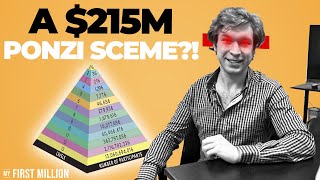
Well, my impression, by the way, sounds nothing like the guy that was, uh, you know, I just made one up there. So he, anyway, so all of a sudden one day people go to quadriga.com or whatever. Hmm, this website is gone. It's just like a 404 page. Oh, Quadriga must be down. Is it just me? No, it seems like everyone's having this issue. All right, is it just down or is it gone? The website is gone. Where's— where did the website go? Where'd the exchange go? Where is my money? And all of a sudden, people realize that all of the customer funds are gone. $215 million of crypto is like not accounted for. And this is before the run-up, right? Now this would be like billions of dollars worth of, of that same crypto. But at the time, this is, you know, 20-whatever, '16, '17, '18, something like that. Um, you know, crypto wasn't as, uh, you know, Bitcoin was, you know, much, much lower back then. And so everyone's like, what the hell happened? Then news comes out, the founder of Quadriga died suddenly on a trip in India. And he had the private keys to the crypto and like he died and no one else knew the keys and the crypto is now inaccessible.
I remember this, this happened maybe 3 years ago. Right.
And so, yeah, exactly. So people are like, what the fuck? And so a bunch of customers are like, dude, I had $10,000. I had $100,000. I had a million dollars there and people are pissed. So they get in a Telegram group and they're like, oh my God, like I hope they're going to be able to recover this. And that kind of like a day goes by and nothing comes out. and like the wife's estate, the wife posts on Facebook like, um, you know, my husband has died suddenly on this trip to India. Um, you know, unfortunately, like, we lost the keys. And it's like Jennifer Robertson, the, the executor of the estate, or something like that. That was his wife. That's how she signed it. And people were like, that's really weird message. Like, he died a month ago and they just like posted this now. And like, where the fuck's the money? And like, really, this, this like the number one exchange in Canada, it was just one guy had all the private keys. Like, that seems so weird. And, um, so they start to say like, how do we know he's dead? How do we know he didn't just pull off what's called an exit scam?
Yeah, roll up that body.
Yeah, exactly. And so literally that's what they do. So they get in a Telegram group together, all these customers, and they start basically crowdsourcing the investigation. First they report to the authorities, authorities do nothing. They're just like, hey, you know, we can't really— you know, cryptocurrency has all kinds of risks. We don't know what to do.
Where was he buried?
So he's in— he dies in India, and they basically— they do come back and they have a funeral here, and they're like, was there— so they're like, hey, was anybody at the funeral? Then they like, they get in touch with like what the wife's like sister, and they're like, was the funeral, uh, was the casket open or closed? And they're like, closed casket. And they're like, ah, and they're like, so people just start getting like, what was he, what did he die from? Uh, he died from Crohn's disease. They were like, oh, he, a sudden, uh, gastro, you know, complication, uh, from somebody with Crohn's disease. And people like, dude, I'm looking this up. You don't die of Crohn's disease. Like, it's just very, very rare to just suddenly die.
Did they call the hospital where he went to?
So then, so they're, they're contacting the local journalists. They send somebody out to India. They go find this. It's like a needle in a haystack. It's like, oh, is there a white man who had diarrhea in India? It's like, yeah, all white people in India have diarrhea, dude. How are you going to find this guy?
Everyone gets number 3 when they go there.
Exactly. This guy died at number 3. But they eventually find the doctor. They go to the doctor and they're like, hey, we heard there's a death certificate for somebody who died here. So they're like, there is a death certificate. Okay, so we think he died. And people are like, you can fake death certificates. Like, you can pay. There's a black market for death certificates. And so they're like talking about that. Then they're like, all right, they go find the doctor. They ask the doctor. The doctor's like, yes, I remember it. Guy came in, was having like, you know, upset stomach. We kept him here overnight for fluids. And then he suddenly like had a heart attack and died. Like, kind of like, you know, he suddenly got much worse and he died. And they were like, okay, was there an autopsy? He's like, no, there was no autopsy done. They're like, that's weird, why was there no autopsy done? And like, so there's still like a question mark, but you know, the journalist comes back, says, look, does, there's no reason to believe that he's not dead. Like, you know, this is what happened. And so there's rumors that he went and got plastic surgery, changed his face, and he's living somewhere in the Bermuda Triangle somewhere. There's some random rumors like that. And there's like all these people trying to like crowdsource this, and they're like, wait a minute, the wife, like, The wife got like $12 million of real estate. They start looking into the wife and they're like, how come her name is what it is? Like, how come she doesn't have his last name? How come there's no record of her name before this? Oh, she changed her name recently. She's changed her name 3 times in the last year. Why did she go from, you know, whatever, Erin Griffith to Erin Jacobs to Erin Robertson? Like, that doesn't make sense. And like, then they find that like the ex-husband, somebody with the same last name, Griffith or whatever, like died also of mysterious causes in Canada. And they're like, oh, did she poison him? And they're like, what's going on? And so nobody knows what actually went down. But this— and then there's like, but because it's crypto, it's all on the— all the transactions of the blockchain. So, right, so the whole time I'm watching this movie, I'm like, wait a minute, but like, if the guy's alive and he's trying to steal the money, you'll see the money moving. If the money's moving, Somebody has the keys. And like what ended up happening was actually that the guy, oh, there's even more to the story. So they go look into this guy, they're like, all right, who is this guy? And they find like an, like, you know, the same way the Silk Road guy got caught, they find an early like record or mention of the name on this like black hat hacker forum. So they go to this black hat forum, which is where hackers hang out. Black hat means you sort of do the— like, there's white hat, which is like you find bugs, you tell the company. There's gray hat, which is like you find an exploit, you kind of use it, but it's not illegal. And black hat's like straight up illegal. And they find this guy under this, uh, name like Scepter or something like that on this black hat forum, and he had been running multiple scams. And they linked this founder, that, that guy I showed you, Butters, they show— they linked him to this guy Scepter because he has the same name. Like they found his email address in the forum and his official name because he had like ordered some product to put in his name and address and it was like his actual full name and that. And so they like figured out that he is Scepter. He was a scammer. And then they find one key thing, which is that the blockchain forensics guy basically is like, you know, like these cases, you sort of hit a dead end and it can be like that for years. But then there's one bit of information that comes out that just cracks the case. He's like, that's what happened. We got one bit of information about this Sceptre guy that went and cracked the case, because then we found a user on the network called Sceptre. We noticed that he basically— what was happening was a customer would come to CodeDigger, they would buy Bitcoin, and he would just in the database send them Bitcoin, like send them quote-unquote Bitcoin into their account, but there was no actual Bitcoin. He was just like funding their account with a fake amount of Bitcoin that wasn't actually on the Bitcoin blockchain, and he would just take their money, he would go to other exchanges and actually buy Bitcoin with it. And like, he— so he was funneling money himself. So the whole time These users thought they had crypto in their account, but they never did.
So where's the money now?
Every crypto person's worst nightmare. Well, so, so that's what I'm saying is like, it wasn't that the site went down and they lost the keys to this one wallet that had $200 million in it.
It's that it was never there the whole time.
It was never there. There was no wallet. There, there was no— there ever was.
If you could always track it, so where's it now?
So that money, every time a customer— imagine basically it wasn't ever one bit of money. It's like every time a customer bought He would go make a small transaction on one of 10 exchanges and you don't know who's, who's doing that. Cause it's all under different account names, stuff like that. So basically he like laundered the money very effectively during that. So all that money is gone. And so this is crazy movie.
What do you think happened? Is he alive or did the wife kill him?
So, oh, well the other crazy part is back in that Black Hat forum, he had, um, he had partnered up with, or he had reached out to this other guy Michael Patron. And Michael Patron, uh, was another guy on the Black Hat Forum, another scammer. And they had built— they had launched— they'd co-founded it together, actually, Quadriga. And then they got in a big disagreement, and then Michael Patron left after, you know, some number of years. Um, and then it was just this, this dude doing it. So one theory is that that guy, that guy killed him. Uh, another theory is the wife killed him. Another is he killed himself because he thought he was gonna get caught. Another is that he's alive. Nobody knows which of those it is.
What do you think?
I believe, I think the guy's alive based on the, like, the, like, the, like, the, the movie basically took the Indian doctor's word as like, oh, I remember this guy coming in. Yep. He had complications. He died. We did no autopsy and I remember it all. You know, like, I feel like they vastly underestimated the amount of corruption you can get in India for like $10. And so, so, you know, I, I think this guy is probably alive just for the people listening.
For the people listening, Sean's Indian, right?
Yeah, exactly.
Um, so like, let's do it for $10.
I'll say Sam's dead.
Uh, so dude, if you're— is there— if you're— if you fake your own death, let's— you fake your own death and you have a billion dollars, as low as $150 million, however much was stolen, as high as a billion dollars, what's even the point of having that money if you're fake dead? Like, how do you ball out and Like, how do you live? What's the point of it? What— and what did his mom and dad say?
Most importantly, how ashamed are your parents?
Well, like, did they— were they devastated?
Dad, they didn't talk to mom and dad. They talked to the wife's sister, uh, and she was like, you know, she's like, we now look like huge liars because at first we were like, she had nothing to do with this, um, and he was a good guy. He was so sweet. He was so romantic. Like, you know, he's, he's not capable of like a crime. Like, if he died, he died. Like, you guys are horrible conspiracy theorists. And then it like came out that no, he clearly scammed. And then it's like, well, we were wrong about the first part saying he didn't scam, so now nobody believes us that A, she wasn't in on it, or B, that he's not dead— like, that he's dead. So we kind of lost our credibility. We look like liars now just because we didn't really know.
Here's what I've learned. Here's what I've learned studying conspiracy theories and watching like every episode of Dateline ever, which is people tend to be very bad at keeping secrets. And so if there's more than a couple people who are involved in this, it typically comes out. Even if it's a long time, things come out. Um, and so that whenever I hear these, I'm like, it could just be the simplest thing is that he did in fact die. It's really hard to keep that secret. To keep that secret would be so challenging, right?
Yeah, I, I'm kind of with you. Like, I think maybe it's possible he did suddenly die or he got killed, uh, you know, like one of those two, or committed suicide. Yeah, those are all possible. But man, dude, just imagine, like, can you even put yourself in the mind of— to execute on this elaborate scheme? Like, you are literally just duping like millions of customers simultaneously, sitting in your room on your laptop, just straight stealing from everybody. Like, it's just a crazy level of, like, you know, like a sociopath to be able to do something like that. It's really wild to me.
Have you read about Bernie Madoff at all?
Uh, no.
So basically he, um, I can't think of a good analogy right now, but basically, yeah, he ran a Ponzi. He was, I think it was like $56 billion, but you and I were both too young to probably be watching the news when it happened. I think I was in high school or grade school. I don't remember. But, um, anyway, he, it was like a $58 billion Ponzi scheme and he had been running it for 40 years and the equivalent of it I think it'd almost be like, um, you know, Jamie Dimon at, um, uh, Morgan Stanley, JP Morgan, or whatever, JP Morgan, like a figurehead like that. Because at, at one point, when even when he got arrested, I believe Bernie Madoff was the chairman of either the NASDAQ or maybe he was chairman of the SEC, like, uh, like he was the chairman who, and it was his job to make sure that fraud didn't exist. And when he got busted, it was this massive ring this, or this massive fraud of like $58 billion. I think, I think, I think it was in the 50s of billions of dollars. So just massive. And he'd been doing this for 40 years. It's, and, and they're like, why did you keep going? He's like, once I was in, I just couldn't back out. I was in.
So dude, I guess I have another one, a more modern day, a current one of these that's unraveling as we speak. Did I, okay. So did I talk about this? This video of the, of the CEO of Fast? I think I did way back in the day on the pod. Did I talk about this?
Well, so people were tweeting at us saying we called it, and I don't remember what we, what we talked about with Fast, but basically Fast.com, it's a quick checkout. So basically if you go to a website, I don't even know what websites, like Honest Company or something, and you want to buy diapers, it's like a universal checkout button basically, which is what PayPal is.
Yeah, it saves your information. And so you can go to another website and do this, right? And so we, uh, we had the founder of Bolt come on here. I invest in Bolt. Bolt does the same thing, but like with a lot of actual users and revenue. Fast, basically, like, I don't know, uh, this was maybe 2 years ago that this was happening, maybe 3 years ago, where all of a sudden on Twitter there was this new company Fast. It had the domain, I think it had the domain fast.com. I think it has fast.com, but it definitely had the Twitter handle at Fast.
Yeah.
And all of a sudden there was this guy, Dom. You would see this guy, D-O-M-M, Dom. And it was like, I'm the CEO of Fast. Before this I grew my business to $50 million. Uh, now I'm doing— now I'm, you know, working on Fast. And then basically they were just like this Twitter fucking hype machine. This, like, this girl joined as the COO and she looked cool and she was— had a background at Uber or something like that. And she was the new COO of Fast. And Fast would talk about how how fast their checkout was, right? And how big of a problem this was. And they were talking about like, you know, they're, um, they would, you know, they were making swag and they were like basically raising money and they were, you know, he could just tweet out.
At one point he like sponsored like a Sea-Doo race team or something like that. Like there was like a press event where he was on a Sea-Doo with like a professional Sea-Doo guy doing that. Yeah.
We need to literally put that in this episode. Ben, can you Google this? I know how. I'm going to get you a link real quick.
It was like a guy doing flips on a fast Sea-Doo. The greatest promo ever.
What's this word you're saying, by the way? I've never heard this word.
Sea-Doo, like a jet ski. I think it's like Kleenex. It's the brand, but a lot of people call it that.
Okay. So, so Ben, go to, go to this link and we're going to watch, we need to watch this video together in a second here, but let me just set up the rest of the context. So. Fast goes and Fast starts raising money, um, and they raised— let me just pull it up. So close to— they raised from Stripe, they raised from, I think, from Shopify as well. I might be wrong on that, but they raised, um, yeah, so they raised from Stripe, uh, early on. I think they raised— this says Crunchbase says almost— oh, over $100 million, right? So they raised a $100 million Series B, they had a $20 million Series A, And so this was, you know, Fast was like a darling. In fact, I met this guy from India, this Indian engineer, and he goes, he had worked at like, I don't know, Stripe. And now he was working at Fast and I was like, oh, like you wanna be an entrepreneur someday? He's like, yeah, I'm just right now. I'm just like, I just collecting, I'm just collecting my stamps on my passport. He goes, in India, he's like, in India, if they see that you worked at Stripe and you worked at Fast and you worked at like, name one of Pinterest, one other, like, one name company that they've heard of, like, oh, you must be like super smart. That's Harvard, IIT. That's like a pedigree right there. And so he was collecting his FAST stamp at the time. And I remember asking, I was like, I was like, so is it legit? Because like they'd raised over, you know, nearly $200 million. And I was like, you know, is it like awesome? Like, is it growing really fast? Are there users? I don't know anyone who uses it. And he's like, no, there's no users yet. And the CEO kept— the red flag number You know, I'd say red flag number 2 was probably like, they— the CEO kept tweeting out these like tech, like a screenshot of a technical scale test that they were doing. It was like, we can handle, you know, 400 billion payments per, you know, you know, per second right now. It's like, we can handle this many transactions. We got to go back to the lab though and keep scaling up, getting ready for the big fast launch. And I remember thinking, wow, there's this problem in Silicon Valley called premature optimization, where you're prematurely— you're planning for scale when you don't have any scale yet. Instead of just going and getting customers who actually want your product and start using you and giving you feedback. You're planning for this like fantasy world where everybody uses your product and you can handle the scale.
We're just gonna call him Dom Prejak from now on. Mr. Prejak.
Exactly. So, so I, so me and, me and Furkan, we were looking at this, we were like, this is weird that he's Prejaket over there. Just, he's like, we were just like, I don't know. We just kind of shrugged our shoulders. And at the beginning, like when it first came out, I was like, Well, honestly, the idea is a good idea. Like a single universal one-click checkout will help the whole world of e-commerce, like go forward. You know, it makes the customer's life more convenient. It makes websites make more money. Like the idea makes sense, which is why Shopify has Shop Pay. And that's why, you know, Bolt is worth billions of dollars now. Like the idea is a good idea and Fast is a great brand name. And it seemed like on paper, this guy was, Great, because he was super high energy, he was building the brand, and he said his last company was like— he had something in his bio about $50 million. So anyways, it all started to unwind more recently when two things happened. The first is people discovered that this guy Dom, who had branded himself as Dom, there was a reason he branded himself as Dom, because if you used his full name, Dominic Holland, if you just Googled that, you would find all kinds of articles about his previous company, which basically was the same thing. It was a hype machine in Australia and ended up losing a bunch of money overnight, getting sued, and then he kind of like ran away from the scene of the crime in a way. Like, and like, not exactly left Australia and he didn't pay people back.
And, uh, yeah, it was, it was, I think it was a gray hat for sure, potentially even illegal shit.
Yeah, there's like a $15 million dispute. The government was like, hey, we're owed something, blah blah, and the same thing had a a great domain, tow.co. And so it's like, this guy's like, you know, good on the branding and the hype side saying, he came out saying we're Uber for, for basically like towing. And so he had the story, he had his brand tow.co, and then, you know, they basically left with a $50 million legal dispute between him and the state government over who's supposed to pay for, you know, something that's going on. Right. So the company goes under. So, and so, you know, his, his story was like, oh, I built a successful company. And I remember, cause I tried to get him on the podcast. I DM'd him and I go, "Hey, what you're doing with FAST seems interesting. I'd love to talk about investing and then maybe have you on the pod, but can we do a call? I just want to understand your story." It was hard to get ahold of him. Then we did a 10-minute phone call. And by the end of it, I was like, "I don't know. This guy's a little bit fuzzy with the details." So I was a little bit on the fence and he sensed my hesitation. Then he DM'd me right afterwards. He goes, "You know what? I think we're not ready for press just yet." Oh. Which was ironic, right? Because he's pumping it on Twitter. So like, I think he saw that I was kind of like, this seems like kind of bullshit, but like, okay.
Yeah. Um, so the alarm was ringing.
So anyways, they, the news just came out about, you know, a, about this guy's background. Um, and then the second thing was that Fast is like very, very small. So Fast has, I think, a lifetime of $600,000 in revenue. Is that right? Like, With 300 employees, more, 500 employees and $600,000 in revenue.
It's crazy. So I had an interaction with them at, when I was running The Hustle, like a year and a half ago, I think it was. I, either me or someone on my team, I don't remember if it was me that wrote it. Someone wrote this ad where it was like a video ad and it, it showed, um, it was like a magician, you know how they do the tricks where cards are coming out of their mouth? I think he was doing it with money kind of coming out of his mouth or something like that. And I get a DM from someone and being like, hey, Fast ripped you off. They took the ad that we wrote and made and they copied it shot for shot, word for word. And I tweeted out that video and I was, and I tagged Dom and his co-founder, I forget her name. And I was like, hey, you guys just totally ripped us off. And Dom replied with just like a smiley face. And then the other co-founder was like, hey, sorry about that. Sometimes And then she named a person on their team. I forget, sometimes Blank gets a little bit too carried away with the inspiration. And I was like, oh, you're just gonna fucking call out this guy who works for you? And then she DM'd me and was like, look, I'm not gonna ask you to take it down, but maybe if you let them know, if you could just tweet out saying that you, you know, we deleted our ad or something like that. And I had a run-in with them and I did not like that. Dom, like, Objectively, he has a super punchable face.
Objectively. We're just talking objectively here.
Objectively. Like if 9 out of 10 doctors recommend, you know, something, 9 out of 10 people recommend that they, he has a punchable face.
Let's watch this video to confirm. Ben, play this video and kind of pause after the ridiculous bit. So my buddy Matt sent this to me and he goes, This is before this news came out about the like no revenue, struggling to raise money, maybe going to have a fire sale. And he's like, uh, dude, is this company serious? Like, I remember you guys talking about them, but like, what the hell? And he sent me this obscure video from the Tampa Bay Journal because they moved to Tampa, which first of all, everybody's moving to Miami right now. That's like the big move.
Tampa.
They moved to Tampa.
Is that—
that's the Sox in—
it's It's like the socks and sandals capital of the world. Right? Dude, people loved your socks and sandals joke recently. That's where we're going to host a Legacy Conf.
By the way, the funny part is I do wear socks and sandals. In fact, I love it. All right, keep going. All right, so this is a little too choppy here.
That's all right. Pause and resume.
I need to describe what's happening.
Oh my God, he's getting out of the car.
He crawled out of the window like a fetus leaving the womb. He— okay, so the mayor or somebody is like, Fast is on a rocket ship trajectory. And, uh, uh, what is this, by the way? Is this a race pickup truck?
It's a, it's a— I think they call it stock trucks. Basically, it's a NASCAR, basically.
Okay, so, so some car revving its engine that has Fast.co all over it, uh, comes up, does a donut, And then the CEO crawls out the window and does a light jog to the podium. All right, play it.
Oh my God.
Some guy puts a peach blazer on him. No, that's pink, bro. It's like, yo, yo, peach me, peach me. And he peached him with the peach blazer.
And then, you know, the paid crowd of people, like 10 people wearing Fast t-shirts.
Yeah, these must be ordinary citizens excited, right?
Making the world better one checkout at a time. So much, Jim.
Thank you to everyone for coming. Truly.
Thank you to Parker, my Uber driver, Parker Kligerman. He also moonlights as one of the fastest NASCAR racers. Oh my God.
Socks and sandals. So fast forward a little bit. Get to the jet ski part. So basically, he goes up there. He gives this speech. You know, the city of Tampa gives a speech.
Oh my God.
And then there's a stuntman on a jet ski that says fast on it, just going in circles in the Tampa Bay. Nice flip, I gotta give him that. Um, so, so this event happens, and this is just another thing where it's like, the more parades you throw before you have customers, like, the bigger red flag you're throwing up into the universe. And so, you know, I— this is ridiculous. This thing's about to blow. The news has already started to leak. We called it, you know, many months ago when we talked about this. And, you know, it looks like it's going down soon.
Yeah, this, this had red flags all over it, man. It is pretty ridiculous. This is crazy. What is he— what's he saying now? Is he— has he said anything or what are the employees saying?
There's nothing on Twitter about it from, from him that I saw. So, you know, it's kind of Yeah, his last tweet was like, oh, they don't like this. Here's this new customer that launched with us.
Um, that's crazy. I'm so excited to see how this ends, man. It is— you— we talked about this. I talked about this before. So I've angel invested in over 50 companies. You've done, I imagine, that or more. And, um, it's easy to lie to people. And I talked about, about this with you. I was like, hey, have you been lied to? And I think you said maybe once. So far I've not been lied to. It is so easy to lie. It's so easy.
That I know of, right?
I thought you said there was one.
Yeah.
I thought there, there was one person who you're like, I think they're lying.
Uh, I don't remember that, but, uh, maybe, yeah. Our point, which is that like Silicon Valley does very little diligence at the early stages. And even at the later stages, there's a lot of like, dude, it's a hot deal. Other big names are in. We're not doing, uh, you know, basically they're like tight timelines, minimal data sharing. You're either in or you're out and you sort of bet blind. And during bull markets, everybody just, you know, like it is common practice for people to, uh, to invest in stuff without doing a ton of diligence. And during the bear markets, when, when the leverage swings over to the side of investors, they're able to ask more questions, which dig in more and have more time.
I'm not entirely hating on, by the way, because I think you have to take the good with the bad. So the good or the bad with the good, what are the phrases? The good is that like someone comes to an investor and they'd be like, hey, I have a track record of doing some interesting things. I don't even have a product yet, but my vision is this. And the good is like, there's people like me and you and other people who are way bigger than us who are like, ah, you know, screw it. Like you gotta, you gotta take a shot. Try it. That's good. And, uh, they'll say, look, I don't have anything here, but let's try it. So I understand that. But then the bad of it is you get shit like this.
Yeah, exactly. And honestly, like if at the time when I was, reaching out to this guy being like, hey, come on the pod and I want to invest and all of that stuff. I think it's because again, it really is a good idea. It's not that this is a bad idea. And you know, at that time there was no traction. So there's not nothing to diligence. It's like it's pre-launch. So of course they have no customers. Of course they have no revenue.
They just launched and he pre-jacked all over the place.
Now it's, uh, it's much further along. And now, you know, sort of you see that the emperor has no clothes. And so, um, you know, but, but I would say like, it is very common practice for this type of stuff to happen. And I think, you know, the—
well, I don't think, I don't think it's common that— it's not common that people lie like that or are full of shit. I think, I think it's common that some people exaggerate, but in general, I think the system actually works.
But yeah, that's right. That what I meant was it's common that you invest without having to go diligence every claim that the company makes and audit all their financials and audit their customer base. Go do, you know, reference checks. And like, you don't do all that for the sake of moving fast. And in the, in the aggregate, it totally works. But then a few times you're gonna get egg on your face. That's just the cost of doing business. It's just the same way that, you know, 1% of all credit card transactions are fraud. That doesn't mean credit cards are bad. It just means you have to bake that into your model that you're gonna have some issues like this. And then in general, there's like, there's the line, there's the gray hat of like sort of fake it till you make it. You know, you're forecasting optimistically versus actually misrepresenting something.
Would you invest someone? Would you invest— had you known that this guy did what he did in Australia? So let's say someone's being charged with like fraud or something that is, you know, related to fraud. Would you invest in someone, uh, if they had that?
Usually not, but it depends on the situation. Like sometimes if, you know, somebody's being sued, you got to take that a little lightly because people can get sued for anything. It doesn't necessarily mean what happened. You sort of have to look into this, to the claims. But yeah, it's not like a deal breaker in that sense of like, if somebody has some bad press about them, I don't necessarily like view that as an absolute no, but I have to like come clear with it, you know, come to terms with it. And I think I've told the story before about somebody who invested in HQ Trivia. And at the time I was like, yeah, I heard the founders are like kind of, uh, you know, like there was some suspect stuff. They were like, They had really gotten in trouble at Twitter for like berating employees and stuff like that. Like they got fired. Like there was some kind of weird claims and they're like, yeah, we looked into it. We didn't find anything that was like, you know, scared us away. And in fact, the fact that it scared other VCs away just makes us even more bullish. Right? Like there's a, there's an honor in Silicon Valley of being a contrarian, which is like, you know, founder friendly. And these things can get you in trouble sometimes.
The people, the people who funded that, they called themselves contrarian. It was, uh, Founders Fund, or some people related to that, and they own a conference called like Contrarian Conference. But you want to know the thing— it's called— but yeah, it is. I think that's what it's called. The thing about contrarians is they're wrong most of the time, right? So, uh, yeah, I'm not surprised on that one. Um, well, where do we go from here?
Um, okay, do you have time? Those are two more topics. All right, I want to get your quick take on something. I'm going to call this Segment genius or idiot. I want you to give me a call. Is this more genius or more idiot? Um, so by the way, I've gotten—
before we get to genius, I've gotten a fair bit of feedback on your drunk ideas. The very long distance girlfriend, fan favorite. And the big ass bed.
Oh dude, by the way, somebody, somebody reached out about the long distance girlfriend. Very long distance, right?
Very long distance.
They were like, don't share this. Don't share this. Oh yeah. Sorry. Very long distance girlfriend. They said, don't share this on the pod, but we, we do this idea and they showed us the numbers and the numbers are super impressive. So that idea like legit is working on them. I wish we could talk about it, but they asked us not to.
All right. Genius or not.
Um, all right. So Alex Lieberman, who's the, uh, co-founder and CEO maybe of Morning Brew.
Um, no chairman.
Is that not right? Chairman of Morning Brew, came out and said he's looking at buying mini golf courses. So he's like, you know, I'm interested in buying and acquiring putt-putt golf businesses. And he kind of had a couple of reasons why. I think he was like, you know, these are like recession resistant, like people need entertainment that's cheap and fun. You know, these are like, you know, cash flowing businesses and You know, probably not a ton of competition. So the prices are probably reasonable. And there's like a real estate play baked in. Those are his kind of like reasons, uh, roughly if I was going to articulate them for him.
And he said, he loves reaction. He said that he loves putt-putt. That's what he said.
The man loves to putt.
Yeah.
So, um, first reaction, genius or idiot, which way are you going?
Alex is a great guy. I, he's very smart and I like him a lot. Uh, he's actually, we've become friends. This is not his best idea, in my opinion. No, I don't, I don't think this is a good idea.
You're being very, very gentle.
But like, but so here's why. So, all right, I'm an internet person. I made, uh, some money on the internet. Now I'm currently at an Airbnb where I, I'm getting into the Airbnb business. And what I'm learning is that it is things like Airbnbs and some other businesses where they like you spit off like 10% or 30%, if you're really lucky, a year in cash flow. Those are awesome, but they're only— they're more like just growing your wealth quicker, not necessarily creating wealth, or at least it's a little bit more rare. And what I'm learning is like, I was out here and I just looked at my Shopify thing and my copy of that thing just made $5,000 today. And it's, it'll do $100,000 a month maybe. And I'm like, okay, well, a good month at my Airbnb will be like $20,000 or $30,000 a month. And I had to spend, over $1 million, right? So I had to spend close to $2 million to buy it. Like, so it's like, if I had to manage a putt-putt course, I think it's tough. So my friend Cody, my good friend Cody, she does all this stuff, Cody Sanchez. And in my head, I'm like, I just do not want to manage all these people. I think it's a fucking nightmare. It's incredibly challenging. And if you're Alex Lieberman, you're very— that means you're world-class, one of the best in the country at creating newsletter businesses. I would stick to that maybe, or something related to that.
So I'm, uh, so you're going idiot, I'm going genius with a caveat. The genius move is he already got all the value he's going to get out of this. Tweeting that out was the genius move because it makes him sound interesting. It's something kind of fun. He seems more— basically just by tweeting that, he's a more interesting guy than just the newsletter guy.
I agree with that.
He's, uh, he comes across as kind of like fun and rich because that's who goes out and acquires putt-putt golf courses, somebody who's fun and rich. And he has currently no more work to do besides typing the tweet out. And so if he stops here, it's genius. If he crosses over and buys his first putt-putt golf course, he has crossed the line into idiot. There's a fine line between genius and idiot.
He needs to take a picture of him touring it. Dude, when I launched, when I like just said I was doing Airbnb and I said, here's the property I'm about to close on, That tweet got read by 2 million people or 2 million impressions.
And he does need to milk it a little more. He needs to like, he needs to go to, go to a few, then he needs to tweet out the economics of how a putt-putt golf business works. So he'll learn himself. He should share that out. Just pour that out. Then he should, you know, like maybe like take a picture of him signing a piece of paper and be like, we'll see.
New adventure.
Yeah.
New adventure.
Just new adventure. New chapter. And then, you know, but like, you know, he's signing whatever the waiver.
And then he just gives the owner $2,000 for like a 5% share. And he says he owns a course. Yeah.
Down in his hometown. He needs to do that in his hometown. And then all of his buddies, you need to be like, hey, I bought a piece of—
let's go to Alex's.
I'm an owner. I'm an owner in Alex's putt. Yeah. Majestic Putt. We're thinking about changing it to Alex's Majestic Putt. But like, for now, I just want to keep that hometown vibe.
They're like, you guys want to go down 0.5%? We got to go do the back nine at Alex's. You guys want to go? You coming with?
I have the keys. We can go tonight.
Yeah. I know the owner.
At night we can go. Yes. I love this. That's the true genius move.
What's the next one?
All right. So the next one here, Elon buys 9% of Twitter shares. I don't know if you saw that this morning.
Baller.
Genius or idiot? Oh, he's going baller. He broke the scale. He's going baller.
I'm not even an Elon fan. I don't like him for I think some of his, like, jokes about, like, 42069 and telling a politician their head looks like a penis. I think that's— I'm not on board with that. I think that's silly. I've also— because, A, it's not even funny. And B, when you have, like, people's pensions invested in your company and you're, like, doing dumb shit, like saying funding secured at 420, not a fan of that. But this move is awesome. I think what's the point of having it if you don't flex? You know, there's no point in having F-you money if you don't say F-you once in a while. I think this is an awesome move. I, uh, he's now the largest shareholder. So he spent $3 billion, is that right? $2 or $3 billion?
Yeah, something like that.
Maybe for him. Yeah, yeah, nothing for him. And he bought into Twitter. The stock is up 30% or 20% today, so he's already made a little bit— a lot. He's made a lot of it. And I think it's amazing. I think that he's all about this free speech guy. I actually think this is an amazing move. I'm very excited for it. What do you think? I think Twitter's been undervalued, by the way, for a long time as well.
I agree with everything you just said. First of all, I also think that Elon's kind of cheesy and cringey, um, when it comes to like personality. I think he's obviously absolutely dope when it comes to his business and like, you know, you know, like changing the world stuff. Um, so, you know, yeah, I think his, his sort of 420 joke and like, you know, 69 jokes, it's sort of like Uh, it's kind of like if a normal person said that, they would not be funny. Yeah. So it's only funny cuz you're, you're rich and you're in business. So it's kind of like being like a hot podcaster.
Yeah.
Right. Like you're not actually hot. You're a hot podcaster.
So it's kind of like, that sounds like a conversation you just had with someone. Did, did someone, were you, were you acting like hot shit? Like, well, well, Sean, like, yeah, you're a good looking podcaster. Yeah, you've got a great voice.
You're one of the best looking podcasters. It's like, oh good, you've got amazing hair for a tech person. I'm the smartest person at Crate and Barrel. Fantastic. What do I care? So, so basically, uh, yeah, I think he's cringing in some of those ways, but I think this is a baller move. This is sort of like when Bezos bought like the Washington Post or whatever, and like You know, whoever, Benioff brought Time magazine.
It's even better now than it was.
Who really wants to own an actual physical newspaper? Like, this is actually better. Like, just buy Twitter. Twitter is the newspaper of the world. And so just buying like a big chunk of Twitter and being able to like, you know, go swing, you know, you know, go flex in that, in that way. I think that's a, I think that's a good move. And I think actually like Twitter could use, um, you know, some change. And, you know, people always try to build alternatives. Like Trump tried to build a Truth Social as like an alternative to Twitter or whatever.
Crashed the other day, but the stock did.
Yeah, but, but a better move is just to buy Twitter. And like, you know, if you're ultra rich, buy Twitter and institute the changes you want there because all the people are already on it, right?
How much, uh, how much stock do you have to own in order to have your opinion be heard? If you own 10%, I think there's like some legal stuff around 10%, right?
I don't know exactly what it is, but I think there's like, depends how much it's like he owns X percent of the float, but I think it's, you need to own the voting shares, which is like, you may not own the same percent of voting shares as you do total shares. And the second thing is I think basically what you do is you become sort of an activist investor, which basically says you get on the board or you sort of lobby the board to make a CEO change. And the CEO needs the CEO that gets installed is a CEO that like kind of carries out the agenda that you have in mind. Otherwise, they're also going to get fired by the, by the activist investors. So, so, you know, I think that's the, the general idea. I don't think he's going to play it exactly like that. I think he's just going to be very vocal about what he, what he thinks they should do, which is a lot around basically freedom of speech and like the algorithm being either open sourced or choose your own algorithm so that you're not— you don't have to listen to Twitter's filter. You can choose your own filter or you can know how the filter works at the very minimum.
Dude, I'm on board with this. I think this is great.
So I think that's what he's trying to do.
Onboard Genius.
Um, and by the way, I think this is the only other stock he owns. So I think before I've heard him on an interview say that he owns only Tesla, SpaceX, Bitcoin, and Ethereum. And now this is— this would be the only other stock he directly owns if, uh, if he was not bullshitting that first time.
That's crazy. What a crazy person.
Oh, okay. I have another, um, sort of, uh, genius or idiot thing. Did you see that Logan Paul was at WrestleMania?
Genius. I did, and I watched it. It was awesome.
And it's actually not a part of Genius or Idiot. This is actually a part of like a different question. Is Logan Paul the greatest athlete of our generation? Did you see this video?
So he looked great. He looked so good.
He looked amazing.
So, so he did 3 suplexes in a row.
I haven't watched wrestling since like in 20 years.
Dude, wrestling's back. Wrestling is like booming.
Wrestling is fucking back, dude. It's back in a huge way. And I think there's a lot of opportunities around the fact that wrestling is back, but the whole world has changed. It's like wrestling is back, but the entire world and the way it works has changed. And so that to me says there's a lot of opportunity because like you have crazy fandom and passion, but like all new like tools at your disposal for like how you could like harness that energy. So they did WrestleMania yesterday and whatever. I saw a bunch of clips, you know, Stone Cold Steve Austin came back and drank a bunch of beers. Pat McAfee was also a podcaster somehow, was like a key person in the thing. I don't know why. Somebody can explain that to me. But Logan Paul did a match. And Ben, if you pull up the clip of Logan Paul in this wrestling match, unbelievable athlete. Absolutely unbelievable.
Yeah, it was amazing. And he did all the acting and stuff. He did.
He killed it.
Yeah, dude, they killed it. I thought that was really good.
And by the way, easy to do what he was doing.
What's it called? It's not the WWF. WWE, I think. They, uh, that's a publicly traded company. And so you could like, and you can buy, buy their stock and it's a killer business. They crush it.
Yeah. Vince McMahon is a, is kind of an unbelievable story in and of itself, but incredible athlete and a great crossover move. The Paul brothers continue to just not miss. So I think, you know, I think like Logan Paul, I think his podcast now one of the most popular podcasts in the world. And more importantly than like, oh, the Paul brothers did something and it got a bunch of views. Like, that's a good podcast though, but, but it's a good podcast and it's actual, it's actually entertaining content. It's actually like deeper content. They talk to all different types of people from like business people, musicians, porn stars. They've had like all different types of people and they have like full-on conversations. So then it's a rebrand, right? It's like basically taking this guy who used to be a Vine star making fart jokes And now you see, you know, a more mellow side and a more thoughtful side and all this other stuff.
Um, look at him, he is yoked. Logan Paul's yoked.
Yeah.
And as a kid, I remember watching this. Look at him do all that shit. Do you— dude, these guys are basically bodybuilders who have personalities. They are so freaking big.
They're, they're bodybuilders that are soap opera actors. That also can do— are like also like Cirque du Soleil acrobats, basically.
Dude, they're unicorns.
He did, uh, like some crazy shit in this match. Anyways, people should go watch it. It's honestly impressive just to see the physical feat that he pulled off in this thing. Um, so I thought that was impressive. And I also think it's a smart move for an influencer. Like, this was not what they've done with like going into celebrity boxing, deep podcasting. They've won crypto, NFTs. Pokemon cards and then going into, uh, like Jake has a venture fund. Logan is going into WWE now and like building his character up there. They're talking about potentially doing a UFC fight. Like these guys have, like, these guys are winning, man. They're winning at like a very high level. That is very impressive to me. Um, and you know, most people just write them off like they're idiots. They're not idiots. These guys are awesome.
The thing about Logan is I actually, like, I've been watching his podcast. He, like, He's done a really good job of rebranding himself. He is, he still has a little bit, but he's mostly, he's not like a douche. He's not a bro. He's super thoughtful. He seems like a really nice person.
He's the respectful one on the podcast. He's got his kind of goofball friends that are like a little more brash and annoying. They can ask questions and like joke around about stuff, but he's the more reserved, almost like introverted, like thoughtful, mature person.
26? 25? He's not that old, but he like, he like gives advice like, uh, Uh, he seems like he's just, it's, there's a lot of stuff there that's rooted in pretty good values. You could just tell that his brother, I don't pay attention to as much, but Logan, I definitely, um, have been watching his stuff and he seems very, very, uh, like a good dude.
Right. Yeah. Super impressive. Um, all right, let's do, uh, one last thing. Uh, I have this, this little life advice tip, which is I believe that everybody needs to have a treat yourself budget. And what is a treat yourself budget? Okay, so basically this is part of, um, the overall skill of learning how to spend money.
And your friend Jason did it wonderfully.
Spending money is a skill. And we— so here's what— here's like my story around this. So my dad was great at, you know, good at making money, right? He came into the country, I think, with like, I don't know, $91, and that was like all he had as his like starting point. And like He ended up making millions of dollars in his lifetime and he learned how to make it, but he didn't, he never learned how to spend it. You know, if I, if I go to a coffee shop with my dad, my dad's first thought is like, this is mostly water. And like, I can make this at home. And like, they're just charging you for the brand and the cup. And you know, he's like talking himself out of a $3 cup of coffee when he actually wants a coffee. And so, you know, like if there was a free coffee, he'd walk 2 miles to go get it. And so, you know, he wants the coffee, but he doesn't know how to spend. And so spending, I've learned, is actually a skill. And so I think one way you can get better at the skill, like anything else, is to practice. So how do you practice spending? Well, uh, I have this idea of a treat yourself budget. So at my last startup, we created a bonus program at Bebo. And basically, I don't remember what it was exactly. I think it was like $1,000 a month at the, uh, was like the low end. And then basically as the company grew, I would multiply the bonus pool. So like when our user base doubled, the bonus pool doubled as well. And, um, and so we would give out this bonus and the only rules, the only strings attached with the bonus is you have to spend it on something interesting that you weren't otherwise gonna buy yourself anyways. So you can't just pay rent, groceries, your student, student debt, can't do it. Sorry. Uh, you gotta buy something you weren't otherwise gonna do it. And then you gotta come tell the story after you, after you buy it. And so Jason was the first winner of the thing. Couldn't have been a better, better guy to win it. And he was like trying to debate what to do. And I told him, I said, he was like, well, what's some of the— he goes, what's something you spent like $1,000 on that like, like punched above its weight? And I told him, I go, you know, when I first got named CEO of the company, I like, I was like, okay, I'm making more money and I'm, you know, like, how do I like mark this new chapter? And I was like, I'm no longer like a college kid anymore, but I still dress like a college kid. So I had hired a personal stylist. I went on Craigslist. I said, hey, I want somebody to come to my house, uh, take away all the clothes that suck and buy me new clothes that look awesome. And I said, send pictures of like what you think awesome style look.
What's like, uh, what's like the statute of limitations on that? Because it doesn't look like you, uh, are, are following through on that.
This was a decade ago. This is a decade ago. So this lasted, I think, 2 years.
Did she buy you cutoffs? Yeah, dude. Was she like, all right, uh, you're a cutoff and t-shirt, cutoff t-shirt type of guy, Jordan shorts. Let's go over to Foot Locker. I think we'll, we'll make you look nice, dude.
I gotta say, it was insane. I put that up on Craigslist. I woke up the next morning, I had 81 replies in my inbox, and I was like, wow. And it was mostly, it was like half people who were like, oh, I work in retail, or I'm a stylist or something. And half of it was like, dude, I wish my guy friends would let me do this. I'm just like, just like a girl who's like, I know how guys should dress better and guys dress horrible, and I wish my friends would let me do this. It sounds like you're going to let me do this. Like, I'll do it. But I ended up picking this like really hot Russian model to do it. And it was awesome. She had a great sense of style. She came to my house, she went into my closet and she just took everything out and was like, do you have garbage bags at the house?
Oh my God.
Oh yeah, yeah. Let me just go get them. And I was like, but that one's my high school jersey. She's like, yeah, it looks like a high school jersey. We're gonna throw it away for that exact reason. She's like, did you wear this to prom? And I was like, yeah, that's my good shirt. She's like, this shirt sucks. Basically, she— yeah, go ahead.
So we did this at The Hustle. So check this out, and then I want to hear what Jason did. So basically, we did the same thing. Every month we would have it, like, it was like $1,000, and one person can, uh, vote how the group will spend it. Like, we'll all do something together. Maybe it was more than $1,000, I don't remember. One time when we had, I think, 12 employees, our office was down the street from Costco, and we basically people teamed up in teams of 2. So there, maybe we had 20 people. I don't remember, but I think we gave each person, each group $200. And we said, starting now, you've got 20 minutes and you got to go buy something. And at the end, we're going to vote on who got the best thing. And like, I went and bought like, and I, oh, and I think it was $100. You had to spend on something that wasn't food. And then the other $100 you had to spend on something that was food. And we're going to eat together and vote on what the winning, winning thing is. And so people like bought all this stuff that like, you don't really want to like the big cheese ball things. Like you don't want to buy it at your house, but you've always wanted to try it. And it was the most fun team building activity we've ever had. It was awesome.
That is, that is genius. Um, I was just talking to somebody like, uh, the guy who runs our warehouse and he's like, oh yeah, you know, people want another, you know, the, the, the, this other warehouse, Amazon warehouse is offering an extra $2 an hour. These guys are complaining that it's cold inside and I just feel like it's hard to hire people because people don't want to work anymore. And I was like, dude, I get it. I get it. But you gotta be creative about how to make this fun for people. And you gotta figure out how to take this many dollars and make it feel like a trillion dollars of budget for you. And the thing you just described costs you probably like $1,000 or $1,200, but like you're still talking about it like 10 years later.
It was amazing.
It was so fun.
I bet you every single person in your company, remembers it.
It was super fun. Great team bonding. Probably liked some of the stuff that you got and like, and then it's such a simple way to like go, go further.
It morphed into eating contests somehow. So every month we would have an eating contest and we had one lady who worked for us who ate, I swear to God, 12 Krispy Kreme donuts in 7 minutes and then went to the bathroom and like just annihilated it. And she had to go home cause she was sick. So it wasn't the most productive, but people loved it. And then we would do the last thing that we would do is we would do taste tests. So for example, we would buy every single bottle of water that this nice grocery store near our office had. And you had to see who can guess which bottle of water is which. We had another guy that he would win $100 if he could guess the difference in all the grapes. Cause he was like, oh, I could tell the difference in all the grapes. I'm like, I don't know, man. I don't think you can. We did the same thing with app.
And then we did the same wine taste test. Yeah.
Like the, which grape is this? And then we did the same thing with apples. So they had to guess which apple it was. And if you got it right, you'd get $100 and stuff like that was the most fun.
Yeah, see, Sam, this is why, this is why you need to be teaching business school instead of, you know, whatever professors teach in business school, because it's the stuff like this that actually matters to people, actually make the work environment more fun. And, uh, you know, they don't teach you this at school. So, so I, I, I'm with you, dude. These like cheap, there's like cheap ways where it's not about the money, it's about the creativity and the fun and the kind of like the humor of it that makes it, uh, that makes it hit.
There's this book, and there's this book called, um, Man's Search for Meaning. Have you read it? It's like really sad.
I've read a part of it.
It's like way— you've read the COVID Yeah. Uh, it's, it's like way deeper than the shit that we're talking about, but basically it's about like a Jewish guy who was a psychiatrist or something, and he went into the concentration camp for 4 years. And so it's kind of interesting because he's like, oh, I'm, I'm my own experiment. And what he said was that the people who survived best, or the people who died would basically say, we're going to get released on Christmas. I think we're going to get released on Christmas. And then Christmas would come and pass and they would get all depressed and bummed and they wouldn't have anything to look forward to and they would die. Just like, you know, just get worn down. And then the other people who are like, I'm getting out of this and when I get out of this, I'm going to become a doctor so I can make sure that no one's harmed like this again. Or I'm going to get out of this so I can see my loved ones. I'm going to get out of this so I can become a— I could tell the world about this and write about it. And he said that every person that survived, they all, most of them had a thing to look forward to. And so I kind of stole that tactic. It doesn't exactly apply here, but I was like, for my office, we're going to have a calendar and we're going to make sure we list all the activities. And so people always have something to look forward to. And I noticed that that actually changed the morale. So you want to, you want to have something to look forward to. So then when you're eating lunch, you're like, hey, uh, in 2 weeks is that thing. Have you thought about what you're going to buy at Costco? And that type of stuff really, really helped.
Probably not the best to compare it to a concentration camp, but yeah, but it was— you learned it from there.
I learned it from that book. It's a great book.
Um, yeah, it was the end of the story. It doesn't really have a point, but basically Jason hired a— Jason, when Jason won, I was like, you should do this thing. He did it. He loved it. First of all, he's like, dude, the experience It's, it's, it's like that scene from Pretty Woman where you just get to walk into the store, you know you're gonna buy up a storm, you don't even really have to think. Like, the stylist, when I did it, she was like, go to the dressing room, I'm gonna hand you things, you put them on. And I was like, she'd hand me something, I'm like, I don't know, I don't really wear stuff like this. She's like, yeah, I know, that's the point. And then, you know, I'd wear the thing and then, you know, I get to see it. Sometimes I hated it and sometimes I liked it. She'd never make you buy something you didn't like, but she would always make you try stuff that you don't normally wear or whatever. And so Jason came back to work looking super cool. Uh, he was wearing like— all of a sudden he had like rings and like, you know, jackets and like, you know, he's a ring guy, interesting than they were before. He's a big ring guy and he had like, you know, like these like, you know, whatever, like these chains that like his mom didn't buy him. And, uh, anyway, so he looked cool and he had just like the right amount of swag to it. And he was saying something, um, on Twitter that I thought was just like a very, uh, like a good way of putting it. What did he say? He goes He goes, what'd he go, what did he say? He goes, most guys don't know how to style themselves. It's worth being taught. Life is more fun if you're excited about what you wear every day, especially if you know that the outfit you're wearing like amplifies the impression that you're trying to make. It gives you more presence. And like most people don't like to say this stuff out loud, but that's part of Jason's superpowers. He's like completely unashamed of the things he feels and says. And so he was able to like articulate it well. So anyways, somebody's listened to this and you have the budget, Something I highly recommend doing. You will feel different, and it's a good experience to go give yourself. It's a great way to treat yourself. But even if you don't do that, create a treat yourself budget. Create like— it doesn't matter if it's $100, $1,000, or $10,000. Start with even like $100 and be like, all right, I'm gonna spend $100 on something that I wouldn't otherwise have done for myself, I didn't need, but will give me some new experience. It'll take me in some different direction, even a slightly different direction in life. Uh, it can make a big difference.
That guy's name is Jason Hitchcock. He's a good follow on Twitter because he's living his best life right now. He's having a good time.
Yep. Uh, all right, that's all I had for today.
All right, that's the episode.










