This Family Made $100M+ From COVID!! (#423)
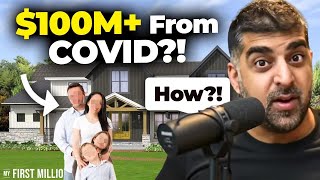
In this episode of the "My First Million" podcast, host Sam Parr and guest Shaun Maguire discuss a range of entrepreneurial stories and lessons. They begin by recounting how a family‑run business pivoted from producing LED‑lit vodka bottles to manufacturing personal‑protective equipment during the COVID‑19 pandemic, securing massive government contracts and generating over $100 million in revenue. They then explore rapid e‑commerce wins, the power of mastermind groups, and Sam’s early hustles—including a near‑miss job at Airbnb and a roommate‑matching side‑project. The conversation shifts to practical ideas for college curricula, such as TikTok‑viral assignments and hands‑on business projects, before diving into a prefab/glamping startup called Joop and Sam’s personal challenges with hearing loss. Shaun draws parallels between dating and startup dynamics, emphasizing relationship skills for founders. A major focus of the latter half is the story of a true‑crime podcast titled “Serial Killers,” which grew to 100 million downloads in two years by “savage‑ing” content—prioritizing volume over polish, leveraging SEO, and operating with a lean, imperfect production model. Sam and Shaun debate the classic quality‑versus‑quantity tension, using marathon‑vs‑sprint analogies to argue that speed can be sustainable when the product is designed for rapid iteration. The episode wraps with a call‑to‑action for listeners to subscribe and join the community.
Chapters
Somehow 5 years later, COVID hits, and you know what they decide to do? They're like, you know what, let's go all in on creating like safety, safety stuff for COVID, like masks, respirators, um, gloves, things like that. And they become one of the like core providers right at the start of COVID They shifted all their production manufacturing stuff. They're like, forget the vodka bottles, forget the LED screens. We need N95 masks and we need respirators and we need, you know, these testing kits and we need— and they started producing this stuff and they started just winning all these contracts.
All right, we're live, Sean. Uh, we have a bunch of stuff. You, you have a, you have a, a full menu over here and so do I. Yeah.
Yeah. All right. I want you to look at my menu here and I want you to just pick something off the menu. Go ahead. And I'll riff off it. I will. For people who they don't, they don't know. We only write like one or two words. So you get like a teaser. You're like, man, what the hell is this about? But you don't know what it actually is.
But I have, I put all my stuff in here on accident. I have this new researcher who's crushing it. He just gives me all the content like 5 minutes ahead of time. But, uh, Rich Neighbor.
How did I know you'd pick Rich Neighbor? So There's somebody in my neighborhood who I bumped into and I've, I've, I'm, you know, I, I sort of get out there and I collect signals. Is this, you know, where, where do I place this person on the, uh, the, the Billy scale? Like, are they, you know, are they on their way up? Are they, are they, have they made it in life? Are they really balling outta control? Where are, where is this person? And these people have been balling outta control. Like when Christmas time came up, there was just like the wife went outside and it was just pointing at windows. And all of a sudden the house was lit up like a Christmas tree. They had like so— they had the most like decked out things. And they go, hey, hey, um, invite your kids over, uh, this Thursday. We have a snow machine there. We're building a snow hill in our driveway. Like, uh, you, you want to do sledding without going to Tahoe?
What's that, like a big snow cone? Is that what that is?
No, it's like a giant truck that comes that creates snow and it piles it up so that you're like— their house looked like it was in Michigan or something like that.
Yeah, but it's just like, like, like it's like an ice machine or something.
Yeah, it's like, yeah, something like that.
Yeah, like a big snow cone, like a big shaved ice thing.
Yeah, yeah, you were right from the beginning. You're right. So they did this and they had a fake Santa there and I was like, man, this is a lot for a Thursday afternoon, but okay, this is cool. Like these people's style, they seem really nice. And I didn't know what they did, so I kind of, I hit them with the Google the other day and I was like, let's see who these people are. And they have a crazy story. So they created a company that back in 2014 did this thing. It basically, it lets you take a vodka bottle. They had a vodka bottle that had an LED sign going around it. So you could give somebody a vodka bottle that would say happy birthday, Sam, or like you could program any message. I could be like, you know, uh, whatever. I could be like, you're getting old, bitch, whatever. I could write any message on it. It would go on your vodka bottle. All right. It seems kind of gimmicky. I don't really, you know, not a bad idea, but, but balling out of control from that didn't, didn't 100% make sense. But that was the business.
Sounds like a dropshipping, like, joke.
Sounds like my first idea out of college. Like, this is like me in college would have been like, bro, next, next Google. I got it. What if we took, you know, this Jägerbomb and we put an LED screen on it? Wouldn't that be incredible? And so So they had this thing and they were like licensing this out or something like that. Somehow like Shaq became an advisor to their company. It was really crazy.
Makes sense.
Yeah, as you would. Somehow 5 years later, COVID hits and you know what they decide to do? They're like, you know what, fuck this vodka thing. Let's go all in on creating like safety, safety stuff for COVID, like masks, respirators, um, gloves, things like that. And they become one of the, like, core providers right at the start of COVID They shifted all their production manufacturing stuff. They're like, forget the vodka bottles, forget the LED screens. We need N95 masks and we need respirators and we need, you know, these testing kits and we need, and they started producing this stuff and they started just winning all these contracts. And so now, like, if you go look at their website, it's one of those, I know you're rich websites, cuz there's like not a lot of information on it. But if you go to like the— they have like a press release section and it's like PR Newswire company gets $113 million contract with the government for safety equipment.
Oh my God.
Local East Bay success story where they, uh, they're now the sole testing provider for, you know, with the Lakers stadium, Levi's Stadium, like all these different places. And so these guys are getting $100 million plus contracts for their stuff. Now I think probably it's like, you know, probably only like 10% margin when you buy it.
You think it's that small?
Selling masks? I think for things like that, probably it's like 10, 15% is my guess. Maybe that maybe during COVID everyone was completely price insensitive and they could just charge whatever they wanted. I'm not sure. I would have thought that, but, um, but wow, dude, what a, what a pivot. And, uh, you know, that isn't that just kind of crazy? And that was an opportunity kind of available to a lot of people.
Right. Dude, I know, I know a bunch of people who did that and like I had a friend that did it and he's like, dude, check this out. And he sends me a picture of a Shopify store and it's doing like $2 million a month. I know a lot of people who did that and I've only followed up with one or two of them. And, uh, I have a feeling that like of the 8 people I know who did it, like 3 of them it worked out and then the rest it was like a really quick cash grab, but then they overbought inventory and it's like nothing. Do you know people who did that?
Yes. We, we, there was a guy in, um, I had started this mastermind group that That's actually where I found Ben. But one of the other guys in the mastermind group, he, like, every time he came to the mastermind—
Does he live in Texas?
No, he's in Canada. Every time he came to the mastermind group, I feel like he had a different business, which is not what you want in a mastermind group. But he was a good dude and he would always be like, oh, I have this other business that's like, oh, for auto repair, blah, blah, blah. We do their SEO. And I was like, okay, but then what about that thing you told me last time? And then one time he came and he's like, Dude, we're doing mobile COVID testing, trucks that will drive up to places and we can just do rapid testing for COVID. And we were like, all right, I mean, that sounds cool, but like, are you like, do you know anything about COVID testing? Like, does anybody in the world know about this? Like what? He's like, oh, I got the scientist, it's going to be great. And then he came back and he was like, hey, I'm really excited to be here. I need you guys' help. Like 3 months later, he was like, really need you guys' help about going public. I was like, what the hell? And he's like, yeah, we're going to do like $85 million this year in revenue. And I was like, what? And he's like, yeah, we're getting all these contracts with the state of, uh, with like the, you know, the, the, in Canada, like these country, countrywide contracts. And, um, you know, yeah, we think maybe we should take this public next year.
I was like, oh my God, what's going on? So how did it end?
I don't even know because I, that, that guy, my head was just spinning every time, uh, you know, he would talk. Cause I'm like, this is either too good to be true. Or I'm too dumb and this is amazing and I can't tell which one it is. It's probably some mix of both. But you're right. I know several people that went all in on COVID right when it happened and like low-key got like an absurd amount of traction very, very fast.
Yeah. Like a ton.
My dad had actually called me one day and he goes, my friend works at this hospital. They need extra equipment. They need extra masks. I talked to somebody in India, um, and they could produce these masks. and I think we could do a $2 or $3 million contract. And I was like, fantastic, should do it. And he's like, yeah, I want to, but my dad has this problem where my dad is addicted to meetings. He thinks winning is like, this important person met with me, and then he'll tell me the duration of the meeting to show me the value. He's like, only scheduled for 1 hour, but we sat there for 90 minutes. And I'd be like, okay, so what? And he'd be like, So he was really interested, 2 hours, right? And he was just like, he just always is obsessed with that. So he just had a bunch of meetings and I was like, Dad, you're going to, it's all about that action, boss. You're going to take some action here. What's going to happen? Go for it, do it. And he's like, well, no, I want, he's like, I want everybody to sign off on it and de-risk it completely, pay me up front. And I was just like, dude, this is like the cheap way to do business. Like, you got to take a little risk here, and he wasn't willing to take the risk.
You're throwing shade on your dad right now. I hope he doesn't listen to this. And you called him boss. If my son calls me boss, he's getting into headlock.
Yeah, my dad, we make fun of each other. Like, we call it like it is. I do a bunch of dumb things, and I say when I do dumb things, this is his dumb thing. He is high planning, low action on these things. And he says it all the time. Like, we went, I went, I took him to Tony Robbins and Tony Robbins is all about like taking massive action on like the things you want. And he's like, I was like, what's your big takeaway? He's like, ah man, I need to take massive action. And I was like, yeah, that's, you did it. You learned the right lesson from this thing. He goes, that's my problem. I don't take massive action.
I was like, whoa, whoa, whoa.
He starts slipping back into like, basically he's like, I've identified my problem, but not like I'm gonna change it. Just like, So right. So true. Whatever.
It worked out for him.
Yeah, he did. He did great. Like, right? Like village in India to like live in, like owning multiple homes.
Dude, this story, the story of you tell of your mom of like, I think you said she like had never eaten with a fork or something and she just comes to America when she's 17. Is that what you said? I'm not exaggerating. I don't want to be disrespectful. I thought you said, I thought you said like she hadn't, they didn't use like utensils or she went to a restaurant and like Oh, actually, you're right, you're right.
That, that did happen.
No, I'm not being disrespectful, uh, Mrs. Perry. That's, this is the story. It's on record. And then also when she used a pay phone to call her brother to say that she was in town, she didn't know like that you hang it up, so she like let it hang.
And then she, she was just crying at the airport and some guy was like, hey, uh, do you need help? Are you okay? She's like, I need like, my brother's supposed to pick me up. I don't know where he is. Like, she just landed in America and he's like, do you have a phone number? She's like, yeah. So he, that guy picks up the payphone, puts in the quarters, calls the brother, tells him, hey, she's at Terminal 2, she's waiting here, I'm gonna tell her not to move. Brother didn't even know, oh, your flight was today? Like, they had no correspondence. Like, okay, I'll hang tight, I'll be there. And she talks to him and she's like, he's like, don't move. And then that guy had left, the helper had left. And so she didn't, she's like, not only did I not know how to use the payphone, I didn't even understand how do you put this back? And she's like, I kind of was like fiddling with it, like kind of like like trying to get it to stick. And I didn't know what to do. I looked around, nobody was there, and I just left it hanging and walked away. She's like, I'll never forget, like, just feeling so clueless about the world. Um, and there's like 5 stories like that on her just adjusting to America.
Now they have a house in San Francisco, so it worked out. That's the, uh, that's the American dream.
Um, um, all right, another topic.
What do you got?
Uh, I got a quick one here. So I saw this TikTok of this, uh, professor Uh, there's some professor at a college, uh, I apologize to her. I don't know her name, but, um, let me see if I can find her real quick. She basically, oh, Professor Cooley. Uh, I don't know what she's a Professor Cooley at Emory University. So shout out to her. Basically her, she has, she teaches marketing at, um, at this college and for her marketing class, she goes, all right, class. Uh, if you want to do well in this class, you want to get an A, you have one job, go viral on TikTok.
Awesome. I'll see you.
I'll see you in a few weeks. Like if you need help, you know, we have some, maybe, maybe some, uh, we could talk about what it takes to get there, but like, that's how you get a good grade. Go viral on TikTok.
Awesome. How old is she? Young looking or older?
Younger looking. Um, yeah, she looks like, you know, she looks like if you were 12, she would be your friend's mom.
Um, got it.
So something like that, whatever age that is.
Perfect description.
So, so basically, uh, I thought this was amazing and it got me thinking like, really? Really how many more classes at a university should be taught this way. Um, so for example, like, why isn't there a class at, you know, why isn't there a class at school where it's basically like, okay, we're gonna have 4 lemonade stands on campus, break up into teams, you're each going to run a lemonade stand, like, and you know, the top lemonade stand is going to get an A+, the next one gets an A-, B+, B-. and if you, if you're not able to break this threshold of sales, you fail. And it's like, just let them go and do their thing and let them learn.
That's 100% how it should be.
Or it's like, you know, maybe it's the net profit. So they learn about the cost management as well. But like, give them, you know, $500 and be like, go, who, who can run the best lemonade stand or t-shirt company or whatever it is, or writing on Twitter. Um, like, you know, okay, it's an English class. Should you basically go read Shakespeare and all this stuff or Should I basically teach you how to do writing in like the modern day and basically get cold email, newsletter, cold email or Twitter? And it's like, yeah, you need to grow an audience around whatever topic you're interested in. It could be The Bachelor, it could be world politics, it doesn't matter. You pick your topic, but you gotta write to an audience on that and you gotta publish. First thing is quantity. You gotta publish every day for the next 60 days. Um, and then the next thing is gonna be quality. Can you actually grow an audience? Can you get, You know, 50% open rate on a newsletter with, you know, 1,000 people on it. Go figure out how to do that. And so things like this, I feel like would be so much better than the way that people learn about how to do real-world business today in school. Another one would be flipping, like, uh, everybody, you're gonna look under your desk. Yep. You're starting with this drill. Okay. Everybody's got a drill. Like, your job is to flip this drill into the most valuable item you can get by the end of the semester. Go. And it's like, you gotta sell this, take the profit, buy something else, sell that. And like, just keep doing that until you can get to the biggest thing.
Dude, uh, Ramon, our friend Ramon, his son goes to a school here in Texas and he, his kid had a class where he had to go haggle and it was like, you have to get this much of a discount from a retail store or something like that. And I was like, oh, that's awesome. That was awesome. It's like great for a 12-year-old. So I love that stuff. I, dude, I didn't have class. When I was, all right, my sophomore year of college, I was a Division I athlete, a runner nonetheless, a runner, peak physical condition. They made me take an aerobic walking class, which was like, if you add up the tuition, it was like $9,000 or something like that. So I'm all, it was aerobic walking. You show up and you go for a walk. So I'm all in favor of this stuff. I think it's awesome.
Like, are you walking at least at like a fast pace? Why is it called aerobic walking versus just walking? Is that just Branding?
Is that the gym teacher had to justify their, their, their pension or their salary? I don't know. It was the stupidest thing ever. Like, it was, it was crazy. It was crazy to me. I had to take aerobic. I remember this. It was ridiculous. You just like showed up.
What do you mean you had to? Seems like they don't force you.
You have to get like these certain amount of credits. And it was like this aerobic walking class is available.
Was your major like PE? Why, why was this in your requirements?
Dude, because they make, I don't know. I don't remember exactly why I had to do this. No, I don't even remember what I majored in. I think just like accounting or business or something.
Accounting?
It was a, so I left school early. So it was accounting. And then I, and then I left school and then I finished online later and I was like, okay, you know, give me, just give me any diploma that I can get, please. Why'd you leave school? Because, um, I moved out. So I, the summer I had to take like some summer classes and one extra semester. Semester, and, uh, I heard about Airbnb and I was like, that's where it's at. So I moved out there. Yeah. Yeah. So, you know, I think I told you this. I had heard about—
I remember you applied. I didn't know you were in college and dropped out for it.
I didn't drop out. I, well, I don't know if it's technically drop out. I just like quit going and then I finished online and like, like I converted to an online student. Yeah. Like I took like some time off and then I eventually like finish, and I would have to go like to a Kaplan, you know, like those Kaplan testing centers. And I would have to take these nonsense, nonsense tests. But basically there's this famous runner. I was a runner at the time and there was a famous runner named Chris Lukasik and he quit running, which wasn't exactly lucrative, but he was like the 7th most fast, fastest miler ever. And he was like, I quit. I'm quitting running at my peak to join this thing called Airbed and Breakfast. And I was like, what the hell is that? That sounds awesome. And so I emailed Joe Gebbia, the founder of Airbnb, and I was like, hey, I like Airbnb. I came up with this interesting hack that I think can help you grow. Here it is. And he forwarded it to— like, it was at the time there was this thing called Reportive that had just come out and I built an Excel sheet where you could type in someone's first name, last name and like their Gmail or their company name. And then it like permutates and you put into this thing, it tells you which emails there. So not like that sophisticated of a hack at all, but it was like new technology. And I emailed him and in his head he's probably like, This is dumb, but like the fact that you came up with this, like, whatever, we'll interview you. So they interview, and so he puts me to a minion. The minion was like, hey, do you want to come to the Bay Area? Um, well, I don't know who the guy was, but the guy is probably worth—
really underused word. I'm gonna start using that. That's an amazing slander. I love it.
Well, that minion is probably worth $20 million. I mean, you know, because at the time there were only like 200 people, and the guy who he referred me to was like the 17th employee. And so his name was Justin. I'm still friends with him. Sorry, Justin, call you a minion, but maybe you were.
That's your friend.
I'm friendly with them. I'm friendly with them. But he— they, they go, all right, great. You live in the Bay Area. And I was in Tennessee at the time. I didn't know what the hell the Bay Area was when he said— I had never been west of Missouri. I'd only basically been to like Missouri and then like whatever the states are when you drive to like Destin, Florida for like spring break. Those are like the only places that I'd been. And he goes, are you in the Bay Area? And I was like, of course, yeah. It goes great. Come into my office on Monday. So I was like, shit, I got to get out there. I got to figure out what the hell the Bay Area is. I thought it was L.A., so I pack up like, yeah, like Silicon Valley. I heard someone make a joke about Silicon Valley, but that was like where like porn is, I think, in L.A. I— they're all the same to me. I didn't know. And so I Googled what the hell the Bay Area is and I bought a ticket and I flew out there and I interviewed with him on a Monday and a Tuesday. And then I interviewed with Joe, the founder. He probably didn't even remember me. Because it was like a 10-minute interview. And then I go home on a Wednesday. They offered me the job on a Thursday. And then a week later, I call my mom. I go, dude, I got this job. This is awesome. And they go, what the hell is this? You stay at someone's home? I go, yeah, I think it's going to be legit. She goes, it sounds like a multilevel marketing scheme. And I'm like, well, they have like health insurance. And she goes, whatever. And so my mom drove down and packed up my apartment with me and then shipped me off. And like, she like gave me $1,000 and that was my seed money. And so I moved out there. And this was all in like a 3-week span. The Sunday night before I'm supposed to start, they call me and they go, we busted you, man. You lied about your resume because you have a criminal record. I, at the time I'd gotten arrested, uh, for DUI. And I was like, well, technically, like, I'm still like, the trial's still happening. So like, I didn't get convicted yet. And they're like, yeah, but that was sneaky.
It isn't until proven guilty.
Yeah. They're like, but that was sneaky. Like, we asked you if you've been charged or whatever. And I was like, you're right. I'm sorry. So I didn't actually get the job. I was hired for like a second, but I never had my first day. And then fast forward 2 years later, my wife ends up going to work there. And I remember walking around, I'm like, ah, my alma mater, my old stomping grounds. So I never ended up working there, but I had a job there for like, you know, a few minutes. And, uh, you know, it could have been something great. I would think I would've been like employee 200. I don't know. Maybe I would've made some money or not, but that's the story of Airbnb.
That's an amazing story. I love that.
And while out there, I also had to like take these classes. And I remember I didn't have any money. I had the $1,000. That was my, my money. And I used to have to take this bike and I lived in the Dogpatch in a warehouse that was $900 a month. And I have to—
for people that don't live in San Francisco, they're like, he lived in a dog patch warehouse.
It's called Dogpatch. It's like, uh, the industrial part of San Francisco by the water. And I used to have to ride my bike because I didn't have any money and I had to ride a bike that I took from my roommate all the way up to Twin Peaks to go to the Kaplan, like, place, which is like 6 miles away, literally up the steepest hills in San Francisco. And so I used to have to do those classes and take tests for like months. It was horrible, but it worked out.
And now you're here. Incredible.
Now, dude, I used to, like, I, like, I learned how to, like, get rid of— like, you could jump on the bus and, like, when they would catch you all the time and they'd be like, where do you live? And I'd be like, I don't know. Uh, what's your name? And I just like give a name and they're like, do you have any ID on you? I'm like, no, I don't have ID. And so I remember like there was zero consequences. There was zero consequences. There was zero consequences. I mean, that's how little I had. Like I didn't have cash for a bus fare, which was $2.50. But, uh, uh, yeah, it turned out okay.
What did you do to, uh, to grow that $1,000? How did you not just wipe out like, cause $1,000 doesn't get you very far in San Francisco. So How did you not wipe out in 3 months?
On my— so when I went to the interview for Airbnb, I stayed at the cheapest Airbnb there was, which was a bedroom in this guy's house. And he had told me he was starting a business. And so when I moved back out there, I go, hey dude, I don't have a job anymore. Can I join you? I only have like 2 or 3 weeks of like payment. And then, and my mother and father had given me a pickup truck for college and I asked them to sell that and they sold it. So they gave me $4,000. So I was like, all right, I got like 3 weeks of rent or 3 weeks of like living expenses. Now I just got this influx of 4 or 5 grand. I've got like 6 months of cash. Let's do this. And so I started— I co-founded a company with this guy, a roommate matching company where we would post ads on Craigslist saying we were hosting these roommate parties where we would match people up into 3 and 4 bedroom apartments because normally it's like you're a single person who just moved there, don't know anyone. So you got to move into a existing bedroom and there was lots of competition. So we would post fake existing bedrooms and get 300 people to apply on Craigslist and be like, hey, this doesn't exist, but we'll team you up with 200 other people who want the same shit as you. And we would host these parties and we would charge people money to attend those parties. And after they got an apartment and so we basically spun that up on Weebly and made money right away. And that's how I lived.
Amazing.
Wow.
Great stories. I love this. Yeah, I feel like there's a bunch of— I've heard bits of these, but not all of them. This is great.
And I would ride my bike to like collect this money. I would knock on their door after they got the apartment. I'm like, hey, you got my money? It was ridiculous.
That's so good.
After this, I have to go get a hearing aid and I'm gonna get fitted for one, and I have to tell you why. I forgot to tell you this. We are at the Vancouver thing and there was these two women speaking to me afterwards. And it was loud. So like the problem with my hearing is I can't hear the difference between background noise and the person speaking for me. It's hard to tell the difference. And these women were talking to me and you probably noticed this. I lean in hard. So I'm only deaf in one ear, but I lean in, I lean, I turn and I, and I, I get really close to you. And also it was a super loud afterparty, by the way.
It was like, it was like a club.
It was like a club. It was loud. And I also stare at people's lips. So I'll either stare at your mouth or I'll lean in.
Mr. Wrong Signals over here.
The horrible worst signals. And this woman comes up to me and I'm leaning in and like I'm starting to get really close and I can tell she's really uncomfortable. And I go, oh, I'm sorry, I forgot to tell you, I'm deaf. I can't freaking hear you. That's why I'm leaning in so hard. And it was at that point I told Sarah, I was like, I gotta go. I gotta get a hearing aid. I can't, I'm making people uncomfortable.
This is why you bring your wife with you to all events, just to totally make it clear what's happening here.
Dude, and I have a rule. I don't travel alone. I love having her around when I travel, but that is definitely the icing on the cake, is having her around for that reason.
Yeah, yeah. You did the opposite of the billionaire hug. You went in with the broke boy lean.
Yeah, the broke boy lean. I'm just staring at her lips and she's just literally trying to watch as the words come out of her mouth and just staring, going down at her lips and looking. And then leaning in and, oh man, I can tell she was uncomfortable. I was like, oh, I forgot to tell you, I can't hear. So I'm going to go get one of those things.
Did you ever learn that like trick from— this might be— it might have been in like those pickup artist things. I'm not 100% sure, but you ever look at their triangle?
Yeah, yeah, yeah. Like the third eye or something like that? No, no.
It's if you ever wanted— if you want somebody to want to kiss you, you're close. If you— let's say you're close, you're in range and you want to like kind of almost like hack their little biology and get them to want to kiss you, you do this triangle. So you basically look at one eye, the second eye, down to the lips, back to the first eye. So it traces a little triangle. And if you do that, you'll just see immediately the person just fuck her up, baby. It's happening.
Yeah, right.
It just happens.
Yeah, right.
I don't know if it's because you're signaling that you want to kiss them or that it just makes them want to kiss you, but This shit works. This was like in college, I was like, you know, you would've thought I'm in the Illuminati, how many triangles I was throwing up everywhere because I was like, this is like a magic trick. This thing is amazing.
Did you get any girls in college? Probably. You're really charismatic. Did you do well?
First base king, baby.
You're the first.
Yeah.
Had a good batting average, but not a lot of home runs.
Got that leadoff, but never got to second.
Yeah. Oh, well that's good.
The hard part too is my roommate was like, just unbelievably good with girls.
And so he's really good looking. He's a good looking guy.
And he was like, right? Yeah, Trevor. He's an athlete and he was just like a professional flirt. And so somehow this guy was just pulling crazy people from like, you know, you have like an RA who's like the person who's like 4 years older that lives in the freshman dorm. He just started dating the RA's girlfriend and then like, you know, he started dating like this girl on the basketball team and started dating like all these seniors. Started dating this like one really rich girl who was giving him gifts all the time. I was like, I don't know what's happening here, but like, you know, this guy's definitely sucking up all the alpha male energy in this room. And, you know, I'm just sort of here along for the ride, but it's okay. It turned out all right.
Well, you know, you worked out all right.
By the way, my dating life was a lot like my startup life. It was basically like fail, fail, fail, fail, fail, home run. It's like, you know, like most people in their career, they sort of get this like 10% raise a year or whatever, where it's like this linear, like steady climb up the ladder. But if you're in the startup world, you're often like making nothing or in debt or broke and all of a sudden for like 7, 8 years and then all of a sudden you're rich. And, uh, that's what my dating life was like. I was broke for like 10 years and then all of a sudden I was rich.
100% same. It like, it didn't, it didn't start picking up until my 20s. It was that 100%.
Your 20s. What you trying to get? What were you trying to do in your teens, bro?
I tried. I tried a lot. Trust me, I tried. I just, I looked like Napoleon Dynamite. I, I, with braces, it just didn't work out.
Dude, I didn't talk to a girl. I was sitting there reciting lines from The Rock in WWE when I was in my teens, bro. I was, I was jumping off the top rope in my bedroom trying to, you know, just, I loved wrestling and basketball and stuff. I didn't have time for girls when I was like 15.
It was a numbers game for me. I knew like, you know, 3% conversion, therefore, you know, you gotta try 100 times.
Right?
Yeah.
You never want war of attrition to describe it.
Whatever. I, it worked out. We, we both, it worked out for both of us. Before we get into this, we gotta remind people there is a gentleman's agreement.
That's right.
Except this time it's, it's different. So we have this thing at this podcast, unlike everything on YouTube and on Spotify and all that stuff, our content actually isn't free. You're only getting this episode for free if it's your first one. And if it's your second or third one, you have to go do something for us. What is it?
They, they got to fire up YouTube, youtube.com, YouTube the app, whatever it is, and type in My First Million. They're going to see our pretty little faces right there. You don't even have to watch video, just click My First Million, click subscribe, turn the notifications on. And we need, we need this. This is what we need, right? Everybody's got needs. Food, shelter, YouTube subscribers. These are your core, core primal needs, and we have ours.
And, uh, That's why it's called the Gentleman's Agreement. We're not on the other side, so you just have to do it and everyone's doing it lately, so you should do it. And that's what we expect out of you. And also do me a huge favor and actually click follow on the podcast app and Spotify, cuz those help us actually go up the rankings. And then when we go up the rankings, we get more dopamine and we do dumber shit. And that's why we're here. So do that. Um, I have a story for you. So go to joop.com. So it's J-U-P-E, Joop. So it's joop.com. It's— they have a slick looking website. So tell me what you see.
I see some sort of like mega tent contraption. I don't know what this is. This is like some sort of structure. It's like, is this like a, like basically like an outdoor unit that's not like something more than a tent but less than a house?
So I met these kind of— I met these guys recently and they're really fascinating. And so basically the, one of the founders, he's like this artist type. He's, his name's Jeff Wilson. And before this, he like wrote a book because he lived in a dumpster for a year. Like he like slept in a dumpster. It was like some like art project as well as like to show like, for what? I don't, I don't know. I mean, he's, he's a wacky, interesting guy, but he lived in a dumpster. And then he, uh, then he started this like prefab house. I guess it was like marketing for like a pre, prefabricated homes or something like that. And, um, they eventually launched this startup. It's called Joop. And I originally saw it because Gary Tan, famous investor, billionaire investor Gary Tan, made this YouTube video where he stayed in one of their things. And so basically what it is, is it's, I don't know, they would be mad if I called it a tent, but it kind of looks like a tent. But basically they ship it to you on, in like a, a huge container and you pop it up. And on the inside it's like a fancy, like a nice mattress. And then there's like a heating and cooling unit and it's got lighting that's all solar powered. And so it's like a standalone, like, house. And the way that their business model works is you could do one of two things. You could just buy it for $30 grand outright, or you can do a thing where you— they give it to you for free and they take something like 40%, 30 to 50% of the revenue and you rent it out. And these things are renting out. And I was like, I don't know, man, who wants to stay in this thing? And he was like, dude, we rent them out for $250 to $500 a night and they're always booked and they're trying to pitch it to me to put it on my land and I'm not sure if I'm going to do it or not, but they're— it's a pretty interesting thing. This year they're supposed to do like $12 million in revenue and it's breakeven and they've deployed 400 of these things in their future. What they're doing is they've got these guys that are buying plots of land and then putting 15 or 20 of these on there. And then Joop, the company, if you do the profit sharing with them, they kind of run it for you. So they have like their own little platform and they like will help manage the thing for you. But it's pretty fascinating. And I've been thinking about putting one of these on my, on my property. I'm not sure if I'm going to do it or not because I don't know if I want more work. But really fascinating, interesting idea that I came across. I've been loving these ideas where you just make more money off the shit that you already have. So like I have land and I was like, Should I just like put these all over my place? But they look kind of fascinating and I thought you'd get a kick out of it. Yeah.
I mean, these look super cool and I gotta give them credit because I see a lot of these like, um, like this kind of like, I forgot what they're called, ADUs or whatever. It's like this additional dwelling unit or something. Um, and they're often just like vaporware. It's just a render of something that looks sick. And what I really like is if you click their vision tab, it opens up a Notion and explains what they're doing. And 4 times in this thing it just says, here's our thing, parentheses, not a render. Here's what it looks like, you know, after it gets delivered. Here's what it looks like the next day. Again, not a render. Like, hey, we actually build the thing. It exists. This is real. This is not like some futuristic dream. And so I think that's pretty, pretty, pretty amazing. This looks super cool. I don't know why you wouldn't do this just for even like the story.
So, uh, I can, I have an update. So my, I have this property, uh, marathonranch.com and you can see it. It's doing like, uh, anywhere from $13,000 to $17,000 a month in gross revenue. And, um, so it's doing well. I'm like making money on my Airbnb. Finally, I got like 40 or something like 5-star reviews on Airbnb and I finally started going up the rankings and it's been really fun to do. And so I'm not sure, but I have 20 acres, 20 acres of land. I'm not sure if I want to like screw anything up because dude, at my Airbnb, we have like 20 cows. So my neighbor is a cow. Well, that's true. But like people, my neighbor owns these cows and they use our property. And in exchange, we pay less property tax. And people like wake up to like a mooing cow because they sleep and wake, they sleep at all my property. For some reason, they decided that's the bed. And I don't know if I wanna like screw that up. It's like so peaceful going out there. So I don't know if I wanna screw that up by having more units on the property.
But, uh, dude, MarathonRanch.com, your photo here, you chose the wrong photo. You chose like a not awesome looking photo for your hero photo. Then if you click gallery, you all of a sudden see all these awesome photos.
It's a work in progress, my friend. It's a work in progress. It's a work in progress.
It's still in beta.
Yeah. I, it's because one of the pictures, it, you couldn't see the writing. Anyway, it's a whole thing I gotta fix. But, uh, anyway, it's going well. I, I always, I basically to the listeners, I send Sean updates on my Airbnb and he's like, oh, that's neat. You're making 5%. You're making 5% return. That's, that's really, that's lovely.
What did I tell you? You were like, dude, this is, this is 5% or 7% or 7% a year. This is great. I go, and I told you, I go, I've lost more money in crypto than you'll ever make on your Airbnb.
Yeah. Somehow that felt like a good statement to me. It's been awesome, man. The Airbnb game, it's been fun. It sucked for a minute and then once I started rolling, it is pretty dope. So maybe one day you'll, you'll be convinced, but right now it's killing it. I don't know if it'll kill it in like June when it's like 100 degrees, but we'll see.
To me, the only reason I would do this is the tax benefits if I bought property. Um, the actual like rental income and, or, and/or slow real estate appreciation to me is not worth it, especially given the headache of of doing stuff.
So you said, let's say from a financial investment, it's only been okay, but from a like reward, like it's been quite exciting. It's, it's been exciting.
What is the margin? So you say $13K a month, um, gross. Okay. So now we take out what Airbnb, we take out property management, we take out utilities, we take out what, what, what, how much, what's the gross on that?
So what's the net? Like a, like a record month recently was like $17,000, but let's round down to $15,000. Yeah. Because that's what it's been lately. So that's gross. So I give away, so I own the property outright, but I assume that I have a mortgage. Yeah. So if you assume that I had a mortgage plus utilities and taxes.
Yeah.
That's in the $7,000 range. Okay. Um, I don't have that, but let's just assume that I do because I will get one eventually. Um, and then property management is 20% of, uh, of, uh, like the $14,000. So if I do, if I do $16,000 revenue, $300 per stay goes to my cleaner. So whatever that, that, let's just say that's $2,000. So that brings us down to whatever that is. What'd I say? $15,000 minus $2,000, that's $13,000. And then management gets 20% of that. And then the rest, I assume it goes to a property, property taxes and a fake mortgage. So all said and done on $15,000 in revenue, I'll walk away with only $3,000 maybe.
Yeah, that's nuts. So that means, let's see, uh, we did, we did $15,000. So 20% margins.
Yeah. It's, it's not like, it's not cash on the $15,000. Well, but I have depreciation, so I'm able to like save a fair bit there. But, um, yeah, like it's a cash on cash return. It's gonna end up being like 5 or somewhere between 5 and 8%. But if you assume appreciation, which is a big assumption, but I looked at the trailing 30 years. It'll probably be a 15 to 20% annual return if I own it for like 10 years. So, but that's a big if. So that cash on cash, it's only okay. It's only okay. But I'm completely hands off and I also like it and I learned how to do something. So I didn't, I didn't do everything. I didn't do everything right here at all. I think I paid a premium. I definitely paid a premium for the property.
Dude, I know you paid a premium because if I look at this, like if I go to the gallery, It's got the kitchen with like the white, everything's like white and like this one look of wood that I'm just like a sucker for. If it looks like this, I'm like, it's a nice place. People know about construction. They're like, this is like cheap and easy. Like, you know, I would walk into a house and be like, well, this is a good house. I'm going to pay a premium for this house. They're like, why? Because the countertops are nice. And I'm like, yeah, but look at this. It looks fantastic. It looks modern. And they're like, dude, that's That costs nothing. Like, you need to pay for a location, you need to pay for square footage, you need to pay for all these other things. But I'm a sucker for, like, just, like, the, the countertops.
But I have 20 acres. And so my, my plan, my plan originally before the markets tanked, I was like, I'll put more, I'll build more crap there. And then when the markets tanked, I got cold feet and I was just like, well, let's just sit on it and just see what happens. And so now I'm just sitting on it and it's going awesome. Like, it's, it's, it's booked constantly. And so I'm happy with it. I don't regret it. I would, I would do it again. Um, and I, but like I learned it was a lot of money to like, you know, it was 7 figures to like get in the game. And so I was fucking nervous as hell, right? It's worked out and I've learned how to do it. So now I know more about it. So I'm happy.
I can't find this client info.
Have you heard of HubSpot? HubSpot is a CRM platform. So it shares its data across every application. Every team can stay aligned. No out-of-sync spreadsheets or dueling databases. HubSpot. Grow better.
All right, let me go. Um, I got two blue collar hustles for you. So these are in the trash, in the trash biz. So, um, I've heard of two trash businesses recently that I thought were pretty interesting. I wanted to share them with you. I want you to tell me which one you like better. Okay. So the first one, our buddy Cieva told me about this. It's called Smash My Trash. Have you ever heard of this? Has he told you about this?
No, but you want to know something funny? I've been very close with SIEVA for like 12 years now. And I don't, I still don't know how to say his last name.
Kozinski, right?
Is that not it? I had to like, yeah, I just, he's in my phone book as the very first time I ever met him. I just, he said he was Russian. So he's just saved as SIEVA Russia. And so I just assumed he was SIEVA Russia. That's just like, I mean, this guy was like in my wedding clothes.
SIEVA, tall, handsome, smart. Yeah. I just called him Adonis.
Yeah.
First name and then attribute. Attributes, like visual attributes that I remember you by.
Six-pack, 6'3". Got it.
Yeah, I have a system and it serves me well. Um, all right, so Steve was telling me about this franchise called Smash My Trash. And so what they do is they basically imagine a giant, like, crane. And so they drive to any business and, like, if you've ever been to, like, we had a warehouse, so our warehouse just produces like an un— like an ungodly amount of trash, just cardboard.
You don't just burn it. Yeah, just be normal.
So we have Charlie. Charlie burns the trash. But like, I do not have that. Um, you would have basically a dumpster and you get charged per, like, I don't know, like per filling of the dumpster, like how many times you fill the dumpster. And then you call them up and they come and they empty your dumpster. What Smash My Trash does is they'll— you sign up for them They drive around, they'll come to your dumpster and they just take this giant crane arm and just smash the trash in, just compacting it. Um, they let you get way more volume or less, it takes less fill. So it lowers your trash bill. And, um, you know, that could save you hundreds of dollars every month if you do this. And so basically the cost of Smash My Trash should just be less than the savings that they give you from having to do less, uh, less dumpster fills. And so this is like a franchise that kind of crushes it. It's basically, you can run this with like 2 guys. And the numbers on this are you invest like, I don't know, $400K. Typically they'll make like $1 million a year in revenue and like $300K of like net income, like EBITDA at the end of the day. And so you're getting like a kind of amazing cash on cash, not, not that, not that trash return you were getting on your Airbnb. This is some real, real returns. And, um, and I think they have, I think they have like a shit ton of locations. I think they have like 160. Locations or something like that. Um, and so that's like, they've made probably $40, $50 million in just the franchise fees, just, uh, franchising this concept out. So I think this is kind of like low-key amazing business.
It's amazing, but there's a big downside. When was the last time you had a blue-collar job? Do you remember? Have you ever had one?
Restaurant?
Yeah.
When I was—
Restaurant?
Like 21. Yeah.
What happens at a restaurant when it closes? Do you remember?
Just carnage.
Carnage. Everyone goes and gets super screwed up. They get drunk. You take pills, you get high, you just do all types of shit. And then hopefully they show up the next day. And there's lots of like, I remember I've, you know, I've, I've been a janitor before. I've worked in restaurants. I've done all this stuff. And there was like, particularly in restaurants, there was constant like issues with this type of person who works there. And it sounds classist. But it is kind of the facts of my experience. I don't know. What do you think the trash— I guess if a trash person has a job, maybe they get up early. So, and I, when I think of a trash guy, I think more of a family guy.
Yeah.
Trash person.
For some reason I trust a trash guy. Like, you know, I feel like a trash guy is reliable, dependable, salt of the earth. You know, like I feel like it's not the degenerates that you'll get like I would rather hire any trash guy than a barista at Starbucks, right? Like, I feel like the barista is a flake and we never know what's going to happen.
But well, the worst is, is, is like a bartender or a waiter at a fancy like nighttime restaurant, like a, like a, like a, or like a, like a TGI Fridays. Like, you know what I'm saying?
Like the worst of the worst. There's someone out there right now listening to this that is a waiter at TGI Fridays. It just Slam their phone in disgust.
Dude, I've worked at all these places. I've worked at all these places. And like, this is probably why I had a little bit of a habit. It's, I don't know, man. This is the downside of this business.
If you have unlimited access to loaded nachos, then something just happens to you.
Yeah. Yeah. Like the Bloomin' Onion, it's like the full moon. You know what I'm saying? Like I turn into a werewolf. And if I get that every night, You know, like, it's bad. I turn into like a, like a Guns N' Roses afterparty. Like, I'm going wild. I'm throwing furniture out the window. So, uh, yeah, is this cool? Yes. I think there's a lot of headache, and I would be curious. We have a good friend, uh, or I'm— I think you're friends with him. His name is Brian. Brian, uh, Scudamore, or Scudamore. He owns, um, sounds like a good friend. Another guy, another last name guy. Yeah, yeah. And, uh, no, not trash.
Junk.
Junk. 1-800 Got Junk. And Brian has been on the pod and, uh, he, uh, I don't know if maybe I could say this, but the company's 100% bootstrapped. Revenue, this is public revenue, I think is in the $300 to $350 million a year range. He owns 100% of it. He parlayed that, now they own like a painting business and they do all these like services. I would be curious what he would have to say is like his trash guys, like, or his franchisees are like degenerates or not. And like, what's the headache with those types of people?
We should definitely ask him. I feel like, uh, I feel like he's gonna give his, his, his sign off on this. So, so this is one trash idea. The other one comes from Twitter. I gotta give credit to Mobile Home Park Guy. Um, I, I know the guy behind this. I know him. Yeah. He's actually pretty awesome, but I don't know if he's trying to be public with his identity here, but he's part of our, our guy mafia, right? We got the, uh, the restaurant guy, we got the car dealership guy. Now we have Mobile Home Park Guy. And he goes, I just found this trash business. That is called Bin Scrub. And what they do is they clean off your trash cans. So they wash, they power wash your trash cans cuz everybody's trash cans are, are filthy. And he's like, he's like, here's how I would take this business and turn it into, you know, 6 figures a year of profit. He goes, why do I love this business? So everybody's got trash bins. So, you know, your market is every home. Um, it's a very young industry, low market penetration. So you'll probably be the only person offering this service. It's not like a bunch of competitors yet. Um, you just need one truck and some hustle. Uh, in a post-COVID world, there's lots of germaphobes and you can play on that. And this has like word of mouth virality. So there are, you know, this has like public virality. You can see the actual service being done. And so he goes, so he goes, you've gotta buy a truck. The trucks are about $40K, but it's a hard asset. You're gonna be able to get a loan against this. So you might only have to put down $5,000 or $10,000 and get a bank to finance the rest cuz the truck will, will do this. Um, he goes, now here's how I, how is, here's how I juice this business to make it more, more valuable. He goes, we're gonna make it, make this like the ice cream truck. We're gonna put a, a speaker system on top and every time we're coming around your neighborhood, we're playing the same song. He's like, you know, I'm going with OutKast, So Fresh, So Clean, just like, just cuz it's a pun. And he's like, we're gonna play this every single time. This song is our branding. We're gonna drive around from 3:00 PM to 8:00 PM when people are home from school, home from work. And they can look out the window and be like, what is that? And then they will see us power washing someone in their neighborhood's bins. You can even—
That's like a horrible idea.
Hold on, hold on, hold on. He goes, we're going to basically leave little flyer brochures on top of everyone's bin. So when they take out the trash, they're going to see that this trash can is dirty. We clean them out. We leave your trash can so clean you could eat cereal from it. And he's like, that would be my— I'd put a spoon in it, be like, you're so clean, you could eat cereal out of this. Um, so he's like, that's what I would do for my marketing. He goes, I think one truck can do about 100 to 200 homes a day. It's a few thousand dollars a day per truck in revenue. Um, you'll use that to finance the second truck. Your costs are gas, water, maintenance, some chemicals, assuming you're the one doing the truck. And he's basically like, this is a blue collar side hustle. If somebody wants to themselves get out there and get to that $10K a month of, of, of income, uh, that they may not be able to get outta their job. This is, this is his idea. So he goes, what do you think, fella? So Sam, you said it's a horrible idea. Tell me why.
Uh, okay. So completely uneducated here. So, uh, two doubts. Uh, I don't think that you can do, I, I don't think that that many people would want this. And number two, 100 to 200 a day. That's so many. That is so many. I would, how much it would, it would take 20 minutes to drive somewhere. I don't— that math is wild to me.
Yeah. You, you basically have to get to a like dense area and then, and then do a route, but that would kind of assume that they're all your customers, which they're not going to all be your customers at the start.
Did he call us out and say, what do we think?
No, but oh, you know, he listens to the pod. So, uh, by the way, there's two people, there's two people in the comments here. One, sparkling bins business. They make the trucks. So there's a woman in the comments goes, it's a fantastic business. We've been, we manufacture the trucks. It's been going great since 2020. And then another guy goes, um, yeah, I do this. Mine's called Bin Busters. I'm 2 years in. It's going great. Okay.
Well, I mean, what the hell do I know?
And by the way, that guy, his bio says living the American dream. Yeah.
Not someone's dream. A dream.
Yeah.
Yeah.
Yeah.
A dream.
Living an American's dream.
Yeah, yeah, one person's. Uh, good, good for him. He's— this is their dream and they're, they're pulling it off. Uh, uh, I don't know, man. I'm out. I'm out on this one. I don't want to do this.
It was like, start a newsletter.
Yeah, start a newsletter, dude. I, uh, I, I've— people make fun of me because I bring this up so much. I had hot dog stands, whatever, but I used to work with my hands outside It's so hard, man. It is so hard.
By the way, you said you were a janitor. When were you a janitor?
Uh, when I was in 8th grade, I worked at a bakery and it was my job to like mop the floors, take out the trash, clean the dishes. And so that was like my first job, $6 an hour. And then, uh, yeah, that's what I did.
Dude, I am so mad at my parents for never giving me my, my, my grind story. Like, can I, you didn't get a little hardship? Yeah.
Like, yeah. You ain't gangster at all, dude.
From being in Uncle's store for a month and just, just give me that story, $5 an hour and I had to enter, empty the trash. Like nobody knows how long I did it. Like I got nothing, dude.
I grew up, dude, a lot of Asian parents don't want you to do that. They say, do your homework.
My hand's got no calluses.
Yeah.
And my kids, I'm gonna give 'em one hustle story. You know, they're gonna have some very token small hardship that will sound good later when they make it because you need that story. And I, I just don't have it.
A lot of my Indian friends, which I have a ton, they, their parents were like, You don't even clean your room. Just do your homework.
Just study.
Is that what they said to you? Like, like, don't cook, don't clean, just study.
Well, they didn't say it like that, but I wasn't asking to cook or clean. So, you know, it just never came up. And they were like, yeah, your, your job is to study and do good in school so you can get like a good job. Don't go be a janitor.
And I was like, I did it all, man. I did the janitor stuff. I was a waiter. I was a busboy. I was a valet. Driver. I did it all, man. I, and, uh, I'm happy I did it, but, uh, I don't want to do it anymore. Oh, and by the way, I need to redeem myself. I made fun of like the, someone the other day said the retail class. So this is like the, the blue collar class. But, uh, I read this, there was this funny article on Business Insider. It had the worst but hilarious title and it was, I'm a millennial manager who works with Gen Z. And then it said like colon, with Gen Z workers, they have a lot of feelings. And so look, you're either gonna like, somebody either you're gonna have drug issues working with one group of people, or you're just gonna have to talk forever about like bringing your whole self to work and all that nonsense. So like, we all have our faults. We're all screwed. You know what I'm saying? I hate when people say bring your whole self to work. I'm okay with you just bringing your work self to work. That's cool too. You don't have to prefer that. Yeah, I prefer that if you wanna bring a little bit more of yourself. We could talk about that too, but like, you don't have— it's not mandatory. You don't have to bring your whole self, right? I'm okay with just your work self. So we all— every, every, every class and every generation has issues. So I don't mean to throw shade just at one.
We throw shade at all here. We're an equal opportunity shade thrower.
Yeah, we're all—
hit my dad. Sam hit the trash man. Who else did we get?
Who else got a stray today?
I'll make fun of myself.
Someone made fun of me the other day because I've got these surgeries on my ear. I was talking about my ear and my glasses. Sit funny. I don't know if you notice my glasses sit crooked because like it's my ear. And someone said, looks like Sam got brain— Sam got head surgery, didn't pay for him to put the rest of it back in because his glasses are sitting. And I was like, yeah, that's kind of true. Yeah, yeah, you're kind of there, dude. I told you the other day, I want to tell you about a media company that most people have no idea about, but they kind of killed it and I love it. So I told you the other day about, about Parcast. I tell you about Parcast.
Yeah, yeah. This was the podcast network that was doing true crime stuff.
Yeah. So I learned about the story. I think the guy who started it just tweeted saying that he was done at Spotify. So I guess his earnout is up. But listen to this. So it was a 3-year-old startup that sold for $50 million to Spotify. And the way it started was the guy, his name was Max Cutler at the time, his 27-year-old graduate. And he bootstrapped this thing. His dad worked in radio. I don't think his dad was like a rich guy. I think his dad, uh, Ron Cutler, I, I think he was like a, uh, he was a radio broadcaster. So he had industry, but I don't think he was like in the business type of thing. And he, uh, they bootstrapped this thing and by 2018, so only 2 years in, they had 16 shows with 100 million downloads. By 2019, they had 40 weekly shows. Now they have a staff of something like 150, of which 75 of them are voice actors. And I listen to these. It's so weird. I listen to these every night when I go to bed. So like, I've got like my favorites. I listen to one called Serial Killers. There's another one called Deathbed Confessions. Then there's another one called like Murder Couples, which is about Bonnie and Clyde. There's another one like, it's like all these things. And there's, and it's not like our podcast at all. There's zero riffing and it's like voice actors.
We should just make up fake true crime shows like Stabbed But Not Dead Yet.
Yeah, the black eye. Yeah, I just, just like stories that people just got kind of hurt.
Was it really an accident?
Yeah, Spit On by a Homeless Guy, Stories of NYC.
Exactly. Not Injured But It Was Gross.
Yeah, Barely Assault. Uh, you hurt my feelings. True Crime Thrills. Dude, and but like, this is the reason why I like this is it's not like, uh, it's like, they're just like, you know how we were talking about like people who do things beautifully done, like, you know, uh, This American Life, and it's like thoughtful. It's like thoughtful. Like, today on This American Life, we're going to talk about like the opioid crisis and they like go out and interview people. This is not that. It's just someone who read a book, summarized it, and then is reading it. And they pump out like literally one a day and they have like, you know, 40 shows and 40 shows now. And it's just a volume play. And this guy was like, dude, this true crime shit to their audience is 75% women. And then me and they're, they're like their audience, like it's crack. It's crack to me. I cannot stop listening to this shit. And it's the same thing every single day. You know, it's kind of like Family Guy, you know, Family Guy. They've been doing it for like 25 years now. It's the same shit all the time. It works every time. I'm going to watch it every single time. It's just like that. It's the same shtick over and over and over again. And they were acquired. It was— they were acquired for something like $53 million or $54 million in cash and then like another $50 million in earnout. But pretty fascinating. This guy bootstrapped this and they're not popular on social. 20,000 followers Twitter, 36 on Facebook, 50,000 on Instagram. They just dominated like people searching for their— their one podcast is called serial killers. That's all it's called. And they just like dominate when people search these. So it's like long tail. It's like, what's the diff— what's, what's SEO for podcast? PEO? I don't know. Uh, and they just crushed it. Really fascinating business. And I, and I brought that up, so I, I needed, I hadn't done the proper research. I, I needed to kind of close that loop.
You know, there's a, we had talked about the beautifully done, like, you know, just X, but beautifully done. There's another version of that that we haven't talked about. And, uh, I don't know about you, but like when I was growing up, like if I had like a plate of food and it's like, let's say it's, I had a bunch of veggies, I had a broccoli, Brussels sprouts, something like that. I didn't really want it. I was kind of like tired of eating it, but it's still there. And I know I should eat it. Um, me and my sister used to have this thing where if one of us was like in that, that spot where we wanted it, we, we know we should do this, but oh God, just the idea of sitting here for another 20 minutes, just spoon after spoon of this. That's I just can't bring myself to do it. One of us would look at the other and just say, savage it. Just savage it. And savage it means you start to eat just like an absolute animal and you, in like 30 seconds, you just basically, it's like chugging for food. And so, um, we used to say that and they would be like, all right, we gotta savage it. And we would just quickly down the whole thing. Now there's a version of that for businesses. That's kind of what you described here was this guy was like, oh, okay, people like this true crime audio.
I'm pumping this out. I'm gonna savage it.
And so basically in 2 years to pump out 40 shows and get 100 million downloads, there's only one way to describe that. He savaged it. And it, he wasn't trying to be beautifully done. I bet you it's imperfect in all these different ways. You know, he might've been hiring, you know, random voice actors and, you know, Paraguay and like doing whatever it took to get these out there and pump them out. But that's exactly what he did. And I think Actually way more often than the beautifully done. Do you see people just savage it and just, just scale up like an absolute savage because they find something that works and then they don't, they're not perfectionists and they don't like, um, they, they don't get limited by what's the normal pace.
They're like, and that works more.
What's the theoretical limit of this?
And that works more. I remember when I lived in San Francisco, when I started the hustle, I was like, originally I was like, let's just pump out blog posts. And people were like, Well, what about quality over quantity? And I was like, dude, did you bring yourself to work again? Yeah. I was like, dude, I, well, I was, I would always turn on my go, no, our quality is quantity, right? Like we are not, we are not an article business. We are a, how many, how, how can these operations be where we pump out lots of articles? That's the product we're building.
You're not a journalist, you're a blogger. Go, go blog.
It was like, and then another, I, that was always one where like people are always like quality versus quantity. And I'm like, Uh, you need both. Or if I wanted to play with their heads, I'd be like, no, the quality is the quantity. Another thing where people would say is like, uh, well, it's a marathon, not a sprint. And that was like a reason for them to slack. And I'm like, yeah, but have you ever ran a marathon at world record pace? It's going to feel like a sprint. So like, it feels pretty fast when you're running real, like top marathoners, we're running fast. So it's going to feel like a sprint. Uh, but yeah, this guy's a quantity over quality guy and I love it. Yeah, I love it.
Exactly. Okay. I think we should, uh, we should wrap it here. That's the pod.










