Tim Chang & Rishi Garg | Hustle Con 2017
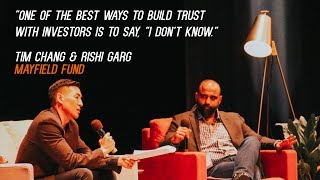
In this HustleCon 2017 talk, Mayfield partners Tim Chang and Rishi Garg explore the often‑overlooked psychological and personal dimensions of being a startup founder. They argue that a founder’s identity, grit, self‑awareness, and personal habits become the DNA of a company’s culture and ultimately its success. Drawing on examples from companies they’ve backed (Lyft, Square, Twitter, Zappos) and personal observations of Jack Dorsey’s evolution, they outline the traits investors look for—authenticity, willingness to admit unknowns, and a growth mindset. The conversation then shifts to a “founder fitness stack,” covering nutrition, nootropics, intermittent fasting, mindfulness, meditation, yoga, and the critical importance of sleep. They stress the need to destigmatize mental‑health support, recommending coaching, advisory boards, and therapy, and note Mayfield’s policy to encourage portfolio founders to engage coaches. Finally, they discuss the power of clearly articulated mission, vision, and core values (e.g., Square’s “four corners”) as a decision‑making north‑star, and the often‑ignored co‑founder relationship, likening its health to marital therapy. The talk concludes with a reminder that these personal practices, though sometimes labeled “woo‑woo,” underpin the metrics and KPIs that drive sustainable growth.
Chapters
Ladies and gentlemen, Tim Chang and Rishi Garg. Hey guys, how are you doing? We are the last thing standing between you and lunch, so we're going to try to talk fast and give you something useful, maybe off the beaten track.
Yeah, send you off to lunch feeling nice and happy, have your appetites be full. Should we sit down?
Yeah, sure. All right. So I'm Tim Chang, I'm a partner with Mayfield Fund. We're actually one of the earliest venture capital firms here in the Valley. We're based down in Menlo Park. Some of our companies, as was mentioned, include Lyft, if you've ever taken a Lyft, Poshmark, ClassPass, Elon Musk's SolarCity, a company I recently sold called Moat to Oracle. So we do a lot of enterprise and consumer, and it's my pleasure to welcome our newest partner, Rishi Garg, who was an early senior exec at Square and Twitter. He also himself did his hustle as an entrepreneur before. Including big stints prior to that at Google and MTV and other places, right?
Thanks, Tim, and thanks also to Sam and John for putting together such an awesome group of people and a great conference today. Hope you guys are having a great time, right? Yeah, let's give them a hand. Um, it's my first HustleCon, and it's amazing to see how far this has come in such a short period of time. Um, uh, you know, just to build on what Tim said, you know, Mayfield's backed about 600 companies in its history, and over time you kind of learn a lot about founders. Myself as a founder, and with Tim being an entrepreneur, his background as well, and all the founders we've seen, you kind of see a lot of the same characteristics. A lot of them were covered by Miguel just now. Some of the elements of the founder journey that are so special to what it's like to be a founder, and that's kind of what we wanted to talk about today. Because the more that we reflected on some of those ideas with Sam and John, it sort of led to this talk here. So what do we mean by this? What do we mean by founder psychology or the founder journey? The— because founders get a lot of advice on how to like manage your company and how to run the company and how to think about strategy. But one thing that's not as talked about is how intimate the experience is of being the founder of a company. It is not just a job. It's not just a place you go to work. It becomes the most deeply embedded part of your identity. How many founders might identify with that out there? Anybody like sort of feel that if you started a company before? It's rare that 100% of the founder hands don't go up on that one because it's something that sort of you really believe in. If you're going to do that, you put your all into it. And the thing is, all the good things and bad things about your psychology end up getting manifested in the culture of your company. And the culture of your company ends up becoming the factor towards your success that matters the most, as we've seen over time. And so that makes it a really important topic for us as we think about not just advising founders, but also as investors, right, Tim? Like, with all the companies that you see, um, it's not really, uh, this is one of the most important elements that we care about.
Yeah, founder attributes, your personalities, who you are as people is actually what we talk about most behind closed doors after the pitch. Usually people think it's business plan, quality technology stack, that kind of stuff, but it's actually traits around founder grit, for lack of a better word. You know, that sort of fortitude, that sort of willingness to go all the way, walk through walls, but also things that are softer, self-awareness, mindfulness, if you will, and even authenticity and vulnerability. Those are things we are looking for all the time. We're looking for clues of those in how you tell your story, how you treat your co-founders, how you think about your customers. Most of all, with that, an example is when people are trying to answer questions, a lot of times folks feel like they have to have every answer buttoned down, but that's a big tell right there. One of the best ways to build trust with investors is knowing when to say, "I don't know," as opposed to try to craft an answer showing you know everything, because the truth is we don't. Every startup's an experiment. There's so much that's unknown, and it's almost more important to know what you don't know And then bonus points if you have a way to test it, uh, and how to build sort of some hypotheses.
And how many of the founders you've backed are hatched fully formed from an egg as perfect CEOs?
None. And I think to a T, every single company we've ever backed, whatever their exit was that was successful, resembled nothing in the original pitch deck.
That's right. And when I was, uh, I was very lucky to be part of two really interesting companies in the last 10 years. Square and Twitter. And for me, that exact point that Tim's talking about where you see the evolution of a founder over time was really brought home because I got to work for two companies back— who were founded by Jack Dorsey. Um, and it was really interesting because when I got to Square sort of at the end of 2011, uh, one thing that struck me was how singular the culture was at Square. It was focused on a few things that made it really different. It was extremely collaborative. Everything was an open office framework, the most openest of offices. It was— every part about our business was about pixel perfection. It was about generating trust because we were carrying billions of dollars of transactions. So everything from the way that we designed our hardware reader to every single part of the user experience for onboarding in the app, all of that was— it had to be excellent all the time. We pushed ourselves in that way. We were extremely structured. Every meeting, the way that we reviewed the activities of the company, And it was also very tops-down. A lot of the power was sort of concentrated with the top 2 or 3 folks. So even as an executive, you sort of felt that. A few years after I was early at Square, I ended up being recruited over to Twitter to run corporate development. And there I got kind of a shock. I kind of realized how much Square was a reaction to Twitter in some ways from a cultural standpoint and showed the growth that the founder had gone through. Because Twitter was much more like an adhocracy. Twitter was as a company in terms of the inner workings of it as protean and democratized and occasionally messy as Twitter as a product was. You know, we sort of made decisions in the hallways. There wasn't a ton of sort of high-level structure in terms of the frequency of our meetings and reviews and stuff like that. But it all kind of worked to create this amazing platform. So much of what I realized then was that Jack's journey as a founder and his potential for growth was a reason that both Twitter and Square was successful, because obviously the way that power was consolidated and, and the, the focus on getting everything just right at Square was a reaction to some of the experiences that were had at Twitter. And both of those were amazing companies. But, uh, one thing I've admired the most about Jack over time as a founder, and a lot of the founders I've worked with over the years and, and visited over the years, is that they have this capacity for personal growth, which is really, really hard, right? I mean, you've had some experiences, I think, as well with founders you've worked with.
Yeah, you know, the point we're hammering here is that startups, companies are basically extension of the founder's personality, values, persona, all those sorts of things. Zappos and Tony Hsieh, their CEO, is a good example. Tony's a friend. We've been to Burning Man many times, and I was struck by how much inspiration he took from Burning Man and brought back into his own company culture to make an otherwise miserable business of low-margin shoe selling online at minimum wage feel like an amazing place to work. It was imbued in their values. When you walk in the lobby, on their values board are things not just about creativity, but about being weird and wacky, and how every pod of every table is like a Burning Man camp where you're there to craft your own identity as a team, self-expression, is imbued throughout, open-mindedness. And it was kind of amazing to see just how much fun you could take an otherwise shitty minimum hour, minimum wage hour job feel with that right culture at play. And it started from, I think, Tony.
Totally. So then the question is, okay, if you're, if who you are as a founder is completely imbued into the culture and the everyday experience of your company, then follows that you'd want to grow and have as many weapons at your disposal as possible to become the best founder you can be and manage some of those goods and bads that we all have within us. So what are some of the things that you've seen, Tim, that work really well to help do that, especially some of the stuff maybe that a lot of founders might not naturally think about?
We always talk about founder grit, right, and this X factor, and I want to share a few notes with you kind of I've observed, and some of these might seem a little off the beaten path, but I'm hoping they'll be helpful for you. You know, we always look for founders who are great managers and leaders, but the truth is being a really good leader starts with managing yourself. And so I kind of think of this sort of fitness stack, if you will. You know how to take care of your body, you exercise, you do yoga, but there's also the notion of wellness at all levels, your body, your mind, your emotions, even your, your soul, your spirit, if you will. And so we think a lot about how founders can manage your energy levels, your mindfulness, even your sleep. When it comes to energy and food, I'm a big fan of looking how to optimize, you know, the things you eat, what you don't eat, the supplements you use, those sorts of things. There is a rise in awareness for things like nootropics and smart drugs. I'm a big fan and personal user of things like NutriBox and Bulletproof from Dave Asprey. Fasting is a big wave these days on how you sort of manage, you know, your caloric intake and expenditures. So intermittent fasting is one I've seen a lot of founders use to keep their calories sort of in a certain cycle and have their mental awareness acutely tuned throughout the day. Mindfulness and meditation, although it sounds a bit woo-woo, it can make a huge difference. And what for me that is, whatever vehicle you use, whether it's apps like Headspace or Calm, going to meditation retreats, doing yoga, microdosing, whatever it is that you find It's a way to train yourself on how to respond intentionally to all the stress hitting you throughout the day, as opposed to— honestly, most of us are reacting to fear and crisis 90% of the time. It's an emotional reaction. And face it, startups are nothing but fire drill, existential threat every day, in and out. It's just stressing you out throughout. So anything you can do to kind of establish a baseline so your response responding intentionally as opposed to that emotional reaction is a big deal. And lastly, we kind of idolize this notion of like, you know, you'll sleep when you're dead and it's all about the hustle and work hard. But God, you know, all those years I wish I didn't believe that because you never get those hours of sleep back. You can't just sleep when you're dead. Sleep turns out to be a secret weapon in digesting all the things throughout the day that's happened and also coming up with non-obvious ideas that wouldn't have it can really suck you. So as nuts as it sounds, don't skip out on your 7, 8 hours of sleep a day. It makes a big difference even for your creative process and your productivity.
Yeah, there's— yeah, right? I think a lot of people feel the— feel that stress out in the audience and are really excited that they sort of can have support in pursuing a healthful lifestyle. There's this great blog post by a coach named Ed Batista. Who writes about this evolution that occurs between being a worker, being an employee versus being a founder or a CEO, which is that when you're kind of working for somebody else, your job is just to get the work done most of the time. But when you become a CEO or a founder, the job is to present you, and that's why it's such a heavy burden on you. That's why it's so deeply involved in your identity. But if you're going to present you and your beliefs about the world and the mission that you're on, then you have to protect the health of that asset, you have to protect that health of you, which is why the physicality is so important, why sleep is so important. Another thing that's starting to get talked about a lot, but isn't still right now in the Valley, is mental illness. And not just mental— there's two things, sort of mental illness, which is that these pressures sometimes can uncover some real pain for us, and that those need to be dealt with on a professional level, but also the idea of destigmatizing the idea of help. And that can be through a lot of different angles. Part of it's through coaching, which I'm happy to say is increasingly common amongst founders. In fact, at Mayfield, we're instituting policies where we're going to over time sort of ask that— or highly encourage all of our portfolio companies to get coaches so that they can get additional perspectives on how they can grow and develop over time. And I strongly encourage founders to do that, almost everyone that I meet, regardless if they're at Mayfield, because I know it helps. Everyone has a coach. Michael Jordan had a coach. and they could be incredibly valuable to you. Having an advisory board of informal people that you actually trust to get advice from, as opposed to one or two people only, but to really build some relationships and invest in building those relationships because of those key moments that you decide to— those key moments where you need that kind of help. And then finally, actually getting therapy. Um, the founder stresses are really, really strong, and I can't tell you how many founders have told me that when they've actually disclosed that they've sought help from a great therapist as part of their process, that they've actually found it to help enormously with the burdens of being a founder, because those burdens are very, very real. So then the question is, okay, now you're doing all this work to actually make yourself better on your journey to becoming a better founder, and manifesting that in your culture, and that's really important. What do you do when you get to work? What are some ways to actually start to showcase that growth or that capability within work? And I think one of the most important things that we've seen is how founders approach mission, vision, and values, right, Tim?
Yeah, after you get to take care of yourself and you're really self-aware, you can bring that to work and kind of shape the team and the culture around you. And this is important because we always talk about the what and the how of our hustle, but not always the why. And the why matters a lot. I think the why keeps you going. And I know it sounds fluffy to write down your mission and vision statement, but it's actually those things that keep you going when shit is just falling apart around you, which it always does. This exercise is also kind of a force multiplier in helping you really just know what your true north is, and I think if you really know your purpose of what you're doing, I think it'll help you let go of your fear of failure, and maybe over time even learn to surrender that attachment to the outcome of what's gonna happen. This is big to me because Statistically, most startups will fail, but if you know why you're building what you're building, there's a lot of value in that, and it's going to create benefit in the world anyway. So, you know, for me, I want to take a moment to thank all of you for doing the hustle you're doing regardless of the outcome of it. It's an experiment that needs to be run, and there's some contribution to the world that you're building that we're all going to learn from. And so that's why I think the vision part's really important because it's the why behind the hustle.
Yeah, and if you haven't already spent time really articulating that, what your mission is, and really spending time on it. When I was a founder, it was the thing I thought was the most frou-frou thing to focus on, and it turned out to be the only thing that mattered. In fact, when I was at Square, there was something that we implemented that turned out to be so different when it came to this topic that I just wanted to share with you, 'cause I've always been so impressed by it. It's the idea that you use your values to make decisions. So the way that we did values at Square was that Jack sort of helped us articulate, helped the fir— helped the company articulate 4 core values. We called them the 4 corners. And then the way that we would kind of judge whether or not those were adequately reflecting, the words were adequately reflecting who we are and why we came to work every day, is whether or not we would use those words in meetings to make decisions. Because that's what values should be. Right? It's famous that the values for Enron were like, you know, accountability, leadership, excellence, integrity, or something like that. I mean, it's like when you actually use values that are part of who you are, and then you start to make decisions about them, they really are your values. And that's always been a great North Star for me as I work with founders on how to get those down on paper. It's kind of, it's work that always feels like it's less important than something else, but it turns out a lot of times I think to be the most important thing. There's one other thing that gets overlooked a lot, and it's, again, starting to get written about, but it's co-founder relationships. Because this is very lonely as a job to be a founder, and most companies, or half the companies roughly, have co-founding relationships, and those are as important as any important relationship you'll ever have. I mean, they're— you spend more time with your co-founder than you do in a marriage. And yet, it's amazing how few times founders actually spend time working on that relationship explicitly. And founders that have outstanding relationships together often end up being certainly, if not more successful, although they probably are, they certainly enjoy that journey more and can disconnect from the outcome, as Tim just said. A great example in our portfolio is actually Lyft. We're the first investors in Lyft. One of the really compelling things when you, when you saw Lyft sort of back in the day, when it was still Zimride, was the relationship between John and Logan, and that tightness of that bond, the effort they made towards that relationship, which persists to this day, and we think is part of the reason they've been able to weather the storm and continue to grow in a really changing environment.
Again, back to the importance of coaching and even therapy. Same techniques for marital therapy probably apply for co-founders.
That's right.
but I think we're out of time, so I just wanted to leave you with those parting thoughts, and I hope those are helpful. And again, like I said, some of these come off as woo-woo or touchy-feely, but they actually are the things that kind of matter in the end, even behind the KPIs and metrics.
That's right. The— you know, I joined Mayfield about a year ago, and the reason I did it was the— this is a unique time in Silicon Valley where a few people are creating a lot of impact. And so the more that founders can sort of spend their time on building themselves to make that impact, the ripple effects for positivity are pretty dramatic. Thanks a lot.
Take care of yourselves, guys.










