Tom and Preston make a brand lovegasm with their customers at Hustle Con
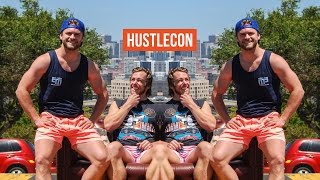
Tom and Preston, founders of Chubbies, outline their five-part brand framework: great product, relentless content, community integration, in-house customer support, and authenticity. They hit 860k Facebook fans in 2.5 years and used pre-sales, an RV tailgate tour, and unscripted customer service to build loyalty.
Chapters
All right, I'm Tom.
Preston, hello.
And we are two of the four founders of Chubby Shorts. First off, happy Friday to everyone. Woo! I don't see nearly enough shorts in the audience, but Yeah, so today we are talking about the very technical term of how to build a brand lovethasm. And without further ado, we'll jump into it. So first, our story. Basically, background is we are 4 buddies from Stanford who are all working random different odd jobs. I was in venture capital. Preston was in the startup world. One of the other guys was in finance. One of the other guys was in retail at Gap. And we all were just kind of getting tired of the day-to-day and of reporting to people and wanted to be doing things for ourselves, wanted to start something. And there was just one fateful day where we decided on, of all things, making tiny shorts for men. And made just a really small crop back in the 4th— for the 4th of July of 2011 for just our close buddies. And we had maybe like 10 left over. We went to Lake Tahoe and everyone in our group was wearing them. And then whatever we had left, we were just carrying in backpacks. Went out and they, we just sold out of everything that we had in our backpacks. People were buying them off of our physical bodies. So it was really cool. And for us, it was really good kind of initial validation that, hey, at least, you know, 20 people like what we're up to. And so that's when we decided to make a little bit more. And just kept kind of having this routine of making 30, 50, 90, 100, and selling them in person, selling them at tailgates, selling them going out in San Francisco. And at some point, we decided it was time to kind of invest and do a little bit more. And so in September of 2011, we officially launched Chubby Shorts. Www.thestores.com, and started selling online. And for about the better part of that fall/winter, it wasn't very exciting. It was pretty mellow. We were selling maybe 100 shorts a month or something like that. Until our first spring, and that's when things started going haywire.
We took this picture during that boring fall.
Yeah, point here—
We're selling shorts, so we just might as well take pictures.
We are a very photogenic bunch.
This was our— the Christmas card picture sent out to our small number of customers, but hopefully it brightened all of their Christmases.
Yeah, so we got through our first holiday season. It was exciting. And we had one guy full-time. It was basically me working out of cafes. In January, Rainer, one of the other co-founders, jumped on. And in March, Preston jumped on, and that's when we really started to pick up steam. And basically from March to July, we were 100% sold out of inventory. So we started doing a lot of presales and selling products ahead of when we actually had them in stock so that we could finance the business. We didn't want to raise any money. We just wanted to be able to grow based on the consumer demand. And people luckily were willing to wait 1, 2, and sometimes almost 3 months to get the product. And then from then on, it was a pretty solid growth pattern. Now you can see we're still very photogenic. Take great pictures.
Just way more creative. Take the couch and put it outside.
Yeah, exactly. And so now this is where we're at. And you know, there's— a lot of it is fortune, and a lot of it is premeditated. And so what we're going to try and do in the talk is lay out what we think are the really important pieces of building brand. And brand to us is the emotional association a customer has with your company and with your products. And so our entire talk is about brand and that concept of really forging that association. And so this is where we're at. So Facebook, we have 860,000 fans in 2.5 years, and I think that makes us First or second biggest in terms of just a men's-focused brand on Facebook. And the other community stats you can see here. A ton of social engagement. Our, our customer's a very young guy and very willing to be involved and participate in the brand that we've created, which is totally awesome. And we've seen a ton of success with social. And then revenue-wise, we've had a lot of good solid growth. And hope to see that line continue ticking up into the right. So how do we—
One thing I would maybe add to— sorry to cut you off, Tom— is just the applicability to hopefully everyone here on brand. Maybe not everyone here is selling clothing online. Maybe no one else is. But the notion of a brand being important Regardless of what you're doing, being consumer-facing, we think, really matters. I think you guys are also probably realizing that it does matter as well, that perception that a consumer has, that a potential customer has, of what you're doing as being the best, and establishing that, and finding ways to establish that really help. So hopefully this is just generally applicable to everyone here, that brand does matter regardless of what you're doing.
Yeah, and so here we're not going to try and be too prescriptive. We're going to try and give what we found to be successful, so that hopefully you guys can glean bits that are applicable to your specific business and your specific brands. So basic outline for us that has been the formula for success and building a really solid emotional connection with the customer base is first, you have to have a great product. You can market the heck out of something that's not very good. And ultimately, that will shine through. So it all is rooted in great products. And as you can see, we have done that. Second is relentlessly focus on content. Content from day one was an enormous part of our business. The first thing that I wrote when I was sitting down to build the website was this concept called the facts. And it was basically laying out in content form a lot of very, very branded and ridiculous details about the company. And our manifesto, which is basically our call to the previously cargo-laden masses to toss them out and shorten up their shorts. But from day one, it was very rooted in content, not just product. Third is community integration. And this one was something that kind of happened to us, as opposed to was too premeditated. As we started selling product and putting out content, we started getting back content from our community. And it was just natural to us to recycle that and integrate it into our website, into our purchasing behavior, and all that good stuff. 4 is customer support. To have a great brand— and this is something that is now almost assumed, but should not be trivialized— is just customer service, customer support, and being always— always having your customers back. It's more than just customer service. It is you are that guy that is there to help them out in any situation. And we'll talk a little bit about that later. And then 5, and this kind of runs through everything, is authenticity. Hugely, hugely, hugely important in one specific facet. Where so many brands get off track is authenticity. And we'll talk about kind of the way that we think about that. So that's the rough outline, and we'll start running through it. So first, great product. We discussed this, but basically you have to ensure that what you're doing is high quality. Whether you're making shorts or software or whatever, the product has to be on point and has to be something that people will be extremely happy with. Um, Dan, anything else to add?
Yeah, that's the basic. I mean, all you guys are building great things. That's just step 1, to be able to build a brand around something. It's got to be something worth building a brand around.
And this is just kind of assumed. Preston and I are the kind of marketing dudes. And luckily, we don't have to— we have a great product team that helps us out with this. Second, and where we get a lot more involved, is on content. Um, so— So we are just extremely rigorous about content. We think about our content organization in the same way that we would think, you know, Comedy Central would think about their content organization, or, you know, Jimmy Fallon would think about his content organization. We treat it as a media outlet, and we think that everything that we put out has to be on a caliber of entertainment as all of those things. So here you can see basically this is one of our social posts of the past week. And this level of engagement, we have about 1,400 likes, 21 shares, and a few comments. This level of engagement is very, very, very high. If you go look at any other brand, let alone men's brand, getting your community to get involved like this is tough. And luckily, we've been fortunate enough to be able to have this level of engagement. But this is an example of something where a customer sends us a photo, and then we take the time to kind of caption it in an interesting and unique way. Isn't salesy. We don't ever try and sell product on our social channels. We just want to give people something interesting and entertaining in their news feed. And it seems to work, and it seems to pay off.
One thing I would add is it's maybe applicable to every— obviously you're not going to necessarily be posting pictures of of someone working at their computer using your software or something like that. But high level—
Although that could be pretty cool.
You might, and maybe it works. I'm not going to say don't do it. But the general notion of making your customer in some way a hero is potentially something that can apply to what you're doing and be a very authentic— we get to authenticity in a second— but be a very authentic representation of, wow, this is kind of the value in some crazy way of— that I'm bringing to the world, or that real people are experiencing through what I'm doing. So making the customer the hero.
The other— and this kind of brings to light one of the first big points about content, is that content is shareable. Um, in this day and age, there are many ways that people can share. Best is people talking about it, but second best is people commenting, liking, and sharing, uh, in social media channels. These are all indicative of potential conversations people can have. That's kind of the way that we think about it. And here you see, you know, 1,300 likes is 1,300 opportunities for this piece of content to get dispersed into other people's news feeds who have never heard about Chubbies. And then their first experience is not only seeing the social validation from their friend, but also seeing that on a great piece of content that has been validated. So step, you know, number one about content is it's very shareable when you do it right. And Facebook is kind of mecca for us. Getting these pieces of content distributed throughout other people's news feeds without paying for it is huge. And so that's step 1. And here you've got— we're just gonna run through a few homepage assets that we have. So these are kind of the first things that a person would see coming to the site. And so you can see just there's always an interplay of— the photograph and the copy that we always have. Never salesy. We don't do discounts. We don't do promos. This is the extent of what we do. And so we'll just run through them relatively quickly. Stone, just, you know, if you have any comments on them.
Bunch of fun being had, obviously. I think that's one thing to say about that.
Protest the top button. We do a lot around not business casual workwear. And so this is kind of getting to the notion of of live the dream, live the weekend all the time. And the top button is one of our enemies, just as pants are. Dehydration is no joke. This is just a public service announcement.
This is serious.
The other thing to really recognize is that everything is content, from your labels to internals to packaging, to your emails, to your order confirmation emails. Anything that a customer sees from your brand is an opportunity to have a positive content experience. So here you can see a few examples. We ship out koozies with all of our orders, and they're not just a utility to keep your hand warm while you're drinking a cold beer. There's always content on them. This tank top that you see is one of the hottest commodities that we've got, and we don't sell it. It's all loyalty item. And you know, we see this going on eBay for $50 to $60. And then you can see the top left, our box. It's another content experience. First-time customer opens that up, they get a hearty boom shakalaka when they open up their first box. Bottom right, "Getting emails from Chubbies makes my day." That's awesome. And then this bottom left here is an order confirmation email where we insert a lot of branded copy, a lot of content. And just opportunities for people to get more involved, talk about it with their friends, share it.
One thing I would add is you may think about, OK, well, content, content strategy, that's always sort of generally talked about. In none of these examples is there a mention of just our blog or having a blog as that being the manifestation of content. I think it's just generally thinking through every touchpoint that a person has with what you're doing and thinking of how you can make that exceptional from start to finish. And so you have a surprising number of opportunities when you think about all those different touch points to wow the customer that is seeking out what you're doing. And so it's not necessarily just, hey, get a blog. It's just think through every touch point as an opportunity to provide an entertaining brand-building experience.
Yeah, and the last thing I'd put on here is that content doesn't have to be copy, video. Content can be a shareable experience. One of the examples is we sent out about 1,000 packages of Big League Chew just randomly to folks who ordered on a random Tuesday. And that created a content experience because they all shared it on Twitter, talked about it with their friends, and hopefully shared some delightful bubble gum with their amigos. So once again stressing this, but content is your voice. Content is the brand. First is why content is important. Second, people share it. People talk about it. It gives people a different reason to promote your brand. And especially with guys, guys aren't often talking about that new fashion item that they purchased. They'd much rather talk about a funny video or a funny piece of content. And third, and more subtly, content— and something that we learned along the way— is content serves as a model for user-generated content. User content. So our content that we put out then is replicated by our customers sending it back in. I don't think when we started this we thought that we would start getting thousands of guy selfies every week.
Which is awesome.
Yeah, it's fantastic. But we do. And it's guys wearing Hawaiian shirts and guys looking ridiculous and going out and having fun. And we didn't realize at first that that would be the response to what we were doing. We were just having fun and marketing to our buddies. But that's what it turned into. And it was just totally awesome. And one of the things that I would take as subtle but impactful with your content strategy.
And in the next 3 minutes that we have, we'll zoom through the rest of the presentation.
OK, 3 is community integration. This is related to the third point of why content. But really work to integrate your community and support your community. These are all user-generated photos. None of this was taken by us. And frankly, just couldn't have been. This guy is like 40 feet in the air on a motorcycle. Not any of us could do that. Yeah, so I guess we can keep on running through. So this is our Instagram account. Most of what we do in social media is taking our customers' photos and turning them into heroes with a caption. and promoting their photo. And when people see this, they get so excited, tag their buddies, uh, tell everyone they know about it. Um, and this has been really, really awesome for us. Uh, our customers are our best photographers, are our best content producers. Um, and— and, uh, we really like to highlight that.
Um, and whatever it is, I mean, for you guys, it's— I think it takes a while to establish a consistency and expectation for what you choose to do if you do choose to do something on social, or if you do choose to find a variety of other channels you can use to communicate with your potential folks is over time people started to understand that this is sort of how it worked. That there was this notion of, "I'm going to submit my photo in hopes that they'll actually turn me into a hero and make me look the best way I can possibly look in front of my set of friends." broader community as well. And so people then— it became sort of this reinforcing cycle. But allow that to happen for whatever you choose. It may not be this, but allow that to happen so someone can start to understand and have that understanding and expectation so that it can sort of start to build. But that first part takes a little while.
And so there are a lot of different ways you can integrate your community. Here we're also providing hero images of our customers as model shots. On our website. Um, and we've seen statistically that having user-generated content on these pages increases conversion rate. Um, people get excited when they see it. It— it provides social validation, and it provides these guys with a reason to tell their buddies about it. So, uh, a really big thing for us that we've recently learned is just this integration, uh, should just be throughout your business. Yes, these are real UGC, and, uh, yes, our customers are awesome. Uh, second way that our community gets involved is in, uh, basically, uh, aiding in our manufacturing decisions. So this is a concept that we launched, uh, a few weeks ago called Chubby's Labs, where we can just put out ridiculous, over-the-top concepts without actually manufacturing them and have our community prepurchase them. It only activates if a certain number are purchased. Um, and this has been really cool. So, uh, we ran this with a few State Flag shorts. Because previously we had done a lot of state flag activations, but only around the states where we knew there were a lot of customers or knew there would be sufficient traction to justify the manufacturing. Here we got to take a shot and give people, you know, 6 different state flag shorts and only make the ones where we had a lot of traction and a lot of shareability. And so this is another way to really involve your community that makes them feel special, makes them feel exclusive. Number 4 is customer support, customer service. Here are just brief tidbits. This slide used to be just full, and it just didn't look good, so we trimmed it down. But basically, our customer service reps are that front line and the voice of our brand. And so you gotta have great customer support, and we don't outsource it. We don't think that's the right way to do it because brand and voice are so important. We in-house all of the customer service. And if you call into Chubbies, you'll be greeted very warmly. So I recommend you guys check it out. But people really, really respond to it. And once again, it turns into a content experience where people will share and tell their friends about it.
The other thing I would add is oftentimes Tom and myself are also taking phone calls from folks. And I would just say, as your company starts to grow, don't allow yourself to be get removed from answering the phones, even if it's just a couple times a day. But it's just so valuable to continue to have that interaction. And use it as an opportunity to ask questions of, how you liking this? Or just to thank them, or do whatever. But still being— my personal phone number is on one of our box inserts, so I randomly get calls from folks asking for refills of their referral cards. And it's awesome to know that a guy just handed out 5 business cards that have a promo code to get a gift with their first Chubbies purchase, but it's also awesome then that they call in to get more of those cards, and it's a great opportunity to just be able to do the things that I just mentioned. But don't allow yourself to get detached from that as you grow.
So there's a lot of different ways to support your customers. One of the ways we found that's just a case study of not— of going above and beyond is we saw just this random guy who was a customer of ours, made a video of himself in kind of Old Spice fashion asking Miss Texas out on a date to his, you know, formal. Here is his reaction and, you know, a videotape of him reacting to Miss Texas accepting his offer.
On the news?
And so we took it upon ourselves to get him a bouquet of flowers, book a limo for him to and from his, his formal, and hooked him up with a few free pairs of shorts to make his experience that much better. And that's something where just randomly we saw it, locked onto it, coordinated it, and did it. And it went above and beyond for this guy and made a huge, huge difference. He told his friends about it, shared it on social media. Really, really cool, and a way that you can turn all of these into really cool content experiences. Yeah, and another example of this that we didn't have good photographic stuff for is there was a guy who emailed in saying that his Chubbies were stolen at the gym. And so obviously we replaced them. What we also did is we figured this guy could use some help. We booked him for self-defense classes. And so we got him into— we got him into some karate classes. And it was really cool, really funny, really shareable. Number 5 is be authentic. That guy is authentic right there. So this is, you gotta live your brand. Everything that you're doing needs to feel good, needs to feel right. And the way that this kind of manifests as us is just picture your brand as a person that's talking to people, that's sharing things. Would you wanna hang out with that person? And in this case, yeah. It's pretty obvious. The answer is clear. But this really pushes the notion of don't sell. Don't be in people's faces. No one likes when their friends are nonstop posting about them coming to their events or whatever. So just think of it in that way, and you'll be like, oh, wow. Yeah, I guess people probably wouldn't like to see that. And for us, we don't ever try and sell. Selling feels— Bad. By all means, we'll give customers the opportunity to buy and the content inspiration to buy. But we're never trying to sell. We're never doing the, hey, comment this to get all sorts of free stuff. We use the content to provide that drive as opposed to creating an artificial experience. And so one of the most authentic ways you can come across is in person. An example of this is we just bought a gigantic RV that's going to be touring the country and going to tailgates throughout the fall, where the whole rationale is to bring people together and have a good time. We're going to— we're ideally, you know, long-term going to be kind of the ESPN College GameDay but for having fun. And so what we're going to be doing is we're going to deck this thing out with, a bar, dance floor, DJ booth, all sorts of stuff like that. So that we are that just mecca of fun at all of these tailgates. And for us, the best way that we come across is in person. The best experiences people can have and the most authentic is just talking to us. We've seen this time and time again is when people come away from an in-person experience with us, they're that much more stoked. And it gives people a real tangible understanding of who we are and what we do. So don't downplay this. Get out and hang with your customers. Meet them. Tell them about what you're doing. People are always interested in your stories because they know your brand and they already love your brand. They just want to learn more about it.
And no better way to bring the brand you're building, whatever it is and whatever it stands for, to life.
So closing. Basically a repetition. But focus on great product. That's the baseline. Second, crazy focus on content. Constant editing. Don't let things through that don't feel good. Three, integrate your community. They serve as even more content, and giving them that validation is huge. Four, got to have great customer support. And that can also turn into content experiences. And 5 is be authentic. And so with that, I hope we have time for questions. I'm not sure. I think we went like 30 minutes over. We do have time for questions.
Well, thank you. Thank you, everyone. Thank you for listening. Appreciate it. Let's give it up.
Come on down if you have questions for the Chubbies guys. We can take probably 2 or 3. Chubby guys. Chubby guys. Chubby fellows. Chubby fellows.
Chub fellows. Hi there.
I was wondering, in a sea of technology startups, once you got started and it became difficult, how did you stick with this idea, especially in fashion among a bunch of guys? So first off, we don't consider ourselves a fashion company. We are a beer brand that happens to sell shorts. Second is that this is the most fun that we could ever imagine having. I was actually all set to go to business school when we started this, and once this started picking up, there was just no other thought in my mind. And, you know, honestly, I'm working with my best friends, and the people that we've hired in the company are the greatest people ever. And the other piece is that it's different. People don't expect it. which is really cool and really fun.
The other two things I would quickly add. One, being able to see that initial part that Tom was talking about where we're just— we have shorts in our backpack and we're walking around San Francisco and people are just saying, "I want the things that you have on. Do you have any? I will buy them right now." Seeing that, even though it was— we did that maybe 10 times in total, you saw, "Wow, there's something. There's some reaction that a person is having." that seems like this could touch more people and have a similar impact on more people, so that even if there are tough times, you remember moments like that. The other thing is just, we wear these things every day, so as it relates to the product you're making, whatever, if it's shorts or if it's software or whatever it is, using it every day and loving it every day, if you're just honestly doing that, that means something.
Great presentation. Where did you guys get your first pair of Chubbies designed, and where did you decide to manufacture, and how did you find a manufacturer?
So that's just legwork, honestly. When you're getting into this world, in the world of manufacturing, it's just a lot of legwork. So it started with a Google search, and then was just us going out and visiting manufacturers. Google search. Did not work at all. But it's talking to people, asking them who they work with. So US manufacturing is very, very dispersed. People don't unify it vertically. So there's a manufacturer who works with all sorts of fabric suppliers, who works with all sorts of button suppliers. And so as you get down the funnel, you ask each and every one of them with whom they're working. And then you start getting references. You start doing your exploration. So when you get referred to a fabric guy, from this manufacturer. Then you ask that fabric guy, what manufacturers do you work with? And then you go meet other manufacturers. But it was a long process, definitely aided by the fact that we had a guy who had worked at the Gap and Levi's before. But totally, totally not— it is a competitive advantage to be able to put in that work, because a lot of people don't. And so, yeah, it's just a lot of, you know— hitting the pavement, but it's well worth it.
Did you design the shorts yourself, or did you outsource that?
We designed the look, but we're not pattern makers. So patterns are basically the way that a cutter will cut the fabric and design the way that it should be sewn together. We don't do that, but basically we had the cut and the look that we wanted, and then we went through multiple revs with a pattern maker to finally get the exact feel, and look that we had in our mind. So kind of both, I guess.
Because you're manufacturing in the US, did you commit to a smaller batch at first and then go larger?
Yes. But yeah, yes, definitely. But one of the innovations that I think really helped out our business was the concept of garment dyeing. For us, basically, we made a bunch of white shorts and then dyed them different colors. And that really helped us because we could make a whole lot of white shorts and then sell 10 different products where we're not too heavily inventoried. But that was never a huge issue for us because we were sold out since March and have— and up until the point where we were big enough scale that it just didn't matter anymore. We were just selling out. So it was, in the early days, a story of how can we maximize variety based on a single kind of manufacturer. But now it's a lot different.
Cool, thanks. Thank you. Hello.
So I'm 48. I hate those kind of stuff, things like, you look like ridiculous when you wear that, so how can you—
To each their own, to each their own. We'll get you something, buddy. It's all right, it's all right.
I'm French, so I have to do something.
So—
You have to be exciting.
So, how can you— I was listening carefully, I had to make a call, but I was listening carefully. So how can you convince me that it's cool and what— great product, alright, but what's the specific thing?
Your friends will convince you. Your friends will start wearing it and then they'll tell you all about it.
I have no choice. Really?
You think my friends—
okay. You will start to become unfashionable. Always good to end with a trolling comment there. So, uh, thanks very much. I hate what you do.
Yeah. All right, thank you so much.










