Turning an Indiegogo campaign into a $100M exit | Exit Strategy S1:E8 Jake Kassan
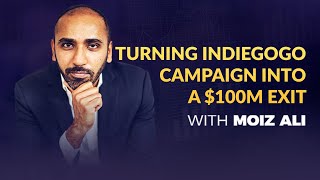
Jake Kassan built MVMT Watches from a $15K Indiegogo goal to $300K in pre-orders using Reddit astroturfing and targeted blogs, then grew it to $100M when Movado acquired it in 2018. He stayed bootstrapped, hit $1M revenue in year one, and kept Facebook CAC as low as $10.
Chapters
All right, we're on the 8th episode of the Exit Strategy Podcast. We're here with Jake Hassan, who's the co-founder and CEO of MVMT Watches. Uh, Jake, MVMT is an accessories company that sells, uh, fashion items that shouldn't break the bank. Is that a good way to describe it, or is that a bad way to describe it?
No, I think that's a great way to describe it. Uh, we've evolved since to, you know, we started with watches. We started with 6 watches at our core, uh, price anywhere between $95 and $100, kind of comparable to those $300 to $500 price point watches. And then, you know, the goal was to continue to build a lifestyle brand and, and, you know, grow into other accessories. So now we have everything from watches, men's, women's, to sunglasses, to jewelry. And one of our most popular products, uh, as of late is actually our blue light blocking Everscroll glasses. Everyone's stuck in front of their screens all day. And I think a lot of people, at least me, I had some trouble, you know, falling asleep or sleeping. And because I'm staring at screens all day, we have nothing else to do. And these truly fill— they filter out. This is kind of a— what do you call it? This is me selling a little bit, but like, uh, this is a little shameless, but shameless plug. But it— the cool thing about them is like, uh, everyone has the device on their screen or has an option on their screen to block it. but it actually distorts the color. So for us, uh, it just, it filters the color. So if you shine blue light in, it just blocks it and filters it. So graphic designers or gamers, whatever it is, like you're able to continue to, to, you know, do what you do without, uh, affecting kind of your sleeping patterns. But anyways, that's, that's been blowing up for us right now. So, and the goal is, is to continue to branch out into other accessories and really be a truly a lifestyle brand.
Who bought, like, who buys the blue light stuff? I feel like, you know, whenever I talk to people from LA, I'm just like, you guys, all you guys think about is LA stuff. I'm talking to Steve from Olipop, I don't know if you know him, I think he's based in LA, and he's telling me about stuff and I'm like, everything you just said is very LA. When I talk to Nick, who's a mutual friend of ours who runs Thrive Market, you know, he's like, yeah, I'm taking these beehive pollen shots. I'm like, that's so LA of you.
Yeah, yeah.
Is a blue light blocker LA, or am I just missing the boat here?
I think it might've started as LA. It was kind of like something people like to wear and be fashion forward, even if they didn't have prescription eyewear. But I think given the world we live in today, it's accelerated, uh, the need for them. And, and, and truly there's a, there is a benefit to it. I mean, there's, you know, there's, there's proof, there's, there's data backing it. So I think what maybe was somewhat of a, fashion trend has now turned into a real utility that, that, that, uh, is helpful. So that's a great— or maybe, to be honest, I've been in my house, so I want to do this now because if it's LA, I want to do it over here.
I live in LA.
I haven't been out of my house in, you know, a while, so maybe it is LA. I don't know. But, uh, it's doing well for us, I think, around the nation and globally. So, gotcha.
Um, okay, let's get started with like the beginning of MVMT Watches. Would love to start like— I know you guys launched on Indiegogo, but even taking a step back from that You know, you're the youngest e-commerce entrepreneur that's super successful that I've ever met. Before you started Movement Watches, you dropped out of college, you were 20— I read that you dropped out of college and then you were $20,000 in debt, and then you decided to start Movement Watches. Is that right?
Yeah, debt. So debt was to partially credit card debt. So I wasn't about— I think it was like $6,000, $7,000 credit card debt. Funding my lifestyle more so, and movement partially. Like, I was still in college and I had stopped working at the time to put all my energy in the movement. And so I was in debt to, you know, I had 18 months of like interest-free credit card debt. So I maxed those, those out for samples and everything else. And then, you know, as well, I had received money from kind of family and friends for a previous business. That just ended up crashing and burning. It was doing well at its peak. I needed some capital to continue to kind of grow it. And then, yeah, it left me in kind of a place of, you know, I don't think I ever— some of the money came from my parents, so I've definitely returned that money since. But yeah, it was largely kind of credit card and family and friends money.
That's so great. I feel like you rarely hear about entrepreneurs who have had the success that you've had and actually, like, you know, legitimately have a story about credit card debt. Usually it's all these like guys who sort of had, you know, who had like dads who were millionaires and sort of like, um, were able to fund their own success or raise money because they had all these amazing connections. You built Movement, or you started Movement Watches actually swiping your own credit card. Yeah, being like, yeah, I need to pay for samples.
Yeah, for me too, it was like back against the wall.
That's fucking insane. Yeah, uh, your back is against the— I mean, like, you chose to make your back against the wall. Like, you're swiping the credit card, ordering samples of watches.
Yeah.
And you're like giving up your work opportunities and ending up dropping out of college for this business. You chose to put yourself, uh, your back against this wall.
Yep, yep.
That's a lot of fucking risk.
It's all, it's all you have though starting off, right? Like, for me, my dad, you know, had a business, was, was, you know, uh, kind of middle class. And, and, but during the last, you know, recession that we were in completely, business went out when, you know, he had to close his doors after 20 years and lay off his employees, et cetera, and ran through, you know, their savings. So I saw financial stress from them. I was supporting myself in college, but granted, I had kind of planned on dropping out regardless. I wasn't doing much in college because I had my previous business before Movement that I was hoping was gonna be, you know, the big winner. And then when that went under, it was kind of like, okay, I have an opportunity to fund another business using my credit card, you know, that I currently have. Let me, let me go big. And honestly, my mentality, and maybe it was a little overdramatic, but, or maybe not, it was, I'll go get, I'll go work anywhere if this doesn't work out. I'll go pay this off. But like, and I think people who have their back against the wall typically end up succeeding because it, sometimes it takes that to like really figure it out and grind and put in the extra energy. And you may try 10 different, as you know, you may try 10 different things and only one works out, but like that one thing may be the difference.
So yeah, uh, give me a poor and hungry person any day of the week versus like a rich Harvard grad. Like, a poor and hungry person is going to want to like, uh, succeed and has a lot more like, uh, at stake basically. Yeah. Uh, but like, it's crazy that you're like, I funded my business on a credit card. Like, everyone's like, I funded my business with the millions of dollars I had. I funded my business with Andreessen Horowitz money. No one's like, yeah, I funded my business with this Visa card that I have in my pocket. Do you still have the same credit card that you used to buy that stuff?
No, I still—
Okay, there it is, I love it.
Yeah, I don't have it anymore, but what a great card. I mean, shit. Yeah, that's crazy.
So you launched, like, you know, you get these samples, you've got 6 watches, you launch on Indiegogo, that's how you sort of get the business started?
Yeah, so back then, you know, I think that I needed some, I knew I needed a source to, you know, drive orders. I knew I needed capital to continue to go. Forward, we needed at least like $15,000 to actually place the first PO. So, so it was like, okay, we need at least $15,000. And, and that was, that was the small goal. That was like, if we do that, we may just give the money back because, yeah, is it really worth it? And then in the day to, you know, move forward, we— so we ended up doing like $15K the first, I don't know, 30 days of the campaign. It was a 50-day campaign. And then based off of like Indiegogo at the time, their algorithms, etc. We got featured on the homepage and then went from, we did another $30K that day and then just spiraled off ending around $300K in pre-orders.
Gotcha, so your mentality was, look, if we only get $15K in sales over 50 days, we're just gonna cancel this whole project, give everyone their money back and go do something else, 'cause that's just not worth the business.
But potentially it was like, does this even back out, yeah.
So you do $15K the first 30 days and Indiegogo features you on the homepage and you get another $30K as a result of that?
Yep. And that's— sorry, go on.
Were you in touch with them to get them to feature you, or did they just like— their algorithm was like, these guys should get the homepage for today?
No. So that was, you know, we again being kind of dropouts in college, we were— or dropouts of college, we were just kind of studying the platform. So we knew that, like, there was algorithms that we had kind of figured out how they worked. And some of them was like, you know, as the campaign's ending, it gets pushed to the top of a page. Or, uh, you know, if a campaign gets a certain amount of funding percentage-wise, they get pushed. If you send enough— there's all these hacks. Like, I was big— the word growth hack to me back then was like— I mean, that was like— I loved and breathed that, right? It was like, that's what I lived by. Today, growth hacking isn't always scalable. To some degrees it can be, but like, uh, at some point it was like, okay, I need to figure out different ways to scale the business. But back then Growth hack. I was a growth hacker. Yeah.
I mean, it's still like, it works when you're going from like zero to one, right? It doesn't work when you're going from $50 million to $100 million. Like there's no tiny growth hack that you figured out where you're like, I just got $50 million in sales. But there is growth hacks to be like, okay, I got an extra $30,000 in sales. Those exist back in 20— when did you start launching the business?
This is back in— It was 2013.
Yeah. So in 2013 they exist. I think they still exist in 2020. —that'll get you from like, you know, $15,000 to $30,000 or $15,000 to $50,000. Oh, 100%. Are you, were you running paid, like, you know, today when people run Kickstarter campaigns and I see a bunch of Facebook ads saying, "Hey, go check out this Kickstarter campaign," and go, were you running paid ads behind this Indiegogo campaign or was this all organic?
Back then it was large, we were paying certain publishers, certain like, blogs to post about us. So we had blogs like Cool Material, um, and then I basically, I, I again found a, uh, some sort of software that allowed me to, uh, kind of reach out to editors. Basically it aggregated— I type in a topic, it'd aggregate articles across the web, and then it'd give me the editor's email, and I exported them to an Excel and sent a personal email with their name everything to 200 people. I ended up getting 15 or something of them to post about it, which was great. Playboy was one of them. I was like, okay, I'll take it, whatever. Uh, and, and then those gave us kind of momentum. And that combination with like kind of a few other strategies— Reddit was a big one. We, uh, we were banned from Reddit actually. We got kicked off of Reddit. There's— I created about 100 different Reddit accounts We had a proxy which hides your IP address. So we would log in using different IP addresses, posting with different IP addresses, and then upvote. And then you gain momentum. And then once you got enough momentum, you just skyrocket. They call that, uh, astroturfing. Um, one of the subreddits we, we did was called Shut Up and Take My Money. So it was literally, hey, here's a product I want. These are consumers who are looking to buy something. Yeah. Uh, and somehow the detectives of Reddit traced back something and there's like, there's a thread somewhere, it's great, it has a ton of upvotes, but there's a thread about how we movement astroturfed Reddit and so now there's a love-hate relationship I have with Reddit. But anyways, that was, I don't know if you can still do that today, but that was like a big piece of like organic traffic basically.
And this is back when you're still running the Indiegogo campaign, you're trying to get Reddit to post about you guys so people will click over to Indiegogo and start funding. Pretty much, yeah. Do you think Indiegogo is still like a viable launch strategy today? Like, I feel like in 2013 everyone was talking about, like, I'd go to Kickstarter once a week and sort of look at the new projects. I feel like now a bunch of people have been burned by Kickstarter and probably Indiegogo because they're just like, I placed an order for something, I ordered a case for my iPhone X or my iPhone X, it didn't get shipped to me until the iPhone 11 came out and now it's useless. Are Indiegogo and Kickstarter as big as they were back then, or like, how do you feel about that?
Yeah, I don't think you have like the big, the big, big winners, at least that I know of, otherwise, because I don't hear about them anymore, right? And people have been burned by like the coolest cooler and stuff like that. They don't even ship. Um, but what I would say is like, you know, I would, rather than looking at us as like, you know, uh, an example of how we did it, right? That was 2013, and as we know, like, technology in the world changes so quickly. I would go and find people who have successfully funded in the last, you know, 12 to 18 months. And if they've done it, then I would say that there could be an argument to still maybe go get friends and family money. Or maybe before you even go out and do that, it— just use it as like a platform to get— because regardless, there's still millions of people that are using Indiegogo and Kickstarter. Yeah, so regardless, there's still an opportunity to get, you know, your product in front of faces for generally free. So I'd argue like it's a good marketing tool whether you raise $300K or you raise $50K or $20K. It's— there's— I still think there could be a benefit to it. Now with Facebook and everything else, I don't know how like, you know, the market— like the marketing stack and how it integrates with, with Indiegogo or Kickstarter. But I would, again, if I were starting over, I would look at someone who's recently funded, uh, and, and just kind of reverse— I mean, reverse engineering again Growth hacking, reverse engineering, those are the two things. Like I take a brand and just completely reverse engineer. Indiegogo, reverse engineer. So yeah, I would do the same.
Gotcha, okay. So you think that they're still viable strategies. Did you realize once you were on Indiegogo that you had found a product that was gonna be big and scale? Or did it take some more time? Like, you know, with Native, in the first two months, like we were seeing a cost of customer acquisition of under $2 for the first two months. And I was just like, this business is gonna work. I don't have the product, like I haven't made the product yet that's great enough to drive this, drive an enormous business, but I know this business is gonna work because people are buying this stuff at $2. Like it cost me $2 in advertising to sell this product. Like that's phenomenal. Like, you know, it doesn't happen today any longer, but like I knew instantly that the business would work and it took me a little bit of time to reformulate the product and really get like product market fit and see a ton of growth. When did you know that MVMT Watches is gonna work? Was it the day that you were on the homepage and you were like, we just did another $15,000, this is fucking great? Or did it take some more time?
Yeah, I think there's different levels of what's working, right? I think, yeah, when we got on the homepage and did $30K in a day, I said, okay, this is real now. That's real money, this is real, let's think about this. But then, you have your Q4 holiday numbers, you start seeing what you, I remember there was a day where we had like a $25,000, day, and at that time it was like, holy shit, that's huge. And we've scaled since then, but there's just, you have days like that and each time you're like, you're just reevaluating even what you're thinking about and the expansion of where your business can go, as you know.
Yeah, so, Indiegogo campaign's over, you realize, hey look, we're gonna start this business, we're definitely not refunding people's money, we're gonna actually ship this product, we wanna go make it. "Do you have any operational—" When we launched Native, the first time we placed a— we were supposed to pick up stuff at our manufacturer. We used a freight forwarder to drive a truck there and pick it up. They were supposed to arrive on a Tuesday, they didn't come. On Wednesday, they didn't come. On Thursday, I dispatched another company to go pick up the deodorants that we had at our manufacturer, and the first guy picked them up, and we'd already canceled that order. So I was like, "Wait, our deodorants are on a truck?" I was like, "Is this manufacturer just lying to me?" 'Cause we were supposed to get all these deodorants. And they're on the wrong truck. And I was like, holy shit, what the fuck is happening? Do you guys have any of those operational— because you guys aren't making this stuff in the United States, I imagine, right out of the gate. Or are you making it in the US?
No, we're making it overseas in Asia.
And so are there operational challenges like that right out of the gate? Because have you dealt with Asian manufacturers and shipping things on boats or air freight? Are there operational challenges right out of the gate?
Yeah, I mean, I think there's just a learning curve, I think, more than anything. We had a 3PL, so we had a third party, you know, kind of helping us with our fulfillment, and they took on a lot of like the logistical kind of stuff in terms of kind of the importing. I think they might have even been the importer of record, if I'm not mistaken. But, you know, it was a long time ago. I don't remember us having anything that was like a major issue per se, fortunately, but It was more of just a learning curve and figuring out, you know, what the best way to do it, what the most affordable way to do it. I think a lot of times you just pay a premium because you don't know better, and then it's— we ended up starting to ship by boat, and then you have to, you know, kind of build that into kind of your timeline. And then you also hear like, you know, well, is the condensation like while going over the ocean like ruin the watches in the boxes? So there's just a lot of like logistical things you have to keep in mind and think about, but we've never really had a major, you know, stopping block or— yeah, exactly.
Was it difficult to find the manufacturer? Like, I would imagine, or was it like, was that easy? Like, do you just go to, you know, the Shenzhen whatever fair that they have, and they're like, okay, there's 400 watch manufacturers here, or is it like really hard to find that guy?
You know, you could, you certainly could go to like a fair and meet with manufacturers. Again, we I was thinking of flying to China for us when we were just getting started to get something sampled. I didn't have the credit card credit to do that. So we ended up going on Google and doing some research and finding a manufacturer that kind of, or consultant who knew different manufacturers. And we worked with him initially. And then I think once you really start to get going, like once our Indiegogo caught attention, Then you have other manufacturers who may be a little bit more legitimate, a little bit more reputable, start reaching out. And I don't think it was until our, maybe almost our third year, maybe our second year, where we actually flew to China and met with different manufacturers. And in the watch world, there's like middlemen. So like for us, we have— we're not middlemen, but we have the movements inside of our watches. You know, we have a quartz Miyota movement for most of our watches. So Miyota, it's— they're in most, like, quartz watches. So they're incentivized to go and introduce us to the best manufacturers. So they went and kind of, you know, pulled us into the 3 top manufacturers and kind of got to see who was vibing with our business at the time and who believed in us and kind of went from there. And have you had to switch manufacturers since you started the business?
Like, from that Indiegogo campaign to today, have you been like, okay, I went from here, I scaled up beyond this facility, so I went here, or are you still with the same guy? Yeah, so we have—
no, we're not with the original. We have multiple manufacturers, you know, prior to Movado, the Movado acquisition. We had multiple manufacturers. I think for multiple reasons, you know, some manufacturers are better at producing, you know, different things. I think it's always great to, you know, whether you want to leverage them against each other, not to be— not to bully them, but just simply to make sure that they're being— giving you the best price and Um, so there's like, there's, there's benefits, uh, to that. You know, some, some manufacturers can only do a certain amount of production, and so it's just, it's keeping them, you know, responsible for, you know, what they're doing and motivated so that they don't take advantage of you in any way. Post Movado—
and I'm not sure if you can talk about this— have you moved manufacturing in-house? Like, is Movado doing the manufacturing, or are you sort of still doing the same thing that you were with your own independent contractors?
So no, we're still doing the same thing. Movado does the, you know, they, they do Swiss and etc., but, uh, I'm pretty sure that For us at least, we have still third parties and I think largely the, you know, fashion watch industry quartz movement is all— I don't think it really makes sense to go and open up your own factory, at least to my knowledge. So—
Okay. So you're launching the brand, it's 2013, Indiegogo campaign successful. Like what is your revenue look like in 2014? You know, 6 years ago or 2015.
Yeah. So you're So the first 2 years it went, so first year we ended at about $1 million with including the Indiegogo. Yeah. And I don't think we did much. It was like blogs, it was Uncrate, you know, we were, the money I spent was like get on Uncrate, get on Cool Material, you know, figure out, you know, those type of things more so than rev share type of opportunity, commission type opportunities. So it was pretty organic, which was great.
So you're not, you weren't paying for Uncrate, you were like, hey Uncrate, we'll give you 15% of sales. No, no, no.
Uncrate, there's a few of them. So a few publishers, Uncrate you pay a flat fee. Back then it was like $7,500 for a feature, but it would return largely a large amount of orders. So those are like big opportunities that no longer exist, but also they were like unknown opportunities. So it was kind of navigating a sea that no one knew like where to go. Growth hacking. It's growth hacking. Exactly. So now it's a little bit more, everyone knows and has seen us or me on these or you guys on all of these blogs. It's saturated and it doesn't just— it just doesn't perform like it once did. But it was largely blogs, and then some was organic as well. We did a big like refer a friend. We really, really encouraged our team to— or not our team, but our customers to refer their friends for either store credit or discounts. And then one of the biggest things we did back then was like every 500 likes on Facebook we did, we gave away a free watch. And then it got too much, so we did 1,000. And that was our fastest growing platform, Facebook. Uh, and that was just— we were like, okay, we can get 500 new people to like us. Yeah, there's at least one person's buying a watch from that. Yeah, it's worth giving out a watch. And people just went nuts about that, and we just scaled through that. So that was, that was year 1. Year 2, we started to play with Facebook. Year 2, we did $7 million, and that, that was like the rocket ship is where I think we were getting like $10 CPAs for a $100 watch. Uh, and that was when It just, it just took off.
And then year 3, we did 30. It's 2014.
Yeah. So, so year 1, year 1 was a million to 7 to 30 to 30. And it goes from blog to Facebook to more Facebook, blog to Facebook to a lot more Facebook. And then after probably 30, it was like, how do we diversify different acquisition channels? We don't want to be solely bet on Facebook. What if it gets saturated? What if CPMs go up? Blah, blah, blah. Here we are today. Yeah.
I remember when we were like, the first time Native raised money, we went to like, one of our investors was putting on some sort of like marketing day show. And we went there and there were Facebook reps and they're like, yeah, on Instagram, we're allowing certain vendors or like certain businesses to advertise. And one of the first businesses is Movement Watches. And I was like, how the fuck are you guys one of the first? Did you guys know? Do you know that? Like, you were one of the first businesses that gets special access to be able to advertise on Instagram before. I think we did know that.
We— so back in the day, I was like, I mean, I was running it out the gate, and then we worked with kind of a freelance consultant, and then we ended up hiring in-house. But, uh, it was like, you know, anytime there was a beta, because we saw the success, and I knew, I knew Instagram was going to be huge because I used it as a consumer, and the numbers of its growth. So We were like, get us on the beta, get us on the beta. Uh, I was— we were really lucky for two reasons. Uh, there was— we worked right next to the, the Facebook LA office. Uh, so we basically just kind of bear hugged Facebook and like, we, we made sure that that was like a network that we stayed close to. And I'm friendly with a bunch of people over there just in the sense of like, you know, not, not that we were getting necessarily special kind of, um, you know, special service, but it was just being able to talk to them more frequently about what was going on. Before, we had like a small business rep in Texas and that was just, you hear from them once a month and it just, it was like surface level stuff.
Yeah, it is weird that Facebook has outsourced so many of your representatives. I think it's in Austin and they're like, even if you're spending $10 million a year, they're like, here's some rep in Austin that is going to give you great feedback. You really have to network your way within Facebook in order to get the right people on your account.
Yeah, definitely. I think they're— I hope— I think they're doing a better job, but, um, I don't know. I mean, we've been— we've been— we've been— we're in LA again, we're close to them, so we've been in the network. So maybe we've been, you know, working with certain teams just because of that. But we also have spent, as you guys I'm sure, a significant amount of money on Facebook.
So yeah, yeah, once we were a part of P&G, uh, they assigned P&G reps to our account. And so like, you know, we were no longer in the, um in the Austin office. So I'm not sure what's happened the last 2 years.
They have different, they have, I know they have different sets. There's like a growth, like a, I forgot what, like it's like a growth. So it's like brands that are in the $10 million plus and spending millions on Facebook. And then you have like, yeah, like the big guys who are, you know, big corps, whether it's, exactly, exactly, yeah.
And so like, you know, unlike almost everyone else I've ever chatted with, you guys never raised a dollar of like outside capital. You guys are funding this on credit cards. And then once you sort of hit that $7 million, $1 million range. I'm sure you're profitable or breakeven and sort of funding. You know, did you ever think that you should raise money? Did you ever try and raise money or were you like, no, this business is working, I want to control our own destiny, let's keep it all in-house?
Yeah, I mean, there was always an internal kind of discussion that me and Kramer, my co-founder, had about do we raise money? Why would we raise money? Everyone else is raising money, why are they raising money? Does it make sense? Like, do we need to grow faster than we're growing? And And, you know, there was a time where we were strongly considering at a later stage to go and raise money to help kind of with expansion and growth. And, you know, that, and that, that, you know, fortunately for us, it was kind of right around the time when we started talking with Movado, and that just made so much more sense for us based, you know, just the synergies in terms of brand and, and just like, you know, where we wanted to go, they already largely knew and were able to support and help us. So That made more sense than doing it ourselves and raising capital and diluting ourselves. But, um, it was tough. I think back then the dialogue wasn't as— it wasn't as— there wasn't, you know, guys like me and you and others who were talking about like, you know, stay, stay lean. Sure. You know, look what happened. And there wasn't examples of the Bonobos and, and, you know, I can't even think, uh, what's the other, uh, company that just— there's Brandless, there's, uh, what was the one that just came out the other day?
Um, anyways, uh Like, look at Casper's IPO, right? Yeah, $400 million. They raised $400 million and now they're worth $300 million. Yeah, yeah. Like, there's a ton of those companies. There's WeWork that raised— Blue Apron.
Blue Apron's a great example. So anyways, probably more, more so, more of them than less of them, right? Like, have turned out to be failures, unfortunately. And largely not because they're necessarily a bad business, just because they raised at a crazy multiple that they can't, you know, uh, kind of get, you know, run from. So anyways, that wasn't as apparent, and we just kind of like, we networked with a lot of people, and that was the one thing because we didn't go to business school. I wouldn't say that like from the finance side of it, like that's not where our specialty is. We were like brand builders and scrappy and entrepreneurs and kind of seizing opportunities and, and, you know, enjoying the process. So we talked to a lot of different founders, uh, who had raised money, and to be frank, like a lot of them were kind of not happy and, and, and said, "Stay away, stay away." And it was just weird that every time we talked to someone who we idolized in terms of the business that is all over the news and gets all the press would be like, "Don't do it. If you don't need, if you're making money, don't do it, blah, blah, blah, blah, blah." And now, I mean, I think that just makes so much sense for so many reasons. And we talk about this even offline all the time, but it's just like, in terms of brands being able to acquire you for a reasonable number, The second you go and raise money, you may outprice yourself for so many brands and you just cause complications for, you know, you may be growing an unhealthy business which will hurt you in the long run.
Yeah, sure. Like there's a day that that all sort of comes back and haunts you, right? Like you could be celebrating and being like, yeah, we just raised, you know, I think I mentioned to you before, when we were raising money and we talked to a VC fund and they're like, We'll put in $3 million at a $30 million valuation or $30 million at a $300 million valuation. So I was like, I could get a $30 million valuation or a $300 from this person sitting across the table from me right now. Like, that doesn't make any sense. They were very honest about it. They're like, look, if you pick $300, you're gonna have to work here for 5 more years and build a $600-700 million exit. And I was like, that's 5 to 10 years. I have no idea what the world is gonna look like 5 or 10 years from now. I don't know if I have the capacity to work that, like, you know, I don't know if I can maintain this and build an $800 million business. And the $3 million just doesn't seem that interesting. You know what's crazy is now I also like, when you're starting to look at companies, when I see a bunch of ads like in the subways of New York City or on billboards, I'm just like, I don't know if that ROI is gonna back out. I'm no longer like, holy shit, that brand is awesome. I'm just like, I'm not sure if this ROI is gonna back out. When I see sales happening at the end of quarters, like at the end of March or at the end of June, I'm just like, these guys are looking to meet quarterly numbers that are required by their board. And so seeing how businesses are sort of building themselves up specifically because they raise a ton of outside capital instead of trying to focus on building the best business.
Yeah, and I feel like the reason might be, and I'm not sure about this, but like, you know, I think that the VCs who had a lot of experience in tech, Tech needs capital often, right? Not always, not always as much capital as some of these tech companies have received. I was just looking at Shopify the other day. I think they've only raised, or before, kind of before they went public, they only raised like $130 million or something like that, which isn't really a ton. Honey, I think, raised like $60 million. And so Shopify is now worth $74 billion, raised at like a $300-400 million valuation. And Honey, I think, raised $60 million and sold for $4 billion. So even those companies— Honey raised less money than like Casper or Belvos or any of these guys, which, which again, it's like, I think it's just because VCs wanted scale, they wanted growth versus having a healthy brand, really focusing on the consumer. And like, if it's resonating, it's resonating. You can't force it. And I think that's where people got, you know, people can You can force people to buy. Someone— you can spend a lot of money. You can spend $1,000 for someone to buy a watch if you wanted to, right? Like, that's possible to do, but it doesn't back out. And that's what they were doing on, you know, Blue Apron or Casper and etc. And, um, and now the mentality has shifted. I mean, I hear it, uh, just from like my network that like VCs are looking for more profitable businesses. And they're, you know, it's, it's, it's a total mind shift. And it's funny because like back in the day, I remember talking to some of the bigger funds and just networking, not even looking to raise, but we talk about our business and kinda get laughed at. It's like, not laughed at, like it's just not a real business, it's not gonna, you can't scale this business, blah, blah, blah. So I don't know.
And in reality, it's the only real business. Exactly, exactly. It's the actual real business and they were wrong about everything else. There was this VC, I remember he tweet, like he wrote this article recently, I tweeted him, I forgot what his name was, and he's like, the reason that Glossier and Away are working is because they don't have any competition, as opposed to like the Caspers of the world that have a ton of competition. And I'm like, are you fucking insane? You think Away doesn't have any competition in fucking luggage? Luggage? You think they invented luggage? Airplanes have been around for 100 years. Yeah, yeah, crazy motherfucker. And he's like— then I like tweeted him, he's like, of course they have competition, they're just like, they have less competition. I'm like, they do a great job with branding, they do a great job with marketing, and they're out hustling people building brand and like being operationally efficient as opposed to the Caspers of the world that weren't operationally efficient and burned a ton of money. Yeah. It is insane how VCs don't get direct-to-consumer even though it's been around for so long and they've put so much money into it. Yeah. I think they're— I think you're building—
I think and I hope that they're starting to, and they're, you know, I think, and maybe not the biggest ones because they're looking for big opportunities, but some smaller, you know, VCs are happy with a smaller exit, right? Like, yeah, they're okay with that. But I think the VCs that we were talking to back in the day are, you know, have huge funds with businesses like Snapchat and so forth. And if they, you know, they want a billion-dollar valuation type of, or billion-dollar exit is kind of what they want when you think about it, so.
And did you like, had that mindset already shifted by the time you were selling MVMT Watches? Or was that still, like I feel like that's a pretty new mindset. I'm not even sure, like you sold the business in 2018, I'm not sure that mindset that existed in 2018. I sold my business in 2017. I'm positive it didn't exist in 2017. In 2017, people were like, why are you selling your business? Why don't you raise more money and really grow this thing? And I was like, we're doing tens of millions of dollars in revenue. We're doing a million dollars in EBITDA a month at this point. Like, it is a fucking real business. And I don't know how much longer I can continue this growth trajectory. And I'm not sure I can do it by myself. You know, had that mindset shifted to profitability, by the time you sold your business or was that still a year away?
I mean, so sorry, are you saying were we always profitable or are you saying just—
No, no, no, I'm saying had VCs started thinking about profitability in 2018, did you think it happened in 2019 or '20?
I actually think one of the bigger articles that came out, I think you were in it as well, Jason Del Rey from, yeah, I don't know what publication. Recode. Yeah, Recode. Yeah. Yeah, and he published and it was like me, you, 2 big acquisitions who— and he kind of, he, the writing on the wall, he foreshadows. And I think it might have been Lisa as well. He goes, these companies, you know, either raise very little or are profitable, and you're seeing acquisitions, uh, successful. Everyone's successful in the acquisition, right? Employees get money, we get money, like the, you know, the acquirer is happy. Like, it's across the board, it's a good acquisition. And, uh, he kind of says, is this the future? And I think that was probably right around 2018. And I think you— I started to see a shift when Bonobos, you know, kind of got written off by Walmart, and you start to just see kind of a trend across the kind of industry. But yeah, to your point, I don't think it was adopted, you know, widely until probably more recently than ever. Yeah, yeah.
It was the Tuck and Needle folks that he mentioned in that article. Yeah.
Oh, Tuck and Needle.
These are the guys that like hadn't raised any money. Okay, let's go back a little bit more to like Movement's growth, you know, from 1 to 730, you're focusing on Facebook, you diversify channels of acquisition. You know, I've seen you and Kramer on television more than I've seen like, you know, Jerry Seinfeld on TV basically. You know, sometimes I watch TV and during commercials, I'm just like, I recognize all, first of all, it's only direct-to-consumer advertising on TV. I'm like, new stores are all direct-to-consumer stores building pop-ups. On TV, it's just direct, One time I saw you, I think I saw like, uh, maybe Hubble Contacts. Yeah. And then me and I was like, okay, it's just us now. And I'm like, I know all of these guys. I'd be like, oh, there's a celebrity. And now I'm like, I know all these guys. I know exactly what they're doing.
I know what agency they're using. Exactly. Exactly. Exactly.
How do you start to, like, what are some of the channels? You know, I've seen you guys run Instagram, like, um, influencers with like, I think it was like Kim Kardashian at one point. I've seen you run TV ads. Where are you spending money today or the last couple of years? And how do those things back? Does TV still back out? Does it like do, you know, at Native, we never could afford influencer ads with Kim Kardashian or like major celebrities. Do those things back out or is it like a sort of test and learn process? Is there a Yelp for influencers? Like there should be a Yelp for working with influencers.
I don't know if there's Yelp. That's good. That's actually a great question. I know there is definitely databases full of like, uh, you know, ability to reach out and give information and feedback and engagement metrics. So, um, but in terms of like, you know, how was the experience? Did they back out? Like, did they do— did they— did they work with you well? Like, it didn't really— yeah, at least it didn't when we were doing it. Our first— the biggest one was Kylie Jenner, um, for us. That was like early, early on, and that was back in the day where like You know, a lot of Instagram influencer marketing was backing out, especially people like, like Kylie, who— this is like, yeah, maybe it was 2015 that we did it, maybe '16. So it was early on in the company. Today though, it's spread out. I mean, yeah, we still do Facebook, we do still do TV, podcasts, um, Instagram, obviously. Uh, I think we might still do some Pinterest. Um, and we've tested anything from like, uh, Snapchat to We've done Taboola back in the day. So it's really like, I mean, I guess my strategy was, you know, you want to, you want to figure out the right marketing mix and test into it. And even influencer, you have like different tiers, right? You have the Kylie Jenners of the world, and then you have people who maybe have 10 million or less who are influencers, but that's kind of their, they're getting product and that's kind of their main source of revenue, or they're a fashion, you know, or YouTuber. And then you have maybe below $100,000 or somewhere around there, maybe below $500,000, who could be micro, right? Yeah. So we— so there's like, we're always testing, we're always trying to figure out, well, you know, where are we spending the most efficient dollars? Does it make sense? You know, is the amount of sales that we're getting in one channel, like the incremental revenue we're getting there, like what does that actually equate to? And so we're just trying to figure out, like, we're always testing, and that's what We kind of built that in-house, and that's, I think, what's made us special is that, you know, if there is a marketing channel that comes around, like, we can identify it, uh, and apply kind of our methodology to it. And it's a very agile, you know, uh, methodology versus just, you know, buying TV. Even though buying TV the way that we probably do versus buying kind of national broadcast is different, but it's a little like buying on Facebook or buying on Taboola or Snapchat or any of those. Or Google are very, are more similar, I'd say, than buying kind of paid media.
Yeah, it's crazy how like marketing is really a living organism. Like you can't be like, okay, Facebook works, it's gonna work for me forever. You have to like diversify and like maybe Taboola works for a year and then it doesn't. I remember Snapchat worked for us for a while, didn't work for us after that. Yeah. Like you really have to diversify those marketing channels pretty quickly and like constantly be testing them to be like, is it working now or is it not? Even Facebook, which has been a behemoth, obviously, in digital advertising probably since 2014. Today, Facebook is— like right now, Facebook is very different than it was 2 months ago. Facebook just released earnings earlier today, and they were like, we're not immune from advertising cuts. Expedia, the CEO of Expedia was like, we spend $5 billion a year on advertising usually. This year, we're going to spend $1 billion, and we've already spent a ton of that. It's because like COVID's going on. And so Facebook ad prices have come down significantly. I wanna delve into influencer advertising, 'cause I feel like you guys were one of the earliest guys to do that. You were talking about 2015, 2016. Is it just a lot of like, well, one, can you talk about the most you ever paid an influencer? Like, I'm personally curious, what is the most you've ever paid an influencer?
It was definitely in this, it was somewhere around, for a single post, it was close to like, yeah, like, $150,000. Okay. I'm gonna guess that's Kylie Jenner. Yeah, maybe. But that was early on. And yeah, that was again, different time. Like, I don't think that we certainly wouldn't do that today unless it was like, you know, there was someone who's, we're gonna be ongoing working with the brand or, you know, collab or whatever the case may be. But so yeah, that was a big chunk of change.
And why wouldn't you do that today? Is it because they're like, the numbers were backing out in 2015 and don't necessarily back out. Like in 2015, people saw that and they were like, what is this? I want to engage with this. While in 2020, they're like, this is an ad by this influencer, let me move past it. Or is it something?
I think it's a combination of all the above, right? Like back then it was first off, the engagement wasn't repressed. They, you could, so you're getting more engagement, you're getting more impressions, right? If she had 50 million followers or whatever it was back then, majority of those people probably saw it. Facebook was, you know, the posts were chronological or whatever it was. And you— so there was that. And then also just she wasn't posting a ton of ads, right? She wasn't— or, you know, collaboration. So I don't even know if she was posting much about her own stuff at the time. So this was just— it was just the right time, right place. And I think today, even remove her, you know, any huge person, you know, with 50 million or more followers, like, I just don't— I don't think the engagement's there. Like, people just aren't seeing the post as much as they once were. And even if they do, they're just, I mean, we're just used to it by now to see, unfortunately, ads. Even if they're as authentic as possible and they really use the product and they love the product, unless they really back something personally and are like, they're a partner, I just don't necessarily see it backing out like it once did. And you know, there's arbitrage elsewhere always, right? Like maybe TikTok's that next place. Yeah. Um, maybe, uh, Twitch, right? Twitch is a big place that we're trying to figure out, especially with those blue light blocking glasses. Like, yeah, you know, the gamers are, are, uh, our screens. Yeah. And they have, I mean, we, you've seen like the trends about the Ninja, Ninja, uh, gamer. And then there's just a bunch of them that honestly, I feel like the average person doesn't know much about, but it's just under ground world that's just absolutely booming.
Yeah. Are you already advertising on TikTok right now? I don't know that we're do—
we have a TikTok account. We're creating videos. We're playing with it. I created— I finally created a TikTok just to figure it out. Uh, I, I've now— I now understand how something can get the amount of views, uh, it does. And I don't know if it's all 100% authentic, but nonetheless, people are seeing it. There's, there's a lot more opportunity for the average person or, or to, to growth hack, let's call it, TikTok. Than there is Instagram today, in my opinion. I think you can get a lot more impressions on TikTok for free. And I see them doing some paid stuff. And the great thing about their paid stuff, which I don't think we've gone into yet, but their paid stuff looks very— it looks like a regular post. So yeah, you have to almost double-take, and it's there, it says it, but you have to double-take and go, oh, that's an ad. So they do a great job. Their ad units is what we call them, are, you know, really great. But we are doing some stuff on Twitch, but that's not— I don't think we're actually paying Twitch commercials as much as we're working with individuals on Twitch.
Does any marketing channel represent more than 25% of your marketing spend? Is Facebook more than 25%? Are influencers—
I think Facebook's still the majority, which is, I feel like it's pretty common for most e-commerce brands. Yeah.
I mean, Facebook is just so good at what they do.
Yeah, I think the best place where you can create demand. Yeah. And the better, the better that you do at Facebook, the better that you are at Facebook, the, you know, you get more learnings from like what creative's working, what ad unit's working, your certain audiences. So they're just so— I mean, you ran it yourself, right, for so long as well. So it's just, I think it's, it's, yeah, it's the scary thing is when you get too deep in it and then Facebook starts dictating your business a little bit based off of what's selling on Facebook too much, and you become reliant on, oh well, this ad's working for this specific watch or this specific scent of deodorant, and it's not necessarily working. So it's a balance of like, is it the ad? Is it— so there's a— I don't know, it's still relatively new in comparison to TV or anything else. Yeah, yeah.
I mean, it's both, uh, at Native, it's both our greatest strength and our greatest weakness. Like, we were great at it, it was minting us a ton of money, and it was, uh, scary as hell because we're like, when does this change? When do we launch new categories? Are they going to go as well as deodorant did? Yeah, it was really terrifying. Uh, are you guys more male or female focused? I have to imagine male because you guys just launched female more recently, but we, we launched it a few years—
female, I think maybe 2016, so, so about 4 years now. Um, But it's actually closer to 50/50 now, I think, in terms of product, if I'm not mistaken. We have a lot of female buyers who buy for, you know, whether it's, you know, boyfriends or whatever the case may be. So it's watches and even sunglasses can be, you know, great gifting items. So we do get a lot of gifting. I don't know if deodorant is much of a gifting.
It's actually more than we ever would have realized. It's certainly not as much as watches, don't give me one.
We're not gonna—
like Q4 is our slowest quarter, but like, you know, we are able to say, hey, Mother's Day, why don't you get your mom this pack of like, you know, healthy for you products. And it works. I mean, it's not as good as watches definitely, but surprisingly okay. And are watches still the majority of your business right now? I would have to imagine. Or is jewelry and sunglasses new? Watches are still the majority.
Sunglasses launch is kind of secondary. So sunglasses, and if you combine sunglasses and everything, over scrolls. They're definitely, you know, a growing kind of segment of the business, but watches are still the majority.
Okay, let's fast forward to 2018. You're now talking to Movado. What is the first— like, is the first conversation with Movado face-to-face? Is it like— or it's like email? Is it like when the first time you've met them face-to-face, is it in LA or wherever they are? I have no idea.
First time we met them in I think they came to us, I want to say. I think they came to us. We had met with them, or no, we had talked to them. We had a kind of a mutual contact. We had talked to the CEO, you know, years before, just more so just, you know, again, I think you just want to, if there's a way to work together one day, partner, if there's a way to, you know, just keep the dialogue open, like, you know, here's who we are and what we're doing. And then we ended up kind of getting in contact when we were contemplating, do we raise or what's the case? And maybe there's an opportunity to work together or partner. And they were interested in acquiring us. And then it was like, well, okay, is that the right thing for us, Movement, the company, the employees? And then as we went further, we're just like, this makes so much sense. They have infrastructure that again, complements like what we do today, where we wanna go in the future. They have experience in obviously manufacturing and other categories. So I think they came out to us, if I'm not mistaken, either they came out to us or we went to them. Cause I think it was, it was supposed to, you know, we needed to make sure that people didn't see us, you know, meeting their employees or our employees. So, so they definitely didn't just come in the office out the gate, if I imagine correctly. I think it was, it was like initial kind of meeting somewhere offsite. And then I can't remember where it was. Where are they based? They're in New Jersey. Um, uh, yeah, so they're in New Jersey and then they have an office in New York as well. Gotcha. How often— they have offices all over the world actually, and I believe in Switzerland as well, and then, uh, in Hong Kong.
How often are you out to New York these days?
Well, before all this, I was probably— I wasn't out there too often, maybe like 3 or 4 times a year, um, which wasn't, which wasn't too bad. And then if we make a trip, like last year I went to Dubai for a big conference and, uh, Switzerland for a big conference. So Yeah, it wasn't all that, it wasn't too much, but definitely, yeah, I had never been to New Jersey beforehand. So this was, you know, 4 times in a year after was different, but, and the vibe's a little different.
I've never been to Cincinnati. Yeah. I've never been to Cincinnati. And I was like, I now have my favorite hotel, my favorite restaurant, you know, oh, here's this Uber driver that I recognize again. I was like, yeah, I now understand what Cincinnati looks like. Yeah. That's great. And like, is the process a long process? Is it a short process? You know, can you tell me a little bit about, you know, what is going on through your head as well? Like, you know, when you haven't raised any money, but that, you know, and you were in credit card debt when you started the business, by the end of the— by the time you sold the business, and is the number that you sold for public or not public?
The number we sold for is public. So it's—
Can you mention, can you talk about that number?
Yeah, so it was $100 million, and then there was $100 million and then there was like an earnout component. But for us, the process took about like 75 days, I believe, from like initial kind of conversation. So it went fast because, yeah, again, again, we were contemplating, well, do we raise money? What do we do? And yeah, and this was, you know, we— I mean, everyone wanted to move fast. So it was like a 75-day process of from initial, I think, phone call to You know, you, uh, you know, hired, you know, banks to kind of help you with the process, and then you meet, uh, you know, each party's meet, and then there's due diligence kind of that they go through on your end. And, uh, and then it's just kind of figuring out, you know, any questions they have essentially, because they need to be comfortable with, you know, the business and questions as well.
So, and were you comfortable? I'm sorry, do you think that the relationship that you had had for a few years with these guys was helpful and how helping you have this exit? Like for us, I never had a relationship with P&G or almost nearly any of the guys who were talking to us until we were selling the business. Was your relationship with Movado, you know, that was built up over time important to that? Or do you think it would have happened anyway? I think it was important.
We didn't have, we didn't have, it's not like I hadn't, you know, met or talked to them much. So it was like, you know, it was just, I think an introduction that kept us top of mind. Yeah, it's a more superficial relationship. Yeah, yeah, yeah. And I'd say that, you know, I'd say that I would recommend for entrepreneurs, if they have— if they know who like a strategic is that they think that, you know, they could get acquired by and complement that business and help that business and vice versa, I think it's worth, you know, figuring out a way to get in touch with that person. And, you know, you obviously— you're always scared because it's competition. Like, they could acquire you or they could, you know, all these companies are big enough to go and start their own version of it, right? So You want to, you know, you want to just have a conversation. It's like you kind of, you know, dance around a little bit and be, you know, you want to create an authentic relationship without sharing too much of the business. But, you know, he was always, you know, again, he was a great, you know, the conversation we had with him was really great. It was just, you know, an introduction, telling him who we were, what our story was, you know, kind of what we're doing now. It was really just interested in who we are, what we were doing, and wasn't trying to like, you know, get information or anything. It was just a very— and we had conversations with different people over the years, um, and I actually have friends again who are in certain businesses who make it a point to be really friendly with like certain— they send them product unsolicited with a note, right? Like, and they— and it could, you know, I think, I think, I mean, we're all humans, right? I think if you get For some people who are really trying to reverse engineer that exit, like, I think, yeah, if you have a relationship with someone who is in the driver's seat of making that decision and they're familiar with your business, it's going to get them more excited about the business. So, um, versus just having no clue and then one day getting a call saying, hey, this is my business, like, it's at that point it's probably too late. So I do think it's probably a good idea to, you know, yeah, it's really—
it works out. Yeah, absolutely. And like, this personal relationship Relationships are so important. I remember getting along with somebody who you might work for or work with. I remember when we were trying to sell Native, there was a guy that we were chatting with and he's like, "I can tell you're not serious about selling Native online." And I was like, "How could you possibly say that? We're doing tens of millions of dollars in revenue, millions of dollars in EBITDA." He's like, "Because you don't own Native.com." And I was just like, "I don't know." I was just like, "You don't know what you're talking about." And this is the CEO of that company. And we're sitting around like a dinner table with probably 10 people or 15 people, his senior executives, my bankers, and I'm like, you don't know what you're talking about. There's just silence in the room. Yeah, I was just like, you have no idea what the fuck you're doing with e-commerce. Silence in the room. Absolute dead silence. And I was just like, and like afterwards, our banker, like the bankers and I were sort of just walking around San Francisco and he's like, that was, my banker was like, that was a really awkward conversation. And I was like, yeah, I don't know what else to say. This guy doesn't know what the fuck he's talking about when it comes to e-commerce. He's telling me, he has no business in e-commerce. He has no material business in e-commerce. He's trying to tell me about my industry. I'm not trying to tell him about his, but I know what he's doing wrong. And it gets me really excited. Afterwards, I love, like afterwards he takes me out, like, you know, he and I go out to dinner one-on-one and he's actually great. And like, he and I grew up watching like infomercials together and that's how we got good at marketing. And I remember like talking about like the rotisserie chicken and like the Ron Popeil or whatever it was, Great History Chicken. I love the guy. At the end, I love the guy, but like, you know, and I remember him saying, he's like, look, there are probably 3 people I would trust to take over my business and you're one of them, Moïse. And I was like, you know, it sounds like you and I don't get along, but in reality, we stand up to each other and sort of appreciate what it takes to be a good marketer. And I really enjoyed him, but like those personal relationships and who you're gonna work with are so important. Oh yeah. Especially post-acquisition, right? The day you sign the docs, it's great, but like, you're gonna have to work with this guy. You're still at Movement Watches for a year, you know, it's been a year and a half since you sold your business, you know, you got to get along with that person daily.
Yep, no, absolutely. I think you hit it on the head.
So you sell the business, you know, all this money, you go from, uh, in 2013, uh, be, you know, using your Chase Freedom card to now having, uh, you know, an Amex Black in 2020. What is like, uh, you know, what do you do? What's the first thing you buy? What do you do with all this money? I think that was it.
It takes time to like settle in, I think, for me at least, like trying to figure out like what, what you're supposed to feel when you, you know, sell your company. You know, it's obviously bittersweet because that means it's not yours anymore. And, and, you know, like you're waiting for this day to have, you know, kind of have the financial, you know, freedom, so to speak, that you want. And but you're not going to go immediately and buy. Like, it's not like you have a house lined up to buy tomorrow. And even if you buy the house tomorrow, like, it takes another few months to like get settled in. And like, I'm 28 years old, so like, you know, I live by myself. So it's like, what do I actually need? Do I really want to go buy a house? So it's, it's, and it's figuring out just like what life's like and, and, and taking a breath and not going in and trying to invest in a bunch of startups right away. So for me, it was like You know, I think eventually my biggest purchase was, you know, a condo that I'm in. It's a 1,500 square foot condo. So, it's great for just me right now, especially in quarantine. I'm glad I did that. But yeah, it's like, you know, and then for me, it's like, you know, helping my family out and it's figuring out, you know, how I'm gonna, you know, invest, you know, the right way and so forth. But I think the biggest balance is just like, For me at least, and I mentioned this a little bit before we started recording, was just kind of like, you know, ultimately it's like what makes me happy was like what I was always in kind of search for. And like building a business, having a financial, big financial outcome was like always something that I thought was something that was going to make me happy. And I think it's a component of it. I think if you're unhappy in your life before and you sell your company, it probably is gonna just magnify those issues even more. Versus like, I think I was like in a pretty good spot, but this has given me like, I can't really be complaining about, you know, my financial situation. So it's just figuring out like, what do I live for outside of just work and money? Like, what are my hobbies? Or what makes me happy? And I think fortunately that can be my focus, right? A large piece of my focus, which I'm super fortunate about, but It's, it's, I think it's taken a couple years to like, and I'm still working on it, but it's taken a couple years to really figure out things that make me happy and like keep my, my brain kind of, you know, stimulated, etc.
What are some of those things?
The one, I mean, the number one thing, and I think has to come down to just like working out for me. I think that like if I work out any, whether it's cardio, anything, if I get a good sweat in, and I instantly feel better that day. Like whatever I eat later, I could eat like shit later that day, whatever it is, at least I got that workout in and like, and was moving and you just, it just, you feel better about yourself. It's, it's known to give you, you know, your, your, your, you know, endorphins, et cetera. So I think that's a big one. Meditating has been big, you know, even if it's 10 minutes a day or even a couple of times a week has been great. Um, You know, I think those have been people. I think relationships. I've really realized like, okay, like, you know, you, you have this financial outcome, but like, and it doesn't need to be just like love relationships, but just friends in general. It's like one of my favorite things is like going on a trip with, with buddies or doing things for, you know, my family, whatever it is. And it's like, those are things that make me happy. So, and I'm on a road to still figure that out. I think my biggest thing in life, to be honest, is just to figure out It's a pursuit of happiness. What is it that— if you could be happy with $100K or $50K a year, like, I think that that's great, that's fine. It's just figuring out what is it that makes you happy. And I think everyone's kind of in the race to, to, to, you know, make money because you need it to survive. And once you have your— I think your kind of the— your life, you know, your regular finances, your kind of, you know, necessary finances in place, I think it's then figuring out, you know, the things that make me happy. I'm talking about working out, right? Like, working out anyone can do. And sure, and, you know, everything else I'm talking about are things that people can do. So it's just I'm fortunate that I'm able to take a step back and really kind of focus on it though.
Yeah, I think you're great. Look, I, you know, we met a few times in person, certainly. I think every time we get brunch in LA, I'm always like amazed at how, you know, self-conscious you are about that happiness. For me, I was always like, okay, great, being wealthy is going to make me happy. Yeah. It absolutely doesn't. You're absolutely right. And like, I would, you know, everyone says being rich doesn't make you happy, and I feel like no one told me that. I didn't believe it. Yeah, I still blame everyone else. You're right, it's all about like what's inside of you that's gonna make you happy and not necessarily like, uh, just spending.
Yeah, and it makes it easier, don't get me wrong. Like if you, like if you want to go take a trip or buy something, but like I think I realized that like having a big TV or having a nice you know, MacBook or iPad. Those are— those things don't, don't— those don't make my happiness levels. For the moment I open it, I get this joy, and then it's instantly gone pretty much after that. But like experiences, experiences are like number one. Yeah, I think, I think health, mental health, you know, your body, keeping those like at an all-time high, and then experiences that ultimately like, yeah, like, you know, if you— I just try and look back on my life. If I died tomorrow, like if I look back on my life, like what would I be upset I didn't experience or do or, or experience with certain people, right? Like, I have so many— I think I'm also excited the fact that like just going through the journey of Movement, like these people I've done it with, like, you know, especially early on, like I have great relationships with those people. And like, and I want to make sure that like as people leave or like, you know, as the company changes, that like I still maintain those relationships with those people. And that's super important to me as well. So yeah.
Yeah, the people that I worked with at Native were like my best friends. I love all of them, I'd do anything for them. Yeah, and you're right, certainly life is a lot easier, but it is crazy where you're like, man, I really want this thing. You end up making the purchasing decision to get it, or you get invited to this thing that you've always wanted to get invited to and you never were, and you get invited to it and you're just like, oh, this is not gonna make me happy. And you're just like, fuck, I got— And it's hard to also mentally, I buy something and I'm like, yeah, you're right, moment of joy when you buy it, then all of that is gone instantly and you're like, okay, here's this other thing that I wanna buy. And you're like, you have to be like, you know what, buying this thing is gonna bring me 2 seconds of joy. Is that really worth it? I follow Justin Kan on Twitter. He's the founder of Twitch. I'm not sure if you follow him. He's fucking, like, you know, everything he says, I'm just like, I wanna be like this guy. Like, he has a ton of money and he's like, I'm trying not to buy anything 'cause I buy this $10,000 watch and I'm just like, okay, I have a moment of happiness and afterwards I'm not happy about it again. And it's like crazy that that's so true. And it happens to everybody. Like that, those material items just never make it out.
Yep. I did it for the first time. I bought like a real— like, I bought some Off-White is what I did. That was my— I was like, let me, let me get— let me just see. I have to do it because— and I swear to God, I haven't worn it once. It's still in my closet. Not even because of the corona, just because I was like waiting for the right time. And now it's— I'm just like, okay, I'm not— I'll never do that again.
So yeah, it seems, uh, once you have them, you're just like, I have no idea why I pulled the trigger. Yeah, yeah. You know, I know you're like, um, an investor, an advisor, at least for a bunch of direct-to-consumer consumer businesses. I know like Skylar, I think, is one of them that you and I are both in. Yeah. What do you think happens to direct-to-consumer? Casper happened where this darling of the direct-to-consumer business sort of didn't go anywhere, or like hasn't had a good outcome. Outdoor Voices had to do a recap. Brandless went out of business. COVID happened. WeWork happened. All of a sudden, people are focusing on profitability. Sustainability. In the next 5 years of direct-to-consumer, are people building more natives and movements, or movements and natives, or are people still going for the VC-backed outcome, or are they just built like— what happens in the next 5 years?
I think for D2C businesses, I think it's going to be more friends and family. You may need more capital than a credit card to get it going, but I think people are going to be more relatively bootstrapped or profitable kind of conscious businesses. And I think it's still very possible. And honestly, most of the companies that I invest in are either— they're either profitable or like very, very close to it. And the only reason they're not is because they're growing so aggressively, etc., that it makes sense. They're kind of on that fence. But yeah, I think— again, I think there will be some interesting potential businesses that come out of COVID that aren't necessarily D2C or may need that may need capital to grow and may be still chasing a big exit. But I think in terms of like the direct-to-consumer brands, I think it's, I just, from what I've seen, the ones that are the healthiest and able to, I mean, this is a good example. This is the most radical thing that's ever happened, right? And I think pretty much our lifetime, our parents' lifetime and their parents', but in terms of like who can weather the storm right now are people who, I think it's people who have good businesses that are profitable and can stay afloat. And if they need to be more lean, they can be more lean. But if you already raised at a certain multiple, like the difference between getting back to that environment, you know, could take years to get that back versus a bootstrapped profitable company who maybe it adds another year and a half, 2 years to kind of your exit or wherever you want to, whatever you wanted to get to. At least you can, you control your business, you maintain things, like you, you stay lean, and it just adds a little bit, you know, longer to, to kind of, you know, your timeline, which I think is, is fine, and it's not the end of the world by any means.
Yeah, couldn't agree more with all that. Um, all right, Jake, really appreciate your time. You know, you said, uh, one of the things that brings you happiness is relationships. Uh, I feel like the first time you and I met was, I I forgot where in Santa Monica, but like, you and I were running one of the few bootstrap companies that existed, or like you were running one of those and I was trying to become one of those. And I always admired that and like, you know, really got inspiration from the way you built Movement. And like every time you and I connect, I remember you and I connected, was in awe of the business that you were building. I was in awe of the way you were thinking about it. I remember when you were thinking about selling your business, you're like, I'm gonna go and like, I haven't told my parents, I'm gonna tell my parents and they're gonna be super excited and they're gonna have this financial safety because of me. And I was in awe of not only the way you were thinking about it, but how humble you were. This relationship is one that brings me a ton of happiness and I love connecting with you every time we do. I feel like, you know, you and I are kindred spirits that want to build profitable businesses. That are willing to do that, that are like, you know, independently, that like are independent-minded and sort of ignore the Silicon Valley ethos of raising a ton of money. And you and I have had great outcomes and we're both like on this path to finding happiness. Like I've realized now that certainly doesn't come from financial success. And I'm trying to figure out, when you realize what it is, tell me so I can do what you're doing.
I'll share, I'll share. I couldn't have said it better, Moisés. Yeah, please share. Couldn't have said it better, man. I appreciate it. It's always been a joy to hang out and to talk with you. I get insight from you all the time as well. So I totally appreciate it. And thank you so much for having me on this podcast. I haven't done a podcast in a while that I can remember. So I was excited about this one. So, and wish you the best of luck with it.
Of course.










