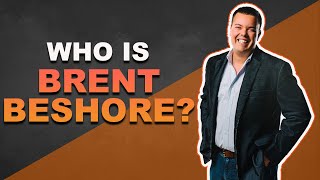
In this episode of the My First Million podcast, host Sam Parr interviews Brent Beshore, the founder of Permanent Equity, a private‑equity style family of companies that acquires family‑owned businesses. Brent recounts how a chance introduction led him to "accidentally" purchase his first company about a decade ago, launching his entrepreneurial journey. He describes the evolution of his original venture—a regional marketing agency started in 2007 that grew to about 26 employees and offered a mix of media buying, digital work, mobile/app development, and film production, pioneering video technology for commercial use. Brent explains the modest but steady success of the agency and the strategic acquisition of MediCross, a firm focused on government contracts, which created cross‑selling opportunities and increased cash flow. He also details financing the initial purchase with an SBA loan, highlighting the role of government‑backed funding in his growth strategy. Throughout, Brent reflects on the challenges of agency life, the lessons learned from trial‑and‑error business models, and the philosophy behind Permanent Equity’s focus on buying and growing family‑owned companies.
Chapters
Give us like, you know, the minute version of who are you, and then also what is Permanent Equity?
Yeah, so, uh, Permanent Equity is— we like to describe ourselves as a family of companies that buys family-owned companies. So technically we're a private equity firm now. We were just a small collection, it was my own capital in the beginning. I was an entrepreneur And then accidentally bought a business about 10 years ago, and that's what led into kind of what we do today. Um, but you accidentally bought a business? Yeah, so, uh, I had a mutual acquaintance say, hey, you should meet this guy. He's in your— he's in your industry, and, uh, he just got left at the altar for the second time. And I took that to mean I should try to buy his business, because why else would you tell me that? He had no idea. He was just trying to connect two people that were, you know, in the same, uh, in the same field or similar fields. And so I don't know, I look about 24, 25 now. I looked about 13 or 14 then and sat across from this guy and told him I wanted to buy his business. And he laughed at me and said, "Two grown men try to buy my business? How in the heck do you think you're gonna do it?" I said, "I don't know, I'll figure it out." And we negotiated and he told me no thank you. And then 7 months later called me back up and said, "All right, let's move forward and get it done." So—
What was your company before?
So I started a kind of collection of regional marketing companies. We started in 2007, kind of really got going in 2008 and '09, which were, as you all know, interesting times. But it actually allowed us to grow, and we adopted some video technology that ended up becoming standard. We think we were probably the first people in the world to use it for commercial purposes.
But what does this mean? What's regional marketing?
You know, we were doing, look, we were doing like ad agency type work. We were doing media buying, we were doing digital work, you know, uh, trying to scrap and claw and sort of make a go of it. Um, you know, so you're just an—
you're, you're an agency just figuring it out?
Yeah, we're an agency. We had some unusual talents kind of under that agency because being in mid-Missouri, we didn't have access to a lot of specialty groups. So we started building out our own specialty groups. So we built that research, um, we did some mobile and app development as well, um, and, uh, and then some film work. So those were kind of the 3 unusual buckets that you typically don't get into an agency.
And how big did it get?
Yeah, give us a sense of the level of success. I think a lot of people, one of the things we hear a lot is from the audience is like they hate when we fast forward and someone's like, yeah, I did this thing and then all of a sudden these amazing opportunities opened up and they sort of were like, wait, where were they before? And so give us the before picture. How were you doing? How was that business doing financially? Was it a big business, small business?
Yeah, yeah. So we, so let's see here. So I'm trying to— it's been a while since I've thought about the numbers. So we grew to 26 employees, I think, at the peak of that, kind of before we were— so we were, look, we were doing fine. I could make a living doing it, make a good living doing it. It wasn't, uh, you know, the agency business is hard. It's really, really hard. And I think that's, uh, um, probably what I've learned in my career is I've made all the mistakes. I've tried and tested a lot of business models and sort of taste and try something, and you're like, oh, didn't realize how hard that was going to be. And you sort of, you know move around. And so, you know, I would say, you know, moderately successful regional marketing firm, nothing special. I mean, I would say, you know, when, yeah, when we bought the firm that we did called MediCross, you know, we were kind of co-equals is how I describe it, kind of in the marketplace. They were much more focused on government contracts than we were. We didn't have any government contracts, so it was really attractive about the acquisition. And being able to combine those organizations gave us a lot more cash flow than having them separate, just based on cross-selling different products that we had and being able to fulfill a lot more of the gross profit through sort of the larger organization that they had been farming out some stuff. So that was kind of a nice combination.
Wait, so did you buy that first company under the umbrella of your marketing business?
Yeah, yeah, correct.
Got it. And so it wasn't its own entity?
No, well, I mean, it was. I mean, if you want to speak technically, it was its own entity, but it was 100% owned by me and 100% of the other firm was owned by me. So I mean, it's shared resources.
Got it, got it. So you didn't have a co-founder or any outside investors or anything?
Yeah, so I bought it with an SBA loan. Thank God for the SBA. And so no, it was just an SBA loan and rolled the dice.