From Designer to $250M Founder in Two Years | Sam Stephenson, Founder of Granola | Speed
Transcript of a Speed interview with Sam Stephenson (founder of Granola). Sam recounts his path from childhood interest in graphic design through university and early freelancing to founding startups and, most recently, Granola — an LLM-powered meeting notepad aimed at knowledge workers. The conversation covers Granola's discovery process (extensive user interviews, prototyping), launch (aiming for habit-forming retention; noted launch date mentioned as May 22, 2024), rapid growth and successive fundraises (interview references to rounds of ~$4M, then ~$20M, then ~$43M), product philosophy (simplicity, “notepad” positioning, cautious rollout of one-way changes like folders), user-research culture (routine user interviews, qualitative feedback), hiring/growth pains, and roadmap priorities (making folders/time-to-value better; improving chat and cross-meeting insights). The tone is reflective and founder-focused.
Questions this video answers
May 22, 2024 (interviewer references this date).
References in interview: an initial $4M round, then ~$20M, then ~$43M (sequence described by interviewer).
About six months (he had saved enough money to not need to work for ~6 months).
Chapters
So, Sam, thank you so much and awesome to be with you in Granola offices. Speed is a series about talking to the fastest builders in tech who are doing a couple of things simultaneously, right. Building really quickly, somehow managing to continue to produce exceptionally high craft, and somehow managing to stay close to customers as they're doing it, as they're scaling, which I think is really, really hard. There's a lot that we want to talk about, but maybe we could just start a little bit with you. I was thinking, when did you really realize that design was such a passion and a skill of yours? Was that a defining moment? Was that an evolving thing? Obviously it was pretty early, right? You studied graphic design, so you must have had a, had a sense early in your life.
But yeah, I think I was, I guess we had Photoshop on a home computer when I was a kid, and so I was playing with design software from very, very young. And so I guess it was just the thing I would do every evening. I would come home and I'd work on Photoshop projects or designing a magazine for my local canoe club, or that kind of thing. So I remember a moment where I explicitly kind of decided that was probably what my career was going to be. And that was looking at a university prospectus and kind of realizing that I'm already fairly good at this design one and everything else I'm going to have to start from scratch. So I think my parents were very good at like kind of nudging me towards, you know, kind of procrastinating or messing around, but in a productive way where I was learning. And so, like, just a lot of my evenings as a teenager was spent building websites, designing magazines, that kind of thing.
Nice. I'm always really interested when I think of designers, how that infiltrates other parts of your life. What I see with, you know, with all creatives, but particularly designers, is then a real interest in design in other parts, whether it's interiors or property or fashion or anything like that. Has it infiltrated other parts of your life? Has that become a thing or is it all note taking software for you?
No, we just bought an apartment and I have to be careful with myself because I can get carried away thinking about this blank canvas we get to play with. Now designing the interior of apartment is a much simpler design problem, I think, than some of the ones we have to grapple with at Granola. So it's kind of tempting sometimes to just go and play with that and not think about the important hard things that we have to think about here.
But maybe A nice reprieve from someone.
It is. Yeah.
So before granola, obviously it's not your first time finding a company.
Right.
You found it so helping to connect farmers to, to. To sell their groceries or sell their produce. Was being a founder something that was always on the list for you? Did that seem like a. A definite.
I think it was like, I. Yeah, I think I probably realized like kind of discovered the tech world first year of uni and I think pretty soon after that kind of, I was drawn to the, like, I always thought someday I want to start a company and like, and build something for myself.
What was it, what was it about starting a company that was appealing?
I've always struggled with like having a job. Like, I've always resisted that in whatever way. That's.
Are you a really, like, bad employee?
I'm not a great employee. Like, I mean, because you did obviously.
A lot of agency style, kind of freelance stuff. Right.
And working on some. Yeah, most of my career has been freelancing for people, which I think is another manifestation of like being quite reluctant to. Yeah. To join a big company and be part of that machine.
And how does that then flip into being a manager now?
Yeah.
Right. Because you've just hired two designers.
Yeah, yeah. It's been, I mean it's been a lot. It's been a lot to learn for me because I've always been. Up until now, I've always been like the only designer on any project I've worked on, basically, apart from a brief sim agency. So I've never had to work with other designers. I've not really had to work with much of a team before. It's always been at most like me and a few engineers in a pm so yeah, I've had a lot to learn. I feel like I'm learning it on the fly. Learning it on the fly. Yeah. Yeah. Hopefully, you know, I'm definitely getting a lot of things wrong and hopefully, you know, slowly learning how to do a few things more. Right.
Okay. Nice, nice. We'll check in with the two designers after what their review is. So it's late 22. Chris is enamored with GPT3. Are you in that moment thinking about starting your next thing? Was this a conversation that kind of came out of the blue? It something that you were excited about?
I'd quit my previous full time thing and was. Was in like full time experimenting with side projects basically. Like, I think I. Yeah, I wanted time to just like pack on stuff and I was. I guess I'd saved up enough Money that I didn't need to work for six months or so. And so it was like, cool. I'm just gonna.
Flexibility to think through.
I'm just gonna play with things and see what happens. A lot of that was teaching myself to be a better software engineer, which I kind of been doing more and more of and was really enjoying. So I worked on a few projects, you know, half to try the project out, but also half just to get.
Better at engineering, pre vive coding. So you took a hard path.
Yeah, yeah, yeah, yeah, yeah, yeah. It's funny how like things that took me months back then because I was a beginner engineer, would be so easy right now. Yeah, yeah.
So even, you know, if you think back to late 22, early 23, at that time there were so many note taking apps, call recording apps out there.
Yeah.
As you started to look into the space, was the ultra competitiveness, doggy dog nature of that industry scary to you or could you, could you very quickly see all the shit that was being done wrong?
I don't, Yeah, I, I don't think we were very scared by it. Like, I'm not sure if that was smart or we should have been more scared about it. Like definitely every investor we spoke to was scared of that, to how competitive it was. When Chris and I started working together, we kind of deliberately decided, okay, we're built in on each other at this point, like working with each other, but the ideas we have are kind of half baked and not really proven. So what we're going to do is we're going to put down all the ideas we have and we're just going to talk to people for a couple weeks and try and approach this problem space with an open mind. And I think we just heard enough cases again and again of like people that have tried other meeting, note taker AI things and the promise had been great. It sounds amazing. But they're just all fallen down in practice and not converted into a daily use tool for these people. It really felt like we could do better.
It really felt like an industry in which everybody was using them, but nobody was actually using them.
Right.
Everybody had them. There were these awkward bots joining calls and I am sure the ratio of bots joining calls to people actually going back and checking the notes must have been tiny.
Nothing. Yeah, yeah, yeah, yeah.
Which, which is interesting.
Yeah.
So, so what was that discovery phase like? Right. I've heard you speak before about going in and talking to people. Right. So is it, yeah. Is it actually saying, hey, we've got 10 ideas. We want to take you through them. Like, like, what are the nuts and bolts of that discovery phase?
I guess we knew we wanted to work on bringing LLMs to knowledge workers and figuring out ways to help LLMs empower knowledge worker type people. And so basically set up calls with a lot of our friends and friends of friends, you know, because we all, we've been in that world for a long time, we know a lot of people in this world set up calls with them. I guess we started doing them just asking them very mundane questions about what did you do today? And like, where was the friction? And like, what, what sucks most about your job? And where do you get the most fulfillment out of your job and things like that. Very open ended.
Yeah.
Kind of lasted for about a month probably. And we would do a lot of these conversations regularly and kind of, I think probably a week in we started. You can't help yourself, but you can't help but start coming up with ideas of things you could do once you start talking to people. So we started throwing together mocks of different things or building a scrappy prototype and showing that to somebody and gauging their reaction. So I think it was like this organic process from complete blank slate to, okay, let's still do the open ended questions, but let's also like throw in a couple of prototypes and see what they think of them. And that evolved over the course of a month or so until we had something that's like, I think one idea that kind of seemed interesting and that gave us the confidence to unblock a real prototype that someone could use.
Did you find that you got a whole bunch of ideas that you haven't got to build yet that you still might build?
Yeah, sure. Yeah. Yeah.
Okay. So it was good fodder for roadmap down the line. Yeah. Um, and obviously at some point in that discovery, there was enough conviction to go out and raise some money. Right. Because you raised before you launch. Yeah, but, but to think about launch. Right. You know, it, it is obviously opposed to child of success for, for B2B or B2C at the time, I guess really launches bring me back to that day. Right. I read somewhere it's 22nd of May, 2024, right?
Yeah.
What happened on the day? How are you feeling? Were you confident? Was it scary?
I think we were fairly confident. Yeah. I think we, we took our time. It was like a year and a half probably from when Chris and I started working together until we launched and probably a year, a year between when we hired our first engineering when we launched. So like the product was kind of like under wraps and been worked on for a long time. And part of that was like we wanted to build the conviction that we had a truly like habitual product before we launched. Like we wanted that habit forming loop to be. To be working before we launched. So we knew our retention was really good.
And that habit you would have defined at the time is routinely coming back.
To the app to use a meeting at least once every day. Okay. Yeah, okay. We knew we had that, that was strong and we knew that the onboarding worked well and that people, if you gave the app to a random person on the street, there was a decent chance they would figure it out because we tested it with enough people. So I think we were confident about that. Launching, getting attention online, all that kind of stuff was like a complete, like we have no idea if this is going to go well or anything. I think most of the success of that early launch is down to like the audiences of our investors and other kind of friends who were able to amplify us and the positioning, which I guess was we had thought about and took a bunch of time on the.
Specific notepad for people in back to back meetings. That messaging was.
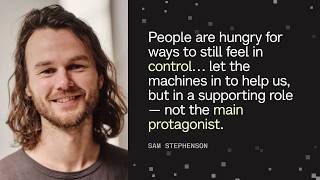
Yeah, I think so. And we had a, like our launch tweet was about if an AI is writing notes for you, it's thinking for you and you should still be doing the thinking in a meeting. You should use granola as like granola is a notepad and it encourages you to still write the stuff that really matters to you and just have the AI as a kind of support system.
I guess, which is so clear in the product. It's unobtrusive. Right. It's just working there for you. It's interesting to hear say what attributed to the incredible launch. How much of it is product? How much of it is just having an audience that say message. Right. Positioning. Do you find yourself. Are you. Are you quite critical of product as you look back? Are you a strong critic of product or are you really proud of what was out there at the time?
Like, no.
What are your inner dark thoughts about?
I don't think I very rarely feel proud, honestly of what we have. Really?
Even still now?
Yeah. I mean, yeah, because I guess you just spend all day thinking about it. I'm drawn to everything that's wrong with it. I can't help it. And yeah.
Is that, is that what keeps you up at night?
I think that's what drives me to. I don't know if it's healthy. But that's honestly what drives me a lot to make the product better is like a sense of perpetual dissatisfaction with it. I guess, like I feel more proud of the. The company we have and the team and the culture we built and stuff like that. I guess maybe it's because it's not the thing I identify as being good at. I just, it's like a beautiful surprise that we have this great bunch of people around us.
Yeah. As the. So as the previous solo operator. Yeah, that's a nice surprise.
Yeah. Yeah. I guess probably just a natural tension when building a startup because you want to move so quickly. I feel like we just constantly have to make trade offs and make the thing not quite as good as it could be. And I feel the pain inside every time we do it. Right.
Yeah. But things did then start to move very, very quickly. Right. So you'd done what, 4 million raise a year later you launched, then what, maybe another six, seven months you raised 20 and then seven months after that you raised 43. Right. It must have felt like things were really, really ramping up in pace.
Yeah. We were dramatically understaffed for the influx of users and all of the new problems that created. So I feel like we had a good couple months afterwards of just feeling like we were fighting fires and just trying to keep our head above water. There's all these things when you have users, you start getting emails from users about things that aren't working or even positive feedback. But all of that takes time to respond to. And I was lost being a customer support person for a couple of weeks before we even. I think with every problem it takes us a while to realize it's a problem. You have to kind of be underwater for a little while to realize that you are and then live and breathe.
It before you know how to solve.
It a little bit.
Yeah. So I've heard Chris talk a lot or attribute a lot of Granola's success to the fact that it was crafted with a lot of soul. Right. Which is obviously a huge compliment to you and to the work that you're doing. Soul is notoriously hard to screen for in interviews, to scale, to teach. How do you think about that and how do you think about trying to maintain that quality bar as you grow?
Good question. Yeah.
Because it's not just you and Figma all day long anymore.
Right.
It's other people and then that's going to become lots more people.
We're having to figure this out. Yeah. I think is that like we're tops.
Down thing Or a bottoms up thing I guess is kind of what I'm trying to understand.
Yeah, I think, I mean historically I think it's been quite top down honestly in that it's like Chris and me making a lot of the product decisions and being. I think I credit this mostly to Chris like being very ruthless about what really matters to the user in this given moment. And let's honor that and then let's strip out everything that's kind of superfluous to that. I think a lot of people say they like using granola because it's very simple and a lot of that is just like in the moments where it really matters, like during a meeting, capturing the notes you have, like there's not much else to do. It's like very. We've cut a lot of the crap out. Yeah. I think as like now we're a bigger team. It's a new challenge to like keep that, you know, but we gotta. Chris and I can't make every single decision that's going into the product anymore.
Because you could imagine granola with 50 more buttons, sophisticated, complex workflows connected into all these different places. But it would be horrible. Right. But you see software going in that direction because they're trying to enable all of this sort of cross functional interdependency. They're trying to build in network effects, they're trying to deliver more economic value for the customers so they can extract more economic value themselves. A lot of that sometimes is necessary. Right. How much are you fighting that balance right now? And do you worry yourself as a designer that's built this thing with beautiful soul that you're going to have to succumb to some of that over time?
Yeah, it's definitely a constant. It comes up a lot in everything we work on and I think we talk a lot when we're building things about is this a one way door or a two way door? This thing we're releasing, we tend to be much more careful with things that are a one way door. So we ship this, we can't really go back. Folders was a good example of that. As soon as we ship folders, people are going to start putting stuff in folders and then we can't really take them, you can't take them out. So when you feel really good that the basic shape of it is right, whereas design of the folder ui, like what a folder looks like on a screen is a very malleable thing which we can change every week. And that's cool. So yeah, I think we tend to be precious about some things and try and not be too precious about others. Yeah.
Do you find that building an LLM powered workspace that a lot of the artifacts that you will call upon to bring into your product in fact already exist? Like folders. Right. We know that people like to be able to visually, you know, work their way through folders and pieces of information. It's tried and tested by the filing cabinet. Right. And software after that. Do you find yourself leaning on some of those examples and do you get confidence from the fact that they already exist or do you think some of them are broken?
I think we definitely do. There is a. Folders is an interesting one because, like, you could argue that folders is kind of an old school metaphor and that nowadays an AI should be able to organize stuff for you. I don't know, there's this tension where people know this thing and they're used to it, so that's what they want and we should just build it for them. But there might also be this new world where they don't even need to think about that anymore.
And search solves all problems.
Search solves all problems has been an argument in software for a long time. And I feel like folders are still around for a reason. People still like them. But.
Yeah, interesting. One of the things that I think is interesting is the people that are moving really fast at the minute. There's like winners and losers in that space. And the winners are the people that manage to do it extraordinarily well. And that seems to me that they have a deep understanding of the user, the customer that they're serving. Right. I've heard you describe granola as a tool for people who do people stuff, which is really broad. So what are the people or what are the users that you call upon in your mind as you imagine them using the product? Are there a whole bunch or are there just a few? How do you kind of think through that?
Yeah, this has changed over time. Like at the beginning, we deliberately basically had a handful of people that we had very close contact with. We had permission to look at all of their meeting notes, for example, and kind of like analyze or remove a little bit in the product to really build this habit loop, like sit beside.
Them, observe the whole thing.
Yeah, yeah. We would do sessions where they'd walk us through the whole calendar and we'd go event by event and talk about what it was going to, what that meeting was for and who was there and what was happening. And yeah, since like now we have more users like we, we speak to a broader range than that. We're still very qualitative, qualitatively driven. We have basic high level dashboards of stats. But all the product decisions are made by talking to users, gauging their reactions to things, watching them struggle to use it and, and going off our own gut feel like from using the product ourselves. Yeah, we recently this has been a thing that's, there's been definite growing pains here because like we launched, we started getting a volume of users and then the kind of just having a handful of people that we talked to kind of broke and we didn't get a new system for a while for talking to people. We now have a kind of system in place which is part manual, somebody kind of scheduling calls, but we have a bunch of automations to make it kind of quick. So we can basically every week we know that we're going to have like five or six user interviews booked in the calendar and anyone on the team can basically like use them for whatever they're working on. We'll also sometimes do like a. If we know we specifically want a bunch of feedback on one thing, then we can kind of up the volume of those and do a full day of interviews where we're getting lots and lots of feedback.
And that's something like folders. Like that would have been a kind of practice. Yeah, yeah. Because for me, I think one of the biggest unsolved problems in software is that most people in most companies don't know what customers are actually saying. It doesn't feel like granola has that problem. Partly maybe because of the product that you yourselves have built, but also because of the culture and how you do that. Do you find that that is pretty prevalent across the team, that everybody's pretty motivated about that or.
I think we have a good culture here of like, if you're not sure about a thing, talk to some users about it and that will bring clarity. Basically that's come from a mix of hiring naturally product centric people who kind of care about what they're building. And Chris and I spend a lot of our time doing user calls with other folks on the team involved. So it's kind of a, we try and lead by example there, I guess. And then, you know, other folks on the team do it for whatever they're working on too.
Right. Has that always been your kind of tried and tested ritual of just get on calls with people? Is that the way that you've always done it and that you try to now encourage your teams to do it.
Pretty much, yeah, I think. Yeah. I mean, well, I guess there's that. There's like. We'll ship things internally very try. Like, try and do that uncomfortably soon. And we can gauge a lot from just using it ourselves and, like, seeing what. What bits of friction we run into. Yeah. But, like, all the data feedback, often it's like we turn on a feature for somebody, give them a few days with it, and then we catch up with them to talk about how it's been. That formula seems reliably good for us. Yeah.
Because conventional wisdom has always find, like, the narrow subset of users. Right. And build specifically for them even beyond, you know, beyond a bigger scale than you guys are at today. That's a luxury that was taken away from you in May 24th when you launched. So many different people started to use the product. Right.
Yeah. Yeah.
So I think it's just interesting to think of, you know, how much you got to go on conviction and how much you got to go on what customers or users are telling you and how those two things often probably fight against each other, because I'm sure there are, you know, orders of magnitude more features requested of you than you could. Than you could ever build.
Yeah, for sure. Yeah, yeah, yeah. I think. I mean, I think for better or worse, like, a lot of our feature, I guess, requests are definitely a big input, but they're not the driving input. Like, I. I think that tends to be either observations from using the product internally for us, or we get a bunch of requests about a thing that's a signal that, hey, there's probably something we need to think about here, and then we'll go talk to a bunch of users and really try and diagnose what the problem is. We very rarely just build a thing that people ask for at face value. There's always a step of going a bit deeper and figuring out what's actually going on there.
Right. Turns out they didn't want a faster horse, they wanted a car.
I mean, sometimes they're right, and a faster horse is the thing. But, yeah.
Interesting is the version of granola that people that work at Granola use very different to the version of granola that people that don't work at Granola use.
It's. Yeah, good question. There are always a bunch of experiments going on. I guess in. In our version, we. I mean, we try and, like, there's a danger of the delta getting too big, and we kind of lose sight of what real people see. We definitely had a couple moments like that, and we've Kind of rained back the experiments to just get back to ground truth of what people are using. But yeah, we're definitely trying a lot of stuff out. Yeah. Yeah.
What are you really excited about that that's coming down the line. Right. Obviously Folders has been a big release for you. You can see how that's really going to create a lot of interdependency between users and teams and organizations. Is it more of that sort of thinking, you know, building in kind of network effects amongst users or is that.
Yeah, I think it's. It's two tracks broadly. Like, I think it's that making folders more useful basically. Like, I think where we're at right now is we have just kind of built out the basic functionality, but we haven't kind of. You've got to be a bit of a power user to get the value out of it, I guess, and we want to make that time to value much, much shorter for regular people. And then like, I think the other exciting track is making chat much more useful and kind of helping you get insights and useful stuff from across a body of meetings, not just one meeting at a time. We have some of that in the app already, but it's kind of hard to discover and not, I mean, chat as a whole is like a really. It's just a. It can do so much. But the problem is all of the things are. Every individual, like task you can use it for, you have to think of yourself. Right. And so like we're working on ways to make, make it less proactive. Yeah. Make all the power of granola, like more obvious and at your fingertips rather than you having to think of how to use it.
Right.
Yeah.
When you look back on this period in another two years, how do you think you will find this period? Right? Like this is. Is this the most stressful professional time of your life? Is it slash, fulfilling, exciting, you know, how are you actually feeling going to this right now?
It's gone through waves. I think I'm at an optimistic moment right now. I think we have a few full time designers on the team, which personally has like taken some pressure off me and I just, I feel like we're able to execute at a higher quality level on more stuff now, which is a big relief. And I think the team is. The team has grown quite a lot in the last few months and I was, I have to say I was kind of worried about that. This is already the biggest team I've ever worked on, so I kind of assumed I would mostly not like the growth of people. But we just. I don't know, everyone we've hired so far is fantastic and we are just able to do more good stuff at the same time. And that's been. It's just really exciting to see so much good stuff happening on many different fronts at the same time, so.
Right.
Yeah.
How hard has hiring been?
It was. Yeah, it's been hard. Like, I think. I think a lot of the. So I would say six months ago we were finding it really tough. I think that was mostly honestly because we weren't giving it the amount of attention it needed.
Just raising a Whopper series be seven months after your previous one.
Definitely helped. Definitely help. Yeah. Yeah. We also. We run a lot of events in the office. That's been great for us. Like, it's really fun meeting people and getting to share the space with. With folks, but it also has a lot of, like, nice downstream benefits of more people being aware of us and good people finding us often, so.
And you guys are betting big on London, right?
Yeah, yeah. We're all in person in here every day, so.
Nice.
Yeah.
And. And presumably you haven't worked much like that then before yourself, right?
Yeah.
Yeah.
This is pretty neat to me too. Yeah.
So don't go too crazy on that apartment because you're never going to see it anyway.
Yeah, yeah, that's true. Yeah. Yeah.
Nice. Well, Sam, thank you so much. Thank you. You're. You're fucking legends and I really appreciate you taking the time. It's a huge honor. Thanks.
This is really fun. Yeah. Yeah. I'm reminded of what you guys are doing, so thanks.
Cheers.