This One Diet Can Cure Every Disease | Subah Saraf | Satvic Movement

Subah Saraf outlines a plant-based diet designed to cure chronic disease through detoxification and four principles: food must be living, wholesome, plant-based, and water-rich. The daily plan includes five meals built around ash gourd juice, fruits, grains with vegetables, and raw salads, with substitutions like whole coconut for oil and coconut milk for dairy.
Chapters
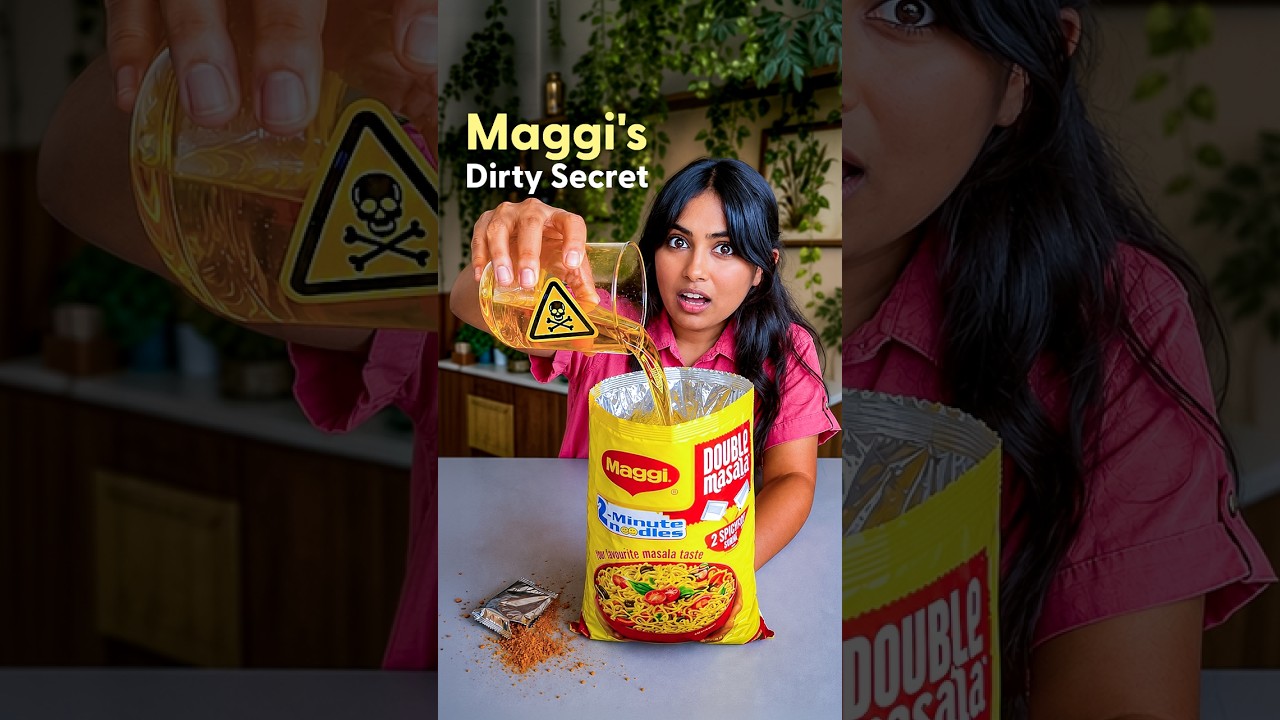
Are you suffering from a health problem? Any chronic health problem— diabetes, back pain, knee pain, thyroid, constipation, acne, high blood pressure, PCOD, low energy, obesity, or even excess weight? What if I tell you that changing your food can cure your disease? Which means that if you change your diet, follow it religiously, and get your blood tests done after 3 months, you will not have that disease anymore. Now you probably wouldn't believe me. Huh? But what's the relation between my diet and my disease? Food doesn't cure disease, medicines do. You might be thinking. What if I tell you that thousands of people around the world are giving up medicine and curing health problems by changing their diet and lifestyle? In this video, I'll share one simple diet plan that was first suggested to me by my guru. I followed it religiously and I. cured my thyroid, PCOD, and hair fall without medicine. I've suggested the same diet to hundreds of people and they've all been able to cure diseases. But before I give you this one diet plan and explain you what food to put in your body, you must take out the undigested food from your body, the waste, the toxins sitting inside. Meaning, knowing how to detox is even more important than knowing what to eat. For example, if you accidentally put in diesel in a car that was meant for petrol, it won't work, right? To make it work again, first you need to take out the diesel and then put in the petrol. Same with us. Our body is meant for this— fresh fruits, vegetables, plants straight from nature. But we accidentally fed it with this— too many grains, oils, breads, paranthas, sodas, snacks, food that's packaged. No wonder our body is not properly working and has all these diseases. So step 1 is to take out the bad stuff, the undigested waste sitting inside, and step 2 is to put in the good stuff, the right food. This video covers only step 2. Make sure that first you In step 1, I share 3 powerful ways to remove toxins from your body. Okay, coming back. I don't want to give you a scripted diet plan and say, hey, this is what you have to eat for breakfast, lunch, dinner. No. First, you must understand some basic principles about natural food. If you want to be truly healthy, you need to look for 4 things in your diet. 4 qualities in your food. Your food should be 4 things. Number 1, it should be living. See, if you bury something in the ground and water it for a few days, it should grow into a plant, right? For example, if you take a lentil seed, bury it in the soil, after a few days you'll get a sapling. But if you plant any junk like Maggi, let's say, do you think you'll ever get a wheat plant out of it? No. No, because unlike the lentil, the Maggi doesn't contain any life, doesn't contain any prana, and therefore it cannot produce more life. It's a dead food, and how can something that's dead bring life to your body? On the other hand, fruits, vegetables, nuts, grains, seeds, sprouts— they're all living foods, and when they enter your body, they bring you life. They extend your age, cure your disease, flush out the toxins sitting inside your body. In the Bhagavad Gita chapter 17, do you know what Lord Krishna says? He says that food should be eaten within 3 hours of being cooked because after 3 hours it becomes tamasic. It starts to lose the life energy or the prana inside it. That's why in the yogic culture they don't eat any sabzi or rice or chapati if it has been kept for more than 3 hours. Same with our grandparents. I mean, they used to eat everything fresh right from the stove. To the plate, and now what's happening? People store subzis in the refrigerator for the next two to four four days. They take a little out every day, eat it, and then store it back. They're eating stale basi food. They're inviting cancer into their body. If something is cooked on fire, you have to eat it within three hours, maximum five hours. Now tell me one thing: Why only apply this three-hour rule to subzi and chapati? What about all this? Can you even imagine how long back these foods were cooked? Forget 3 hours or 3 days, most of them were cooked maybe even 3 years in advance and have been stored in packets, bottles, cans, and boxes after being lathered with synthetic chemicals so that they don't appear to be stale or smell bad. These chemicals might increase the shelf life of these products, but they decrease the shelf life of our own bodies. Actually, if you think about it, these are not food. They're products. They're products made by a company who wants to make a profit like any other business. They're dead. They have no life energy left inside them. So rule number 1 is to eat living food. Nothing bottled, tinned, packaged, frozen, or processed. Nothing man-made in a factory. Eat living foods straight from nature. Fruits, vegetables, sprouts, coconut juices, grains, nuts, and seeds. Instead of munching on biscuits, munch on coconut slices. Instead of popping soda cans, pop coconut waters. Instead of having namkeens, have platters full of fresh fruits or salads. Second, eat food that is wholesome. See, Mother Nature knows best. She does not make mistakes. There's a reason why she hung dates on trees and not sugar. There's a reason why she gives us olives but not olive oil, potatoes but not potato chips. All foods that come directly from plants or trees or from the earth are wholesome. They've not been, you know, subtracted of anything. Nature has done a lot of planning before making every food. She has given each food item a specific ratio of protein, fats, nutrients, so that we humans can easily digest and eliminate it. If we fragment it by consuming only a part of it, or by stripping away its outer layer, or by squeezing out only the fats from it, we totally change it from nature's original design. So for example, eat brown rice instead of white rice. Brown rice is wholesome, it's the real deal. When we remove the bran from it, it becomes white rice. The digestive mechanism of the rice lies in this outer that we so conveniently just decide to throw out. Eat dates or jaggery instead of sugar. Dates are wholesome, sugar is fragmented. Eat whole coconut instead of coconut oil. Eat the whole olive instead of olive oil. When eating wheat, eat only whole wheat along with the outer layer, or what we call chokar in Hindi. Do not sieve it before making your chapatis. Third, eat food that comes from plants. No meat, fish, or eggs. Nature has not designed our body to consume these animals. What should I do? I will create a separate video on this topic in the future. Your next question may be: What about milk and dairy? Look, as a substance, pure cow milk is very good. But the problem is that milk that we're getting today is actually not even milk. What we get in these tetra packs is a white liquid made of milk powder, urea, and dangerous chemicals. Do you know that the World Health Organization has warned the Indian government that milk today has become so contaminated that if you continue drinking it, by 2025, 87% of India will be suffering from serious diseases like cancer? And this was in the Economic Times recently. In the description of this video, I've linked a video showing how detergents like Easy and urea is used in this milk to make it store for longer and to make it thicker. Now, even if you get the purest form of cow milk straight from your farm, straight from your own cow, even then you cannot digest it if you're suffering from a disease or if you want to lose weight. Pure cow milk is very good for athletes or small children whose height is growing, but not for us who spend 8 hours a day in front of a computer screen. We simply cannot digest it because it's a very, very heavy food by nature. One glass of milk is a complete meal on its own. Good news is that there's a substitute which can give you all the same nutrients, protein and calcium. Difference is that your body can actually digest and absorb it. Do you know what it is? It's coconut milk. Coconut is one of the best foods on earth. There's a reason it's called shreefal in Sanskrit. And there's a reason why every birth, every marriage, every auspicious occasion in India starts with the breaking of a coconut. Always make your coconut milk at your own home. It's very easy. The links for all the recipes are given in the YouTube description below. Fourth, your food should be water-rich. See, there's 2 kinds of foods: water-rich and water-poor. Water-rich foods include fruits, such as watermelon, papaya, grapes, oranges, juicy vegetables like tomatoes, cucumber, leafy greens, bottle gourd. Water-poor foods include grains, rice, wheat, chapati, dal, nuts, seeds, and starchy vegetables like potatoes. See, if you put it in a juicer and a lot of juice comes out of it, then you know that it's water-rich. Have you ever put a chapati or rice in the juicer? No, because you know that there's no juice in it. It's a water-poor food. Now, 70% of your body is water and 30% is, you know, solid— bones, muscles, and mass. So naturally, 70% of your diet should be composed of water-rich food— juices, fruits, vegetables— and 30% of your diet should consist of water-poor food— grains, cereals, nuts, and seeds. Funnily enough, most of us eat in the exact opposite ratio. We eat grains thrice a day, and as a result, we're drying up. So in summary, number 1, eat living foods. Eat foods that come straight from the farm to your kitchen. It should not go to a factory in between. Number 2, eat wholesome food, means original food. Brown rice instead of white rice, dates or jaggery instead of sugar, whole coconut and olives instead of their oils. Number 3, eat plant-based food. Strictly no meat, fish, or eggs. Instead of animal milk, have coconut milk. Number 4, eat 70% water-rich food. Okay, now let's move on to the diet plan. We suggest having 5 main meals in a day: a morning detox juice, breakfast, lunch, mid-meal, and dinner. The timings that I give in this video are those that are generally suitable for most people, but feel free to adjust them according to your routine and your schedule. Let's start with the morning detox juice, which you can have a little after waking up in the morning, let's say 8 AM. For this, we recommend the juice of a very, very special vegetable. When this vegetable enters your body, it starts to suck in all the toxins. It's like a sponge, and when it exits your body, it carries with it all the accumulated toxins and the garbage sitting inside. It is the best thing you can drink for weight loss and for clearing up your skin. It's light green from the outside and white from the inside. Do you know what it's called? It's called ash gourd in English and safed peetha in Hindi. Simply cut it, peel off the skin, take out the seeds, and juice it. Drink 1 full glass of this juice without adding any lemon or salt. If you want, you can mix it with 50% coconut water. And don't worry at all, it doesn't taste bad or bitter. It's actually just bland. It has almost no taste. In case ash gourd juice is not available, drink 1 glass of coconut water. In case even coconut water is not available in your country or your region, drink the juice of any vegetable, for example, bottle gourd or ghee or celery or cucumber. Then till about the next 2 hours, eat nothing because the ash gourd juice is doing its work inside your body and you don't want to interrupt the cleaning by eating something. At about 10 AM, it's time for breakfast. For breakfast, you can have a big bowl of fresh seasonal fruits. Can be any fruit you like. Preferably water-rich fruits. So avoid bananas. You can eat any combination of fruits that you like. Eat fruits that are always local to your country. Always eat seasonal and regional. If you wish, you can grate some fresh coconut from the top. Then comes time for lunch at about 1 PM. This is when you can have your grain meal, chapati and sabzi. The chapati that we suggest is a special chapati. It's much more easier to digest. Instead of using 100% wheat flour, it's made of 50% wheat flour and 50% vegetable. So you can make any vegetable chapati— cucumber chapati, beetroot chapati, spinach chapati, bottle gourd chapati, carrot chapati. So this way, even if you're eating 2 chapatis, the grain or the wheat of only 1 chapati is going Going inside your body, but this doesn't mean that you start eating double the number of chapatis. Eat just as many as you were before. I've made a video showing exactly how to make this kind of chapati. Please watch it by clicking on this box. With chapati comes sabzi. The sabzi that we recommend is also very different. Instead of using oil, we use fresh grated coconut, and instead of using spicy masalas, we use fresh herbs. Watch the method of making sabzi by clicking on this box above. By the way, I've also given the links of all of these videos that I'm mentioning of sabzi and chapati in the description box below. If you eat 1 chapati, have 2 bowls of sabzi. If you eat 2 chapatis, have 4 bowls of sabzi. The idea is to eat more and more of vegetables and less and less of grains. Once or twice a week, you can also have brown rice instead of chapati. Now, even when you're eating brown rice, if you have one bowl of brown rice, have two bowls of sabzi. When you eat grains alone, it is very difficult for your body to digest them. But by mixing grains with vegetables, it makes them easier to digest and eliminate from your body. So no dal roti. Instead, have sabzi roti. No dal rice. Instead, have sabzi rice. No rajma. No chana. At least till you get completely cured and reach your ideal weight. See, it's not like dal, which is lentils, is wrong. It's not like rajma is wrong. It's just that in our modern lifestyles where we spend most of the day sitting down and work out for just 1 hour a day, we cannot digest it. Our grandparents could easily digest it because they didn't have laptops or mobile phones. They used to walk everywhere and they used to work hard in the sun in their farms for 6 to 8 hours a day. So they could afford to eat a lot of grain. The problem is that we're living the lifestyle of today but eating the diet of our grandparents, and that's why we're falling so diseased as a society. So back to the meal plan. You might need a mid-meal between your lunch and your dinner. We recommend having the juice of any freshly squeezed vegetable, or you can also have fresh coconut water. Again, no biscuits, no namkeens, no snacks. If you feel hungry even after the juice, you can have coconut slices, about 2 to 3 pieces. It's the best healthy snack. Most people are used to drinking tea or coffee at this time. If that's the case with you, you can have herbal tea, but not the packets of green tea which you get from a factory. Make fresh herbal tea at your own home. I've given the recipe in the description below this YouTube video. Then for dinner, have a salad and a soup. Your salad would be raw. Take any fresh seasonal vegetables Chop them up and toss them together with a nut-based homemade dressing. Do not add any grains like chana or rajma or dal to your salad. I've created some amazing salad recipes that are actually healthy. The links for all the recipes and the dressings are given in the YouTube description below. If you wish, you can have a soup with your salad. The soup would be a steamed meal. Make sure that the soup has no dairy, no oil, no grains. You'll feel so light after eating this. And when you see your weight dropping on the weighing machine every morning and your readings in control without medicine, then there's no going back. The idea is to eat grains only once a day, and rest of the day eat one fruit meal and one salad meal. Your digestion will work wonderfully. If you wish, you can even swap lunch and dinner. You can have a soup and salad for lunch, and your grain meal could be dinner. Now, this diet plan is for people who want to lose weight or reverse a health problem. It's also for people who are already fit and want to maintain their weight. But it's not recommended for children and athletes. Children below the age of 16, if they're healthy, and athletes can eat grains 2 to 3 times a day. Because their bodies are in the growing stage and therefore they are capable of digesting it. Now, let's discuss some frequently asked questions. How much water should I drink? You should drink water only when you feel thirsty, just like how you should eat food only when you feel hungry. No need to forcefully consume 8-9 litres of water every day when there is no physical need for it. It puts undue pressure on your kidneys. Next question: For how long should I follow this? Follow it till the time you want to stay healthy and fit and not want to get diseases in your body. See, what I'm giving you here is not a diet plan for weight loss. It's a lifestyle. It's a way of living and eating the way that nature intended. The human body is a precious gift that God has given to us, and day by day, week by week, Year by year, time is passing. Every morning we wake up, look at ourselves in the mirror, and we wish we didn't have all that excess weight. We wish we didn't have to start our mornings popping pills or with medicine. I don't want that all your life you just keep wishing. I want you to experience what it feels like to have an optimally functioning human body. To have no disease or disease seed inside you. I want to empower you to be your own doctor. All I'm here for is to connect you back with nature. Goodbye for now, and I'll see you in the next video. Thank you.