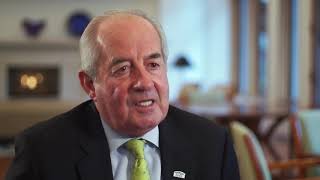
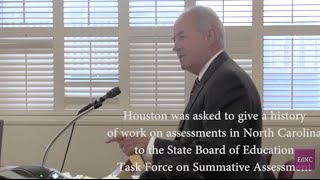
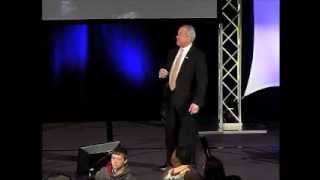
In this interview, Samuel H. Houston Jr., a celebrated North Carolina educator and 2019 NC STEM Hall of Fame honoree, recounts his unexpected path to college, sparked by his wife's plans and a late‑senior‑year decision. He explains the founding philosophy of the SMT Center, emphasizing that STEM stands for "strategies that engage minds" rather than the traditional siloed disciplines, and highlights its focus on teaching students to use information to navigate chaos and become independent thinkers. Houston describes the Center’s commitment to serving rural communities and the School of Science and Math, noting its broad outreach to middle‑grade students and its role as a flagship model for sharing knowledge. He positions himself not as a scientist or mathematician but as an educator and change agent who leverages available resources to influence behavior and improve education. Colleagues praise his wisdom, dedication, and impact on students and teachers across the state.
Chapters
I was not one of those young people who really had thought much about even going to college. My wife of 53 years, she said she was going to go to college, and about halfway through my senior year, I thought, "Oh hell, maybe I better go to college too." And that's how it all started.
Sam is, you know, one of the most widely respected educators in North Carolina.
He just has such a command of education and the need for change and the need to create better opportunities for our students and for our teachers.
When we created the SMT Center, we didn't use the acronym STEM—science, technology, engineering, and math. We interpret that as strategies that engage minds. And the excitement there is that, uh, STEM is not about the silo of disciplines separate from one another. It's about learning how to use information, uh, to deal with chaos. It's about, uh, opportunities to give young people the skills and knowledge that they need to be competitive in an ever-changing environment. Quality education is what my life has been about. One of the things that we're committed to at the SMT Center is to reach rural communities and work with communities that need the greatest help. The School of Science and Math is misunderstood by those that don't recognize the outreach that they do. Their, their touch is really broad. They're dealing with young people as early as middle grades, so the school is I think a flagship opportunity to look at what can happen when you have the ability to share information. We need to make sure that they can become independent thinkers and deal with unexpected things that come their way. I don't consider myself a scientist or a mathematician, and I actually think it's a miracle when my computer turns on. I'm an educator. I try to act as a change agent. I try to use the resources that are available to me to make a difference in how other people behave.
Sam is wise. He's the kind of person that is willing to give of himself in a committed way to support the well-being of others.
I'm driven and excited by the fact that coming to work here every day, I know and have evidence that we're making a difference, that we're actually giving schools the opportunity to change the lives of thousands of young people.