STEM - Strategies That Engage Minds with Dr. Sam Houston
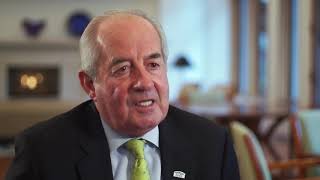
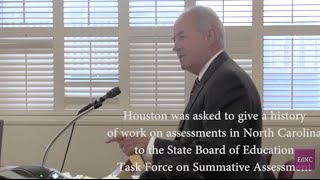
In this episode of the Ed Leader podcast, host Dr. Rob Jackson interviews Dr. Samuel H. Houston Jr., a veteran K‑12 leader and CEO of the North Carolina Science, Mathematics, and Technology Education Center. The conversation covers a range of topics that reflect Dr. Houston’s 50‑plus years in education. He emphasizes the importance of personal fulfillment and mentorship, describing how his enjoyment of helping the next generation fuels his longevity. He recounts the creation of the Next Generation Superintendents Development Program, highlighting the need for networking, friendship, and collaborative learning among superintendents. Dr. Houston explains his concept of "STEM as Strategies That Engage Minds," advocating for inquiry‑driven, cross‑disciplinary instruction that uses science as an entry point to develop literacy, math, and civic skills, and stresses measuring student growth through portfolios rather than standardized tests. He shares the experience of implementing a year‑round quarter system in Mooresville to increase instructional days and shift focus from test scores to cultural success, illustrating his "true north" of making every student successful. The interview delves into leadership philosophy, urging aspiring superintendents to know themselves, write down core beliefs, and regularly reflect on them to guide decision‑making. A practical "inbox" scenario demonstrates his approach to board relations and personnel decisions, emphasizing process, transparency, and respect for board members while maintaining fairness. Throughout, Dr. Houston underscores the need for flexible, individualized instruction, the limitations of current accountability policies, and the power of mentorship and networks in shaping effective educational leaders.
Chapters
Welcome to Ed Leader with your host, Dr.
Rob Jackson.
Join Dr. Jackson for conversations and reflections on improving educational leadership from the classroom to the boardroom and beyond. Educational leadership is an ever-evolving opportunity to make a real and lasting difference in the lives of students, parents and the community. And now, here's your host, Dr. Rob Jackson.
Hi friends, welcome to episode 5 of Ed Leader. I'm your host, Rob Jackson, and I want to thank you for spending some time with me today. I'm very appreciative of the incredible growth of the Ed Leader Podcast community, as we now have listeners from coast to coast in less than a month on the air. I hope that means that you are finding value in our time together. If so, please consider subscribing to the podcast on Apple Podcast, Google Podcast, Spotify, iHeartRadio, or your favorite podcast player to help continue to grow the Ed Leader community. Today, I have the incredible opportunity to sit down with an ed leader who has been serving in public education for over 50 years. He has been described as one of the faces on the Mount Rushmore of ed leaders in our state. We're going to talk about the importance of ed leaders knowing themselves and their true north. We'll discuss STEMs as strategies that engage the mind, moving the curriculum from fact-driven to inquiry-driven, and using science as an introduction to all other curricular areas. We're even going to put our esteemed guests to the test with a visit to the ed leader inbox scenario. Let's get to it. I'm sitting down today with the President and Chief Executive Officer of the North Carolina Science, Mathematics, and Technology Education Center. Prior to this appointment, he served as the first Executive Director of the University of North Carolina Center for School Leadership Development. After serving as an elementary school teacher, He began a career in administration, serving as an assistant principal and principal at the junior high and high school levels. In 1983, he was named as the superintendent of the Mooresville City Schools, post he held for a decade. He was awarded the J. Robinson Leadership Award as an exemplary educator for his outstanding contributions to statewide public K-12 education. In 2006, he was presented a distinguished career Career Award from the University of North Carolina at Greensboro School of Education. He was inducted into the Appalachian State University Wright College of Education's Rhododendron Society in June 2012, the highest honor given by the College of Education there. In October 2015, he was inducted into the East Carolina University's Educators Hall of Fame. He was also inducted into the North Carolina School of Science and Mathematics North Carolina STEM Hall of Fame in 2019. Please help me welcome my incredibly esteemed guest, Dr. Samuel H. Houston Jr.
Welcome, Sam.
Glad to be here, Rob.
You are someone that I personally look up to. After all these years, what keeps you going, Sam? I believe you've got 53, 54 years in education. What keeps you going?
You know, it's not salary, it's not money, it's not just having something to do, it's the enjoyment. And the first day I feel like I'm not making a difference would be my last day. I think that you don't have a job when you're enjoying what you're doing and you actually feel like you're developing something for others.
Absolutely.
That's it. I enjoy being around the newer generation that's coming along. I don't envy the work that they have to do. If there's anything we can do, or I can do, to help any one of them be successful, I feel good when I go home in the afternoon. And of course, we work with so many different groups, from teachers, policymakers. I think one of my favorite roles is what we do with school administrators. I have great respect for the difference they make. We have— I'll just use North Carolina as an example— we have 2,500-plus schools. That many principals and assistant principals, and that's a number we can't deal with. It's too big to make an impact. But if we can make an impact on those that lead them, our way to make a difference in every classroom.
Absolutely. Sam, you mentioned a couple of times really feeding into young educational leaders. It seems to me there's a responsibility of an educational leader to share their experiences, positive and negative, to help the next generation be able to take the next step forward. Who are some of the leaders that really helped you as a young administrator get to where you were, were as a successful superintendent and beyond?
You, you mentioned I've been in business a long time.
You have.
When I first became a— if I may use the term— an executive administrator, after having been an elementary, middle, and high school principal, it was a time in an era when The superintendency was kind of a club. There were so many that had many years of experience and in many cases in the same district. So I was fortunate to be able to learn from some of the best names no one would recognize. You would, some of them, but the J. Robinsons and the Lawson Browns and so many others I could name. They were more or less our mentors and teachers, even though they didn't realize it.
Right.
If you were somewhat wise, you watched those that were successful and you watched those that weren't, and you decided which ones you wanted to emulate and be. I saw masters do their work, and one thing I learned, and I still believe it holds true today, is that to be successful in executive leadership roles, you have to be successful managing all of the people around you, your board. Policymakers and leaders in the community. That doesn't mean that education in the classroom isn't your first responsibility, but if you're going to get that done, you better simultaneously control the environment. So those that I watched that were so successful were absolute managers of people and creating cultures that people could, could enjoy and support.
Well, Sam, thinking to your experience as a superintendent, and you mentioned almost club-like feel of the superintendency at that point. Just over 7 years ago, I know you worked with Jack Hoak, who's the Executive Director of the School Superintendents Association, to help build a program called the Next Generation Superintendents Development Program, a program to offer professional development for superintendents, to bring superintendents from across the state together. Why was that important to you? What, what were you hoping to accomplish in helping with that program at its birth? And you've continued to be a very important part of that program. Why did you get energized around that work?
A couple of reasons. One, I recognize the value of building network. We have 115 superintendents, as you well know. We have quite a few of them that have marginal, very short-term experience. They don't know each other. They don't know how to rely on each other. They don't necessarily have friends in every case in the same profession. So one of the things we wanted to help do was to continue to develop that culture and friendship and network. And then also there was a little bit of self-defense in the business that we're in here at the North Carolina Science, Math, Technology Education Center is to serve school districts, to help them not just with science, technology, engineering, and math. As you know, we call that Strategies That Engage Minds. We're more about an interest in developing great classroom behavior, to help kids learn how to think independently, learn, be thoughtful. And I say frequently, know what to do when they're not sure what to do.
Exactly.
The main way we could get there is to know the superintendents, start to help them think that way, which would open the door for us to work in their district. And it also gave us a chance to know where we might have the best return on investment. We're not big. We're— I think we have some influence.
I dare say.
But we have to be sure where we spend our energy. We're going to have a cooperative partner who appreciates what we're doing as much as we appreciate what they're doing, and together we can make a difference with marginal effort.
Absolutely. Well, part of that program— and I've had the opportunity to be a part of that program each year, and I very much appreciate your leadership in that program— part of that program, each time, each year, you actually have the superintendents divide into groups, and you have a practicing classroom teacher who leads the superintendents through a science lesson or through a classroom instructional activity. Why was that important to include as part of the program?
I've heard even back in my day in schools, and I didn't appreciate it as much as I should or understand it the way I should, particularly in the area of science and social studies and the arts. I would frequently hear, I don't have time to do that because I have to teach reading and math. That's wrong if you have a deep understanding of what we really today, particularly today, want our graduates to leave our classrooms with. And when I say graduates from classrooms, I mean kindergarten, first grade, second grade, and on up through the years. It became clear to me that what we needed to do is make sure that through any discipline you can do the literacy and math. So what we do when we have that investigation that we ask superintendents or aspiring superintendents to participate in is We don't tell them in advance when we break them into groups that one group's going to be doing math, one group's going to be doing science, another group's going to be doing social studies or language arts, because you can take the exact same lesson and disaggregate it to the content standards in any set of disciplines and weave them together. Why do we think science is the place to start? There may be a kid out there somewhere that doesn't like science, but I haven't found many of them.
That's right.
They like doing stuff. They like getting their hands on materials. So we can trick them into the social sciences, the literacy, the math, the even, even the civic behaviors. When you think about an investigation that may deal with water quality or deal with air, deal with the major issues that society is confronted with trying to solve right now. So we won't administrators to see that they can support the full range of disciplines with science being a focus. If you think about STEM as strategies that engage minds, you can get a concept of what we're— what we envision when we put kids in an investigation of some type, that it's about reporting data, defending beliefs, understanding the literacy and math that's there, keeping a notebook to to define later what they believe they saw and understood. It's not so much about right and wrong, it's more about learning how to think. And I'm gonna say this again, I hope it comes out. If I could have a graduate that can act as an independent learner and thinker, who's thoughtful rather than thoughtless, who can process information, who can problem solve, and who can figure out what to do when they're not sure what to do, they can make it anywhere in life.
Absolutely.
They might not make the highest test scores, but if they can do those other things, they can make their way through most any unknown environment and be successful.
Absolutely, and be a graduate that we're proud to call a graduate of our public schools.
One that can find a job and keep it, one that has the skills to get better at what they're interested in.
That's right.
Not just tied to someone else directing them.
Absolutely. Well, Sam, you've mentioned a couple of times Strategies that engage minds. And so I want to kind of broaden out and talk for a few moments about leadership in general. After nearly half a century in this education work, thinking across the career you've had, the success you've had, just the amazing difference that you've made in countless lives, as you think about your career, what has been your true north? As educational leaders are having the opportunity to hear from you, What would you say to them are the important things? What are the big rocks when it comes to educational leadership?
You know, my first experience in kind of determining the answer to that question was back in 1988 or '89. I'm not sure which year. Isn't that terrible? In Mooresville, where I was the superintendent, we decided that we wanted to find a way to get kids a minimum of 220 instructional days. So we created a true quarter system, year-round quarter system.
The first year-round school in the state, as I understand. Correct.
And it was a school within a school. We had two calendars, two principals. Logistically, it was a bit of a headache. And the first thing my teachers said that were in the year-round program is they started day one worrying about test scores. And I said to them, I don't care about your test scores. I'll take the responsibility for that. What I do care about is what we do to make every kid better by the end of the year, by the end of the quarter, by the end of each day. What can we do to help young people improve and understand who they are? And it was the first time I started thinking about, hey, this thing's about building a culture. It's about giving kids opportunities to be successful. Success, I believe, breeds success. If we make them even a little bit successful, it's easier to make them a lot more successful over time. So the teachers changed the way they thought about what they were doing, got the vision of being successful based on a— back then it was the California Achievement Test, right? Right. And that's kind of what drove me in the direction of Strategies That Engage Minds because it addresses the whole person and the whole environment. It changes fact-driven to inquiry-driven instruction. It changes the way people look at the learner and say to themselves, how do I make that kid a better person? And sure, that's learning some knowledge and facts and data, but that's a very minuscule part of the desired outcome long-term. Absolutely. I don't know anybody that for the most part gets hired or fired based on test scores or just discrete pieces of knowledge.
You're 100% right, and I heard you talk about helping every student be successful, and I think you'll agree, Sam, that's what makes public education different. Every student in our community is welcomed and embraced in our public schools, and we've We love them as they come in the building, and our challenge is trying to figure out how to best help that individual child be successful based on the set of circumstances they come in with. And that comes right back to that strategies that engage the mind. And so if it's a science lesson where they're getting their hands dirty in some mud or putting together some rubber band driven cars, we really get some students excited about what's happening in school.
We have a real challenge in public education because we have such immature measures that we determine whether or not a child is successful or a school is successful or whether or not a teacher is successful. It's very, very difficult to measure those performance indicators versus being able to measure whether or not kids have discrete bits of information. Large-scale testing does not lend itself to the individual measures that we need so that we can look at every child. We've got the capabilities now of building complete pictures of the individual. I don't— I'll use the term portfolio, but we've, we've got the ability to record growth in so many different ways. What we don't have are policies that acknowledge the value of that.
Absolutely.
The child that comes with the most difficulty may make the greatest progress based on their baseline and where we get through with, whereas those that come terribly well equipped easily be bored by the lockstep system that we have. Always said that the interesting thing about our belief is that we hold constant time, therefore we can't really vary the standard. We kind of— we think that every child learns in the same way and on the same day. Not true.
That's right.
We've got to be able to spend more time on certain things with some kids and less time with others.
That's absolutely right.
But if you're in the 4th grade day 1, you're in the 4th grade day 1. I don't care where you are on the continuum of learning. Only in the hands of a very skillful teacher in a very flexible environment can we do what we need to do with the kids that are not at the same point on the same day and do the right things for them.
Thank you very much. I absolutely agree with what you're sharing. It's interesting, in a previous episode I had the opportunity to talk to someone you know and admire as well, Dr. Tony Jackson, who's our State Superintendent of the Year this year. He talked about children roll over as babies when they're ready, and they begin to crawl when they're ready, and they begin to stand and pull up when they're ready, but they start kindergarten when they're 5. And so, yeah, you're getting at that same concept, that 4th grade day 1 is 4th grade day 1 for everyone, and we expect them to be ready. And so there's really this conversation and this need for advocacy and information in the greater community about what we're really trying to do with a portfolio, like you mentioned, in terms of measuring growth of each individual student and measuring more than just what may be captured on a standardized test. You know, Sam, thinking about someone who may aspire to work in the central service executive leadership or to be a superintendent, what would you share with them if you had the opportunity to counsel them? They're someone may think, a principal for example, thinking about, I think I may want to be a superintendent. What would you share with them as they're going through that thought process, the things they might need to think about and what they would be actually coming into as you've worked with so many superintendents over the years?
A superintendent's not an island unto themselves. One of the first things, and you've heard me say this, one, you need to really make up your mind if you want to do that because it's a very hard job. Secondly, and maybe the most important factor in leadership is to— it'll sound biblical— know thyself. You've got to really have a lot of introspection. You need to know as a leader what you believe. What are those non-negotiables? When you drop back to the non-negotiable and when you negotiate. How to learn to respect the values of others and evaluate it against your belief system. Because your belief system will guide your decision-making, whether you know it's happening or not. It will. And therefore, I, I say to aspiring superintendents and even superintendents who are maybe young, you better write it down and you better review it regularly as to what are your beliefs that you hold true that guide your decision-making. Now, does that mean, does that mean you don't amend your belief system as you learn and grow and new information is provided? No, that's not I don't think it's a static thing. There are certain things that are static. Respect for others, that didn't change. There's no new evidence that should change that value. But some things about teaching and learning, about whether I integrate artificial intelligence, new levels of electronic and virtual learning opportunities, do I change the way I believe about the school day, the school year? Do I believe that 180 days sitting in a chair is the only value add for public education? And there's certain things like that you might change your opinion about, which might then change your belief system. You've got to have some set of standards to work from.
Right.
And I think, again, critically, the problem is, is that some people don't really know what they believe to the extent that they realize how it guides their decision-making and how and what they think about others.
That is a powerful strategy, Sam, the writing down your core beliefs, and really looking at those on a daily basis, because there are opportunities for decision-making where your ethics come into play, where your morality comes into play. Sometimes legality comes into play. And having those core values written down and really being reflected on on a regular basis becomes incredibly important.
You better know who you are if you're going to lead up.
Know thyself.
Because if You don't know who you are, they will, they will manipulate you. I'm not saying that in a vicious or disrespectful way. If someone else's system of beliefs overpowers yours because you don't understand what you really value, conflict and anxiety can reign.
Absolutely.
You've Got Mail.
Just when everything is going perfectly, someone makes a choice that lands squarely on on your desk. What will you do and how will you handle it? It's time to check the inbox. Oh, Sam, there's the bell. We've got something in our inbox. Sam, you're serving as superintendent in a public school system. One of your board members have just called you. They said there is someone in the community that really needs to be hired for this new position that the school system has just advertised for. As superintendent, how do you handle that?
I'm excited that you as a board member are aware of personnel issues that we're dealing with. I would encourage you to make sure that person applies, and hopefully, possibly, they'll be successful in winning the job. They will be evaluated with all others that apply. Really, thank you for letting me know about that, and I would appreciate it if you would share that with the rest of the board so that they know you have an individual you have an interest in.
Sam, that's a brilliant answer to that phone call. Let's break that down a little bit. So you were doing some pretty powerful things in the background as you were answering that board member. Why did you answer it that way?
I think you have to— I don't have a problem with a board member recommending someone, right? Because I know they fully understand they'll never see that name again unless I take it back to them, right? But there's no need to not at least honor that board member's interest, as disinterested as you may be in their recommendation. That's not a fight that I would pick. I try to always make people not forget that there's a process.
Absolutely.
That's why I said have them apply, right? They'll be considered with everyone else. I do think that it's important that if you've got a board member who's possibly trying to act individually, that if they have an individual interest, either you through some mechanism or by asking them to reveal their interest to the rest of the board. I think you— dealing with a board is a very, very complex issue because you're dealing with, you know, multiple personalities, multiple entities who represent multiple facets of a community, right? And the last thing you need to do is pick a fight with one.
Absolutely.
Unless you're ready to go.
That's right.
If you've got your letter of resignation in the drawer, pick a fight when you want to because you'll get to hand it in real soon. But board— boards need to be open to each other.
There's a lot of wisdom there in terms of honoring the board member who we hope has the most positive of intentions. And sometimes our board members know great people that we may not be aware of, but that pointing them back to the process, making sure the entire board is aware of the actions of the individual board member and doing so in a way that's positive and respectful of the board member, that's certainly the way that a superintendent can remain employed. And so we certainly appreciate that as well.
Yeah, because, you know, there's, um, you just have to be so smart, careful, and thoughtful, and even in sometimes, in some cases, delay your response rather than the first thing that pops off the top of your head. I'm comfortable with the answer I gave you. I don't know if I hadn't had quite a bit of experience over time if that would have been my answer.
Sure.
One of your biggest issues dealing with the board will be personnel in many cases. Now you're going to have things that pop up that you don't know about, and particularly in a small community, a small county where families have been there for generations, you need a process in place that helps you get the best people.
Absolutely.
Not the best friend of someone. And keeping your board and others aware of process and Thanking them for their interest in trying to find a good person.
That's right.
Doesn't hurt you.
That's absolutely right. And Sam, you know, as you're sharing, I was reflecting back on what you said earlier, which is to know yourself, to know your core values, that really helps in those moments where you have to provide an answer because you know the rock that you're standing on in terms of your belief system. But then also you mentioned you may not have answered that the same way when you were younger in your career or less experienced in your career, and that certainly points to the importance of seeking wisdom from from those who've been down the pathway. Sam, you've been so kind with your time. I want to say thank you on a personal level, certainly for sharing with our listeners your wisdom, but the way that you give yourself to leaders across our state, the way you've given yourself, the sage advice you've given me, the presentations I've been able to hear you share, I just appreciate all that you've done for leaders across our state, but for our state. 50-plus years in public education in service to the children of the state of North Carolina. I salute you.
I appreciate you.
Thank you, my friend.
Thank you, Rob.
I hope that you enjoyed my conversation today with Dr. Samuel H. Houston Jr. He certainly gave us a lot to think about and reflect on, particularly when he said that ed leaders better know who they are and what they believe in. I particularly we appreciated his sharing how much his mentors had helped him as he began his journey as an ed leader. You can follow Dr. Houston on Twitter @HoustonSTEM and the North Carolina Science, Mathematics and Technology Education Center @SMTCenter. Thank you for spending time with me today. Thank you for all that you do for every student, every teacher, every staff member. You are making a difference. If no one else has told you, I want you to know that I believe in you.
Thank you for listening to the Ed Leader Podcast. Please subscribe to the podcast and consider leaving a review with 5 stars on Apple Podcasts so that we may continue to grow the Ed Leader community.
We hope that you have enjoyed your time with Dr. Jackson.
Until next time.
More from Dr.
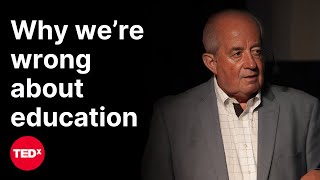
Why education fails students of the future | Dr. Samuel H. Houston Jr, Ed.D | TEDxWIS Youth