The hidden cost of letting AI design for you

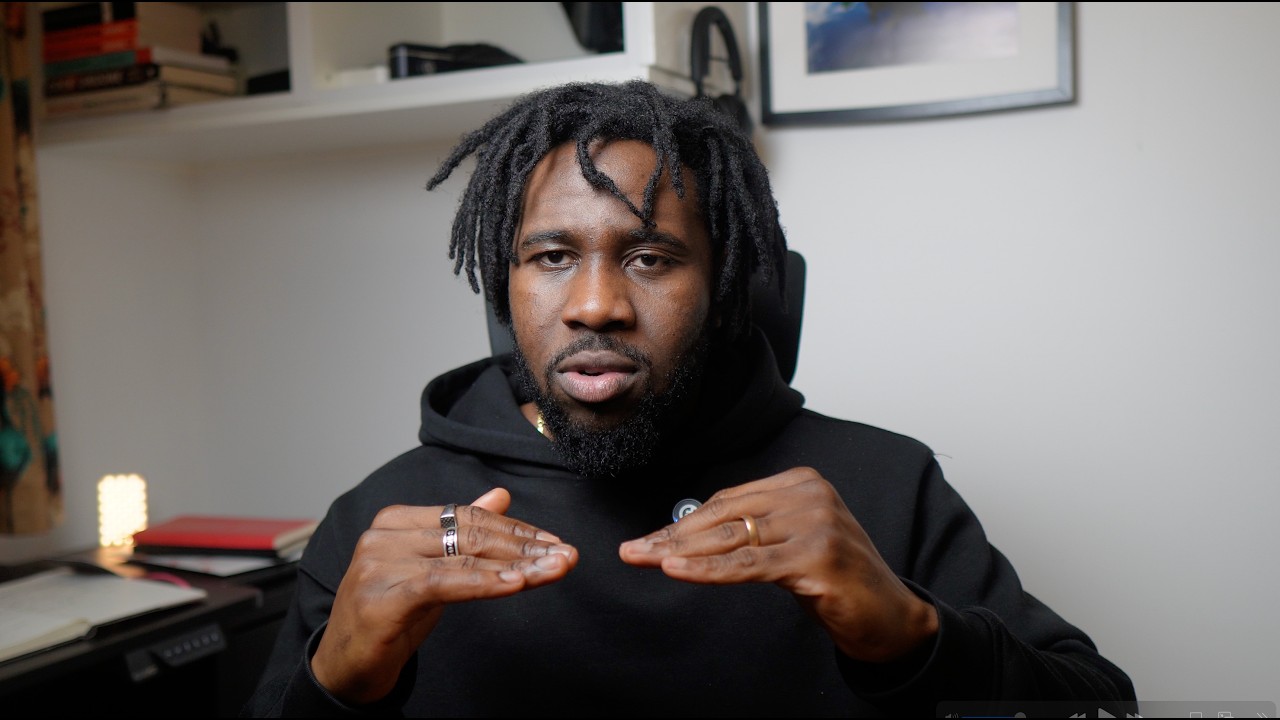
In this unscripted, first‑person video, senior product designer Samuel Fabayo (Monzo) recounts a four‑month experiment in which he delegated virtually every design task to AI tools (Claude, Anthropic, OpenAI Codex) integrated with Figma and Notion. While the AI delivered the promised speed and productivity gains, Fabayo identifies three hidden costs that outweigh those benefits: (1) degradation of social and collaboration skills, as AI reduces the need for human interaction and teamwork; (2) loss of focus and increased multitasking, because designers feel compelled to match the machine’s rapid pace, leading to errors and a "factory‑worker" mindset; and (3) erosion of personal craft, where reliance on average AI outputs dilutes a designer’s unique DNA and quality of work. He argues that AI tools are marketed to employers, not designers, and that over‑reliance can jeopardize promotions, hiring prospects, and freelance opportunities. Fabayo concludes with practical guidance: use AI selectively, protect authentic work (especially writing), maintain manual exploration to sharpen craft, and always prioritize quality over speed. He stresses that recruiters seek high‑craft designers who understand where AI fits, not merely "AI‑native" speed.
Chapters
Every AI tool used by designers promises 2 things: speed and productivity. But do these tools really deliver on that promise? Yeah, sometimes. But when they do deliver on that promise, they come at a severe cost that might be hurting your career and you don't know it. Most times when we use these tools, we tend to hurt our chances of getting like the things that we want as designers for using these tools. It could hurt our chances of landing a UX design role. It could hurt our chances of getting promoted, and it can even alter our chances of getting, you know, freelance opportunities from clients. But a lot of times we don't know because we've been told that we should embrace AI and use AI tools, and therefore you want to make sure that you are actually using these tools. So in this video, I want to tell you what these costs are, the price you're paying for letting AI do most of the heavy lifting of your design work for you, and how to understand where AI fits into your design process. So in the last 4 months, which was around when I posted my last video on this channel, I have been doing a lot of experiments. I actually took time off YouTube because I wanted to just stay away from all of the noise and also wanted to take some break from creating content on this channel for a while. So I used that period to actually go deeper into exploring how AI tools into my own personal design process, I actually went extreme. I considered it as an experiment. So I would literally do everything with AI. And when I say everything, I mean everything from planning workshops to writing proposals to planning experiments to designing to coding to just think about it. Think about anything that you'd be able to do with design. I always figured out how could AI do this for me because I wanted to really understand how this fits into my process and if it makes sense. I also wanted to understand where working with AI makes me a better designer and where it makes me a much worse designer. At Monzo, where I work as a senior product designer, we have unlimited AI tokens for our AI tool of choice. And I also have subscription fees to Anthropic and Claude, Anthropic and OpenAI. So I have access to Claude by Anthropic, and I also have access to Codex. So I connected both of these tools to my personal work tools. I connected to my Figma, I connected to my Notion, which means that these tools can actually read and write from my Figma and my Notion. And which also means that I can just go into Claude and ask it to do something, and it goes into Figma and it starts designing, or it goes into Notion and it starts writing instead of writing things in the chart there. And what I noticed while I was running this experiment was that there were actually 3 specific costs that I was paying for allowing AI to do so much work for me, or allowing AI to do so much work on my behalf. And while I was getting like the speed and productivity gains, I started to doubt if the benefits would actually outweigh the cost. Because I think the 3 things that actually cost me by using— that actually cost me by using these tools are probably more important than speed and productivity. You see, the thing about speed and productivity is that speed and productivity is important to your employers, it's important to your CEO, it's important to your manager, because the more The faster and more productive that you can be, the more work that you can take on. The faster and more productive that every employee can be, the less they have to hire people. Or even if they hire more people, then that means that they can do so much more. So speed and productivity is a metric that is important to employers' businesses. And that's why whenever these AI tools are crafting their marketing messaging, they are not crafting it for you. They're not telling you that so that you can be fast and productive. They are telling your employers that they are going to make their employees fast and productive because the employers are going to be the ones to pay more money for the tools. Like the majority of the most money that a company like Anthropic would make from AI, even though they are burning way more money than they are making right now, but the most revenue that they're going to make is probably from enterprises, not from individuals. So you can understand why speed and productivity is an important messaging or marketing message for your employer. But for you, these 3 things that it costs you is probably way more important. And the first one is your social skills. The first price you pay for relying heavily on these AI tools is your social skills. Your social skills is very, very, very important because your social skills is what makes you relatable to the next person. Your social skills is what makes people understand you as a human being. And when I started using— when I was running this experiment, I realized that I was collaborating less with my colleagues. I felt like I could do a lot more now just by talking to these AI tools. I felt like I could spin up a prototype quickly just by talking to this AI tool. So therefore, I probably do not need to have another session with a data scientist or have another session with an engineer when I can spin up a prototype and then show them that prototype. But the thing about this is that Collaboration is one of the easiest ways to get people to buy into your idea. And it looks like we are collaborating less and less the more we are using these AI tools. First of all, we started dipping in collaboration during COVID when everybody started working remotely. We were seeing each other's faces less. So we were working remotely. And that in-person collaboration was reducing. And if you notice, a lot of companies are asking people to come back into the office right now because they understand how important it is to have like face-to-face time, even though for some companies it's just a management tactic or just a way of policing what employees are doing. But that doesn't mean that collaboration is still not very, very important. Because when the performance review comes, performance review season, when it comes, your agents are not going to be the ones to write your reviews for you. People that will write for your reviews for you are the engineers that you've worked with, your manager, the data scientists that you've worked with, and the people in your team. And how do you want them to really understand who you are as a person and how you work as a person if all you've been doing is spinning up AI prototypes for them to review without actually getting their inputs into that? So that's one of the things that I saw that was happening. I found out that people were collaborating less and less and people felt like they could now do every other person's role. So The PM is doing prototypes, is creating prototypes that the designer would normally do without really getting much inputs from the designer. The designer is coding, which I don't have anything against, but then the designer is now even going into backend code and backend engineering without having enough conversations with the engineer. The engineer thinks they can be a PM, so they're also doing the same thing and people are just interacting. Less and less, which is one of the most important things that you have to do in an organization, especially when you want to get ahead. And people are also forgetting that AI actually rewards expertise. So rather than focusing on doing another person's role, you're going to get more output and more quality output from AI by actually going deeper into your own domain. If you're a designer and you go way deeper into being the designer and into shaping how AI designs and how you offload your thinking to the AI, you'll get a much more quality outcome than a PM would. The same way you wouldn't be able to use AI to write a good product requirement document than a PM. So instead of jumping into the PM's role, why don't you focus on the designer's role? Instead of the PM jumping into the engineer's role, why don't they focus on doing better quality work with, with AI as a PM? So a lot, a lot of people are collaborating less and less, and it's affecting your social skills, and it could affect your chances of getting promoted, for example. This brings me to the second one, and second price that I saw that I was paying just by really, really relying on these AI tools. And it is focus. This one is really, really important because I realized that I found it very, very difficult to focus because I thought that I was moving fast and I was getting really, really productive. Um, because it's taken me maybe 10, 15 minutes to do what I would have done in 2, 3 hours. I felt like I needed to fill that time with something else. And then I just keep spinning up more work and doing more work. And then you've probably seen all of these cursor agents, Claude agents, and people that are bragging that they are running 3, 4, 5, 6, or even 10 things at the same time. You have like agents working on 3, 4, 5 things at the same time. Some agents might be— one agent might be working on coding something, might be working on another feature. But you forget that you still have to be the one to review what all of these agents have done. And it is not news that when you multitask, you will tend to make more errors, you tend to lose focus. And it's very, very difficult to actually get quality outcome out of what you're doing when you're multitasking. There are lots of studies that have been done that has tried to measure people's cognitive abilities when they are multitasking. And it has all come to the same result that you're prone to more errors and poorer quality work when you multitask. But the speed at which these agents are working is making us to multitask. And what people are doing now is that they are working at the speed of the machine. Because the machine is working at such a high speed, we want to go as fast as the machine. And then that is turning us into some kind of factory workers. And you do not want to be a factory worker. If you picture a factory worker, think about a factory, maybe like an Amazon factory where they're doing some kind of packaging or some kind of product. Think about like the conveyor belt that is moving at a really, really fast speed and bringing out a lot of products. And then maybe you have like 3 or 4 factory workers that are just picking stuff from the conveyor belt and packaging it and picking stuff from the belt and packaging it. Those people are working at the speed of the machine. And in the hierarchy of the organization, the factory worker is the lowest person in the rank. The machine is more important than the factory worker. The pace at which AI is going right now, AI is already way more important to a lot of organizations than a lot of the employees in that organization. But there's always somebody in the office, in a room somewhere that is determining the pace of that machine. That person is saying that, okay, we want to hit XYZ revenue in the next 6 months. We want to eat $600 million in the next 6 months. For us to eat $600 million, we need to make this machine move 2x faster, or we need to make this machine move 1.5x faster. Therefore, we are going to increase the speed of the machine, which means that we probably need more factory workers so that they can pick up the pace, or we're going to ask the current factory workers to pick up the pace. So the factory workers become the people that are constantly being asked to churn out work. And that is exactly what is happening. When people say that AI is going to replace designers or AI is going to replace one particular role, it doesn't mean that those people won't have jobs when they are replaced. It means that it is so easy to get another factory worker to replace one factory worker. So it means that you become a disposable tool instead of being an indispensable talent. They can easily replace you with somebody else. It is not AI that will replace you. It is somebody else that has the same level of average skill that behaves like a factory worker. So instead of thinking about yourself as a factory worker, you want to make sure that you move up the ladder and move towards the person that is shaping how fast the machine moves. And the only way you can do this is to improve the quality of work and slow down and improve. Like, you need to be able to, say, dictate the pace that you want to work with AI. That's the only way that you can move from a disposable tool or a factory worker to an indispensable talent. And I realized that if I continue to overly rely on AI for everything like this, it's so easy for me to be a factory worker because I'm going to be optimizing the speed of what I'm doing and the speed of what I'm trying to deliver over the quality of the work. But the quality of the work is the most important. And that brings me to the third price that I saw that we were paying for moving at this pace of AI, or the price that I saw that we were paying for overly relying on AI to design for us. And it is craft. Craft is your ability to I'm trying to find a really good definition for craft because people define craft in different ways. But I think for me, a craft is your ability to do something in a unique way, something that is unique to you. Like you are able to deliver results in a high bar of quality, but then you also add your own unique twist. To how you deliver that result. It is how you show up in your work. It is the final work that you present and the bar of quality that is presented with that final work. And it also needs to have something about you, something that makes it unique, something that makes it feel like this wouldn't have been possible if you hadn't worked on this. So I think every individual has DNA of craft, either high craft, low craft, or poor craft. But everybody has a DNA of craft. But what is happening with all of these AI tools is that we are losing our DNAs and allowing the tools to replace our craft completely. It is very, very difficult to pass your craft to an AI tool because craft consists of all of your unique experiences, all of your inspiration that you gathered from the past and your unique understanding of the problem that you are trying to solve. And it is really, really hard to pass all those things. Imagine all the experiences that you've had, how you get inspiration. You cannot— how many words do you want to write to the AI agent to be able to pass on your craft to it? So when you rely on these AI tools too much, you tend to give up on your craft. And you tend to stop sharpening your craft and then rely on the average of what the AI is delivering to you. And even AIs as well, as great as they are, as good as they are within any domain, it is the average of the internet. That's how it is trained. It is trained to deliver the average on the internet. The problem is that a lot of times the average is better than most people. Your own thing that you need to do is find out how can you be better than the average. Even you can argue that, oh, but a lot of these AI tools are creating like really, really nice designs now. But the reason why AI has a smell to it, or AI designs has a smell to it, is because even if it creates something that is looking nice and unique today, if Claude releases a new model today that can design the best designs in the world, it's only going to take 72 hours before everybody has jumped on that unique thing, and that unique thing is no longer unique. It becomes average, right? So you need to be able to find ways to continuously pass your DNA, your craft DNA, into the agent, or shape the agent to design as you would. But it's very difficult, which is why you cannot completely rely on these tools, which is why you need to combine your own personal unique skills, your own way of designing before these AI tools came. You need to keep sharpening them. You need to keep going back into those design tools that you've been using before. Go back into your Figma and design manually and explore multiple iterations and go and stress test a lot of iterations before you then start to introduce these agents into your workflow. You have to learn how to do difficult things again on your own before this agent replaces your thinking, your craft, and makes you a factory worker that just generates average work. I was at an event currently, an event by Granola, and a brand designer from Vercel came to that event to present how they designed the brand identity for one of the Vercel conferences. They used AI a lot in the process, but it's one of the most impressive presentations I've seen in my life because of how deep they went into explorations. That is a really good use of AI because they went deep into about 100 explorations with AI tools and falling back to manual tools and going back into AI tools. And then the final result of what they had was way better than anything they could have done on their own or anything that they could— that the machine could have done. So craft in the age of AI is bringing your own best self and the best of the agent and combining it together. That's the only way you can get amazing results. And most people are not doing this. And if we— if you let go and you allow these tools to completely take over, you're going to lose craft. And a lot of people keep saying that, oh, um, you know, people are now looking for like AI-native designers. I get 3 to 5 recruiters in my DMs on LinkedIn every week, and nobody has ever asked for an AI-native designer. What they are always asking for is that they're looking for a designer that has a high craft standard, that has high-quality work. And even in interviews, if somebody asks you how you're using AI in your design process. They're not interested in how fast or how productive you are with AI. They want to know if you've understood where AI fits into your design process and all of the experiments that you've done to come to the conclusion to understand where AI fits into your design process. That's what they're interested in. They're not interested in how fast you were able to go with AI. So everything I'm trying to say here about craft is that You should stop sacrificing the quality of the work for speed. Do not think that because you are fast, then you've done the work. You shouldn't optimize for speed. You should optimize for quality over speed anytime. And in fact, when you see content or YouTube videos that people are saying that I did this in two two hours, I was able to do this in five hours, I was able to do this in one weekend, they're trying to. Baits you with speed. Avoid those kinds of content. Look for content that is going deeper into the process. Look for people that are sharing things with you on 2, 3, 4-hour-long videos that are ready to go into the mess with you, that show you where they make mistakes. Don't just try to get content that somebody is just trying to bait you into something because they have to deliver yet another content for views and the algorithm, because that is what is happening on YouTube today. Now, I've spoken about these 3 prices that I, that I believe that I've paid for experimenting with AI excessively for the past 3 months: your social skills, your focus, and your craft. But does this mean that I will stop using AI in my design process? Definitely no. I've seen too much to understand that this is the future. There are times when I was genuinely excited about working with AI. But this experiment has taught me to understand where AI fits into my design process, when I use AI in my design tools, and when I raw dog the process like I normally do. It has taught me how important it is to protect, protect one particular thing, and that is my writing. It has taught me to do things like this unscripted video where I literally didn't write any script, and I'm just actually talking to the camera, not asking any AI to write any script for me, because I actually want to express myself. All of these things are things that I've learned from this experiment to make sure that I'm leaning more into my authenticity and bringing my real self to my work. And I think that's what you should do as well. If there's anything that you pick from this video, it is always asking yourself that question: am I optimizing for speed over the quality of my work? And what is the true level of my craft? And how can I get to the next level? Those are the 2 questions I want you to keep asking yourself whenever you find yourself defaulting to these AI tools. I don't know when the next video is coming, but I'll see you then.