How to Win $1M Commercial Roofing Contracts
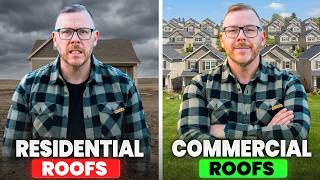
Adam Sand shows roofing contractors how to move from residential bidding wars into commercial contracts worth $1M+. The strategy: create lead magnets like inspection checklists and ROI guides, run LinkedIn ads to property managers and building owners, then nurture leads through automated emails and multi-touch remarketing to build trust and land recurring maintenance agreements.
Chapters
Big question: what if you could step out of the bidding wars, right? And that's what we're talking about here. What if you could build a system that brings you high-value repeat business without buying every other roofer on Facebook or on Google or on Google LSA? So how can we do that, and what's the goal here? The way to step out of that bidding war is to go into the commercial realm. Now, I say that, get out of the bidding wars, but you're still going to have to fight for commercial jobs, right? There's still other people working on commercial jobs, but it's not about a bidding war. It's a little bit different because now it becomes a little more consultative. All right, shift your focus from homeowners to property owners, right? Property managers, HOAs, building owners— they have different needs. They're not searching for roofers in the same way as homeowners. Why commercial is a game changer: bigger contracts, better clients. So we say better clients, not necessarily that residential clients are bad, it's just that clients are a little different, right? It's a partnership rather than a job. You become the go-to roofer for their entire portfolio. So if you're talking to someone who's in charge of multiple multifamily location. If you do one roof, they're gonna want you to probably do another roof because there's a level of trust that's been built. The stakes are much higher for your commercial customer, right? Because they're making a decision, they have a budget they've got to stick to, and the biggest thing for these guys is they don't want to have to call you back for a problem, right? They don't want problems. So if they find someone who can do the job and there's no problems, they're going to always come back to you first. It's it's going to be difficult for somebody else to pry you away. That's why it's more like a partnership, because once they find it, they want to stick with you. Recurring revenue— you get maintenance contracts, which can give you predictable income. So once you do the roof, all right, we need somebody that's going to handle any roof maintenance issues that might potentially be involved here. And so you maybe write up a maintenance contract that provides some set payment per month, right, or per quarter, or whatever it may be. And obviously larger contracts— one commercial job can equal 5 to 10 residential, right? Because generally your commercial roofs are much larger, a different arena, a different set of rules that tend to involve higher margins. All right, the how-to is gonna be different. Now, you can't catch whales with minnow nets, so you gotta pull out your whale net. The blueprint is a value-first strategy, right? It's not about, hey, I can do your roof for this price. It's about ensuring to the potential client that they can trust you and you have the capabilities to do the job and that you're gonna be their partner going forward if something happens or You know, there's an issue with the roof. You know, maybe you do a good job, but something happened and there's damage to the roof. They want you to come out and explain the warranty to them. They want to understand if they can rely on you for information and they can rely on you to help them moving forward. And like I said, if they have other issues or other roofs, if they trust you with that roof, they're gonna trust you with the other roofs and you're gonna be their subject matter expert in terms of the roof, right? Because if somebody asks them questions, you know, if it's a multi-family unit, people who are living there, they're going to be expected to give an answer. And so if you're giving them a correct answer, they know they can trust that. Hey, we're going to have this fixed in such and such time. This is why this is occurring. You can give an answer and that answer's solid and it works, and then they trust you. They feel more comfortable because they have to face those potential clients. So step 1 is the high-value lead magnet. So the a little different here in how you attract these people. Now, this also works for higher value residential consumers. So keep that in mind. There's certain types of residential consumers who are also high value, who tend to have some of the same needs and kind of the same approach. You know, there's certain people who are particularly in your retail market, if they have high value homes, they're looking at a roof as a protection of their investment. That's the case, they're gonna take kind of the same approach. So you can take some of this and apply it to certain types of residential customers, but for your commercial customers, this is the approach you probably wanna take every time. Like we said before, it's not about just getting a roof done. This is about a long-term relationship. Here's how you're gonna start off. Your ads aren't gonna be about, hey, get your roof done, because a lot of these people, they have a long process, right? They're gonna have requests for proposals, right? They're gonna wanna know information about you, but it's not gonna just start with everybody getting a request for proposal. Proposal, right? They're probably going to shortlist people that they tell, hey, I would like to get you to give me a proposal. They're not gonna let everybody give them a proposal because they don't want to sit through a million proposals. They only want to sit through proposals of people that they think they want to work with. So how do you start establishing yourself as that potentially trusted partner? Well, what you have to do is you have to give them answers and prove that you are a subject matter expert. You're going to start off with things like a property manager's guide to reducing long-term roofing costs. That's going to be important to someone who's managing an HOA or who's in charge of an office park, who's not concerned with saving money, right? We don't know anybody that just wants to spend money for any reason. Annual commercial roof inspection checklist and budgeting template, right? These are all things that the person who's in charge of this roof or maintaining this roof or getting this redone or repaired, these are all things they're concerned with. They're concerned with budgets. How do I know when I need a new roof and those types of things? You're becoming that reliable resource of information that they can trust, right? Hey, I can trust this person. They told me when I needed a roof, it was true, right? Or they, man, they showed me how I can save money on getting this roof done. They showed me a better way to get things done. Now you become that reliable source of information. So that's part of how you're gonna attract people in the beginning. You're going to create this high-value lead magnet, right, where I'm providing information that's related to how they perform their job, right? Much different than, hey, you can get your roof done and here's a warranty. All right. And so step 2 is, you know, how do we find these people? So you're gonna wanna jump into LinkedIn and you're gonna go into job titles and you're gonna look at building managers. You know, you're gonna look at property management companies, right? And those are the people you're going to wanna find, the presidents and heads and those decision makers who are in charge of finding a list of vendors. And so it's gonna be easier to find these people on LinkedIn because we're gonna see them by job type. Now this is, again, remember your ads are gonna offer these know-how or these informational eBooks, for example, how to inspect your commercial roof and understand and how to budget for repairs and replacement and those types of things. But these are the people that are gonna be concerned. There's other ideas you can throw out there, but this is gonna be the main source of finding your potential leads. When we get these leads, it's not, hey, here's a hot lead, let me go call 'em and try and sell this person a roof. That's not the process here. Again, these people are starting. Much further out from their point of actually needing your services. And a lot of times they may not need your service at all, right? They just want to have a list of options. I may have my favorite supplier that I like, but let's find a secondary supplier. And sometimes we would use a supplier just to see what their work was like. And if it didn't knock our socks off, maybe we stay with that supplier. But sometimes we did things and people said, wow, you are— sometimes a supplier would do something that was a little different. Or gave us some service and we said, hey, you know what, we're gonna stick with this supplier, maybe use them for something specific because they seem to have a specific skill in a specific area. So what you wanna do is get in the game early, right? Get in the game early and get those names. And some of the things you wanna focus on on your landing page is very important. You're gonna focus on return on investment, right? That's gonna be important to any business owner, right? You're a business owner. You're concerned with return on investment. You're concerned with return on investment in your time that you're spending here, right? You could be doing something else. You came here because you feel like, hey, I wanna get this return. The knowledge is gonna help me do something better or earn more money. So the time is well spent. Same thing for the people who are dealing with or looking for a roofer. Liability reduction. That's always a big one, right? Talk about things like, hey, I wanna reduce my liability and budget predictability, right? I don't want to go out and say it's gonna cost me this much and then come back and then we get halfway through the roof and you tell me, well, Our original estimate was a little too low. Gotta charge you an extra $15K. I gotta charge you an extra $10K, an extra $5K, right? Or an extra $1,500. What this does is it begins to build trust because now you're talking about the issues that are important to me as the, in the HOA manager, the property manager, right? The building manager, the property management company that's doing the work. They wanna see the return on investment. They want the budget predictability. But those are the things you want your landing page to talk about. And this is the other factor, right? Your form should not have I'm not going to ask them for everything, their address. I might not even ask for the phone number in this case. I want to get the name and I want to get the email. Be smart and strategic about how you ask for and you get the email and how you give away the ebook, right? So they put in their email address and you'll see this quite often. What you'll do is say, thank you for providing the information that we requested. We just sent the ebook to your email address, right? And so now they'll go check their email address. The best way to do it is to say, all right, hey, we sent that, you know, thanks for providing information. We're glad we could help. We've sent it to your email address. Click the link there and you can download it. Right. And that gives you the ability to track everything that was done there. And it lets you confirm the email address. Make the form very simple, but still giving you some level of certainty that, hey, I did get some valuable information. It just didn't give me some weird email address that didn't work. Right. So that's very important in these situations because commercial people tend to be very, very conscious of who they give their email address to. Right. We've all been there. I know that if I give you this email address, you're going to contact me and this isn't gonna be the end of this conversation. And so that's not a bad thing because if I give it to you and I know this, you have some level of confidence as the advertiser and the roofing company. This person has some level of interest because they know I'm gonna contact them. They know what this means. They know how this works. That means they really see value in what you're offering them, which is important. For you to understand. And so what that also means is that the information that you provide has to be very valuable because if it isn't, now they're gonna feel duped just as if your advertising copy didn't match the landing page, right? So your landing page is important and the information that you're gonna provide once they get past the landing page and say, okay, landing page has convinced me that they're following through on what they said in the ad. Now that ebook or whatever it is that you're handing or giving away for that, or exchanging for that email address also has to carry some value. So you want to put thought into that. All right. So now after they've done this and given you the information and you've given them this exchange, you're gonna have an email sequence that's gonna follow this up. And so the purpose of this email sequence is to nurture the lead, to get them to move along towards a point where they want to speak to you in a consultation call, right? We're not gonna just bombard them with these phone calls. Again, these people just wanted to get some information and they only gave you your email address. Now we're gonna have this email nurturing process where I'm gonna provide more information. What's the purpose of that? Well, we're gonna see who opens that email, right? Because if you're using automated system like HubSpot, which is what we use here at Roofing Business Partner, it's gonna let me know who opened that email. And so you're gonna know who's opened the email or who didn't open the email. They clicked on a link in the email, right? We're gonna know not that they just opened it, they clicked on a link and went to a link. On the website. And so what happens in these emails depends on how you build up your funnel, right? And so there may be a link that talks about something. In the book that you downloaded, we talked about return on investment, we talked about reliability reduction, and we talked about budget predictability. Let's go a little deeper into return on investment in this particular instance, right? And that's what maybe the first email talks about. Maybe they open it, but don't click the link. Liability reduction is the email that goes out next, and they open that and they click on it and they go to the page and They spend lots of time on the website. When the time comes, you understand that, hey, I do get the chance to have this consult with this person. I wanna focus on liability reduction because that seems to be where their biggest concern is. That's the benefit of having a CRM system like HubSpot that can connect your contacts and their activity to your marketing assets like a form. Or an email or a link or a landing page. We're going to put all those together and that's going to help us build a virtual relationship. And that virtual relationship will lead us to a point where we can, hey, let's sit down and let's talk about this over a Zoom call or a phone call. All right. Or maybe I can come out to your office and sit down and talk to you face to face and bring my folder full of information. Right. So here's the full funnel in action, kind of giving you a high-level look at this from stranger partners, what we call this, right? So I'm going to start with a LinkedIn ad. That ad, right, it's going to have some compelling information. It's going to take me to that business-to-business landing page, right? Once we get them to the landing page, our goal is to get them to download the lead magnet. If you create an audience based on the people who visit your business-to-business landing page, you can come back with Facebook or you can come back with Google Ads and you can advertise to that audience specifically. 'Cause a lot of people don't necessarily click on that ad one time and come directly to and say, yeah, I wanna do this, right? Understand that most people, it takes 3 to 5 touches with your brand, right? With your company. And I say touch, meaning they see your ad, they see your company name while they're driving. Maybe you have a sign up, right? Maybe there's a yard sign when they go home, they see your yard sign. What are the chances, right, that that might be touch and go? So it's difficult to get these 5 touches for you for a commercial client, but You can get those 5 touches, right? If I create those audiences and use remarketing. So now between Facebook, a lot of people spend time on Facebook and a lot of people spend time on Instagram, right? A lot of people spend time on different websites. Most people use the web or use YouTube. So I can use the audiences that I've created by, you know, trapping people. I call it trapping or collecting the group of people who went to the landing page. And now with Google Ads, I can create a, a YouTube ad, I can advertise and say, hey, advertise these people somewhere else on the web. And I, now I can get my 3 to 5 touches in. So trying to get your 3 to 5 touches all on LinkedIn can be difficult because people don't tend to go to LinkedIn as often as they go to other social media sites, right? People tend to go to LinkedIn like once a month, whereas people on Facebook go multiple times per day. People surf the web every day., right? So remarketing via both Facebook and Google allows you to, to interact with people or show your ad to people as they're surfing the website. So get them to download your lead magnet. That's where it's important to have a system like HubSpot that can track that lead, right? Once they download it, we wanna record that. And then of course, if you don't have like a HubSpot or CRM that's automated, you can't kick off your email nurturing campaign where those 4 emails are timed, where we're tracking whether or not they open or click on links in our email, right? And Also remember that your email nurturing, that's gonna involve more content on the website. It's not just gonna be, hey, here's an email. Hey, remember us? No. What we're trying to do is establish our trustworthiness, our ability to be a partner, right? And establishing our subject matter expertise. Hey, this is somebody I can rely on. One of these emails may be, here's what our previous commercial customers have said about us, right? Maybe it's a video. 4 commercial customers who all recorded videos and they're all giving their testimonies to how great you are as a commercial roof Those are just as good aha moments as other things. Maybe it's the owner of the company where you're sitting down talking about how you started the company. Here's our mission statement and our commitment to every customer, right? People seeing you and seeing the owner and realizing, hey, this is the owner of the company talking to me. Now there's another level of trust that's being established in terms of, all right, I know who these people are. It's just not a company on the web. So that's our funnel. And how we're gonna take them from stranger to partner. And then that will get them to that final phase where, hey, let me just talk with these guys. Even like I said, a lot of times the consultation isn't, hey, come do my roof. It's just, all right, I need to put these people on my shortlist of companies that when I need a roof done, that I'm gonna ask for an RFP. All right. So you can do all this in your CRM system. If you need help, we can do that for you. This is a low-cost, low-risk entry-level service, right? We can help you set this up and set it up for you. And what's included in our process, creation of one professional professional B2B lead magnet, a dedicated high-converting landing page, setup and management of a 4-week LinkedIn ad campaign, and a customizable 4-part automated email nurture sequence. So before I let you go, we've reached the end here. Remember, you get a free strategy call with us, free 30 minutes, no obligation, no pressure. Don't feel like you're signed up for us to high-pressure you into something. That's not the case at all. We just want to help you do better by your business, right? Because that's what we do, roofing business partners.










