Mastering Sales & Pipeline Reporting with HubSpot
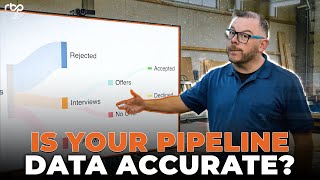
Adam Sand walks through HubSpot's pipeline reporting tools, including Sankey diagrams to spot where deals get stuck or lost. He explains why stable deal stages matter and introduces a five-question CSM audit checklist: deal amount, close date, objection, next step, and next step date. Clean data makes forecasting work.
Chapters
Talk about reporting on pipelines. It's all about mastering HubSpot data. When we're reporting on pipeline, we have to understand like what is reporting. So this is just like 101, it's a graphical representation of your data. So a report is not the data, the report is the graphical representation of your data. It's a way to answer a question that you have about your business or your customer interactions so that if you can answer it, you can make a determination. There's all kinds of reports. So if the questions that you ask about a business, if you were to answer them, how would you change the decisions that you're making on a day to day basis? So this is called a Sankey diagram. S A N K E, Y and it's a diagram for like, where are my deals being lost? This is a big reason why we don't want you changing your deal stages. Because if we set this report up and then you change a deal stage, it's not going to report properly. Because this is set to say measure the where deals go next and where do deals get stuck so that we can understand at what stage of our business are we losing deals? Because a lot of people just think in terms of laps, which is good lapses, leads, appointments, presentations and sales. But there are more stages, especially in insurance, where you're going to see deals get lost. And so looking at the Sankey diagram, if you notice this bar going here, what this is telling us is that we skipped a step. We went past the inspection complete, past the contract sent and straight to contract signed. So this could mean that they sold it on site because they didn't move it through the deal stages and it went straight to there. We can see that some are skipping straight to loss. This long line is showing us as they went straight over to year lost. So we lost it before we even did the inspection. So in some cases maybe we're taking too long to do our inspections, we're booked out too far, we need to hire more salespeople. So this is an example of why are my deals being lost? Well, they're being lost because we're not getting even to the inspection. Some percentage of the time they'll give you a number over in the far corner there we can also see where deals are stuck. So they're just staying. So we're losing deals before we even send the contract because they're just getting stuck there. We're not moving them to loss though. So this is like how many deals are actively stuck in a current stage and we Gotta kind of say, okay, we gotta fix that. This is why we talk a lot about the CSM audit view. Because it's the foundation upon which we get all the behavior sets necessary to making sure that this information is accurate. The whole point of the CSM audit view is to say, okay, well, what are the five things a sales manager must know about every deal for their team to win every day? Because as your company grows, you go from having just salespeople and an owner or the owner selling and then you get salespeople selling and a sales manager and then that sales manager has to report to an owner. And then eventually a sales manager reports to a director of sales and then a VP of sales. It doesn't matter how big your company gets, you're always gonna have someone who has to know the pipeline of a branch or cause your company is a branch. If you're thinking on a long enough time horizon, there's five questions that a sales manager has to be able to answer what every deal so that you don't lose your effectiveness as you grow. Because this is something that happens is you get, next thing you know, you got 16 salespeople and you don't know what's going on with all the deals. We have to make sure we have a system in place at the very start in business to say we need to have a process and a system to support asking these five questions. Those five questions are how much money can we make? This is your deal amount. So that's a custom field. How much money can we make? How much money can we make? But then in order to be ever able to forecast revenue, which is a whole other report which is like not just where my deal is being lost, but when am I going to make my money? When am I going to make my money? Well, that's the close date field. That's an input field called close date. When you set your close date, you're basically saying, I expect this money to be made now. And there's two times we use close date. One, before we sell the deal and two, when we expect the install to be done two times. The close date helps us forecast revenue. In our initial trainings, we focus a lot on just the sales part. And then as we get like jab, jab, right hook, kind of down, then we focus on uppercut and roundhouse kick and adding more of those. That next level skill of the second time that we use close date. But we got to forecast sales before we forecast revenue. So we start with the foundation of that then because we Know how much we can make and when we expect to make it. The next logical question is, why don't we have this money already? We already did the inspection. Why don't we have this money? That's your objection. So you have a field in your system called the objection. And you want to know what is the customer objection? Like why don't we have this money yet? And there's a degree to which this question can be answered if it needs to think about it, waiting on other estimates. That's not a great objection. We have to have a better objection than that. This is why we train inside sales to push the outside sales. What's the real objection? Because a lot of times we say needs to think about it and like the next question out of the inside sales, like so they said they had to think about it. What'd you do? Just like, okay, gotta go. No, you probably did you push what are they thinking about? What question didn't you answer? We have to push a little bit on these objections to get the real objection to the deal. Why we don't have the money yet. Then if we know how much money we can make, when we can make it and why we don't have it, the next logical thing is what are we going to do about that? How are we going to overturn that objection? That is the next step property. The next step field where you enter in your next step. This is what the next logical step is to overcome the objection so that we can make the money when we plan to make it. Then we have to say, well, when are we going to do that? If you don't have a plan, you're on the hope plan. You're just hoping that your deals come through. We want to make sure that's filled out. When we look at a CSM auto view, this is we're looking for how much money can we make? What is the amount? How much can we make? So we're about like, what's this 80%, 80% filled out, 90% filled out. How much can we make? When can we make make it? There's objections in here. Price is major objection. What do we learn? What's the meaningful insight? If we see price is a lot, then we have to say, okay, value in excess of price. We've got to work on our presentation. Time to role play. So then we say, okay, Met with him yesterday. Trying to get adjuster on the phone. Likes ours most. Okay, so this is good. So what is our next steps? We don't have a next step here. So now we're on the hope plan. We don't have a plan. When we get a plan, then we can pursue that plan. We don't have a lot of next activity dates. So that's where I look at this and I go, of the five questions, we're 90% on amount, we're 90% on objection. We're, let's say a little bit like there's not much of a strategy to this, but it's just follow up. But that's okay. So let's call it a 50% here and a 0% here. What's that work out to? Probably like what, like a 65%. So that'll get you through high school, but it won't make you a billionaire. So we got to get this tightened up. But what happens when we do this? If we look at these close dates, we've got close dates in February, we've got close dates in January. So we got to update some of these close dates. This is usually the case whenever we get into a new month is we forget to go and update our close dates because then what we can do is we can filter by close date and say this week or next week or this month or this quarter and we can start to forecast revenue. We can say if I go look at this, I go close date is this week. Well then now it shows we have 10,000 that's intended to close this week. But we know that some of our close dates were in the past. Our close dates are in the past. We opt out those close dates. We can then forecast our revenue this week to be a little bit more. And then we can change this to close date next month or this month or whatever we want. When we are forecasting our revenue revenue this way, we're moving from hindsight, what happened to insight, what's happening to foresight, which will happen if you would be able to make more money if you could predict the future. If I could go back 10 years and talk to myself, everybody here would say the same thing. There's going to be this thing called bitcoin.










