Maximize Roofing Profits & Leads with the Proven "Production Octopus" Framework
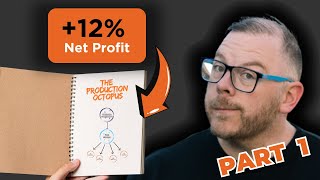
Adam Sand explains the Production Octopus framework for roofing companies: a three-tier structure where the production manager leads, the field manager watches, and site supervisors handle the work. Dedicated supervisors on every job prevent safety problems, quality failures, and warranty disputes that cost thousands in rework.
Chapters
Foreign. So it all starts at who does what. Right. It's just like the move the book good to great or the other book traction. They both talk about getting the right people on the bus, getting the wrong people off the bus, getting the right people in the right seats and get. Then getting the bus going in the right direction. And so it starts with the production manager. This is the brain of the octopus. And I'm going to go into this a little bit more later and you're going to, you'll never be able to forget it after today, I promise you. But it's the production manager is the brain of the operation, right. So they focus on the supplier relationships, they're managing the production octopus. They make the decisions. This is the person who has to be able to look at a company cam and look at a job and be able to say, ah, that's two days and I should send this crew. And that only gets more complex as we go. But then you have the field manager and the field manager is the eyes of the octopus. So they're the ones out in the field, they're overseeing the production on site. So they're coordinating with the site supervisors and managing customer interactions when things get hot. Right. And so they're the ones that is ultimately they, they do it when the site supervisors can't. And finally the site supervisors are the arms or the tentacles of the octopus. These are energetic young individuals who act as the hands of the operation. They clean up, they manage flawless job sites, they document the job and they get leads. So they're the ones that provide the day to day kind of pace on the job itself. They're the ones that make sure the job gets done. But again they're not expected to be like this is a 20 year old kid. This is not someone who's going to tell a 30 year, you know, 15 year veteran, 30 years old, 15 year like veteran Mexican roofer how to do his job. Okay. You're never going to get that from a site supervisor and they don't need to. That's a field manager for. We'll get more into that. But there's. I want to talk about just one problem with production, right. Is which is that safety is hard to manage. Right. It's just one piece of the roofing production thing that we have to do. So sometimes we pay subcontractors or some and that are paid by the bundle and that is where speed equals profit. Right? To them, speed equals profit. So they want to find ways to be fast. And sometimes you look up at A roof. And you're like, geez, how, how did you finish that work so fast? OSHA in Canada, they expect us to keep the contractors safe, whether they work for us or they work for their own company. Right. OSHA wants us to make sure that they're safe. And there's all kinds of ways that we do this, right? Like you might have a subcontractor agreement that sign that they sign on saying it's their responsibility to be safe. And yet for some reason in the aid to be, you know, making money, you think that sometimes these guys just end up jumping off the roof and we're supposed to be enforcing this. So then maybe you run something like a safety class, you get a fall protection training, bring in a third party so they learn how to do site specific safety plans and identify the hazards that exist on site and what are the consequences of ignoring them. And even when they ignore those instructions, you might say, well, hey, I require you to take a photo proving that you are safe. And yet still at the beginning of the day, they take that photo and then this is how the day goes. Right in the middle of the day, we all know what happens. These guys go for lunch and they take off their fall arrest and they drive to their local convenience store so they can pick up the official roof for lunch, which is gas station pizza, a bag of Jolly Ranchers and two monster energy drinks. And then they drive back to the site where they literally step over their fall arrest right back on where they left it on the ground and get right back on the ladder and they get on the roof and they get to work. And all of a sudden they wonder, hey, I wonder what that white Ford Explorer is doing here. And that's the ocean van and the ocean van. In their head, this is what they think happens. They think you're the big fat capitalist. They have the audacity to manufacture this idea that you're standing on the side of the job site, like Andrew Carnegie way back in the days of American steel, saying, get back on the roof you dogs go. And I got boats to buy. That is not necessarily the case, but they certainly seem to act like it, you know. But when they're driving to work, if they don't wear the seatbelt, that's their problem. But when they don't wear the fall arrest, that's your problem. This is one problem, one problem to be solved in the production like Journey. But today is not about safety. I want to talk about production. Safety is important and I want to cover that. But I want to Talk more about actually getting happy customers and profitable jobs so that you can get, and you want to get more leads from those jobs so you can get more fulfillment, right? That's flowing through your business because your business essentially functions a little bit like this. There's the market, you get some leads, you have a sales process, you have more opportunities to sell than you get jobs. Jobs fall in, you got crews, crews get work done, money falls out the bottom. And hopefully you get a lot of Google reviews from it and you get a lot of that value out of that doing that work. Right? Because that's how we create a funnel that looks like this, which is where not only do you have your leads that become marketing qualified, that become sales qualified, that you then sell and then you build. So you build them. But then hopefully you get the reviews, which leads to more leads, the testimonials which lead to more leads, you get the referrals which lead to more marketing qualified leads, and repeat business, which gets you more sales qualified leads. And this is what Production Octopus does, is it operationalizes that goal. When I go through this today, one of the first objections I get to the concept of putting somebody on site full time, what do you think that is? I say, hey, you're going to put somebody on site full time. They say they can't afford this kind of model, right? And I've introduced this to lots of companies over the course of the last three years now, since we really figured this out. And when mostly see it for the first time, their brains shut off before I'm finished talking about what this is. And they start thinking that they don't have the money to afford this model. So what I need from you is to kind of suspend your disbelief for a second. This is like watching a Marvel movie or a Mission Impossible movie. You kind of got to suspend your disbelief for just a minute so that I can get to the end before your brain starts shutting this out. But I'll give you an example of one company where I went where I was on site and they said they couldn't afford this. Well, over the course of the next two days when I was on site teaching this, we had a few issues, right, that came up. And so one of his crews threw these glass skylights off the roof into the grass and exploded into a zillion pieces. And they had to go back multiple times. So the phone call that we got was that somebody had to come back because there was still glass in the, in the grass. Say that 10 times fast. And this had cost him money Right. Because now he's going back all the time. And this is for some crew that no longer worked for him because of this exact problem. But they had some problems before because another problem had come up and I was sitting there and I watched him arguing with Atlas because Atlas changed their warranty about what the gap was allowed to be in the boards on a roof. Right. I guess the, the new warranty says there was some gaps, but the old warranty said there wasn't and, or was the other way around. But when the customer went online and read the current warranty, I think it was the warranty said no gaps. And he was trying to say, that's right, that no, but when we built your roof, it said it allowed for some gaps. When he ended up showing me, right, what was actually being what the company cam pictures were looking like. It wasn't a matter of like some gap or a little gap or no gap. He was showing me pictures of where there was broken boards and the crew had literally shot the nails through like, and there was like no board for it to grab onto. Like huge knots in the wood. Like now wood gets like a knot, like a hole in it, right? Like knots that didn't popped out and literally nothing for the nails to grab onto. There was rotten wood. Like the crew did not give a darn about this. Right. And it was, it was absolutely terrible. And then we, we kept going with our build. He had another job site where they did the same thing, they installed it on the boards. And the lady was calling him to let him know that she had another person come and inspect the roof. And while it was just over the boards issue, the other thing popped up where this third party inspector went in the roof and he said, hey, interestingly enough, when I look up at the boards, I can see that the peel and stick is still on the back of your ice and water shield. And so there's no peel and stick. The peeling stick's not installed properly. And this meant that the customer wanted them to replace the whole roof, which they also wanted to replace the whole roof on the one with boards. And the customer, the glass is costing him money. And so I ended up asking him, I was like, how much is all this going to cost you? Like, you're going to have to go to court with this one lady. You're going to have to deal with the boards on this other, on this other house and you have this, this, this one place where you keep sending your production manager out to go clean glass up off the grass. How much is all this going to cost you. And when we totaled it up, it was like 50 or 60 grand, right? By the time he's done replacing these two roofs and the grass and going to court. And not to mention, what is the cost of all the negative press, the lack of Google reviews? And this wasn't like some random rogue crew that did something wrong once, right? This was actually a crew that did multiple jobs in a row and they started finding this stuff after the fact. And these things were things that would not get caught when you send your sales guy. Because the other thing is like, why can't I get my sales guy to just go do a post job inspection? They don't care as much as you like to think they care. And they wouldn't have caught this, right? They wouldn't have caught the board. They're the ones who sold it without the plywood, right? So they wouldn't have did that thing where they lean up the ladder and go look at the roof and go, yep, looks like a roof. And then climb down and say, yep, looks. Do you think your sales guy really wants to come down when they're there to get the check that gets them paid so they clean up the draw that they took last month from their commission? You really think they want to open that can of worms? No. One of those would have required going into the attic to see, right? Like, you would have had to go looking for the peel and stick to not have had the backing removed. Because it wouldn't have been. It would have been impossible to find if you weren't specifically looking for it. And all of These examples were 100% preventable with the production octopus model, which is what I told them. I said, the cost of you doing this or like not having this, the cost of these mistakes was going to cost it more than it would have cost you to have a site supervisor on site for six months. This is three jobs. Not six months, not a month, not three weeks, three jobs worth of mistakes. Have you ever had seen something go wrong with a roof that was preventable if you were there? If you were there, it was preventable. But because you weren't there, something happened and you've had to pay more than $5,000 for this stuff happens. And usually it's so silly how simple it is to prevent it.










