MRP (Insurance Manage Repairs Programs) & Public Adjusters | Roofing Insights Podcast
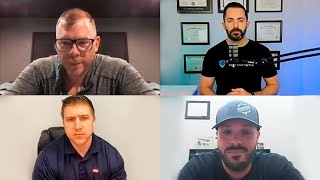
Dmitry, Adam Sand, Vince, Brent, and Steve debate managed repair programs and public adjusters in roofing. They weigh MRPs' speed and service guarantees against conflicts of interest, discuss public adjuster fees and bad actors, and argue about whether contractors should do insurance work at all.
Chapters
Foreign.
Guys, welcome back to Roofing Insights podcast. We have the record amount of people here on my screen. My eyes are kind of all over the place. We have Vince from Commercial Claims Advocates here. And as a first topic, we're going to discuss our debates with famous public insurance guy Anthony. And I already will watch Vin's take on it, my take on it. We're just gonna discuss it and see both sides of the spectrum, I guess. Good morning, guys.
Morning.
Good morning. Vince, I want to let you start the conversation. I would say this. You were way too nice in your YouTube video. You can, you know, notch it up a little bit, be a little bit tough on me and don't be afraid to offend anyone.
Yeah, I know. You know, I was, I had a feeling that you were going to start with that, with the too nice thing, because that was your first comment on it. And when did it become bad to be too nice?
It's nice and free. I agree with it.
You know, I mean, there's no reason, in my opinion, the way I like to do things is that we should be fighting or we should be arguing or we should be doing much of anything, especially in our industry, which it's a very similar industry. We are in the restoration industry. And it's why I came out with the video. And the sort of, I guess, response to the video was that as opposed to roofers and adjusters, I guess, battling against one another, I think we should be working together. I do believe that on a particular claim, on any particular claim, having a roofer and a public adjuster on the claim at the same time is, frankly, it's a match made in heaven. It could really just take the claim from, just from one thing to the next. And like I explained in the video, it's, it's not just. It's not just talking policy and making sure you're getting the claim covered. For me, I love having you guys on there because I usually ask you guys for a simple document that states, here's what's going on with the damage. It's as a result of when I'm a licensed certified roofer, five star Google review. And what I say sort of goes. And that's. I use that as my expert documentation all the time. And it works a lot better a lot of times than their engineers that they send out with no experience at all.
No, I agree. And I want to address the nice thing right away. You can, you don't have to be a dick. You don't have to be like, you know, nasty. But it just, I have five kids. You have, you have to be nice. But if you want your kids to understand the point, you also have to be firm. And what I'm afraid of when we are not firm and we're not, when we. You can call out person in a nice way. You can be, you know, like raising voices and stuff, but you also can be very firm. And I like, like John, how telling, for example, if you see his debate with a badger on stage. Like, you can be professional and you can be firm. But I think what really needs to happen is as an industry, we need to be a little bit more firm how we deal with a bad practice. I feel like many, many contractors and players just want to be politically correct. We don't want to offend anyone. We don't want to, we all want to watch our own lane, which is good. But then when we see this nasty bad practice, whether it's a roofer or, you know, whoever, we kind of don't do anything about it. We're too quiet. We don't want to confront because we don't want a confrontation and we're afraid that we will look bad if we call them out. And then of course, Dmitry has to do it because nobody else.
Well, there's a real, there's a real thing to it about the fear of looking bad. Right. I mean, not, not everybody has a, has the long term goal of producing the kind of media that you produce then and what it can do. I think that there's a lot of people who are worried about making enemies in the industry because they never recover from it. Because content production and clickbait and the daily drama, those things aren't their full time focus. Their full time focus is trying to function nicely within the environment that they're in. And they're worried about the people outside of the roofing community maybe getting a hold of it. Right. But. So I agree with his approach and it's true that it's a match made in heaven, I suppose, because you have someone representing the policy and someone representing the property. Where I seem to get the issue is when you have the how do you get rid of bad actors giving bad advice without looking like a jerk. Right. And I think that that's just why there is a certain place for certain people in the industry like yourself, Dimitri, maybe, you know, get who, who maybe might not always be the nicest, but that's why you're somewhat of a roofing journalist, I guess you could say. Right. You're not. Your job isn't to Be always nice. But him, he's. He's a claim or a pa, right? So then his job is not to be a journalist, his job is to be a pa, but he's offering his opinion because he's trying to build his personal brand, which is smart of him. So I agree with his approach to it.
Well, if I could say something about bad practice, about bad actors, about the bad people in the industry. I mean, in any industry, you're going to find it. And my strategy about doing that. And let me tell you, there's probably no other industry, maybe alongside the roofing industry, probably even worse than that, has the unfortunate reputation of bad actors in the industry. I mean, it just is what it is. I mean, you just Google search public adjuster and you can see all the, all the websites that are probably written by the insurance company that talk about public adjusters dragging out the claim, that public, public adjusters just out there for the money, that they're not, that they're not necessary. You don't even need them on a claim. Just file the claim and everything will be okay. So my idea behind the whole thing is just to educate people, educate people on the benefits of a public adjuster. Educate public adjusters on not practicing bad practices and getting better at their craft. Because ultimately the bad practice is being done by the carrier. Guys, it's not us. It's not us on this side. Yes, of course it's there. I get it. But my style, my route is to educate our side so that we can call out the bad practice that's being done on a daily basis, on a claim basis. Every single one. There's a reason why 100% of the claims are underpaid. Every single one. Guys. Undisputed payments, you guys know, are always underpaid. That's a little weird when I could file a claim or I could go into a claim and they paid $10,000 and then I settle it for 100. That's weird. There's something going on there. So I think what needs to.
What about this is a different opinion though. Like I look at, at the insurance industry and I think there's one thing that's a little unfair is that the manufacturers get a free pass, right? The insurance, if you like, the insurance company is insuring these houses and these manufacturers are making things. And I think what you're seeing with all this money coming into the industry, a lot of it is private equity firms that are also in like, that also have connections through finance and banking and insurance. And I see a lot of the consolidation in the industry coming. One reason that I've heard is because if, you know, insurance fund provides private equity firm with money, private Equity firm buys 100 roofing companies, or you know, three big roofing companies, let's say, and puts them together, well, now you've got a roofing company with some clout and, and that roofing company can start holding the manufacturer accountable for some of the fact that like why is it that when you, when you put a gaf or I shouldn't even say a name, but because I don't want to get Dimitri in trouble. But I mean, when you start putting manufacturers that start saying certain warranties where you get certain limitations or lacks of limitations and then when the wind blows the shingle off, why is it the insurance company's problem at all? Why isn't it the manufacturer? Why isn't it that when you have these class four shingles and, and the insurance company has given you a reduction in premiums because supposedly this impact resistant shingle is going to be good and then it becomes the insurance company. Why isn't there. Or more like because the roofer's job is to try and sell the customer a product that's got coverage. If you have a Ford vehicle and your engine doesn't last to the you pulling your truck, you're pulling your trailer, you don't go to your insurance company when the engine doesn't perform as it was supposed to for the time it was supposed to. If your roof doesn't, your roof's job is to deal, deal with weather. That's its job. And if weather happens and it doesn't perform as good as it's supposed to, then why is it always the insurance company's fault? Your truck's job is to run an engine and pull stuff. And if it breaks or doesn't perform, pulling stuff, it's not necessarily the insurance company's problem. It should sometimes be the manufacturer's problem, but it never is. And so I think there's something, I think that you're starting going to see the consolidation of the roofing industry start to hold the manufacturer's feet to the fire because you're going to see some much bigger, much more powerful roofing companies out there. Because one of the big thing that comes up in all these, in all these purchases that are happening is what is your contingent warranty liability? What warranties do you, how many roofs do you have under warranty? What warranties have you put out? Why do these purchasers care so much about the roofing Companies that they're buying, what warranties are put out. I think it's because you're going to see the manufacturers start having more pressure from the roofing side of the industry to say we sold our customers a product with a warranty. And why is it the entire roofing industry goes, yeah, it's got a warranty, but like, you know, I never gets covered and if something happens we just go to insurance and then we fight with insurance all day and we put like, I think that there's something there. I don't know what you guys thoughts are.
I have a question to Brent. Brent, how many claims do you do like insurance jobs and do you use PAS and Tennessee?
Yeah, that's a good question. So we were doing a lot of insurance about 18 months ago and then we primarily switched to retail because I wanted to just convert insurance to retail with the whole Rodney Web thing. But recently we've gotten back in it. So I would say we just had an ice storm. So more than half of my roofs right now are as from a storm damage. Sorry, But I have used PAS in the past and I will say, and I kind of have a different opinion than everybody here. I think I have dealt with some unscrupulous PAs as well. I've had, I had one PA on a very large project that I had to come in and do damage control because he was, he was pushing it so hard. I mean I, me being a roofing expert and a general contractor, there was damage that was totally not related to the storm and he was pushing so hard to the point where like the insurance company flew someone in. I mean it just, it got bad. So I kind of had to bring him back down and kind of ground him and say, hey, we're going to lose the whole thing because now the customer is about to fire both of us.
So.
But that being said, roofers play, you know, they, they, there's some shady roofers out there for sure causing damage. We all know that. But my latest thought pattern lately because I've been talking to some insurance agents, I'm actually in a group, it's like a BNI type group and there's two different agents in the group. And one, one girl comes in and she says, I can shop 40 different carriers to get you the lowest rate possible. And then another guy I really like, he says he'll literally come in and say, you know what? It's not, it's not about getting the lowest premium. It's about getting the right amount of coverage. So my theory is, I Don't think there's enough attention being given to actually educating homeowners and policy owners on what they're actually buying. You've got agents out there just trying to sell as many as possible without any regard to the coverage of their, of their clients. And you have people out there just shopping for the cheapest thing. Not really understanding, huh? What's an ACV only policy? Oh, don't worry about that. Your premium is, you know, four grand. You know, I mean, it's, it's. Well, that's high, but that's kind of my thought. You know, we talk about the shady lawyers and there's good lawyers, there's shady all the way around, there's shady people. But I don't know. My latest push has been talking to my clients and being like, hey, make sure you buy a good policy next time.
Sorry to interrupt you, Brent, if you want, if you finish.
Yeah, I'm good, man.
Sorry about that, man. That is how I started this whole commercial claims advocate and doing videos. And every Wednesday I was coming out with a video to educate policyholders on the policy. I was doing one minute clips on Facebook almost on a daily basis because I kept running into water damage exclusions, water damage limits, contractor right to repair policy, RCV policy on the roof. And I'm just. And these people had no idea. And I mean, unfortunately, I'm trying to get along with agents, but it's so freaking hard. They are an agent of the insurance company. And the fact is, is if they sell certain kinds of policies with some of these limits and exclusions because the insurance company knows it will benefit them in, throughout the claims process. From what I've heard, I don't know this for a fact, so I don't, I don't want to say that it is or it isn't, but from what I've heard, there are bonuses and there are perks to selling these policies to policyholders.
I believe that. I'm gonna share one more thing with you guys and this is why I'm really big on this right now. We transferring our business and everything. We got new insurance, new workers, comp, general liability through a new agent. And he pulled up our old policy. And I'm not going to say the dates or the name or whatever, but I kid you not. There was a roofing exclusion. One point in our insurance policy. We had no idea this agent would come to us every year and be like, hey man, I got you covered. Actually saved you money this year. And that's how he was excluding everything we do to where there was a period we had no freaking coverage.
We didn't even have insurance.
Brent, Brent, there's a, there's a public, a public adjuster exclusion out there that exists where it literally says you cannot hire a public adjuster. How many, how popular is it, the public adjuster exclusion? I've only seen it once on one of my claims. I've seen it a couple times on, on one of the Facebook groups, but it's not very popular. And it is, it is fightable. Like we could still sign that claim and work it and it's not, it's not set in stone. But just the fact that it's there is insane.
Steve, what about you? What's your experience with the public adjusters?
We don't do a lot of insurance. We did like a few years back, we did a lot like Brent, we've switched to retail, turning it into retail. I don't care what your insurance company's paying you, this is my retail price. I bet you we've dealt with, we've never had to pull in a public adjuster. We've met them on site before and I've always had good experience with them. They've always been the ones that are ready to, ready to do what they can for the customer and get something, get everything approved for them. So I never had bad experiences with them.
Vince, I want to share mine really quick. And I talk to a lot of public adjusters because they want to pitch me, they wanted me to, you know, become friends to endorse them and stuff like that. And I talk to a lot of contractors who use PAs. And the trend that I see with the public adjusters, at least on my side, is most public adjusters are going towards large losses. It's kind of like trend like Nobody wants a $10,000 claim because their fees, you know, very hard to find. And on the smaller claims, what I also noticed, I would call it milking A lot of public adjuster milk small claims because they want to get like as much as possible. Kind of what Brent was talking about. I see the, the day just going for everything, you know, you do 10,000 claim, they want a 50,000. It's not enough for them to increase to 15,000 because I guess of fees, especially their pay structure. So I see more and more public adjusters who advertise and go after bigger claims because that's where they can make real money. But the problem that I see to justify their claims and I've seen few numbers like let's say you take Million dollar claim. If you take out, you know, 10% or whatever, like they don't leave enough meat on the bone for the contractor. It's almost like a lawyers, you know, like a lawyer can settle big case, you know, after accident, but lawyer gets 30% for him. You know, the same thing here. I see that as a trend where like for the roofing business the most important thing is profits. That's why we hire supplementor in house. So we do increase our claims. We do, you know, argue, negotiate with adjusters, but it's in house, we can control it. So we will take $10,000 claim to $20,000 claim, but we will do it ethically. We're not going to ask for something we're not going to do. And I feel like when we hire third party public adjusters, they just go for everything just to try it. I guess that's. Is that a common strategy?
No, no, it's not, it's not common. I mean, of course I'm sure it exists. It's out there. And it's something again that I'm trying to change in the industry. And, and I only tell you that it is out there because I used to do it. I mean, when I first started and I didn't know what I was doing, I would just try to throw a bunch of shit against the wall and see what sticks, right? But ultimately it's not me that's cutting the check, it's the carrier that's cutting the check and they're sending their people out there and if I'm throwing a bunch of crap in there that's not arguable or related to the loss, they're not going to pay for it, number one. And number two, if you do that more and more and more, as I'm sure you guys know, it's a small world, right? The insurance world. I know most of the carrier inside adjusters, a lot of them and a lot of the field adjusters I meet because I met them before or we fought over the phone before, whatever it is. And they know that when I send them an estimate, it's an accurate estimate of what it costs. As far as throwing more stuff in there, I mean, obviously we have to make sure that, that the whole roof is covered along with everything else that's included with the roof, with the, with the roof structure, but then also the continuous floor inside the home and continuous pain and whatever it is. Like we have to write all that stuff. But hold on a second. Sorry about that, but there's something that you said Also in regards to million dollar claims, the way I sell that is Frankly Whether it's 10%, 20%, whatever it is that we charge. Number one, I think the homeowner needs to understand it's a service that you're paying for. It's a complicated service dealing with the insurance company and some of the things that we do besides documenting the loss, getting. Getting the. Man, this is ridiculous. Sorry guys. Documenting the loss, besides getting the. Getting the facts of loss and interviewing the insured, making sure it's a good claim, making sure it's worth it for them. Most importantly, making sure that we're putting an accurate estimate together, getting mitigation done, getting repair bills, whatever it is, and then the follow up process that goes along with it. Obviously we have to get paid for it, but the way I tell the client is if we're getting you a million dollars, that's probably because they were only gonna pay you $100,000 in the first place. So my 20% fee or 10% fee or whatever it is, technically was paid for by me bringing your claim up from $100,000 to a million dollars.
I want to bring back this insurance guy and I want to ask you, Vince, like how real is it? Like his company is so confused. Like the business model. How much do you know about that company and business model? Because they have like 90 VPs, like vice presidents. Because he advertised like, you know, I'm vice president of the company. When I look like everybody advertised the vice president of the company, what's going on there? Like so many people ask if it's real or just stunned or he's just. I have even a few people telling me that they know him and he doesn't work for them. He's just like this advertising figure. Like it's so weird. Like the messages I'm getting about the whole story.
Only thing that I've heard about them is I know one person that works for them. She seems to like working there. From what I heard about their split, it's not a very good one. But they are so large that they're providing leads constantly and then they're going out to work the claim. Ultimately. And they have some inside people too. It's like, I guess like a sort of like a large corporation. But as far as details about them, I mean, I mean, you saw reviews aren't very good. I don't know. I don't know too much. I do know one person, like I said, that works for them. Again, she seems pretty happy about it. It seems like what I like about the business model, from what I've heard about it, is that they provide you with all these leads. It could be a good start for people who are just sort of getting into the industry. Because the hardest part about being a public adjuster when you're starting out is finding the work. So even if you're getting less of a split, less of a cut, if you could, I guess, find a larger firm like this where you can get your feet wet and sort of learn about the industry even for shitty split, you know, at least you know you're getting leads. You go out to claims, you work them. I'm sure there's got to be some. I think. I think you have a team lead that sort of helps you answer questions and stuff like that. But as far as the quality that they've got in the team leads and in the. In the leads, too, I. That I don't know anything about.
Do you know any other public adjuster that advertises the way they do? Because. And I don't know if it's entire firm or just this Anthony guy, but like, last video I made on him, like, he published it on YouTube, pretty much guiding you how he's getting you more money, how he, you know, you don't have to get depreciation, and how he's getting you $23,000 and 48. I mean, he's teaching people. I mean, is it a company? Is it him? Have you ever seen anything like that? I mean, that's like bizarre to me. Like, why would you put it out there? Why did you tell people, hey, you can keep $6,000 and $40,000 claim and take it on vacation?
Look, ultimately, where. I think there was some confusion when you guys were going back and forth and you were saying one thing and he was saying. And you were telling him that it's fraud to pocket the money and stuff like that. Ultimately, what I do want you guys to understand is that there is nowhere in the policy that states that the money that is paid for all has to go into all of the repairs. There is really nothing that states that. I don't want to, like, shock you guys at that, but if they're paid $50,000 and let's say a roofer's not involved, if there's a. If there's a work authorization done with the roofer, then. And it's. And it matches the estimate that the insurance company puts together, then absolutely, they have to pay the deductible to that roofer and they have to get the work done for what it, what it's going to cost. But if they do the process there by themselves, they get $50,000 minus a $5,000 deductible, they're left with $45,000 to do their roof and they find somebody to do it for 20 and they get their roof replaced. They're more within their right to do that. They can do that. I'm not saying that's right or that's ethical, but. But it is okay for them to basically use. The only thing that they cannot do is that if they do pocket $45,000 and go on vacation to go see Adam in Hawaii.
Well.
And don't. And never replace the roof. Well, guess what? They can never replace that roof again or they can never claim that roof again.
Yeah. And that's. And that's the right way to do it, right?
I mean, when go to Hawaii with the money.
No, no. To make it so that, like that the homeowner understands they can't make that claim again. Because I mean, the clients that I've worked with that are on managed repair programs with the insurance companies, that's one of the biggest services that the roofing contractor is providing is good documentation. Because the insurance company has a hard time sometimes saying, well, now they have another damage claim on their house. They took the cash. Last time my client didn't get the work to do the repair, but they did do a payout. And then now my client gets another call to go investigate another damage claim on this year's storm. And they go and look and now they have to know, well, is this damage to the, is this damaged from the original place? Right. The original part that was damaged, or is this a new thing? And so, I mean, this is where a lot of the documentation company cam and stuff like that has really allowed the, the roofing contractor to provide a great service to the insurance company and be a good partner with them. And I, I love managed repair programs myself. I think it's a great, I think it's a great, great program. I know that it'd be just because it puts the insurance company, the homeowner and the roofing company, at least on some sense of a mutual relationship and a long term relationship.
But Adam, doesn't that by becoming a right to repair contractor for the insurance company, doesn't that sort of. How long is that really going to last when they keep telling you to not repair this or not repair that, or you're saying.
In my experience they don't really have that because I mean, the insurance Company, I mean they, they're, they're making great money. And in my experience, and like this is like my experience sitting here listening to the calls, I've seen it where like the insurance, the, the, the roofing contractor, the person taking the call from them is like, kind of like saying like the insurance company wants to cover the roof. Like they're paying, you know, a couple hundred bucks for the inspection, you know, minimum $600 for a temp cover. And they're like, temp cover every roof, like temp cover every roof. Sentence the bill. We don't want any more damage inside. And they want to cover the roof, they want to get the roof fixed. They just want to know, is it a repair or is it a replacement? And they pay and they pay for it. And like this, this, like two of my clients are on agreements like this and they've been with the insurance company for three years or more each and both of them have great relationships. And I mean the insurance company's making money, the roofing contractors making money, and the homeowners are getting covered. I really like the program. I understand that it doesn't mean they always get a free roof, but you know, or a new roof. But I also don't think that because you had three shingles blow off your 16 year old roof, you don't necessarily always get a new roof. You know, I mean you get a rock chip on your windshield on a five year old car, you don't need a new car. But I mean it's, it's like I see that putting everybody in an adversarial position seems to be causing increases in price to insurance premiums, increases in cost of getting roofs done. Roofers make tons of money on this one, but then lose money on this one, have to fight for money on that one. And then homeowners are caught in this legal battle. It feels like it's like every roof claim is a divorce, you know what I mean? And it's in. And I just, I mean, I just, I like the idea of everybody coming to a mutual service level agreement and saying this is what we consider damage. This is what we consider a reasonable price to pay for these certain things. This is what we'll pay you to go check it. You have to make sure you can check 700 houses in a week. So you have to make sure you maintain this level of staff and this response time. This is how we want our inspections and this is what will pay for a temp cover of this size and this size and this size. Go and Then everybody just agrees to operate in a good way.
I want to take a pause and I want to ask our audience guys, comment below, what you think about manager repair programs. If you see them in your town, if you have tried, what's your experience? I want to hear your opinion. Comment below because I have a feeling we're going to push back on Adam a little bit. Vince, I know in Florida you have few companies that actually purchase roofing companies and kind of, well, they own manager repair programs. And there's huge conflict of interest. And as a matter of fact, in Florida, it's a really big problem because if insurance company sends your manager repair program now, you cannot get another quote. You cannot get third party. You pretty much it's leave it or take it. Like I insure you and I fix it. And if I say I'm going to pay for this, you don't get to choose to get another opinion. So as a homeowner, you're getting screwed because you cannot get a three bids, you cannot get a second opinion. That's what you get. Vince, explain what's happening in Florida with manager repair programs.
Yeah. So the issue is they're writing up the same. I mean, we're allowed to curse here, right? I think I already cursed anyway. But they're writing up the same bullshit estimate that they would with any other claim. And I'm writing up my estimate, which, by the way, I mean, I wrote my own estimates for 10 years, and now I send certified legitimate estimators out to do my estimates. Like these are accurate estimates that we're writing. Do I have a little negotiation room?
Sure.
I find a little bit here and there, but ultimately it's an accurate estimate of what needs to be done. And we're still at the same differences. And then they're sending out, they're saying that you need to sign this contract or right to repair to do it. And we're still at a huge scope to difference. Now, by the policy language, we're not allowed to say no because it's the policy that they signed even though they didn't know what they were signing, so they have to agree to it. So what we're getting into is just really arguing about scope, making sure that we get it accurate so that the contractor that they have working for the insurance company goes out there for at least a proper scope. That's a fight in itself. But then we get. We run into the issues where, like you said, they're not allowed to choose whomever they want. They're sending out contractors that when you Google them, they're worse than that. Public adjusters Google reviews, way worse. They're at one or two stars. So now the homeowner's upset because, you know, I would have liked to shop around and find somebody who's five star.
So we, yeah, I think that it comes down to actually picking good contractors like these people that I know they're the highest rated companies in their market. Right.
I just had one now, Adam, where they did the contractor rights of repair and they put a good estimate together, the insurance adjustments adjuster and the roofer that they sent out a hundred and some odd Reviews or more. 5 stars. What am I going to say to that? That's totally fine. I'm cool with that. Obviously I don't get paid. So there's one thing, although we have, we have, we do work out an hourly thing where we do, we do try to figure that out. But yeah, I mean, ultimately, look, I mean my number one, my number one priority is always and forever will be the policyholder. If the insurance company decides to send five star roofers out there to get the work done and the scope is accurate and it looks okay, then who am I to say, to say not to do that. But the problem is that's the first time I've ever seen that in the 10 or some odd years they've been trying to do this. Contractor rights of repair. That's the first time. So it's not common whatsoever.
Brent, I know you've tried manager repair programs. What's your experience? And do you still do it or you quit it?
I've been itching to jump in on this. So this is a little counter to Adam here. So I was on an MRP for a while and it's one of the biggest ones that will remain unnamed. But so my first couple months, it was fantastic, man. First day, my first one I ever looked at with them was a $17,000 roof that they approved. And I was like, wow, this is amazing. But what Adam's saying, his theory on it kind of assumes that every character involved is ethical and honest. And I happened to run across a very unethical adjuster during this process. And you know, I was needy for work at the time. So what had happened, there was a, like a three layer roof, very small with 59 damaged, three tab shingles and he wanted me to repair. And I showed him everything and he basically ended up approving it. But then he went back to the homeowner and said, hey, you can't use restoration roofing to do your roof. Which looking back, was illegal for him to do that. But the second I heard that and the customer was mad at me, like I had done something wrong. So he had done something to get in her head to try to damage my reputation. And even though she's getting a new roof. So the next day I called him up and said, no, I'm done. Don't need you anymore. Screw you. So, you know, I'm, but I'm also real quick to kind of say screw you. Like it only took one time out of, you know, 40 plus for me to be like, okay, I'm done. Yeah. So then I tried a different one and it was just a disaster out of the gate. But we were one of those five star contractors, Vince. I mean, we're, you know, we've got more reviews than anybody else in our market. So it was the guy that recruited me into the system, like I knew him. And he was like, hey man, you're going to be perfect. The insurance is going to love you. And I will say at the beginning, I used to have adjusters during virtual calls and stuff say, man, thank you for what you do. And that's the first time in my career I had ever heard an adjuster say that to me, an insurance adjuster. So I was really under the assumption that it was a, it was a really good deal. And you know what, looking back, I probably should have just let that one slide.
Absolutely. That's exactly. Because you could just as easily hire a bad employee that could do something bad. That doesn't mean you write off your whole company.
Yeah, but I didn't, but, but I didn't need them. I mean, that I had grown to a point where I was generating my own leads and you know, so I kind of saw a shift in the industry and a shift where, you know, maybe I was forecasting something that wasn't there. So I was like, you know what.
This is, Brent, what was your profit margins like? Were you able to get more, the same or less from this npr? Because we tried them too and the profit margin, everything was so much lower. They would not, you know, you can't dictate the prices like they give you. They were low ball on us, like with the storm group, we've done them, but it was such a small profit margins to take them.
It's a numbers game. I think it's more for you're trying to get, trying to get a lot.
Of work as opposed to profit margin. The customer, frequent business. You, you don't have to deal with the paying, the supplementers. You don't have to deal with the fighting. You don't have to deal with like, again, it's a mat. It's just another way of doing business. But you can be like, I mean, $30 million contractors or $3 million contractors or $300,000 contractors. I mean, they're all, there's, there's people from all sizes that are on these programs, but it's a relationship. It's, it's working through good days and bad days. It's working through good adjusters and bad adjusters. I just think that the program has. I think that the program has merit. But like any program, it can be run well or it can be run poorly. This podcast will be better than next episode or might be better than the last episode. But I mean, it's, There's a variance in everything. But I think that putting everybody into a service level agreement and trying to get everybody on, on at least some ground basis of understanding creates a big better, a better, faster response to the storm than all this fighting and bickering. And Everybody just, the PAs are trying to get their 20%, the roofers are trying to get 60% margin, the homeowner is trying to get a free roof. Maybe they don't necessarily deserve it, and the insurance company is trying to make as much money as possible. It just seems like everybody's out for themselves and nobody's trying to create some sense of, I guess, rational agreement as to what this whole storm is going to cost.
We tried out a couple of them too. Sorry, Brent. We tried out a couple that kind of had the same experience that Brent had. And I was like, I'm just going to use this as a way to get into neighborhoods. And I think the problem, one of the big problems is the inconsistency in everything we do. It's a couple of them, they would take my word for it and it would be approved. And then it got to the point where I was getting nothing approved. Like home runs, like copper flashings all look like a shotgun shot it. And it started getting, everything started getting denied. And I'm like, I just, it became, it became a hour away.
Yeah. And then that's that they're not trusting the roofing contractor at that point. And that's.
What am I there for?
Yeah. At that point they should pick. They should not. Like, like one thing I wonder is like, how many, how many contractors in the same market did they partner with? Or should they just have picked the, like the Apple roofing of that market? You Know what I mean? Like, just pick one person who's got 45 estimators on staff where they can all agree to a standard service level agreement, you know what I mean? Like, not necessarily a Dreamworks or Restoration or a Sergeant's roofing or a storm group, but like a big company that says, listen, when the storm hits, we will have 100 people on the ground getting out, doing, doing inspections, doing temp covers, patching vents, and then we will also be writing up estimates and we will have the entire market covered in. You know what I mean? I think it works better when it's a larger company. I do. Because then it's not about Steve trying to make money for Steve's company. It's about Steve's 30 employees all just trying to maintain the relationship with the insurance company and not screw up this account by making sure that we perform the service that we're being hired to do, which is inspect, arrange temp covers, provide reports, and then you get the work sometimes. You know what I mean?
Yeah, we didn't, we didn't want it to be. I thought it would just be some sort of like in house job. I saw that app roofing kind of does it too. Like it'd be just an in house job, keep us rolling. I knew we wouldn't make much profit on it, but it got to the point where I was, I would go out, I drove all the way to Philly. That's like an hour and a half for me. And the roof was tarped and it didn't need to be tarp, but they wanted me to take the tarp off, take photos, and I did all that. I didn't get paid.
Yeah, you should get paid for every inspection. Every time you inspect, you should get paid. And every time you do a template, you should get paid a minimum of like, you know, whatever the, whatever the market will pay. And then, you know, and then it should be. There should be a, there should be a service level agreement in place with standardized pricing.
Yeah, but that's the problem, Adam, is if you get, and if you get into these MRP programs with the insurance companies, I mean, now you're basically working for the carrier on these claims and ultimately they're the ones who are going to decide. You can say, as an experienced roofer with five star Google reviews, you could say what needs to be done, but it's really not up to you. Ultimately, it's up to the carrier on what they want to pay. And it's the reason why a lot of roofers don't like joining the MRP programs because you're being held accountable by the carrier. And it's the reason why I get messages on a daily basis from independent adjusters.
Yeah. I think.
Who are sick and tired of working for the carrier and having their estimates tricking slice.
I don't think, I don't think that, yeah. Those types of managed repair programs are as good as a real relationship, an exclusive relationship with a company that you know where, where, where it's. It started on the basis of. We don't, we're not in the business of responding to these. We want to provide our customers with a better experience than our other insurance carrier. So we want to work with you. Awesome company. To make sure that our customers get a better response to the storm. I think it all starts in how the relationship is, Bo. If it's just like, oh yeah, apply to be on a manager program and work for us, I think that's a little different. I think it needs to be a higher level negotiation. Like not like where you get to apply to be on the program and you're one of 18 roofers in the market. I think it's like you sit down and like there's a real negotiation that happens and it's on the basis of you're helping the insurance company reduce the cost of their claims by temp covering stuff before making sure that the home is protected faster and earlier and that you're getting like you're, you're giving the homeowner a better experience with their insurance company. That, that really has to be the inception of it. If that's not the inception of it, I agree with you. Then it's, then it's in bad faith. Right. So that I think is what's made these two clients unique is that they're not in it to like the inception of the program was that the insurance company wanted to provide, wanted to reduce the cost of their claims by reducing the damage to the insides of homes and provide a better experience for their insured than their competitor because they're getting responses to the storm faster. Right. And that's why they have to make sure that they have a service level agreement in place.
I'm just not sure that's the world we live in.
And my biggest pushback on it too, if let's say it's Apple roofing and you know you love Apple roofing. I love Apple roofing. But what if that homeowner does not want to do business with Apple roofing.
Like then they should, then that's capitalism. They can pick whoever they want. They can take their cash settlement and hire whoever they want. And that's the way it works with Apple Roofing. And both these clients, they, they, if they don't get the job, they don't get the job. And, and at the end of the day, they're there to provide an inspection attempt, cover if needed, and a report. And if they get the work, they get the work. They're so bloody busy, they're not too worried about it.
And they're making money on those three things. But in most NPR's, insurance companies are pushing their contractors. You do business with them, they do.
Push them, but they not. But it's not by any means held. You know what I mean? The whole thing is it should be a better experience if you use our preferred contract.
I get it.
Yeah.
But if it's not a better experience and the homeowner chooses that, they want to work with someone else. Absolutely.
It's not their choice, though, Adam. Once they sign the policy, once they have that contract in place, when a loss occurs, they don't have a choice.
Yeah, that's the Paul again. That's born in bad blood. This, the, these two con. These two contractors lose jobs all the time. There was, I was just in the office the other day because the guy said, no, no, no need to send out, no need to send out the company. We got it. And they brought out three other companies. And turns out the guy, the guy is the father of a guy who used to own a mainland roofing company and now he's retired and living in Hawaii. And then once the three roofing contractors came, then they're like, yep, yep, sure, send, send out the company to do their inspection because then they felt armed and they, like, they treated it like it was going to be a hostile experience. And I just, I guess the effect is, I've seen this work in a company in Canada and a company in this in the States. And I, and I don't, I haven't seen too much like behind the scenes with Apple, but even them, I know that, like, well, it's a great program when it's not that busy, but then when there's a crazy storm, yeah, it'd be a great way to make more money to go on the, on the offensive. You know what I mean? So it's, it's, it's, it's just another part of the industry. But I don't believe that it should be trapping you into dealing with their contractor. It should just be trying to create a environment where the best experience would be to use the preferred contractor because they're making an agreement to get there first, get there faster, provide a better experience, provide a great inspection, report, accurate assessment of damages, and have the people on staff to provide a repair quickly because they know when the storm happens that they're going to get a lot of work. So they focus on hiring and developing the best roofing company in the market because they know that when this, when these storms come, that there's going to be an influx of business and they need to have the right people on hand to provide the best service. Like, it should be born that way. I'm not saying it's going to be all the time, but it could and should be that way.
I wish it did work that way, you know, and again, it goes back to everybody working together. I mean, that's perfect in a perfect world. But I do. It just. It didn't play. Play out like that with me. It did seem like for a period of time I was a part of the team, but it just, it kind of fell off. But I want to touch on something Steve said is. And something Adam said. So, Adam, you said there's no customer acquisition cost, but you have to play their game 100% perfectly. So they had certain software outside of Xactimate we had to use. There was documentation that was like. I mean, I was like a Hancock adjuster at that point. Like the amount of document inspector at that point, a ton of documentation. But then when it got to billing and getting paid, I was at the point where I had so many claims that hadn't been paid that I was looking to hire somebody just to handle the billing side of this. So it took forever to get paid on some of these things. And then when I finally, when I quit working for them, oh, it slowed down majorly. So there. I think you, you, you. It was nice having those leads given to me because we pay a ton of money trying to generate our own leads and stuff. But on the back end, I promise you, I spent the same amount of money.
If I could just add one more thing to it. I think all of us here, we're all, we're all entrepreneurs for a reason, is because we prefer to work for ourselves and not work for someone else. And I think that's what it ultimately comes down to when you start joining these MRP programs. I think in the beginning, I think it's. It could be great. Like, I always tell a lot of people who are interested in becoming public adjusters, go work on the IA Side first, learn the ropes, save some money, because you're basically, it's, it's the, it's kind of the same thing as an mrp. You're an adjuster and you're, you're an independent adjuster hired by the carrier and you're getting fed claims all the time. You go, you work them, you get paid for them, and that's it. And then this way you can sort of transition yourself into becoming a public adjuster. I kind of feel the same way in regards to the MRPs is, you know, it's just a consistent flow of claims. And if you're okay with the bullshit that you have to sort of deal with like we've been talking about here and then make that transition into working for yourself, then great.
But again, why couldn't you do both to be a part of managed repair program, also run a coding business, also install solar. Like, why, why is it that you can't just have a division of your business that runs the repair program and focuses on working with the insurance company to improve the program and making sure that you're able to provide the insurance company and the insured the best possible outcome and recovery after a storm?
That's what, that's what I wanted because we're like the highest rated roofer in our area. And I was like, we're perfect for this. I have a whole staff of sales guys. I would love to go out there, but then you get out there and it's like, you're not getting paid even.
Like, even the billing problem, the Brent message, we had this issue. One of the things that I'm doing out here is building the integration of software between the two billings because neither of them like having to process 700, $200 inspection fees and 608. Like they were trying to determine whether the temp covers. And then what happens when the homeowners like, why are you here and why do you have a tarp? You know what I mean? Like the homeowner, because the old grandma is the homeowner, but the point of contact was the daughter and the grandma's yelling at the roof for showing up at the temp cover. And so perfecting the message, the, like the messaging system and the billing system to make sure. Because who wants to process 700 transactions for temp covers and inspections? You know what I mean? Like, so how do we. Like we were. That's the thing. The client is working with the insurance company to say, hey, you don't like having to try and audit 700 inspections and Ecover fees. We don't like having to try and do it. How can we make our things talk and automate and that. So that's what we built and that's like, what's going. So it's in a relationship that requires work. You know what I mean? Like, it's not gonna be perfect.
A good relationship like any other shouldn't require that much work.
No, but I mean, now it's built and it's an automatic $200 ATM machine. That's just one third of their business.
Go ahead.
Some props. If there's anybody in the world in this industry that can figure out that integration, it's totally Adam Sand. So I wish I had you when I was doing this program, because I might. Might have hired you to help me figure it out. You can do it.
I want to say this. I like what Vin says, that we're all entrepreneurs and it's our businesses. Here's the thing. I look at this as just. I look at the builders. Just I look at it Home Depot. It's a business decision. You can pick to work with insurance company. I don't like it because you play on their terms and you kind of hostage and you building a pipeline that can go away. Like. And my only worry is someone putting all their eggs in one basket. And then if that insurance company. We know how it is like today, this year, a state farm can improve everything. Single claim. And next year, they deny every claim. Like, they change their game and you're out of business. The same thing. Just like working for one builder. You know, it's small profit margin. It's a business decision. You want to make $20 per square and $1000 roofs, go ahead. I turn all of those builders down because that's not my business. I'm not a subcontractor. But can I say that it's wrong to work for builders? No. There's a lot of roofing companies who only work for builders. So just it's really business model. I think if you don't have, you know, marketing presence, if you're brand new, if you don't have thousands of reviews, if you don't have any other options, you know, it's better than nothing. But if you have options and if it's not worth your time, I mean, it's an entrepreneurship decision.
I was going to say it's probably good for someone who's new, but then the billing part of it is like, you got to be a pro.
I didn't know that. I didn't know that they were so difficult on paying.
You figure it was like very confusing.
Wow. You figure with all that money it'd be a lot easier than how to get paid by the homeowner.
It was like they gave you like a coupon to buy their. You got to buy their materials on their account or it was just very. It was too much.
Vince, what's the. What's the best insurance company that you love to work with in Florida? I know Chub has really good reputation across the country pretty much, but it's very hard to get. It's like very exclusive insurance. Who do you like to work with? What's your favorite insurance companies?
Well, I don't know.
It's all the same.
I don't work with any, so I don't. I can't answer that question honestly.
Everybody. I get the question every day. What's the best insurance company? That for my claim. What's the best insurance company? It boils down to the policy. It doesn't boil down to the actual company because like you actually just said State Farm might be paying a bunch of claims this year. Then they start denying a bunch of claims next year. All the insurance companies, in my opinion, it's the same business model. It boils down to the policy. What is covered? What is not covered? Is it an RCV policy? Is an ACV policy. Does it have certain exclusions? Does it not have certain exclusions? That is all it boils down to.
I love what Jen Silver is doing because I don't want you.
I like what Jen's doing too.
Yeah, here's my. Jen's got it figured out.
Yeah, here's my retail quote. Let me know if you.
You know, I'm trying to have her on my podcast. I like, I had a conversation with her at Roofcon and I like Jen a lot.
We.
We've started to do it where it's like, here's our quote. You know, maybe we'll send him an ask price and water shield, but that's about it. I don't want to deal with it.
I would like to make a conclusion to this podcast. Don't listen to Adam Sand Mrp socks. It. It works for 0.1 contract percent of contractors. No, honestly, I love that someone figured it out and I've seen companies who added that department and kudos to them. But I also know like majority tried it for a long time and they just couldn't. It's hard to implement. You have to have everything else figured out to make this figure out mitigation.
Mitigation companies is one that, it's brutal for them. I mean, if the mitigation that the dry out companies, the dry out companies that go out there, I mean, they're getting paid peanuts and they're so limited on what they can do. When I walk into a house after suffering a water loss and the extent of the water damage that occurred and the minimal dry out that was done because of, they're not allowed to tear anything out. They're not allowed to, to, to do much of anything. So all you see, you'll see 1 inch of, 1 inch of water was throughout the house. They dried up, set a couple fans and walk out. When you know, as I. Well, as much as I do where, you know, baseboards need to be torn out, holes need to be drilled into the walls. So you could do in an inner dry out of the wall cavities and so on and so forth, it's like. And it's brutal. On top of that, they're just paid peanuts.
Look at Adam Sen face. He, he does not agree with that. He, he is like, why do we have to do that?
Why do we have to hold in to see the claims that don't go well? What about, what about the other 70% of claims that go great? And the homeowners like, you know what, State Farm? Or I'm not saying State Farm. I'm like, I mean, I don't work with State Farm with any of my clients, but I'm just saying that what if today at State Farm and the customer says, yeah, you know what? State Farm was awesome. They sent in a contractor. Like, they were there the day after the storm. They came in, they did an inspection, the guy went up on my roof. Then like two hours later a crew came by, tarped it off, and then they came in, they fixed the roof, and then they fixed the interior and they dried everything out and it looks great. And I had my mic. My uncle is Bob Vila and he came in and then it looked great. It can and could and should be that way. I'm just saying that, I'm not saying that. Yes, I understand that these two clients represent 0.002% of the industry, but they're both, you know, like large contractors and, and they focused on saying, listen, you have this problem, we have this issue, let's work together. But you got to have enough room to sit at the table with an insurance company and actually be respected. I believe that you have to have your business figured out enough that you can do that. But, but in and These aren't billion dollar insurance companies either. These are regional insurance companies. And so it's. I believe, I don't want to guy in the room that, that, that believes that this can be done. I just believe that I, But I, I guess I believe that it can be done. And I want to try and put the message out there that how could we make the business in the industry better and not just focus on being better fighters? Like, oh, you know what, hire a better pa Who's a better fighter. Hey, roofers, go to the conference and learn how to fight better, you know, or learn how to not fight at all and tell the homeowner to figure it out. You know what I mean? Like, that's Jen Silver's thing is like, be a responsible moment and read your policy and deal with it yourself. Here's my quote. You know what I mean? And then let's. And then the insurance companies are just finding new ways to screw their customers because they're trying to. Because the game is evolving as just a more and more complicated fight. Right? And meanwhile, the who's getting a free pass on all of it? The manufacturer. They build a product that protects your home against the weather, and when it doesn't protect your home against the weather, they have absolutely zero accountability. If you want my real opinion, I believe that the industry needs to stand up and we as roofers need to say, hey, manufacturer, my customer had shingles blew off. You have this limit on your, on your wind warranty that the wind was within that limit. I'm not going to fight with the insurance company. I'm going to process a warranty claim.
But what's easier? What's more complicated? Because that's a, that's an interesting point that I didn't really think about. But is it more? More? There has to be a reason for that. And I could only assume that maybe the actually going the insurance claim route is, is easier and less complicated.
And that's why consolidation of roofing companies and then creating a warranty department inside of a large company is one of the reasons why so much capital is coming into this industry. Because insurance companies have money. Insurance companies.
I don't want to get sued over this podcast. Let's do it. Let's do it next week.
Week.
And I'll prepare mentally to face another legal.
You see, it's probably easier to work with the insurance companies.
It's been an hour. I would like to close. Vince, do you have some closing lines you wanted to say?
No, I mean, I, I would just bring it full circle. What I initially said is like, I like doing this. I want to do more of this. I think again, roofers and public adjusters should be sort of going back and forth to figure out ways that they could work together. I understand that every once in a while there's not bad blood, but there's disagreements on both sides whether when to use one or the other. But ultimately, you know, Dimitri loves disagreements. So we need to have these disagreements in order for us to come with some kind of conclusion that will ultimately help the policyholder. And that's. That's what I want it to be about. So thank you for having me, Dimitri.
Awesome, guys. It's a wrap for today. Next week looks like we'll be talking about roofing warranties and manufacturing warranties and how can we have manufacturers accountable. I'll consult with my lawyer before filming that. Follow Vince and commercial claim advocates on YouTube. Amazing channel. He's a little bit too nice for me. I cannot watch nice channels. I need some conflicts, some drama. I'm just kidding. Vince is awesome and his channel is awesome. Brent over there down big guy in a chair. Roland, he also have a channel restoration roofing. He is freaking phenomenal. Actually yesterday I was talking to one of roofing school students and the guy was keep telling me how awesome Brent is and he met him before even my channel. And Brent, you're freaking awesome. And Steve is wannabe tiktoker. Follow him on TikTok. He's grown, he's trying hard. Amazing guy. And Adam sand, forget about him. He just sell out insurance companies these days. That's a wrap for today. Comment below what you guys think and I'll see you in the next podcast.










