Roofing Business Stuck? Few Leads or Too Many To Handle? Adam Sand with Growth with Patrick Carr
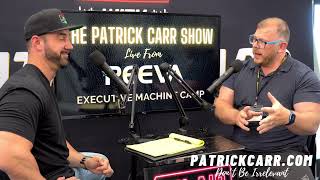
Adam Sand went from running a roofing company to building software for roofers after Facebook ads generated $420,000 in sales from $7,000 spent. He shares how to stop the scroll with headlines that declare a problem and solution in three seconds, and warns that roofers who don't adopt technology will get squeezed out as the industry consolidates.
Questions this video answers
October 23, 2023.
$7,000.
$420,000.
2016.
From $6 million to $11 million in the next year.
Chapters
Asking our people to do more or work harder or be more focused or remove context switching is all great. But if we can use technology as a lever to make our people more effective, then we can improve our businesses. You're competing with cats, whatever the Trump saying. And chicks. This is an unpopular opinion that would probably get me hit in the face by a bunch of roofers here. But.
All right, so I'm here with Adam right now. And Adam, for people who aren't familiar, let's just get a quick backstory on you. We're here at the RIVA conference. Tell me a little bit about yourself.
Well, I don't know how far you want me to go, but essentially I own a half owner roofing company back in Edmonton with my best friend. And based on some things we did back in 2015, 2016, I got a little bit of notoriety about doing some stuff that was unconventional at the time. And then that created this sudden thing. So being from Canada, when a bunch of roofers started asking me about this unconventional stuff we did, it felt really good. And so all of a sudden I realized I had a second business on my hands and I started to work with roofers. And now here I am, you know, what is it, seven years later, still doing it.
You say unconventional stuff right there. Explain elaborate for me. What kind of stuff are you doing for the roofers in Canada?
Well, so in our business when we started out, you know, and in Canada, it's a very much like, it's not like the States where there's a lot of opportunity for the little guy and you can really, you know, try and take on, you know, do the whole David Goliath story. In Canada, the entrenched players are the entrenched players and the whole system is just a more socialist government. So just like that. And so we had no way to. We couldn't find a way to really beat the bigger companies. And I'd lent my buddy some money to start a roofing company because I had, you know, I went on a nice vacation and I also kind of seen, like, I've got some money built up. I'm starting to get some adult life going on. And my buddy, he was just a shingler. So I said, why don't we start a roofing company? And we started one. But he couldn't really get any traction with business. And I thought maybe we should try and use this Facebook thing because back in 2016, you know, Facebook, like, they, the stock, like the news in the stock market was like, how is Facebook going to Monetize mobile. And all this stuff was being talked about. Back then, all they had was the ads on the right hand side. I was like, we got to find a way to use this Facebook because, like, everybody's on it. And in hindsight, this all makes sense. But you got to remember what it was like at the time when I was a roofer saying we should use Facebook, we had a Google person, like an agency that was doing our SEO. And I said, hey, do you guys do Facebook ads? And they're like, oh, you don't want to do that roofing. That's dumb. You need, like a buy now. But, like, like dog toys and cookies and weight loss. And I was like, okay, well, I'm gonna go find agency. So I found another one. And I said, hey, do you do Facebook ads? And they said, yeah. I said, great, you're hired. You're fired. And then I was like, they did the Google stuff. And then I said, so about the Facebook ads. They said, oh, that's dumb. You don't want to do that. That's, like, for people like dog toys and weight loss and then cookies. And I was like, why wouldn't anybody do this? So I went out searching for a roofer Facebook ad guru, which right. Today, like, you can't throw a shingle off a roof without hitting 10 of them in the head. Right? Sure. Back then, you couldn't find one. And so I went looking for roofer one, then a construction one, then a home services one. Couldn't find a guru. Finally, I found a guru who did Facebook ads.
This guy named Looking for a guru. Yeah, Isn't that crazy thing now? Like, now you can find them anywhere?
Yeah, you can't. Like, you can'. Get rid of them. And so I found this guy, Rick Mulready, who ran the Art of paid traffic podcast. And. And I was. And I remember I went on his chat at 11:45 at night, then midnight, before his, quote, his cart closed for his Facebook ad course. And he was all about weight loss, dog toys, selling, chiropractic tooth whitening, you know, like all the online stuff. Basically any. Their whole strategy back then was, whatever's being done on Groupon, go direct to those businesses and say, stop paying Groupon half your money and start a Facebook ad agency and help them with his Facebook ads.
Makes sense.
So I was like, 11:45, like, you guys don't know how to market for a real business. I was just, like, being a total troll. 11:45 a night, because I wanted to buy the course and at the time, $3,000 felt like a lot of money to learn how to do Facebook ads that wasn't even anything to do with roofing. And he was like, you're right. I have no idea if that would even work. I don't know anybody who would do it. I don't know anybody who's done it. But I can teach you Facebook ads, and you can try it. Because everything in marketing is about testing. I said, fine. So I bought it. I know when you join these courses, you get these, like, private Facebook groups. Sure, right. Well, I went and joined their private Facebook group. And back then it was I. We ran a thousand dollars worth of ads and we sold $7,000 worth of dog toys and like, or, you know, like, stuff like that. And I. And we had spent a lot of money finding all the wrong ways to do it. And like Martin was talking about in there, taking your objections and turning them into ads. You know, our first one that really landed was we ran a ad about fate, about drip edge, because I always seen roofers doing this with their hands to try and explain drip edge to customers. So we made an infographic about how drip edge could add five years life to roof. And then we retargeted anybody who looked at that ad with an ad that said free drip edge with a roof in June. And that thing got crazy. We ran $7,000 with the ads and made $420,000 roofing sales. And that every single podcast that we got interviewed on did this exact same thing that became the clickbaity headline, right? Is that back then it was unheard of to run $7,000 with ads and sell $420,000 worth of stuff because everybody was selling nine dollar dog toys, things with a buy now button, right? And so when I posted about that in the private group, right, Every podcaster that wanted to make their name in Facebook ads was hitting me up, being like, I'd love to interview you about your story. And so between like 2016 and 2018, if you googled roofer and Facebook ads, it was just me being interviewed on like 30 podcasts, right? So we did like digital marketer, everybody. So then all these roofers started reaching out and they're like, hey, can you show me how you did that? And at first I was like, oh my God, a guy from Texas wants, like help from little old me in Edmonton. And. And so I started, like, helping out. And then I just started to say to myself, I think I have a business here. I wonder what I should call it. I'm like, well, I'm a partner in a roofing business, so I could partner in their roofing businesses. I'll call a roofing business partner. And that's. That was where the name came from.
That is an awesome story. I rarely hear, like, a really unique story about how someone falls into roofing. That's a good one.
Yeah.
Everyone kind of falls into it because they lose their job somewhere, you know?
You know what I mean? Yeah.
But you were actually searching for a way that could benefit your company. You found it. And then he found. Okay, listen, I'm going to help other people and benefit their company.
Right? Yeah.
So I got a couple questions for you. About to unpack what you just said right there. Right.
For sure.
First, I'm going to ask a more general question. All right. Because I think you understand social media pretty well. Simple question, yes or no? Social media, good or bad nowadays.
Good.
What?
Over. Overwhelmingly showing signs of its tearing down society a bit. But tearing down and torn down are two different things. I think that stuff like what you've heard from Elon Musk lately, I think that overall, we're evolving as people and we're learning how to use this new thing. We're.
We're.
We were chimpanzees like, four generations ago. Like, not chimpanzees, but we were like very unevolved people. You know what I mean? And then, like, there's a lot of things that happened in the last four people, you know? You know, four people ago, you know, if you were a blacksmith, your last name was Smith, and you were a blacksmith because you're four generations backwards. For blacksmiths, the upward momentum that things like social media has created has put people who Maybe didn't have 10 generations of nobility, allowing them to be in a position of power. We've got mavericks and radicals and good people and bad people with a voice now. And that has been something that people have had a hard time really understanding what those messages are and sorting out good from bad. And so while it makes it tough because, like, it's so divisive in some ways and so inflammatory in some ways, I think it's better overall because it's allowed new people to rise up and it's empowered people from all over the world, but anything great is going to come with this kind of friction and grinding. Right. No pressure, no diamonds. This is going to cause society overall to evolve and get better.
You're still doing this stuff with roofing business partner. You're still helping these companies grow today.
So what actually happened is it's evolved over time. So you might have heard Martin in there mentioned we're changing our logo. So what happened was we were early to this Facebook thing right back when it was like shooting fish in a barrel. There was nobody doing it. And we started to get really good results early on. And so we started getting fired by our customers, and we didn't know why. And I started asking them, you know, you start asking why you're losing your clients. Like, why are you, like, canceling your service? Well, we got too many leads, and we're, like, falling behind. We got customers who are getting mad and all this kind of stuff. And Because I designed an app and sold it, and you're right. You're like, who fires the marketing guy for that? Creating that problem. Right, right. And I said, well. And I. And I said, because I designed an app and sold it, and I owned some businesses and been in a franchise thing, I'd. I'd played around a lot with software, and I knew what I was. I could. I knew my way around it. So we built a custom CRM and our roofing company that I'm partnered with. And so I said, well, show me your problem. And they were like, well, we have this folder that goes on the wall, and they put this post it on the back of it. And then we have the software, we type stuff in, but then it does do everything. So we have to copy and paste stuff into this software, move it over here, and then. And then. And then once that's done, it goes in the truck. And then once in a while, it flies out the window, and then it comes back, and then we put a stamp on it and we put in this office and it goes on a whiteboard and we move it over, and there's a post it note. And when the post notes green, it means this. I was like, oh. I'm like, that's your problem. I said, you need a system. Like, you need. Like, you can't get past a certain number with that kind of system. Like, you're gonna have to evolve, you know, you gotta come up with new shit. Sorry, I don't know if I can swear on this place. So then I said, instead of firing me, I'll fix that problem for the same monthly rate, and it'll take me like three months. And then I'll fly back out here and I'll teach you guys how to use it. And they said, yes. And I did that. And it went from 6 to 11 million the next year. And I was like. And I thought that was really cool because I couldn't get fired from being a part of the operational framework of the company for doing a good job, you know what I mean? But you can get fired for doing a good job when you're just getting a ton of leads if they can't keep up with the flow. And so we started funneling our Facebook ad clients into CRM and software and process development clients. And then slowly our client list started to evolve and get to be bigger companies with the bigger problems to solve. And so we've done, you know, we started doing stuff for like 50 million dollar companies, like solving big software problems, connecting things to other things and trying where they're trying to be innovative and competitive, right? Like if they're trying to create like an uber like experience, you know, like where they get the, like, your roofing crew's on their way, your roofing crews arrived, your roofing crew's tearing off the roof. Like, like they're trying to like create their competitive advantage for the next 10 years. They started, we started to become like the name, you know what I mean? That's why like somebody in there said he's a boss at that thing, right? Because we just started making a name for doing that. So we're, so we're still helping roofing businesses, but we've really gone away from the marketing side because it's decommoditized. Facebook ads platform has become way easier. There's a lot of players in it and we, we forged that pat and we've created an industry for people that came up behind us. And I can recommend 10 good people that can do it now and they love it because that's what they're passionate about. I wasn't passionate about marketing. I just, I was trying to grow a business and I, and I got recognition for finding out a way to do it and then I just found a way to make money doing it. But I really love like process development, really managing like breaking down silos between departments. And I really love finding ways to innovate and make things run more efficiently. One of my favorite stories, and I can kind of end it with this, is that you take all human, all the animals in the world, right? And you measure the amount of energy that they expend to travel 100 miles, right? The number one is the condor, right? For the least amount of energy burned over 100 miles, human beings are somewhere in like the second, third, right? We're not overwhelmingly efficient, right? We have a lot of other advantages, opposable thumbs and stuff like that. But as far as, like that, that we're, we don't have that advantage, but you give the human being a bicycle and they become the most efficient Animal to travel 100 miles by a factor of four. So asking our people to do more or work harder or be more focused or remove context switching is all great. But if we can use technology as a lever to make our people more effective, then we can improve our businesses. And I think that that's going to be the theme of the roofing industry for the next five years.
So two questions to end with here. Okay. Both different, very different. But I think they're worth asking you about because the, the market for Facebook ads and for just attention on social media is so competitive right now. All right, I'm looking for a tangible piece of advice. I'm going to give you what, tell you what I tell people and you add to it. Tell me I'm wrong, whatever you think. Not just, I'm thinking videos in general, posts in general, social media, that you've got to grab somebody's attention in the first three seconds, if not second and a half. And I felt always that the best way to do that is to establish what you're there for. What is the problem that you're there to solve? What can you do for me immediately? What is the value that you're bringing to my life right now? I find that a lot of my clients will begin videos with, hi, my name is Patrick.
I'm from Rob Rob's Roofing.
You're done. You've already lost me. How do, how do you suggest in your experience, a good solid way, a trick of the trade to grab attention for someone on social media. How do you grab that attention? Someone.
I love that. So we actually had to measure that a lot with Facebook ads because, you know, you can see the two second video view, the three second video view, the first 5%, 10, 25%. And so we, the first thing we said was your thumb stop ability. Like what is there to stop the thumb? And then what is the first thing you're to say? So we taught it as instant clarity headline, declare the problem, present the solution in the first three seconds. Because if you go in the. Hi, I'm Joe from Joe's Roofing. And today we're on site watching. They're. They're already like you're competing with cats, whatever the Trump saying, and chicks like you're never going to get as much attention as them. So it has to be like instant clarity headline to declare exactly why they should be There the benefit to watching the video declare the problem that you're going to demonstrate a solution for in the video and then. And then explain that solution and elaborate. And the only other strategy really worked was like thought reversal, which is basically ripped off from weight loss, which is. Every weight loss video ever made is like, are you tired of doing this? Do you wish you didn't have to do that? Do you find it hard to do this? Well, what if I told you that the thing that you're doing is wrong? It's every weight loss video ever. You could use it with marketing. And we use in thought versal. Right. So in roofing companies, because people have a lot of misconceptions about the roofing industry that need to be turned on their head. And it's a great way to get people engaged in your content.
I love that right there. My final question for you is along what you just said, you said the. The roofing industry is moving towards the technology. You're moving towards the. You even could say automation of processes being more efficient using the bicycle, if you will, in the roofing industry. A little scared about something and I want to know your opinion. I say scared, not the right word. I am nervous. I've got some anxiety about it because of what I see in the industry. Amazon entering into the roofing game with the technology that's available, the platform that's available. Do you foresee there being a time where a good roofing contractor is competing with a person that simply goes to Amazon, scrolls down a list and says, I want that color select. And. And that becomes how roofing is purchased? I can see that becoming, I think, a problem in the next five years.
You're absolutely right. I didn't think I would buy. I thought, okay, fine, I'll buy a book online.
Correct.
Then I bought one. Then I did. I'll buy a book. But I'm never gonna buy, like, clothes or car. Yeah, I thought I was gonna buy a car, but I'll never buy shoes. Shoes are so. I'm never buy a mattress, I'll never buy. I have. I'm wearing shorts. I got on the Internet. My shoes, I got on the Internet. I'm sleeping on a mattress. Foam, I got on the Internet. So I've been wrong before. And I think anybody who doubts, like, I keep all of Jeff Bezos annual letters to the shareholders on my phone at all times. And I read them all the time because for me, it's an inspiration and I believe that this is coming to the roofing industry. And I Believe that they will. They will have the profit to pay for any of the mistakes that they make. Because everybody says, oh, you could never do that. You'll make mistakes that'll cost you money. So how do you find a way to deliver at a lower incremental cost to you? All you're trying to do is create a customer surplus because you've got three levers, you've got value, you've got the price you charge, and you got the cost you do it for. And if you increase the value and by solving the problem with a high likelihood of accomplishment, with a minimal effort and sacrifice and no time delay, you're going to create a customer surplus in excess of your price. And all you have to do is work on cost. Well, you know, this is an unpopular opinion that would probably get me hit in the face by a bunch of roofers here, but I don't believe that 30 of the roofing companies in any given city deserve to exist. You've got 30 roofing companies, they're installing the same product, installed the exact same way according to manufacturer specification. Many times they're using the same labor. Some other subcontractor in the industry, right. They're using. They're sharing the labor. So they're selling the same part. Same. The same way for the same people, for more or less the same price. What makes you so special? Customer service. We care about quality. Integrity.
Fucking integrity.
Yeah.
Lord. I mean, stop. It's one word I won't allow my clients to use, by the way. Yeah, integrity. Because I can't stand it.
Everybody should have integrity.
Yes. You'd give me the basics.
Yeah. Like that's the bare. Bare medium. Bare minimum to entry. Right. And so we have 30 roofing companies who are all paying 30 production managers to run two or three crews. They're paying them 50,000 a year. Right. And they're doing the same thing with a Facebook guy, Tim Hook, from the. From there. They're paying a receptionist, they're paying a bookkeeper. Those 30 companies paying 50,000 a year for a production manager to run two or three crews means you're spending $1.5 million a year to run 90 crews if you're running three crews. So 1.5 million a year to run ninety crews. I've. In the stuff that I've built, right? And the stuff that I've built. I mean, we're. We're not talking Amazon level. Good. Like, they're like 50 to $250,000 projects. There's a company looking to spend a Million, a million and a half on their CRM. I tried to get the bid, I didn't win the bid. But there's a company spending between a million and a million and a half on their RFP to get a CRM built. That thing is going to make it. So they're going to be able to run like we can run 60 crews with two people on the systems like that. We've built one of our clients. That thing I won't be impressed by. Unless they could run 200 crews nationwide off of two employees making $100,000 a year combined. Which means that now $3 million for 180 crews versus $100,000 for 200 crews, you can afford to fix the mistakes. So if they go online and buy it through Amazon.com and all of a sudden, oh, we didn't account for the fact that there was a thing on the back or there was an eyebrow. It's like, who cares? Pay for why? Because the value was incredibly high. They could go on Amazon, they could buy with a click, they've got consistency in pricing, didn't have to deal with a salesperson, they got a lifetime guarantee, blah, blah, blah. The price was comparable to the local market and, and the person delivering it, they've driven their cost down so much on the incremental cost of delivery that they can afford to pay for all the mistakes in the world and they will find the people to do it. And you'll see roofers putting an Uber roof or Amazon roof or whatever sticker on their door. And as soon as you get, as soon as you get self driving cars, 5G Internet everywhere and FAA less drones that can be followed remotely, you're gonna have remote job site monitoring, you're gonna have the ability for guys to log into their Uber app and they're gonna go and join a roofing crew and get a roof done and then Elon's going to make some robots and then they're going to do that in 30 years. So if you're not evolving at the time, you don't deserve to exist. And therefore the invisible eye of capitalism will come out and crush you. Or not. Invisible eye, the invisible hand of capitalism will come and just move you off the board, right? And you have to be willing to innovate or die. So either make as much profit as you can until the invisible boot comes out of the sky and leave, or position yourself as a strong regional player. Get into commercial, get into maintenance, get into something niche, right? Or get positioned to be acquired by one of the big regional, national players that is coming out there with all this capital to try and homogenize the industry and consolidate it into something that's going to give customers a better experience and give roofers a better career, create a better working relationship between distributors and manufacturers. And then, I mean, then we have the big. The big warranty debate after that.
Adam, I tell you what, man. More people need to have your knowledge. Okay. How do they get in touch with you? I'll put it across the podcast. How do they get in touch with.
You, brother, Easy way to find me is just to go to roofingbusinesspartner.com, find us on Facebook, Instagram. We're very active on social media. If you can't find me, I'm not doing my job.
I'll tell you what, folks, there's so many gems. I hope everybody goes back and watches this again, because I surely am. If you don't automate, you're going to be moved off the board. I love that right there. Moved off the board. So you got to start thinking about this now. There are companies, as Adam said, that are investing millions or hundreds of thousands of dollars into their CRM to make the competitive in a market right now that is becoming increasingly automated. If what you are doing is only taking incremental steps to where you are doing a small little part where you. It's integrated into your CRM and that's all you've done, and you think that's going to Prepare you for 10 years down the road, you are not slowly, you are quickly falling behind your competition. I want to end by saying this, and Adam, I think you would agree the way that technology increases, it's exponentially becoming quicker, which means your small increments of change are. Are putting you further and further behind people that are willing to make that change. Get in touch with Adam and his crew. I am sure that you would give them an assessment of what is going on within your company so that you can start to speed up your process, catch up, and surpass your competition in this competitive market before your ass gets pushed off the board. Thanks a lot, Adam.
Hey, man, pleasure to be here, man.
That's awesome. Thanks a lot, buddy.
Hey, man, thank you very much.










