Roofing CRM: Do I Really Need a CRM? + When to Switch (w/ Adam Sand)
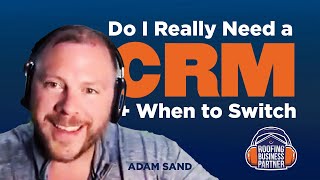
Adam Sand argues roofing companies need one clear source of truth for customer data, preferably HubSpot, over scattered tools. He walks through when to hire an automation specialist, how ringless voicemail and SumoQuote integration work, and why most businesses mess up by confusing contacts, deals, and buildings in their CRM.
Chapters
Hey, how's it going? It's Tim Brown, and this is the Hook Better Leads podcast. And I'm talking to Adam sand from roofing business partner today. How you doing, Adam?
I'm doing awesome. I'm glad to be here. I've listened to a few episodes of the show. You guys put out good content, so I'm excited to be a part of it.
Awesome. Thank you. And we're talking about, do I really need a CRM? And when to switch. So we see people in the roofing Facebook groups all the time. They're talking about, hey, tell me real quick what the best CRM is. Hey, yeah, we need to know more than that. We need to know more than just, you know, hey, this question of, I'm a roofing company and I need a CRM. The top ones that I see the most are Job Nimbus, Accu Links, Rooflink, and Adam's out here pushing that HubSpot life. So I want to hear a little bit quick if Adam's cool with kind of explaining why he loves HubSpot for what he's doing.
Yeah. The biggest thing is that I believe that user friendliness and a single source of truth for your entire revenue operation is more important than something that's niche specific.
I love it. So if I had to make you choose one of the niche specific ones, though, which one would you choose?
You know what, my number one source of customers is acculinx. So I will say Acculinx because they're probably the.
Hey, there you go. Okay, I dig it. And what do you think acculinx has that some of the other ones, if you had to answer this question, what would you say acculinx has that some of the other ones might not?
Well, I think that they box people into the software really well because they try and create a good all in one tool. And that's good for. That's good for a lot of contractors that get shiny. Shiny ball syndrome, want to chase little shiny balls every time they flash across the screen. But I also, you know, believe that. I mean, my number one source of clients is Accu Link. So it's good for me that they box them in because then eventually we've got to get them out. So. But they do provide, I believe, a better all in one solution. I think that they thought through. They've got more time in. They had a lot of technical debt, like three, four years ago. The software was just basically like duct taped on, duct taped on, duct taped on. And I think they kind of went down to the frame about a couple years ago and kind of rebuilt it and I see that now Job Nimbus Job Progress has got a lot of technical debt. Rooflink is very new and they're still figuring out how to properly separate the different objects in their systems like contacts, deals, stuff like that. So you know, just from, if you're looking to get into something and you're going to want to go with one of the niche specific ones, I would say that's probably your best choice.
So who doesn't need a CRM? Adam, we were talking about, let's say you got what, like what amount of leads may not necessitate a CRM or where, where is the point where you do need one?
Well, when, when you, I mean it's all about measuring and testing your customer experience. So when you don't know what's going on anymore, then you need a CRM. But most contractors could know more about what's going on with their business with three sheets of paper. I yeah. Start a roofing company on three sheets of paper. I've helped. I actually had a podcast episode that's years old where I told roofers that the best first CRM is three sheets of paper. Right. And it's just clearly mapping out customers or sorry, leads who have waiting for an estimate and people who've got an estimate and need follow up and then people who have said yes and are awaiting install and that's just three leads. And then you can put a little D for you know, material delivered. You can put queue for giving a quote, you know, quote given and you can run, you can run a million or two on that and a couple of post it notes and I remember when we had started roofing and I was first kind of helping Joe get set up with it, we were driving down the road and watched our CRM fly out the window. So maybe that's when you need a CRM, when you're worried about your CRM flying out the window of your truck as you're driving down the highway. But I mean the point is, is that when you are no longer delivering on a service level agreement that you decide that you're how you're going to run your company and you can no longer deliver on it, then that's when you CRM because the customer is getting only more needy and only getting higher expectations of the places they do business with. And when you're in a business where you're selling the same product, right. Installed pretty much the same way, in many cases installed by the same people. As your competitors would be using. You really only have three levers on your business. Value, price and cost of goods sold. You have to make value exceed price. The measure by which value exceeds price is what creates your customer surplus. And the only place to create value is in your experience because you're installing the same product the same way by the same people. So that's really my best way to try and give people understand when they're no longer delivering on the service that they have set up for themselves to deliver.
So let's swing kind of over the other audience, a little bit more sophisticated individual who's been on a CRM for a while. When, when should you hire a chief of automation? When should you get some automation guru guy in the company? I mean like when is it time to like. Because there's companies that probably should start to get an automation type of person in the company. When is that appropriate?
I mean the answer really is the same. It's when you stop delivering on the experience that you planned out for your customers. So because you have to reckon, like, you have to recognize this universal truth in revenue operations which is that adoption matters more than process and process matters more than the tool. And so the tool would include automations, but the process is more important than the tool. So if you commit to drawing out your process and you've decided that this is a service level agreement that we're going to. So I'll give you a good example. So there is an automated task, right? And people, automation guys like the rookies love creating tasks. Oh yeah. When you get to this stage or when this happens, it creates a task, right? And again, adoption matters more than the process. You have to have a good way to actually keep people in task based behavior, which is proactive behavior as opposed to living in their emails, which is reactive. You have to get people to adopt task based behavior so that they can follow the process in the tool. But here's a great example which is that this client I was working with had a process which in the tool whenever a job went to sold, right? And they were now moving into execution, which is where they do homeowners association figure when they get the solar panels off, figure out when the material can get, you know, delivered. Like when you know, like making sure they know the earliest possible install date for the production team in that execution phase. They would, the sales guy would get a task to call the customer and let them know that hey, you know, we've got your job, I've completed your job files, passed off production, you're going to be getting an email from a person named this and they're going to reach out to you. And that phone call would turn into basically them now trying to answer all the questions that this person should be asking of production and production at the same deal stage would automate an email going to the customer. Now the problem was is that that phone call would end up kind of souring the handoff production. And so what we said was, okay, well we want to create a ringless voicemail automation, right? And so the problem there is not every single customer on every single deal is always the main point of contact. You might have an insurance adjuster, you might have a property manager. So then the messaging is very different. So you have to be very scared of, of automation because then your ringless voicemails could be going to the wrong person. And so we had to build up something quite complicated. But again, it was because they knew, they realized that by creating this ringless voicemail process and if we could do it right, and that's a whole other, that's a long conversation. But by doing it right, they reduced the amount of time that the salespeople would end up getting involved in production related questions because the ringless voicemail was saying the same thing, which is, hey, I've got your job files handed into production. You're going to be getting an email from someone, so make sure you read that and speak with the production team about your questions. So we eliminated the task first of all. So that was now less tasks showing up in their list of tasks in their CRM. But we also made it so that the production team would get a chance to actually build that relationship with the customer while still making sure the customer got that like handoff from the sales guy. And so in this case, right, you had to get a bunch of people to adopt the idea, right? And then you had to get them to be able to follow the process and then only then would the tool and the automation work. So it's like, when do you hire an automatic automation guide? Well, it's when your current process, right, is not being followed, right? Or don't you don't have adoption. And it's because there's not enough time because you automate what you can and manage what you can't, right? So you really only want to look at hiring an automation guy or some kind of person that can do that stuff when you can no longer, when this is something that could be automated and it will help you continue to deliver on your service level agreement that you set out to actually achieve, to try and create a value differential between your price and what you're actually delivering for your customer. The only way you get there is by constant, is by doing weekly meetings, managing everything from inside. Like you're saying, like a higher level person. Right. This is when you're using weekly meetings to manage your company from one dashboard. So you measure everything from marketing to customer service satisfaction so you can actually get a clear picture as to where your, your service level agreements are being broken. But you have to measure that on a weekly level to know even what to try to automate.
I dig it. So I'm going to get into a little bit of the weeds with you on stuff that I've seen from you and I'm curious, I'm just curious. It seemed like you have a trigger in HubSpot related to Sumo Quote and you guys are creating sumo quotes kind of automatically. Is that what I'm seeing? What is. Can you explain that? I feel like you've posted about it a few times, but I didn't fully understand from the post. So I'm just kind of trying to understand what's cool about this. Why should a roofing company get excited about something like that?
Well, I mean there's, there's a lot. I don't know exactly which post you're speaking about, but we've done, we've done a lot of stuff. So we've made it so that yes, you can create a single quote from right within HubSpot. It makes it a lot. We have created something. I mean, I'm trying to, there's a lot of stuff, but essentially we're trying to make it faster to get a much better quote out. A lot of people are.
So some people know, some people know what some sumo quote is. But I'll just give the basic overview. If you're watching this and you don't, it creates better visual looking quotes for people and it's got a mixture of data and the numbers and it's also, you can put like marketing pages in the quotes too so it looks good and you got like testimonials and stuff like that. So you're able to roll out these, these quotes somewhat quickly in Sumo Quote. But if you're able to do it in your CRM, that's, that's cool.
Yeah. The whole idea is that you know when you're, when you're a leader of a company and you're trying to get salespeople to adopt. Right. Your process. Right. You're, you get these complications where They've got too many windows open, too many apps open, right? And then the company is living within 45 SaaS tools, right? Because they've got QuickBooks, QuickBooks Time, QuickBooks Payroll T Sheets, you know, things for downloading receipts. And then they've got accounts payable systems and accounts receivable systems and that's just accounting, you know what I mean? And then we get all the way back to marketing automation, which you know all about. I mean you've probably got 10 that you're using yourself, right? And so all these tools are then got all this siloed data everywhere. And the same exists for when you're working with Sumoquote, which is that you know, what is happening over in Sumoquote isn't necessarily causing anything to be happening inside your CRM besides job one, right. And is it providing any, any valuable feedback again, when you're talking about managing that service level agreement is providing any meaningful feedback to operations, to production, to accounting, to marketing. Right. Not just sales is a job won or lost. Right. But how is this affecting our marketing? So we've just used the API of Sumoqo and our relationship with them as their only certified implementation partner to make single quote better through gently nudging them in the direction of things that we think would be good. And then they have an extremely smart team there that when gently nudged with a good idea, they take the ball and ram it through the floor like, I mean they go crazy with it. So they actually get stuff done. And we've managed to make some really cool things that will, you know, I mean they're just translating into higher closing ratios, better penetration on upgrades, faster deployment of quotes, you know, more informative quotes, you know, better, better psychological hooks in the sales to the constant feedback loop from production back to the lead generation. So no customers are coming in better marketed to better understanding of what they're going to be getting from the experience. And then we design the sales space, we design the sales experience and the service level agreements of the company around the feedback that we're getting from the data.
I love it. So when you, so you know, you've been involved with many roofing companies, seen the processes and you've seen how those filter into the CRM and filter into automation and different things. I'm curious, like when you go in, what are some of those like easy wins that you see in the CRM or in the processes that you, that you like to do every time, like for those maybe people that are kind of in the middle. So we talked to the early guy who doesn't know if he needs a CRM yet. We talked to the later person who's on the verge of getting. I know that there's not that many of you yet to get the automation guy, but I think Adam, I think Adam is a harbinger. He's a, he's a, a sign of things to come for the roofing industry and that you will, there will be a bunch of you out there that have an automation specialist on your team in 10, 5, 10 years or whatever. So the middle guy, the middle. What are these things that people are missing in the CRMs that you often like kind of blow their mind with when you get to come in and, and look at their CRM.
Well, so one of the biggest things is understanding is they don't understand a CRM and they don't understand how they're, they understand the objects, right? Or the entities that exist in their process, right? So one of the biggest mind, I guess one of the biggest mind shift, minds, mind mindset shifts that we try and create for people is understanding the entities that exist. So you have all these CRMs work different ways. So how do we make something that people can make sense of? So you have contacts and contacts are not deals, right? And buildings are not contacts and buildings are not deals and deals are not jobs and jobs are not contacts, right? And so what people have to realize is that when you're talking about how does your stuff connect to QuickBooks, how does your stuff connect to CompanyCam, how do you start automating things so it makes sense. So a good example is every time a deal is created, create a new company account. Very common, very, very common. Automation, right? But if every time a deal is created, create a new company cam, what happens when you get an insurance inspection like you, like someone, you know, you knock a door and you go up and check the insurance, check the house and you see that there is, you see there's damage, but the customer doesn't want to wish to proceed. So now you've created a contact in your system at 43 Brown street create a new company camp, 43 Brown Street. But there was no damage or the customer didn't want to do anything. So there was no deal created. Right? Now customer calls you back or customer calls you eight months later, right? And they live at 43 Brown Street. They phone in. So now you create a contact, create a new deal, create a new company cam. You now have two company CAM profiles existing in the same in your company CAM account for the same Building, right? But a building is on a contact, because a contact can own a building, a contact can sell a building, a building. A company cam represents a building. It doesn't represent a deal, it doesn't represent a contact. It represents a building. And in QuickBooks, QuickBooks is all about revenue recognition, right? When you're looking at, like, accounting, double entry accounting, revenue recognition, right? You have to understand that. That a job is not revenue recognition. A deal is revenue recognition because you account for the revenue when it's earned, not when you collect the money. So you have to know how to. So, so when we teach people how to understand what these things are, then we say, okay, we're only going to create one company cam for any building. So we're not going to filter by when a new deal is created, but when a deal is created without a known address. So we add filters and we add layers of complexity to make sure to keep things organized. And a good example to understand how. What this is worth is that one of my clients was able to go to a local, like, go to an insurance company, right? It was a regional insurance company. And they. And this isn't like, hey, I'll sign up for your managed repair program. That's your template of what a managed repair program looks like. It's like, hey, you have customers who get insurance claims. We handle the. We handle doing that work. We need to partner up. And they said, here's how we're going to make it. So you're going to pay us what we're worth. We only create a company camp anytime a building is created. Therefore, we have meticulous records of every building that happens. You have a problem with homeowners trying to make a second claim when they've already been paid out for the first time that the shingles blew off. And then they get the two or two thousand, our cash payout. But they don't actually replace the shingles. They just. They just claim they did. And then now when the shingles go off again, they try and file the claim again. We're going to keep meticulous records of every single house that ever files a claim with you. And that way we're going to know exactly whether or not these shingles were damaged once or twice. So you're not ever going to pay out a claim twice for the same space. And now all of a sudden, the insurance company's like, holy crap, you're right. And so because they had the power of the collected data, they were now able to negotiate at the table with an insurance company from a position of strength because they can provide more value than the price that they were charging the insurance company. So then they got a fair rate for doing inspections, a fair rate for doing temp covers, a fair rate for doing repairs and section replacements and roof replacements. And they were able to establish a clear service level agreement. It was all because they could clearly identify what that service level agreement could be and they could realistically kind of project into the insurance company's eyes how that would be able to be tracked and measured so that the insurance company, they weren't going to get ripped off by roofer just trying to, you know, turn every roof into a replacement. But then at the same time, they were to make sure the homeowners couldn't be ripping off the insurance companies. And so they kept, they made it so that we will collect the data, make sure that everybody here stays fair. And so if you can help, roofing companies could look and understand that a deal is not a contact. A contact is not a building. A deal is not a job. A job is not a job is not a contact. If they can understand the different objects that exist, then all of a sudden trying to create clean data in your system becomes a lot easier.
I like it. So if somebody wanted to work with you on their CRM and kind of see what else, what other efficiencies might be available, improve their process, improve their bottom line, what do you guys have available for somebody? Just curious.
Well, I mean really, you have to kind of like look at your businesses like anything else. If you, I mean, you want to see if your business is going to survive real challenges, you have to be able to do a health checkup. Just like if you're going to look at your body and wonder if it's going to do a health checkup. And in order to do that, there's pretty simple levers that you need to measure. And so what we take people through is like a CRM audit, right? A process audit. And we have like this 162 point checklist. We create this like fake scenario where a homeowner named Adam sand and a property manager named Tony Stark, you know, are both involved in a deal and they get a roof and they have a color change halfway through and they have to deal with site support and getting people out there. Because I don't just look at it as just a CRM. Roofers use the word CRM pretty loosely. I have to kind of, I kind of have to appeal to that lowest common denominator. But we do more than Like a CRM. We're like more like managing the revenue operation of the company. But just for some of the tech nerds that are going to come out there and say he's talking about more than CRM. Right. You know, we look at.
Okay, we don't have too many tech nerds on our podcast. I'll just throw that out here.
Well, you never know.
It's mostly contractors.
And then, yeah, if you, if you get HubSpot and you start learning how to build your audience, then, you know, you'll eventually have thousands of viewers and they'll come back and they'll listen to this episode three years from now. And then you will have tech nurses into this thing. But that's my little date. But anyway, so when you.
Hey, we, hey, we got a million people on our website every year. I'll throw that out there.
Perfect. It's just music.
Yeah, YouTube isn't. YouTube isn't my thing yet. But eventually I'll learn from Dimitri and I'll, I'll get it going. But at the, at present, what we do just kind of like a note on that is we break this down five times and then those little clips and stuff like that. We get a lot of views on that kind of stuff. So that's kind of the way I think of it.
Gary Vee, 82 page slide deck about creating micro content from content is like. Yeah, exactly.
And just, and just relationships. It's relationships for me. So like I get to get mentored a little bit by the smartest people in the industry, which is the best part about a podcast, in my opinion and why I encourage you to continue yours.
So with. So what we do is we kind of take people through this 162 point checklist. It's like a full, it's like a full role play from start to finish. We time it and then we provide people with this. They get a total of up to 300 points. And then we give this like, PDF that just kind of says this is what you. These were your times, these key milestones. This is like kind of whether this is how we grade it. And then here's some suggested improvements. It's basically, it's just a health checkup on your process and just really getting a clear understanding of where your bottlenecks are. Because you'd be amazed at how many people they get the minute you add a couple of variables like, oh, so I want to change my color after the second follow up. Or oh, we have to. There's bad fascia in plywood. Found on the job site. So keep in touch with Tony Stark, my property manager. But I need the billing. Right. And keeping track of the billing address and the site address. You'd be amazed at how easy it is to break most people's processes and CRMs with these very simple, highly common circumstances. And so we kind of. And then we also add in a change order. Sorry, not a change. Or a callback at the end to see. Okay, how do you track callback? Callbacks are tracked as deals. And, you know, again, it's very easy to break people's CRMs and to show them, you know, where they can make some pretty big improvements. And I mean, that's. I mean, that. That, to me, is just the best value that we can give people is just trying to help them understand their CRM a little bit better. Before. Before we even talk about trying to sell them stuff. I. We. I mean, it's. It's terrible to try and sell something to somebody who doesn't even understand the value of what you're doing.
I love it. And the first bit is showing them the problem and zooming in on it. I dig it. So check out the CRM audit from Adam Sand. Adam, where else? Where can people find us online?
Well, usually in all the Facebook groups, every time they ask what's the best CRM for the roofing business? But yeah, I mean, they can go to roofingbusinessbar.com they can find me on Facebook. Adam Sand. If I'm hard to find, I'm not doing a good job of my marketing. So if you look around for Adam sand, you'll find me.
Awesome. Thank you so much for joining me. And thank you, everyone, for watching or listening to the podcast. Took better leads put on by hookagency.com hook agency all over social. Thank you, bet.
Thank you.










