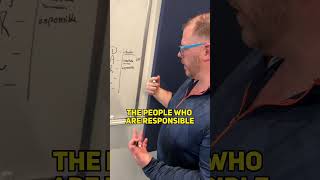
A short YouTube clip where Adam Sand explains the DARCI project-role framework and how it applies in practice. He defines the delegator/decider (who holds veto power), the accountable party (who is responsible for outcomes), the responsible actors (those who do the work), the consulted (advisers/sources of facts), and the informed (kept up-to-date but not decision-makers). He illustrates with CRM work and client/vendor role distinctions.
Chapters
What we're talking about here is just like in any project, ones that I've witnessed, ones I've been a part of, where they seem to live and die is on this concept of Darcy. And so you need a delegator or a decider, right? And that's the person who ultimately has veto power on any initiative or decision. And then there's the person who's accountable to the end results. Like when I'm building CRMs, that's like me, right? Or that's like my company, RBP. So the client is the delegator and the decider, they veto any ideas. My, you know, we're accountable to result, then responsible is the next level. And so this is a mixture of my team, the people who are responsible for making the thing, and the people in the company who are responsible for helping us scope the thing. So like, what is this? And then you got consulted, right? So who's consulted to give advice or to give us facts that we need? And then who remains informed, but they don't make decisions. Neither of these people make decisions. It is either we look to them for resources and answers, and these people are kept informed as to the status of the project budget. Better leave.