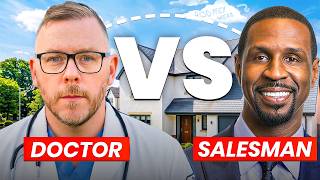
Adam Sand explains how roofing salespeople can use a doctor's trust-building tactics to close more deals. Rodney Webb, a 6'10" former basketball player turned gutter-seller, created a "doctor bag" with professional tools and a medical-style intake process that made customers more likely to sign contracts. The key: clean appearance, organized presentation, and visible tools that signal competence.
Chapters
When you go to the doctor, they ask you to take off your shirt and you do it without questioning them. How do they bypass our natural defenses and build instant trust? Here is how you can use that exact same psychology to close more roofing deals.
Rodney Webb's story is that he's this like 6'10" ex-basketball player that flunked out of the NBA or something. Something bad happened. He went and they ended up selling gutters. And I mean, he could pretty much inspect your gutters from the ground. He was so tall. But he would talk about how the state that he was in, you know, 30 years ago or whatever, You know, 6'10" Black guy shows up on grandma's door. He wasn't like super welcome. You know, they get the door opening a crack and he thought, how do I solve this problem and get in the home and all this kind of stuff? And he thought, well, when you go to the doctor, you'll spend 3 minutes in the doctor's office and this guy's already being like, bend over, take down your pants, stick a finger up your butt, turn to the left and cough. How does a doctor just skip past so many like lines of trust and get right to that? The simple answer is, well, he's a doctor. Like what makes that happen for you emotionally and psychologically that you just suddenly are so willing to like submit to this scenario? So then he said, well, you, you go into the office, you have to talk to a person who's dressed a certain way. They got a piece of paper and a process that's a certain way. And then that person takes your information in a very scripted way, then sits you down. You get a number, you wait for your number to get called, you go into the room. The room feels familiar every time you walk in. There's a bunch of professional shit around the room, a little vertebrae thing that you play with on the wall you probably shouldn't. And then doctor walks in, first thing they do, you got a problem that's nowhere near it, but for whatever reason they go, 'Hey, can you just unzip your shirt?' And they put the thing on, they put your hand on your back, and they say, 'Can you breathe for a second?' They got a chart in their hand, and they wear a certain kind of clothes, and they break that bound— that barrier of trust, right, by giving that physical touch barrier that is, you know, once you get an inch, you get a mile kind of thing. And then bang, they can ask for all this stuff. So what Rodney Webb did was he said, 'We have to find a way to show up with like my doctor bag.' So first thing he did was try and recreate that office experience with the appointment confirmation. That's why we like the Arrivee process, because you get the medical assistants, the girls, usually the where the smocks and boys too. I'm sorry, don't cancel me, but you know, those people that sit in the office and get your number and ask for your Social Security number and everything. He had to create that intake process, right? And then he had to have that welcoming process. It was like the room, and he had to have something that made him look like he knew he was supposed to be there. So he had a bag that he would bring with him and had booties to put on his shoes, and he had a very specific process. So err on the side of being the most professional without looking completely out of touch. I'll kind of take this back to like when my business partner and I sold roofs. My business partner in my roofing company, he was the roofer. I was just a friend. I made money. I knew sell. I knew how to do businessy stuff and computer stuff. So I dressed differently. I typically wore like black pants and a polo shirt with the Sargeant's Roofing logo on it. Sometimes he's showing up after a roof wearing like dirty gray sweatpants and a Superman shirt and smelling like a roof. Now there are people who will argue— usually the dirtier people will argue— that the dirtiness shows that they know how to work and they know what they're talking about. They know how to play to those strengths. But then some people are offended by this big smelly dirty guy, and like they didn't let him in the house very often when his pants looked like he had roof tar from the ceiling strips on him. So he did a lot more kitchen door presentations than I did. But then at the same time, you know, me, I was not dark and tanned from being on a roof all day. I was not in roofer shape. I'm a big guy. I typically break more plywood than I can fix, but I knew how to talk. So I would say fair in the middle, jeans and a polo shirt is good. And then usually like some kind of tool type situation that you've got for like holding your iPad while you go up and down the ladder, you know, having like shingle gauge, tape measure, you know, stuff like that. The ideal RVP client would err to the edge of professional, in my opinion. What I want to do is show that we're a professionally run organization. I want you guys to see the impact that you have when you exude a certain sense of like We're the most put-together roofing company that you're going to talk to. But at the end of the day, the jeans, whether they have holes in them or not, none of those things are going to make as much of a difference as what you do when you're there and how prepared you look and the presentation that you give and the ability to demonstrate a process, right, that creates confidence and competence in the customer.