Top 4 Books Roofing CEOs Should Read to Skyrocket Their Business
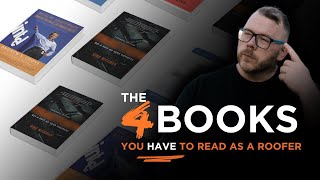
Adam Sand walks through four books that shaped how he runs his roofing business: The E-Myth and High Output Management for operations, Good to Great for strategy, and Traction for focus. He explains the hedgehog concept, the three uniques framework, and a communication technique called ACA that he uses with his team.
Questions this video answers
September 25, 2024
$245,000 (he said he paid $200k originally, actually $245k when accounting earlier purchases).
77 times EBITDA.
Chapters
Foreign. Talk about these four books. These four books, I would say, are probably my favorite books on leadership. The E Myth is all about process. If you've known me for any amount of time, you know, the process is something that I love. My mother actually had this book, not the E. Myth Revisited. She had, like, the OG E. Myth, because my mom was an entrepreneur, and that's where a lot of this came from. My dad, on the other hand, he could not read. My dad and I both have dyslexia. I have a little more control over it than he did. You see it a lot when I write, but I don't. Not at all when I type, which is nice, and when I read, I don't really have a problem with it. But my dad, he never got to learn how to read. And so my dad is just, you know, just unfortunate, right? So he grew up. He was an oil man, right? Worked in the oil field, right? Not an owner or anything, just worked in the oil fields in Alberta. But my mom was entrepreneurial. And so my mom would always take my dad's money and kind of put it into businesses and stuff like that. And then eventually they got divorced. But when they were together, they did really well. And my mom would have all these books, but when they would start to get divorced, they would fight, and I would not want to hear them fight. So I listened to my mom's books on tape going back that far. And the ETH is something that was exposed to super early because it was one of the books that I would listen to. So I get drowned out the sound of the fighting. Not trying to complain about my childhood, just trying to say, like, this is how far back this book goes and why part of my origin that creates my mission that kind of crafts my vision is so much built around the process is because I literally fell asleep to this book about 400 times. So I love this book, and it's so much about designing process in your business. And this is kind of something that raises your operational effectiveness. Then another book I read was Good to great. And this is a book by essentially. It's a university professor who had used his students to essentially study businesses. And they looked at like 100-year-old brands that why did some brands outperform the general market and their 15 closest competitors over the course of huge long periods of time? And then broke down kind of like what we did with Platform, right? We looked at all of our most successful roofing clients in the enterprise segment that we used to serve before I had a kid and we said, okay, what are the things that they do? And there's like 20 things that were like pretty common. And then we said, what are like the three things that they all do? And we found the three operating frameworks that they all did. And it was kind of like, okay, if all of our most successful customers do these three things. And these three things are what every roofing company should do. And that's what became the basis of the platform program. Was like saying, we're going to just build these three operating frameworks into roofing companies, design the systems and infrastructure to support it and teach and train it through webinars. Good to Great was kind of like a macro version of my micro study of our roofing clients. And that's kind of what inspired me to do that. But other me was like, it was like, great. They're like, there's so much of like the what to do in this book. In like the last three years. I found this book is like the masterclass on high output management. And this is any leader should read this so that they can pass this on. Because this is the operational effectiveness handbook right here. Like, this is a how to run like an entrepreneurial operating system. But this is like the how to operate a Company Day to Day book. This is, it's a heavy read. Like, I've read it three times and I feel like I got to read it five more times to ever truly learn what's in here. But this is by Andy Grove, former chairman and CEO of Intel. And it is just an absolutely brilliant, brilliant book. The E Myth that was the childhood trauma book. And then this was the Tanning Salon Trying to Figure out how to Make Money book. And then this is the how to guide of the what what to do Good to Great. Like this has kind of led to this. And then High Output Management by Andy Grove. Every leader should read this book three times and then give it to the people who are managing their companies. Because this is unsung hero of leadership. It's almost nobody reads this book. It's like the other three you probably see on like an Amazon bestsellers list. This one's buried. You don't see it, but it is a true gem. One of the concepts that I want to kind of pull apart about these two books is that in many cases, books have the same lesson right inside of them. And so in Good to Great, it talks about a concept called the hedgehog concept. And then in Traction, it talks about the three uniques. And these are essentially the same thing. This is where I Got this idea for the platform program was because we found like three uniques of our most successful customers. And this is like the Venn diagram, right? You could have this thing and this thing and live inside of this overlap that would exist here. Or you could have this thing and this thing and have the overlap that exists here. And you could have this thing in this thing and have the overlap that exists here. But, you know, really exceptional companies are kind of built by the harmony of taking a rare hard to do thing and a smart forward thinking thing. Kind of a motivating, empowering thing. Putting them all together is what makes you really hard to beat. And that's essentially the story of the hedgehog concept from good to great. When it said that like the companies that kind of outperform the market for 50 years in competitors, through recessions and everything, those companies really knew who they were and what their unique strengths were. It talks about the hedgehog and that the hedgehog is the food of the fox. And the fox can, can run, it can jump, it can see far, it can hear far, it can smell far. It's got claws, right? It's fast, and yet it has a really hard time eating a hedgehog because the hedgehog can roll up in a ball and be spiky. Like it's, you know what I mean? It's like there's an ultimate defense in many cases, you know, as your business goes through all kinds of different times, sometimes the best offense is a good defense. This is really where the people rise and fall, right? Is on, on a large part of this concept. So you as a leader, getting really clear about your three uniques is big, but then it's also how you can communicate and deal with your people. And again, just like this book, there's, you know, there are lessons that sound different in nature, but you find the common ground. So Alex Horoi talks about when you're, when you're trying to compel people to do things right or go through a challenge, or trying to compel people to make decisions when it comes to like a sales environment. He talks about the ACA message, which is where you acknowledge what they just said, you compliment them, and then you ask for the next thing, ask for the thing that you want, ask them to do the thing you need, right? So acknowledge, compliment, ask. But then Brandon Dawson, who, you know, sold his company for 77 times EBITDA. So think about like, you know, roofing companies, most of them are selling for three to seven times EBITDA, right? So if you make $2 million profit. You sell it for three times, you get $6 million. He sold his company for 77 times EBITDA. I paid 200 grand to go to his consulting program. Actually 245 when you think of the two that I bought before. And you know, the crazy thing is I would say that 75 of what I learned, I also learned from this guy and other books that I read. But sometimes it's just about creating certainty, right? When you spend this kind of money, you learn because you want to make sure you get a return on investment. But he says, acknowledge, motivate, ask. Well, a compliment is motivating. And to motivate others might compliment them because you're investing in them. But the premise is the same is right, is you acknowledge what someone has said, you compliment or motivate them, and then you ask for the next thing. And so this is. These are lessons of leadership that stand on solid ground. If you just look up ACA method his name, or AMA method his name, you'll find videos on the Internet. You can learn it today if you want. But this is how you become more operationally effective. So if we've checked that box now, we need to move into leadership, right? Once we've satisfied our belief and we sat and we know how to improve our operational effectiveness, then that's when leadership, the ability to compel others, will become better.










