Traction for Roofing: Why & How? w/ Adam Sand
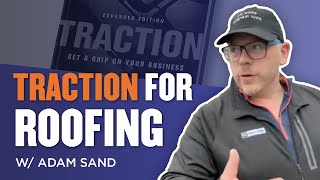
Tim Brown and Adam Sand discuss using the Entrepreneurial Operating System to run roofing businesses better. They cover the VTO planning tool, weekly Level 10 meetings, and quarterly priorities called rocks. Adam explains how to roll out CRM software without losing your team, and why pricing strategy and client selection matter more than taking every job.
Chapters
Hey, how's it going? It's.
Here we are.
Tim Brown.
Adam Sand.
What's going on? We're talking traction and roofing. And I know for a fact traction has been useful for my business. Adam, how's it been for yours?
It's been great. We've implemented RBP and we've implemented with clients. So it's. It's something that we see as kind of like a necessary part of our life at this point. It's the only book I've carried with me in my backpack for three years. Three years.
So Attraction Entrepreneurial operating system. And it's essentially like a. A. What do you call it? A. Yeah, it's an operating system for.
Yeah, it's basically an operating system for your business. The idea behind it is that you're trying to build something in your business that's duplicatable, gives you a way to track the activity that actually makes you successful. And if you read the book Good to Great and you, like, I read it, I went, wow, like, I'd love to build a business. It was Good to great. And I read this when I was 20. Then this guy Keith is telling me to read this book, Traction for a long time. And I was like, yeah, yeah, yeah. And I've read a lot of books. And I was like, yeah, whatever. And then I finally read. I'm like, holy shit. This is like a workbook for the book Good to Great. So if you read Good to Great and you like it, well, then it's like a workbook for that. Yeah.
And I feel like the funny thing is, is like kind of wish there was just like a playbook for a small business. Right. Like, and I know that there's a lot of things that try to be that. E. Myth Revisited is another really good one. But there's not really. You. Like, there's no light. Like, it feels like there's no rules. Yeah, it feels like there's no like framework for running a business. There's no, you know, so you just get into it. You're flailing out here. And I think EOS and the book.
Traction, it kind of kind of gives you a framework from which to run it.
Yeah.
So the reason that we've like, I guess what is it that you think, Tim, would be valuable for your audience to hear about what we do with it? Because, I mean, it's such a far reaching subject. It's everything about running your business.
Yes, yes. So what are the kind of like key tools in EOS traction that you think are awesome? Isaac Smith says he read Rocket Fuel. Isaac, what up?
Rocket Fuel is a good. Rocket Fuel is a good one. I love that book. That actually taught me a lot after having been in traction for a long time. What my favorite thing about the book is actually the level 10 meeting, right. Just because it's, you know, everything in Traction is about, I guess, strategy, right? So you're talking, it's all about strategic risk, right. So you might have your, what you feel are your three uniques, right. Your hedgehog concept. Or you might have your, you might be working on your people analyzer, right.
Or a couple. A couple. Like one of the things I think is really cool is the. They call it the vto. It's a one page visual traction organizer with all these things in it. You should have three uniques. You should have a basically like a branded process. You should have a something that you follow every single time they say to laminate it. There's a couple, you know, there's a couple old, old school things in this book. You should have a built out process. In our situation, we kind of made it into a digital asset and then like made icons for the steps, you know, like. So like you should have a branded process and in place in a way that anyone can see it. So, so VTO is one thing. We got level 10 meetings.
So what I like about the level 10 meeting is that if you're talking about strategy risk or idea risk versus execution risk, I will always want to bet on execution risk. I'll always bet on myself and my ability to do the work. I won't necessarily always bet on idea being the best idea. And so the level 10 meeting really focuses on. It's like you read the book Traction and you do 90 of the book, but there's only 10 of the book that you consistently do from now until forever. And That's a level 10 meeting.
Yeah.
So that's my favorite part of it, right. Because the quarterly rocks you're gonna revisit every quarter, right? You're gonna, I mean if you finish 10 years and you're probably gonna start a new VTO with a new 10 year plan, so you're gonna do level 10 every week.
So quarterly rocks Adam mentioned like this is like having department level like and people goals that you have that happen every quarter, I think that the court for me, I mean it's not that revolutionary in business, but for me the quarterly rhythm on stuff was really useful.
Like I remember. Yeah, I remember that was something for. I remember that was something for Joel, my business Partner back home when we implemented Traction at first is he really liked that quarterly rhythm. Right. He liked the idea of thinking of the business, about the business in terms of quarters instead of seasons.
Right.
Like, instead of, like the whole year, the whole winter, thinking about in terms of how does our business operate on a quarterly rhythm. Yeah.
I read this at the same time I read a book called, what is it, 12 week year. And it's kind of like just. It really hammered me, hammered into me this point that, like, if you think about each quarter, kind of like a year, you know, like, you can really get a lot more done.
Yeah.
It's like, it's kind of crazy because what if you took your year goals and you tried to knock them out in one quarter? And I know that there's some things you can't do like that, but a lot of things you can. You can get a lot more done if you think in quarterly rhythm.
Well, most people get. They. They get distracted. They get, like, so many people in business, they get distracted because, you know, you know, I'll use you as an example. I beat you like a Cherokee drum over doing a HubSpot website, CMS. Right. And one thing that I respected about you was that you stuck to, like, one of the core tenants of something like Traction, which is better, more, and then new, and you really wanted to focus on doing more of what you've really been focused on making better for a long time. So in business, you got to do things better. You got to think, how can we do our SEO better? How can we do our customer service better? How can we do. Make our response time better? How can we make our quality better?
Can we show Thanos for a second?
Yes.
Thanos. Hey, come here. One second. Hey. I got to. Oh, yeah. Oh, yeah. I don't know how. I don't know how to hang out with you like this.
Yeah, he's like. He doesn't understand PH and he knows there's squirrels around.
We're looking for squirrels.
Yeah.
Hey, that's. That's your business without traction. Squirrels all the time.
Constant squirrels. Yeah. Thanos does not have his quarterly rocks figured out at all. He's just, like, constantly looking all squirrels around here. So anyway, so you. You focused on better, right?
Yeah.
And you. And you did what you were doing.
Already turn around at that mail mailbox.
So you focus on doing what you were doing better, and then you were trying to do more of it, and I wanted you to do something new. Right. And you did the right thing and said no.
Right.
And you didn't do the new thing.
We just go a lot slower now. I used to be the guy that would literally turn the ship constantly. And so, like, still thinking about it? Yeah, it's on the. It's on the table. Let's. Let's pop a ue. Okay.
Look at this lake.
I just know where the signal goes bad. You guys probably know where the signal goes bad half the time if you watch this a lot.
Yeah.
So.
So traction is absolutely, absolutely necessary. But yes, it's. It's important to read the book and follow the instructions right. You have to get your. You have to get your vision sorted out and your mission sorted out, because so many roofing companies can get hard, right? Because you're doing the same thing the same way. Like, you're selling the same shingles with the same people, the same amount of time, using the same tools. How do you get a mission right? How do you get a vision right? How do you.
Hey, let me throw something on here. These are. These are beautiful tenants. You. If you go read this book, you're gonna. Your business is gonna be better. So Adam, his business, roofing business partner, our RBP Consulting, he works with all types of businesses, but has a lot of experience in the roofing industry. They do HubSpot implementation, but they also do, like, CRM audits things. Whatever CRM you're. You're on. He can show you the inefficiencies and show you ways to make it better. Make it better. He also does sumo quote implementations, so beautiful proposals for roofing companies. He'll help you build that out, including design work. Your team does design work and automation and stuff like that. So what I want to offer you guys, for anyone watching this live, is if you sign up, I'm gonna put a. A link below. Actually, if somebody's watching and they want extra credit, go drop Adam's link for. I don't know if somebody would do this, but if somebody's an ally of ours and you want to drop a link for their consulting in the comments, I will buy you the Traction book and send it to you. So if you. If you go sign up for a, A, A intro call with these guys, I will buy you Traction book if you're interested in these services.
Yeah.
Other than that. Yeah, you should be on Traction if you're not. And if nothing else, this is a great book for just business concepts and grabbing nuggets, but you probably will fall in love if you read it, I'll tell you that.
Yeah, most people do read it. They fall in love with it. First of all, everybody give it a thumbs up for Tim because you don't realize it, but he's holding his phone out like this. Like, he doesn't have a selfie stick. He's literally got to, like, hold his phone out like this. And we're both like, he's got baby brain. I got vacation brain. This dog has been trapped in a hotel room for three days because Allison just had surgery. So he's just, like a total spaz right now. So thank you to Tim for getting me on this thing and let me join him for it.
Hey, I just gotta throw it out here. So traction allows business owners to have a little bit more freedom. So I do think it relates to the fact that Adam's taking a vacation. Guests were being naughty on our vacation and working. Yeah, but. And I'm on baby duty, so we're. We're able to do that a little bit better. I mean, that's a very. That's a rare thing sometimes with a small business. I'm not saying we got it perfect.
No.
I'm sure there's things that go wrong. But there is always more freedom in a business where you make systems on a regular basis. And I think making systems more than, you know, CRMs and more than marketing, having systems in place and having something like Traction is going to create freedom in your business to be able. And neither of us are selling really. Like, we're not EOS sales people.
We don't have a licensed. We're not. Like, neither one of us is licensed to be an EOS implementer. Right. Yeah, we just. When we're working with. With customers and building CRMs, we're engaged with people for several months at a time.
Yeah.
And so we end up just as part of the process of, like, trying to roll out a new CRM. I mean, we've done 11 in the last 12 months. That's a massive amount of organizational change. And you get something similar to a level 10 meeting as part of the process of implementing it, which is that you're looking at it and you're saying, how do we, you know, what are the issues that we're facing? What are the core goals? Like, when you call rocks, right, it's like your. Your rock review is kind of like, what is your most important parts of this new implementation, this new CRM rollout? Like, what are the things you're, like, problems you're most trying to solve? And then as you're rolling it out, you're going to identify issues Right. When you don't hit certain targets or you're not getting certain things built, I.
Love having that on a Google Doc. And then may everyone. You bring your issues, you put them into this doc. Yeah. And then every time. And then we're going to solve, we are going to meet on this every week and we are going to sit down and spend an hour solving these issues. Like that is a big game changer. Just your people knowing that there's a spot where the problems go and that they actually get addressed every week.
Yeah. So it's like once a lot of times when we're done rolling out the CRM, we end up like, the client ends up keeping this like level 10 meeting framework that we just show them from the book traction. Like, I'm not an EOS implementer. We just, I've read the book a bunch of times and I've helped a bunch of people through it. And then they keep it and then we actually join them on those meetings every week. And it's awesome to see it just like flow every time. It's like you come in good news, customer highlight, then you focus on your rock review and then you, you go over your accountability numbers and then you come up with your issues, which are just excuses for not hitting your accountability numbers. And then you focus on your issues, you identify, you discuss, solve, you come up with a to do list and you end the meeting in 59 minutes and 59 seconds. Every single time.
Yes.
We just like being a part of it because usually the issues that come up with a to do list, usually there's a to do list for CRM guy. You know what I mean?
Yeah.
Like, oh, we want to make this automated. Oh, we need to make sure we track this. Or oh, we're, we want to make sure we time the time between this and this happening so that we can see who's, you know, falling below it and who's falling above it. Like, if you're wanting to implement systems in your business, the best place to start is to just try writing it out and put timelines to how fast you want things to happen. Like a service level agreement, like how long is something supposed to take? When is it going to be done? So you can just see, like, are we. Because it's like Elon Musk talks about it when he's talking about the assembly line at the Tesla factory and they found this insulated blanket that goes on top of the battery and the noise, the noise and vibration team thought it was there, thought it was there to, for as a safety measure in case there was a fire in the battery. And the safety people thought that it was there to prevent noise and vibration from a sound perspective. So then they drove. So they both. And this was a huge delay in the, in the, like, the factory. Like it was causing the factory to get backed up. So then he says, we'll put a microphone in the car and drive around and see if, like, this affects the, the sound of the vehicle. It didn't. He's like, then why the hell are we doing this? You know what I mean? But both teams thought that it was there for the other team because you get information trapped in silos.
Yeah.
Right. And so if you write out your process and set times and service level agreements, then you can see if you're struggling to be average and failing to show improvement or if you're staying on track. And then you can start diagnosing issues. Right. And then all the CRMs and tech and innovation that comes after. Right. But first you got to know what your goals are. Right. And what your goal of your service level agreement is going to be.
So when you come in and chat with folks, what is. What are the questions that you get really into? Hey, Caleb's on. What's up? Caleb Oberg, what are some questions that you go through? Hey, Caleb, if you had a good experience with Adam, I know you've probably given them a few things as far as, like, testimonials and stuff, but if you don't mind dropping one on this live, I think it would really create some social proofing video we're doing.
Yeah.
What are some questions that you get really kind of like that are really important at the beginning of a consulting thing with spokes.
Yeah. So that's a great question. I appreciate you asking it because it's probably the most important part of what we do is actually change management. Building out a CRM is by comparison, really easy. Right. Creating organizational change is super tough. And so we need to get executive buy in. Right. We need to get. So that all the people are on the same page. Just like, I mean, to relate it back to roofing, if you're a roof salesman, one of the first things you have to do is get the people to admit that they need a roof. Right. They need a new roof. If you don't get them to agree they need a new roof, it's gonna be hard to sell them a new roof.
So if you don't. If you don't agree, you have a problem in your business.
Yeah. Then you don't Then you're not going to get the rest of the team to do it. So you have to. So we have this process called solution extraction where we ask these questions that are pretty intentional to try and drag the pain out of people, right? And so it's like, if you could wave a magic wand and fix one thing, what would it be? What is. How is a. What's an example of tech letting you down that costs the company money? You know, what is a problem that you've had to deal with that was caused by another person in the organization?
I'm not going to lie. That's. That's probably free value right there. If you write one of those down.
And think about it, it's like. That's like. Probably one of the most proprietary things we have is this collection of questions.
Just write those down real quick.
Yeah, but when we do, when we ask those questions of the entire organization, all. You get some really good stories, right? You find out who is like the whiners in the business. You start to be able to get some guesses as to who the D's, the eyes, the S's and the. And the C's are from like a disc type perspective Y. And then what happens is when you go to roll something out, you can be like, hey, Sharon, remember you said you had this problem and it was caused by Tim. Well, now, because Tim's gonna do this, that's not gonna happen anymore. What I need you to do is I need to make sure that you check this box and do this thing and you start getting people on board. Because, I mean, speaking of Caleb, Caleb has one guy there who's like an absolute sales I want to get. I don't want to call him a God. I'm trying to get right with God and not say that. Like sales gangster, right? But he's real stubborn and hard to get to change. But once he changes and he sees the benefit and what you've done, he's the best proponent of it. Like, he is the biggest ally. But he can be a pain in my ass. And managing change through him is probably one of the most delicate arts that I've learned to get. But we do get pretty good results with that. And then other people, like this one I just did in Charleston, the production manager always had closed off body language, always had a scowl on his face every zoom meeting prior to the rollout. And so I knew. I'm like, okay, this is a guy that's going to need a lot of attention. He's going to need to Focus and we need to make sure we get. Understand what he needs to make him successful. And in his solution extraction, he said things like, what keeps you up at night? It was like that he's not making enough profit on the jobs and that he'll be the reason the company doesn't succeed or something. Right. Because the way he's managing production well, we made everything about that message about how we can make sure he knew what kind of profit he was doing. And. And now he became one of the most positive people out there. Basically taught himself because he was so excited about it.
So I want to throw it here real quick. Caleb says a huge shout out to Adam sand, the master CRM builder. But that's not just. Just because his process is so good. Your entire company becomes the best at everything. And I saw.
That's super cool.
I saw them level up. I saw the vibes, kind of like good vibes over in that company. And also I wanted to note Mark Godare was on here. He said, I'm making a video thanking you guys for the Riva jackets.
Oh, we.
So I, I threw them. I threw them a. A version of this with the re. The Riva R. No kidding. And a big. A big Reva on the back.
Nice.
And so. You're welcome, Mark. I hope those are sweet. The gold wasn't quite Riva gold, and so I hope it still looks dope. I was hoping to see those at roofing process conference in a month. I. I know that that's moved back, but hopefully we get to hang out and maybe get you guys some steak. They've been such a good, like, referral partner for us, so.
Same here. Yeah, we've. We've had such a good relationship with. With a lot of the people in the industry. A lot of people, like, look at it as like, such an angry competitor thing. And yes, I see the Thanos is taking a dump in the field. It's like we're both kind of like.
It'S gonna be a steamer.
But we. Yeah, we've had really good relationship with Riva. We've worked with them, collaborated with them on projects. We've come in after them, we've come in before them. And it's really an awesome team over there because, I mean, I am. I'm jealous because they've done the work of building this thing, this inside, outside thing for three years. So when they go and like, inside.
Outside sales, I'm sure other people are.
No inside, outside sales format. Like, they did the work of building it over three years. And, like, real knows real. So we recognized that when we, like, accidentally tripped across it in August. And then through the process of working with them, I'm like, I'm kind of jealous because they can come in, they can convey the message in three days, get everybody excited about it, and they can actually create organizational change in three days. Takes me 30. So they have such conviction and belief in what they're doing that they're changing the industry one roofing company at a time. I almost wonder why Martin would give it away, but, I mean, the whole idea is that he's. The whole idea is that he's. He's now at a point in his life where he's about the impact that he can have. And I really. I really like seeing that.
Yeah. I mean, it's just crazy. So Adam and I also. We're doing this live partly because we. We're starting to have a lot of clients in common. I think, too, we want to hang out a little bit. It's just good to kind of, like, see what other people are doing that are serving the roofing. The. The roofing companies that you're serving sometimes so that you can be a better partner to them and to each other and all that, so.
Yeah. Well, I mean, the whole idea is that, like, there's a. There's not. There used to be. Not a lot of humility in the industry. It used to be a very, like, competitive thing. But, I mean, there's so much benefit in just being humble and trying to be a good industry teammate because we're. We're all just trying to make the industry better. At the end of the day, like. Like, we could pick a lot of other businesses. Roofing is just where we ended up. And I really like working with other people in the industry. I don't feel like I feel like I'm in on my own island. Like, I wish I could find more people that do what I do because they could hire more people to do what I do. I can maybe steal employees from other people, but I don't find a lot. So I like being a collaborator in a lot of ways, and there's so many different ways to skin the cat that there's almost nothing that's, like, ubiquitous or absolute in this industry. There's so much that's like. There's so many different ways to win. Like, Caleb was talking on that Ascend podcast with radio. Some people think radio is absolutely nuts, but, I mean, we got to be humble. I mean, doesn't matter how great you are, you still Got to pick up your dog's crap at the dog park.
We'll zoom in on this when he does it right. Adam, your stuff sticks through. So you don't. Don't undervalue yourself and what you do or. Or hunt or dot or dog. Oh, no, you know what?
It wasn't even that big of a deal.
I'm not going to actually zoom in on it. No, we don't need to do that.
That was a little one once in your backyard.
I think, you know, with the not being competitive thing a little bit too, is a lot of times like this really stuck out to me. I went to, I think it was like 2017. I went to 10x growth conference. One of the. One of the takeaways that I had, which is Grant Cardone's thing, and one of the takeaways I had was, you're not. Your competitor is not who you think it is. Your competitor is not the person who does what you do. It's actually apathy. You're like, they potentially will not move forward in roofing. You kind of got a benefit, right? The apathy can go down really quick if there's a leak into your house. That's a beautiful thing. But still, you're not really competing a lot. Like, you're probably competing less with other roofers than apathy a lot of the times. And same with people serving the roofing industry, like, for instance, SEO. Like, I think of competitors, I'm thinking about them sometimes, but then really, most people are just not going to do this thing. They're not going to do it. There's probably 60, 70, 80% of people are not going to do it. So really I'm competing with that. That apathy of maybe even. I thought about it once, but now I'm not going to. And even competitors or people that I think of as competing solutions are educating the. The industry about this and making it more likely that they'll even want. Want services in the future. So thank you, thank you to all my competitors out there. And I think you should think of it the same way, too, with. With that. And we should all be collaborating is what I'm really saying.
Yeah, I think that there's a lot of. Here, let me take your ticket. Take a load off there, brother. But I think that, yeah, we could all be working together to create a lot more education on, like, the averages in the business. Because the question I get the most often is like, well, what do you think is this? And what do most people do here and how much work, like what should I do there and what should I do here? Like, you know, Nate Schwepp, I mean, I was having a conversation. I've never taken a dollar from the guy, at least not that I can think of. But we talk like probably once every two months and we have conversations and he's just like, struggles to know what to focus on and there's so many competing, different beliefs and I think that some data analysis on what's actually going on in the industry could be helpful. Yeah. And so, you know, as the industry experts can start to combine and I think give, give some advice to that, to that smaller contractor, maybe there's some value in that. I don't know. I'd have to like meditate on it a bit.
It's tough though, because you, like, as far as a roofing business owner, I would say you shouldn't have five giant new initiatives next year. You know what I mean?
Absolutely. You're going to leave. Everybody's leaving roofcon right now, going, okay, so I need to start a podcast. I need to get some, some, some stock footage from just share media. I gotta go get a website hook agency talked to me, but I need to start focusing on my SEO and my content. So I gotta start writing blogs. But then I also got to think on impact over income. So to like have a mission statement, we got to get our guys and go into the, go into the forest and sing Kumbaya together. But then we also have to make sure that we're focusing on, on getting, we got to get catchalls now. We got to get catch. We got to put that in everything. But then we got to get a catch all truck like Caleb Bulberg talks about. But then we have to also make sure we're doing like, it just, it's never ending right? Like, oh, I got to get a rep card. I got a rep card. So I got, so I have a business card.
You got to, you got to have like two or three things that you're going to get really into this next year. You got to figure out what the highest impact bits are and go for it. Like in some people, they already have their lead gen pretty well down, so they need to get their CRM cleaned up and they need to get their systems in place so they're not wasting money on that. Like, I know that you work with a lot of people in that 5 to 10 million range that are really just trying to clean up their systems and some people don't have their lead gen systems in place and they need to move that way. Or some people just haven't studied leadership. And that should be a big thing. And you should get your people into leadership. But you can choose like two or three kind of big moves for this next year. And kind of like, that's the thing. That's the one part where it's like, we can't. I can't tell you all of the awesome people that you should potentially work with because that's over the next five years. You should choose three things that you're really hammering. This next three this next year, and then do another three the next year. You know, like, that's. It's patience, man. It's patience and time, and that's the ultimate life hack, in my opinion. And like, that's a lot of patience, though. It's so much patience.
Well, it's because it's boring, right? It's doing, it's doing the common sense thing for an uncommon amount of time without convincing yourself you're smarter than you think. Doing that, like, consistently for a long period on the customer service will always work. Do it better, do it faster, give it, you know, do it to a higher degree more consistently. How do you create that opportunity in your business?
Like, hey, I have a question for you. So a lot of people give you a lot of props and say you're like a crazy genius, right? Roofing genius, Roofing business genius, dude. Dustin Beagler, CEO of a hundred million dollar roofing company, said he's not the smartest person in the room is Adam. So how do you not let that go to your head? Because I know, like, Gary Vee talks about it a lot. Like, I don't listen. Like, I don't really, like, don't really think about the haters and I don't really think about the people just blowing smoke all the time. So, like, how do you kind of keep that balance when there is so much back and forth?
Yeah, well, okay, so Alex Hormozi is like 32 and he's got 100,000,000 million dollars. The kid that started Gymshark has got a billion dollars and he's like 22. Like, I mean, like, I am not, like, I'm not the smartest. I'm like, if you're the smartest guy in the room, you might be in the wrong room. And that's why we kind of continue to just kind of keep working with like, higher level, bigger, more visionary owners. Because we, we have to keep putting ourselves in that position. Position, be challenged by our clients. Because yeah, seven million dollar Roofing company doesn't challenge my idea. So if you're the smartest. Oh, good. That's on. Thank you. Good job, dog. Now he's gonna be wet and muddy in the truck. Just zoom machine over here. But, yeah, so if you're smart. So that's the thing. So you. I try and just continue to.
To get around super smart people.
Yeah, get around super smart people because, I mean, Dustin's an incredibly intelligent guy.
Yeah. He's.
He's found ways to make things simple, but he remains humble because he knows that there's, you know, that he's not Mark Zuckerberg. Right. Like, if you're not Elon, you don't get to see, like, until you're Elon Musk. You really. You're all a bunch of morons.
Right.
So I just try and stick with it that way, but I try and just remain doing the common things for an uncommon amount of time.
And people are gonna say nice things sometimes.
Yeah, people say nice things, and I appreciate it. But, like, funny story, somebody at Sales Transformation Group at. Where everybody was drinking at a table, and someone said, oh, Adam. Like, they were like, who's that guy? And he was like, oh, he's Adam. He's like the Alex Hormozi of roofing. Which I did not say, but the other people heard it on the Alex Jones. So they're like, he's making the shingles gay. So then that became the joke of Sales Transformation Group. So, you know, don't believe everything here, folks. But, yeah, so then.
Alex Joe's joke. He's making the frogs.
Yeah. Yeah. So it's like. So I try and just remain humble, and people say that I'm smart, and I appreciate it, but I'm not. Like, I make mistakes too, and I'm smart with certain things. I'm. I'm not smart with other things. Like, I had someone say that I'm a better. I'm a better consultant than I am investor lately. And that was a really interesting. A really interesting thing. And I'm like, you're right. And that's where I have room. I have room to grow. I mean, in a roofing business, you're solving 15 problems that are in, like, three main veins of the business. And, I mean, the three main veins are just customer acquisition, execution of your business, and keeping all the. Keeping all the money straight. That's it. Those are the three veins of business. And there's really, like, five problems per vein. And so you're just constantly solving those problems. You're Just keeping the plates spinning. And when that plate starts to wobble, you have to go back over and spin that one. And some people just get to do it to a higher degree. It's amazing to me how we have like trying to make sure we get Tim in there, but it's amazing to me how we get some people in business who have we got to zoom.
In on this hat too. Oh, keep on going.
Oh yeah, show me your margins. Yeah. Cuz most of the roofing companies out there don't know the difference between markup and margin. And we, they, we have, we do sumo quotes for people and they're like, yeah, make it 35% markup. And I'm like, no, you want 35% margin. The coach that you're talking to said margin, not markup. And they, we were like, no, we want markup or that's too much money. And then two months later they phone us and say, can you change that to margin? Yes, yes we can. But, but like there's some people in this industry who absolutely struggle so much and they make everything look so hard and they just. And then there's other people who come into this industry and they're like, yep, we're going to go to 100 million in three years and they're going to do it, you know, like Stanford educated people who are just surrounding themselves with like really smart people. There are some people who are like some mercenary business people who are coming into this industry industry to absolutely bully the industry. And we gotta be smart, right? Like people are coming to take your lunch money. Right. And if we don't surround ourselves with smart people, we don't stick together as an industry. You're gonna, you're gonna see a lot of people end up, you know, kind of not happy with the outcome of their business and that's okay, but maybe they can go get jobs, maybe they can go work for other companies and that's. I go to the doomsday thing quite a bit.
But I think I, I tend to, because I, I've been emotionally managing my team and I'm working on working in on my business, not in it all the time. Although I think you got to do a blend, right? And one of the things I just to kind of like emotionally manage them. I'll say like you, it's not die or just rocket to the moon. It's, it's shrink and grow. Like so like you might not die, your company might not die. Just that shrinking thing. Like it sucks and like your people don't have as many opportunities. So you have a little bit of an obligation to your team to try to grow it. And it's not always head count, but it's. It is certainly probably margins, and it is definitely their. Hopefully their income. You know what I mean? So, like, I think, like, thinking of it like, just, do we want to drop 20% when this recession goes full force, or do we want to. Can we actually take a. Find a vein? Because other people are drawing back and saying, you know what? I'm gonna not. Mark. Yeah, I'm not. I'm gonna stop marketing.
Don't make too many change. Like, the lessons that I've. I've watched play out is like, don't make too many changes too quickly. Right. There's so many unintended consequences of change. It's about doing things better, doing things, doing those things more often, and then doing new things. Right. And the stuff they have to do better is all this that you don't want to do. That's obvious. That's sitting in the back shelf of your brain. That's not exciting. It's. How do we get back to customers more often? How do we touch customers more often? How do we get. How do we produce more content? How do we get on more people's pages? How do we get more people's minds? How do we get on more bus benches, More Facebook ads? More like, doing the kind of marketing that works on Facebook, put it on a bus bench. Doing the kind of marketing that works as a. As an audio ad, on a podcast, put it on the radio, doing stuff that works on Facebook, put it on tv, you know, doing the. Doing the stuff. Like, it's just. It's just doing the boring stuff, the common. For an uncommon amount of time without convincing yourself you're smarter than you think. That's like, that's just such an easy.
I love it.
It's such a. It's. It's just so simple. And I. Traveling around the country, I've learned so much in the last 12 months. I. I actually really appreciate all my clients because I learn more from working for them than I actually, like, I become smarter every time I leave.
Yeah.
And I try and add that to the. The collective hive brain of, like, what RBP is. It's like we're the collective hive brain of some of the most. I would say one of some of the biggest visionaries in the industry who are willing to spend some of the crazy. Like Patrick Carr said to one of my employees this weekend, you know, you guys are, like, really expensive Right. He's like, you're. It's a really high cost for every. Everything you do is just so much. And. And I said, yeah, but like, those people that. That pay it, they have the vision to see what they're trying to do. And then we get to focus on. On, like, dream outcomes because we're getting paid to, like, focus on less but cooler. Like, cooler things.
Yeah. I'm guessing you're selective with the people that you work with. You probably don't just go to every single.
Yeah, we turn. We turn more away or ignore more messages than we actually get back to. Like, we had a.
So why is this guy selective when he's somewhat expensive?
Well, because we. So it all starts like, way back in the day. We did a project where we wanted to get involved in making job nimbuses. Right? No hate against Job Nimbus. I mean, you guys use my favorite CRM in all your marketing videos. I say, see the HubSpot tabs in the corners? So I mean, I love Job Nimbus, but I. I originally tried, like, making job nimbuses for people. Right. And we did this whole thing. And then what happened was, like, we constantly have to kept saying, no, we can't do that. No, that. It doesn't do that. No, software doesn't do it. But how did they come to me? They came to me because they heard Adam San Smart Adam done Sam does CRM stuff. Right. And they were like. So then they came to me and they're like, well, I thought you were the guy. Like, I thought you could make it do that. You can make it do that. You can make it that you're so smart. And then we actually got impacted because of what, like, Job Nimbus couldn't do. And it's not just job Nimbus. Like, I'm like, it's all of them, right?
Yeah.
And so then we just decided that we wanted to work with people who. Who, like the marginal utility of more money in their bank account was. Had a diminishing rate of return on their happiness. They don't need another bolt. They don't care about another car, that another vacation is going to make them as happy as if their business could run the way they always knew it could or should. And they want to embark on the massive, massive journey of organizational change that it takes to do that. And when you start to, like, really hone in on who your ideal customer avatar is, and not every business gets one. You know what I mean? Not every business gets an ideal customer avatar, like roofing it's people who need a roof that were impacted by the storm lately. You know what I mean? Like, it's not necessarily getting to pick an ideal customer avatar all the time, but for us, we do. And so then when we do, then we. Then you start to develop questions and marketing that's designed to attract and pre qualify those people. Because then when you get to work with your ideal customer avatar, you're like working with friends. Like, most of my customers are friends. Like, one of my clients has a. Has a HubSpot tattoo on his leg he just caught. So we, like, work with friends and people who think like us, act like us, and want to see the industry evolve like we do. And that's why. So that's. We become selective because we just want to work with awesome people with awesome ideas like us. Because they got the strength to get the grit to pull through this project.
No, I love it. And I. You know when people talk about price and expensive, because I get that, I just think about it, like, are we trying to save money here? Are we trying to make more? I mean, I get that. I, like, I think some people. And I see a lot of, like, people stuck in that 1 to 2 million range that are just so focused. And I mean, yes, that's, that's revenue and we're looking for margin here. That's an important distinction. But stuck in that range and just are so focused on like, getting the cheapest possible everything and then they stay there for five years. Because, like, part of my thing is I let money go. And I know that we're talking about purchasing expensive things here, but, like, this is money mindset stuff. Like, I let money go out. I try to. I try to do it with, like, love. Yes. I'm letting money go because guess what? I'm investing it. And that is literally my mindset about money. I'm not focused on, like, holding it all. I'm not trying to hold all my money I needed to flow.
It's like, I mean, you can take it to the core tenets of a lot of things. Like the secret talks about it in the Jewish face. They thought. They talk about sedaka and tithing and getting pledged and doing things that giving money away makes. In the Christian religion, it talks like giving money away means that you have more than you need. And since you have more than you need, then you will find opportunities to make more because you know you have to give it away. I'm not equating our businesses, but what I'm trying to say is that like it's a mindset. It's a mindset.
I love this. I think it's a very important mindset. I use it all the time. So like that's why I'm talking about it. Not just, I'm just like when people think something's so expensive and it's hard to scale a business and to hire awesome people. So I think that it's good to be. You should be more expensive. I usually think roofing companies have opportunity to like improve on.
Yeah, like roofing companies do. We just had a talk with a guy from that was looking to buy a sumo quote. Well known guy in the industry, lots of people know like who he is because he's one of those people at every conference. He's everybody's friend, right? He's one of the guys very active in the groups but he's perpetually struggling. Right. And, and, and we talked to him about a summa quote and it's like, oh yeah, like we give, we don't charge for that. We don't charge for that. We don't charge for that. We give that away for free. More roofers should give that away for free. And it's like you're doing the wrong kind of charity. You know what I mean? You should be charging for the things that you're doing. But there's these virtuous and vicious cycles of price and a vicious cycle of prices where you constantly think that you can just lower your price to get more customers and go down. And unless your entire business is built around that, like a Walmart, that's not going to work. But then there's a virtuous cycle of price which is where you charge more and you charge more, which gives your people and your team the feeling that they're working on great things. And the people that you charge more to, they value the thing that you're doing. So they get more committed in completing this task that are on their side of the fence of those obligations that they have towards the project. And then so you get, when you get that more commitment, then you are able to hire better people so you can apply better people to the project. You have to take on less projects and become more focused. So it's like if every business owner there tries to find a virtuous cycle of their pricing, then they will get a better end result for their customer and they will attract better people. And people be more proud of what they're working on because they know they're not in the bargain basement. We did a sumo quote For a guy who wanted to do layovers, like, want to do shingle layovers, and we had to, like, go through the whole thing of, like, do you have any idea how much that impacts your sales people and your roofers when they're getting hired to sell and install shingle layovers? Like, they always think, like, they're the rat's nest of the roofing industry. They're embarrassed of what they're doing and what they're selling. Stop doing it. Like, don't allow. If the customers don't want to pay your price, you don't say, oh, let's sell a layover. You say, that's not our customer, and move on. Right. And so roof. What's that? Or go sell an ugly roof. That's a creative solution to the problem. Right. And that's how you create a virtuous cycle of price. Because now you're charging, you know, like, what's Jonathan bro say? He's like, the average repair job is 5,300 bucks or something like that. And they're doing this ugly roof. They're adding years of life to the roof. And now there's engineers in Florida who are willing to put their stamp on the line to say that these new shingles, the. The ugly roof and other materials like it will pass the pliability test to make us insurance companies have to allow the roof to be insured even though it's past a certain age. That's the kind of, like, innovation and creativity that, like, the invisible hand of capitalism creates. So I love this country, America.
It's from Canada, y'. All. All right, so, hey, this was a. This is a blast. Adam and I are going to continue this chat over coffee, and I hope that you guys have an amazing day. Adam, thank you for being on, man.
Yeah, it was fun. I got to take the dog for a walk, burn off some steam.
Homies on. Homies on vacation. So give it. Give it up for Adam. And then I gotta go hang out with the baby after this, too, after we. We grab coffee. And I'm just. I'm grateful for everyone on my team is back there working on. And we've got processes in place, partly thanks to Traction.
Yes.
And from creating systems in the business. And I appreciate you guys. Thank you.
Thanks for watching.
Bye.










