EP 9: A Complete Worldview

In this Holy Week sermon, Pastor Sandy Edwards urges listeners to move beyond a superficial celebration of the resurrection and instead embrace a full, biblical worldview that includes the death, burial, and resurrection of Jesus. He highlights the often‑overlooked details of the new tomb (John 19:41), the prophetic role of Joseph of Arimathea (Isaiah 53:9), and the significance of Jesus’ unbroken bones (linking Exodus 12:46 and the Passover lamb). Edwards connects these events to the believer’s own baptism, emphasizing that Christians are buried with Christ and raised to new life by the same Spirit that raised Jesus. Practical applications include a symbolic “tomb” exercise to discard shame and sin, and a call to replace a praise‑first culture with genuine grief, repentance, and a lived holiness. Throughout, he weaves garden imagery from Genesis to the empty tomb, underscoring God’s intentional design and the completeness of redemption.
Welcome to the Thirst with Hunger podcast with Pastor Sandy Edwards, where we destroy every obstacle that hinders people from knowing God. Here you'll be challenged, encouraged, and equipped to pursue his presence, walk in truth, and live with bold faith. Let's dive in.
Hello and welcome back. To the Thirst with Hunger podcast. I'm your host, Pastor Sandy Edwards, and I am so glad to be back sharing the word of God to help you destroy every obstacle that hinders you from knowing God. So we're in what the church and most Christians in the world are calling Holy Week. And I want us to slow down together and not to do what we usually do this time of year, which is we gather together in our good clothes, we cry about the death, the burial, and the resurrection for a few days, and we feel the weight of it in the room, and then we go right back to living like people who have no real understanding of what that price actually cost. And we treat holiness and Jesus dying on the cross like it's just a one-year calendar event, and then the week ends and we just go right back to living how we were before. Today I am just urging you to listen to the entirety of this podcast episode and really posture yourself as a person who has a renewed perspective around the death, the burial, and the resurrection of Jesus Christ, because all 3 are important. We usually rush to excitement focusing on only the resurrection, and we miss those other 2 components that really help us to have a complete worldview of one of the most important— or the most important, I'll say— markers of our faith. Before I get into the word of God that God has given me to share on this episode, I need you to really understand that your hope needs to be built on things that are eternal. And that means that your understanding of scripture cannot be what you picked up in Sunday school or the handful of verses you memorized as a child. And only what your pastor preaches every Resurrection Sunday. Because a faith that is built on partial knowledge is a faith that can have holes poked in it, and the enemy of your soul knows exactly where those holes are. You ought to desire a complete, a complete whole view of what the Bible actually says. Both the Old Testament and the New, the prophecies and their fulfillment, the patterns God established thousands of years ago that are still speaking today. And when your worldview is built on the whole counsel of scripture, nobody can shake it. No one can shake it. And in this episode, we're gonna go Even deeper. My children and I were watching The Light of the World together, and there was a scene that was so captivating. It was a child-appropriate scene of Jesus dying on the cross and all of the things. And so the cross is raised and the sky had grown dark, and right after Jesus said, it is finished, A single drop of his blood fell from the cross and hit the ground. And the moment that it landed, the earth shook, the ground cracked open. And my son turned to me with this look on his face and asked a question that I kind of really just sat with the entire time after he said it. And he said, why is his blood so heavy? How is his blood so heavy that it caused— The earth to shake? An earthquake. And I want to sit here in this episode with that because we grew up singing about it. There is power, power, wonder-working power in the blood of the Lamb. There is power, power, wonder-working power in the precious blood of the Lamb. And we sung that, you know, with our hands raised and tears on our faces, and we feel all the real things. And then when the song ends, we keep moving, and we never stop to ask what we just sung about or considered the meaning behind our words. And the blood of Jesus was not light. It was carrying the full weight of every sin ever committed. By every human being who would ever live. And it was the blood of a man who had never sinned absorbing sin that was not his own. So of course the earth moved. It had never felt anything like that. So before we get to the empty tomb, I want to go back to the burial. In John 19:40-41, The scripture says, now in the place where he was crucified, there was a garden, and in the garden a new tomb which no one had yet been laid. A new tomb, one that had never been used before. We rush right past this to get to the resurrection, but God Never waste a detail. And I want you to picture this yourself. In John 19:41, it says, now in the place where he was crucified, there was a garden, and in the garden a new tomb in which no one had yet been laid. And I want you to picture that. The crucifixion is over. The crowd that had been screaming for his death was scattered. The sky had turned black. At midday, it's beginning to settle, and the body of Jesus is still on the cross. And there's a problem, right? Because the Sabbath begins at sundown, and the Jewish law in that day required that the body be taken down before then. So Joseph, who was also a wealthy member of the ruling council, who had quietly refused to vote for Jesus' execution, goes to Pilate and asks for the body. He gets it. He takes it down from the cross with his own hands, and he carries it to a tomb that he had prepared for himself. Now, I gotta run this point, okay? Fresh cut from the rock, never used, sitting in a garden just outside the city walls near the place where Jesus died. Now, I imagine that Joseph had no idea that he was fulfilling a prophecy written 7 centuries Before this moment. Isaiah 53:9 said the suffering servant would be with a rich man in his death. Joseph had no idea that the tomb that he was just putting aside in a nice garden, exactly where the cross was going to be, right near there— he had no idea that the same tomb he was carving for himself Was always meant for our Lord and Savior. He thought he was doing an act of kindness for a man he believed in, and God had been ordering the details of Joseph's entire life, including when he carved that tomb and where he placed it, with this specific moment already in view. God is so brilliant. Only God could order the details of Joseph's actions to make sure that he was wealthy, that he was the wealthy man who was also a member of the Sanhedrin who had quietly refused to vote for Jesus' execution, to go to Pilate In secret to be the one to bury our Lord and Savior Jesus Christ, a tomb he created for himself in a garden right near where Jesus died on the cross. Wasn't that far away. I have to believe that he had no idea that he was fulfilling a prophecy from Isaiah 53:9. That said that our Lord and Savior Jesus Christ would be with a rich man in his death. Only God could orchestrate those details. And here's something else I, I want you to consider, that in order for the testimony of the resurrection to be undeniably true, there had to be Evidence. Not just faith, but real pure evidence. And God, who created the very laws of nature, right, that we will one day call science, made sure that that evidence was undeniable. God, in all of his brilliance, Orchestrated for the body of our Lord Jesus Christ to be put inside of a new tomb so there would be no question about whose body had been there. And when that tomb was found empty, there was absolutely nothing in it that was supposed to be in there. Except our Lord Jesus Christ. And he was gone. God, in all of his brilliance, proved his own word all the way back to Genesis 1 in that garden. The same God who spoke creation into existence out of nothing Who formed man from the dust of the ground and breathed life into him in a garden. The beginning of life happened in a garden, and the undoing of death happened in a garden. And there is this lyric in the hymn that we sing often, In Christ Alone, that says, there in the ground his body lay. And that lyric is true. But we're not just gonna sing that and just let that sit there anymore, because our Lord and Savior was not just in the ground or any part of the ground. He was in a new tomb, in a garden, in a space that had never held death before, in a location that God had been preparing through the life of one man who had no idea that he was a part of the plan the entire time. Every single detail was arranged. Every word of John 19:41 was carrying more weight than most of us have ever stopped to receive. The Greek word for new in this verse means fresh, unused. Previously unoccupied. So I want you to imagine what that means in the context of redemption and healing. And this new tomb with no stains on the floor, no smell of decay clinging to the walls, no names carved into the stone by grieving families, no history of loss. And into that space, the body of Jesus was laid, carrying our sin, our shame, the weight of everything we have done and everything that had been done to us. He took all of that in with him, and he did it in a tomb that was set apart, dignified, prepared. So when we are sitting here and we're concerned about our life, and we're just like, well, I just can't seem to break through this. I just can't seem to get through this. There's no way I can live how God has called me to live. When the scripture says the same Spirit that raised Jesus from the dead now Lives in us. So that means you and I have the complete power— not partial, not sometimes, but the complete power— based on the word of God alone and what the word of God says in context. You and I have the ability to live as Jesus did because the same spirit that raised him from the dead. Raised him from the dead now lives in you and I so we can be set apart. He didn't just die on the cross for our sins, but he died so we could live how he did, so that we could live set apart, so that we could present our bodies as a living sacrifice. And in what we say is too hard to do, and what we say is too much, and what we say is there's no way I could do that, and I'm not Jesus, and this is that and the third. We're not him, but it is our responsibility to be just like him, because the same spirit that raised Jesus from the dead lives in you and I. So saying that we can't forgive, saying that we cannot walk in the restoration of Jesus Christ, saying that there's no way this can happen. Is a direct mindset of rebellion against the very work that Jesus did for us. Jesus was buried with honor. When shame tells you that you're not worthy of any dignity at all, As a result of things that you may have done, things you may have said, or even shame that was placed on you by stuff that happened to you that was out of your control. Jesus answers that lie directly in 2 Corinthians 5:21. The scripture says that he became sin so that we might become the righteousness of God in him. That's not just forgiveness of sin. That is dignity returned to us, honor given back to people who had lost it or who had never believed that they had it in the first place. He alone was buried with honor so you and I could be raised in it. Now, there is something else that happened at the cross that most people rush right past, just like They rushed past the new tomb in the garden. They could break everyone else's bones, but they could not break the bones of our Lord and Savior Jesus Christ. John 19:32-33, it says the soldiers came to break the legs of the men Being crucified to speed up their deaths, and this was common practice for them. They went to the first man; they broke his legs. They went to the second man; they broke his. They came to Jesus, and he was already dead, so they did not break a single bone. John tells us that this happened. To fulfill the scripture, not one of his bones will be broken. And that's in John 19:36. The whole Bible connects, and this is why you need to study both the Old and the New Testament so that you can have A complete worldview of the death, burial, and resurrection of Jesus Christ. And so John 19:36 goes all the way back to Exodus 12:46, the instruction God gave about the Passover lamb. Not one of its bones was to be broken. And God put that requirement into the Law of Moses 1,000 years before the cross. He was writing a prophecy that was going to be practiced year after year by an entire nation, pointing forward to the moment when the Lamb of God, Jesus Christ, would fulfill what the Passover meal had been foreshadowing. The bones of Jesus Christ were kept whole on purpose. For God's word to be fulfilled completely, his bones had to be in place. And I want you to think. About that. They had the authority, the tools, and all of the intention to break his bones. They had just done it to the other man. And God, in all of his sovereignty, and in all the things that they did to our Lord and Savior, the one thing they could not do was break his bones. And it wasn't simply because Jesus needed protection from pain that his body in the flesh was already feeling, but because of what was being accomplished by God through our Lord and Savior Jesus Christ required a body that was whole. Unbroken. And if you are walking around with something broken in you, something fractured by what life has done to you, by what sin has produced in you, by what trauma has disconnected in you, the healing available to you was purchased by a body that arrived at the resurrection with every bone intact. The fullness of the healing that is available to you and I is not partial. It's not conditional. It is as whole and complete as the body that was laid in that tomb and walked out of it. Our Lord and Savior Jesus Christ was buried whole. So that you could be made whole. And we're not just gonna skip past these things like he was wounded for our transgressions and treat it casually as these statements that we just throw out when people are going through hard things. But I wonder what would happen if we actually took the time this weekend To consider how we can implement all of this and hold to high regard the death, the burial, and the resurrection of the Lord Jesus Christ in our everyday life, in our everyday encounters. When we're at the doctor's office, when we're talking to people who are experiencing hardship, I wonder what would happen if we kept this in the forefront of our mind, that our Lord and Savior Jesus Christ was buried with honor. That our Lord and Savior Jesus Christ, that his body was put into that tomb as a whole body, and he was raised from the dead in a whole body. Not a broken body. Not a body that was full of lack. Not a body that lacked power. Not a body that lacked provision. Not a body that lacked life. He wasn't a robot. But our Lord and Savior rose from the dead, and we love to say with all power in his hands, but let's break down what that power was. Wholeness. Not partial wholeness, but wholeness. His body went in whole, he came out whole. So when we look at our life from the worldview and the perspective of, well, I just can't be made whole, I just can't be healed, there's no way, so much has happened to me and I don't think I'm ever gonna get out— those are very real things that surface on our hearts when we're going through things and when we're in conversation with people who are going through things. But I wonder what would happen if we shifted our With the understanding and the mind frame and the framework of our Savior didn't just die for our sins, but our Lord and Savior Jesus Christ died for our sins. Was placed in a tomb by a wealthy man. And there's so many things that you can get out of that. That means that there's no capacity where God will not provide. God was intentional about every single detail. The suffering servant would be with a wealthy man in his death. The tomb was in a garden. And I want you to picture the first garden, which is in Genesis 2. The ground is rich and dark, trees are heavy with fruit, rivers are running through it, God walking through it in the cool of the day. And man is walking beside him, and there's no distance between them. No shame, no hiding, just the sound of their voices together in the most intimate place that has ever existed. And then picture what happens next. The beast is moving through the grass, the fruit is taken, and something shifts in the atmosphere, and the man and woman feel it. Immediately. That cold, unfamiliar feeling rushing in. They grab leaves to cover themselves, and they hear God walking through the cool of the day, calling them. And they do something that they had never done before, which is hide. And this is when sin entered the world, not just physical death, the death of the life that they were created for. And from that moment, everything in human history has been carrying the weight of what happened in Genesis 2. And God, because he is the beginning and the end, the Alpha and Omega, had already considered all of this. God chose to begin the undoing of all sin in a garden too. John 19:41, now in the place where he was crucified, right where the death of our Lord and Savior Jesus Christ happened. The garden was already there when the cross was planted. The place of death and the place of burial were in the same location. God is so brilliant and intentional. There was a garden. Not a graveyard, not a public burial ground. A garden. Green, growing, a place where things came up from the ground. You do not put a garden next to something that you intend to stay dead. Something is always in the process of becoming in a garden. Seeds in the ground are always underground doing what you and I cannot see, and God in all of his brilliance. Yes. Made sure that Jesus and the tomb that he would be placed in was in a garden. And in the garden, a new tomb. Not just any tomb, a new one. Clean ground.
Prepared ground.
Prepared ground, ground that was waiting for our Lord and Savior Jesus Christ. What was lost in the garden in Genesis 2 was reclaimed In a garden in John 19:41. Now, Jesus did not enter that tomb alone. All of us, through sin, went in with him. Paul does not say Jesus paid the price and left us watching. From the outside. He says we were buried with him. Again, the whole Bible connects. Romans 6:4, we were buried therefore with him by baptism into death, in order that just as Christ was raised from the dead by the glory of the Father, We too might walk in the newness of life. We were buried with him. Colossians 2:12 says we were buried with him in baptism and raised with him through faith in The power of God who raised him from the dead. This is why you need a complete worldview of the death, the burial, and the resurrection of our Lord and Savior Jesus Christ. We were buried with him in baptism and raised with him through faith in the power of God Not just buried with our sin, but we were raised with him through faith in the power of God who raised him from the dead. This was not a transaction. And as much as we can, we have to stop picturing it as such, and we gotta stop allowing the things that happen in our life to dilute the death, the burial, and the resurrection of our Lord and Savior and stop only celebrating and honoring what Jesus did on this particular week and honor what he did in our daily life. That means that what Jesus did for you and I Your old self, the version of you that was bound, ashamed, spiritually dead, going into the ground with the body of Jesus. The stone that was rolled away allowed you and I, by the power of God, not our own strength, Not our own doing, not what we feel is right, not what we think or our ways, but by the power of God, what comes out is not the same thing that went in. You got to start picturing your old self entering into that tomb with Jesus Christ. And picturing your new self walking out. Even if you have to today, everything for you has been a struggle. You feel shame. You feel like God is not moving in your life. You feel so broken beyond repair, and you've believed the lies of the enemy and all of that. I want you to take all them dusty, dirty, trashy thoughts from the devil. I want you to take every situation that you have been through that continues to feel like a burden to you, where you can't even receive the peace of God, things that are hindering you. I want you to go get a box, a little small packaging box, right? And I want you to write the tomb on that box. And I want you to write down on little small sticky notes everything that has been difficult, that has brought shame, all of it. I want you to write it on sticky notes, and I want you to rip up those pieces of paper after you are done and put it inside of that box. And then I want you to go throw the box in the trash. Because some of us have a difficulty receiving the word of God because we're not making our faith practical, where we say these things to ourselves but we're not walking in it because part of us just doesn't believe it. And when I say go throw it in the trash, I want you to go find one of them big large dumpsters that sit outside of apartment complexes or store, and I want you to throw it in that one. Don't throw it in your house trash can. And the reason I don't want you to throw it in your home trash can is because it's going to be easy for you to access. I want you to go throw it in a big one because some of us need to actually take serious the things that we read about, that we say to ourselves, that we believe. And we just be saying all of these scriptures, but then we're not living it and we're not walking in it, and we wonder why we're having such a hard time. You got to make your faith practical. Make your faith practical. Joseph built that tomb to hold death. This is what tombs are for. But the one they laid inside it had already declared in John 14:6 that I am the way and the truth and the life. Jesus didn't say I was the life. He didn't say I will be life after the resurrection. He said I am the life. Right now. Right now, always. Where Jesus is, life is. The moment his body crossed the threshold of that tomb, the tomb was not a regular tomb, and it could not do what regular tombs do. And I want you to picture for a moment a dark room, the kind of dark where you cannot see your own hand in front of your face. Now picture someone opening the door to that room that you are in and turning on a light. What happens to the darkness? It goes away. It does not retreat to the corners. It does not put up a fight. That darkness that was in that room that you were in, the moment someone opens up the door and turns on the light, the darkness is gone. It is just the absence of light. It has no power to remain where light has entered. None. It has no power. And this is what happened in that garden. Death did not battle Jesus and lose. Death encountered life and discovered that it has no jurisdiction. Acts 2:24 says it was not possible for death to hold him. Not difficult, not unlikely like some of us believe. It says that it was not possible for death to hold him. And Romans 8:11 says that the same spirit that raised Jesus from the dead lives In you and I right now, that means those places that have been built to contain you, to mark you by your worst moments, to hold you inside what someone else declared over your life, other people's expectations, even the expectations that you have over yourself that God does not have an expectation of—they have to now discover the same incompatibility. Life does not. Stay buried. It never has. It never will. Many of us walk around carrying a picture in our heads of Adam and Eve outside the garden, the gate closed behind them. And every time we sin, we feel that same thing, like we've been put outside again. Like we have to find our way back to God from the wrong side of something that we've been locked out of. But that is not where you are anymore. Because of Jesus Christ, the garden is where the tomb is. The tomb is where redemption happened. The veil was torn. The gate is open. The God who walked through that first garden calling you out, where are you, is the same God who is standing at a gate waiting for you to Clean. Is the same God who is not standing at a gate waiting for you to clean yourself up before he lets you back in. He is already in the garden. He is already with you. That means that you can fall, repent, repent, and be redeemed all in the same place. Repentance is the response to God. Repentance is the response to God when he asks where you are. And the good news is, this time you never have to leave. The good news is, this time you never have to leave. So before you do all of your praise breaking, before the hallelujah leaves your mouth, take a moment this weekend to really consider the death, the burial, and the resurrection of Jesus Christ. The heavy work for us was truly done at the crucifixion. Everything that needs to be paid was paid there. The burial sealed what was paid for us. The resurrection declared what was paid for us. And the cross was payment. Your specific freedom. The sin that so easily entangles you, the thing you were brought out of, the bondage you have been believing that you are too far gone to be free from. Jesus went into the tomb with all of it, and he walked out without it. Psalm 24, verse 3 through 4 asks, who may ascend to the hill of the Lord? Who may stand In his holy place, he who has clean hands and a pure heart. And that's not about behavior. And we got to stop looking at scripture as behavior modification instead of understanding that it is instruction for how to live a holy life, for how to live a life that is set apart. Clean hands and a pure heart before God is not about your behavior. It is full remorse, full grievance over sin. The kind that understands what sin actually costs. The kind that looks at the burial of Jesus and says, I was in the tomb with him, and I will not treat lightly what he went in there to carry. Because right now in this hour, we have a praise culture that has outpaced our repentance, and we are quick to shout and slow to grieve. Quick to shout, quick to praise, quick to get excited, but very slow to grieve over sin. And the people in scripture that we read about, that we make stories and memes and all of this other stuff that we do, who encountered the holiness of God, did not Start with a praise break. They started on their knees and on their faces. Isaiah saw the Lord high and lifted up and said, woe is me, I am undone. Peter, after realizing what he did— and so many of us make jokes and take jabs at Peter for denying Jesus Christ 3 times. But even Peter was redeemed by Jesus. The praise came after the encounter with who Jesus actually is. You and I and our sins were in that tomb with him. What he carried for you was actually real, and it's time for you to start living Like it, like you actually were paid for by the blood of Jesus Christ. Not with this religious guilt that keeps you at a distance from God, but with the kind of grateful, broken, wide-open heart that actually receives what the burial accomplished and walks out of it transformed. Celebrate the empty tomb. Celebrate it, but don't rush past the fact that it wasn't just any tomb. It was a new tomb. Therefore, if any man be in Christ, and Christ was in a new tomb, he is a new creature. Therefore, if any man be in Christ, he is a new creature. A new creation. And because Jesus was placed in a new tomb, you and I have the ability Because we are in Christ, we are new. The old has passed away. Behold, all things are new. Your perspective about the new that God is getting you to the place of beholding is too low, because in order for something to be made new, it has to die. That means your old perspectives Your old habits, the way you used to doing it. That means the path that leads to sin, the sin that so easily entangles you, the sin you keep running back to, has to remain in the tomb. God is so brilliant in the idea that he made sure that death happened in the new tomb. The Holy Spirit never inspired anybody to write anything in scripture that was just for logistics. Every word that is written on the pages of the word of God, of the Bible, was inspired by God. There's a reason why God wanted us to know in John 19:41 that it wasn't just any tomb. But a new tomb. There's a reason why he wanted us to know that the tomb wasn't just anywhere or near everybody else's tomb. It was in the garden, right near the place where he was crucified. It says, now in the place Where he was crucified. It doesn't say right next to the place. It says now, in the place where he was crucified. So celebrate the empty tomb, but do not rush past. That it was a new tomb. Thank you for listening. God bless you.
Thank you for listening to the Thirst with Hunger podcast. We truly appreciate you joining us on this journey. Your support makes it all possible. If you enjoyed this episode, please subscribe to our channel, hit the like button, and leave a comment below with your thoughts.
More from Sandy

Your heart matters more. #jesus #holyspirit #bible #jesuschrist #jesuslovesyou

Tell God thank you for the no’s too. #jesuschrist #blessings #prayer #holyspirit

New song. Coming soon. #jesuschrist #faith #worshipmusic #worship #holyspirit


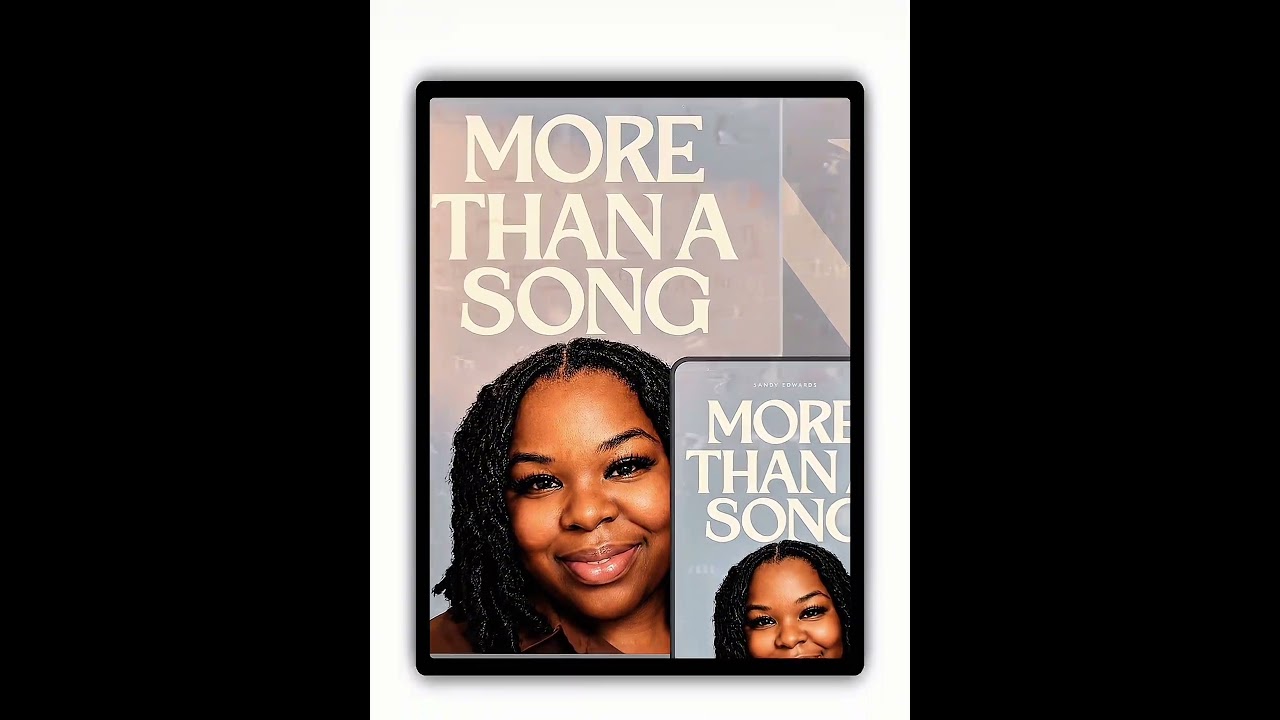
Thank you to everyone who has purchased, replied, commented, and shared. #newbook #amazonschoice

3 moreeee days!!! Morethanasongbook.com #newbook #memory #jesuschrist #jesus #holyspirit #testimony