Changing the Narrative with Gethin Jones - 304
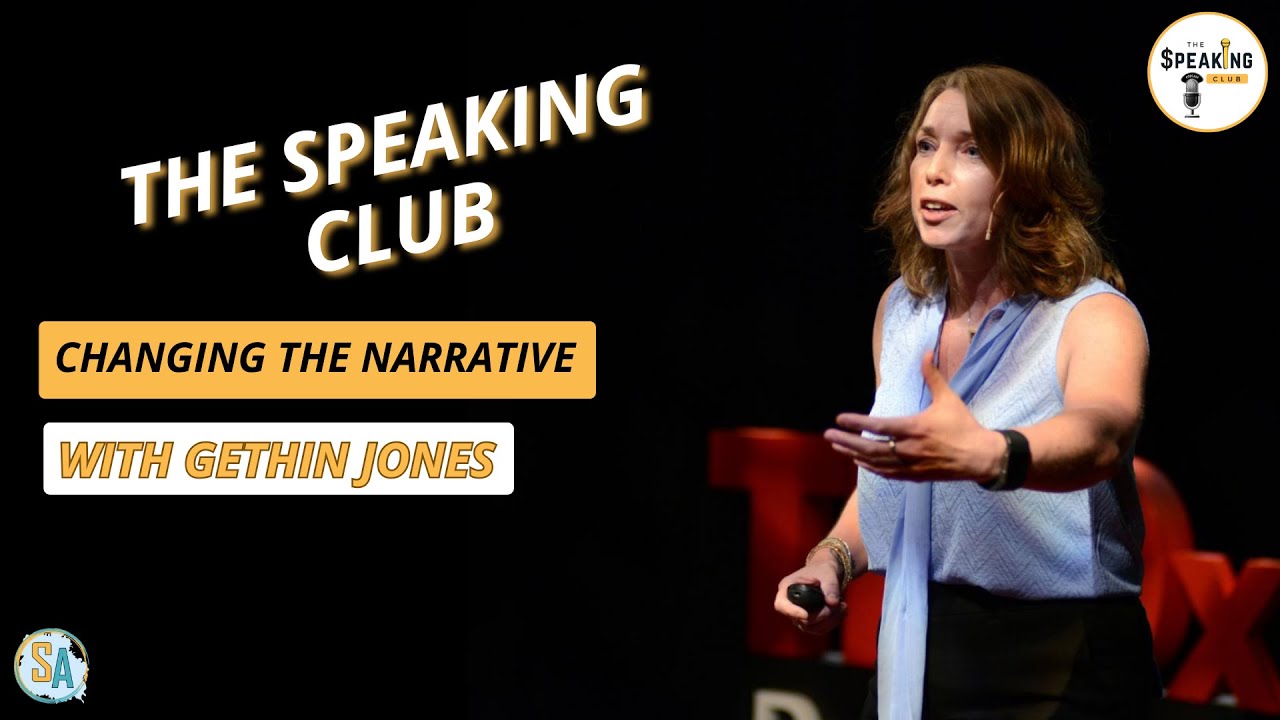
Gethin Jones spent eight years in prison before creating the HOPE program after hearing another inmate's story. He now runs Unlocking Potential to reshape the justice system and challenges the myth that prisons prioritize public safety, arguing they often harm communities instead.
Chapters
Hello, you're listening to Sarah Archer and episode 304 of The Speaking Club podcast. I want to start this show with a quote from author and teacher Yehuda Berg. We need to realise that our path to transformation is through our mistakes. We're meant to make mistakes. To recognize them and move on to become unlimited. I started this podcast for two reasons: because I want to help people recognize the power of stories and humor in speaking, and because I believe it's your message that counts, not the number of ums and ahs you use. There are some organizations that want to create robot speakers. They want you to sacrifice your personality in order to speak. I want to let you know that you can be yourself and a sensational speaker. So, if you want to be a speaker that connects and engages authentically through stories, a speaker that gives value as well as a great performance, then welcome home. Hey, welcome to the show. Got a doozy for you today. This one had me choked up. You're here. When I, when I get choked up and you'll see me getting choked up. But, uh, yeah, it's a great show. I met Gethin Jones at a conference a few weeks ago and his personality, his passion, and his story just caught my attention. And I knew that I had to get him on the show so that he could share all of those things with you. And I think the biggest thing to pay attention to here is the journey that he's been on, from where he started off to where he's ended up. And if you are struggling to, you know, get your confidence up to become a speaker or to level up your speaking, or you're worried that your message is not getting heard, Or people won't listen to it because it's challenging and difficult, then you're gonna get so much inspiration and insight from Gethin. He grew up in the care system, he ended up in prison, but he found the will and the way to turn his life around. And today he is owner of a business that helps people Uh, in the justice system and working in the justice system to transform things. And he speaks internationally, and he's got a big mission, which he'll be sharing about on the show. So, that's enough from me. I'm going to hand over now to Gethin and myself and the interview. Welcome to The Speaking Club, Gethin Jones. Thank you.
Thank you very much for having me here today. It's amazing to be in your company.
Oh, it's lovely to have you. And I, I knew I wanted to get you on as a guest, uh, when I met you at the conference we were at. You've just got this enormous personality, this amazing story, and, uh, I know that you're gonna add a lot of value to the audience today. So let's start off. By just asking you to share your personal story that's led you to what you do today.
Okay, well, I really appreciate you, Sarah. So yeah, I shall make a start. I'll just do the succinct version, okay, because of time. So if I just first of all say, and it'll give some understanding to the listeners, I am what you call a poacher turned gamekeeper, okay? But first of all, you need to understand what poaching looks like.
Okay.
So I always say I had an interesting life, especially the first 35 years of it. And that's what I'm going to explain to you quickly now. So I was born into what they call a dysfunctional family. I don't believe there's any functional families out there. You're all dysfunctional to a point. But Mum was certainly dysfunctional. And what that meant for me, my mum come through the children's care system. My mum also had learning difficulties, and my father was an alcoholic. And that meant that children's services were there from the day I was born. Because of the lifestyle that I had growing up within the home, it was very, very unsettled. And there was a lot of trauma that I experienced from a very, very young age. And because my mum and my father weren't able to give me the love, the care and nurture that I needed to develop as a human being, certain things happened in my life, which kind of led me down the path of what I'll kind of explain now. I always talk about in a chronology of events rather than go into detail, because it would just take too long. So what happened was, uh, my father left when I was about 2 years of age, uh, and that was when I was first put into the children's social care system as a foster placement. I was then put into another foster placement at the age of 5. Uh, when I was 6 years of age, my mum got into a violent relationship with a criminal, which was, uh, which was a very difficult place to live. Uh, and that was when my ACEs first come out. We call it adverse childhood experiences. ACEs came out of my behavior. And then my behavior starts to get punished, and nobody's asking why I was acting like I was. They just kept punishing me. So what that then led to was that I was put into another foster placement when I was six. I was returned home again. I then ended up getting into trouble in the local community. I got my first criminal conviction at the tender age of twelve. So at twelve years of age, they put me in front of court. I also went into at the age of twelve the same children's home that my mum had left. So I went into the same home that my mum had left. I was then excluded from school at the age of 13, and then it continued to deteriorate because I was in these children's homes. I didn't want to be there, so I kept running away, and I was getting into lots of things I shouldn't be doing— drugs, war crime, and other sorts of stuff. Back in them days, you had to be 14 before you could go to prison, and 2 weeks after my 14th birthday, they locked me up. And I always say, at that point, I was a 14-year-old child. Yeah, and it wasn't until my own son turned 14 that I realized just how young I was. But what happened was that when I came out of that detention center, I was just completely broken and lost at that point. I had no trust in anyone or anything, and I just made a decision that I was just going to live my life on my terms. And then I went on what I can only describe as a 20-year self-destruct. And what that looked like for me was I was in secure units at 14, I was in secure units at 15, I got my second custodial sentence at the age of 15. I ended up spending a total of 8 years of my life behind a prison wall. I became an intravenous dependent heroin user. I spent time on the streets and in homeless hostels, and I destroyed any relationship that came my way. It wasn't that people didn't want to love or care for me. I was incapable of maintaining any kind of human relationship. I had an unconscious inbuilt mechanism that says, I'm going to push you away before you push me away, and I'm going to hurt you Before you hurt me, but something changed because I'm talking to you here today.
Yeah, you are.
So, so yeah, so I don't know if you want me to go into all of the detail of like what the change looked like, or have you got any questions?
Yeah, yeah, I think, I think people want like what made the difference. What? Because that's, you know, it's a horror story, and I can't believe. From hearing that, the person that I'm seeing in front of me today, you know, the change has been amazing. Like, and what, so what caused that change? I think it'd be interesting to hear.
Yeah. So, um, so everything I do in relation to the work that I do deliver now is all what I call human-to-human relationships, human-to-human relationships. So people always say to me, so was it the system that rehabilitated you or changed you? And I will go, no, it wasn't the system that rehabilitated or changed me. It was individuals that worked within it. People change people. And what happened for me was when I was 29 years of age, I went into Winchester Prison. I first went into that prison as a 15-year-old boy. Okay, I'm now 29 years of age, I'm coming off heroin, crack cocaine, and everything else. And in my head, I'm like thinking, there's got to be more to life than this. Because I felt my life was only ever going to be worth a prison cell, a council estate, and a bag of drugs. And I was wrapped around all of the same people continuously on this cycle. So that was when I first had the idea of change.
Okay.
And everybody used to say to me, you need a change. And I'd be like, excuse my French, no shit, Sherlock, I'll stick needles in my neck. But changing what? I don't know what you're talking about. I don't know anything else. So what happened was I had this drug program. Yeah. And in my head, I thought, right, I'm going to go on this drug program. But I didn't go on there because I wanted to be like, clean and serene. In my head, I thought, if I go on to this drug program, when I get out, I can just sell it and not use it. So I was only going on there so I could be a successful criminal. That's the truth. But when I was on there, they said to me, Geoff, and they said, we want you to listen to this fella speak. And I remember going in this room, I saw this bloke, and I remember looking at him thinking, what do you know about me? What do you know about my life? And then he shared his story. When he shared his story, I identified with parts of his story. And then he talks about this new life. And he talks about he had a family, he had holidays, he had a home, he had a job, a bank account, passport, all this normal stuff. My jaw hit the floor, because I didn't believe that stuff was possible for people like me. So for the first time in my life, I saw what change looked like. I had a goal and an aim to go to. So that's why I call my programs HOPE, which is Hearing Other People's Experiences. He showed me what it was. But then I was so damaged, and I mistrusted everyone and everything. If you think about victims and perpetrators, for me, the system was the perpetrator of my pain, not just mine, but all of my family's too. You're now telling me I have to go and work with my perpetrator? How do you even do that? So then it was a long process of going back and forwards, back and forwards. And it was certain individuals through that prison system, and when I came out to the community, that were able to connect with me as a human being. Nurtured me, supported me, and kept taking me to the next step and the next step until you see the person that you see before me today.
Amazing. So from that 29-year-old, how long did it get you? How long, many years did it take you to get things back onto, you know, a sort of stable footing, if you like?
Yes. And this is the other thing. Yeah, because everybody thinks changing people is like a bit of like a sausage machine. Yeah, you put them in, they come out. So what happened? 29 was when I had the idea of change. I was 30 years of age, so I'd been in for a little while when I, when I heard that gentleman speak. And then it took 5 years. So 2001, that was the shift, came in 2006. Okay, 2006. And, and it was a process of one step forward, two steps back, step forward, two steps back. I do a lot of work with business owners. I always use the word fail. Yeah, because there's nothing wrong with failing. Failing is a part of living. And FAIL for me stands for first attempt in learning. Uh, for me, it was 50 attempts in learning, but I think FAIL the same way twice. And it was all of that learning that then got me to the place of, this is it, this is what I need to do. And from that point, I just didn't look back. And that was in 2006.
Brilliant. I love that. I love that concept of failing forward as well. Like, it's, it's, uh, it's really, really important to reframe failure, you know, otherwise people can get stuck, can't they? And that's, that's really good. Now, I know one of the things that you talk about, I've seen some of the posts that you, you've written about it. You talk about this concept of prison pipelines and how we should, and when I say we, I mean society should take an upstream approach to changing things. What do you mean by that?
So, so I suppose really is, is misrepresentation of what prison is, and what the main general public believe as well. So if I just put it into a bit of a roundabout thing, at the moment, most people believe that you lock people up to keep communities safe. Yeah, you lock people up to keep communities safe. But currently, with the system that we have at the moment, we've got complete overflow, and it just keeps on filling. They're now looking at spending nearly £4 billion on 20,000 new prison places. Yeah. So something's not working.
Yeah.
Because the population is going up. The other issue as well is when people are in prison, they're not really getting the support that they need to be able to make the changes needed. So actually, when they get out, they're more disadvantaged than when they went in, yeah, which then makes our communities more unsafe because they're then more likely to re-offend. And that's why we've got a lot of the situations that are going on within our communities. So actually, there's the misrepresentation is where we think that prisons are the solution, but actually, Prisons are becoming the problem because prisons that's creating the pain that we're feeling within our communities. So then we need to look at so who is it that we're actually incarcerating? Who are we looking at locking up? And there is an ex-prison governor called John Podmore, and he said this: He said sixty percent of people in prison shouldn't be there. You should only lock up people you're scared of, not people you're mad at.
I love that. That's really cool.
And it's the truth. Because if you look at them, 60%, these are people that have come from adverse childhood experiences. They've come from the care system. Yeah. They've come— they've got homeless, drug dependent, alcohol dependent, ex-veterans, PTSD, lots of mental health. And because society doesn't know how to manage or deal with them, They end up then coming in contact with the law, and then they go to the court, and then they go to prison. But then what happens with these percentages of people is they're what's called low risk, high need. But the prison system can't manage the need, and the community can't manage the need, and then you've got this revolving door. And what happens as well is because the risks are low and the offenses are low, they're very short sentences.
Right.
So there's not even enough time to do anything whilst they're in prison. And then this is costing so much money to society. It costs £50,000 a year to keep somebody in prison. £50,000. It's around about the same price to put somebody through Eton. Okay, but less than 5% of that £50,000 is being spent on education and rehabilitation. It's all being spent on infrastructure and wages and all of the other things that keep the prison moving and working. So yes, we've got that area there, but then like you say, we've got the pipelines. Yeah, the pipelines that feed it. So if you look at, say, educational stats, it's something like 65% of people in prison have got reading ages of below 11. Yeah, over 50% of people in prison were excluded from school. Okay, it's nearly 60% that have no qualifications. So we have literally got the education-to-prison pipeline. Yeah.
Mm-hmm.
And if you have a little Google, you can find one because they put it up as a Northern Line on the Tube one time to show people what it looked like. But it looks like this. It goes detention, isolation, exclusion, permanent exclusion. Then what happens to them children? They're usually then on the streets, and they've got none of the infrastructure there to be able to hold and support them. Okay, we also as well, if we look at other stats within it, 80% of young men in prison come from fatherless families, fatherless families. So actually, the mentoring and nurturing and support they could maybe get in education. They're not being given because they can't attain the academic way of learning. But actually, maybe their lifestyle means that they're not in a place to be able to do academic learning. So that's one pipeline. On the care leaver, comes through the children's services. This one's shocking. Care leavers or care experienced people make up just 1% of the population in the UK, just 1%. Of the 21-year-olds, yeah, 21 and under, yeah, 50% of those young people are care experienced. They're just 1% of the population, but 50%. So what we see as a society is the vulnerability of a child. We then put them into the care system. Okay, then what happens is when they're in the care system, they respond negatively in their behavior linked to their trauma. We then punish and criminalize the behavior and put them into another system. They did it in my day, and they do it the same in the day today. And the other one is the postcodes. Yeah, the postcode. So if you, whatever area you live in, you'll have a local prison, a remand prison, which is fed to the court. So I live in Portsmouth, my one is Winchester. If I went to Winchester Prison and asked to look at the postcodes of the people from Portsmouth within there, we've got some really poor areas like Portsea, Lambeth, Buckland, Somerstown. And that's the areas that are feeding the prisons. So this is the upstream thinking. It's actually, you know, you're about to spend £4 billion on 20,000 new prison places. Why not spend it in them postcodes, in them social care areas, in them educational schools that are struggling on a day-to-day basis? And then maybe we can then hopefully then reduce the need for people to go to prison.
God, that makes absolute sense, doesn't it? And it's just It's basically putting a plaster on a broken leg instead of like stopping the thing happening in the first place. Interesting. Okay. And, and I guess, you know, there's some— you've alluded to one myth there around prison, the purpose of prison, or what people perceive as the purpose of prison. Are there some other myths that People believe in society around the justice system that you're trying to destroy?
Well, you've got to ask the question, what is the purpose of prison? Yeah, what is prison's purpose? Uh, and is it punishment or rehabilitation? Yeah, punishment or rehabilitation. Uh, so most people will say they're going there to be punished, to be punished. And then it's like, well, no, actually, the punishment is the loss of liberty. That's the punishment. If it's a small crime, it's a small amount of time. If it's a big crime, it's a big amount of time. So it's the loss of liberty. And then prison's primary purpose then should be about education and rehabilitation. Yeah, about how you can make better citizens of the people who are in there. So when they come out as returning citizens, they're in a place to be able to return to our communities and add value. Okay. But, you know, but there's, there's a lot of people out there that believe we have to repunish them. And it's funny because I always say to people about, like, you know, the loss of liberties, the punishment. And if we think not that long ago, we was in COVID. Yeah.
Yeah.
When we was in COVID, people lost their liberty and people felt the pain of losing that liberty. Yeah. And people were isolated. from their families, their friends, and their communities. They were only allowed out for an hour a day.
Hmm.
What happens on a daily basis in prison? Most people in prison are spending around 23 hours a day behind the cell door. Yeah, these people are very traumatized, a lot of them that have come from a lot of pain and anguish, and then they don't know what to do with that pain and anguish. And then if you go into any kind of real local prison, On a daily basis, you'll be hearing the bells going off. And the reason why the bells are going off is because people are cutting their arms. People are trying to commit suicide. There's violence. There's all of this stuff going on. And the reason why this is going on is because we're not giving people what we need. But then the media will say, but they've got a TV in their cell. Yeah, they've got this and, and, and they make it out as if it's a holiday camp. And I'm like, please. Please go and spend 24 hours in a prison. You will never ever believe it's a holiday camp again, you know, because it is far from a holiday camp.
Was it scary for you in there? Did you feel scared, or you, in, in terms of navigating your way through, uh, the sentences?
So, um, so for me, I— this sounds really sad— for me, it was I was fortunate, and what I mean by that is I was institutionalized before I even went to a prison, and that was because I was in children's homes. I'd already been in the system; it was just a bigger children's home. Yeah, and actually, I knew a lot of the young people that were already in there. Okay, what I'd also learnt throughout my life was how to be able to survive. Yeah, so I was able to be able to survive in all of those kind of places. But I suppose the sad thing for me was when I first went to that, and I went to what was called a detention center when I was fourteen, and they're called short sharp. We're going to scare you straight. They was filled with bullying, violence, and intimidation. But I will say, as that 14-year-old child going through that gate for that first time, I was absolutely terrified because I knew what was going on because I'd heard from all of the other peers that had been there before me. But I also knew I couldn't show any fear. Yeah, I could not show any fear and I couldn't show any weakness. I had to find a way to survive. And that's kind of what it is that I did. Yeah, I would be able to survive in whatever environment that I was put within. But then the sad thing about it is like, you know, and I'm not proud of this, but I've got 56 offenses and 18 convictions. I've done a total of eight years behind a prison wall. I had numerous prison sentences, and to be honest with you, prison became quite a relief. Yeah, it became a relief because I didn't know how to live in this world. I wasn't accepted in this world. I was given no opportunities in this world. So actually, when I went to prison, it was like a.
Yeah.
Because I knew where I fitted. I knew what I could do. I knew what I couldn't do. Yeah, I had all of this sort of ability to survive within that place. The fear for me came when it was time to get out. Yeah, when it was time to get out. And the best person to explain this was Morgan Freeman in, in Shawshank Redemption.
Yeah.
And he said, when you first go to prison, you fear the walls. Once you've been going there for long enough, then you get used to the walls. Stay there too long, you depend on the walls. Yeah, but I also say about institutionalization, that's a part of life as well, because we all get trapped by the safety and security of what we know. Yeah, the safety and security of what we know. So if you keep locking people up, yeah, that becomes their safety and security of what they know, and then they find it very difficult to move then off into another type of world.
Yeah. And people do it to themselves with the beliefs that they have. They create their own prisons in terms of what they know, that comfort. Uh, that, that's, that's an interesting, uh, analogy. Gosh, you really went through it. I, I want to ask you before we move on to some of the other questions, one of the things that you mentioned at the start was the wall that you put up that pushed people away and also that you must have needed to create that sort of mask of fearlessness to survive in all the different systems. How difficult has it been for you to dismantle that part of things?
It was very difficult. That's why it took me over 5 years. Uh, and it's a constant process. If you, uh, if you've ever read The Chimp Paradox, yeah, I don't know if you've read The Chimp Paradox, and he always talks about, uh, gremlins and goblins. Yeah. Do you know? Um, and I think it's the goblins that are just there. Yeah, they're just there. So for me, uh, I have got, uh, uh, attachment disorder, you want to call it whatever you want to kind of call it. Uh, so my natural, uh, instinct if I feel any kind of pain is to push. Yeah, that's my natural instinct. But what it is is I've learned to be able to manage and deal with that. Yeah, so I had learned to manage and deal with it, you know. And I had this amazing counselor one time, um, and what he said to me, he said like when a situation happens, so if it happens here and it might be a very small, say, letting or something like that. Yeah. It's like a conduit that goes to a big massive ball of being let down my whole life.
Yeah.
And then that's the overreaction where the push comes from. Uh, so I learned techniques of where I could actually just pause and ask myself, is that real today?
Yeah.
Is that real today? Uh, so I have to stay consciously aware. Yeah. Uh, and kind of monitor, uh, how I'm acting, thinking, and doing, you know, because there is a kind of, there is a kind of a, a, a consequence from it if you wanna kind of call it that, you know? So, But, um, but to be honest with you as well, it's now become a huge gift because what I have got is a huge amount of self-awareness, um, and I've got an ability to see people. Yeah, because I understand so much about my own behaviors and my own personality and my own way of, uh, thinking and being, I can see it in others.
Yeah, yeah.
And then I found the ability to be able to guide them to it without telling them or pointing it to them. Yeah, so Yeah. So it's become a bit of a gift, you know?
So, well, it was really interesting to me because for everyone listening, like every, and watching, every time I saw Gethin, he had like a load of people around him. He's like a people magnet. So what it must be, whatever you're doing must be working because people are flocking to you. So, uh, that's, that was really cool. Now let's shift on to your mission. How would you describe your mission today? And how can people listening help?
Well, just by you, Sarah, allowing me to come on here. Because I remember, like, when you said this to me, you said, you said, oh, would you like to come on the show? And you went, uh, and you said, uh, but there may not be people on there that kind of link to your kind of work. And I'm like, brilliant. Absolutely brilliant. That's what I kind of want. Uh, so, uh, and I was at an event the other day as well. So then what it is, there's a lot of people like me that do a lot of stuff about prison reform. We all do about prison reform. You know, go back to Charles Dickens. Charles Dickens was a prison reformer. It's been going on for centuries. Uh, but what it is is we're kind of in an echo chamber. Yeah, it's all the same people saying the same things, you know. So, uh, for me it's about we need to shift tact. Yeah, we need to shift tact. Uh, so I've kind of now set up a new mission. Yeah, so I've got Unlocking Potential, uh, which is a successful company that's sort of still able to do like, uh, consulting, training, coaching, lots of other bits and pieces with other associates that do it as well. So now I'm on a one-man campaign Activist, yeah, to be able to change the justice system. The other thing as well is I don't call it a criminal justice system. I'll take out the C word, yeah. It's just a justice system because it should be just and fair for all. Okay, it's not just about the C word, so I'll take that one away from it. And literally, my mission is to create a justice system that's fit for purpose and fairest for all. That's for the people that work in it, the people trapped in it. And for those they serve, which is us. Okay. So what I've learned through my time is that politicians will listen to you, but they're not actually going to make the changes that you want. And I've been to Westminster more times than I know what to do with. I've actually been in 10 Downing Street. I've met them all. Okay. And the reason why they won't make the big decisions and changes is because of our friends at the Daily Mail. Okay, and other public narratives that have this belief that we need to be tough on crime. Yeah, and we need to be tougher, longer sentences and everything like that, so to speak. So my mission now is to shift public's perception. That's my mission, shift public perception. Because I believe if the public narrative will change, that will then mean that the politicians will fall into line. Because what they want is the vote, and they will put in what the public are wanting. And I use an example, the best way to be able to do this, and I always link it to smoking. Yeah, because the reason why smoking is today is because of a campaign of changing public perception. If you went back 30 years ago and said in 30 years' time you won't be able to smoke in a pub, in a restaurant, on a train, in a plane, or in a car, a taxi, they go, that's mad, that will never happen. But what they did, there was such a campaign that smoking went from social to antisocial, and then legislation had no choice but to change. So that's kind of my mission now in relation to what it is that I want to do. And for me, I just want to get my voice out as much as possible to as many audiences as possible. So, you know, if you are somebody out there that thinks actually you would like to hear my story on your stage, yeah, where actually I can give you something that sort of like will show you that actually change is possible, and we can all be better human beings, and at the same time, educate your audiences into the realities of the justice system, please just get in touch. I'm more than happy to do that. And then together, we can make a justice system that's fit for purpose and fairer for all.
I love that. And I'm sure people will be listening, and will want you to come on and share your story and your perspective. And we'll put all the links for people to grab hold of you in the, in the show notes. Cool. Now you mentioned this already, that you, you speak and you train business organizations. At what point did you realize you had value to offer them and what made you see that?
Oh, see, it is, it's, it's, it all kind of happens by accident. Yeah, it all kind of just happens by accident. Uh, but what it is, I think it comes down to the understanding of human behavior. Human behavior, and I've got a lot of transferable skills. Yes, that's where they transfer across. So I'm a qualified leader and manager. Yeah, qualified leader and manager. I always say that's a transferable skill. When I was in children's homes, I used to get kicked out children's homes for leading kids astray. It don't matter if you lead somebody left or you lead somebody right; it's the same skill set. It's about influence. Okay, so that's the transferable skills that I kind of I'm able to translate today. And then when I think about what makes the best leaders and managers, what makes the best leaders and managers, and for me it's the ones that are very self-aware, yeah, and they've got— and they continue to develop through their own personal development, yeah, personal to them. Um, so that's kind of where the transition went through. I thought, I'm a natural leader, I understand what it's like to lead individuals, and I can create good, high-functioning, quality teams. Okay, and if I can do that in the public sector, I can do it in your sector, you know. And then the other bit as well, because I do a lot of stuff which I call in the messy middle. Yeah, the messy middle, that middle management. Yeah, okay, where do you know somebody goes into a job? Yeah, what they do when they go to a job, we train them really well so they could do that job. They've been there for a few years, they want a bit of extra money, so they apply for a promotion because they know the language. We give them a promotion and then they go into a first-line leader or management job. And we give them no training. And then we wonder why it becomes a complete mess. And then there's a lot of them and us going on, them and us. So what I do in the justice system is I can literally work with prisoners and prison officers in the same room. And there is no bigger them and us than that. Okay? Yes.
Yeah.
But I can facilitate that in such a way where actually they can learn how to be able to work together, Yeah, to support better outcomes for both of them, whether they're living there or working there. Okay, so I just think if I can translate that— well, don't think, I just know because I do it anyway— I can translate that there, I can translate it into your company. And actually the outcome there is about reducing reoffending and blah blah blah, whereas the outcome in the businesses is about sort of like higher productivity, uh, less sickness, yeah, more engagement, uh, higher productivity.
Absolutely makes sense. I mean, at the end of the day, we're all people and we all have the same drivers and the same hangups and, you know, to, to, you know, fewer or more degrees, but, uh, it's the same. The other thing that I read that you had put one day was about how a meeting that you went to in 2016 opened doors for you.
Yeah.
And I wanted to see if you could share what you learned from that event. That you've taken forward as you've built your business and speaking career?
Yes, it's funny because it's about the same time I started the PSA, Professional Speakers Association, as well. So I've got a book and it's called How to F Up and Still Succeed. Yeah. And the model is called Think It, Say It, Do It. Yeah. You have an idea, share it with the right people, and then put in the kind of the action. So what it was is when I went on to this, this, this journey of being an entrepreneur, Okay. I knew that I had to sort of like put this into action. And I remember I went to this, it was an Entrepreneurial Spark event. And the one thing that I heard in there that just stayed with me was be opportunity hungry. Yeah, be opportunity hungry. And then I thought, I've always been opportunity hungry. That's how I survive. Yeah. So I just need to work out what it is that I do. So then what I made a decision to do was whenever I went to a networking event, Yeah, if I went to a networking event, I was going to come away with two to three meetings post that event because I knew that every two to three meetings is probably going to lead to another one or two meetings or blah blah blah. That's how it kind of goes. So that's what happened at that event. You know, so that event I was opportunity hungry and I remember like someone's gone. Can you come to this roundtable event? It's about justice. Yeah, and it's professors and philosophers. Yeah, I remember saying I'm going to philosophize with philosophers. Yeah, and I was new in the space. Nobody really knew me, but there was some very influential people in there, and I worked out, opportunity hungry, who they were. Yeah, so I ended up getting a meeting with a lady called Annie Fox, and she was a CEO of a big charity called Clinks that oversaw, uh, all of the third sector charities within the justice sector. I ended up having a meeting with her, and then she was like, uh, I love what it is that you do, Geffin. Would you maybe come to speak at our event. Yeah, we won't be able to pay you. Yeah, but we'll be able to kind of pay your expenses and all that sort of stuff. Absolutely lovely. I said, is there anybody else that you could maybe refer me to? She went, there's a lady called Natasha Porter. She's got a really good thing called Unlock Graduates, and it's about graduates going into, uh, to get a master's degree whilst being prison officers. I went, brilliant, let's do it. Yeah, so anyway, so I spoke with Natasha. Natasha said, yeah, we'd love to have you come down there. The mad thing about it as well, I ended up sharing that stage with Richard McCann that I'd already met before that as well. And then at the end of that event, you know, this gentleman came up to me and he's called Paul Baker. And all I'd done was shared everything I knew in relation to my own story in the justice system. And he said, he said, definitely goes, can I introduce myself? I went, yeah, okay. He said, my name is Paul Baker. He said, I'm a prison group director. And what that means is he oversaw all the prisons in the Thames Valley area. He said, do you know anything about what's called the OMIC model or the rehab culture? And I went, nope, never heard of it. He said, everything you spoke of is that, and I need you in every one of my prisons. And I always say on that day, he didn't open one door. It was a corridor of doors and it just continued from that point. So like literally it was going to that one event with Entrepreneurial Spark, opportunity hungry, think it, say it, do it. And then just action.
I love that. And I think that's the thing is, is, is being open and being interested as well in, in, in other people. And I love the thing. I think I saw something else from you recently where you put about, I think it was like something like be of service or do things for other people. But, and the mistake that people make is they do it with an expectation. And, you know, so be opportunity hungry. But be of service. And I think that's the attitude that comes across from you.
Yeah. Or be authentically kind.
Yeah.
I'm a Buddhist anyway. Yes, I'm a Buddhist. So I kind of understand all of that sort of stuff, you know. And the thing is, is if you're doing something because you want to be rewarded, you will not be rewarded. You have to do it because it comes from a place of just the way where you can and you want to do it. You know, you can and you want to do it. Um, and, you know, and, and it's, uh, I remember that I think I put it in there as well. Yeah. So there's, there's some organizations where they say, You can only keep what you have by giving it away. Yeah, you can only keep what you have by giving it away. And that's the principle. The more kind, the more caring, the more giving, the more supportive you are authentically. Yeah. And actually the more stuff kind of comes your way. And then that comes to that thing about where you were saying about sort of like people are attracted to me. And I suppose if they're attracted to me is because I probably do throw out that I am just a nice person, which is, which, which is very bizarre for me even to think of that because there was a time where I just thought I was just not a nice person at all. But today I absolutely know that I am, and I know that I am, and I am kind, I am caring, I am giving. I don't tell anybody when I do that stuff because it's not about that. Uh, but then I think that just kind of rubs off and then people just come and opportunities come, you know?
So yeah, absolutely. Yeah, it does. Right. Your vibration radiates out and people sense that. Cool. Now I wanted to get your advice for people who might be listening. who have a message that they feel no one is interested in hearing because it's difficult or it's challenging. And I wondered if you could give some advice to people, um, because your message, you know, can be for some people difficult and challenging to hear. You've got a perspective and it doesn't align, you know, potentially with the popular view. Um, how, what advice would you give to them? around going forward?
So, so for me, uh, I, I always have this thing is, um, uh, if, if, if I didn't speak and I didn't say the truth of what needs to be said, then actually I'm part of the problem. I'm not part of the solution. Yeah, I'm part of the problem, not part of the solution. And I can remember as well when I first went into the speaking world as well, when somebody said, you're never going to get everybody in the audience on your side. Yeah, there's always going to be people within that room that doubt you. But then they also said, but to be honest with you, GIF, they said they'll still remember you because of that. Yeah, because you've irritated them that much because you've gone against everything they've done. So they're going to stay, you're going to— they're going to remember you anyway. Um, so yeah, so for me, it's— I am able to speak in the way that I speak in relation to what it is because I truly believe within the core of me Yeah, that this, this, this needs to be out there. It needs to be told and it needs to be shown. Um, you know, and the only way that we do that is by educating people that may not have the educational understanding because they don't see it within that way. So for me, that's that, that's that, um, uh, that, that's, that's that drive that keeps me forward. Then I suppose the other part of it as well is that, that old saying is, is find your tribe. Yeah, because you won't be alone. Yeah, you won't be alone. Uh, and I, I've been in this for a little while, and it's kind of funny as well because there was only a couple of people that were doing the stuff that I'm doing. And that's why I feel ready to move on to the next stage, uh, because now what it is is an abundance of people that are doing the same work that I'm doing, and they're doing it in prison. And I don't, I don't have this thing, oh, they're coming in, they're taking everything. I'm like, thank God for that. Yeah, let's share it. Yeah. So actually, they're now going in and they're doing— so I'll call it now— they're doing micro work and doing the work and supporting the individuals that are within there. And then I'm now looking at the macro work of changing the bigger thing. Yeah. So find your tribe, find other people that have kind of got the same mission, the same vision.
Yeah.
And then collectively work together and support each other, you know? So that would be the—
Yeah. That abundant mindset makes a whole difference, uh, as well. Cool. And at what point in the journey did you start speaking and how Did you approach the first talk you gave?
Yeah, well, that's it's quite an interesting one. Yeah. So so what was I was working for Port City Council? Yeah. And I was already in this thing in my head of thinking there's got to be more. I was in that place again. Got to be more to this. Yeah. I felt I had a good job, but I felt it was all a bit tokenistic. And I was managing some alcohol services at the time. And and a pharmaceutical company said, "Oh, we'd like you to come and present." What it is that you do? Yeah. And then they said, and we'll pay you for it. I went, what? Pay me for it? So anyways, so they kind of like they went up to Birmingham. They put me in this really nice plush hotel. You know, I'm talking really plush. And they put and I've done all of this sort of stuff. And I had a partner with me, a friend who were not partners in but a work colleague. Yeah. And and we delivered this workshop. That was kind of fine. It's what we did every single day anyway. And then at the end of the day. We then had to do a there was a the big dinner, and there was an after dinner speech. And then this gentleman got up, and he started to share his story, which was about his relationship with alcohol. And that's God's honest truth. I was listening to him, and I just thought, "I could do better than that." That's what I was thinking. But then I was like thinking, "Oh, that's just your ego, Geth. That's just your ego." And then Sue was with me, my colleague. Sue said to me, she went. So what did you think of him then, Kevin? I went, yeah, yeah, he was all right. And then she went, you could have done a better job than that. Yeah. And that was it. I thought, that's it, that's what I've got to do. I've got to find a way to share my story. And then fortunately, while I was in Portsmouth City Council, opportunity hungry, uh, there was a lady called Lisa Wills, and she was just about to do some stuff at Winchester Prison. And I said, can I join you and maybe do a presentation to the staff there? Yeah. So the first presentation I'd done was in the prison that I spent most of my life within. Yeah.
Wow.
Yeah. So, and, and the best way to— the best way I can explain it is, you know, is say if I put my speaking at a number 8 now. Yeah, at a number 8. Okay. I was like at minus 2. Yeah. Okay. I probably spoke about 100 miles an hour. Yeah. I, I was looking at notes. I was doing all of that sort of stuff. Yeah. But, uh, But I just had this passion that I was going to be this speaker. Yeah. So that's kind of what it was like. And then I did another one. And then, you know, the funny thing was, is I thought I need to work out how to do this a bit better. And I went on to LinkedIn public speakers and Lee Jackson popped up from the PSA and I had a conversation with Lee and then he encouraged me to join the PSA. And then that's what then helped me speak more, speak better.
That's brilliant. And I love the fact that's one of the things again that I see sort of shining through you know, our conversations that we've had, the— I remember you bidding for something at the PSA in terms of a development opportunity, and that feeling that you are happy to embrace, uh, and are committed to being a pupil, especially, you know, probably other areas of your life, but I know when it comes to speaking that you've got that, that openness to learn, and, and that's what's going to make you better. Um, what are the biggest things that you're looking to learn more about with your speaking?
So for me, it's scalability. Yes, scalability. Okay. Because the thing is, is when you're speaking, you're selling your time for money, you're selling your time for money, and you've only got an infinite amount of time. And there's a maximum amount of money that you can charge. There's kind of a window. For me, I've always had this vision of doing this, what I'm going to be doing now. Okay. Um, and so what it is, is I need Unlocking Potential to be a vehicle that can work without me, that can give me an income that means that I can just go off and do the stuff that really lights me up. Uh, so I'm now going through a process of learning to be a business owner. Yeah, that's the journey now, being a business owner.
Yeah.
Um, and don't get me wrong, I have learned stuff on the way, but I'm nowhere near there. So that same sort of thing, if we talk about a scale of 1 to 10, As a business owner, I'm probably at about 3. Yeah, I know enough, but nowhere near what I need to know. But also, well, I don't mind that I don't know enough because that then makes me open to actually what it is that I can learn. So as you know, I kind of bidded for what it is I bidded. I haven't actually taken that yet, but the reason why I haven't taken it yet is because I've got a business mentor and I'm going to be sitting down with my business mentor to find out what areas I really need support on. Then I will have a little look at sort of the speakers that I'm going to be with and see which one of them can help me in which of those areas. Then I'll make it strategically kind of work as well. But the reason why I've got this as well, because I do a lot of spiritual reading, there's a bloke called Wayne Dyer. And Wayne Dyer, yeah, Wayne Dyer. And he says, we are the pupil and teacher in equal measure. Yeah, the pupil and teacher in equal measure. And, and that's always resonated with me. And I always want to be that pupil. And It's funny as well, because I remember this as well when I went first went into the PSA. When I went into the PSA, yeah, I always felt like I was the most unintelligent person in the room, the most unintelligent. I walked into that room and everyone was like, I was like, oh my God, where am I? But then the truth of the matter was that was exactly where I needed to be because I was in a learning environment there. Yeah, I wanted to run away. I had the imposter syndrome. But what I did was I stayed and learned and learned and learned. So what I'm now doing is I'm looking for new rooms where I can be in as the most unintelligent person in the room, and then I'm going to learn in again. Yeah, it's scary, but isn't change scary?
Yeah, absolutely. I love that. And that is so true. If you, if you know, if you're the most accomplished person in the room, you're in the wrong room is what they say, isn't it? That's basically the thing.
Yeah.
Cool. Right. Before we talk about where people can go to connect with you, get more information, book you to speak, I have a few standard questions, the first of which is what's the best thing that speaking has done for you?
Oh, do you know, it's, well, it's opened up the world. It's opened up the world, you know. So like, you know, I have literally spoken in America, I've spoken in Australia, I've spoken in Barbados. I've got a network like I couldn't even imagine, you know, is You know, they say your network is your net worth. Okay, I don't believe that in financial. I believe that in education, learning, and understanding. You know, I've got such an amazing network. But also as well, I suppose the other good thing about it is I'm never alone. Yeah, I'm never alone. So not next week, the week after, I've got to go up to the northwest. And on the way there, I'm stopping at Annie Fox's, who's the lady I met from Clinks. Yeah, I call her my Irish mammy now. And I'll stop her as she lives in Coventry. I'm in Portsmouth. If I'm going up towards Liverpool, I'm going to stop there, have dinner, catch up, and then carry on to my destination. So it doesn't matter where I go. I've always got people that I can spend time with. When I've been to America, you know, I'll meet people in America and they take me to different areas. Yeah, I just feel like I've just got like this worldwide family. And for somebody that grew up with no family, that's extraordinary. Yeah, that's That's, that's what speaking has given me.
I love that. I think that's the best— it's sort of making me choked up, actually. It's probably the best answer we've ever had to that question. So thank you for sharing that. Now, uh, the next question is, has there been a gig that you just like, that you're like, you want to forget? Or like, oh my God, like, I never want to remember that thing again. Uh, has that ever happened to you?
Oh yeah, yeah, yeah, yeah, yeah, yeah. Do you know what? And the main thing was, yeah, it was a school. Yeah, it was a school. Yeah, I take my— so I, I've worked in youth services, I've worked in youth clubs and everything like that. Yeah, so in my head I thought like, I can do schools. Oh my God, what a car crash. What an absolute car crash. And I sold it to this school as if I was going to be the best thing since sliced bread, you know. I'm going into prisons, I've got some of the toughest people in the world Hanging off every word. Oh my God. Yeah. And I just realized at that point, schools are not mine. They're not mine. Yeah, I'll leave them to the Lee Jacksons of the world. I've got a mate down here called Duke Harrison Hunter, absolutely brilliant at them. Yeah, Dave Tiner, all of them people that do it. That's yours, not mine. I can't do it. I'll just— and yeah, I do literally, I talk about every other speech. I'll never talk about that one.
Everyone's got one. But you got back on the And you learned from it.
And that was the most important thing. Exactly. Cool.
All right, next question. What's the book that's had most impact on your life and why?
Oh, what's the book that's had the most impact on my life? Do you know what? I'm going to say Who Moved My Cheese.
Cool.
Yeah, Who Moved My Cheese. Uh, and it's, it's, and that's literally linked to the opportunity hunger. I've been all of those characters. Yeah, you know, I was the one dying because there was no cheese left there. Yeah, there was no cheese left there, and I was so fearful of what the maze would look like, I couldn't even put my trainers on and move. That's if people understand the story and everything. Yeah, yeah, yeah. Whereas now, uh, I'm scratch and hurry. Uh, I think that's because— yeah, yeah, I'm out. Yeah, I was kind of saying actually, because I've also realized I go through these stages, they're usually 7-year cycles. You know, I'm kind of going through it at the moment. It's like I've got to this point now of like, right, I've done all of that. What's next? Where next? Yeah. So yeah. And the other thing as well, I remember like when I was managing a team at Portsmouth City Council, so I oversaw staff teams of 40. I went through quite a lot of restructures. When we went for a restructure, I'd buy every staff member a copy of Who Moved My Cheese? Yeah. You know, I'd do it on the council budget, of course, you know, but You know, for me it was like, how do we help the staff? Give them something that's tangible that may be able to read, that they can kind of connect with, rather than be fearful of the change. Look at the change as an opportunity. So yeah, I would say, uh, Who Moved My Cheese?
That's a great— it's a great little book, and amazing how it's a bit like Dr. Seuss, you know, you can get such amazing, uh, shifts in perspective from something that's really simple. So that's great. Okay.
Just say this one quick, Sarah, as well. Um, but, uh, there's another small one called The Go-Giver, and you've got Go-Giver Leadership, which goes back to the authentic stuff that we talked about before as well. Okay, brings that to life as well. Yeah, so The Go-Giver or Go-Giver Leadership, they're good as well.
Brilliant. We'll put links to both of those books in the show notes. Okay, penultimate question: what's the best bit of business advice you've ever had and why?
Oh, so the best bit— so I suppose really it was, uh, from a friend of mine, Mark Legg. Uh, who's got construction business, and he was the first person to take me in to do communication training and skills with builders. Yeah, you know, and contracts managers. Uh, but what it was was, uh, it was linked to finance. Yeah, finance. Yeah. Uh, and, uh, and he just taught me that to, uh, how to be able to do everything exactly as it needs to be. Yeah, make sure your accounts are actually tip-top. And in perfect position, yeah. So that was kind of the best bit of advice that he gave me. But then also as well was like when I became VAT registered, yeah. When you become VAT registered, he says to me, "Geoffrey, the VAT is not your money, yeah. It's not your money. It's not part of the cash flow." So he encouraged me to get an extra account on the on the bank account, on the business bank account. So every month my my PA tells me how much VAT has come in. I then put that into the separate account, and then when my VAT return's done, uh, at the quarter, yeah, the money's already there to be able to go back into, uh, the, uh, HMRC. But also as well, there's usually a bit of a kickback. That money then stays there, and that goes against my corporation tax at the end of the year.
So yeah. Nice.
Be wise with the finances and understand your numbers Is probably the best bit of business advice that I ever got given.
Brilliant. Lovely. Thank you for sharing that. Okay. Last question. If you could have one mentor and they can be alive or dead, fictional or non-fictional, who would you choose and why?
I'm going to say 3, but they're all, they're all kind of the same. Yeah. So it'd be Nelson Mandela. Okay, it'd be Martin Luther King and Malcolm X. And the reason for it is because it was all about social justice, social justice, and, and making it the core of everything that you do. Yes. People always say to me, they say, oh, Geffen, you're so successful. Well, I say, I don't wake up to be successful. I wake up because I've got purpose. It's the purpose that then leads to the byproduct that's success.
Yeah.
So So yes, they would be their mentors because some days you wake up and you think this is just too big. It's too big. But when I look at the sacrifices that they made, especially Nelson Mandela, 27 years in a cell, what he believed, it's like, no, you can do this, Geth. Just keep going. Keep going.
What a way to leave that, that sort of wind up the show. Great stuff, Gethin. Really inspirational. The whole conversation has been Fantastic. I've loved having you on as a guest. If people want to book you to speak about what you're up to, to do some more training, if you're available, where's the best place for them to go?
Uh, so yes, you can go to my website. Uh, that's just about to be, uh, brand new and refreshed. It's also been done. So that's www.unlockingthepotential.com. Uh, you can find me on LinkedIn, uh, Geffin Jones Inspirational Speakers. You should probably usually do it, uh, or you can also email me directly at geffin@unlockingthepotential.co.uk.
Fantastic. And we will put all of those links in the show notes as well. Brilliant. Thank you so much for sharing your story and your insight and your opinions and being vulnerable and just a really big inspiration. Thank you so much, Gethin.
Thank you very much, Sarah. It's been a pleasure.
There you go. I hope that you got a lot from watching and listening to Gethin and all of the stuff that he shared. It's an amazing story. He's had a journey that most people, you know, would have not survived to get to where he is today. And so many lessons in that story for us and the way that he's come through, you know, to teach us about how to look at things, how to just keep moving forward, to seize opportunities that come up, to, you know, to just be focused on what's possible rather than, you know, what isn't. And I hope that you will reach out to Gethin if something resonated with you. And perhaps it's changed your perspective about the justice system and the people within it. I know that it certainly made me rethink a few things. And, uh, yeah, I'm just chuffed that he was able to come on the show. So, do reach out to him, do check out his website. I'm sure that, uh, if you're looking for a speaker who's going to, you know, inspire and motivate and just, you know, show what is possible for people when they put their minds to it and their hearts to it, then he would be a great person for you to bring in. Great. Well, all that's left for me to do is to say thank you once again for watching and listening to the show. If you do get value from The Speaking Club, I'd be grateful if you would leave a comment below, subscribe to the YouTube channel if you're watching, also subscribe if you're listening. And leave a rating or review, and you can do that over at ratethispodcast.com/tsc. Now, as I've mentioned before, we have a Patreon and that's over at patreon.com/tsc. And we have extra questions that Gethin answered around his tips for new speakers and other bits and pieces that is exclusive for people that support our Patreon. As well as other things that you get, including access to me, questions and answers that you might have around speaking, storytelling, performance, humour, whatever it is. So, do check out our Patreon. Love to have you support us so that we can make the show better, get some more great guests on, uh, also respond to the things that you are interested in learning and that matter to you that you want help with.
Great.
Well, that's all from me. Have a wonderful rest of your week, and I will see you next time. In the meantime, as ever, don't forget to go out, grab your life by the nuts, and get cracking. Bye-bye. It's a nightmare. You're an expert with so much to say, but now that you've been booked to speak. You're struggling to know exactly what to talk about. You want a talk that engages the audience and wins you new clients without you losing your personality or anyone feeling pitched to. But what happens when you sit down to create that talk is that you end up staring at a blank page for ages, or worse, surrounded by hundreds of sticky notes with content that you could include. With so much material you just don't know where to start or finish. Don't worry, because many experts like you face exactly the same challenge, and that's why I created the Blank Page to Stage Guide. In just 50 minutes, this breakthrough resource is going to help you identify the big idea of your message, make it relatable for the audience that you're speaking to, and convey it all in a way that gets the audience inspired and on board with your idea. And it works even if you have tons of material or your subject feels less than exciting. If you want to cut through swathes of content and get a talk that you're excited to share, your audience loves, and wins you new clients, then grab your Blank Page to Stage guide from saraharcher.co.uk/book. New Guide- TSC. Oh, I forgot to say, it's completely free. Enjoy!
More from Sarah




The Skill That Helps You Connect With Any Audience with Michelle Mills-Porter




What Moderating World Leaders Taught Me About Great Communication with Xenia Wickett


