Communicate with More Impact and Elevate Your Screen Presence with Loreta Tarozaite - 316
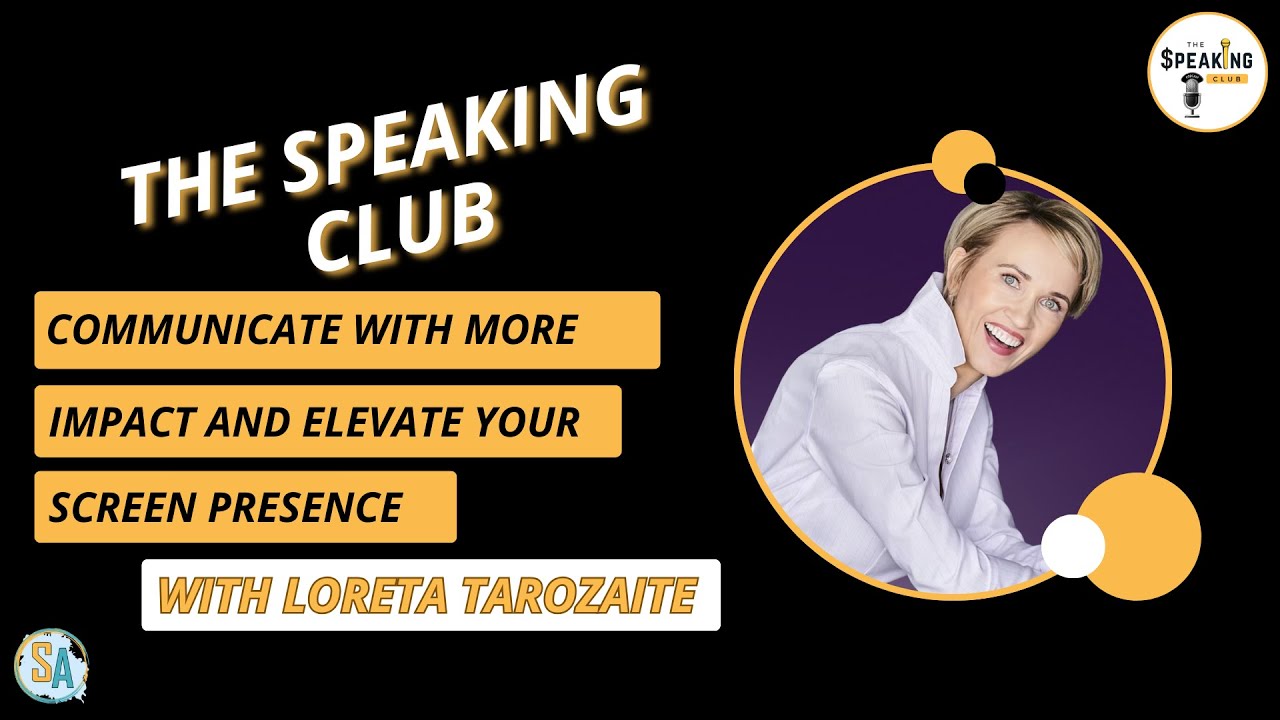
Loreta Tarozaite, a former TV journalist turned executive-presence coach, explains how to communicate complex ideas clearly and build credibility on camera. She breaks down the "3 Ps" framework (People, Process, Presence) and shares why executives fail when they use jargon, ignore their audience, and perform instead of being themselves.
Chapters
Hello, you're listening and watching Sarah Archer and episode 316 of The Speaking Club podcast. And I want to open the show this week with a quote from Thích Nhất Hạnh, who, this is pure coincidence, who was the author of the book that Heather Lillico chose as the one that had most impact on her life in last week's episode. And the Thich Nhat Hanh was a pioneer in bringing mindfulness to the West, and he just happened to be the most, uh, quote that most resonated with me for this particular episode. And before I share the quote with you, I just want you to bear in mind that for me, as a speaker and a speaking coach, I want you to love your audience. When you love someone, The best thing you can offer is your presence. I started this podcast for 2 reasons: because I want to help people recognize the power of stories and humor in speaking, and because I believe it's your message that counts, not the number of ums and ahs you use. There are some organizations that want to create robot speakers. They want you to sacrifice your personality in order to speak perfectly. I want to let you know that you can be yourself and a sensational speaker. So if you want to be a speaker that connects and engages authentically through stories, a speaker that gives value as well as a great performance, then welcome home. Hey, welcome to the show. How are you? How's your week going? Having a good one? How's your speaking going? Are you getting out there? Are you getting the gigs? Are you confident in your material? Are you sharing your message with the world? If not, do, do that. Don't just listen to the show, implement, get yourself out there. I am excited. I've got my actual, uh, play coming up next week. So that's keeping me busy and out of trouble. And, uh, lots of really exciting products also in the pipeline to share with you. Uh, I'll keep you posted on those. Now today, let's switch to talk about today's show. Well, if any of these sound like you, then you are going to love this. Do you feel like your message is getting lost in a sea of jargon? Like you are really struggling to turn a complex or technical idea that makes absolute sense to you into something that connects with and is relatable with your audience? You know, something that I've touched on in the past, but particularly around tech stuff, this is going to be an absolute great episode for you. Or maybe the other thing that might resonate is that you're in a room with people and you're absolutely fine, but get in front of a camera and you lose the plot. You lose your personality. You don't know what to say. It just feels awkward and uncomfortable. And if any of those things resonate, then you are absolutely in the right place because my guest on the podcast today is a lady called Loretta Taurasaitė, and she is a TV journalist, an ex-TV journalist who moved from Lithuania to America, and she has been behind the camera. She's been on screen, and today she spends her time working with companies and C-suite execs to help them bring their— build their brand and leadership Uh, an executive presence, especially in front of the camera and around video storytelling. And she has got some amazing skills that she brings from the world of journalism and TV into this space, and she's going to be sharing some gold with you today. So without further ado, let's switch over to the interview with me and Loretta. Welcome to The Speaking Club, Loretta Teresaitė.
Thank you, Sarah. Looking forward to chatting with you today.
Likewise. Likewise. Now, I, I wanted to start off talking a little bit about the past because you began your career as a TV journalist in Lithuania, which is, we were talking about this because I'm going to be speaking in Lithuania in May. So, my ears pricked up at that. But how, I'm interested, first of all, in how your experiences as a journalist contributed to your approach to storytelling and communication, first of all.
Thank you for asking this question and for bringing me a little bit to the past. It feels like so many years ago that I was a news anchor and a news reporter back in Lithuania. You know, I was very, very green back then, to be honest. You know, I started my career very early in television, and I remember I was shadowing one of the more senior journalists on a documentary, you know, episode that we were building. And I was just admiring how well she was extracting, you know, information from the interviews and, you know, just weaving in the story. And I think I was probably— I'm trying to remember, maybe in my last year or soon after graduating, you know, university. And I was like, oh my God, I have no idea how to do this job, you know. I remember thinking this way. The knowledge and expertise came in way, way later in my career. You know, I did not have really good coaching, you know, through being a news anchor, a news reporter. Nobody really taught you. All my knowledge came from the university sort of theoretical part of it. And then when I was, you know, working in television, you know, nobody really guided me how to do things, how to, how to be the best you can be, you know, as an anchor or as a journalist. So a lot of it came from observation. And sort of taking in the information, seeing how, let's say, news, news producers, news directors are thinking, how they're compiling all of the, all, all of the show together, and just really soaking it all in and applying it to myself. So what in the end it taught me is this, that asking questions, listening to answers is very important, and distilling the information to the core of the message is important because airtime is expensive, you know, on television. So you have to be very precise, very short in how you tell the story so that it resonates and it's understood by the audience. So when I was working in the news department specifically as a news anchor, you know, I, alongside with news producers and directors, you know, we would all be looking at this, at the flood of information coming from different news, I guess, channels.
Hmm.
And the goal was to look for commonalities, to look, you know, what's on a global scale is important, important, how those stories are being told by different news outlets, and then distill it to present it to, you know, the audiences and to the viewers. And clarity, you know, of the information is something that, you know, I found was crucial in how you tell that story. So that translated over to me being a video producer, video storyteller. You know, when I just started tapping, when I moved here into the United States, and, you know, many years ago. I figured, you know, I will not be a news anchor here in the United States. Nobody's gonna give me this opportunity, nor do I even believe it might be possibility. So I transformed the skills of being a journalist, a, a, a TV journalist in Lithuania, to video producing. And, and only in that moment, as I was building my business, as I was trying to discover the new me through new outlets, I realized, you know, what I was good at. And what kind of knowledge I brought from those experiences as being on TV to, you know, telling business video stories. And again, that's back to listening, asking questions, listening for answers, guiding, you know, the story thread to concise, clear points so that we're not taking them— taking up, you know, massive amounts of time to deliver that message.
Interesting. Yeah, I think that's really there's some really key points there about being precise and stuff like that. What was interesting to me, and I don't know if it's different in Lithuania, but I find in the UK that there are 2 types of journalists, TV journalists, and, and I think this distinction is, is important in terms of there's listening to understand and listening to reply, and there seems to be 2 camps There's definitely a group of, of people that I've seen on TV that have a point that they want to make, and regardless of the answer, they're gonna kind of make that point. And then there's the others who are really listening to understand the situation, and maybe it depends on the guest and, and the approach. Is that, is that something that happens? You sometimes get directed to make a point, or is that just something that you hear?
Um, You know, when I moved to the United States, one thing I noticed that was very different is that the news here are like shows. You know, the hosts, they express their opinions, they blast the other side. They're very outspoken about, you know, where they stand with the views, with the thinking on different issues and, you know, ideas that are, you know, floating at any given time, you know, in the in the country. And I remember watching the news and I was like, how are they even allowed to comment so bravely and so outspokenly? You know, because I was trained to not give out my— where I stand, you know, not even my facial expressions were allowed to be made to, to, to show, you know, indirectly through the body language what I feel about a certain message. So I was trained to, to be unbiased and then come here to the United States. It's like a show. Everybody's commenting on everything. Everybody's saying bad things about stuff, you know, good things depending right on the story. So where I stood, where, where I come from, you know, from that type of training, for me in working with business owners, entrepreneurs, and C-suite level, you know, executives, it was important for me to understand the business, right? Because I could not help them, uh, get better in delivering the message if I did not understand the business. So I would give them the platform to talk and express what it is that they're trying to give an answer to. And then by listening and sort of comprehending and editing their message in my head, you know, like, oh, okay, I think that's where they're going with it. And that ties to the business that I'm aware of that we're trying to achieve, you know, as a company. So I, I distill that information for them on the spot. So that kind of encapsulates the main idea of that, what you're trying to deliver, and then repeat it to them asking, is that what you are trying to say? And they're like, yes, that's exactly what we were trying to say. So now let's make it a 2-sentence, 3-sentence, you know, version versus 5-minute version of that idea, you know. So listening to me is crucial because first of all, that's how people learn. And that's how I learn, you know, I, by asking questions and then by understanding what the answer is, I learn about the business, I learn about technology this way, and I can help the executives and, and, you know, leaders to, to deliver that message more clearly because I understand it myself better.
Absolutely. Yeah. And it's almost like translating from them into something that's more concrete and memorable using those skills that you picked up as a journalist. That's cool.
Yeah.
And it's a great segue actually, because I wanted to next ask you about your work with B2B tech startups and companies that are in transition. I'm curious because I have an interest in this area too. What are the biggest communication mistakes that you see people making in these environments and how can they fix them?
Yeah, yeah, we definitely overlap, you know, in how we coach leaders, you know, to, to, to, to be clear in their— in how they communicate. To me, uh, the words are always accompanied with visuals. So, um, uh, despite the message, you know, uh, uh, or lack of clarity of the message, um, visuals is always like a piece of it that just comes from TV, right?
Yeah.
So for example, if somebody is trying to communicate a story And that is very prominent with tech technology type of, you know, leaders or people working in tech. They tend to use a lot of tech jargon, you know.
Yeah.
Acronyms, just throwing things in. They go out and about too deep, too geeky into, into things that nobody understands, you know. And then I have to reel them back in. How does this tie to the story? How does this tie to the business? How can you explain that in a simple form? And it's really challenging for those who, who have really deep brains. You know, to simplify things because for them it feels like they're oversimplifying. You know, it's like, it's almost like devaluating the information. But, uh, what I try to coach the executives on is, you know, the receiver is who you care about. It's not about you. It's how this information is being received, you know, and is that person who you're trying to explain things to understanding? Because if they don't, they won't engage with you. They won't work with you. So, so distilling and, and, and guiding technical leaders specifically to be less geeky and, and, and more simple, I guess, is, is very challenging for them and for me to get them to that point.
Yeah.
And using the jargon, you know, going in circles, circles, circles, Before making the point, you know, that's, those are the problems that I, that I constantly see.
I come across this often, and it's not just with tech people. I think it's, it's anyone that gets into that sort of expert space where they, they potentially even had the problem that they're solving for people, but they're so far removed from the time that they had the problem that they have this expert mindset and getting back into the beginner mindset. Is really tough because there's all this experience in between. They just have to shift perspective. You're absolutely right.
Yes. You know, honestly, I also encounter myself the same problem, you know, because if, if I call myself one thing, then I'm like, but I leave all this other thing behind that nobody's aware of. So I feel like sometimes have to cramp everything, and that is an overload of information. So I myself also have to constantly distill the message and test it out, what resonates, what works. You know, when I go to networking events, I always test it out. Okay, does this— if I pitch myself this way, do people understand it? If I pitch it this way, what people understand, right? How— what comes to their mind as the first thought, what I do, right? It's the expert problem, I guess.
Absolutely. I call it the expert trap. Yeah, cool. So we've talked about companies in transition. Is there anything specific that you would advise, uh, leaders to do during times of change in terms of their communication to maintain trust and also engagement and morale?
Yeah, so the, the, the transition period within the company is, is like a flip point, right? There's a lot of chaos that happens in transition stage, and I love cleaning up the chaos. I just love coming in and finding the gems, putting structure into place, you know. So the transition is, is, is not only on a company level, it's also on a leadership level. It's when, you know, uh, for example, let's take a startup, right? It's when a startup is, is, is aiming to become that bigger company because it's going through this accelerated growth. The leader has to think about them not being entrepreneur anymore.
They now to become—
have to elevate their own presence and become the CEO of the company and elevate their own authority to match that growth, to match that perspective, perception of the company itself. So during transition times, you know, what happens often is the company is going— growing at accelerated pace. The workforce is growing at an accelerated pace. The processes become, you know, convoluted, or there's lack of processes, you know, teams become a little bit more siloed. So all of that has to start to become more streamlined and structured. And a lot of times, the leaders who are— whose goals— and, and this is not the wrong goal— is to continue growing the company, they neglect that, uh, the, the, that need for structure. They don't understand that the structure needed in order to support and, and allow for that growth to continue. So what happens often in this time is, is executives have to start, or leaders of the companies, they have to start thinking about executive communication programs in-house. You know, how do they now translate where the company is heading to the rest of the growing team so that everybody's kind of on the same bandwagon? You know, they're all riding the same wavelength. They have to be transparent, you know, because change brings a lot of friction. Sometimes you have to fix things that are broken and takes time. So there's a lot of frustration also that accumulates among employees and the growing teams. And, and leaders just have to be transparent. Look, it's broken right now. Stick with us. You know, we will fix it. And there has to be obviously resources allocated. They have to understand that without allocating the resources, it's gonna continue. The problems will continue. So they have to be a bit more mindful, you know, what they need to do, where they need to invest so that the company again sustains that growth and continues that growth, but in a more streamlined and smoother manner. So those are the things, you know, that I always advise to think about.
I think you're absolutely right. And I think it's one of the— having sort of led change projects and programs myself, what I see consistently is an underinvestment and an underappreciation of the soft part of change and the communication and all of that side of things. It's focusing on, you know, processes are absolutely right, processes are important, it needs— that needs to be clear. But those softer side of things that— why, I don't even think they're soft. The communications is actually like critical. Don't, you know, if you're not equipping your leaders with the ability to be able to convey things to people in a transparent, authentic, engaging way, it's, you know, you won't overcome that resistance and you'll probably fan the flames of it, if that makes sense.
Yeah. And, you know, in the end, the internal issues become external, externally visible, you know, and impacting external experiences, be it customer experience, be it brand authority experience, right? So you have to, you have to fix the house inside first before you can tackle the impact, you know, elevation outside of the organization. And when I work with companies and leaders, I, I look at the 3 Ps: people, process, and presence. You know, how are people working together? Who's interacting with who? You know, how is the information flowing inside the organization? How do we remove those silos so that people are working towards the same goals? Do we even set the goals, you know, for the teams? Because that becomes also a crucial part of the growth. You know, you've reached a certain point. Now, how do we move the needle further? How do we measure ourselves? Do we move the needle further? So people, you know, as one of the pieces is very important to me. And again, that humanizing, you know, that engagement, humanizing the company internally is, is, is, is also reflective of how the company is being perceived externally. The processes, right? As I mentioned before, the second P is, you know, a lot of times when companies are smaller, they, they do things ad hoc, you know, a spreadsheet here and there, you know, IT maybe works, maybe doesn't work, you know. Well, there's no problem, you know, if it doesn't work, we'll figure it out. And, and the bigger the team gets, the, the more it becomes complex. to track things, right, through the spreadsheets, through the email. So now you have to think about IT infrastructure that supports the tools, you know, that are needed for the collaboration, for being agile, for moving faster, for approving cycles to be faster, for visibility, you know, to the leadership, to cross the functional teams as well, right, as to what is happening, you know, within the organization. And then presence, obviously, that's a given word. You know, without fixing those things, you can't really fix the present. You know, you can do as much as you want externally, ad hoc way, but until you have the strategy, until you, you know what you're doing on, you know, that in a way that aligns with business, you can't really move the needle with the presence. And presence is everything encompassing. You know, you have to elevate your leadership team now, you know, through thought leadership, through PR initiatives. You have to look at your brand message and voice and tone and visual consistency across the board, not only on, you know, website, but also how, you know, your PowerPoints look when your sales team goes to the customer meetings, you know, are we all on the same, you know, template? Are we all telling the same story? So those are the 3 Ps I look at, people, process, and presence.
And I had a question, and we may have just covered it, but one of the things that you say is that you help people to go from scrappy to world-class presence. You may have already covered some of the biggest shifts that are required to make that transition. Is there anything else that you haven't covered that you, you might want to cover here to help people understand what's involved and also how to move that needle?
Yeah, one of the biggest things is mindset shift. So leaders have to recognize that for them to be there, the aspirational goal that they have to build the brand equity, they have to work on their own mindset shift. We talked about, you know, understanding that there's resources will be needed to allocate, will need to be allocated to support certain initiatives and to support cleanup of the house, so to say, or putting the right people in the right places. And, and that's one of the biggest, biggest challenges. You know, how, how do they— and again, we probably didn't set the tone. I work within the sort of the architecture of communication and marketing department, right? So how do you then believe that this is a valuable thing to fix? You know, and you have to have the right people in place and the right leader in that position to actually help you elevate and get the company to where it needs to be with the right structure, with the right team member, with the right team members, you know, in place within that department. And again, all the initiatives that are being presented. So, so that mindset shift is key. And a lot of times I have to coach and work and educate leaders, you know, why and show the metrics, right? So you're here right now. Let's set the goal of where you want to be, and here's how we are going to track the results of that goal that we set. You know, for it to happen, you know, we have to have resources. We have to have different initiatives, budget for initiatives that we need to support. So that would be one of the key, one of the key things. And I mentioned earlier as well, it's having structure, a little bit more structure versus just trying things ad hoc. You know, start having structure. Look, you know, so I normally look for gaps and opportunities that are not filled. How can we elevate the company? what is going on inside the organization. This is my sort of prerequisite whenever I work with leaders. It's like phase 1 out of my 4-pillar, you know, process. Pillar 1 is I just dive deep. I go interview the stakeholders, I talk to employees, I try to uncover all the problems, and then externally and internally before we start coming up with a plan. So that's like a prerequisite. You know, if you want to work with me, I will go deep. That's my journalistic approach. You know, I will ask a ton of questions. I will have you fill out different questionnaires. I will be able to sort of understand what the business is all about, where it wants to go, and then see the opportunities that we need to, you know, uncover.
Excellent. And I guess in a sense we are talking a little bit more about brand presence in that scenario. I want to shift also then to another area that you support people on, which is executive presence. And I wondered if you would be able to make the distinction between executive presence and just being a confident speaker. What's the difference in your opinion, and how can someone develop that presence more?
Confidence helps with presence. You know, if you're not confident, then it will be just more work to, to elevate your presence. But confidence is more internal. That's how I see it. You know, you just have confidence to do things. You're not afraid to try things out. Presence is almost like an output, like external, ex— sort of a representation of, uh, your presence, you know, externally, right? How people are perceiving you. How do you walk in the room? You know, how do you— are you put together? You know, how do you communicate? How do you handle yourself? And presence and present is kind of the twofold thing, right? Uh, when I work with executives, I coach them to be also present within the organization. You know, what is their presence inside the organization? Are they detached? They have no idea what's going on. Are they too embedded where they're micromanaging, right? What's that level of presence that is comfortable, you know, to lead, continue leading the team? And what is overpowering where it's like, just leave us alone, you know, go do your work, you know, go, go do speaking engagements. You know, we know what we're doing. So, so the presence is that how others are perceiving you. You know, if let's say an employee is researching the company that they want to be hired in, right? I don't have the stats in front of me, but somewhere I read it that there's the amount of influence that the CEO or the leadership team has with their presence, you know, digitally also influences, you know, if the employee feels that this company is trustworthy, you know, do they want to join it? You know, because they can read up about, okay, who is this leader? You know? if there's enough information about him or her, then it builds that report in advance before they even submit the resume, right? So being present inside the organization and elevating your presence externally for executives is crucially crucial, you know, when the company starts growing, you know, and even before that, depending, you know, you have to be— you have to exude a certain presence when you go and pitch, you know, to investors, for example, right?
Yeah.
Or when you go and talk to your customers, So each stage is a different layer of that presence, but it's how, you know, how is your authority, you know, what it is that you are all about.
Cool, that's helpful. And I think you're right, and we can certainly see, I guess, with the bigger companies, and not to sort of get into any views on it, but how You know, how Elon Musk's transition has influenced the brand and whether people want to work for the organization or buy the, buy the products. And, you know, so you're— I think it's not, it's not, um, unrealistic to say that this is an important— even if you aren't, you know, a big huge company like Tesla, people do their research before they choose to work with you. And, you know, and also buy from you, especially in the B2B space, it potentially has an impact. So I think you're right to flag this as something that people need to pay attention to.
Yeah, and, and, and recently I've been having a lot of conversations around the leadership presence, right? Because, um, many years ago, and even right now, those larger organizations, more bureaucratic, or, you know, the ones that were established 30, you know, 40 years ago, the culture and mindset, it's still old. You know, executives are behind the walls. Yeah, they're not there to show their faces. They're not there to communicate. You know, the younger organizations, they and leaders of those organizations, they do understand the value of being more present out there, you know, using PR strategies to get the voice out about them, by extension about the company, you know, presenting on stage and doing all of these things.
Right.
And obviously they're more open to having open-door policy. policy inside the organization as well. I'm not talking this as 100%, you know, that's also personality. A lot of it is also personality, how people lead, right?
Yes.
Some of them, you know, would prefer to stay behind the walls and they would put somebody, you know, more outspoken as the face of the company. And that's totally normal as long as it's agreed upon. But it's more, you know, the perception externally, right, that's being given to people who, let's say, want to learn about the brand. How how are these leaders? You know, who are they? You know, can I learn about them in advance? What does their LinkedIn feed look like? You know, are there any interviews published about them? Do they use video as a medium? You know, have they presented anything on stage? That gives that, you know, rounded view about the presence and who they are and what the values are, I guess, as well.
Yeah, definitely. I think there's also a potential Uh, danger here for some leaders in terms of, and I see this with people as speakers, having a perception sometimes of what a speaker should be like. That means that when they start speaking, they lose their personality to become this version of themselves that's not real. And I think there's this balance to be had between creating a presence, but in a way that is authentic and natural to you. And I wondered if you had any advice or opinion on that.
100%, Sarah, you know, 100%. Sometimes, and I've seen those presentations on stage especially, that's more prominent, you know, where you talk to that person off stage, they go on stage like a completely different personality, completely different person. Like, where was this person before? So Obviously, that gives indication that people are trainable. You know, you can train yourself to be a very good speaker. The difference with camera is, though, you can't really cheat the camera because camera exaggerates. Whenever there's a lot of fakeness, it just gives you tenfold of fakeness, you know. So on camera, you have to find the real you, the real voice, and the way you communicate, the way you use your hands. camera is just a completely different medium, you know. So, uh, when I do— when I coach executives on camera, you know, they sometimes would come in confident. Oh, I've done multiple speaking engagements, you know, kind of very confident what I'm doing. So I just stay quiet. We start working, they start sweating. Oh my God, what happened to me? I don't know what I'm doing, you know. I said, yes, because camera is completely different. You know, there's a layer of that, you know, red record button that brings this, um, mental block. And, and you have to now distill— you have to stay within the frame, you have to distill the information, uh, you have only 2 minutes of the video, you know, segment, and you have to be really precise in what you need to say. So, uh, to deliver authenticity on camera, I, I feel is more challenging.
Mm-hmm.
Just because there's— it's, it's It's a different medium. And when you hear yourself, when people watch back themselves, they just hate themselves, right? So then it's another layer to unblock, you know, to get this breakthrough, because now we have to work on getting comfortable, you know, in hearing your voice, getting comfortable in seeing yourself, you know, finding, you know, the body language that works, you know, hearing, catching yourself in real, real environments, how you talk to the teams, how you talk to your colleagues. translating that through video as a medium. So being real is definitely important, you know, Sarah. So yeah, I agree with you on that 100%.
That's really interesting because I did have a question around the, you know, the difference between on stage and on screen. I think you've just done a really good job of highlighting some of those issues. That's really cool. Yeah. And I mean, as an actor, I act on stage. I don't act on screen at the moment. And it's, it's a complete— again, with acting, it's a completely different animal. Stage is bigger. And I think the same is speaking. You have to occupy the space on stage. Everything is bigger. The facial gestures can get laughs. And but it would look really odd if you're doing the same thing in that little space. It just looks like you probably something wrong with you.
Yeah, that's why, you know, I think there are even famous actors and I don't know their names who've transitioned from being stage to, you know, on-camera acting. And it's even if you're a pro, it's still a challenge for them to make that transition because as you just said, on stage you have to be more animatic, more expressive because you have this massive amount of audience, you know, in this big hall— not hall, or I guess space sitting and watching you. And somebody in the far row has to have the same experience as somebody in the front row. And so you have to be more expressive. You have to fill it in on camera. It's just one-on-one consumption, you know. Uh, people normally consume content, uh, video content on the mobile, on the computers alone, not with groups of people. So you have to connect with somebody, a single person, you know, alone, right? Looking, listening to you. Yeah.
Excellent. That's really, that's really useful. Cool. Okay, now we've mentioned this a little bit, about visual storytelling, which is one of your, you know, key areas and key strengths. What are some creative ways that you can suggest that speakers can use visuals to make their talk more compelling?
Yeah, so there's stage speaking and there's video storytelling, right? So we can touch a little bit on both. On stage, obviously, people are tied to having what I call a security blanket, which is a PowerPoint presentation, right? They just have to have something on the screen displayed. Now, if we compare different, different types of, you know, presentations, let's say TED Talk to a regular keynote or, you know, conference type of presentations, those are 2 completely different styles, right? TED Talk is just the, the PowerPoint is just for background, you know, just to make the speaker look good. The speaker is the storyteller. They describe, you know, the journey. They describe, you know, through different pauses and inflections of the voice, you know, the message that they're trying to convey. Now, if you're an executive, an entrepreneur, a leader, and you're presenting on stage, obviously, most of the time, I should say, obviously, most of the time you will, you will be using the PowerPoint, right? So it is important to not rely on that PowerPoint with a lot, a lot of words. Your words have to come out of your mouth. They should not be sitting on the PowerPoint. So the PowerPoint is there just as a cue, you know. And you know that more than anybody because you coach people, you know, on, on, on, on speaking engagements, on speaking, stage speaking. You use your PowerPoint only for as a cue, you know, what your next message is. And let's say if it's a very technical message, what I advise usually is to distill technicality into simple visual sort of sequence of the story, right? Be it with icons and a sort of a word accompanying the icon. Or like design something that would tell that story, you know, visually while you're speaking it on stage. So that's, you know, for stage type of presentations. And obviously, everything that we talked before, you know, in terms of clarity of the communication, you know, you have to not use any jargon, you know, distill that information, be clear on what you're saying. And again, on stage, when you speak on stage, and actually it's the same advice even on camera. Use voice inflections, pauses, you know, don't be afraid of the silence. You don't need to rush through things, you know, just to get it out of your, of your brain and out of your mouth. Give yourself those pauses because we, we have to remember that our audiences don't know the information that we know.
Yes.
So they're listening and trying to digest it at the same time, maybe take notes. Right? Remember it. So we have to give them space to digest that information and not just rush through the bullet points that we have, you know, on our script to deliver. Nobody knows those bullet points but you. If you miss one bullet point, that's not a problem. The audience didn't even know it existed. So you really don't have to worry about that part.
Yeah, I think this is a really important point, you know, certainly about the, the pause, but also Just understanding that when you are, and I guess this also can apply on camera. If I'm asking a barrage of questions, it's gonna overwhelm the audience in, in both mediums. But also what I also find when speakers ask questions of the audience, if you are asking them a question or painting a future, they need to go into their mind to their memory banks. to consider how they actually feel about the question. And if you just go straight on, then you're gonna rob them of that opportunity to consider, which is what you actually want them to do. So it's a— I think that's a really strong point that you, you made just then. Yeah, for sure. Yeah.
And, and on camera, sometimes that silence may feel very awkward because, like I touched earlier, you know, airtime is expensive. So when people are quiet on camera, it feels like it just brings more stress than on stage because on stage you can pause but allow yourself to walk, look at the audience, right? You kind of engage differently on camera. If you pause, it feels like you don't know what you're talking about sometimes because you're thinking too long, right? It might feel this way, but it's not. And yes, on camera, equally important to use your hands, you know, use voice inflections, use facial expressions, you know, again, Keeping in mind the sensitivity that camera translates, right?
Definitely, definitely. That's cool. Okay, now something I read, uh, about you which is quite interesting is that you've produced over 300 video stories, which is quite a lot. And, um, tell me a bit more about the video stories and how you approach those to, to get maximum engagement and impact.
So any, any project, any video story requires understanding of the goals of what we're trying to achieve with it, right? Where does it fit in the marketing funnel? Is it supposed to educate? Is it supposed to inform? Is it supposed to sell? What it is that we're trying to do with that video story, first of all, then, you know, and what I've done as a video producer, actually, is part of the process I go through in any level of the project because you can't really produce a story if you, if you're not prepared. So there's 3 stages, if I may educate. There's 3 stages in video, in video storytelling. So it's pre-production, which is preparation, right? You try to understand, involve all the stakeholders, figure out, okay, what we're doing, what we're, what we're saying, what's the message, what's the goal? Then you build out sort of, okay, for me to reach this goal, I have to have X, Y, Z people giving interviews on camera and that's the pieces that they will cover, you know, to build that story fully out. So now that we have people, you know, ready to be on camera, where are we filming all of this? Is it on location? Do we, do we go to studio? Is it a teleprompter? Is it an interview style? What is it? What is the setup? What kind of vibe are we wanting to, to exude with this story, with this visual? Right. So you prepare all of that and then you go into production day. So production, you have a plan, you know exactly what you're doing. Boom, boom, boom, boom, boom. You know, you capture the interviews or you record, you know, the teleprompter version scripts. You capture some visuals, you know, on site. I'm, I'm referencing a more elaborate sort of production here. You kind of capture supplementary, complementary visuals to support that story, be it product imagery, be it, you know, office environment, employee environment, whatever that story is. So that's production day. And where everything is being put together is post-production, right? So now it's in the magic hands of the editor to weave everything together, you know, put the flow of the story from different interviews, lay over the visuals, add music, add all the bells and whistles so that when you see the final output, it's a wow output. And, and so it's preparation, you know, production, And then follow-up kind of thing, you know. So, and obviously, once you have the video, we have to start thinking about how do I market it? Where do I put it? What are the channels of distribution? You know, who does it need to reach? How are we going to optimize it? You know, can we dissect it into different, different mini stories, you know, to lead to the full stories for social? Right. So then the strategy, you know, the implementation comes, comes and plays the role. Is that helpful? Is that what you wanted to—
Yeah.
Yeah.
No, it's, it's good. It's, and it's, it's sort of making me think about some stuff. I love, you know, I love the idea of, you know, the pre-production, the story. It's almost like storyboarding, you know. I think of it in terms of the creative arts, if, you know, that sort of thing, but storyboarding and, and getting it all clear. And it's just made me think, I've been seeing a lot on LinkedIn recently, uh, I'm assuming it's a global consultancy company, and they've been running video ads on LinkedIn that are kind of positioned as interviews with founders and very senior, uh, C-suite of the company. And I, I was curious about, you know, that approach because I— it got to the point where I was like, oh my goodness, if I see this woman again, you know. But it's that— it's not just like putting it together, but it's how do we put it out there. And, you know, they're doing very well, they're getting a ton of engagement, and I can see the, the sort of views and the comments. Obviously it's a paid promotion, but But even so, but I love that. I think that's a really clear, um, you know, process that people can apply to something large or even something small. And that, you know, and also paying attention to the B-roll, which is, you talked about the sort of background, the product and all of that sort of thing. Even if you're a speaker creating a showreel, what Loretta's just gone through is a great way to approach putting your showreel together. Um, as well as any sort of company, company video. So thank you for sharing, that's very thorough.
Of course, of course, of course, not a problem.
I want to ask you, uh, one question before— last question before we go into the, the standard questions. What's one unconventional technique that you swear by that you've seen work to help executors level up their I'm going to focus on the, on the screen presence more than the stage presence here.
I try to educate them to really get to understand themselves better. Who, what is their true personality that we need to translate? Not their projected executive sort of mode, but what it is that's in their hearts, right? Who are they here? that we need to extract and, and translate. And that's where that camera, you know, authenticity is— it becomes very, very important. Because to your point that we discussed earlier, sometimes, you know, we put on a face, we put on a voice, you know, that we want to project almost like a fake, you know, energy to it, you know, versus truly being real. Because humanization for me is one of the key things when I work, you know, with organizations. I always look at the human, you know, I always look at the person and I always want to extract that humanity, that, that true nature of the person on camera, because that's the only way you can sell is when you're truly real. You, you meet people, meet and assess you on camera first before they meet you, and you're exactly the same person. You know, if people meet me in person, I'm exactly the same. You know, I use a lot of gestures. I sometimes speed up speed when I talk, you know, and I need to slow down and I know that. Uh, but that's what people get. If they can keep up with me, then we're good. Um, so, so that, you know, understanding your own energy, your own sort of what you truly are, is what usually helps in translating through the camera lens.
Yeah, that's brilliant. And I was gonna say, I can absolutely keep up with you, but any listener on the podcast, you can absolutely down-tick the setting to play us at 0.75 or something if we're going a bit fast for you. So that's cool. Smashing. Thank you so much for sharing all of that really useful, um, you know, advice and tips and insight to how we can up, uh, level our presence, how we can influence change in organizations more positively. All sorts of really useful stuff there. Now I'm going to come to in a little bit how people can find out more about you and working with you. Before I do that, I have some standard questions that I'd like to ask. Um, first one being, what's the best thing that speaking has done for you?
I think building my own authority, you know, and presence, actually, uh, because, uh, that's the advice I always give executives as well. Get out there, even if you're not comfortable. Get out there, um, because that just builds that digital imprint and, and gives exposure to you. So building my own authority and presence is probably the best outcome. Brilliant.
Thank you for that. And now we can extend this to back when you started in TV, if you like. Is there, has there been a speaking gig or anything where it hasn't gone to plan and you thought, oh my goodness, I just want to forget about that? Oh, does that happen to you, Loretta?
Oh my God. When I was a news anchor, very probably my first year of anchoring the national news, Or maybe the second— no, the first year, I think. Usually when you put this show, news show together, you put your, as an anchor, you know, sequences and blurbs into a teleprompter, right? And the teleprompter broke one day.
Oh.
And, and I remember I'm like, oh, oh no, my papers are all shuffled because I was not following, you know, the printed versions along with the teleprompter. So everything was kind of like not in sequence. So I started shuffling through the papers. And I was like blank, blank stare on live TV. I would— I was dying. I would never want to repeat that emotion or experience that emotion again in my life. It was mortifying and I was going to die, you know? So that was a scary moment for me, you know, especially being so early on in your career to experience that big flop on live, you know, air. Oh my God, it's just— I even right now I get like anxiety. My heart is palpitating just thinking about it. How did you get out of it?
Did someone cut to something or?
Yeah. So I scramble. I read something in the end. I don't even think it was the right intro to the, to the report, you know, but they cut to the report, you know, and then in the meantime, I shuffled, you know, my papers and found the next Right one that I needed to read off of the paper. So the lesson there learned was— yeah, but the lesson there learned was that, um, know your story. You know, we all know the story, but we sometimes rely on the paper or on, on assistance, right, of some sorts, thinking, oh, it's going to be there, I'll just read it, or I'll just look at the paper, it's going to be there. But then it's not in your head, and it was not in my head. I did not internalize that particular day's, you know, uh, show flow. And it got— and, and I just got lost because I'm like, well, what's the story here that I'm introducing? I mean, I knew the report. I just get— couldn't get the words out, out of it because I was relying on the words on the teleprompter, you know. And, uh, and, and when I coach executives, I, I tell them, look, you built the company or you are running the company. You know how it all started. You don't need to read it off the paper, you know. You know the story. So my job is to help them extract that story, you know, help articulate it as clearly as possible, you know, because we don't need to rely on papers. Now, there's versions, obviously, there's opportunities when script is needed, when the teleprompter is a must. Let's say it's an important, you know, let's say reputation management or an important message to be delivered from legal perspective where you can't really, you know, ad hoc the words. They have to be very precise, right? So then the teleprompter obviously is the way to go, but it's a different type of coaching for the teleprompter.
Yeah, I think that's a really important point to, to have. I see this often as well with, with speakers, and, and I've worked with people who were pitching for funding and stuff like that, and their presentation was still like, it was about their lived experience, which they knew, but it was only when they switched into Q&A that they sort of, their natural self was coming through. So I was trying to coach them to say, look, like, this is a presentation, but it's your story. Like, even if we miss some words, it's still your story. And you— I want you to have that same, you know, comfort and natural, uh, storytelling in the main body as in the Q&A. It was almost like the switch went off and it's like, I can now be me.
And, you know, I think it's, it's psychological. It's psychological because people feel that they have to perform. Yeah. Oh, now I'm performing a presentation. Now I'm performing a message. Right? They're not thinking, I'm telling a story. They're thinking, I'm performing. When you're performing, you're not authentic. You know, you're acting. You know better than anybody else, right? Because you do that. You have to get into a character. So the, the— what they need to understand, the, the, you know, uh, people who want to be on camera, on stage, they are the character.
Yeah.
They don't need to be somebody else. They are the character. They just have to be comfortable with themselves to express that character, you know, and sometimes it's more, it's more easy to just answer the question than have an official, you know, presentation flow, right? It's a slightly different dynamics. You know, when I coach people to, to read the teleprompter, it's completely different than when I ask them the question on camera because question is just more like information gathering, conversational, whereas teleprompter or stage, you know, when you have a flow, it feels like you have to go through that flow very precisely. which then turns into a little bit of that performance, you know, and now I have to kind of be very put together. I have to know what I'm saying and they have to be very clear and precise on what I'm saying versus more casual. So yeah, to your point, we have to find that balance, help them find that balance.
Yeah. And I think just a point too, for any stage speakers here, where we can bring in performance is like there are performance skills that we can apply, some choreography, some body language, some voice work But it's not you performing. It's like some things that we add in to bring your storytelling to life that don't replace your personality. And I think that's really—
Yeah.
An important thing. So yeah, that's cool.
Amplifying and, and sort of, uh, complementing who they are by adding those additional layers, making them basically better.
Exactly. Cool. Right, next question. What's the book that's had most influence on you and why?
Way back when, when I was still— I'm trying to think, was I— I think in my early days at the university when I was studying journalism, I was introduced to Paulo Coelho's book Alchemist.
Oh yes.
And back then when I read it, I remember being fascinated because that was probably my first introduction to personal growth type of book, something that's metaphysical, something that's not on the ground.
Yeah.
And I remember reading it and I could not quite comprehend the feeling it was giving me because I was so green. I was like, somebody said read it and I read it and I was reading and I'm like, I don't quite comprehend this book. And actually the other day I was thinking I need to read it right now as an adult, like a mature adult, because a lot of years have passed since I read it and I read it in Lithuanian. I will— I would read it in English. And, and it just opened that door for me to, to, to seek this type of information moving forward, you know, through my life. Because I just could not explain the feeling it gave me. It just felt very good, and, uh, um, and I just wanted more of it. Yeah.
Yeah, yeah, that's great. And we'll put a link to that in the show notes. It's a lovely book, and it is often a gateway, uh, book into a different way of looking at life, which is, which is really cool. Thank you for that. Okay, next question is, what's the best bit of business advice you've had and why?
I'm a planner by nature, so I always tell people to plan, you know, and set goals, right? What it is that you want to achieve. And, you know, when it comes to, let's say, allocating resources to help you out in your business, don't start looking for those resources at the moment of need. Start looking, you know, looking and assessing, oh, will this resource be needed a year from now, you know, in my business? Should I talk to this person right now? I always look myself about 2 years ahead when I work with companies. I see where they're at, but I kind of know where they should be about 2 years in advance. So with that in mind, I start building, like, uh, mapping out what, you know, resources might need to be allocated or hired or brought on board to achieve certain things down the road. So don't look for resources when you need them. Start sort of building that, not portfolio, but resource library, I guess, or people in your network, you know, that you can tap into, you know, through every stage, you know, of your business. Cool.
Excellent. Thank you for that. That's a really good point. Looking 2 years, that's a long way. Most people don't do that. That's interesting.
Yeah, it's difficult sometimes to see, you know, what's going to be 2 years ahead. Sometimes we don't know what's going to be a month ahead, you know. But if you know where you're headed, if you know where you want to be, it's easier to imagine, it's easier to envision, and kind of in a way you're setting your mind to get there too, right? And I'm a big believer in, you know, mind work as well, right? How your mind actually helps you get there, you know, through the steps that you will take along the way to get there.
Definitely, definitely. That's really cool. Okay, last question. If you could have one mentor, and they can be alive or dead, fictional or non-fictional, who would you choose and why?
I would not know the name, but I, I know that what I would want out of them, and that would be somebody guiding me and teaching me along the way how to become a more efficient and effective business person. Because I did not grow up here. I did not grow up in the United States. I grew up in Lithuania. When I moved here and started my own business, I honestly didn't know what I was— what I was doing. I was just like, okay, well, I'm going to try this because people say I should be doing this, so I'm going to try it. And then it kind of stuck because I realized, okay, I'm good at it. specifically video, you know, storytelling and coaching people on camera. But when I started working in a corporation, I saw so many opportunities for growth within the organization. And people, you know, in those big organizations, they keep talking, find a mentor, find a sponsor in another department who can vouch for you. And I was— I remember sitting there thinking, well, how the heck do I find one? Like, where are they? Isn't it your HR job to kind of build this program and assign people? You know, so I, I really dislike the idea that's being said, find a mentor. You know, it's, it's not easy, first of all, because that mentor has to have it in him or her to mentor you. It's their time, their knowledge that they have to transfer. And I remember I was pursued— pursuing several people in the inside the organization, you know, like blunt asking, would you be my mentor? And like, I have no time. Well, what do you want out of this? You know? And of course I didn't have clear idea that then yet, you know, had I had an idea. But I was like, somebody told me to get a mentor. I'm looking for a mentor right now. Who wants to be my mentor? But I know that if I had gotten certain coaching earlier in my career, I would probably have achieved my goals more effectively and more precisely, I guess, because a lot of what I'm doing and have been doing is, you know, trial and error, right? That's also part of the journey. You kind of try it out, you fail, or you find a mistake, or you find what works, and you continue trying, right? But with a mentorship, it feels like you can get there faster because their knowledge is now ingested into your brain and you just have to apply that knowledge into your situation. So, you know, I committed this year to actually working with a business coach, which is, you know, it's not the same as mentor, but somebody who I can bounce ideas off of, who has more knowledge than I do. And I look at it as an investment. It's like, how can I get myself faster to where I want to be, you know, with somebody listening to me, understanding my business, understanding my story, understanding what I'm all about, helping sort of shape my path. So it's not just me, you know, figuring it out on my own. You know, it's a huge value to have somebody who can actually help you.
I think that's, that's fair. It's, um, I think it's seeing it as an investment. It's a shortcut. And effectively what you're paying for with a coach is, as long as you pick the right one for the right job, is time-saving, time-saving, overwhelm-saving, stress, to avoid some of the pitfalls, and also that guiding hand or guiding, you know, um, light to, to help you sound out ideas as well, like you said. Because it can be quite a lonely journey, um, as, as a business owner, as an entrepreneur, as a speaker, um, and it's great to have a sort of a, a voice to help you You know, measure what you're doing and find out if you're doing the right thing and so on, that compass. But yeah, that's cool. Well, I hope, I hope if you haven't found the person yet, I hope you find the right one to help you get where you need to get to.
Yeah, thank you. Thank you.
2 years down the road.
Exactly. Exactly. I know where I want to be 2 years from now, so I just need to get there right now.
Excellent. Excellent. Well, Loretta, thank you so much for coming onto the show and sharing your story and your tips and tools and insight and opinion on all of this really important stuff for people. If someone has heard something they like, a company or an individual, where should they go to find out more about what you're up to and to potentially hire you?
Yeah, thank you. Thank you, Sarah, for this platform, and thank you for asking these thoughtful questions. I live, so to say, on LinkedIn. So if people want to reach out after listening to this podcast and say, hey, I heard you on Sarah, you know, Sarah's podcast, you know, I'll accept the invitation. I post, you know, content regularly there at least once per week is my commitment to myself. And if you want to schedule a call with me, you can find me on my website, loretta.today. Loretta is spelled with one T and one R, dot today. I also have a presence questionnaire still up there, which I'm planning to take down and repurpose in different ways. where people can download the questionnaire and take a company and executive presence assessment, and then it gives the score and shows the gaps where they need to work on. So that's a good tool for them to kind of look at it and reach out to me if they want anything to get fixed.
Cool, and we'll put all of those links in the show notes as well so you can shortcut your way to contacting Loretta. Well, again, thank you so much for your time today, for being so generous, and it's been a pleasure having a chat with you today and seeing someone who is extremely authentic. Um, I, I've really enjoyed it. Thank you.
Thank you so much, Sarah. Likewise, I appreciate the platform.
There you go. I hope you got some value from this episode. I know I had a blast actually talking to Loretta. She's what you call in the UK a whizzy wig, which stands for what you see is what you get. Completely authentic. And funny, you know, I think she must be a joy to work with. And if you have got some value, picked up a tip or two from Loretta, do go and let her know. You can connect with her on LinkedIn. If you want to work with her, have a look at her website. The link is in the show notes for that. And yeah, also I'm available on LinkedIn to connect with, to, you know, get in touch with, love to hear from you. Also, if you're watching the channel on YouTube, first of all, thanks so much. And if you want to leave a comment below, let us know what the biggest thing you took away, that'd be amazeballs. And if you are watching but haven't subscribed yet, well, get on and do that. And for those of you that have, thank you so much. Really appreciate that. And if you're listening to the show on any of the Apple Podcasts, Amazon Music, Spotify, or a podcast app, then if you would leave a rating or review for the show, That would be fantastic too. And you can also do that over at ratethispodcast.com/tsc. So, thanks so much again for choosing to watch or listen to the show. It's been a pleasure being with you as ever. And until next time, you know what I'm going to say. Go out, grab your life. Buy the nuts and get cracking. Bye-bye. It's a nightmare. You're an expert with so much to say, but now that you've been booked to speak, you're struggling to know exactly what to talk about. You want a talk that engages the audience and wins you new clients without you losing your personality or anyone feeling pitched to. But what happens you sit down to create that talk is that you end up staring at a blank page for ages, or worse, surrounded by hundreds of sticky notes with content that you could include. With so much material, you just don't know where to start or finish. Don't worry, because many experts like you face exactly the same challenge, and that's why I created the Blank Page to Stage Guide. In just 50 minutes, this breakthrough resource is going to help you identify the big idea of your message, make it relatable for the audience that you're speaking to, and convey it all in a way that gets the audience inspired and on board with your idea. And it works even if you have tons of material or your subject feels less than exciting. If you want to cut through swathes of content, And get a talk that you're excited to share, your audience loves, and wins you new clients, then grab your Blank Page to Stage guide from saraharcher.co.uk/newguide-tsc. Oh, I forgot to say, it's completely free. Enjoy!
More from Sarah




The Skill That Helps You Connect With Any Audience with Michelle Mills-Porter




What Moderating World Leaders Taught Me About Great Communication with Xenia Wickett


