[Quick Tip] - Nuggets from the Speaker Summit - Episode 294
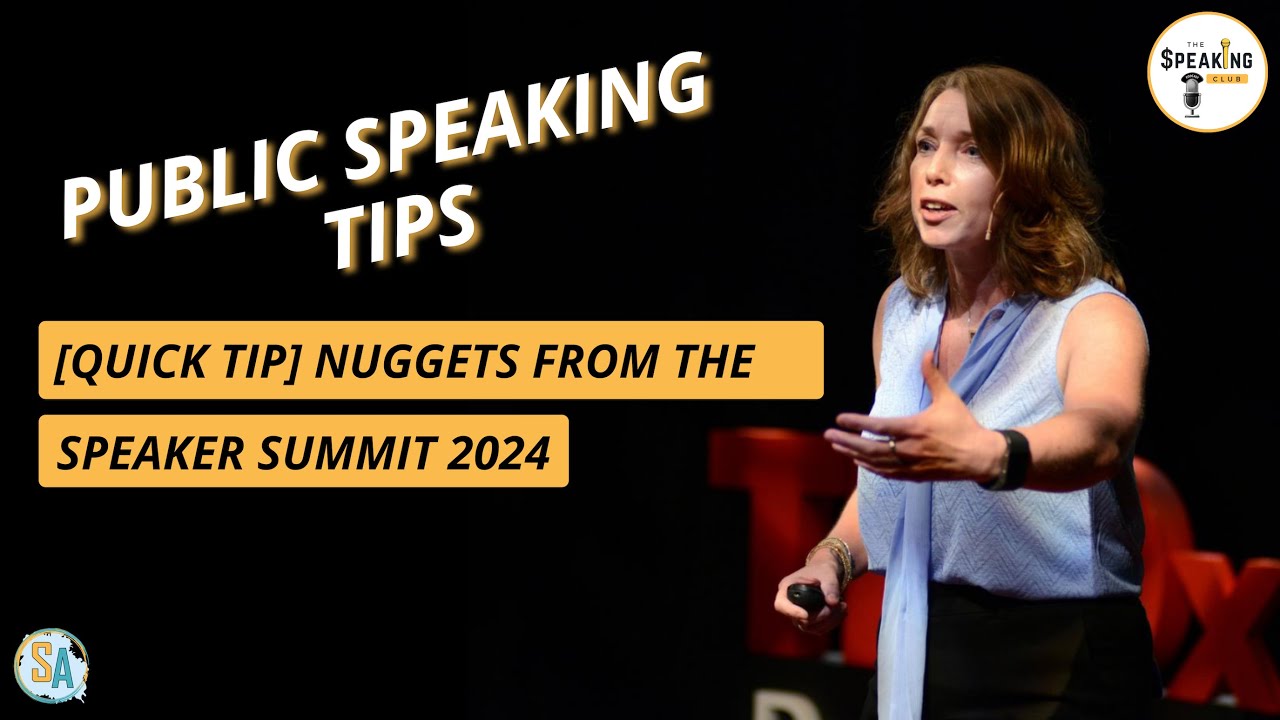
In this quick‑tip episode of The Speaking Club, Sarah Archer distils practical takeaways from a recent Speaker Summit. She shares six actionable nuggets: (1) a networking question technique from Maria Franzoni for uncovering speaking leads in everyday conversations; (2) Lavelda Vincenzi’s advice on treating a LinkedIn profile as prime real‑estate to attract inbound speaking enquiries; (3) Simone Vincenzi’s strategy of “standing in front of someone else’s parade” – guesting on podcasts and other platforms to tap existing audiences; (4) Rikki Arendelle’s reminder to make your name memorable by delivering wow‑worthy talks and sharpening performance skills through acting or improv; (5) Elliot Kaye’s 12 speaking archetypes and the conductor metaphor, urging speakers to flex voice, pace and movement to guide audience emotion; (6) a panel discussion clarifying the roles of bureaus, agents and managers, the importance of following their instructions, staying authentic rather than chasing hot topics, and leveraging any minority identity responsibly. Sarah wraps up with a call to subscribe, leave reviews, and a free “Blank Page to Stage” guide for turning ideas into compelling talks.
Chapters
Think of these quick tip episodes like a cold water swim. In just a few minutes, you can get some amazing benefits to support you on your speaking journey. And bonus, the only thing that's getting wet here is your appetite to try this stuff out. And if you have a question you want me to answer about anything related to speaking, storytelling, pitching, performance, or humour, then DM me on Instagram, LinkedIn, or Twitter @SarahArcher15.
Hello and welcome to The Speaking Club. This is a quick tip episode, and it's coming at you both in audio and in video. Yes! So, if you've ever wondered what I look like and you don't know, although maybe you've never wondered what I look like and you don't care, but if you did, well, here I am. It's me. It's Sarah Archer. Lovely to be with you again. Now, this is a quick tip episode. And this episode is all about the things that I picked up from the Speaker Summit, which I attended a few weeks back. So, there were some great speakers and a panel of experts from the speaking industry, and I have sort of filtered the stuff to give you the best bits, the highlights, if you like, of the summit, and I think it's going to be useful for you, and you're going to take away at least one nugget of gold that's going to help you on your speaking journey. So, let's kick off with a nugget from Maria Franzoni. She's been on the show before. She used to be in a speaking bureau, and she now helps speakers get on. She's got her own courses and programmes, and she spoke about, well, her sort of catchphrase was, show me the money. And she was talking about how she'd developed her speaking business when she started out at the bureau, like she had targets to meet, you know, sales targets to meet, and how she built that business up. And here are the big tips for you. So, she was talking about how she stumbled upon this sort of secret golden tip by accident. She happened to be somewhere and she just asked someone, have you been invited to any conferences recently? And the person said, yeah, I have actually. And through asking that question, she was able to find out who sort of was in charge of the conference and booking, you know, the people, the speakers for the conference, and so she started to do it wherever she went, whether it was the hairdressers, and turns out a hairdresser had been to a conference and she then got the, you know, they have like these product launches for hairdressers and big conferences, and she managed to get them as a client, and then she found a guy who was quite senior in one company. She met him at an event, I think, and she asked him the same question, have you been invited to any conferences recently? And then he put her in touch with the person who organised the conference he went to, and then whenever he went to a new company, he always, you know, if he went to new conferences, put Maria in touch with the person. Obviously, she made the introduction herself, but, you know, she made the sort of effort, But she had the lead. So, it's about being smart in looking at opportunities everywhere, not being pushy, not seeming desperate, just like interested and curious in terms of where people have been and what they've been up to, and then who knows what's going to come from it. So, it's a great way to, to really get those speaking leads. So, that's the first tip. Use those questions wherever you happen to be because you never know you know, what, what opportunities are out there. So that's the first thing. So that was from Maria Franzoni. The next tip that I'm going to share with you came from a lady called Lavelda Vincenzi. What a cool name. And Lavelda is a speaker. I think she also helps speakers as well. And she was focused on really using your LinkedIn profile to get inbound inquiries. And she was saying, and this is something I'm pretty sure I've said before, is that your LinkedIn profile is such a piece of real estate for you as a speaker, especially if you're working with corporates. And so many people are not utilising that. In fact, often the way that they've got their profile, it's sabotaging. Their speaking opportunities. So, look at your speaking, look at your LinkedIn profile. Everyone and their mother is putting themselves down as a speaker, right? And I think I've said this before, companies are looking for experts who are speakers, right? So, it's making sure that you are differentiating yourself from everyone who just puts speaker. You know, what type of speaker are you? What are you an expert in? And as I've said, you know, look at sharing and showing you doing speaking rather than just putting the word speaker because, you know, everyone does it. It doesn't mean anything if there's nothing in your profile to back it up, what, you know, what you're saying about being a speaker. So, check out some of the speakers that get booked. Have a look at their profile. See what they're putting in their profile. Have a look at mine. Have a look at Lavelda's. I will put her name in the show notes so you can get a link to her LinkedIn profile in the show notes so you can check it out, but just have a look at what successful speakers are doing and then see, have a look at yours and see where the differences are, and she was suggesting that making those tweaks could really increase your inbound enquiries, okay? So, that's tip number 2, golden nugget number 2. Okay, moving on. Uh, LeVelda's husband, Simone Vincenzi, uh, was also there. So, LeVelda and Simone are also founders of the Speaking Summit and Speaker Awards, which, as you know, I was a judge of, um, along with Elliot Kaye, who was also on the show recently. And what Simone was talking about was something that I've kind of known about and utilized from sort of more of a marketing angle in the past because, you know, I'm a speaking coach and a marketing coach. I have both those backgrounds, so it's something I've come across from that sort of field, and that's standing in front of someone else's parade. Now, he was talking about utilising other people's audiences to look at finding opportunities for yourself. Now, there are— you can't— like, podcasts are an example of this. Now, you can absolutely start a podcast, build up your own audience, audience. But if you don't want to spend the time doing that, you can look at getting guest spots on other people's shows. As you know, there are some tips how to do this the right way. I'm sure I've done a podcast episode on that. But that is an opportunity for you to step in front of their audience, their parade, if you like, that they've pulled together. And so, it's about looking at where are potential partnerships for you to collaborate with other people, you know, maybe share your audience if you've got an audience, so there's a bit of quid pro quo, or at least bringing some value to their audience so that you can start to build your authority, tap into whoever might be watching, listening, viewing, reading their posts, their videos, and so on to increase your footprint, for your brand, for your authority, and as I say, increase those speaking opportunities that might come your way. Now, the next person that I'm going to share a tip from is someone called Rikki Arendelle. Rikki was the founder of the Professional Speaking Association in the UK, and she sort of shared her journey both as a speaker and sort of setting up the Professional Speaking Association in the UK. She went to the National Speaking Association in the States, saw what was going on there, thought it was brilliant, and then brought it back to the UK. But what I was most interested in, in terms of her talk, was 2 things really. First of all, she was really stressing the fact that as a speaker, you need to do a talk in such a way as your audience remembers your name, and that's harder than you think. So, like, as a comedian, quite often as a comedian, people will remember the joke but they won't remember the comic's name. You've probably experienced it yourself, and occasionally it can happen with speakers too. So, we want to be so memorable that they want to know who you are, so that they, if they don't catch your name, they want to look you up, and But, you know, there's ways of doing that. One is to create a talk that is an absolutely wow experience for your audience, you know, is it just stands out for its engagement, for its entertainment, for its insight and all of that stuff. And so, one of the things that Ricky was advocating for speakers was to go and do some acting classes. Some improv classes to build up the performance skills that take your speaking to the next level. So, that's something that I would recommend to you. I was hoping to do this in one take, but I didn't because that little brrring you heard was the doorbell, so I had to go and answer it.
Oh, that's...
Some fella was going to be standing there in the UK summer rain, and we don't want that. So, anyway, I'm back now. Which is fabulous. So, here we go. Last tip was around making sure people remember your name and getting some acting classes and all sorts so that you can bump up your performance skills. What's next? You might ask, full of excitement and anticipation, and that's a really good question because the next tip, uh, I got from Elliot Kaye, who spoke at the event, who's been on the show. He's also another speaking coach, and he was talking about the 12 archetypes of speaking, and it was kind of like different sort of personas that were embodied by different speakers, and he was giving examples, and they were ones like the motivator, the preacher, the commander, but I think the key point of this, because we could kind of get hung up on what type we are, But the main point that he was making was that at different points in your talk, you need to act kind of like a conductor. And I don't know if you've seen a conductor of an orchestra. I'm going to do, you know, my best impression of it, and for those listening, it's not going to be great, but for those watching, it could be really interesting. So, if you've seen conductors of an orchestra, they will, when it's a quiet thing, they will be, you know, very sort of slow movements, quiet, that you can tell that it's a quiet piece by the way that they are being, and the orchestra follows. And when the orchestra gets loud, their movements get huge, and they are, you know, bringing the orchestra up, and so on. Now, the thing is, with your talk, and I talk to my clients about choreographing their talk, both from a movement, sort of blocking, acting type of way, but also from a voice modulation. You know, we've talked about pitch, pace, tone, volume on the show before, and part of this is around that. It's recognising that in order to get a specific response from the audience, you as the speaker need to do something to generate that response. And so, in recognizing that you need to shift your energy, shift your emotion, shift those performance tools of, you know, volume, pitch, pace, so on, in order to evoke that response from your audience is really what he was getting at. And the thing is, quite a few speakers will, you know, be comfortable being, you know, maybe one or even two ways maybe, but not pushing themselves out of their comfort zone in terms of being those, in the, you know, those different ways. And I'm not suggesting that you change your personality, that you are not authentic, that's not what I'm saying. It's just tapping into those performance skills to be able to take your audience on that emotional journey, to be able to switch from a bit where you're very passionate about your topic and you're making a statement, maybe even a provocative positive statement that you strongly believe, to a serious bit that maybe needs you to be in a different way, that needs to have a different tone and a way of connecting with your audience, to an excited bit where you're really joyful. You can see the difference, and it's being able to do that in a way that is generating those emotions but is still you, still authentically you, not outside of your personality. And even if you're an introvert with a naturally quiet style, there is a way of doing this to, you know, to bring the audience on that journey with you. So, you know, he was talking about 12 archetypes. I'm sure you can find out more from Elliot around those, but the key message is to be able to flex your presenting style in order to, you know, give the audience the signals for the emotions, you know, lead them like a conductor would lead an orchestra to have the emotions to get on that journey with you. Okay, so last tip, well, few tips really. So, one of the things that they had at the summit, which was incredibly useful and interesting for the speakers that were assembled there, was a panel of industry experts, and that included people from bureaus, people from agencies, and managers as well. And so, one of the things that they were focusing on at the start was the difference between those types of organisations in relation to speakers. Bureaus are literally like a huge warehouse of speakers, and the bureaus' clients are the organisations that book the speakers. The speakers are not the clients of the bureaus. So, you, they likely have thousands on their books, and one of the things that they were saying was that they don't have the time to know every speaker, and they, they're only able to sort of know a few, and, and so your job in the, you know, as a bureau speaker is to keep yourself marketable, relevant and let them know when you're doing big things. Let them know when you're in the media, when you've been booked for a big gig, if it's not come through them, so that they start to see you are, you know, moving up the ranks, that you're becoming hot property, but also to do that in a way that is sort of considerate of their time because, as you can imagine, they're pretty busy, and, you know, you need to be always mindful of the way that you approach the bureaus. Now, agents are, you know, like acting agents, like book agents, speakers' agents are looking at you, looking after you and getting you clients, getting you gigs. A bit like Jeremy Gwire in that film, you know, he was an agent for sports stars, and agents for speakers, you know, they will actually work with the bureaus to, and with other organisations, to get you gigs, and they will take a cut of that fee, as will bureaus. So, if you've got an agent and a bureau, they're both going to take a cut of your fee, which is why it's also important for you to be able to create your own opportunities, because, you know, well, I think an agent might still take some of that. Definitely a manager will. So, as some record stars, music artists have managers, and I suppose actors as well, and they are focused on you, and they will take you when you're sort of on the way up, but they will take a cut of everything you do. Whereas if you have a speaking agent and a book agent, your speaking agent will only take stuff from your speaking Anyway, the point is that getting a good understanding of the way to approach the different players in the industry is important, but also paying attention to what they say to you. One thing came across loud and clear from one of the panel where the previous day they had, like, a VIP day and they'd asked— someone had asked about getting on their books. And they said, "Yep, send me an email." And so the person sent them a message on LinkedIn. And you know, you've got to pay attention to what they're asking you to do, and to you know to do it. If you can't follow that instruction, if you're not easy to work with, if you don't pay attention to them, you know you're scuppering your chances right out of the gate. So listen to what they ask you to do, and follow their instructions. If you are trying to impress them to get on their books. Now, the other tips that came from the speaker panel are something that I've mentioned, I think, not very long ago. Do not chase hot topics. They were very clear on that. You know, have your niche that you are passionate about, that you are an expert in. Don't try and angle it to something that you think is a hot topic at the moment because it's not authentic. It will, you know, it's just pointless, and they were very, very clear on that. One of the other things they did say, though, is if you have something about you that is, you know, desirable, you know, for the moment, if you fit into a particular minority category and companies are looking for that, don't be afraid to use that. Like, it's not going to replace talent. It's not going to replace you being able to offer the organisation value, but if you're ticking all the other boxes and that's something else that you can bring to the table in terms of, you know, if they're looking specifically to have someone that fits into that category, it can also help you. So, don't be afraid to sort of highlight that as long as it's not the main thing, right? And what else? I'm just trying to think of anything else that came up from them. That I think basically the last thing that they said was around making sure you keep yourself marketable. It is very much on you, you know, even though these organisations are out there, you've got to keep yourself marketable, and also the talk has to be absolutely on point. And, you know, it's not enough to rely on messaging and branding. If you turn up to a gig and you don't deliver the goods, then it's, it's not going to make any difference. So there you go. Those were some of the golden nuggets I picked up from the summit. I hope that you find them useful and can apply some of those things, taking a look at your LinkedIn profile, thinking about broadening your performance skills, taking an audit of what You know, sort of way you feel most comfortable when you're doing your talk and pushing yourself a little bit harder to take the audience on that journey and so on. So, that's your Quick Tip episode for today. It's been a blast as ever, and I will see you next time. If you are a regular listener to the show and you like it, then first of all, do subscribe. That would be amazing. And secondly, if you do like it and you get value, then we would love it if you would leave a rating or review over at ratethispodcast.com/tsc or wherever you're listening, whether it's Amazon Music, Spotify, a podcast app, there is a facility wherever you're listening to leave a review for The Speaking Club, and I'll be so grateful. If you would take a couple of minutes to do that. Until next time, make sure you go out, grab your speaking by the nuts, and get cracking.
Bye-bye.
It's a nightmare.
You're an expert with so much to say, but now that you've been booked to speak, you're struggling to know exactly what to talk about. You want a talk that engages the audience and wins you new clients, without you losing your personality or anyone feeling pitched to. But what happens when you sit down to create that talk is that you end up staring at a blank page for ages, or worse, surrounded by hundreds of sticky notes with content that you could include.
With so much material, you just don't know where to start or finish.
Don't worry, because many experts like you face exactly the same challenge. And that's why I created the Blank Page to Stage Guide. In just 50 minutes, this breakthrough resource is going to help you identify the big idea of your message, make it relatable for the audience that you're speaking to, and convey it all in a way that gets the audience inspired and on board with your idea. And it works even if you have tons of material or your subject feels less than exciting. If you want to cut through swathes of content and get a talk that you're excited to share, your audience loves, and wins you new clients, then grab your Blank Page to Stage guide from saraharcher.co.uk/newguide-tsc. Oh, I forgot to say, it's completely free. Enjoy!
More from Sarah




The Skill That Helps You Connect With Any Audience with Michelle Mills-Porter




What Moderating World Leaders Taught Me About Great Communication with Xenia Wickett


