This Breathing Technique Works Better Than Any Anti-Anxiety Hack
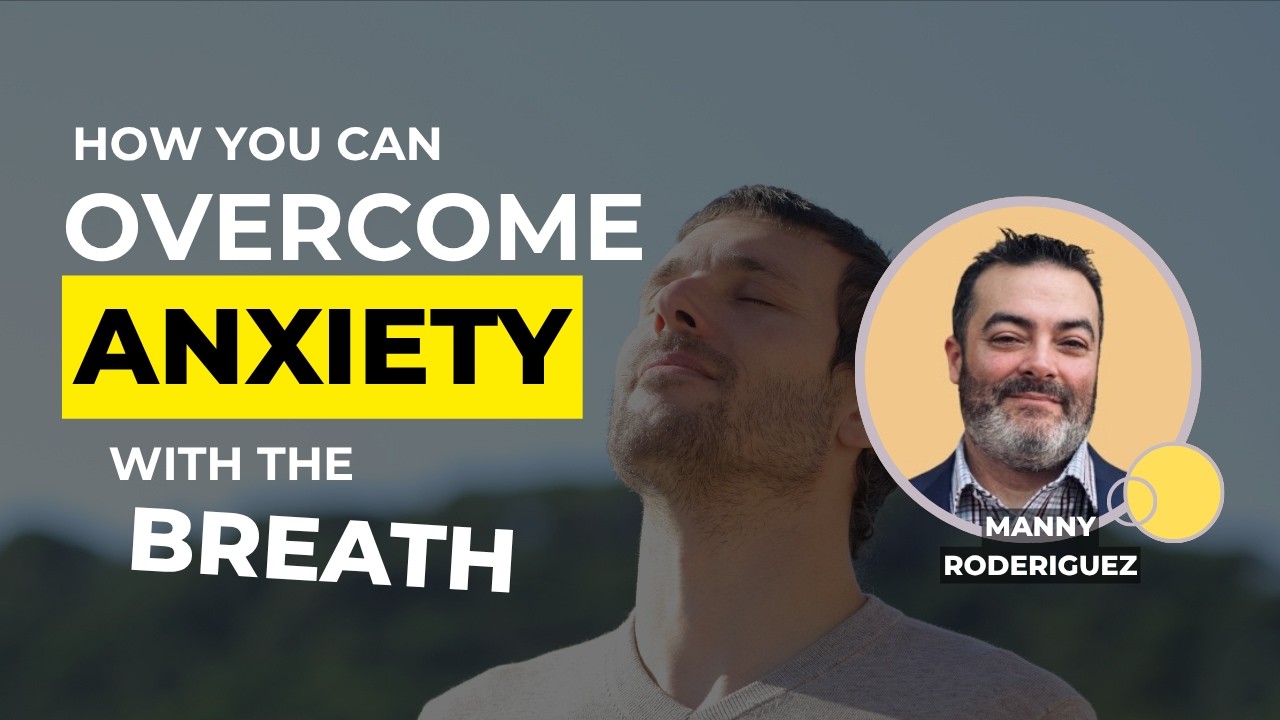
Manny Rodriguez, a former Army infantryman who survived opioid addiction and liver failure, teaches a breathing framework called AIRSPEND that helped him recover. He explains how Systema's four pillars—breathing, relaxation, posture, movement—work together, and shares specific patterns like box breathing and diaphragmatic breathing that reduce anxiety without drugs.
Chapters
Hello, you are watching and listening to episode 322 of The Speaking Club Podcast.
I want to open this show with a quote from poet Dee Antoinette Foy. Breathe deeply until sweet air extinguishes the burn of fear in your lungs, and every breath is a beautiful refusal to become anything less than infinite.
I started this podcast for 2 reasons: because I want to help people recognize the power of stories and humor in speaking, and because I believe it's your message that counts, not the number of ums and ahs you use. There are some organizations that want to create robot speakers. They want you to sacrifice your personality in order to speak perfectly. I want to let you know that you can be yourself and a sensational speaker. So, if you want to be a speaker that connects and engages authentically through stories, a speaker that gives value as well as a great performance, then welcome home.
Hey, how are you? Hope you're doing well. Hope your speaking is going well, your storytelling, humour, all that good stuff. You're getting out there on stage to share your message. And even if you're feeling fear, that you're breaking through it. And today, I've got a guest on who is going to help you if you do feel anxious before you go on stage to speak. His name is Manny Rodriguez, and I am thrilled that I met him probably, you know, 2 and a half years, 3 years ago now, and he's been a client of mine, and I've learned and been inspired by him, from him, as much as I've given him anything, I think. And I'm so pleased to be bringing him onto the show today to share his story of overcoming incredible odds to turn his life around. And also because he has some important things to share about something that we absolutely take for granted, and that is our breathing. And so often people will throw lines at you like, oh, just breathe, you know, especially if you're scared before you're going on stage, just breathe. But often it, it isn't the right thing to do, and Manny's going to explain more about that. Um, he has got, as I say, a brilliant story to share from, uh, his time as an infantry fighter in the US Army, and you're gonna love his story and everything else that he's going to share with you today. gonna get some tools that you can use every day, as well as when you go on stage to speak. So, without further ado, let me shift over into the interview with myself and Manny Rodriguez. Welcome to The Speaking Club, Manny Rodriguez.
Hi, thanks for having me.
Oh, it's, I'm so excited to have you on the show because This has been a long time coming and, uh, we've known each other for a while now and I really am so pleased to be able to share your story and all the wonderful things that you are now doing to help other people. So that being said, let's start off with this question. You exchanged a gun for a microphone. How did that happen?
Well, first I actually exchanged a gun for a camera, and that made so much more sense, right? Because they're so related. Um, but after a couple of years of— and I loved photography, it was so much fun. I could express myself. It was the first time I'd really explored the arts, and I was really good at it, but it wasn't where I was supposed to be. Nothing was falling into place. I just I had this feeling like this is more personal desire rather than where I'm actually supposed to be, and that is right around the time that I was thrown into the whole public speaking thing. My buddy was like, "Man, you really have a story, and I think you could change a lot of people's lives." And it was so far-fetched at the moment that I. I don't know. I didn't take it too seriously, but I started. I started just doing some videos with him. I took a public speaking class, and next thing you know, I I liked it. It sure wasn't easy, but things started falling into place much easier. And regardless of how uncomfortable I was, it was every like the feelings were there. This is where I was supposed to. I just had to work through it. figure out the areas that really needed to be improved. And some of them were like a really, really, really long, deep path of healing my nervous system. It wasn't just stage fright. Like, there was some, there was some trauma that was stuck in my body. And that is, that's, that's the transition from, from the gun or the rifle to the, to the microphone.
Okay.
And it's been, uh, it's been a very interesting, um, experience. And I'm just getting to the point finally of really finding comfort in speaking.
I wanna take you back, um, cuz you mentioned about the trauma and I've mentioned about the gun. I wanna take you back to your story. Um, what happened after you enlisted at age of 28? Uh, in the Army and your journey in the Army that sort of got you to the point where you discovered what you were talking about today, which is breathing and rehabilitation and, and all of that good stuff. So will you share that journey, uh, that you went on from, uh, you know, enlisting at 28?
Sure, sure. Um, My life was so structured growing up. I mean, I could make my own decisions, but I was really guided for most of my life and all the way through college. And, you know, when I finished college, I had good jobs, good career, really wanted to start my own business. And so I gave that a shot. Paintball, the paintball industry was really skyrocketing at that point. But it wasn't sustainable. So, the business didn't last. And, you know, despite all that structure growing up, I wanted some sort of adventure. I wanted, I don't know, I wanted to matter. I wanted to make some sort of big change. It was 2006. And we were just 5 years after 9/11. So, there was still a huge demand. And that's, that's What kind of prompted me really to make that decision at 28. In basic training, it was a it was a fun experience. I was the old guy. Everybody had me by like ten, eleven years because they were all fresh out of high school. So that was that was fun. But towards the end of basic, there was a little bit of an injury. I was trying to complete this graduation objective. And it was really difficult when we were trying to lift this simulated body out of, out of a ravine. It was a 200-pound duffel bag full of sand. As I'm trying to get that thing up the hill, I ended up injuring my back. I didn't know how severe it was. And, you know, when you graduate, graduate from basic training, you get a couple of weeks off and then you go to your unit. So I was like, I'm just going to finish basic. I'll go to my unit if I need to see a doctor there. I will. As soon as I get to my unit, I go get the checkup, and that's where the initial process, at least in the military, of x-rays and muscle relaxers and mild painkillers and stuff kind of started. Um, but unfortunately, all of this was right around the time of my unit's deployment, and turns out I needed a back surgery 3 months before deployment. And so, I followed through. But after creating such a close bond with my unit through all of our training and preparation, I really felt it was my place to be there with my unit in-country, overseas in Iraq. So, I had a back surgery 3 months before we deployed. And the only way that I was going to be able to make that deployment is if I started numbing the pain instead of healing the pain. And that's that's pretty much when it all started. I mean, just a heavy, heavy influx of almost every prescription narcotic you can imagine. And I was able to take all that over to Iraq with me, which the reason the whole reason I pushed to go initially was because I I wanted to help out. I wanted to be an asset to my unit. But with all these pills. I saw myself slowly declining and becoming a liability. I was, I was not just behind a desk. I was a driver. I was a gunner. I was a dismount, which meant we were foot soldiers on the ground, go kick in doors and stuff. And yeah, that led me down a really scary and confusing path because it reached a point where I couldn't really get off the pills myself. And every time I asked for help, None of the— none of my doctors would intervene. None of my doctors— they would, they would take away pills and give me new ones or different ones, or I don't know, it was just, it was impossible. It's lasted for about 4 and a half years, and I ended up having to take matters into my own hands and do an aggressive self-detox and really embrace the side of alternative medicine and healing and so on. And that's, that's kind of when I got into The breathing. I realized, you know, when I initiated this, this alternative healing approach and kind of took things, um, into my own hands, and breathing was the first step. Breathing was the first step to unlocking all of the trauma, to resetting everything, to finding balance, to finding calm, to finding focus. Uh, once I started slowing my breathing down and really focusing on you know, the, the proper way, the, the structure of the breathing, the way we were supposed to do it like when we were kids, the way we've been intended to breathe. Everything started to, uh, everything started to change within me. And then I was able to, uh, uh, focus on detox. And then I was able to focus on hydration and the nutrition and, you know, mobility and exercise and, and, um, From that point, you know, it took me a while. It took me just about 18 years to do the full recovery. Uh, but I think I'm finally at the point where I'm in a much better place. I'm much more capable. The lessons are behind me, and now it's time to start helping others overcome their obstacles.
Yeah, I mean, we've talked before, and I think what the drugs that you were on Are probably like, they're Class A narcotics that you were having to take day in, day out. And I remember you told me that at one point your whole body turned yellow, and that was the point when you realized you needed to take matters into your own hands because your body had started to shut down, hadn't it?
Yes. Yes, it was horrifying. I just woke up one morning, and this is about— it's about 4 years into all these pills and stuff, and my body had turned completely yellow. Fingernails, hands, face, legs, chest, back, everything. And it was a big panic moment. I wasn't sure what was going on. I called a couple of people, and they had no clue what was going on. It's like a couple of my friends, family. So I went to the internet and found out that like it was liver failure and my organs were starting to shut down. And honestly, there was such an emotional spike. I have a hard time fully recalling like how everything happened, but I do know that was, that was the wake-up call where everything started to change. At this point, I had been out, um, of the Army for about a year. Yeah, I'd been out for about a year.
Tell us, like you mentioned, you skirted over it in that, in what you said just a few moments ago, uh, you took matters into your own hands and did a detox program. Can you just share exactly what happened?
Yes, yes. From, from the, the moment of turning yellow, Um, that's when I started to find ways out on my own. Um, and fortunately, maybe 2, 3 weeks after that incident was the first time I tried medical cannabis. I mean, I figured I have all these chemical-based drugs in my system, what's something natural going to hurt, right?
Mm-hmm.
And that was the turning point. Because I had the best night's sleep that I had in years. And all the, all the sleeping pills that I was given, like, they built tolerance. And so I just, I couldn't sleep anymore. And so that right there was a turning point of me finding hope that, hey, you know what, this might be possible, which was the opening to me making this risky, horrible decision. I really hit the gas on trying to find a way to steadily, safely get off the pills. And I couldn't. I just couldn't. I couldn't find help to do it. And it doesn't make any sense. But the doctors in the VA— and this isn't blame. This is just that this was the time and all this stuff was flowing, all these pills and stuff. It was like mainstream. It was their, their peak. And I just could not get help. To come up with a plan, and so that's why I took it into my hands. All right, man, if nobody's going to help me do this, I've already almost died numerous times throughout this period of pills and combat and everything. I'm going to try and I'm going to try and get off this stuff myself. So I figured, hey, you know what? I'm going to give myself plenty of time, right? Because I've been on this for a while, and they're really, really heavy narcotics, and. I don't want to just cold turkey overnight. So I figured 2 weeks, I figured 2 weeks would be good enough to kind of stair-step it down. And it was— God, it was horrible. The withdrawals, the withdrawals, um, the, the night sweats, the restless legs and arms, um, the shakes, the, the increase and decrease in appetite. I mean, like, everything. It was, it was, it was a really— I, I know that was probably the closest to death while still being alive and aware that I've ever like been. Um, but that was regardless of how dangerous that was. Um, I, I think it was still for me the best decision because a couple weeks after I started that aggressive detox is actually when I met my wife. Who was pretty much an alternative healing expert focused on detox because she was under the towers on 9/11. So she had gained all that knowledge helping herself heal, and she was able to transfer it over to me to help me recover and get all that horrible stuff out of my body and start recovering my mind. And yeah, it was a, it was a grueling process. It had numerous starting points and then it would fail and I'd have to try something else. Which led to an 18-year recovery process.
Such a, like, an amazing journey. And I think it's important to say, probably if anyone's in similar circumstances, don't do it in 2 weeks. You'd probably say that yourself. You were very lucky, I think, to still be alive. But on the other hand, it was the decision that possibly saved your life. So yeah. Oh my goodness. So, So you started to find these alternative healing methodologies and modalities, and breathing, as you've mentioned, was, was one of the biggest ones that you discovered. And today, like, you work with people who have to stay calm and focused during an adrenaline spike. And I wonder if you can share more about that, the tactical breathing, as you call it.
Um, wow. Breathing is such a, uh, Such a complex path for me on how I got there. Um, now a big piece of my natural healing involved a Russian martial art called Systema. Systema focuses on four pillars, which is breathing, relaxation, posture, and then physical movement. And Systema is utilized by Russia's currently utilized by Russia's special forces and their elite tactical units and so on and so forth. So it's proven combat. It's very effective, um, but it's also really effective for, for healing. And so I was incorporating all of these, these 4 pillars into my daily life, and that's when my— that's when everything started to change within me. And I think the reason for these 4 pillars is, you know, one of the primary focuses of Systema is to stay calm in the face of fear. And so I applied a lot of this to myself, and I started really paying attention to what's going on out there tactically. And I, I think there's, there's a lot of reactions, there's a lot of, um, and I'm speaking in lines of, of like military, first responders, so on and so forth. When I was, I was in the infantry and when we were training, we would really focus on building muscle memory, right? Because when, when your mind shuts down due to fear or stress or threats, whatever it is, if you train your body enough, you know, your body actually takes over when your mind shuts down, right? And you can function quite effectively. But why stop there? Right? Why stop there when there can be actual presence of mind, clarity, and focus in the middle of all that chaos so you can make the right decisions? Instead of just reacting, and that's that's where I kind of came up with one of my slogans is you know the job title is first responder, not first reactor. So we want to respond instead of react, and and most of the times they do, but almost every single time the mind is reacting; it's not responding. And so through simulated stress. Through slow breathing and relaxation, it is actually possible for our police officers, firefighters, EMTs, soldiers to go into the danger and experience that tornadic chaos in their mind and actually slow it down a little bit to be able to see the next move or the next 10 moves instead of, you know, And then trying to work from this point of stress and tension and not breathing. When you're not breathing, your mind's not working properly. Your blood and your air is not flowing through your body. And these are all fundamental things. And when these stop, your body instantaneously reacts.
Mm-hmm.
And so that's what I'm working to do is calm these reactions through breathing and relaxation. To make danger a little bit safer for everybody out there.
I like that, make danger a bit safer. Because that's the thing, isn't it? What happens physically and mentally when someone sort of heart races and their breath quickens? It does shut down. And that can happen, like we're talking about first responders who you work with, but it can also happen for speakers getting on stage that like, you know, all of a sudden their mind goes blank. They don't— and muscle memory doesn't really help a speaker because you need your— you need to be able to speak. So, um, yeah, can you share a bit more about that?
Yeah, that's— it's totally different on the softer side when you're not working with, with the threats and the danger, but the response, the reaction, um, public speaking, that, that, that, that fear is the same. Um, it's, it's a, it's an aggressive, overactive nervous system. And public speaking was actually what led me into the whole tactical breathing thing before I had even thought of first responders or military or anything. Um, because I have been working on public speaking for the last 3 years. And the whole time everybody would always tell me, oh, you're nervous, just, just breathe, do these breathing, do box breathing and do all these breathing exercises and stuff. And I would, and it wouldn't work, man. If anything, I felt worse afterwards. And that's when I identified that if I'm not breathing normally all the time, Like I should be properly, calmly aware. Those advanced breathing exercises actually send a signal to your brain that says, "Whoa, whoa, whoa, whoa! Hang on a second. You don't breathe like this normally, and you're all amped up right now. Now you're doing this breathing exercise. What's wrong? What's what's got you scared? You know, and so it can amplify. And and so it was at that point that I started creating a baseline, which. That's yours, by the way. Baseline breathing was something that you recommended for me, and it stuck, and so I went with it. But that is when I really started creating a foundation of breathing that focuses on building the awareness, inhaling deeply, slowing everything down, relaxing your body, making sure your posture and your spine is fully aligned, extending your exhale. Just a little bit longer than your inhale, breathing through your nose, breathing through your belly, all this stuff. It's a system, right? But it's, it's nothing new. This is how we breathe when we were born, or this is how we would breathe when we were born, when we were children. And then stress and all this other stuff pops in. We don't have the awareness or the education on, on, you know, breathing normally and properly is, is actually part of our natural strategy to get through this life. And we step away from it. We start breathing slow and shallow up here through our mouth. And, you know, we end up by the end of the day, we're carrying tension all over the place. I think this lack of awareness is, is pretty toxic. Yeah, I— it took me just setting alarms, putting out Post-it notes and stuff. It took me about 3 weeks, 2 to 3 weeks. So. to really kind of get back into tune with this skill. And then after that, I just, I do it normally. I just, I breathe normally. And now, when I do these exercises, super effective, super, like my body actually accepts the free medicine. So yeah, it, it was, it was a huge transition. But at the same time, it opened the door to something completely opposite of public speaking. Uh, which now I've got like a tactical side, and then I've got kind of a softer side because this applies to everybody. And working with senior citizens, working with, you know, teachers and students, corporate executives, anybody who really has stress. Um, but I did, you know, can't just start off marketing to the world, so I had to find my starting point. And I'm slowly starting to kind of branch out into other areas as I lock down Like police departments, police academies, corrections facilities, so on and so forth. The progression and the evolution of the, the, the whole breathing process.
Definitely. And I, what I've never heard anyone like put it that way before. And it, it makes complete sense if you've not been breathing in this way and then you are in a heightened, uh, physical, you know, stress situation and you start doing that box breathing, you're right. Your body's gonna go, what? So, so that's really— so it kind of— I had a question, but I feel like the question I was going to ask you was— is redundant because of, of that answer. So what I'm gonna ask you is, rather than have something that people do— and you may have a suggestion— something that people do like in the wings before they go on to speak, what are some things that they can build into their daily routine that enables them to, you know, get to a reasonable baseline before they do the gig, if that makes sense, before they get into that heightened stress situation.
Okay. So I just kind of went through a jumbled form of my acronym AIRSPEND, A-I-R-S-P-E-N-D. And this, this is the first step for everybody when it comes to breathing. For anything to be effective in this area, you want to create awareness. So again, like I said, I set alarms 5 times a day just to check in and make sure I'm breathing properly. I put Post-it notes all over the place. I put an anchor in my pocket just so whenever I put my hand in my pocket, like, oh, hey, I need to focus and make sure I'm doing everything right. Um, and that's, that's the first step. Next from there, you want to inhale deeply.
Mm-hmm.
Uh, I mean, everybody can feel this shift, just breathing slow and shallow or short and shallow through here. And then you, you expand everything, you slowly let it out. That's, that's you taking control. That's you putting the joystick back into your hands, right? That's the first step. Inhale deeply. And then from there, you want to relax. You want to relax your body, because if you're like this, if you have tension, or even if you just have a little bit of tension, it's restricting the flow through your body of, of the air, of the blood, of energy, whatever it is that you're trying to focus on. Next is slow it down. I mean, that's just inhale deeply. You can inhale deeply fast, and that's going to create a panic attack. Um, so you want to slow everything down. Uh, to what pace? Whatever feels comfortable, whatever feels relaxing, whatever feels calming, and like you have control. Um, next step from there is posture. You want to focus on your posture and alignment, especially as a speaker, because it's gonna, it's gonna exude confidence. Um, it's going to help you access the air that you need, just like a singer.
Mm-hmm.
Um, and again, if, if we're kinked some way, if we don't have proper posture and alignment, that's gonna be right up there with the relaxation. It's gonna be, it's gonna be restricting the flow of, of all the movement in your body. Extend your exhale. Extend your exhale by, by just a second longer than your inhale, right? If you inhale for 3 to 4 seconds, then exhale for 4 to 5, right? And that activates your parasympathetic nervous system. It calms everything down, it slows everything down. And then the last 2, nasal breathing. Breathe through your nose. If there's one thing that I can say that, that will help your body just start to pick this back up on its own, you really don't have to focus on anything else. Close your mouth. Close your mouth and breathe through your nose. Your nose, it, it, it regulates the flow. So there's not too much and there's not too little, and it's in perfect balance what your body needs. So send it to the nose and then also make sure you're not breathing through your chest. You're breathing through your belly or your diaphragm. It's called diaphragmatic breathing. And instead of when you inhale, your chest rising, when you inhale, your stomach goes out. And when you exhale, your stomach goes in and your chest goes out. So it's kind of the opposite of, of the, the chest breathing. And that's, that's, that's really about it, right? I just slow that, slow everything down, do the natural stuff, follow air spend.
Mm-hmm.
And I mean, that, that's pretty much it, right? Um, when, when, once you have this down and it's a natural part of your routine, uh, I would, I would focus on 360 breathing. It's very simple. You just pretend you're a balloon and you try and fill up every last little area of your body, your fingertips, your toes, the ends of your hair. I mean, like, you fill in every last area and then you slowly release. And that should be, that should be a good enough reset to get you calm and focused and ready to go.
Yeah, I think this is the problem, isn't it? And I think this is where maybe the Systema thing comes in as well. I don't know. Is that we spend so much time in our heads that we lose the connection with our body. Um, I, I don't know if you feel that way, uh, or felt that way, but the whole movement and breath and being in connection with your body feels like it's really important to, to take back the joystick, as you put it. Is that, is that right, do you think? Yeah.
Yes, it is. Because, you know, the breathing and relaxation and the movement, it's all that flow, right? And if you don't have any bottlenecks or roadblocks inside you, especially when you're speaking, if everything's in flow, that's speaking. Speaking is flow. You got to have everything coming out in that rhythm. And I think that this really does help kind of support that flow. Mentally, you're in flow because you're speaking, you need your words to come out right. But if your body is in flow, that's, that's the body and the mind working together. And that's that. I think that's exactly where we all want to be, especially in that moment.
Definitely. And I think from our conversations before, there are different types of breathing in different situations. Is that, is that correct? What are the different types of breathing?
Um, so there's, there's actually quite a few. I mean, like, there's, there's circular breathing where you're just kind of breathing in and breathing out and breathing in and breathing out in a circle. Um, and then you've got the, uh, the top pyramid breathing where you're holding on an inhale. So you breathe in and you hold on an inhale. And then you have bottom pyramid breathing, which is The opposite. You're exhaling when you're holding on that exhale. And if you put those 2 triangles or those 2 pyramids together, you get a box, and that's box breathing. So you inhale, you hold, you exhale, and you hold, and then you continue that. So those are some of the types of breathing, and that's going really deep. On the surface though, you know, there's, there's quick, short breathing to recover from stress. Say you're running or you just finished speaking or whatever, just kind of getting those, those short, quick breaths through your system to help recover is, is beneficial. But at the same time, you're not going to do that before. You're not going to do that as a preparatory. So there's the slow Deep breathing.
Hmm.
Um, and then kind of in between those 2, the, the fast and the slow, is the sipping air, where you can, uh, just slowly bring it in. And that's going to be up there with the slow controlled breathing, but it's also bringing that element of control into the equation. And it just it shuts down all focus, all shuts down worries, at least most of the time for that I have experienced it because when you're it's almost like mindful meditation where you're focusing on your breath and you can't focus on much else. So in addition to calming you down, it actually shifts your focus as well. And in a nutshell, those are. Those are the basic types of breathing. Fast for recovery and slow for preparation or calm.
Cool. I think some people might have had some feeling of resistance to something that you've said already, which is around breathing through your nose. It's not something that we find Easy, even though that's the way that we were designed to do it. But this is something that's making a huge difference in, um, for elite athletes these days. People are, you know, they're, they're being trained to— what they've been training with their nose, with their mouth covered up. Is that— that's right, isn't it, Manny?
100%. Um, and I was, I was such a mouth breather when I first started breathing properly that I ended up having to tape my mouth.
Shut.
I do it at night, and that's what really sent the message to my body that this is going to be the new way, because that's 7 to 9 hours of reinforcement. Be very— I've seen some people do it outside of the house. I don't know if they're trying to sell product or show off or what, but if you feel comfortable, tape your mouth going outside. But you can do it during the day inside the house when you're by yourself, right? And you know, again, you're reinforcing. But that is the quickest way that I found to get everything back through the nose. Now, if you have respiratory issues, so on and so forth, there might need to be some medical intervention. But for the most part, people should be able to get back to their nose pretty easily.
Does it make you panic when you first put it over your mouth? Because I'd imagine sometimes I'm in bed and I'm trying to take a deep breath through my mouth and I can't get one, and then I start panicking, and then that makes things even worse. I'm just wondering if I tape my mouth up, whether I would— my body would be like, what are you doing? And panic.
So yes, most definitely. And I, I leave just the outer edges of my lips uncovered. That way you can kind of sneak if you have to, you can talk if you have to. And I mean, like, if worse comes to worse, There's medical tape out there that it doesn't hurt when you rip it off, and it's pretty affordable. So, I mean, like, you can pull it off and start over if you need to. It is a little bit of a shock, but start at nighttime, leave a little bit of space to escape, and you'll be— honestly, you'll probably wake up feeling great. I woke up again. It was a— it was an excellent night's sleep. And I actually struggled with sleep apnea. Um, breathing through my nose just stopped all those symptoms.
Wow. Yeah, that's really cool. And why is it you mentioned like we came into this world breathing this way, but I think you mentioned things like stress. What, how, how do we lose that ability to, to breathe in the right way?
Well, I mean, just over the last 100 years, 120 years, um, society has taken off, right, with responsibilities and obligations and, um, stress and overload. It just all hit us, and I, I don't think we necessarily knew how to adapt, so we all just went into survival mode, and we sustained that up until this point. That's a massive contributor. I believe to where everything currently is now. Diet, diet is another thing that affects our ability to breathe, whether there be like a mucus buildup or I'm forgetting the science behind it right now. But yeah, that's that. And something else I noticed is when you when you breathe through your nose. Just that's it. If you do that, everything else will take over eventually.
Okay.
Yeah, this is the regulator. This is— this slows everything down. If you need to use your mouth, if you need to recover, by all means. But if you're doing everything through your nose, things will start to slow down, things will start to make sense, and you will actually start breathing through your belly. One thing real quick, to breathe through your belly, I focus a lot on this. Start off by laying down. You're laying down, it's taken away gravity, it's taken away all the, the weight of your organs, and it just happens naturally.
Cool.
And this is so, it's, it's, it's simple stuff. I mean, obviously there's loads to it and there's advanced stuff that you do and so on, but it's, it can have such a profound effect to make some of these simple changes. And it, it can help all sorts of people. Like you said, you've got your first responders. You mentioned older people as well. How do you help them?
Uh, well, just the, the breathing, slowing everything down, identifying the tension. It's a lot, lot softer. Um, it's funny, my buddy and I, uh, we were going to teach Systema a couple summers ago. We thought we were going to be getting fighters and police and military and all these big tough guys, and a bunch of senior citizens showed up. So we had to like, we had to shift really quickly, and it's a good thing we did because we found this softer side that really, really does apply to that community.
Cool. And what are some of the benefits that you saw just even in that session with those older people?
Uh, well, first off, I mean, like, the aha moment, getting their brain working, having that, that, that rush of excitement and dopamine, uh, is, is rewarding, uh, on its own. Um, hearing the feedback on their progress that they're making and I mean, just creating the awareness is a difficult step for some of these people, and when they succeed, I mean, like it's like they won the lottery. So it's it's really cool and rewarding. I don't have I don't have like medical results with the people that I was working with, the senior citizens that I was working with. But I did this class for some special operations guys. year ago, and, um, we were doing vitals every, uh, every day at this, this retreat that we went to. And the next day, you know, their blood pressure, their heart rate, everything was calm and regulated. One of the guys came up and said, like, my, my, uh, blood pressure hasn't been like this since I was 19 years old.
Wow.
And that actually— they helped me develop Some of this tactical stuff to apply it to special operations and SWAT and first responders, so on and so forth. So the results are definitely there, and it's it's not like you have to wait six to eight weeks. Like they're instant, and it's natural. So it's not going to be this big shock to your body. If anything, your body's been running cramped up on overdrive for a very long time, and it's going to be like oh wow this is. This is great. Thank you. I appreciate it. Uh, and then that will just continue as, as you create consistency with your breathing habits.
That's amazing. Now I want to, in a little bit, come back to, you know, where people can, um, find you to maybe book you for some workshops or even have one-to-one sessions or book you to speak. But before that, I have some standard questions to ask you, mate, and I really appreciate everything that you've shared. including your journey, which I know was just one of those epic journeys. You know, it really is. You know, yours is really sort of life and death stuff. But, um, my first question is this: what's the best thing that speaking has done for you?
It's given me confidence I've never had. Um, uh, brain injury came with My injuries from overseas, and I really had to learn like the fundamentals of communication all over again. That made actually made me really confused why I chose public speaking at first. But again, it was that intuition; it was that pull, and it was brutal. It was grueling, and I pretty much started off with you right after I finished my first. public speaking class. Um, having to work through like not being able to connect thoughts with words, which is beyond frustrating. Um, you have it perfectly in your head, you just can't say it or write it. To just kind of being able to flow my words like I have been during this, this podcast interview, um, goes a long way, builds a lot of confidence. Um, and tells me that I, I can regard— I mean, like, if you're trying to do public speaking and you struggle speaking and you overcome that, um, you know, there's not much left to worry about at that point.
You're, you've had— yeah, you're an amazing example of someone who, you know, a lot of people think they have challenges around public speaking, but yours were Really sort of huge, big obstacles and you've managed to, you know, barge through them and, and you, your speaking is, is excellent. So I'm really, really impressed with what you've been able to achieve, Manny.
Well, thank you. I appreciate that.
Next question is, has there been a time so far on the journey that you've done a gig or something you've spoken and you went, oh no, I never want to experience that memory again. It went really badly. Has that happened to you?
Oh yes, yes, most definitely. Um, on a couple of occasions. The first one was a long time ago. Um, it was, uh, it was in college and I was, I was just about to graduate. It was literally like the end of the semester and there was this huge group project, um, and there was all these corporate executives from like Fortune 500 companies in the audience. We had to give this Real life presentation, and I was like, "Hey, I'm good with words. I'm the president of this organization, this business organization on campus. I do meetings once a week. I got this right." I I was arrogant. I didn't prepare. I felt that I knew the material enough, which I did. I knew it wonderfully. I just didn't have presentation structure. So I got up there, and that. It's almost like turning yellow. I just was like, and I just froze. I was like, oh God, panic. I don't know what to do. I think I got about— got out about 7 words over 15 minutes, and I literally just stood up there shaking the whole time. Um, so I think that, that really made things difficult when I got back into it. Um, I felt the similar reaction. When I took that public speaking class, there was a competition at the college, public speaking competition, and my instructor said, hey, I really recommend you to do this. And I did, and I kept speaking. I got up there and I spoke and I kept speaking, except I blacked out. And I didn't like pass out, I just don't remember any of it. And that's when I was like, okay, yeah, I don't ever want to do this again. But I won the competition. So there was some massive change that took place, uh, and that's when I realized that I, I do have to— even now I still have to go off of what other people tell me because there's progress in there, there's success I just can't see.
Yeah.
Um, so yeah, it, uh, it has, it has crept up. I've had to do a lot of hypnosis and EMDR therapy to calm my nervous system, the breathing Um, acupuncture. I mean, I, I had to address all of my trauma first. I was doing everything in the tool book and nothing was working. I really had to get in and calm my nervous system. And I think that that was the big change that got me to this point today.
Yeah, it's amazing. And the interesting thing is that, you know, when I work with people, and you've heard me say this before, is that, you know, you've got to prepare and then you've got to let go. And it feels like when you let go and you're in flow, you know, your intuition, all the prep is taking over and you're able to be fluent and, you know, inspirational and all that good stuff. But that, I think, is what people need to understand. As long as you've done the prep, as long as you've, you know, done the rehearsals and whatnot, then when you get on stage, it's about being present. It's about being calm. And in control, which is what you talk about because, you know, and breathing can help you let go and be with the people in the audience. So next question then, Manny. What's the book that's had most impact on your life and why?
The book that's had the most impact on my life and why? Hidden Messages in Water.
Oh, I've not heard of that.
It is amazing. Uh, Masaru Emoto, um, it is, uh, this scientist, I guess, did an experiment on water and like the vibration of your energy when you talk to it. So like when you say I love you, there's a whole bunch of like beautiful little snowflake crystals. And if you say I hate you, the water reacts in a totally different way. And it's just this, like, really dark creation. It's— it just— it shows how our words matter and how, you know, the vibration behind our words, the energy behind our words actually does play a big role. And that really got me to soften my perspective. It got me to soften how I talk to other people. As a matter of fact, You can calmly talk to somebody who's amped up and transfer that energy and get them to calm down. And I don't know, that, that's something that this— the message that this book provided. It's a lot of pictures and stuff too. So it's a real easy read. It's, it's a just incredible message. And I think of all the books I've read so far, it was probably the most impactful.
Oh, I love that. Yeah, words absolutely do matter. But it's like you say, it's the energy behind them as well. I will check Check that book out and we'll put a link in the show notes to that as well.
Nice.
Right, next question. What's the best bit of business advice you've had and why?
I mean, it's going to sound cliché, but don't quit. Yeah, right. Like, once you start something, each step forward, each second, each hour, each day is progress forward. That thing is actually growing like a human being, like a person. And it's really hard to see your progress, right? And a lot of people quit right when they're about to turn that corner into success. When it feels like it's time to quit, when it feels like you don't want to do it anymore and it's painful and it's confusing and it's just not going to work out, that's, that's actually when you need to hit the gas.
Yeah.
Most, most marathon runners get tired the last 5 miles or 2 miles or whatever. After doing 26.2 or or whatever the the marathon miles are, I mean like and then they finish and like that's where everybody wants to quit. If they quit, then you know there would always be a different marathon winner. It's usually when these signs pop up, you're close, you're close to finish, and that's something that really resonated with me and kept me going even to this point. I haven't made it there yet, and I'm kind of at that point of oh just. I'm sick and tired. I just wanna throw it in and tell myself, no, it's not time, man. It's time to continue moving forward.
Excellent. That's really useful. Yeah. It is. It's when you hit the wall, isn't it? In, in marathon running. Cool. Okay. Last question then. If you could have one mentor and they can be alive or dead, fictional or nonfictional, who would you choose and why?
Robin Williams.
Nice.
He had a great stage presence. Uh, he was focused on impacting people's lives. Um, he was just a— he was just a natural at happiness, right? Even though he, he was in a dark place for a lot of his life. Um, which is almost me. Um, just his character, his, his willingness to help. take people out of dark places and move them into happier places. I've read a lot about him recently and just some of the things that he would do for his friends, for strangers, to cheer people up in hospitals. And he was really effective. I even worked with Koko, that gorilla, and had some positive impact on an animal. Right. So I think I've had this question floating around in my head for a while, and I think that's, that's the person who it would be. 100%.
Excellent. A great, great answer, I think. Well, listen, Manny, thank you so much for sharing all the tips, uh, sharing your story, sharing the pain and, uh, the triumph at the other end of it as well. Um, things not to do, things to do. Um, where can people find out more about you to either book you to speak? Because your story is incredible. Um, or to get you to run a breathing workshop. Where's the best place for people to connect with you?
Well, I'm still getting everything started up, so I don't have a website or anything yet. But I do have baselinebreathwork@gmail.com.
Cool.
Is how I can be reached. And my LinkedIn profile also, it's Manny, M-A-N-N-Y, Rodz, R-O-D-Z. That's pretty unique. I don't think there's anybody else on there with that name. So Manny Rodz. R-O-D-Z. You should be able to find me on LinkedIn pretty easily.
Brilliant. Brilliant. And we'll put all of that stuff into the show notes too. Manny, thank you again so much. It's lovely to see you. Best of luck with everything, and I will catch up with you again soon.
Looking forward to it. Can I say one thing real quick?
Yeah.
All of this progression, all of this success and healing and stuff when it comes to public speaking started with you. I need to make sure that everybody understands that. And there are a lot of solutions when working with you that can really change your course as a public speaker. So thank you for that. And I just wanted to make sure and throw that credit in there.
I appreciate it. Well, it's been my pleasure and my honor to work with you, Manny, so far. And yeah, looking forward to seeing what comes up in the future. Take care of yourself. Thank you. Well, there you go. I enjoyed that chat with Manny, and I'm just so pleased and proud of everything that he has achieved. And in the, in the speaking realm, you know, he's got an amazing talk that will absolutely transform lives. And if you are looking for a great speaker who has got an amazing story to share and will add value to your employees or your, um, you know, first responders, then, you know, do get Manny booked to speak to your people. And I hope you got something from that, perhaps some ahas about, you know, baseline breathing and how you can calm your nervous system. And yeah, if you want to find out about Manny, he's on LinkedIn. I think he's all over the place. Reach out to him and book him or see if you can work with him. He's a great, great guy. Now, if you are a regular listener or watcher of The Speaking Club and you're not subscribed yet, then make sure you subscribe. And you know what would be absolutely brilliant? Is if you could leave a rating or review where you are listening on, if you're listening to the podcast, wherever you are, or on Apple Podcasts, and also subscribe to the show if you are watching on YouTube, and also leave a comment. Let me know what you thought about the episode. And I'm sure if you got something from this, Manny would love to hear either in comments or reach out to him personally and let him know. But thank you again for listening to the show. It's much appreciated. There's lots of shows out there you could choose. It's lovely to have you with me in the Speaking Club. Look after yourself, and until next time, you know what I'm going to say. Go out, grab your life by the nuts, and get cracking.
Bye-bye. It's a nightmare. You're an expert with so much to say, but now that you've been booked to speak, you're struggling to know exactly what to talk about. You want a talk that engages the audience and wins you new clients without you losing your personality or anyone feeling pitched to. But what happens when you sit down to create that talk is that you end up staring at a blank page for ages, or worse, by hundreds of sticky notes with content that you could include. With so much material, you just don't know where to start or finish. Don't worry, because many experts like you face exactly the same challenge, and that's why I created the Blank Page to Stage Guide. In just 50 minutes, this breakthrough resource is going to help you identify the big idea of your message, make it relatable for the audience that you're speaking to, and convey it all in a way that gets the audience inspired and on board with your idea. And it works even if you have tons of material or your subject feels less than exciting. If you want to cut through swathes of content and get a talk that you're excited to share, your audience loves, and wins you new clients, then grab your Your Blank Page to Stage Guide from saraharcher.co.uk/newguide-tsc. Oh, I forgot to say, it's completely free.
Enjoy!
More from Sarah




The Skill That Helps You Connect With Any Audience with Michelle Mills-Porter




What Moderating World Leaders Taught Me About Great Communication with Xenia Wickett


