Unleash Your Creativity to Increase Your Visibility with Azul Terronez - 310
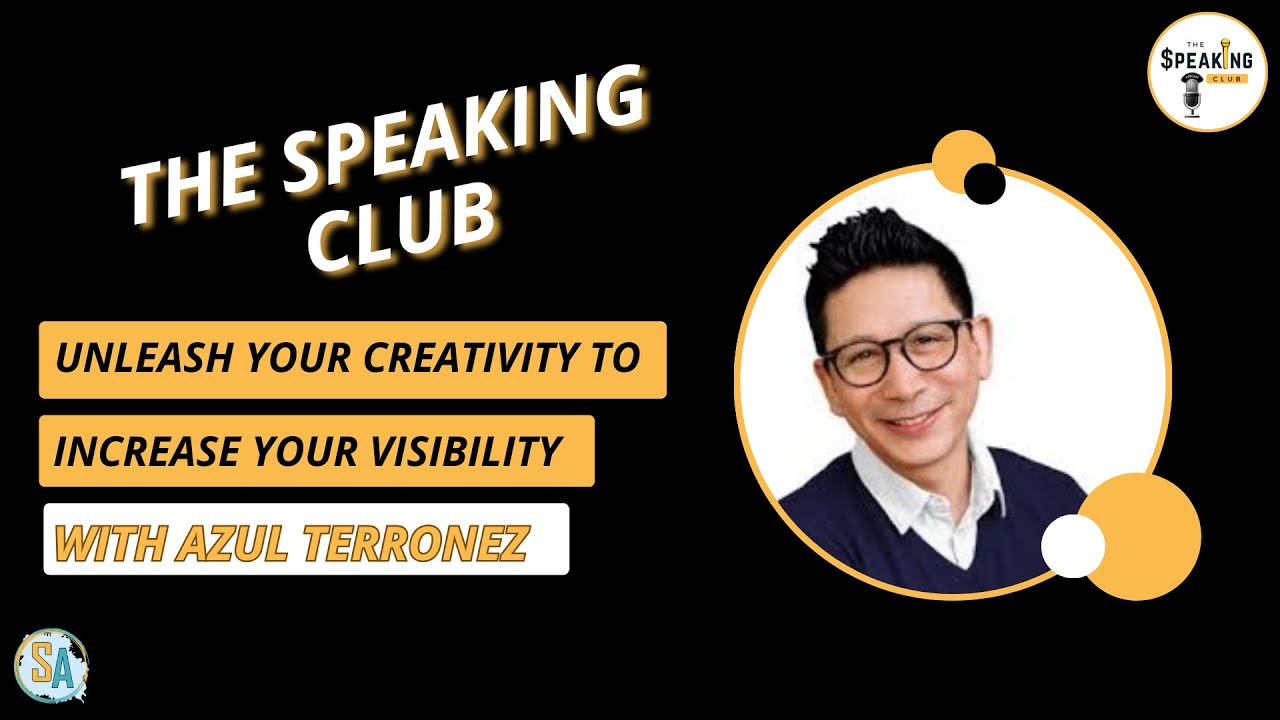
Azul Terronez wrote his first bestseller in 30 days using 'bubble thinking' instead of outlines, keeping his creator and critic separate. The TEDx speaker and book coach built a publishing business around neuro-diverse writers and uses speaking as a client-acquisition engine.
Chapters
Hello, you're listening to Sarah Archer and episode 310 of The Speaking Club podcast. I'd like to start this show with a quote from author Ray Bradbury: Your intuition knows what to write, so get out of its way. I started this podcast for 2 reasons: because I want to help people recognise the power of stories and humour in speaking, And because I believe it's your message that counts, not the number of ums and ahs you use. There are some organisations that want to create robot speakers. They want you to sacrifice your personality in order to speak perfectly. I want to let you know that you can be yourself and a sensational speaker. So if you want to be a speaker that connects and engages authentically through stories, a speaker that gives value as well as a great performance, Then welcome home. Hello, welcome to the show. So it's, uh, what is it, day after Boxing Day here in the UK. We're on the cusp of 2025, and maybe 2025 is the year that you want to write a book. And if you are thinking about that, then you are going to love this show. Now, I often work with authors, and I can work with speakers who want to be authors. You'll see a couple of books that way behind me, and, you know, I'm an author myself, and I do believe that books and speaking have a symbiotic relationship, one fueling the other. So, in, you know, one of the big questions that I get asked is, what should I do first, write the book or do the talk? I don't actually think it matters, and there's benefits to both, but I've got another expert who is coming onto the show today who I asked that question of to get their view as well. That person is Azul Terranez. Now, Azul and I met back in 2017 when we both started our podcasts together at the same time, and I've been watching Azul's trajectory, his journey has been absolutely phenomenal since that point. He is a bestselling author himself. He is a viral TEDx speaker. He's a book coach to some of the biggest thought leaders around. And I've brought him onto the show today to give you some insight from his experience of, you know, writing a book. His first book, which was a bestselling book, he wrote in 30 days. He's gonna share about that. He's also gonna talk about his TEDx talk, how and why it went viral, and he's also gonna share one of the biggest lessons I think that is invaluable for whatever you're doing in business, whether that's writing, speaking, or starting your own company, whatever it is. There's an absolute golden gem that he is gonna— golden gem, golden nugget, that he's going to share with you today. So, that's probably enough from me. Let's head on over to the interview. Welcome to The Speaking Club, Azul Terenhes.
Thank you so much for having me, Sarah. I'm so glad to be a guest.
That's fabulous. And we've arranged this super quick. So, I said, come on the show, and you were like, right, this. And it was, I'm really thrilled to have you here. Because I think we originally sort of acquainted with each other during starting up podcasts. So, I know you started up your podcast about the same time I did mine back in, I think, 2017, which seems ages ago now.
Right.
With Pat Flynn, who went on to become a client of yours, which we may come on to in a bit. But I wanted to start off by asking you about your journey. Now, I know kind of you mentioned this in your about, but I was curious about this. You discovered you were dyslexic when you failed English at college, and you said it motivated you. Some people might have gone the other way when they had that come up. Can you share more about that?
Yeah. Well, you know what's interesting? I failed English. You know, UCLA is a You know, a fairly prominent school here in the US. And I was really happy to get in, but I didn't find out I was dyslexic until I was almost a senior in college. So I failed that class and had to go take it again. And school was very difficult. And, but it was my ticket out and I really wanted to be able to have this incredible experience. So I just worked really hard at things I was good at. Ironically, being a good storyteller isn't really very valuable in college. I have found though, it's very valuable outside of college. So I, I just pushed through with the skills that I had and, you know, ironically became a schoolteacher of English nonetheless, which is sort of ironic because I wasn't intending to be a schoolteacher at all. I wasn't where I was headed. I was just trying to get through my schooling and, um, Yeah. So it was sort of an interesting beginning to something that I wasn't ever supposed to be very good at. Right. And then I became a teacher, a principal, a college professor. So it really just shifted my mind around what's possible.
Excellent. So you were battling through initially, then you got the diagnosis and you were kind of like, well, that's why it's hard. And so I've literally built a superpower around this thing. That's cool. So you became a teacher. And I noticed that you said that you helped your students publish books. Now, I studied English. My teachers didn't used to do—
how did—
can you tell me more about that?
Yeah. So what I observed in kids is that they were really motivated to write if they had something that was meaningful. Most of their teachers assigned them a paper every semester or quarter. Here's your paper requirements, and students wrote them to various degrees, right? You know, if you're an A student, you always wrote an A paper. If you're a B student, C student, whatever the mark you always work towards, but they were never very motivated to do any better than they were required. So when they gave me that feedback, I started to realize what if making their writing was more important? So I figured, what if we just start? This was the early days of Amazon's online publishing for self-published authors. So I decided to start publishing them around 2006. 2007. And then what happened was, is that they changed their perspective about the way they saw themselves. So I no longer called it writing class. I called it, you know, we're gonna have our author's workshop today. And I started treating them like authors. Like an author has deadlines, an author has, uh, some flexibility in what they get to choose to write. They had, they have to move at their own pace. Um, that's what they did. So once I treated them like authors, their behavior changed and I had people come from all over the world to watch me teach, and I was like, you're not going to see me teaching anything. They're like, how do you get your kids to write? My students would write 10,000 typed pages over above the other classes. And they're like, how do you get your students to write so prolifically? And I say, because they have an expectation for themselves that I don't have. It's even bigger than my expectation. So when they started publishing their works and they all graduated as published authors, I figured, well, If you go to the McDonald's and you're 14 and you don't have any experience, just staple your book to the application and your name and say, I've never worked before, but here's my first book as a published author at 14. I think you'll get the job, whatever it is. So I really believe that giving them deeper purpose was allowing them to find their way.
Wow. And did it— I'm just curious, did any of them go on to do writing as a career?
You know, I never expect that, you know, because it's not the point of it. But I had students write me after they graduated graduate school or college and say, you know, they finished, they went to be a writer or filmmaker, and to write me to thank me. Thank you so much for making writing a part of my life. You know, I'm a writer because of you. That's really great. You know, it's really neat to see that, you know, years later, because I taught for a long time, you know, so You know, some of my students were closer to the 40s now. And so they, I get to hear from them, you know, here and there.
That's amazing. I love what you did there. That's so fantastic. And what an accomplishment to have, like, as, as, as you're entering the workforce to have already done that and the confidence that it must've brought them, you know, in terms of what they could achieve, um, was, was amazing. Now, I think from what I also read about you that at one point you did feel like a bit of a fraud when your students called you out. Do you wanna share a bit more about that?
Yeah, so we had these sort of book fairs, you could imagine. We had classes come over, other schools or other, you know, teachers would bring their classes to read the books or the stories that the students were preparing for print. And we were getting ready for that, and one of the students very peacefully and very naively said, where's your book, Mr. Taronis? I want to put it out with the others. And I thought, oh, I could lie here. I could tell them, it's not about me, it's about you, which would've been partially true. But I just honestly said to them, I don't have one. And they're like, well, why? Where is it? I said, well, honestly, I'm afraid if I write a book, I won't know what to say. I won't have anything to say. And they looked at me very odd because that's not what they've heard me tell them. And they said, well, you told, told us not to worry, that the fear is the gift that you have. So why didn't you write your book? And they walked off. And I was like, you little smart thing. That's exactly right. It was fear that kept me from writing. It wasn't my ability, obviously, or my know-how. And that's what changed it for me. It really made me say, you know, all these years I've been talking about writing. And it was fear, not my skill. I always thought it was dyslexia. Yeah, dyslexia was the thing keeping me from all these wonderful opportunities, and it surely wasn't. So yeah, that was a moment where it really shifted. They turned the tables on me, you know, which as a great teacher would appreciate when students do that. You should expect your students to teach you something, and they really did.
That's amazing. And so you decide, like, I know you said you'd been waiting sort of 24 years to write that first book. First question, I guess, is how did you decide what to write about for that first book?
You know, ironically, after 24 years, I, when I asked myself, what am I going to say? Like, do I have anything to say? I didn't want to write about education. I did. It was an obvious choice, like write about education. And I was like, but I don't want to be an educator and I don't want to tell the student that. I want to grow. I'm just, I've been here 25 years and I want to move on. So I wrote about what it would take to get out of education. What would I do if I were going to leap into something else? And I didn't know. So I wrote about what I didn't know, which is usually what you don't recommend. I wrote about what I wanted to know. So my point of my book was, it's called The Art of Apprenticeship, was about how do I make this leap from this place that I'm at into a place I wanted to be? And that's where our intersection comes together because I had noticed Pat Flynn. the online, um, he was a blogger at that time and was just starting his podcast. Um, and I thought, well, I want to do whatever he's doing. That seems really amazing that he could have a life where he's in charge of his own career, but it's not like you can go to school for that. So I need to figure out how do I do that? So I didn't know Pat Flynn at all. I just decided I'm gonna write as if this, this idea and concept of service will, would help me get closer to a mentor.
Yeah.
And the mentor I chose was Pat. And so I wrote this book with him in mind, and it just happened to be he was having a one-day class like we did in, for his podcast, sort of a one, one-day breakthrough with his buddy Chris Ducker. And that was my goal. I said, I need to write this book to get there. And I wrote that first book in 30 days cuz now I had motivation beyond, um, my, my, my classroom, beyond what I could use it for every day. So that's where I shifted my thinking outside of myself, and that's what I asked my students to do. So I was like, I need to do that too. So that's kind of how I found the topic for myself, which was ironic because I didn't know how to tell people I was writing a book about how to leap out of education.
And you, I mean, you wrote it in 30 days. Now I've written a couple of books and that seems like a fast pace to go at. Is that because You had it all, or what? What— how did you even approach doing it in that amount of time?
Yeah, so because I'm dyslexic, I don't really think the way other people do. And that's the advantage I took away from my, my, you know, learning about it was that my brain thought in ideas kind of like bubbles. Like when you blow bubbles, you know, and like, you know, in the park you see children blowing bubbles. I always thought that seems so easy. You don't have to know how to do it really. You just hand them the thing and say blow. But writing seems so complicated. And I, I was like, well, what if it wasn't? What if it was just like blowing bubbles that sometimes bubbles, you have a lot of them, sometimes they pop, sometimes they form together, sometimes they drift away. I go, what if writing was more like that? So I decided I would write sort of more freely and not against an outline. An outline very, was very restrictive to me. And most people teach to write a book, you get an outline and then you write. What I found is it was terribly painful to imagine that this had to be the path I took. If I started down this path, it meant I couldn't change. So I let go of the idea of an outline and I just started writing the ideas that mattered to me around this topic. And I started blowing bubbles as I imagined, these are all the things I want to talk about and some of them don't make it. It's okay. So I first visualized the book as I imagined it, and then I started to write things that mattered to me. I didn't write in order. I wrote things that I, that I cared about. And then I assembled the book later, like, okay, this makes sense now. This is a book about apprenticeship, but It needs this, it needs this, it's missing this, but this is really good. These are good stories. So I just, I sort of deconstructed it like you would a sandwich or something and decided to just work on the parts, not on the whole. So every day I didn't have to write a book. I was just writing this small little piece of writing that was a few hundred, few thousand words. It was much easier. So that's how I finished very quickly, is that I wrote an hour a day, which surprised people. I didn't write all day for 30 days. I wrote an hour. I was a teacher. I had kids at home. I couldn't find more time than everyone else. I just had to think about it differently. And once I did that, everything changed and I was able to be very, you know, efficient. And I realized most of the time we were trained as young people to be editors, not authors, not writers.
Mm-hmm.
So we are always editing towards the goal, right? Our professor said, you need to get an A. This is the requirement. This is the rubric. to get the grade. And so we always edit towards the grade, we edit towards the assignment that was given. We don't ever really write for ourselves without any rules, without any, uh, requirements. And that's what it takes to be creative. And so creativity really flows when you no longer restrict it. So I just found a new path forward. And that's the thing that I realized that was holding me back, was using traditional thinking was keeping me from being able to— my, my brain wasn't traditional, but I was trying to use traditional thinking to write books, and it wasn't working. So when I let go of the idea that I'm not an editor, I'm a writer, and writers write, and I don't— doesn't matter how well it's written, because that's the judgment. This is not good. And I no longer judged that if it being good or bad was a requirement, then it became infinitely more likely to finish every day that piece. You know, if I had 1,600 words to write that day without judgment, it was pretty easy.
Yeah, that's amazing. As I know, I feel like I know what you mean when you kind of let go. So I've written some plays, and when I get going and I look back and say, I don't even know where that came from. I have no clue. Like, I hadn't planned that character's direction or anything like that. And it's just, it's when you are free and in flow, as Csikszentmihalyi says, and in touch with your intuition and your— you know, something else.
Yeah.
And I do think it's really important. And then the point that you're making is that you keep that creator and that critic separated when you're doing something creative and almost physically locating them in separate places. And it's the same when you're creating a talk as creating a book. You want to keep them apart. I don't know if you relate to that.
I can't do it any other way. I wish I, I can't. So I don't know what it's like to, to be more linear. But what I observe is, to your point, when people say finding flow, what they're really meaning is that, that you're no longer thinking and you're just— that's why you don't remember doing it, is you weren't thinking actively. I want— I think I wanna write about this, and then you write about it. Most people, because they're so busy trying to edit it to get the grade they want, that they don't find themselves in a present moment to write. So. What I want people to do is no longer think when they're writing. So as a coach, I say, I wasn't thinking when I was writing. And they go, well, how do you write if you weren't thinking? I said, I'm speaking to you and I'm not thinking. I'm just speaking. They're like, oh, that's right. I'm just talking to you. I go, right. You didn't stop to think of what you're going to say. That's how writing is. And if you put thinking in the middle of it, it causes an extreme friction and sparks fly and all these things, but it doesn't ever produce writing. People get stuck in their mind and I try to get them out of their mind and onto the page. So. If they let go of the idea that they have to be good, if they let go of the idea that this is a book, if they let go of all these constructs, then the writing can be in that moment and nothing else. And then magic happens. And like you experienced, yes, for fiction authors, they often experience it, right? Quite a bit. For nonfiction authors, they go, well, but this is a very linear book. And when I coach, whether they're doctors or lawyers, I say, you spend your day thinking, right? They're like, oh, all day. I said, I'm asking you to spend your, your time writing, not thinking. And that takes me a, a significant amount of time to teach people how to not think.
Yeah.
And I know it's a strange concept, but, but really, when you remove the thinking process, the thoughts really that get in the way aren't the ones that say, how do I put this screw into this nut and tighten it? That's, that's logical, working, functional mind. I'm talking about the mind that's judging you when you're writing. Like you said, separating the 2 halves of your brain. One other way that I suggest is stop using words when you begin writing a book or a talk. What I mean by that is I, you know, the adage that a picture's worth a thousand words, I think is very true. So I make my, my clients and I myself, I draw my book out first and people are like, oh, but I'm not an artist. I'm like, oh, I'm definitely not an artist. That's not what I'm asking you to be. I said, but I want you to visualize your book because, um, if you can visualize it, then you could create it. But if, if you're thinking that somehow You wanna know where you're going, don't do an outline. Visualize the book so you know that it's all there, so you don't worry you're gonna miss it. So all these techniques help to release your mind from this very editorial, you know, right brain, restrictive brain into a more creative, free-flowing, no judgment zone that allows you to be present when you're doing the work.
That's, there's some brilliant tips there. And I, I know exactly what you mean. I mean, I guess when I write plays, I mean, I've written nonfiction books as well, but when I write plays, I can see it as a director. I can kind of see it first. like where I want to go, and then I put it on the page. But like you say, there's no reason why we can't do that in other genres as well. And I love those tips. Thank you for those. That's great.
Yeah.
So, you wrote the book in 30 days, uh, and this was kind of, well, I don't know, maybe it wasn't in terms of the students' books. Did you promote those? What I was curious about is how did you go about promoting that first book that you wrote?
My first book I wrote, because you know what, when you have naivete on your side, it can really help because you don't know better, right? I, I just promoted it with guerrilla marketing, like in every way possible. I didn't have a list. I didn't have a social following. I wasn't anyone special. I didn't know anybody in particular. That, that was the first thing is I was going to just ask anyone and everyone to buy the book. And then I was going to do the harder part, which is ask them to write a review, because that's the hardest part of books is writing reviews, is getting them to write reviews. Um, but I was really motivated and so I created small games for myself, which now I, I teach my clients cuz it's funny, it worked, which was every day I would post a video I was writing. So I didn't wait to market the book until I was done. I would write a, do a 60-second video about what happened today in my writing. I ironically wrote the first book all in longhand. in, in a journal. And my thinking was I would write, write it in journal because every time I sat at the computer in the past, I would just freeze, like frozen. So I figured if I write with this, I can move away from my normally do work. I could sit in different spots. I would go, I would tell my family, look, I'm gonna go write. And, you know, I would go coffee shops, yes, but I would— I had this idea that I want to go to the fancy hotel pools, lounges, and order a drink at the bar. you know, a mocktail and act like— or some sort of beer. And what do you— I'm here writing. Oh wow. And even though I wasn't a guest at the hotel, I would just change hotels. I, I just created this idea and I would take videos and I would talk to people. I'm sneaking in today. And people were just— they were loving it. And then I would talk occasionally about what I was writing about or why I was writing it. And over the course of writing it, um, I would post these videos. And so I got more and more followers because videos at the time, 10 years ago, was like— people weren't doing that as much. And then, um, halfway through, I lost the manuscript, that journal. I lost it. I could not find it. And people were cheering me on. They were giving me ideas. They were volunteering to come help look in my home for it.
Oh my goodness.
Um, but it was just— they were just so engaged through the writing process. But when the time the book came, they had to have it whether they wanted to or not, whether they needed it or not. So I think that was the foolish thing, is I, I just created attention early, which is what I recommend to people if you don't have an audience. Create an audience. The other thing that I, I did was I was writing it again, as I told you, to go see my mentor, Pat Flynn, who I didn't know yet. I had never met him a day in my life. I didn't know him. He didn't know me. So I was like, if I can get, if I could tell him about this book, maybe he, there'll be a chance that he would talk about it or something. And that's what happened. I wasn't ready for that because he did a whole YouTube video about my book. And I was like, oh my gosh, he, he doesn't even know me. I can't believe this is happening. And I, I didn't have a website. I didn't have anything. So I was freaking out. I had too much promotion. But that's kind of what happened. I just decided I'm just going to try things and see how it goes.
I love that. I love that. I think that's the curse, the curse of knowledge or the curse of baggage. As you get older, you've got all of this stuff. And that's why I think young people can be so, like, make progress so quickly is because they haven't got those limiting beliefs that we that we sort of grow as we get older. And I just love that you didn't know what you didn't know. And so went and did. I love that. We just gotta be more like that, I think, in our lives. That's brilliant. And so how did you get from there to what you do today, which is to sort of teach others how to do that, particularly leaders around the books?
So I went to that one-day business event and I, everyone, I didn't realize this is how naive I was. This is why naivete is wonderful. I mean, if you could put your mind as Forrest Gump, Do it. Because if you don't know any better, you'll do things you don't, you know, you don't know to be afraid of. So I went there and I, I realized I signed up for this event because it was sort of like serendipitous that I was doing this book. I was wanting to impress, or at least get the attention of Pat Flynn to be a mentor. And I didn't want to ask him. I wanted to show him I was committed to this idea. I wrote this book and when I showed up, the emails, uh, that they sent you, you know, when you come to this event, You gotta be prepared for a 15-minute hot seat. I said, I don't know what that is, but it sounds reasonable. 15 minutes. And then they said, uh, send us your email list, your opt-in, your lead magnet, your offer for your business. And I was like, oh my gosh, I don't even know. I don't even have an idea for a business. I didn't even know this is really about, like, I was really very, again, super naive. I didn't know what a mastermind was. So I just went and I told them about this idea and the story I told you about the boy. And I was there writing this book about the art of apprenticeship, why I was doing it. and that I wrote it in 30 days. And they all just stared at me, like, because some of them are 6 and 7-figure business owners already. And I was— I didn't have an idea for a business, let alone any of the things that they were. So I thought either this is foolish, which, you know, I was trying to just go foolish, right? Because I didn't know better. Um, people came to me afterwards and during the talk, during my hot seat, were asking me questions about how did I do it, not the other way around. And so I just kept talking like you were asking me, well, how did you do it? And then afterwards, people came up to me who were very successful entrepreneurs. Could you help me write a book? And then I was a teacher. Of course I can help you. Like, I can help anybody. Um, and then eventually Pat Flynn came to me and asked, would you help me write my book? And I said, oh yeah, of course. That's how it started. I didn't, I didn't go there with a business that I could help people write books. I went there for myself and, um, That's how magic ensued. It wasn't, it wasn't an effort that I did.
Oh, I love that. We can get so hung up on some of those other things as well that become obstacles to us moving forward. Okay. So let's switch into what you do today. What are the 3 biggest reasons that you think leaders should, you know, reasons why people should write a book?
I really think anyone, should write a book. But the reason leaders in particular is that it's sort of like creating an asset for yourself about what, what you believe, who you are, what's your legacy in this world, right? Um, nobody needs to know what you know as much as you think. Um, what they usually need to know is why you— how did you get to know what you know, right? Because I can ChatGPT, what information, but how my journey, how someone got there is really nuanced and really different than everyone else's. Most leaders miss that opportunity. And I think if you can write something that shows your perspective, you really have a chance to change an industry, a community, and definitely a person, but most of all yourself. And I don't want a book about what you know. I want a book about why you perceive the world this way. And so most of my work in helping people is helping them see the simple message inside of them. Don't think of the book. Books aren't important as you think. And I know that's terrible at being a teacher and a coach of writing and an author. What I mean by that is books aren't words. I know that's confusing because aren't books just words? Books are ideas or messages that are held together by words, right? The words are holding it there. If I could speak to you in person, each individual, it would be so much more impactful, but I can't. So. This is the best way I can package this message for you. And I'm going to use words because outside of a book, 70% of our communication is non-physical, nonverbal. So I get to communicate you differently, but on a page, I have to do it in such a way that you remember, you can understand and see me. Most people buy books they don't finish. Even New York Times bestselling books, the best books ever, your friends' books, they sit on the shelves. You intend to read them. You have good heart. You want to read them and you don't. But books that get talked about are the books that matter, not the books that get read or the books that get partially read. Because most people will talk about Atomic Habits and never read it or never finished it. Um, because having a conversation start, um, because you put something in the world is such a powerful thing. It's, it's how you make a movement with your message. You're not trying to say, hey, I know stuff, here you go. And people don't go out to the world and say, Hey, so what book are you reading? And then the person goes, oh, I'm reading this. And then they go, well, what did you learn? And they don't go, well, chapter 4, page 6, paragraph 3, I learned this. They're not textbooks. They say, you know what, I learned really about how to do X, Y, and Z, and my life's better for it. They're like, that sounds like an interesting book, I should buy it, right? That's, that's what a book is. So if you let go of this idea that there are all these words that are supposed to do magical things and start focusing on why am I the unique messenger? Jada Seldner, who was a great friend of mine, one of my clients, she was the co-founder of Simple Green Smoothies. She'd always remind me, Azul, there's no unique messages, just unique messengers. And I always agreed with her. And that's what you're looking for in a book is how do you— you are unique. There's no way you can't be, but most people don't see that. So my job is to help leaders see their uniqueness because that's what's to be left behind, not what you know.
Absolutely. Yeah, I think we do similar things in different mediums. So that insight and that opinion and that, that almost like the personal manifesto, that, that stuff, because it's the same for speaking, I believe, in terms of a great talk. Um, that's, that's really, because like you say, information is cheap, insight and opinion, um, and your experience isn't. And that's, that's the difference. Absolutely. Cool. So where do you, in, in the sort of book publishing journey, where do you and your partner Steve fit into that?
Well, some, sometimes people when they start a book, they just, they know they have an idea or they know they wanna write a book and they have some sort of idea. They just don't know how to get started and how to, so what do I do? What's the, I know I wanna write a book. I've, a lot of people say I've started writing and I'll say, well, where are you? Like, well, I just have, Scraps of paper, or I have a Google Doc, or I have a Word doc, and I have these words on this page, and they don't really know where they're going. And so my job is to help them clarify their message first. Like, let's slow down. Let's figure out what are you trying to say? If you, if this is your last message on, on earth, they're like, wait, I'm not doing that. I'm like, oh no, no. Books are too hard to not put your last message on earth in them. Don't just write it because it's, it's, it, you thought it would be good for your business. Write something that's meaningful because it's going to be the hardest thing you do if you put your truth to it. And so our job is to get out who are they and help them build their brand by, by building who they are and being confident in the who they are, not what they know is more important. Here's the analogy I try to, to use when I'm helping leaders understand this principle is when I was a child, I was given a, a science kit, you know, a microscope, magnifying glass, et cetera. And I, I, I found that the microscope was a little bit boring cuz you had to put things underneath this little light, but the magnifying glass you could take outside and look at things and leaves up close. So it was quite cool. But the moment I realized if you move that magnifying at just the right distance from a dry leaf, you could ignite it and it burns, made me really excited about science. So, uh, I, uh, I burned different things, of course, my friend's leg, an ant, which I know I owe karma for. Uh, but, but the lesson learned here is that most people focus on the content, especially even other book coaches. They'll say, what's your message? What are you writing about? And I say, oh no, no. Who are you? Because it's not, it's not the content. The content is the sunshine shining through that lens. Everyone has access to sunshine. It's hard to press to say, hey, come over here, I'm gonna sell you some sunshine. It's really good. People are like, there's sunshine right there. But if you take the magnifying glass and you ignite it, you go, look, I have sunshine that lights things on fire. You'd be like, oh, show me that. That's amazing. That's who you are. You're the, you're the You're the magnifying glass that ignites the content. It's not what you shine through it, it's who you are when you do shine it through. And if you move it at just the right spot and ignites for the reader, you'll change everything for them. So my job is to help people see that in them so that writing the book isn't the hardest part. It becomes the thing they get excited about because now they know where they're going. Now they know why it matters. And I've seen people build entire brands on these books that we've written because we're taking them apart and getting rid of the words. And saying to someone like Pat, Will It Fly, saying, who are you? Why are you doing this? What does this matter? And Will It Fly didn't start that way when we, when Pat came to me, it was a totally different book. And I had to have the confidence to help him believe what I'm saying to you, that he has to let go of this idea that he's supposed to write lots of words and then people do things. I said, what's the thing that changes people's lives? He goes, when they get an idea that works. I said, then that's the focus of the book. So, um, it's just about that. That's the magic thing that we do. We help people see their messages. We help leaders like you write books that people love.
And do you see them all the way through the journey or just that first part?
Correct. Yeah. So people started, when we finished writing books, people like, okay, now what do I do? Do I get a publisher? Do I, do I get an agent? Do I, how do I self-publish this thing? What, they have all these questions. So then I started teaching that and I have a less of a love for teaching than the— because people could do that. My magic is this other thing. But I, I did start teaching people, and eventually not only did we start teaching them, we started doing it for them. Like, could you do it for me? I don't want to do all this editing and finding a designer, and I don't want to learn how to do it, upload it, and get it into bookstores. Could you help me? So the more we did that, we, we decided— and in the pandemic, Steve and I said we should just start a small press and do it for them and help them promote their book, help them do all the things that are necessary. So, um, that's when Mundala Tree Press and Rock Rose Press were born because it was a necessity. So the business kind of grew like also now we have a publishing business, which I was never planning to do. Um, and then a coaching business and, and then we have a community. So that's sort of how it all evolved and how we support people. And some of our authors, yeah, we help all the way through the launch and we help them do audiobook production. We help them with their book signings if they're in our area. We help them with pitching for the media. So yeah, we've kind of grown over the years, not, again, not knowing what we're doing. We just make it up as we go, basically.
I love that. I love that. Now, I had a question that I wanted to run past you, and we may have actually touched on this in some of the things that you shared already. I've got a friend who wants to write a book. She has ADHD and she finds the idea terrifying. She's, you know, she's done degrees and master's and all of that stuff, But she finds it terrifying. Have you worked with other neurodiverse people and what advice would you give her and them for their book journey?
Yes. The answer is yes. I've helped lots of neurodiverse people and my system works pretty well for neurodiverse people because I'm pulling them to the other end of their challenge. Organization for an ADHD person or a neurodiverse person is really difficult. And then if it is easy to create, it's difficult to hold to. So getting rid of all those things makes them feel much more at ease. They're not messing up, right? A lot of their feeling is, I'm not doing it right, or I'm lost, or I'm, I'm all over the place, right? These feelings of just distractedness.
Mm-hmm.
So my job is to say, good. Then they're like, wait, it's good? And we go, yeah, it's good. They're like, oh my God, no one ever said that about my distractedness. We're like, oh, well, the good part is, is that you don't have to focus on writing it from the beginning. You could write it in out of order. You can write ideas that don't stay anywhere.
You could—
they're like, oh, so this is all okay? I'm like, absolutely. So what I'm doing is just doing what I learned from kids, which is take away all the things that are hard and everything that's easy, give it to them to do. So what you have to do is just rewire their brain around what writing is and take away the hard part and give them the easy part. So whether that's tools on using their voice, people, people who are— have neurodivergency, they always think, well, I'll just talk it out. Like, Sometimes that can create more trouble because you're talking yourself in a circle. Um, so I say you can try that, but I want you to know that that won't solve the problem. The problem is that you're thinking too much and that our, our neurodivergence is we've been overthinking things so long that your brain is tired every time you try to even do the simplest tasks because you're focused on trying to distract yourself to get through the thing. And my job is to make it easier for you. We reduce the, the, um, the friction. So if I know that you're already overthinking this, my job is to get you in a space of not thinking, like I told you in the beginning.
Yeah.
And when I get those people not to think and the work happens, they're like, it's like magic. I'm like, oh yeah, you have magic in you. This gift you have is magic. You're just— you're using it with somebody who— using a system that someone that's not neurodivergent taught you how to do, to do the thing. And I want you to use your brain to teach you how to do the thing. And you, once you get it wired, you won't You'll never have to go back, but we have to rewire your brain. And that's how it works. That's really how I help people. And especially, you know what's ironic? The other people who have the same trouble, uh, professors, doctors, lawyers, people who follow really strict patterns, they have a really hard time with writing because their brain wants it to be a problem to solve. And I said, oh, it's not a problem to solve. It's a curiosity to wonder about. You're not going to always know the answer. Like, oh, but I don't like that. I'm like, oh, I know you don't. But that's the only place where books come from, is this question of wonder. Curiosity's about not knowing. It's not about knowing.
Absolutely. I love that. Curiosity, it's amazing. It's an amazing thing. Now, your book led to a TEDx talk, which has amassed, I think, around 4 million views. How did you prepare for that talk and why do you think that it went viral?
Well, you know, prepared is probably a very generous word.
Ironically.
So that book, that was actually a failed book proposal. So I had gone to a conference, I met a really famous author who was a New York Times bestselling author, and he just casually asked me, like that boy casually asked me, what are you working on? And I said, I'm working on a book. And he, it was a new book. He said, well, what's the book idea? And I pitched him the idea and, um, he's like, that would be a bestselling book. Let me introduce you to my agent. I was like, like terror over a complete terror. Not— you think it would be good. It was awful. It was probably the worst thing that could happen is, is, is giving me— because before I was writing without expectation, no need to feel pressure. All of a sudden there was this extreme pressure. So I hired a proposalist to help me write the book proposal. I was trying to get this book idea ready to send to this agent, and every time I sent it back to my proposalist, he said, this is just not interesting. I was like, gosh, this is not going well. Like, The idea was interesting, but the way I'm getting it out wasn't interesting. So it was really not working out. And, um, it was at that time someone asked me, hey, I want to introduce you to a TEDx organizer. Would you be open for that? Somebody that knew I wrote a book, another author. And I said, yeah, that would be great. They introduced me, we chatted. They said, great, I like you. Would you mind coming to do a TEDx talk here in Dominican Republic? I said, of course. Um, I said, what about it? He goes, whatever you want. I said, okay, great. I work best that way. Just whatever I want. And I thought about it. I don't know what I'm going to talk about because this wasn't a TED Talk about education. I'm an educator. I was living in Shanghai, China at the time. It's my last teaching gig. I was a coach for a school. I didn't know what to write about. I didn't know what to talk about. Then I remember this proposal that was not working. And the one thing that the proposalist did say was, All the stuff that you talk about, it's okay, but these things that kids say, that's super interesting. Talk more about that. So he kept encouraging me to talk more about these kids, and I'm like, I don't know. 2 weeks before I finally decided that— 2 weeks before I'm giving it, I finally decided I should really work on this. And I, I commissioned some slides, you know, like, to be made and this and that. I hadn't really practiced though. And I get to Dominican Republic, here it is. I've never practiced this. I barely have the talk together. It's going to be this failed book proposal called What Makes a Good Teacher Great. And I guess I'll just work on it when I get there. And the night before, I was practicing with my friend who was another TEDx speaker. He's like, I think you should start here, move this around. I think you start this a little early, start this here, change the slide. Photoshop this. I was like, I don't know how to Photoshop this. He's like, I'll help you. So the night before I changed, the night before rehearsal, like there's a dress rehearsal the day before of the actual talk. And I went to go practice and they, they didn't even have time for me to do it. They said, stand on your mark. Can you see the monitor? Good. They're like, good. Tomorrow, that's where you'll be. We don't have time. So I didn't even get a chance to practice it. So the only time I ever gave that talk was on the day that I gave it. that very first day. And it's because it was just true. It was just from a deeper space of, this is really what I have to say.
Mm.
And it wasn't because I had practiced. It wasn't because I'm a good speaker. It wasn't because of any of those things. It was, this is what the proposal said was interesting, what kids say. And I stuck with it. And I think that's, again, naively not knowing. I just focused on the 400 people in the room.
Yeah.
I didn't even think that this was gonna be seen and I didn't, who's gonna watch this? You know, that's what I thought. It won't matter. It's like 400 people. I'll live through this hour or, you know, 15 minutes that I have here. Um, and that's sort of how it came about and what happened. And the virality was, I think, the same thing I do with my clients, which is what's the message that I have to share that no one else is sharing? That's so obvious. If you talk about it, you're like, oh my gosh, that's just right there. It's the idea worth spreading. I just stuck to the concept, which is what's something that I can share that no one's talking about, but it's right here, right before us. And that's what books are. That's what talks are. They're the simple discovery of something that everyone else didn't notice, but you did. So that's how it all kind of unfolded.
I love that. I mean, part of me as a speaking coach is like, not ideal.
Don't do that. Don't do that.
But having said that, one of the big things that I talk about for speakers is It's your lived experience mostly. If it's the right talk, it's your lived experience. And if you can let go and be present and trust, having done the prep and having a sort of narrative that you are, obviously there's a lot of work that goes into a professional keynote, but it does come from that lived experience. And the best performances are ones where you let go and stay present and trust Like it's tapping into that magic again that you're channeling when you write, you know, when you're talking about writing a book, when you're on stage. So I love that.
I always want to say about the virality part, people always ask, well, how did you get it to go viral? I go, oh, I didn't get it to do anything. I've only shared it 3 or 4 times. Like, I don't talk about it very often. People are like, well, how did it get seen so many times? I go, that's a wonder, isn't it? Like, that's what makes— that's what's special is it's I wasn't trying to do those things. And I think people, I, people used to come to me after I gave that talk and wanted me to coach them. And I, I was like, I'm not a speaker coach like you, but I am gonna help you understand that your message matters more than you think.
Mm-hmm.
And who you are matters more than what you know, but you have to find the way to make it all work and sync together. I go, I spent my time telling stories because I couldn't read, that I have a skill. I, I, I worked on it over the years you were writing. I was trying to figure out how do I tell a story to get, to get what I, what I wanna say across. So I think people need to understand that virality is, it's not something I was aiming for at all. The people in the room weren't native English speakers, so I spoke very slowly. The concept was so simple that anybody, even a 5-year-old, could understand it. That was really important to letting the— I get messages from all over the world every week from people who, who've watched it or that their professors have assigned the talk. I've had a TEDx talk about my TEDx talk happen. A professor did it. It's just crazy how it happens when you're like, I'm like, I don't know. I just, I just, I'm so inspired by others who find something in it because they found more in it than I did.
I love that. And I just love this, this concept of an idea that lingers. And it's so, you know, there's old books on sticky ideas and stuff, but the more simple you can make what you're talking about, the better. And that's the real experts, as I always say, are the ones who can make it simple enough for your grandma or a 5-year-old to understand. Like, that's the sort of benchmark I work with people on— your grandma and a 5-year-old. And if you can get it to there, that's brilliant. Now, I work with a lot of authors to help them turn their book into a profitable talk, but I also work with speakers who want to write a book. Now, what do you think should come first, the talk or the book?
Right, the chicken or the egg. I don't know that I have a belief that one over the other. I know that writing a book gave me more confidence. I had something to say, but I didn't. I didn't give my talk about my book. So so I can't say that that's the route I took. Ironically, people have asked me over the years, and I finally am writing that book about what makes a good teacher great because people have asked for it. They ask, well, how do you do this? And they ask for specific. Now they want to know more. So I am writing it for them. But It's hard to write a book that was a talk.
It's—
I find it would have— might have been easier the other way around, but because I tried the other way around, it didn't work. I'm trying it this way, and, um, it's much easier because now I know what I'm trying to evoke in the person. Um, but I think if you're— let's say you're new to the thing. Let's say you haven't, um, been an expert in your mind in this field. Writing a book could be a really good way to let people know you are. Because I doubt I would've gotten that invitation to speak freely about whatever I wanted in a TEDx talk without any rehearsal or without anybody knowing what I was gonna talk about if I wasn't an author. So I think if you— it gave me credibility when I, I didn't have any. Um, so that's amazing. But it also can be a really great tool to help refine your messaging. And then your, your, your talks aren't your book. Your talks are from your book. They're, they're from you, right? They're, they're from, The seeds of your book. So books are a great way to get lots of content. You could—I've been asked to speak all over the world from that talk, and it's hard to give a 15 minute. I tell people like, "Look, I know you want me to do the TED Talk into an hour." I've tried it; it's really not very interesting. It becomes boring after 15 minutes. I say the same thing like it's a TED Talk. They're like, "But we'll want you to do." I'm like, "So now I just say no. I'll do another talk, but I'm not doing that talk because it misses some of who I am now. Like that was a long time ago to me. You know, it's a decade ago that I was." you know, preparing for that talk almost. And, um, yeah, I feel differently about not the topic, but, but what I have to say. So I think you could go either route. I think writing a book's better for people who've been around for a while or have not had a business around for a while, then, because it gives them credibility.
Yeah.
Gives them something to focus on. They have all their ideas kind of worked out so you can see them and you can pick and choose. Um, so I mean, Honestly, I think a book's a great way to start, but if you don't, then you could definitely use your talks. Like some people are better at speaking, so writing a book's a lot harder for them. Um, so I, I try to help people just use the least resistance path for doing what works for them. So I don't know that I'm very helpful in this area.
No, that's great though. There's some great things, you know, points to think about there for, for people and some guidance. And, you know, they are very different animals. You know, you can't just cut and paste your book into a key. It just doesn't work.
People tried to do that. I know, they've come to me, here, here's my talk. Oh no, sorry, it's not the same. I don't want to read your talk. Um, it's like, it's like when someone says, here's my blog, can we turn it into a book? I go, no, I don't want to read your blog as a book. I don't, it's not interesting. Well, what do you mean?
Yeah, I get people doing, doing worksheets and they'll be like, and I know the answers that they've done. I'm like, no, you need to go and start again. This is not your book.
That's exactly right. That's exactly right. So it's, it's a bit of letting people find their way within themselves. Because I, I don't sell how to write books or how to write at all. I sell confidence in what they're doing.
Right.
I can teach them how to do the thing, because if I show them my way, then they have my way. But if I show them their way, they always have their way. But I need to show them why I think the way I do, how I got here, how I help people like Ali Abdaal find his book, how I help all these wonderful talents have the same fear as you do. And I have to walk them through Their same imposter feelings and their doubts and their fears to find this beautiful nugget of truth.
And I think that's reassuring to people. I watched the video of Pat talking about you helping him with, um, Will It Fly? And it is nice for people to see that these accomplished experts and influencers have the same fears and doubts as they do. Um, it's normal. It doesn't mean you shouldn't do it. It's actually a spur to get it done. Um, you've just got to push through it, and that's— it's lovely that you're helping people to do that. Next question I wanted to ask you was, how does speaking fit into your business model?
Yeah, great question. It was interesting during the pandemic, obviously, your, your particular profession— mine exploded because everybody's home writing now, you know. But for me, I kind of paused my speaking because it was really taking off With the TED Talk, I was speaking quite a bit and getting a lot of requests, which is a little bit away from what I do as a business, right? My books aren't necessarily who I— what I do for work. But now it's a really great way for me to get in front of people. So to get on stage, I'm talking to this group here in the spring about— they're a financially independent group, meaning that they're financially independent and they retired early. So they're all disposable income and all have money, but now they need purpose. So I'm going to speak to them, and the reason I'm speaking to them is about what do you do when you have all this time and money? Now what? You worked your whole— you know, now you have this freedom about leaving a legacy through writing. And, um, so when I speak, it helps my business, right? Whatever the business is. So I'll go from that talk, uh, that will help my publishing business and my coaching business, to go then do a book tour of my own book. I write historical fiction with my husband Steve. So I'll go teach a class on how to write fiction with purpose. How do you take true stories and make them your own? How do you write fiction at all? How do I— what's the model? You know, and then talk about the books and these areas where I'm writing about this, this red light district in this small old coal mining town in the '50s here in the US. So I'll teach about that. So, and I'll get clients from that or people join my community from that. So I use it as a tool to share my who I am so that people get to know me. And it really helps. So wherever I speak, I tend to get clients. So, and it doesn't matter where I speak, I've gotten people have come from my TED Talk. I have many clients that came from my TED Talk. They're like, I was researching you to speak at our conference. And then I realized you don't do that, you write books. So now I want to write a book, and they've written books with me. So it just, I find that speaking, because it's a natural thing for me, it really is a powerful tool. So I love speaking. And it's part of my business brand. And because then it, one, it supports my peers, people that I respect and admire, because I know I'll do a good job for them if they ask me to speak like at their conference or something. But it's also a really good way for me to work on my messaging for the things I'm teaching and learning. So I think it's great. I hope every author should be prepared to be a speaker, in my opinion.
Yeah, well, I completely agree with that, but I would. Brilliant. Well, listen, thank you so much for sharing all of those brilliant tips and the And your sort of approach, which is to find your own way really. You know, I love all of that stuff. Now I have some standard questions that I want to ask before we share where people can find out more if they want to book you to speak, to work with you, to do their book. The first question you might have kind of answered already, which is, what's the best thing that speaking has done for you?
I think it's validated that Everyone has gifts. And that, that the thing that was for me not useful in school— talking, speaking, telling stories— has become incredibly useful to me. I never took debate. I never did any of those things. Um, but it's helped me grow and be more confident. I, I— have you heard of the thing called the moth?
No.
It's a storytelling—
5 minutes. Yeah.
Yeah. I've done it many times and I've trained with Moth coaches. To tell a 5-minute story is one of the most challenging things to do and to, to, to get people to experience laughter, tears, and then resolution all within 5 minutes of a personal story. Incredible training. Wonderful. I love it. I think it's given me confidence. That's what I would say it's provided for me.
Brilliant. Brilliant. Yeah, we haven't got— I think we've got a moth in London in the UK, but I've had moth experts on the show, and it's a lovely format. And actually, you are perfectly right, actually doing a shorter talk is harder than doing a longer talk. So, it's a tough one, but really good if you get the opportunity to go to a moth watch or have a go yourself. It's really worth doing. Next question. I think this might be harder for you. I don't know. What's the book that's had most impact on your life and why?
Me personally?
Yeah.
You know what? It'd probably have to be the very first book that I read on my own because being a dyslexic kid, reading was painful. I probably have 2, but The Old Man and the Sea was the first book I read that I chose that I read for myself. As a young person. And so I think that the idea that, that it didn't have to be long to be impactful, it didn't have to have lots of characters. It was just so good. I was just riveted. It was over a break. No one assigned it to me. I remember thinking, I should read this. Uh, that book changed me because it made me fall in love with reading. And the other book that changed me probably was The Alchemist by Paulo Coelho.
Mm-hmm.
Because it just had such an inspirational story. And I used to teach to my 7th graders because I wanted them to understand the difference between ordinary life and people who listen to the soul of the world. And it was magnificent. I love teaching that. So those 2 books.
Brilliant. Thank you. I realized I skipped a speaking question, which I must go back on because it's useful for people to know if this has happened to you. Has there been a speaking gig or some time when you've spoken where it's not gone to plan and you're like, I want to put that in the back of my mind and forget about that? Has it happened to you?
100%. And it was probably the time I got paid the most. Which is terrible. I was with the Speaker's Bureau. I was being paid an incredible 5-figure, you know, sum for a 1-hour talk. I had overprepared because I don't do well with overprepared. I do well with a certain type of preparation. After that, it's like whipping eggs. It just kind of falls flat. Um, and the talk was an hour. It was a keynote. And instead of being myself, I did the talk. I knew from the moment I got up there that this room— it was a huge auditorium. With only 2,000 people, and it just felt—2,000 people would normally feel great, but they were there were 10,000 people at the conference, so it felt really light. I would have done my teacher moves and said, "Okay, everybody move up forward." I would have stopped everything and changed the way I did the talk, and I didn't. I just—I went to what I rehearsed, and I think I—I made a mistake. I should have pivoted and done what I could have done naturally, which I could have done. No one would have known the wiser, but it would have gone infinitely better in my mind. Whether they—you know—that the client was happy, but I think it could have been a great talk and not.
Oh yeah, that's really, that's again, reading, reading yours and being trusting yourself and keeping in touch with yourself when you're in those moments. That's really helpful to share. Okay. Penultimate question. What's the best bit of business advice you've had and why?
To keep everything you do simple. Don't try to overcomplicate it. So many— Pat, often, because he's been my mentor for these last decades since that moment, which is incredible. I wrote a book to find a mentor and it worked, right? Um, he's always reminding me of who we are. So he's like, you're, you're a premium coach. You, you, you command premium clients. You need to stay in your lane. So keep it simple. Don't make— don't add to it. And, um, and I've had to do that over the, over the years is I had a huge team. of people. You know, as a publisher, you have all these people that you hire. And I realized that we could do a lot of the work without this huge team. We just had to be more thoughtful. So I learned that simpler is better for me. And that when I start getting complicated chasing influencers about what they should or should not, this is how you do this. That's when I go astray. I just want to learn a skill from an influencer and not the hypes and whistles of like, you'll do this, you'll get X 7 figures. I don't follow those people. I don't take that advice. In fact, Yeah. I turn from it. So now I keep everything simple. And that's been really rewarding and makes my life a joy. I don't do anything I don't love.
I love that. And I think this is a really key point for people is that you design the business to work for you. You're not, you know, like this is the message that you've been talking about all the way through this is that what structures work for others, what things work for others may not necessarily work for you. So find your way to success in whatever you're doing. I love that. That's really cool. Yeah. Okay. It's really made it fun for me. Last quote. Sorry, go on as well.
Oh, I'm just saying that just makes it more fun for me to do what I love. I don't spend another minute if I don't love it. I go, why are we doing this? Let's stop doing this. It doesn't matter how much time we put into this. Let's let it go. Okay, let it go. Because then I'm having fun and I get back to flow, back to joy. I only work Tuesday through Thursdays because that's when I choose to work. Not because I couldn't work more. I just like, but I want to choose my life. My business works for me. It's not the other way around.
Yeah, exactly. Exactly that. That's smashing. Thank you for sharing that. Uh, okay. Last question. I may even have the answer already. Um, if you could choose one mentor and they can be alive or dead, fictional or non-fictional, who would you choose and why? Great question.
I wasn't expecting to be stumped, but it is a hard choice. You know, ironically, I always think who I meet, who I talk to, you know, because Tina Turner was my music idol. But I think about the person that I'd want to know from and be someone like, like the persons or the place that I want to know from, the people who wrote amazing books that didn't really write the books, were someone like the Buddha or Jesus or something like this. Because not because I'm religious, actually, I'm not religious at all. I'm really inspired by people who speak their truth. And I know that's interesting. Like, I've sat in retreat with Eckhart Tolle, you know, Heron spoke 10 different times. There's something powerful about sitting at the foot of a master. So I think that's what I would say.
I love that. So a few, but, but yeah, I know.
It's not fair, is it? Right? Pick one. Because then if I say the Buddha, That's probably the right answer because I want to know what was he thinking.
Brilliant. That's, that's cool. Azul, thank you so much for coming on the show and making time to do this, being so generous with your tips and sharing your experience and journey. Where's the best place people can go if they want to book you or work with you?
Yeah, you can find me at authorswholead.com. You can read my emails the same, azula@authorswholead.com. And I always invite people to email me or reach out to me. And my podcast is there too, authorswholead.com. I interview amazing authors like you and interview wonderful speakers and people in that world. And that's a great way to connect with me.
Brilliant. Thank you so much. And best of luck with everything. And thank you again for coming on the show.
Well, it's my pleasure. Thank you for inviting me.
Well, there you go. I hope you got a ton from, uh, what Azul shared today. Loads of really interesting stuff about creativity, about, you know, getting out of your own way, you know, what to do, what not to do, what to think about, what not to think about when you're writing your book. Just loads of stuff that I think will shortcut and accelerate your journey and also give you a lot of things to think about when you're deciding how to approach that book writing journey. One of the biggest takeaways for me from this interview was that reinforcement of this idea of naivety, and it's one of the biggest treasures that we can have in our lives as a, you know, an entrepreneur, a business owner, a speaker, because so many people get stopped because of baggage and false beliefs, and if we can just strip that all away, you know, like Azul did, you know, he didn't know what he didn't know, and he just moved forward unencumbered by all of that baggage, and the freedom that he had to do things on his own terms as well was amazing. So, that's what I took away. I hope that you got a ton too. If you did have an aha moment, Then I'm sure Azul would love to hear about that. He's on LinkedIn, he's on various different platforms. Do go and let him know. And do check out his Authors at Lead podcast and all his other stuff. The links are in the show notes for you to go and find those. I hope you got a lot out of it. I know I did. And hopefully, as we do enter this new year, you know, you are thinking about writing the book, I hope that it's helped you to do that. Well, all that's left for me to say is have a wonderful end of 2024. There's a lot that I'm happy to see the back of this year, and I hope that some of the things that are causing all of us anxiety and worry filter away in next year and, you know, we're in a much better place. But there's, you know, there's still a lot to be grateful for. As we see this year out, and hopeful for even better things to come if we've had, you know, a good year, or, you know, better things if we haven't had such a good year in 2025. But whatever you do, you know what I'm going to say now. In 2025, go out, grab your life by the nuts, and get cracking.
Bye-bye.
Bye-bye. It's a nightmare. You're an expert with so much to say, but now that you've been booked to speak, you're struggling to know exactly what to talk about. You want a talk that engages the audience and wins you new clients without you losing your personality or anyone feeling pitched to. But what happens when you sit down to create that talk is that you end up staring at a blank page for ages. Or worse, surrounded by hundreds of sticky notes with content that you could include. With so much material, you just don't know where to start or finish. Don't worry, because many experts like you face exactly the same challenge, and that's why I created the Blank Page to Stage Guide. In just 50 minutes, this breakthrough resource is going to help you Identify the big idea of your message, make it relatable for the audience that you're speaking to, and convey it all in a way that gets the audience inspired and on board with your idea. And it works even if you have tons of material or your subject feels less than exciting. If you want to cut through swathes of content and get a talk that you're excited to share, your audience loves, and wins you new clients, then grab your Blank Page to Stage guide from saraharcher.co.uk/newguide-tsc. Oh, I forgot to say, it's completely free. Enjoy!
More from Sarah




The Skill That Helps You Connect With Any Audience with Michelle Mills-Porter




What Moderating World Leaders Taught Me About Great Communication with Xenia Wickett


