Why Change Communications Fail: The Altitude Gap
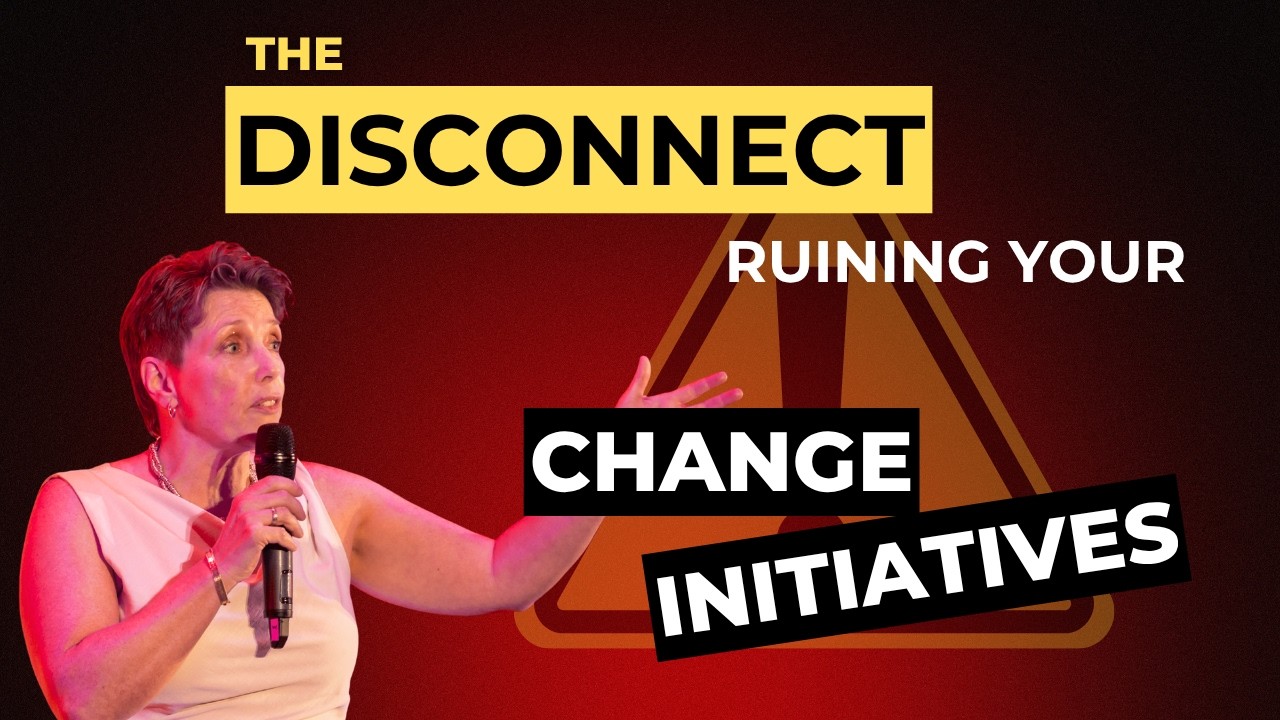
Sarah Archer explains why change programmes fail: leaders speak from the strategic summit while employees listen from their day-to-day base. She maps three story types—Journey, Jump, and Jolt—to bridge this altitude gap and shows that emotional safety must come before logic.
Chapters
Organisations spend millions on change and transformation programmes, and yet so many of those programmes either go over budget, go over time, or fail completely and sink like the Titanic. Even when on paper those changes make sense, the logic adds up, the business case stacks up, and the destination is clear. But organisations stumble because they struggle to get employees bought in and moving in the same direction. So the question is, why, when the logic makes sense, do people Resist that change, and that's what this episode is all about. So the way that leaders see it, I think, is that people resist change, don't buy into change, because they are not understanding it, or they're just resistant. Maybe they've got change fatigue, um, or they're just bloody-minded. Sometimes that's what people think. But I don't think that's what's going on. I think the problem is that the communication about the change is failing to connect, and I've seen this recently. So I was talking to a colleague, an ex-colleague of mine who's a senior HR leader. She works for an organisation that's been around for quite a long time, but right now they're at the precipice of a huge transformation program. Now most of the employees have worked at the organization for donkey's yonks, that's British for a long time, and the culture there is very family-like, it's a really positive culture, people like working there and just recently they've employed a new CEO who's come from a similar organisation who has already implemented the change. And she said to me, the CEO wants to tell the employees about the change from the organisational perspective, you know, all the benefits, the scalability, all of the efficiencies, the productivity, all of that stuff. The problem is that those employees are not going to be listening to that CEO from an organisational perspective. They're going to be listening from a personal perspective, and there's this huge mismatch because they're thinking about things like, Oh my God, am I still going to have a job? What about my friends? Am I even going to be able to do this thing in the new way? Will my responsibilities change? Am I going to look stupid? So he's talking about the vision and they're wondering about whether they're going to be able to fill the fridge. So there's this huge mismatch. And recently I've been pondering on this thing. And I've been thinking that a great way of looking at this issue is using the metaphor of a mountain. You see, the CEO has done this before. He's at the top of the mountain. He's seen the view, and he's going to be talking about the opportunities, the vision, all the benefits. And those people, they're at the bottom of the mountain. And they're like, oh, I quite like it here at the bottom. Is that mountain too steep? Do I even have the energy for this climb? Do I trust the route? So the leader is communicating like people can see what they see, and actually the view from the summit is not what those people are thinking about. They're wondering if they even want to do the climb. And this creates what I call the altitude gap. It's a gap between where the leader is communicating from, because they're at a different place psychologically, and the place that the employees are listening from. And this is so often why change communication falls apart, because those leaders are, and, you know, the senior leadership team are failing to recognize that gap, and they're falling into what I call the logic trap. Now, the logic trap is something a lot of people that I work with fall into because often, even when I'm working with speakers who are experts or business authors, they will have that mountain, that summit view too, As an expert, they won't see the problem in the same way as the people that they are communicating with. And this is exactly the same as in this scenario. And people love to go to facts and information, especially in the corporate world, and those won't work. They won't even get received by the employees until they feel psychologically safe enough to hear them. Now, I'm not saying that logic doesn't work or it's useless. I'm just saying it doesn't work before people have bought in emotionally, because human beings don't make decisions rationally, and especially when things like security and identity and confidence and status are feeling threatened, which is often the way in change and transformation programs. I've been through so many of those in my 20-year career in HR, and I tell you what, in the last 10 years that I've been working to understand strategic storytelling and marketing, influencing sales, I just wish that I could go back in time and share this stuff with myself as the HR leader, you know, trying to get people to buy into change. Some of it, you know, I did naturally, but most of the time, you know, things were missing the mark when they could have been absolutely hitting that spot of connection. And so what this made me think about, and this is a, you know, when you work in HR, you'll soon learn about this fella called Maslow. And his hierarchy of needs. This really comes into play here because people don't care, can't even consider things like innovation or transformation or, you know, all of that other stuff until their concerns are sort of resolved. You know, am I feeling safe? Do I belong? Can I do this? The things that are at the bottom of Maslow's pyramid, you know, those hygiene needs have to be resolved before they can climb up to see things from the summit. And even if you don't have all the answers, acknowledging where they are, reflecting where they are, and making that commitment to time frames will help, whereas often we can avoid those things. This altitude gap and the logic trap are the reasons that I've seen change communications fail time and time again. Things that sound great in the boardroom and land like a wet firework with the employees. And this is where strategic storytelling becomes super important, as I alluded to. And I'm not talking about stories for entertainment or inspirational fluff. I'm talking about using stories as a mechanism to get people to feel safe enough to buy in and to move in the direction that you want them to go. And over years, as I said, working to lead change and transformation and researching storytelling and, and motivation, I found that there are 3 key strategic story types that you need to use in these situations, and I call them the jump, the journey, and the jolt. So let's talk about the journey first. The journey story is one of transformation. It's the story that we use to connect with where our audience is at the bottom of the mountain. This is where we make them feel seen and heard. We're reflecting some of the things that they're thinking and we say them out loud and they go, oh my gosh, I can't believe that they, they know I'm thinking that. And then the other job of the journey story is to show the possibilities for the future. Once they— you've connected with them where they are, is, is a story that takes them on the journey to see the view from the top. So this isn't about being polished or, you know, about credibility. It's about connection, and I see so many leaders and speakers fall into the trap of proving themselves in this story, which breaks the connection, rather than being vulnerable, sharing You know, some of their own doubts. You know, leader that shares their own doubts about a situation is gonna build trust. It it may feel like it's the wrong thing to do, but it will build trust and connection. You're taking them by the hand and leading them on the journey, and it starts from that very first communication. So next we have the jump. Now the jump is. All about shifting perspectives. So even if we can connect with employees and then we get them to see the new possibilities, there will be doubts and old narratives and old beliefs that start popping up that we have to proactively tackle. Often in change, there are rose-tinted glasses about how things have been in the past. And we can respectfully and gently dismantle those and get those people to see things in a new way. For instance, here's an example. A lot of leaders think that people resist change, but what if it wasn't about resisting change, it was about employees resisting uncertainty? And if it's about that, then it's about making sure that our communication resolves that uncertainty for them. And that's what jump does. It shifts the perspective. It enables you to reframe things in a new way for people and dismantle those old beliefs. So really, really important in the change narrative that we have those jump stories in there. And then we come to Jolt. Jolt is all about getting attention, building connection. It's another connection builder and action. Well, all of these stories are connection builders and trust builders actually. So we can use a Jolt story at the start of the communication to reflect some of what people are thinking. It will grab their attention and connect with them. We want to hook them in Not talk about some organisational thing, you know, that they don't care about. Opening with a jolt that connects to them. And then jolts are very good for getting people into action, for showing them what things will be like if we don't move. So those are really powerful to get people into action and to grab attention. Now people are so obsessed with data and info these days, but if we can first get people to buy in emotionally before we start sharing that stuff, then they will be able to hear us. You know, you've experienced this yourself probably when you've fallen in love with a new hobby or, you know, some gadget or whatever, and you're talking to people about it And telling them all the guff about it, all the, you know, using all the lingo and telling them about all the tech or whatever, people start resisting it. They don't care because they're not emotionally bought in. You've gone straight to logic. So we have to get people to emotionally buy in first, and then we can talk to them about the logic. So I think You know, this is about meeting people where they are before you take them somewhere new, and it applies not just to change and transformation programs, it applies everywhere— speaking, sales, being a parent, anywhere, politics, social media, anywhere where you're trying to get one human being to move another human being is where these strategic stories come in to help people buy in emotionally before you talk to them about the logic. So resistance doesn't happen because people have analyzed the strategy and have found the flaw. It happens because they don't feel safe enough or they're not emotionally bought in. They're not able to see the logic and no amount of slides can fix that. If you haven't led them to see it, then you are wasting your time. So next time you communicate a big idea or a change initiative, anything where you're trying to move people towards action, I want you to ask yourself, am I trying to show people the view from the summit, or have I actually met them at the bottom of the climb first? There you go. So I hope that you got some value, maybe some ahas from this episode. I've put together a companion guide on the Jolt, Jump, and Journey stories that will give you more detail on these and how you can apply them to your change situations. And if you know anyone else that's leading a change or transformation program right now and that might benefit from having a listen or a watch of this podcast, then do share it with them. And if you've got any questions, if you're leading a change or transformation program right now and you want to ask some questions about the communications, the strategic stories, then you can always find me on LinkedIn as well. I'm happy to hear from you over there. And if you did get value from the show, then please, if you're watching on YouTube, Do subscribe. There'll be more good stuff coming. Leave a comment, maybe ask a question there as well. I'll be happy to respond there. And if you're listening to the show, then leaving a rating or review would be amazing, and you can do that over at ratethispodcast.com. So I will put the link to grab the companion guide, uh, in the show notes. It will be from saraharcher.co .uk/altitude, but I'll put the link in the show notes. And, uh, I'd be so grateful if you can share this episode with anyone you know that might benefit from it. And I do thank you for spending your time here with me. Appreciate your attention is very precious, and you could be watching or listening to another show. So yeah, good to have you with me, and I look forward to Catching up with you again next time I'm on the Speaking Club. But in the meantime, until then, you know what I'm gonna say. Go out, grab your life by the nuts, and get cracking. Bye-bye. Bye-bye.
More from Sarah




The Skill That Helps You Connect With Any Audience with Michelle Mills-Porter




What Moderating World Leaders Taught Me About Great Communication with Xenia Wickett


