
Saul Talks Bonus Episode: Why higher AOV matters as an Amazon Seller
Saul Doane breaks down why selling higher-priced items on Amazon beats low-AOV products. A $20 item needs a 400% markup to break even on a bad buy; a $500 item needs only 20%. Higher AOV means less competition and easier profit margins.
Chapters
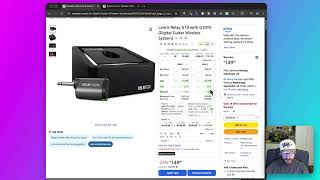
Hello. Welcome back to Saul Talks. This is kind of a bonus episode, so if you watch episode two or episode three, you'll notice I'm wearing the same clothing. I wasn't going to do another video today, but I had an idea, something that someone said to me and I was like, you know what, I got to record this before I lose it. So we're not really going to count this probably as a full episode. I'm hoping it is way less than my normal 25 minutes that I go into. And we're kind of just getting into it before we do, obviously. I'm Saul. It's nice to meet you. I'm not going to do a full intro, but I am an Amazon seller. I sell a bunch of stuff on the Internet, honestly, and I just kind of come on here and I talk about questions or things on my mind that people ask me through Twitter, through YouTube, through kind of whatever means they can get to me, and also through the groups and other things that I run in that space. So this is specifically an Amazon video. This is going to be about Amazon sourcing. This is a particular subject that we're going to talk about, which is near and dear to me. I've talked about it a bunch online, but I really want to nail the point for you guys with visuals. So we're going to talk about AOV today, which is average order value and why it matters how essentially how expensive the products you sell on Amazon are. There's pros and cons, but we're going to talk about the pros and one very specific pro. So when I started Amazon 2017, pretty much through 2021, I think my AOV was 40 bucks, which means on average everything I sold came out to about $40. Some things I sold 60, some things I sold 20. But for the most part, $40 was my average price. When I sold a product which is probably pretty standard. I talked to thousands of Amazon sellers over the years. Most people, particularly ones that start for the first year or two, kind of stick into that lower price point. There's some that absolutely crush it in like that $15 range, which mostly is grocery and light beauty, but a lot of folks end up in like the $30 to $40 range, which is fine, but if you are willing to explore higher priced goods, you will likely have slightly easier time. Obviously more expensive goods means you need better cash flow. It needs more cash on hand, means returns hurt a little bit more. But it also means reduced competition and it means that you actually get burned. This is what we're going to talk about you can get burned less often on the same amount of buys and that makes no sense sort of the way I'm talking about it. But I'll explain. So when I source anything on Amazon for Amazon, I should say I do a ratio. And I've talked about this before as well. I personally do a three to one ratio which means that I like to make. I like to estimate that I could make three times ish or more profit than I would loss if I had to sell it back at my buy cost. Which means if I pay $30 for something and the market saying it's a $60 product, what is the profit I'm going to make if I sell it at 60, what is that number? And then what is the loss that I would make if I had to sell it back at 30? So I bought it for 30. So back at 30, where's my loss? I like the profit to be at least three times the loss unless it's a no brainer decision to buy. But if it's a new category, a new brand, if it's something that I'm kind of on the fence about, I kind of stick to this ratio. If it's really risky, I'll do five to one ratio. They just helps me stack up more wins and losses because I continually do that. Even if I lose, which you're going to lose, sometimes my losses don't hurt me as bad because I just need to win two out of three times and I'm in the green. So here's what we're going to talk about when it comes to AOV and that idea, that idea of that more profit versus that potential loss. So I have a product on the screen that you've been staring at this whole time. Line six relay from. I don't even know what the company is. Yamaha I guess makes this according to this manufacturing here. And we're going to talk about this price point here. This is the first one. I have a second tab here. We're going to talk about even more expensive price point. So this is $150 product. Beautiful. I think anything above $80 AOV is where you should target if you're trying to creep up. And then some folks are going to be into the hundreds. There's one guy I talked to that was like $2,000 plus on all of his products. But I think 80 plus this guest becomes a bit easier. So this is 150 product, this is its sell price. This is not a flip. This is not something we're going to look at and say oh, we can buy it for 150. No, we're just using this as an example. We can look at Keepa though. We can say all right, well at one point this was.
$130 product and it's selling for 200. So maybe there is some room there. That's not really a point, but we'll put 130 in here to prove I guess the point in a second. So we have $130 buy cost.
Or I'm sorry, sell price. Let's look at again, let's go back to our 3 to 1, how much money would we lose? What is our percent loss, our ROI margin negative that we'd lose if we bought it for 130 and sold it for 130. And the reason I do that is because if you're buying it, you're usually you're buying because there's a good deal. There's a reason that you think it's going to go up in price or it's already up in price. It can happen but it's less common for you to buy something and it to drop below your buy cost. Right, it might drop and you might not be profitable anymore. But for something to go below your buy cost happens, but it's far less likely than any other scenario. So we're going to say all right, we buy for 130, we sell it for 130. We can see here in the calculator we're losing 21% ROI, similar margin rate, essentially losing 21% of our money on this. And let's say we buy for 130, we sell for 200.
We make $32 and make 25% margin. I mean ROI. This is not for the 3 to 1, right, we made $30, we lost over 20 something dollars. We would have to have made at least 60 plus dollars for it to hit to our 3 to 1. But the goal here is to explain the negative ROI, negative margin value of higher EOB. So 130, 130. We lose 21% of our money if we have to sell this back. Now if we're constantly buying higher priced goods, $26 is important, it's an important note. But what's more important to me is actually the ROI margin. What is the percent loss? Because if I'm consistently buying products 100 plus dollars then I can compare my percentage losses versus my dollars loss. You can do it either way. It's just right now we're going to focus on the percent loss to look at this specific point here, because of course, the more money we're spending on the product, the more technical money we can lose, even if it's a smaller percentage of our buy. So to make it even, we're going to look at our buy percentage because that's going to be the most even thing across all of what you source. The percentage of what you potentially lose versus what you spend is going to be kind of your north. And then your actual dollar amount here is just going to fluctuate depending on how much you actually paid for the product. But you could inflate that by a thousand dollar product sell for $1,000. You're going to be huge loss. But what is the actual percentage of loss? That's more important to me. So 130. 130 is what we're seeing here at negative 21. Now, let's say this was a $40 product. So we have a $40 sell price and a $40 buy cost. So now suddenly the same mechanics, right? We're still buying and selling it at our same cost. We're still trying to understand what our negative would be. But instead of a 21% negative, now we're at a 33% negative. So we have a larger chunk of the cash that we spent not coming back to us. We essentially lost 12% purely because our AOV dropped. And that's because of how Amazon fees work. And Amazon fees, some of them are based on a percent. So some of them are just gonna be a flat percent of your sell price. But some are set in stone based on the product's dimensions and the actual shipment cost to get it out the door into the customer. And we can keep going, right? Let's say if it's 30.
So this is kind of like your $30 AOV. Now you're at a 40% loss. And AOV a member is the value of when the person buys it. So if you're sitting here at like a 30 to $40, you're probably only spending maybe 15 to $20 for your products. So we can go down to $20.
And now you're at a 52% loss, right? So if you're constantly paying $20 for products and you are doing the math to say, all right, well, the risk reward, right? Is this worth buying? What would be my negative versus my positive ratio, etc. You're already seeing at least loss just if you have to get out at the price you paid. So your ability to take risks when you're buying low is Dwarfed compared to someone just at the 130 who was only losing 21% of their money. They can essentially make. They could do it twice. They could take two risks at 100 plus dollars, 130 plus dollars, and still as a percentage of spend, have lost less money than you at $20. And let's take it one so far. Let's go expensive. We have a $600amp here, right? So sometimes you're going to end up in situations where you might be able to source 500, $670 products. I have what I'm selling right now. It's, I think $950 is what I'm selling it for. So this is a $600 buy cost, right? Let's go down, let's say, yeah, let's just pretend this is a $900 product. You can get it for 600 bucks. So you buy it for 600 and you're like, oh, what, what, what am I actually risking here? What if I have to sell it for 600? So 5, 9, 9, 9 9. 11%. So your, your downside here is 11% compared to your $20 buy cost, which is 50%. Now I know what you're thinking, which is, well, yes, but I'm losing $63 versus $10. And that is true. Cash is important. We need to understand the cash flow implications of what we purchase. But if we're purely looking at a risk when we purchase, what is the risk worst case scenario that we want to play out when we make a buying decision? And what is our risk versus reward on these things? Higher. AOV is just going to allow you to have more breathing room. In that case, it also allows you to have more breathing room in general. Right. If we go back to our $20 cost, if you're buying something for $20, where's our break even? Right. So we can look at it the same way. So we have a buy cost of $20. If we sell it for $30, we break even. Nope. $32. Okay. So we pretty much break even at $32. So you know, you figure that's over 50% above what you paid. So it's like what, 51, 52% of what you're paying? You're gonna have to sell it for just to break even. And we come over here and let's say we pay $600. Where is our break even?
That's pretty. Okay, let's call it.
Call 666. All right, so now we're looking at under 15%.
Right? Barely over 10% upsell. So again, pay something, you buy something for $20 to break even, you have to sell it for 50% more than you paid. Buy something for $600 to break even, you have to spend, you have to sell it for 10% more than you paid. So I just want to drive that point. This video is getting longer than I intended, but I want to drive that point home. That higher AOV allows you to take some of these risks that you just can't take if you're buying lower aov. Unless again, you're very confident in those buys and you can get in and get out. But my feeling is that some people may be watching this or are going to get into selling on Amazon. They're leaking because they're not understanding the difference between when they spend $20 or spending $100 on a product, when in reality, you know, the way Amazon is structured, there's a massive difference in what you spend and what you can sell it for versus how much you're actually losing as a percent of your buy cost. And so we'll probably leave it here. This might force more questions than answers. I would love those questions. If you want to put them in the comments and I can make a video on them, I'm happy to. But if you're an active seller right now and you're kind of sitting in that 30 to $40 AOV range, you can check on Amazon, you can look at reports, highly recommend. Kind of just starting to creep up, right? Just starting to view products. You don't have to go crazy. You don't need a $600. But what if you were to spend, you know, $40 on your buy cost instead of $40 on yourself? You buy for $40 and you try to sell it for 70 or $80. What does that look like? And I bet you you're gonna find more products, more opportunity as you get higher than if you stay super, super low. And you can have a nice mix. Not saying you have to go high 100% of the time, but certainly start balancing that in to your, to your situation and eventually you're going to start buying things for 100, $200 and you'll realize that you're one of three sellers on that listing, right? You can kind of own a good chunk of that buy box or where you're sourcing from the sources. The places that you're finding that product are just far less picked over, they tank less often. And this is just the reality of when you are sourcing higher priced goods and again, there's sourcing basics. The 101s of sourcing still need to apply. You can't just nilly throw out money. But again, the goal of this is to show you the discrepancy between those low AOV and those high OV goods and what that really allows you to do once you get up there. So thanks for watching this kind of mini episode and I will see you in the next one.
More from Saul

Saul Talks Business Partners - How I manage 6 companies doing $3M/Year in profit


Saul Talks Hiring + Delegation - How I manage 28 team members and $60,000 in monthly payroll



Using Amazon to Amazon Flips in Your Online Arbitrage Business | A New Way to Source Using Keepa