Using Amazon to Amazon Flips in Your Online Arbitrage Business | A New Way to Source Using Keepa
Saul Doane from Buy Box IO breaks down five methods for Amazon-to-Amazon flips: Hunt-and-Click for low-stock deals, seasonal buys, bundling, using Keepa trackers, and watching sold-out retail SKUs. He recommends looking for roughly 40% price drops up to rank 500k, following a 3:1 risk-reward rule, and avoiding Prime shipping on your buy account.
Chapters
Welcome to the Clear the Shelf podcast with Chris and Chris, the show that meets at the intersection of education and entertainment to discuss online arbitrage, retail arbitrage, wholesale and all facets of selling on Amazon. We'll bring you news, tactics, strategies, insights, stories and interviews to help you grow your Amazon business. And now here are your hosts, Bris Grant and Chris Racik. What's up Amazon sellers? And welcome back to the Clear the Shelf podcast with myself and my punctilious co host Chris Racik. Today we have a very special guest, my friend Saul, also known as at Saul sell stuffs on on Twitter and one of the co founders of the Buy box IO so Saul's been around in the Amazon space for quite a while now and and our own discussions about Amazon to Amazon flips have always been kind of enlightening for me because I don't consider it to be one of my strong suits although I am fascinated by them. And so he specializes in Amazon to Amazon, both quick flips and some longer term holds. So much so that as he searches for a new house right now with his bride, I'm pretty sure that a large leak free basement is one of the non negotiables. And so our objective in in this episode of the podcast is to make you almost as dangerous as he is behind the wheel of Keepa and and flips and be able to hopefully get you a quick win or two after this episode with your own Amazon to Amazon flips. So Saul, welcome to the show man. I appreciate you staying up well past your bedtime to hang out with Chris.
And I. Yeah, thank you. I so I just turned 30 last month but I, I act like 50, 60 years. I, I'm in bed 8:30. So this is you know it for all listening. It's 9:30 right now so you know you should be feeling good that I'm here.
I will be honest, I wish that I had that kind of, I don't know, I don't know if it's willpower, I don't know if it's, I don't know what it is but I wish I had it.
Yeah, I mean wake up really early, consistent consistently and you'll just get tired early. So it comes down to so before.
We dive in, you guys know the drill. This show isn't free. We may not hide the show behind a paywall but, but that doesn't mean that the content here is going to be absolutely of no charge. If you find some value in this episode, please give us the equivalent of A digital handshake. Smash the follow button on your favorite podcast player or, or on YouTube. Not only to juice the algorithm just a little bit, but also to keep us coming back and making more of these for you. I just did a little bit of research and we found out that we recently hit 30,000 downloads of the podcast and we've hit over 34,000 views on YouTube. And we do want to take a moment and really appreciate you guys for that, for giving us a, a little bit of your attention. We are, we're both honored and humbled and, and we're gonna keep trying to bring you as much of this content as absolutely possible. And we wouldn't mind if you share this in your favorite FBA group or chat or on social media anywhere. That would certainly help us. And, and we thank you in advance. But now let's go ahead and let's get into the, into the content of the meet tonight.
I always kind of like to set the scene a little bit. Can you tell us a little bit about what got you started on Amazon and maybe a little bit of your background and things like that?
Yeah, of course. So I started Amazon in 2017.
It was like the online selling experiment blog, I think is what got me into it. And I was at the time working, let's call it middle management for like a fitness health place with employees and salary. And I was taking work home with me and I was burning out at both ends and I was like, there has to be something else I can do. I can't just rely on one source of income. So I started doing Amazon on the side with books. I think that's how a lot of us start going to thrift stores and open books. Um, eventually moved on to toys. Cause who doesn't love toys? I've never really left that category. And it started to build and build where I was able to, you know, almost take home the same amount from Amazon that I was from work. Um, and the problem with that was it was just overwhelming. My apartment, uh, I lived in a walk up. I lived in two, two bedroom apartment. Uh, we couldn't. The living room was non existent anymore. The second bedroom was nonexistent. It was, it was kind of terrible. Um, and so I took the plunge in 2019 and I left my job and I started Amazon full time. And I did Amazon full time for a little over a year. I have a lot to say about that, which we all talk about here, but I have lots of opinions like going to Amazon full time. So I did that for a year and I thought that was going to be longer. But then I had an opportunity that came up for me to essentially work with someone that I've always admired in a company that I really cared about. And it did feel like a job. It was just like I want to be a part of the movement or the mission that you're doing. And so I just volunteered my time and ultimately that turned into actually becoming a co founder and that's something I still do today. So I, I think I had the freedom to do that because of Amazon and I appreciated that. But Amazon, you know, has always now been like a second income, you know, since 2019 or so. And we wanted to give back any knowledge you've Learned. So in 2020 we started like a friends and family group just like, hey, who can I help? Do something on the side and make some extra money. And then it was 2019 and then 2020 we made that more public. And then in 2021 we started the Buy Box, which, you know, kind of plugged for us and we won't plug too much, but it's, you know, one of your kind of discord groups, if you will. We like to think it was one of the, one of the early ones, but kind of caters more to support than anything else just to help people navigate Amazon because we know Amazon seller support is not the best. But nowadays that's what I do. I do Amazon, I do the Buy Box, I do this, this other company, I have a few other ventures, but I just essentially get to work from home 90% of my day and I have a wife and two dogs and I enjoy life now much more than I did it in 2017 when I was working my job.
It's, it's funny how many, how many stories kind of start like that, you know, the, the whole, the middle management thing, you know, you got, not only do you have people you know, above you breathing down your neck, but you've got some, maybe some reports and.
You'Re always taking work home and, and just burned out. It's, I don't know, I hear that quite often. But you also, you mentioned that you lived in a walk up. How many story walk up was it?
I wasn't high. I was three. Okay, three sets.
Because I know, I know one of your, I know one of your mods in, in the Buy box, Andre, I know he, I know he still lives in like a six story walk up and you know, and, and does even wholesale from, from that, which I, I don't know, I always, I find that fascinating. So yeah, let's, let's talk a little bit about kind of what the, what the Amazon to Amazon flip side of your business looks like. Cause I don't know. That especially your long term holds is fascinating to me.
Yeah. So I Amazon, Amazon has always been a part of my journey. Maybe not that first year, but probably should at least last five. And it ebbs and flows. Sometimes I'm really into it and sometimes I'm not. Let's say over the last year it's been a much larger part of my percentage, maybe 50% of my business now just because I'm kind of over the last years when I really took investment in my business and I got engaged in a whole lot of things that I wasn't in before. It took me a year when I started my business to get engaged in anything. And then it took me five years to get engaged in Hasbro. To give you an example, like I've been very reluctant to do some on gates. I was like, I'm set, I'm happy with where I am. I'll get to it eventually. And the last year is my eventually. So because I was able to do that, I invested a lot more time. I had a lot more products I could sell. So I spend about $30,000 a month on a 2A now. I, I think that if I did it more, I think there's opportunity. I could probably spend 60. Some days I spend a lot, some days I spend a little. But I really focus on, you know, the easier wins right now. But eventually I'm sure I'll get deeper into it. So yeah, it's, it's roughly half what's going on in my life.
Nice. Let's, let's maybe start with another easy question as well. So, and this is, this is something that I hear quite frequently when you talk about Amazon to Amazon flips or online arbitrage and retail arbitrage actually was asked this question earlier today. So are Amazon to Amazon flips within terms of service and if so, what's the proper way to practice Amazon to Amazon flips to make sure that you are always abiding by Amazon's terms.
Yeah, it's actually very, very simple. I love how simple it is and we hope they never change. So Amazon, Amazon is well within TOS to do it on its surface. The only thing that is not is to use prime shipping to resell. And that's not specific to A2A. Technically you shouldn't use prime shipping to resell anywhere. Now the likelihood they catch you Reselling on ebay or Mercari. Doing A two like doing a Prime shipping is very low because how. You know, they'd have to do a lot of effort, but the likelihood they catch you on A2A is much higher because they see both ends of that transaction. So the only thing that you really shouldn't do is use Prime. Um, but everything else actually should line up. So what we recommend is most people have a prime personal account. You can keep that, that's fine. Create a second account that's not prime. Use your real name. Use an email address that's actually yours. Use your business address like it should link. It should be very easy to link it to you just don't pay for prime and treat it like you would any other retailer or wholesaler where you might need to use those receipts in the future to fight a claim. Like, that's at the bottom line. Whatever you would want to do to fight a claim, make sure that your receipt on Amazon matches whatever Amazon knows of you. Simple as that.
Interesting. Yeah, yeah. And on. Even on that front, actually, I don't know if we would get there. And I wrote down one of the hidden benefits of A2A is that A2A receipts are kind of a breeze. Now, I can't say they won't reject you because Amazon is Amazon and we all know they make some odd decisions. But I think, you know, if you're submitting an Amazon receipt to fight an IP complaint, inauthentic use this new. All these different things you might have to go through. It's a lot less scary than a Walmart receipt or a Target receipt. And you can actually download an invoice. They call it an invoice in your order history. And it's hard. Cause you can imagine if Amazon rejected your receipt, they're admitting that they sold you in authentic goods. And I just can't imagine that would go over very well, you know, if they did that enough and you know, you made us think about it.
That's.
That is.
That is an interesting. An interesting thing. And we all know Amazon makes bad decisions, you know, but that would be if they stopped accepting those. It would be, I don't know, an interesting turn of events, but go ahead. Hey guys, wanted to take a quick second and thank you for listening to the Clear the Shelf podcast. My magnanimous co host, Chris Racik has put together a gift for you for being a listener. It's called the Monthly Goal Tracking Spreadsheet and it's free. The spreadsheet will help you Break down and track how much you've purchased, which should be a leading indicator of how much you will sell. And then you'll be able to track how much you've sold as well as your estimated monthly profit on a daily basis. This will all feed into the daily averages so you can ensure that you're on track to meet your goals each and every month. Grab it for free today over at cleartheshelf.com forward/, goal-tracking. Thanks again for being a listener. Now back to the show.
Feels like it should be pretty ironclad. You know, it's, it's like the, the theory of. People have the theory where if you took a, an Amazon loan, your account would be less likely to be suspended.
Because they say that. Yeah.
Right.
So kind of, that's what they say.
Kind of plug in multiple jacks with Amazon and, and people think it's a safety net. Right.
So we usually, majority of the time we're talking arbitrage, retail and online arbitrage. So I, I wanted to ask you.
Apologize for this being overly generalized, but is the process of finding Amazon Amazon flips significantly different than online arbitrage in a traditional sense?
In a short answer, no. Right. Everything that you would look for in an OA flip, you're going to look for in an Amazon Amazon flip. You still want to make money, you still need to agree to keep the charts. You still need to understand everything that would go into buying the product. I think the difference obviously is the methods, how you might find those products, the specific things you might look for. It might change slightly when you look at a keepa chart because you might be assuming that you're gonna have to compete with Amazon at some point or some other things and we can get into that. But, but no, I mean, for oa, if you're going to Target or Nike or Walmart and you're finding a product, you're doing your research, it's the exact same principles.
Kind of, kind of on that question. I think the thing that I typically, or at least I hear or see, you know, out there is I think people are very afraid of Amazon being their competitor, you know, for, for a couple of reasons. One, they don't know whether or not Amazon is ever going to share the buy box. And they're really worried, like, is Amazon actually going to increase the price back to what it was, where maybe I can price below them or match their price. And so I guess. How do you help people get over that fear?
Yeah, I mean, those people make my life easier. I Try to convince them otherwise anytime I get the chance. But the reality is that competing with Amazon or against Amazon is not nearly as scary as people make it out to be. And I know there are are definitely some that like, absolutely not do it. Like, you can never buy anything that Amazon is selling. Some things that I like to point out is we love Keepa. Keepa could charge 20 times what they do now and I pay for it. But it's not the Bible in a sense, right? Like there are lots of things in Keepa that are not 100% accurate or that Keepa doesn't have all the information for every second of every day. One of those is buyback statistics. Tried to convince everyone of this, but the reality is keep a don't possibly know every region and every time the buy box changes to give you an accurate percentage of the buy box. So some people look at it and say, Amazon's been in 100% of the time. Like that may be when Kipo is looking at it, but it's not really the case. I've never actually come against Amazon and had them never share the buy box they will eventually rotate me in. So as long as you're matching them, I wouldn't say try to undercut them, but as long as you're matching them, you should be fine selling the product. And then as far as will Amazon ever just not come back up and just drop their price forever and sell your product at a loss? I mean, I think there's always some risk, right? You have to be aware of that. But there's no different risk to me than buying from Walmart or Target and saying, oh, the MSRP is suddenly going to change on this product and everyone's going to start selling it cheaper or Walmart's going to have it on clearance for a year or whatever it is. Like, there's always that risk that when you think you're getting a good deal, that's actually going to be the new norm for a long time with Amazon at least there's like history. If Amazon's the seller, there's a strong history of whatever they were selling it at before. And then our goal is to figure out why they dropped the price. Did they drop it because, you know, being there's a newer version out and they're like, oh, this is going to be the new price. Did they drop it because they're discontinuing it? They drop it because they had too much stock of it? Did they drop it because they're price matching? You know, the retailer and that's where we have to get into it and figure out exactly what's going on.
So I want to, I want to bring up an, an example about something you said. You're like, you know, there's no way that keepa can be 100% accurate all the time. And, and you're right on the money. I actually saw a thread about this the other day. You know, someone was like, you know, Amazon or Keepa's not 100% accurate, although it's the best thing that we have. And, and I wholly agree. I'm. I think Keepa is the best thing ever as it for Amazon sellers. However, we're going through the OA Challenge right now or the live challenge currently, and I was sharing a pair of Nike Air Monarchs, as I do during every challenge, to discuss variations. And several people were looking at the exact same variation that I was showing on the screen. And My price was 69.99 from a FBM seller or merchant fulfilled seller, someone else, their buy box was suppressed on that variation. In another part of the country, and still another part of the country, they had a different seller with a different price, all while Keepa was showing a flat buy box of around 67 to $68.
And so there was a. And I was discussing how Keepa is the best data that we have, but it cannot get every region, it cannot get every second or every sale. And there are things that change. And, and so I don't know, it was just one of those kind of live.
Moments where people could realize, oh, okay, you know, he's not full of it. This is actually how Keepa works.
Sounds perfectly planned.
Yeah.
Yes. Well done.
Thank you.
So the next thing we should probably talk about is before the show, we chatted that there are different methods of Amazon to Amazon flips. And so I am curious because I really am only aware of one and I want to be enlightened.
Oh, I think, I think you know more than one. We'll see. We'll see his reaction for those watching the video. So I broke it down into five, and we'll start with the one that I think most people think of, which I just named these creative things that I thought of, but there's no real specific name. I call it like the Hunt and Click method. Right. And those are time sensitive, often low stock deals. You're going to find those maybe using brickseek, because brickseek has an Amazon section. You might find those using the Keep a Deal section. You might find those if you're in a Discord group. And you'd have a monitor that's just like, ping random sales. Like, those are the things that for whatever reason, Amazon is $50. And then someone comes in stock at $20 and they have two, and you're like, oh, I have to buy this. You have two minutes to make your decision before 30 other people come in and try to swoop in. And I think that's when people think Amazon, Amazon, that's what they think of. They think of, like, this forever Wheel of I have to check every three minutes because it might be a new deal. And if I don't check, then I'm not gonna make money. And I could check for an hour. Nothing pops up, right? It's just kind of like this. We never know what's going to happen. I think that that method is. Is really fun. And ultimately part of the reason I loved HOA when I first got into it, because I was like, I just want one store that I can look at all the time, and I can just like. And I think a lot of people come from playing video games or some kind of mmo. And I was like, I want an auction house in real life, right? Like, I just want to sit there and refresh an auction house and try to snipe deals like you would on ebay, but for Amazon. And I think HOA this way is the closest we're ever going to get to that. Because, yeah, you could sit there and you can just refresh and you can just wait and see what happens. Now, if you're going to use keepa, be mindful. You refresh too much, KEEPA will actually block you and they'll not let you refresh for a little while. But yeah, so that's. That's number one. Number two is the seasonal, which again, Chris, this is the one I think that you definitely know, right? So this is like nothing to do with a 2A. This is actually the same methodology that you would use for OA or ra, and this is just looking ahead and saying, like, what is going to happen this summer? What is going to happen, you know, some holidays? What's going to happen in life? How can I take advantage of a market that's going to suddenly want this thing, but no one wants it right now? And so a prime example of that is, like, I've loaded up on like five or six thousand dollars worth of sunscreen, and I have that right now. And I. What's nice about doing Amazon to Amazon for this is that you. Every listing you have Keepa to rely on to know the trends. Like you don't have to go to Walmart and try to find that exact match on Amazon. It's like there's no matching involved. You have everything you need in front of you. And so I will just go through and I'll search Sunscreen, I'll search 4th of July decorations, I'll search Halloween costumes, whatever. And I'll say, okay, I'm going to look at Keepa, I'm going to go back a year, what did this do? And over time you just learn what to look for seasonally. And they actually kind of become replims at some level because I know every year I'm going to buy these type of products ahead of the curve and people will always sell out. And I'll have three weeks where I can triple my money.
Number three is one of my favorites. And I think, I don't think it's talked about enough, which is bundling or debundling.
And that is when you're buying products either direction. So you're buying something that's already bundled by Amazon. It's a six pack, 12 pack. It's a master case. You're part, you're buying it, you're breaking it apart and you're selling the pieces off either separately or in smaller bundles. And then vice versa. You could buy a bunch of small things and then bundle them together and sell them on a bigger listing. And I think debundling is.
More lucrative in the sense that I generally find things faster. And you can actually use Keepa to leverage how to find those listings. And we can talk about that. The fourth one is using some kind of tracker, right? So it's going through Keepa or some tool to find things that if you had seen them at the moment on the hut and click method, you would have purchased. You're like, I missed this deal. There was a really good deal and I missed it. But you could find it by looking through the data later. And then you're just going to find a way to monitor that product either, you know, the keep a tracker which is not a plug. But like this happens so much in my life that we build our own monitor for it, our own tracker. And that I think that is a nice way of just like the deal coming to you in a sense, right? Like you just wake up, your phone dings, you buy it. And then the fifth one is like kind of canary in the coal mine in a sense where if you're already doing RA and oa, look for all the things that are sold out on the shelf or on the website. And I think a lot of people say, oh, this is sold out. They look at Amazon, Amazon's still in stock, and they move on. But the reality is if it's sold out at Target, it might sell out on Amazon. And so at that point you have to do some research into, like, why did it sell out at Target? Right? It sell out because it's super hyped. Did it sell out because there's something happening in the world that this thing is now very popular and you have the opportunity to buy it on Amazon, which is still in stock, because generally Amazon has much more stock than a lot of the retailers you might be sourcing at. And that one obviously has some of the higher risk, but some of the highest reward. And I think that's an easy way. It's an easy thing to implement for people already doing RA and oa. And something, particularly when I was doing RA that I did a lot when I was doing toys. Like, always take. I mean, I think you teach us ra. Always take note of the empty spaces, right? Always look for what's not there because those are the things people wanted. And now you're, now what you can do is just go on Amazon and see, like, what is the trend? Like, use the keepa history, use the stock counts. Are things going down. What, what do you think's gonna happen with that listing? And if you can buy it now and you have some, some reason to believe that it's gonna sell out, you have an opportunity.
If you don't mind. There. There were three that. Yeah, those, those ones all makes a seasonality, of course, you know, the, the deals. Those ones, yeah. The two that interest me the most out of those are of course, the, the canary in the coal mine and the debundling. So now I don't, I don't dabble in these kind of flips or flips very often, but I know of a somewhat recent example for the debundling. It would have been. It would be the one chip challenge for 2022. Amazon was selling them in a 10 pack on AM on Amazon. But you could go and list those on a one or a two pack and easily make money. Could you, could we break that down as to how to find those more often?
Yeah, so I leverage to keep a data section for a lot of what I do. And I think in this way I would. The one chip challenging one would be an interesting one to find. But what I always recommend people do for anything when they try to reverse engineer something is if you find a really good deal, particularly if you're finding it through this method or any other method. Look at the keepa chart and like, what made this Keep a chart good. Like, what about this? Keep a chart did I like. And then how can I use the data section to plug in all the numbers to see this, Keep a chart. Because if you can see this, keep a chart in the data section, you can probably see a bunch of other ones similar and those are going to be deals that you might want to buy. Um, and so for this one what I would do is I would go into the KIVA data section. I would filter by whatever rank you're comfortable. Some people only want to do under a hundred thousand, whatever. I usually go up to 500,000. Um, and then I would search the title and I would write the word pack in the title because we only want to see multi packs. And then I would probably do 20 as our max price because we want things that are pretty cheap for right now. Just because we want to like, you know, remove a lot of the fluff. And I would focus primarily, and I wrote this down actually.
I would focus primarily on grocery, health and beauty.
And tools. Those are kind of like my three that I find where like the most bundles happen, particularly grocery. I think grocery is like the number one grocery. And. And then yeah, health and beauty would be, would be second and some kind of home goods. Uh, and then I would just filter through those lists and what you're looking for at first is just something that you feel is oddly cheap. Like look for things that's like an eight pack for $10. And you're like, this feels like I could never buy this one thing for a dollar.
The price is right method, if you will.
Yeah. And you're like, this doesn't, this doesn't feel right. And so at that point, you know, click those, take the name of that, throw it into Amazon and see if you can find other packs or other individuals for that product. I have an example right now. I won't give you the exact product cause I want to blow up my store, but it's a spring cleaning is in the air and it's.
A cleaning product that helps your house smell good. And they were selling I think six or eight packs for $10. I think that was the exact example. It's like you get eight of them for 10 bucks and individually each one sells for $9, which is ridiculous. So I was paying $10 and getting $72 worth of stuff if I broke it down and obviously fees and Things, but it's small and light, and so I'm making $5 every sale, and I bought a thousand of them.
Oh, wow.
And what's. What's crazy about it is it does it every single year. Every year, this thing goes back in stock like Amazon prepares for spring, so they. They throw this up and it's like, in stock all winter, and then it sells out because everyone wants them. And then it comes back next winter, and so next year, I will be buying more than a thousand.
Most of the prep was the most annoying part, but, you know, it's worth it. I prep, I didn't pay like 40 in an hour. I think was like, what I could do. And it's 200 an hour at that point. And I'm like, I'm okay with that for right now. Um. Cause it's. It's mostly just me. Uh, so at some point, if I had an employee, it would still be worth it. But that would be an example of debundling interest.
I like that. It's. You're almost kind of mixing the seasonality of it along with the debundling. Uh, and of course, that gets my wheels turning because there's. There's pumpkin spice season, there's, you know, pine smell season. There's coffee.
Yeah, coffee. Debundling coffee is one of my favorites as well. Like, they. Amazon loves to sell, like, six packs and eight packs of coffee, and they're always retail boxes inside the bigger box.
Interesting. Okay, so let's. Let's talk a little bit more about the. The canary and the coal mine method and.
And kind of how you can do that research to see why is it sold out. So I'm trying to think. I actually, I can't remember what product it was, but I. I took the family to Target just recently because every now and again we're like, hey, you know what? Let's just go and let's just see what Target tells us we need, you know, as. As everyone does. And. And we were just looking down the aisles, and I noticed something was sold. And I can't remember what it was, but I was like, that. That seems odd. And of course, then it was. It was gone. But if I were to go home, how would I. What would I look for to try to figure out why it sold out?
Yeah, so the first thing, number one, take pictures so you don't forget. I mean, I just. I always take a picture of the empty shelf.
Look and see if it's sold out in other retailers as well. Right. So if you're at Target and you can't find it. First thing is, can you, can you buy it on Target's website? If you can't buy on Target's website, can you buy it on Walmart's website? Can you buy it on anywhere's website? Any of the big ones. Right. And if it's only located on small independent retailers, that's a great sign. And Amazon, Amazon is usually one of the last to go. And then you want to figure out, you know, depending on the product is going to be easier than others. Some things you can just find are huge TikTok trends that you had no idea because you don't go on TikTok. But other things are going to be more noticeable. There's some seasonality. You might not realize that this thing is particularly popular because maybe you go onto Amazon, it's still in stock, but you look at the Keepa data and the Keepa data suggests that every year it sells out. And now you've essentially found a seasonal product without realizing that you found a seasonal product just by looking at what was empty on the shelf.
And what, you know, what you can also do. What I like to do is like look at the brand, look at similar products. You know, maybe this product didn't stock on Amazon but every similar product like it is sold out or other products in that brand are sold out. And you just think this is the inevitable next one to go.
But it's, it's more so I think for me at least leveraging history on keepa, leveraging Google, just searching the product and seeing what happens. Is it in the news, is it sold out everywhere else? And then some of it's just going to be sucks to stand a podcast like gut right? Like you do it enough and you have like some sense of like this brand or this product type is like has some, you know, is going to be resellable or flippable and then there's risk tolerance and I don't know if now is the right time. I would love to talk about risk tolerance because I have, I have a tried and true method that I use that I talk about pretty often and I'm happy to share it, which is my risk tolerance ratio. So on Amazon, Amazon in particular, you will inevitably be buying products that you're going to feel you, I'm going to say you could get screwed on but like the Amazon either could come back to stock on or you're, you're buying without enough data. You're buying it because you think that it's going to sell out and it never actually is sold out. You're just like this feels like it's going to sell based on these other factors. So my risk is a 3 to 1 ratio for the most part. I bend it sometimes but what I like to do is if I'm buying something for $20, well, how much money will I lose if I sell it for $20 in short? Right. So if I'm buying for $20 and I have to sell it back for $20, say I lose $7. Fine. I want to make at least $21 on the upside. So I have my three to one ratio. Just like what do I think I could make profit wise if everything goes right, if this thing actually sells out, or if Amazon doesn't come back in stock, what is my current projected profit versus my potential loss? And for the most part my 3 to 1 works. Sometimes I flex it to 5 to 1 if it's like particularly risky. And sometimes it comes a little bit less like if it's like a no brainer. But for the most part three to one is probably 80% of my buys. Wow.
I like that three to one ratio. That's a, it's a nice easy rule of thumb to be able to kind of keep forefront.
Yeah. Cause you won't win everything, right? Like, and I think that's beyond a 2A. Any Amazon seller needs to acknowledge that, that you will eventually have to sell something for a loss, but you just have to win more than you lose. And so as long as we're making calculated risks like this, we will come out ahead.
If you've got that three to one ratio, do you, I don't know, do you have kind of a, a soft rule on how many you need to win compared to how many it's okay to lose and still have a profitable business or be okay with it?
I don't have a soft rule that I can illustrate in words. Cause I've never thought about it in that way. I think statistically as long as the money all worked out, if I bought every buy and I had the same potential profit and loss, I'd have to win two out of three times. But no, I think I tend to win. It's going to sound very egocentric. I tend to win more than I lose just because of the nature of my tactics.
Man, you stumped me on that one. No, I, I've never, I've never sat down and really thought about.
You know, my.
What would it look like, how many do I have to win scenario.
I, I, I like the Thought process. Because, you know, before I ever got into like, Amazon and things like that, I. I mean, I've got shiny object syndrome, as I think a lot of us do. And so of course I tried out forex trading and, and automated forex trading. And, you know, the rule there was, well, you've gotta, you've gotta win 60% of the trades. And if you win 60%, you should be profitable in a long run. And so I always kind of bring that up as an example. Like I would. I think that if you can probably do 80% on Amazon and as long as you're not taking these wild risks, that, you know, that's plenty to be profitable in your business.
So I've never done the exact math either, but it's kind of always been my thought process.
Yeah, I mean, I think you also have. We started this conversation with the idea of holding inventory too. So depending on your space and your money, someone joked in our discord the other day is like, how many times do you buy something to hold and it goes to zero? And I was like, oh, never, because I'll just hold it until I'm the last one to have it.
But, but like, you know, my life has changed over the years. I don't hold things nearly as long. I used to hold things up to three years.
I used like, true investment. Now I think I hold things. Maybe 18 months is probably my average. If I'm going to hold something and I hold it unless it's something I specifically buy to hold for longer. But if you truly believe in the product and cash is not a problem, and space is not a problem, and you just think the market didn't react the way it. You thought it should, but it will. You could always hold it, but, you know, fast nickel over a slow dime, as they say. So I think for, for most sellers, you just want to turn that back into cash and keep buying. But, you know, for me, at least at this point in my Amazon journey, I'm happy to invest 30% of my total buys into holds because the ROI generally works out better for me. And those holds, usually a 300 or 4% ROI. And so even if I turned it faster, I'm gonna make about the same.
How do you, how do you track your holds? How do you, how does that work for you?
I have a giant room of boxes and I just walk in there every now and then. I look inside them. I, I used to track them just with Excel and like Airtable spreadsheets. Inventory Labs has that great unlisted portion now, which has made life a lot easier. So when I buy things, I'll just list them. Well, unlist them, if you will. I'll hold them in inventory labs and I'll record them. I still do spreadsheet because I don't fully trust that I won't lose all my data in IO at some point. But that's really what it comes down to is, like, the date I purchased it, what I purchased it for. You know what my a hundred percent ROI point is? Like, at what point? Like, what dollar amount can I sell this for to double my money? And then it just like corresponds. Green, yellow, red, depending on how long I held it. Like, over time, it just changes for me. And then I set up keepo alerts. You know, again, I have this other software I built, but if I was just using keepa, I would set up a keepo alert for the price point that I want to send it in at. So I'm like, I want to sell this at a hundred dollars. So alert me when it's at a hundred dollars. And then, you know, off it goes.
Nice.
I'm still. Still stuck on the fact that Chris can go to Target with his family still. I. I can't.
My.
No, no members of my family will let me go to the store with them anymore.
I love. Oh, I love Target. Yeah.
They just. My kids, if they. If they see me pulling into, you know, Target, they. They hear groans and they're like, nah.
Oh, daddy.
I had. At one point, me and my wife had, like, a talk about it. She sat me down. She's like, listen, we have to be able to go to the store.
And, like, just have it be 15 minutes. And I was like, and we'll try.
I need.
I just need a loaf of bread. Knock it off.
That.
That intervention, I think, is. I. I think that's one of those. Those accomplishments that every Amazon seller has to unlock, though. And you walk into a room and there's like, there's several people sitting around, and you're like, I don't. I don't drink. And I. I'm not doing drugs. So what is this? You know?
Yeah, no, it's. It's a man. Yeah. I mean, I don't think every episode seller hasn't. I don't think you have to have it to be successful. But holy crap, if I'm like, every second I want to be sourcing, I want, like, I'm always on the lookout, right? And I think that that's just kind of the nature of the beast, because once you realize how much money is out there to buy. Like, how can I just live my life and not go and buy it?
Yeah, you know, that's, it's not too different from hustle culture in general. You know, it's kind of.
We've.
We've commodified our time, so to speak. You know, so it's, it's tough to turn that off or give yourself permission to turn that off.
Yeah, that's a whole different podcast. But I do think that you need that space and you have to have that separation. You have to. It's a design separation, though. If you trust, if you trust yourself to just magically get there, it's not going to happen.
Yeah, just tell yourself, I could stop anytime I want.
It's not a problem. Yeah, yeah, exactly.
So can we talk about the risk of account deactivation?
I assume it's out there and if it happens, what would you do in that circumstance?
What am I being deactivated for? Just doing a 2A in general?
Well, you're. You're like, say it was based on buying stuff that you were buying. Something along those lines.
Yeah. So, I mean, as, as we touched on the beginning. Right. The big red flag with a 2A is Prime Shipping. If you're not using prime shipping, there's Nothing inherently wrong. A2A will not. I mean, what. When you listen to this podcast, if Amazon changes the rules, but the time of recording this, Amazon will not just ban you for doing hoa. You are not doing anything against the rules. A two way. Now, this being said, obviously you could get removed for lots of reasons, and those reasons could be a result of something you bought hoa. So there are things you can do to mitigate that risk.
A lot of the purchases that you're going to do are just going to be Amazon directly selling the product. If Amazon's the one selling the product is a little bit less risk. That being said, everyone should use common sense the same way they would with oa. Just because you buy something from a website does not mean it's authentic. Someone could have switched it out, returned it to that website, and now you're getting this inauthentic good that the company didn't realize was. Was inauthentic. Amazon is actually probably worse at this than most retailers. So when you're buying anything, you should always have eyes on it, make sure it's real, make sure it's new. And I think a lot of sellers, particularly if you're using a prep center, you might buy something A2A have it go to the prep center, have it shipped off and sold and then get a return or some complaint. Reality is, because it wasn't really what you bought or it wasn't in the condition you thought it was going to be in. And there are some categories worse than others. Video games is horrendous. If you're buying a new video game on Amazon to flip, just expect it not to be new. I think I have a 20% win rate. It's one of the worst categories.
Food. We talked about grocery earlier. I love grocery. But be very aware Amazon will play this very thin line game with expiration dates. So if you're doing something to a, to a flip with grocery, please check the expiration dates. I guess there is a way Amazon you could get Amazon's bad side. Amazon doesn't like massive returns for anyone, consumer or not. So, you know, understand there is this chance you might have to eat. No pun intended. Some of these buys purely just to like hold your return rate down. You know, if you're buying a thousand things of them on Amazon and 900 of them are bad and you return 900 at once, your account may get flagged. And Amazon does connect that with your seller account. Have I ever seen anyone get banned for this? No. I've seen warnings for sure. And I think that it generally comes down to just people returning bad buys more than things that Amazon did wrong, which I'm generally very against. Right. Gotta learn from your mistakes as opposed to just returning them. But no, I mean, to answer your question, in short, yeah, you should not run into issues just doing A2A where your account gets shut down. The only way you would get shut down is if you're not paying attention to the products, similar as you would doing any kind of arbitrage.
It's interesting you bring up the, the expiration date issue in that situation. Amazon's very much, you know, do as we say, not as we do when it comes to Amazon sellers. That's, that's interesting.
Yeah, it really burnt me. They didn't burn me. I still made money. But I was really frustrated because I bought a lot of coffee. I was so excited. I, I caught, I caught this restocking coffee. Bought a thousand boxes. Like I was so into this coffee and every box expired in like 130 days from when I got it. And I bought it was to debundle. So I bought it to like break it down. So my thousand boxes was going to be 6,000 boxes. And I was like, there's no way I'm selling 6,000 boxes of coffee in enough time. So I had to sell them back as what I bought them as, as bundles. And thankfully, Amazon had raised the price back to what it should have been at retail. And I actually made money, but I made so much less than I was. Like, I was like walking around like, oh, I'm hot stuff, man, this is a great flip. And then I.
New car money.
Yeah. I was so bummed.
So I want to get, I want to get a little bit more tactical, maybe a little bit more in the weeds.
Yeah.
So there are some times when, you know, we're looking for Amazon to Amazon flips and Amazon lowers their price. Maybe before going out of stock, they're clearancing out a product, if you will.
Is there anything that can indicate that Amazon's not going to restock? You know, that way people could decide whether it's, I guess, safe to flip or if you might end up getting stuck with a product where Amazon, if they've lowered the price, but then they come back in stock with a thousand units or anything like that.
Yeah. I mean, really, the only surefire way to know that Amazon won't restock and it's your, your 99% on this is researching that product on Google and finding that it's been discontinued in some way. Right. Like something that can confirm with you that Amazon's just not going to get any more. I tend to not rely on, on Amazon always being sold out. I think every time you purchase something, you should assume at some point Amazon might come back in stock. It might not be a thousand units, but they might just come back in stock at some level. And what you can do to mitigate that is keep a history. When they went out of stock last time, how long were they out of stock for? When they restocked, how many did they restock? And you can look through the data tab and look through the stock history. It's not perfect. It gives you some idea. You can also. I love buying products where Amazon's under retail price significantly. Right. So think of if retail's a hundred dollars, everywhere else in the Internet, selling it for a hundred dollars, Amazon's at 40. Like that is something I'm, I'm very pleased with because the likelihood that Amazon, that everyone's going to drop their price to 40 is super unlikely. And you have some faith Amazon's going to raise their price back up to a hundred or close to it. And then third is like figuring out why they've dropped their price in the first place. To your point, sometimes it's because it's being discontinued. Sometimes they just have too much inventory. And honestly, more often than not, it's because they're price matching somewhere else. And that's a huge part of my business. Now. I didn't used to be. I figured that out years after doing a 2A. And I wish I hadn't figured it out sooner, but I don't have a percentage to give you. But a lot of the times they drop in prices because some large retailer somewhere is doing some sale. And I try to find that sale. In short, so if, if Amazon suddenly dropped by 40%, I'm going to go find where they're matching and I'm going to source that sale. So now I have an A2A flip and I have an OA sale to source for other products that Amazon might not even be selling. And that has made me more money in the last six months than anything else.
Interesting.
Well, I want to dive a little deeper into that one. Okay, so are most of those, are most of those kind of fines? Is it because you're, you're seeing a deal on Keepa or is it because you are, I don't know, you, you got an email or you saw a sale happening at a retail store and then you're like, you know what, I'm gonna go check Amazon to see if they're matching this particular sale and if it would be profitable.
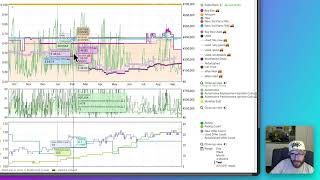
When I flip this, it usually starts on Amazon, so I'll usually find the sale through Keepa, through Brickseek, through some other means. What I look for is something that's dropped at least 40%. And again, we talked about this offline. I want to give people a structure, but I don't want to tell people exactly how to find a lead. And it's not to protect my leads. It's because the way I run my business might be different. The way you run business. I, I look for certain things at like at 40% drops, you might be uncomfortable at 20%, whatever it is, but I get triggered at 40%. So if it's a hundred dollars I want to see, it's down to 60. And when that happens, then I'm going and trying to find where their price matching. Because a 40% drop, a straight line drop. Now there's a difference between a waterfall drop, like a, like a cascading staircase and a straight job. I'm looking for straight jobs. I want like Amazon woke up in the morning and they're like, you know what, 40% off today.
And the Staircase ones. Those to me are more concerning. Those to me are like, oh, Amazon doesn't want this product anymore. Or like the whole MSRP has dropped in some way. Or like, that's more indicative of them staying at that lower price because for some reason they can't, like, they're not doing it because someone else is telling them they're doing it because they want to sell out or they want to, like, get more sales.
They're trying to figure out what the market actually wants to pay. Maybe.
Yeah, yeah. And, and for those, I find they stay at that lower price a lot longer. The, the straight jobs, they might stay in stock like that for a day, a week, but for the most part, they, they go back up.
Okay, interesting.
So let's, let's stick with Keepa for a little bit. What kind of parameters do you use within Keepa? Let's say, especially if you wanted to exclude like certain categories or say you wanted to exclude books or something like that, how do you, how do you arrange your Keepa?
So the only things I exclude, and again, this is preference is music and vinyls. There are a lot of vinyl clips. There are a ton of vinyl clips. It's just not my thing. Vinyl prep is not something I like to do. So I don't personally get vinyls. For a long, long time. I didn't look at any clothing. I say, if you're doing clothing, there's a lot of things you're gonna have to, like, wade through private label wise, because there's a ton of private label clothing. But I actually made a tweet about this and I got, I think that's what started some of the discussion. I recently unlocked clothing for myself. I was like, you know what, I'm gonna, I'm gonna venture into clothing. So I've been buying a ton of shoes. So for the most part, though, I would say have CDs, books I don't do as much of through people. There's another tool, and I also linked it on Twitter we can maybe show on YouTube. I don't know who made the tool. It's entirely free. It's. I don't even know if it's supposed to be free, to be honest. It's called sellertoolportals.com so there's a little plug for them. And essentially.
It'S entirely devoted to finding book slips. Like, like, I don't, I don't know what, what's going on with it, but it's designed to help you flip FBM to fba. So if you want to do books like that is the way to do that. Otherwise I'll look at every other category and my parameters are right. I, I want 40% drops, usually up to 500,000 rank. I want things where Amazon has been out of stock about 70% of the time over the last 90 days. For the most part, unless it's a new product or something, in which case I'm gonna hold it or I think it's gonna grow out of stock. I like to have at least three sellers in the listing for the most part. That is for like, unless it's a brand name that I recognize, like an Adidas product or Reebok, whatever, like a Lego, I'm not concerned. I don't care how many sellers I'm listing. But if it's these products like I've never heard of, they kind of look private label. Y I like at least three sellers. Just like some comfort in the fact that I won't get hit with claims.
I do look at the stock count history on all these. I want to see that it is dropping. I want to see historically who was on the listing. Because I'm obviously looking for brands, the manufacturer, big sellers. Sometimes I will stay away from certain listings. Even if there's 10 sellers, if everyone on that listing has a hundred thousand reviews, I'm like, okay, they're all big sellers. To buy from a distributor, it's more likely I'm going to get hit with something. I wasn't supposed to buy this product this cheap. And they're probably all monitoring it for map violations and they will target me very quickly.
And otherwise, I mean that, that's it. And then, you know, I filter through those and I, and I see what, what's interesting to me.
Now you said.
You mentioned stock levels.
How do you, do you just kind of kick out the anomalies or the, the, the, the weird stuff or how do you translate Keepa stock levels? Cause that's, it's not always straightforward from my experience.
Yeah, I mean, I do best I can with the data Keepa gives me. You know, sometimes obviously people can set parameters. They're only going to sell X per order and so you can't actually see but the Keepa history that if you go into individual products, you go to the data, you go to was it sellers or stock history. There's like a, I'm, I'm blanking on the tab off the top of my head, but there's one where you can see historical stock levels and they actually give you a little mini keeper Charts of each seller and I love those are the ones that I like a lot. Right. Like I want to see if they restocked, I want to see how it dropped for them. What I really really like and this is more for third party buys because it's the only question we get like can you do a 2A by buying from third party sellers? Does it have to be Amazon as a seller? You can, you can absolutely buy from third party sellers. Obviously there's some additional risk with that and some things you should be aware of. But what I like to see when I'm buying from third party sellers I love when they were at the a hundred dollars and then they dropped to 60 or 40. What I don't want to see is that they were not on the listing and they came in at 40. I might still buy them but I'm much more weary of that purchase and I'm more concerned that they listed on the wrong listing or that they listed like it's a multi pack and they always like one or that it's fake or that something's going on. What I want to see is they have a history of selling this at a certain price and then they decide to drop their price and I'm going to take advantage of that as opposed to just like a brand new person on the listing.
Yeah, similar to Amazon you want like an external factor that made them choose.
Liquidate for whatever reason and you know, bluntly and hopefully this doesn't make me a bad person. I mean I have to assume some of those are errors. I can't know which are errors and obviously it's going from $100 to $5. I think there's a safe assumption that they didn't mean to do that. But if it's like a normal, I'd say 40% drop I try to get myself a little bit. I'd make it okay in my head and like you know what, like maybe they just had too much inventory or their price matching or something so that.
So all those people, all those people in the Repricer groups and stuff that say the Repricer's pricing below my mint, that's you buying their stuff is what you're saying, right?
Some. Listen, it's happened to me too. If I, if anyone's listening to this that uses Repricer the only thing I can tell you is when you're, when you sell out of something turn off your Repricer for that product. Either turn off your Repricer for that product or like a hundred percent make sure. That you go in and look at every product you have in that next shipment to see if you've ever sold it. And it's still in your repricer somewhere. Because I've accidentally sold products hundreds of dollars under because I restocked something and the market had just blown up and I just totally forgot that I had sold it before. And my repricitor was like no, this is a $40 product according to you. And I sold eight to one guy. And I'm like, I just get eight to eight. And that's fine. That's karma and that's okay.
Let's. Can we talk a little bit about that, that extra risk that you talked about with third party. With buying from third party sellers? I guess what's the. And we talked about what the risk factors are. Maybe it's fake, you know, may, you know, that kind of thing. But I guess how do you protect yourself a little bit when you are buying from a third party seller?
So I actually wrote down here, I wrote common sense, which is, which is like a terrible thing to say. But again, I think something too good to be true is something to be weary of. The biggest indicators are products that are multipacks. I think if you see a multipack listing that's normally $60 and all of a sudden it's $12, there's a very, very good chance that someone accidentally sold a single unit on that multi pack. Now I'm not saying you shouldn't buy it and if it is the wrong product, you know, return it or whatever. But just be aware that that happens more than not. That's more than 50% of the time someone just didn't do the listing correctly and it's going to sell you the wrong thing.
Obviously we talked about expiration dates.
I'm looking at my notes for those that can't see the, the camera.
I look at the seller itself of course, like pretty particularly if it's fbm. If it's fba, I'm a little bit less concerned because I have Amazon to protect me. Because at that point you're a consumer and Amazon protects their consumers. And so I'm okay taking some additional risk. Fba, it's fbm. I want to check that seller's history. I want to see their reviews. I want to get a sense of like, do they actually ship the things they say? Do they magically get lost all the time? I tend to not buy things to sellers that are under 92% unless I'm just like taking a crazy chance the other day like a 700 product. Some FBM seller had it for a hundred bucks. They had like a 90% rating. And I was like, you know what? Why not? Let's see what they send me. But you know, there are a lot of bad actors on Amazon and sometimes what they do is they do this exact thing to get you. And I've gotten envelopes in the mail. I ordered, you know, a 30 pound box and I got a little envelope with the same tracking number on it. Magically, you know, like they will do things to try to scam you. So you just have to be aware of that. And I think particularly if you're using a prep center, you know, if you have a note section, your prep center and you order something like that, make it very clear to whoever's looking at that product, please make sure this is the right product. Please make sure the condition is new, please make sure it's authentic. But it's the same thing, you know, if you're buying on any new site that you've never heard of before, you always want to do your risk assessment. Like, is this a legitimate site? What are the risks? Like what are people saying about it? And I think for a, to a third party sellers, the, yeah, the biggest things really are the listing themselves. Do I think that this listing is more likely to cause problems because it's a multi pack? Do I think that the product. Sometimes you can tell, I look at the review sometimes, like the listing has changed, right? Like somehow it's changed in the last week and all the reviews are talking about a product that doesn't make any sense for the listing. Like they're talking about some makeup and this is for shoes. And I'm like, I don't know what I'm actually going to receive.
Anymore. So like, you know, look at the reviews. If the reviews have pictures, that's great because you can obviously validate what those people receive versus what you're actually going to get. But that's all it is. I think most of the time though, if you're doing this consistently again, a very large percentage of your buys are going to be from Amazon directly. Like most of this will not come into it. You're just going to have so many outliers. You're like, I'll take the chance and I'll see what happens. And then again, if you're doing clothing or things, there are Amazon owned brands that sell on Amazon, but not from Amazon. Zappos is a huge one. If you're buying shoes, you're gonna buy from Zappos a lot. I don't know why they do it, but Zappos routinely underpriced shoes when they're selling on their own on Amazon's marketplace versus their own website. 6pm is another huge one. Woot is another one. Like those are all safe buys. Like you can trust those purchases. Nice.
Let's what about quantity limits? How often, how often do you run into quantity limit issues and is there any way to overcome them?
There's very little. So I do run into them. Mainly electronics and shoes. Those are probably my two biggest categories for quantity limits. Interestingly, Amazon sets quantity limits.
It's hit or miss when they set them. So we talked about the example where Amazon suddenly drops their price. There's a chance if you caught it early enough, you had no quantity limits. Ten minutes later there's quantity limits. They will let your original order go through. Fine. So like I've placed orders for you know, fifty or a hundred or something and then I try to reorder and I can only order three and everyone else can only order three. So I would definitely recommend not making multiple accounts to get around quantity limits. It's a really nice way of getting banned and they will figure it out. What you can do is you can create a personal account and a business account.
Business accounts have changed some actually fairly recently and I think this is one of the questions we had on Twitter. So it used to be that business accounts had much higher quantity limits and actually some oftentimes cheaper pricing or business pricing.
That doesn't happen as often anymore unfortunately. So some products you can't even buy with a business account now I don't know why in those cases you should just switch to your personal account and buy it. The value of a business account though is you can get tax exempt. So if you're not using a prep center or tax free state and you want all your purchases A2A BE tax exempt or open a business account with your llc. Get tax exempt. Buy your HOA through that. Perfectly fine to do that. Just know like some products for some reason you won't be able to purchase and some you will get slightly higher quantity limits on the business than personal. But it's not as good as it once was. Interesting. But they do reset. Quantity limits will often reset on restocks. So if Amazon sells out of something and then comes back in stock, it resets. If Amazon doesn't sell out of something, it won't reset. That's how I have found it's not every listing but it's quite Often there's a for depending on, well, it's next week by the time the list of this. But there's like this.
There'S a doll, I think it's Corolla is the name of the brand. I'm not sure which is a perfect example of a HOA flip. Amazon has restocked 10 or 15 times now in the last two months at $18 for this $85$. I don't know why.
Everywhere else is $85 and it's a three order limit, but every time they restock you can order three more. So if you go just check every day because it kind of comes in and out of stock a lot, you can end up with like 12, 15, 18 of these things. Amazon has slowly dropped in price because so many people are buying it to flip HOA, but I think it's still $50. So on the 18 buy you're still making, it's like 15 to $20. And if you buy three a day, I mean if it never changes, you know, it's 60 bucks a day for one purchase in profit. And I, I would also push or urge everyone to. When Amazon, when you buy an HOA flip and it stays in stock, Amazon has like, you think they're going to sell out and they stay in stock. Obviously, if cash is tight, cancel the order, that's totally fine. Personally, I don't for the most part. I think that you have a great opportunity if you don't cancel. Because if in the states where the $80 drops to $18, there's a very good chance that it will sell out eventually. It's just too good of a deal not to. And you want everyone else to be scared. You want everyone else to be like, oh, Amazon stayed in stock for a month on this thing, I need to cancel this order. There's no way I'm going to make money because then by the time he actually ships to you, the thing doesn't skyrocket in sellers and you can take advantage of that. I had one and posted about it earlier where Amazon was stocked for 35 days.
And the minute they went out of stock, maybe two days later, I sold it for double what Amazon was selling it for. And the reason I could do that is because I bought it at the beginning and it came to me, I shipped it in and then they had it. And so I just waited for them to sell out. And the best time to wait for them to sell out is if it's already at Amazon. You want your product to be prime eligible and Ready to ship. So you can catch those like day windows or two day windows where they're out of stock. Because you can do a lot in two days for a $40 product. It can go out to a hundred bucks and you can make a lot of sales in those two days. And funny enough, like you really don't get a lot of cancels or returns. People are very concerned like, oh like people are just gonna notice. How many times do you go back in your order history and see what the current price of the product is that you purchased?
Right.
So you, you were hinting around buying when the market was scared or not canceling. I think I've heard that somewhere before.
Right?
That might be. That's Warren Buffett maybe. Warren Buffett.
I, I love people always show the charts, right? Where like the price, the product price goes down and the seller count goes up. Right? You're like meeting at this like middle ground.
I think that's the perfect officially the pinch.
By the way.
Buy at the pinch 100%.
Buy the pinch. That's might be our next shirt, Chris.
I like it.
Buy the pinch.
Hey, so when, when you're looking at Amazon to Amazon flips, just out of curiosity, is there any, anything that would stick out or any scenario where you might actually merchant fulfill product?
It wouldn't be specific to A2A but I merchant fulfill right when the seasonality calls for it. So if I think a product's only going to be hot for a short window of time, trends, pop culture related references.
Christmas time, holidays, things that people are going to want this right now and I just don't have time to get it in LFBM. But there's nothing specific to A2A that calls for something to be FTM in my mind outside of those scenarios. But this, the hype stuff you'll find with a two A decent amount, right. Things just sell out of Amazon because they're massively popular all of a sudden out of nowhere. But you don't know how long they're going to be popular for. So if you want to hedge your bet and you want to FBM them, you know, more power to you, I think that that could be great. Or if you want to split. I like splitting shipments. Don't. Maybe you order 20, send 10 in FBM 10, try to make your money back and then you know, let the other shin ride.
You.
You mentioned pop culture there. So I want to, I want to bring something up.
And we could, we could discuss the, you know, the ethics of this some other time. But let's talk celebrity deaths.
Yeah, I know. We going.
Yeah, that would be, that'd be one where you might FBM it because there's going to be a short window where the interest has peaked is how often is something like that.
Or I guess how quickly do you see those kinds of pop culture issues.
Come into play and things like that. When it comes to flips, I am.
A big fan of pop culture flips. It's what a lot of my holds are. So. And I hold a lot of toys. So at a big Transformer, I hold somewhere between fifty and a hundred thousand dollars in cost of goods, mainly toys. Some of them are held for Christmas because I know they're going to go up and some of them are pop culture related.
Toys in particular come out often before the reference that they're referenced before the reference material. So like a toy for a movie that hasn't come out yet will be on the shelf before the movie. Stuff like that.
Yeah. Again, to the desk stuff. You know, we don't have to too much, but yeah, once the thing happens and people in the public are aware of it, it can go from 0 to 100 in an hour. Right. Like it can just go very, very, very fast. And in that situation, if you think it's going to happen soon, send it in and just let it ride and hold it up top in price and wait for that wave. If you think it's, you know, in a. On a questionable amount of time, that's when I store products and I just wait for the market to react. But there's a lot of money to be made in predicting what people are going to want before they know they want it. And that's, that's what I try to do. Interesting. Interesting.
All right. Now you've already, you already kind of touched on this once, but I want to expand on this. What categories are better than others for Amazon to Amazon flips. And what categories do you just completely stay away from?
Yeah, so I really only stay away from music.
You're going to have to maybe look. I mean, I'm happy to look.
It's mainly music. As far as like what I'm not looking at. Oh, I don't look at jewelry either.
Okay. I know you mentioned video games. You only had like a 20% hit rate.
I will, I'll continue to get burned on video games. It's just too much fun.
You're glutton for punishment.
Yeah. For like that hope that this N64 game is going to be brand new still. But I buy the Vast majority of products are going to be toys, grocery, health and beauty, electronics, and now shoes. Shoes are very quickly becoming probably number two on that list. This year in particular, I've been buying a lot higher price products. I have found that hoa, I mean, it comes to ebbs and flows. Like this podcast will generate some attention. New people will join and be like, I want to do hoa, which I love that you want to do that and I'm sure you'll be successful. But that wave kind of happens, right? People see hoa, they get really excited and curious about it. There's always new people and then they, they die off and they just keep going. So what I found is the lower the price, like the 20, $30 flips are the ones that just get eaten up first. And the more you comfortable you get with hoa, the more comfortable you're going to get spending money. And so lately I've been spending 60 to $150 a flip. Probably actually close to like a hundred to $150 a flip because I just have a lot less competition for those categories. I'm spending more in shoes and I'm spending more in household, like plumbing equipment. Like I'm buying a ton of shower heads. I'm buying like power tools. I'm buying, you know, expensive, higher end things that I actually have less returns on and slightly more risk maybe, but way less competition. It's just like a very nice keeper chart. But when I was getting into it for a long time, toys, grocery, health and beauty were probably my mainstays. They still are a large part. I think there's a lot of easy wins there. A lot of $10, $15 buys that you can make seven, $8 on. Right. But the more you scale up to some of those higher end things, the more profit you'll find. But slightly more risk.
Yeah.
So it, the, you're doing more shoes now and we talked about this earlier this month.
Yeah.
Okay. Are you. So you're only a month into it.
Okay.
So I'm just gonna. Like the, the compounding of you said earlier you're not gonna win everything. You know, whatever that ratio is compounded with the perceived higher return rate on shoes.
Yeah.
Feels, feels risky. And I don't, I don't have a question mark at the end of this. Maybe I'm interested.
More of an observation.
Sorry.
But I think. Can you talk about that a little bit?
Yeah, I mean, I think that's a question. Right. I think there is absolute risk. I'm, I am prepared for the Onslaught of your shoes that I receive. But for A2A, my, my margin, my ROI is good enough to support that. I think I'm not a big shoe seller, but I. This goes. You surround yourself with people smarter than you. And Chris says this all the time, right? And shoes I know very little. I'm not a shoe guy. I have two pairs of shoes in my life. I don't know what one shoe looks like compared to another shoe. But I ask a lot of questions. And I'm just trying to understand the shoe game. And my understanding is like, you want at least 100%. You kind of want that third rule, right? Like, I buy it for $50, I sell it for $150, I make $50, right? Like there's the three buckets, and that's where a lot of shoes actually A2A come in. I think there are a lot of really good deals in shoes that allow you to get that margin so that I can prepare for the returns and, you know, whatever comes with it. For right now in my life, I'm just having. I have spent goals. I just, you know, if shoes allow me to get to my spending goal, then I will buy shoes. I don't really care what the product is. I don't look at it as products anymore. I look at as data points. I try to remove all biases from my buying decision. I don't assume what's going to sell. If I started doing that a lot sooner, I'd be a lot richer. Just buy what people are buying and sell it to them. It doesn't matter what, like if you agree that they should buy it or not or if you think it's going to sell, the data will prove to you that it does. And so I just, I buy anything and everything now that I can make money on. And I think a large part of that is getting a good prep center. You know, I was doing everything myself. My wife was helping. Now I don't see any of it, which is really, really nice. And so it allows you to just spend all the money you have and wait for it to come back with friends.
Nice.
Chris, is that. Do we exhaust all our questions or.
I think we did exhaust all the questions that we had for you. Okay.
Is there anything that. Did we miss anything? Is there anything we should have asked.
You that we didn't?
Looking through my list here.
I don't think so. I mean, I think you asked some really great questions. You guys are professionals. Good reason that you're ranked so high on the charts for. For Podcasts?
No, I mean I, I really, I might feel like a little like I should, I wanted to give more. I want people to walk away and like have actionable steps and they can go make some money. And, and again, I think you can do that just through like right now, at the very beginning, Pipa and Bricsy, you can just find some of these deals. You're not going to make $10,000 in your first month, but you'll make enough to support like the concept. You'll prove to yourself that this thing can actually do it. And yeah, I mean the keep a deal section is super strong. It is slightly delayed. There are ways to get that information faster. So you might be like slightly behind other people. But I would start there and I would just play with all those filters. Like I don't want to tell you exactly what to do. There's a ton of filters left inside. Play with them, see what products pop up. Always sort by newest at the bottom filter because otherwise you're going to be behind the eight ball. And then I'm going to plug the Keepa program that Chris has because I think if you, if you understand Keepa really, really well, you can manipulate that data section to do beautiful things. And one of those things is find the A2A flips. If you already have tattoo arbitrage, there's an HOA scanner there. I think that's the. It's not a scanner, but it's a tool. I think that's the only tool that I know of that helps you find seasonal flips. Keepa alone can't do it for you because it doesn't have exactly the right parameters in their built in toolbox, which kind of annoying but the type arbitrage one does. So if you want to find things that did really well last year and sell them again this year, you can fiddle with that and have a learning curve for sure. Um, but if you're already paying for it, you should definitely use it. Uh, and I mean that's, that's really it. I, I think that HOA shouldn't be your only model, it shouldn't be the only method that you use, but it can really fill in the gaps for you. You know, if you're trying to make your $300 profit a month to pay your car bill, or you're trying to make an Upper street loan to your mortgage and you only can spend so much in OA, you get some wins here and there. A2A you check, you know, now and then in some of the deal section you find a winner, like I think that's how you should leverage it. And then rabbit hole from there, like it's going to introduce you to new brands, can introduce you to sales again. If you find a good flip, figure out why, go find that sale. And that's what really elevated my business this year is going. I've found so many sales by reverse sourcing from hoa. I never used to buy from Lowe's and Home Depot. I buy from Lowe's and all the time now the. Because man, they're showerhead deals. Gotta check those out. Uh, and you know, I'm just buying things I like, I wouldn't have looked at at all. Interesting because you just get presented the data first. I think that's the beauty of it on oa, you get presented the product first and so you're biased. You like have to see the product, have to click on it, have to be interested enough to search it on Amazon and then look at Keepa. Whereas this way you're seeing the data, the data supports like, oh, this is kind of cool. This is profitable, then you're going to find the product and by then you're much more confident you're buying it.
I like that's really interesting.
Yeah.
Saul, if I don't know how much or how often you might listen to the show, but we always like to end the show with a quote of the week. And this one comes from Daniel Ludwig. He was an American shipping magnet. He was the owner of the largest salt company in the world. He was a hotelier and owner of some 200 companies in his almost 100 year long life. And, and I thought this one was apropos to this episode because even though this is kind of the, I guess maybe an easy area to source from, it's a place where I think a lot of people tend to, I don't know, not necessarily turn their nose up at, but not ever look at. So the quote of the week this week is the farther the frontier, the greater the opportunity. I think this is a Amazon to Amazon flips is kind of a frontier that maybe scares some people. And hopefully this, this masterclass, if you will, will, will kind of get some people into it or, or at least take a look at it as another method that they can kind of put in their toolkit. So I appreciate you coming and spending some time with us. This honestly kind of has repeat my own interest in Amazon flips. So I want to start, start messing with a few things. So Saul, thanks so much, man. I appreciate you.
Yeah, thank you guys, I appreciate it too.
Yeah, thanks.
Everybody. Thanks so much for listening. Make sure to go follow Saul at Saul Sell Stuff over on Twitter. He's a great follow. And if you're interested in learning more about the buy box IO, there's a link down below. You can check that out. I. I don't know if there's a free trial or how you guys do that.
Yeah, we can get that set up. And also, like, I'm a little money plug. All of the tools that I built, I put in a buy box. So like, we have all. We have two really strong A2A tools. So if you're really into HOA, the buy box has a scanner that auto finds you deals and a monitor. So if you want to monitor any product you find on Amazon, it will do that for you much faster than Kiva will plug.
Absolutely. There will be links for all of that down below in the show notes and I would definitely go check it out. I do hang out over in the buy box a little bit. Not as much as I probably should. So thanks so much for listening, guys. We'll be back next week with another episode for you guys and take it easy. Thanks for listening to Clear the Shelf with Chris. And Chris, if you enjoyed this episode, please take a screenshot on your phone and and share to Facebook, Instagram or your favorite FBA group. And be sure to tag me and let me know why you liked it and what you'd like to hear more from us in the future. Also, I'd like to give you some free gifts for listening. Head over to rabbitt trail challenge.com and repricerchallenge.com for some free courses to further your business. Thanks for listening.
More from Saul

Saul Talks Business Partners - How I manage 6 companies doing $3M/Year in profit


Saul Talks Hiring + Delegation - How I manage 28 team members and $60,000 in monthly payroll