Fintech, What the Heck? | The Investing Meritocracy ft. Autopilot
In this episode of The Investing Meritocracy, host Andrew interviews Brian Schardt, co‑founder of Iris Finance and the new copy‑trading platform Autopilot. Brian recounts his journey from a college student trading on Robinhood to building Iris, a social‑investing app that went viral during the GameStop frenzy, and the lessons learned from that experience. He explains how Iris revealed a demand for copy‑trading, leading to the creation of Autopilot – a service that lets users connect their brokerage accounts (Robinhood, TD, Fidelity, etc.) and automatically copy the trades of selected “pilots” in near‑real time. The conversation covers the technical challenge of building proprietary broker integrations, the psychological responsibilities pilots feel, the design of a performance‑ranking algorithm, and the regulatory constraints that force Autopilot to use a flat‑rate subscription model with tiered pricing (from $4.99 to $100 per month) and revenue‑share for pilots. Brian outlines the product’s go‑to‑market strategy: start with publicly disclosed traders (e.g., Nancy Pelosi, Warren Buffett, Michael Burry), partner with data‑focused influencers (Unusual Whales, Quiver Quant), and eventually open the platform to any investor who ranks in the top 5‑10 % over a multi‑year track record. He shares metrics from the private beta (≈400 paying users, $20k+ revenue, $300k+ copied from Nancy Pelosi) and a waitlist of ~10,000. Marketing tactics that drove virality—timely stories about politicians’ trades, earnings‑season match‑ups, and meme‑page amplification—are discussed. Finally, Brian talks about future milestones: adding support for large brokerages (Schwab, Vanguard, Merrill Lynch), scaling distribution to millions on TikTok, Twitter, and Instagram, and launching the full product within six months.
Chapters
Welcome to the show. My guest today is Brian Schardt. He's the co-founder of Iris Finance and now Autopilot, and we're going to learn all about social investing and what he's working on at Autopilot. Welcome to the show, Brian.
Thanks so much, man. Thanks. Thanks for having me.
You bet. Can you start by just telling our audience a little bit about your background, um, how you got into investing and, and why you got started founding these platforms?
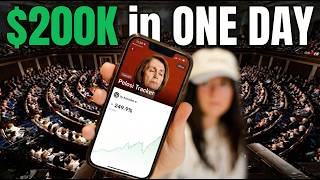
Um, it started when I was in college. Um, my dad set me up with a TD Ameritrade, and then I found a website that was zero commission trading, Robinhood. And I was like, dude, this is phenomenal. And I was in class, and they like call on you in class, and I was trading stocks in class, and I got called right when I needed to sell. I like just run to the bathroom and sell some stocks. On Robinhood, and I got like all my friends in college on it. Um, so I've just been trading on Robinhood from like day one. I was on the waitlist, etc. Uh, fast forward, um, I got into software engineering. I started, you know, working as an engineer for different companies in California and then later in New York. And in New York, a lot of people started trading, and I started seeing things like that. The big one was Tesla was being crushed by people, and it went— it dropped all the way to $180 a share pre- stock split. And I was like, you know what, I just love Elon Musk and love Teslas. Like, I'm just gonna buy a very risky call option, um, on it. Um, and I did, uh, and it later went up to just really, uh, high amounts. And at that time, I was actually, um, in Argentina. And what I noticed in Argentina, it's actually very similar to Brian from Coinbase, is they struggled a lot with inflation. It's like every month I was there, my dollar was worth way more money. Um, and I was with a lot of Americans, and they're also just trading in the stock market to support their lives there. And I was like, man, I wish Argentinians could like get access to the US financial markets because they'll actually be able to save up enough money that they're not able to do because of inflation. Inflation was around like 40-50% a year. Um, and actually right now I think it's 100% a year, which is, which is pretty bad. And that's one of the reasons why Brian started Coinbase was now Argentinians get access and they can put their money in Bitcoin, and it's not inflated as much as their Argentinian currency. But then as soon as I was in Argentina, COVID hit a month into it, and I was like, shoot, what do I do? Um, I'm working remotely. I was working remotely before COVID um, and I tried to get a flight back to America, and I'm like trying to buy them, but every— like, they're selling out. And I'm just like, oh no, I'm gonna be stuck here. But then I finally found a flight, go back to California, and I'm like, man, everyone's trading in the stock market. My friends are telling me what they're doing. I started buying put options on the airlines. and I just had a lot of people telling me how good of traders they were, but there was no way to prove it. And I was like, man, I wish I could just like see their Robinhood accounts. Um, and I was like, what if I just build a simple API integration of Robinhood, export the trades on a Google Doc, and now I can actually prove who's good or who's not. We did that. We did that with a close group of friends and people were checking it every single day. And so I was like, what if I just build an application and put on the App Store and see what happens? And so that's, that's what we did. Uh, we called it Iris, uh, for like the eye to see what's in someone's portfolio. And it went, uh, very viral, very quickly. Uh, the meme pages on Instagram, on Twitter started, uh, downloading it, sharing it with their followers. Uh, during the GameStop craze of 2021, uh, we got around 30,000 downloads in a week, like crashed all of our servers. Um, I hear it's a, a good problem to have, but I was like freaking out. I'm like, what do we do? How do we, where it's like upgrading the database, upgrading the servers. Everyone is talking about GameStop. I'm like, I didn't even know GameStop is public. I'm trying to figure this out. Our whole team ended up buying GameStop and then Robinhood blocked trading of it. And what's actually really funny is they said a lot of people weren't trying to buy that day or the day previous anyway, but we actually have Robinhood data and there's some, there's some data we have that kind of contradicts what the CEO of Robinhood said. We could maybe get into that, but it's kind of funny that like we can actually see what Robinhood traders are actually doing in their account. Fast forward, there is, you know, different meme stock crazes like Nokia, AMC. But what we really wanted to do was become the real hub for the retail investor where they could actually see what their friends are doing. What we ended up seeing was people didn't just want to see what other people were doing, but they actually wanted to like copy. And we saw people manually copy other people's trades. On the app. And I was like, what if we could just make this super easy? What if we could just like have them press a button and then their Robinhood account is copying the friend's Robinhood account? Or even better, their Robinhood account is copying their dad's Fidelity account. And we were like, this could be really awesome and really fun. Um, and so that's what we did, and we built it originally as a feature. Now this is, uh, our first time— this is me and my co-founder's first time, uh, starting a tech company, and We, we, we've definitely made some mistakes by keeping things maybe too complicated, adding more and more features. And so we decided to look at what is the one thing that users want, the one thing, and let's just focus 100% on that. And when we saw, we saw it was actually Autopilot. We saw it was being able to copy what people are doing. That's the, the most obvious 10x experience. That's what people are paying for. And so we decided to actually dedicate the whole company and every resource to that. And we decided to actually build like a whole new experience on a new app on this, really just dedicated to that one thing and making that one thing super easy. And so that's where we're at with Autopilot. We have around 400 paying customers just in our private beta, and we have around 10,000 people on a waitlist waiting for this to happen. We have— what's fun is we actually have around $300,000 just copying Nancy Pelosi's trades. And so it's really cool to see like her like file NVIDIA and then like we just see all this money go towards NVIDIA from our platform. It's just really, really cool to see. But I'll pause there and see if you have any questions or comments.
I have so many questions. I mean, you've got the Nancy Pelosi, the CEO of Robinhood, you've got contradictory data, you've got Argentina servers crashing. It's like the classic, most classic startup story I've ever heard where you just hack an MVP and it goes viral faster than you're ready for. It's fascinating. Why don't we start with Autopilot? Let's dive in a little bit more. So like you're in this private beta. How does it work? Does someone just log in, connect their brokerage account and say, copy this person and off it goes? Exactly.
So right now what you would do is you'd connect your brokerage like your Robinhood, TD, Fidelity. We have a bunch of connections. It's not using Plaid, it's using our own proprietary broker connections. This way we get write access. Plaid unfortunately doesn't have write access. And if Plaid's listening, please add write access. It would help a lot of people out. But we ended up having to build them ourselves. And so what you do is you connect your brokerage. You could choose a person like Nancy Pelosi. We sync her trades via the stock filings, which is 45 days delayed, so it's not the best experience. But then we actually have certain pilots. We have people, we call them pilots because they're controlling or controlling the flow of funds from our platform. and you could actually copy them real time. And so I'm actually one of the pilots, um, on the Autopilot app. And if you copy me, within 30 seconds of me making a trade, everyone copying me will make that exact same trade without that 45 days delay. And so the, the goal we see is to really democratize wealth management. I've seen a lot of families, like especially older, older couples, uh, look towards wealth management and they're like, oh, I hear it's like, you know, 0.5% or 1%, but of all their money, That ends up being like $20,000, $30,000 a year. And I'm like, all they do is put it in ETFs. They don't do anything. I just think wealth management is, is a, is a ripe, uh, industry to be innovated. Um, and I, I don't think millennials or Gen Z will really stand for how it exists right now. And I think we're going to see it get a lot cheaper and we're going to get to see it a lot more convenient.
Yeah, I, I think those are trends that are absolutely— we've seen that across the industry, but I've never heard of anybody going after it this way. Like, feels like you're taking on a lot of Goliaths out there. As a, as a pilot, what's the experience? Do you feel, um, responsible for the folks that are tracking your portfolio?
Yeah, so this is— we've had a lot of different pilots, and I've— I follow, uh, Michael Burry. And so what I started doing last November was buying a lot of short positions on the market. And so that actually fortunately has been doing pretty well. And it's actually really cool to see, like, I think I have around 30 people autopilot— autopiloting me. It's really cool to see them being like, dude, I'm up and all my friends are down. But then we have other pilots who have, you know, have been in line with what's going on in the market and have lost money. And so I'll talk to them and I'll say like, do you feel responsible? Like, you're not a certified financial advisor, you're not mitigating risk, you're just trading with your own portfolio. Like, how responsible do you feel for the loss of this? And they're like, well, somewhat. Um, and this is, this is a psychological issue we're working through. One of the things that makes it better is, uh, everyone— most people in the market are losing money. And so it's actually the, the number that matters is how are they doing relative to the, to the index funds like the S&P and the NASDAQ. And so if someone's beating the market and there's— and someone's losing money with them, they actually feel better. They're like, well, I'm doing better than if they just put it in the SPY. But if they're losing to the SPY, that's where I think the negative emotions will come in for the pilot. And we'll actually have to figure out, you know, do we not show them as a pilot? Do we not enable them to be a pilot? The goal for 3 years from now is to truly build a meritocracy and say like, only the best traders should be able to control other people's money. And the goal would be to have the majority of people not have that negative psychological psychological experience. That'll only happen in a minority of cases.
Right. That's a psychological experience that anybody who's a portfolio wealth manager has to feel regardless. There's thousands and thousands of financial advisors and investment professionals doing that, right? So you're coming and disrupting that industry and realizing some of the challenges they have. How do you plan to track performance for folks? Is that something that you're building now?
This is one of the hardest things to do is to track performance, especially in someone's native brokerage account. One of the things is, one reason why we decided to be brokerage agnostic and not create our own broker is because the data, the historical data of someone's brokerage is so important. So there's like a Public.com, which is their own broker. They add a social experience to it. But in a way, like, I don't care about the trades they're making in the future. I actually care about the trades they made in the past. Right? And so it's like, if you're an amazing trader, we need to know you're an amazing trader. We need to mine your data, build a performance algorithm, and see were you beating the market over the last 10 years? And if that— there's 1% of people who are doing that, we need to find those 1% and amplify them, as opposed to going on, you know, creating a new brokerage and saying, okay, let's see the trades you're making in the future and seeing are you doing well in those trades? Well, you know, you might be good for one year, but what about year two? And the best part about getting the history of trades is like you could actually see their performance over 10 years. And so that's what we're doing. You're spot on with we do have to build a very compelling and accurate performance algorithm to measure and find who those investors are.
Yeah. It's almost like a human resources problem. You've got to recruit these folks. You've got to manage their psychology. How are they feeling? You're like a coach. You're getting pilots for a plane, but someone trains and manages the pilots to make sure that they their history and their future performance and their psychology makes sense. What an interesting, unique problem. I mean, when you were first talking about social investing and it went viral, I think it was because this was new. This wasn't something that was out there before. Is this trend happening outside of IRIS, outside of Autopilot? Are you seeing other folks since the meme stock craze kind of jump on social investing?
Are you referring to like other startups also taking off across the broader industry? Yeah, yeah. So I would say is investing has been one of the most social domains in America for a while. Like I'd always remember going to a bar, meeting some guys, and they'll just be like talking about the stock market and we could just bond. Like never met him, but we're talking about Tesla all of a sudden, right? Or there will be like iMessage group chats or there'll be Reddit WallStreetBets or there's, you know, there's stock market talk on Twitter, on TikTok, etc. But there's no— there's never been a platform where you could actually verify what people are doing. Yeah, it's all just talk. And the biggest problem I have is like, I remember talking to someone in person and I'm like, my sister was like, dude, this guy, he's so good, I should like copy, do what he says. And I'm like, well, people are all talking. Let me check. Let me see if he'll show me his Robinhood. And I just said, hey, send me screenshots of your Robinhood. He's like, nah. I'm like, all right, he's probably losing money. He then showed me, I'm like, yeah, you're down 20%, but you're talking a big game. So what we found is like confidence of talking does not reflect necessarily your performance as an investor. And sure, I actually think it's maybe inversely related, a little bit inversely correlated. And so the goal of Iris was really to, you know, show people who are, who are good, who should be the one, who should you amplify. And so with our algorithm on the social app, we actually prioritize how good of an investor you are where you fall in anytime you say something, which, which became really important. Um, and a fun fact is people on Iris, um, before, um, uh, the stock market started going down actually lost less money than people just joining, um, now. And we could actually track the previous data to see what, what happens. And that's because we're amplifying people who are being able to predict when the markets would go down or predict that they have like an actual good pulse on the market. Due to their previous data.
Yeah, so there is a social component to following somebody, but there's also the social component of who to follow. You're talking about amplifying certain traders. Is that going to be a primary feature of Autopilot where, you know, like you almost have to advertise the Autopilots to folks? Like, how is that experience?
Yeah, the way I see it is we're going to be tackling this in 3 parts. The first part is as we build the technology, we're just going to be, um, having people copy Stock filings, um, which is like Nancy Pelosi, Michael Burry, Warren Buffett, Ray Dalio, really the big names that people already trust. A big thing when you, when you put your money where their mouth is, like, you want to trust their mouth, right? And the way you do that is by, uh, one, they could already have trust like Nancy Pelosi, like Michael Burry. And so that's our first target market. And that, that'll be for the next 6 months of where we're really targeting to. And we actually have a bunch of, uh, Twitter pages. Like, our Nancy Pelosi Twitter page just got 60,000 followers last week. And so that's how we're distributing that product. But version 2 is then we're going to pair up with different people who have large distributions, like Unusual Whales on Twitter. Hopefully, hopefully we'll be able to get in contact with them, or Quiver Quantitative. I'm sure you guys, you guys talk to them. They're building some really cool stuff, and it'd be really cool if they could actually build some algorithm or some— have some data that they're like, you know what, we actually want people to copy trade this. This. And so we're actually looking at different partners where we could say, hey, like, let— we have all these connections to these retail brokerages. You have people that trust you. We'll do some profit share and you guys can recommend these different trading strategies. The third version is now let's open up a true meritocracy where anyone in America can connect their portfolio. And if they're approved and they're shown to be one of like the top 5% of investors in America over the last 5 to 10 years, we could say, you know what, we're opening up you to become a pilot where you could actually manage your friends' money, or we shouldn't say manage, but your friends could copy you, your parents can copy you, anyone could copy you. And then what we would also do is have a leaderboard of pilots and say, hey, you're literally number one. And then I think what people would do is as they started to trust us as a company, they will trust our, our leaderboard as a company. It's kind of like how do you trust the Uber driver or do you trust Uber? Well, you trust Uber to make sure that Uber driver is trustworthy. And so that's what would end up happening is they would trust Autopilot to trust the person that we're putting at the number one spot.
It's a chicken and egg problem, right? Probably like you need this critical mass. It sounds like you get massive amounts of signups and interest and folks coming in, but you're solving that by starting piggybacking on already trusted folks that the government makes so well known and trusted, they actually have to disclose what they're trading. You start there, then you partner with Unusual Whales, QuiverQuant, companies that are already in this space that want the exposure, and then finally you are so well established that they can just trust your leaderboard.
Exactly.
Yeah. 100%. That's going to work, I think. Yeah, I could see that. That's super plausible. I buy that path will work. Can you talk a little bit about— the financial incentives that are there for pilots, maybe not now or in the future, and also how you charge your current customers. Like, what's your business model, um, for, for, for generating revenue and also generating revenue for, uh, your users and your pilots?
Yeah, that's a really good question, especially because there's a lot of regulation in this industry, and the regulation is specifically around how you monetize. So for example, traditional wealth management charges assets under management fees, so like 0.5% or 1% of assets under management per year, plus let's say a 20% performance fee. We're not allowed to do that unless we have certified financial advisors and IRAs, etc. But we are allowed to charge flat rate subscriptions that have no— that are not directly correlated to AUM or performance. And so that puts us in an interesting perspective to actually cheapen the prices, which is something I wanted to do anyway. And actually said we're just going to charge a subscription for this service, right? And so what we'll do is we'll say if you're, if you're autopiloting $1,000 or less, we're just going to charge you $4.99 a month. That's tier 1. Tier 2 is if you're autopiloting, you know, $1,000 to $100,000, we'll charge you $50 a month. If you're autopiloting more than that, we'll charge you $100 a month. And so we'll actually just have 3 tiers. We've talked to our legal team and they said you could have 3 tiers that have a loose correlation to AUM, no correlation to performance, um, and you can't have an infinite number of tiers. You could just have 3 because then the SEC will come after you and say you're basically doing AUM. And so we're also tying other features to each tier. So like Tier 2, you get option support. Tier 3, you get crypto support and option support, etc. And so we're able to do some really cool things like that. Um, now when it comes to incentivizing pilots, we'll actually be able to do a revenue share. So if they're paying us, you know, 50 bucks a month, we'll be able to share that with the pilots. You know, 30 bucks out of that 50 bucks will go directly to the, to the pilot. And so that's how we're thinking about monetization.
Yeah, those— that's a great— you solved a tough problem. I mean, I deal with regulations on stock markets, things like that. It's like, it's incredibly difficult, and your answer is incredibly simple. And I think it, it incentivizes things properly, you know, like, I think there's a some pretty poor incentives when you talk about paying fees whether or not a hedge fund performs. And then they get a huge chunk if they do well, but they still get 2% if they do poorly. This isn't fair. Yeah. And the fees that you outline starting at $4 a month, $5 a month, $50, $100, these are numbers that make sense in Argentina. I, I think that like your original goal of helping democratize investing, helping a country with runaway inflation, I think— do you think that they're gonna— that they'll be met through this at some point? Like that someone in Argentina who's using Coinbase maybe to, to prevent inflation could use your platform someday to take part in wealth growth and protecting their assets?
I think the best inflation hedges are actually revenue-generating assets, which could be— and not necessarily speculative assets. And so I think what happens in the stock market is in hype is the stock market becomes very speculative. But in times like maybe now, it's maybe getting more true to fundamentals like revenue generating. And so my goal is for some company to be able to open up access to the US stock market to Argentina, which they don't have access to right now. And I think Alpaca might be working on that, but I do hope maybe an Argentinian is able to come up with that. And if they do, they would for sure be able to leverage Autopilot to be able to connect and provide wealth management services to them to prevent inflation.
Yeah, I love it. And I like the idea that for an Autopilot, people talk about selling options as a way to improve the returns of your portfolio. Talk about improving your return by I just connect through Autopilot through your service and I'm going to make basically dividends on my portfolio for allowing folks to track it without increasing my risk. Isn't that a pretty sweet deal for an autopilot? I mean, you're an autopilot, right? That's pretty cool.
Yeah. It is a pretty sweet deal. And I think it really encourages people to be a little more thoughtful about some investments they make as well. Oh sure, I know, I know. As a, as a pilot, I'll be like, there's sometimes I'm like, I'll just do this, but then I'm like, wait, do I want to do this? I have 30 other people who are going to do this. And I'm actually become a way better investor because I'm not just trading for myself, I'm actually trading for other people. Um, and it allows me to really think a little more critically. It kind of, I kind of, it reminds me of like, uh, when I was playing football in high school, um, this is like my freshman year and I was on a, it was like one team, like varsity and JV. But I just couldn't run fast enough. And then my coach just kept yelling at me, and then he's like, you know what, sit down. We're gonna make the whole other team run while you sit and rest. And I was like, I can't do this. Like, I need— like, I feel bad. Um, and so I never, I never slowed down again because I didn't— I had to like sacrifice for my other teammates, not just myself. And so when you trade, when you trade for other people, you start thinking about it a lot more critically, and you start saying like, I need this level of conviction in order to make this move. And so I've seen it actually make me personally a better trader.
Yeah, what an interesting— another side of the psychology, the motivation, right? Not just feeling guilty if you're underperforming SPY, but also feeling like responsible for the folks with you, and maybe even feeling better if you can succeed not just for yourself but for other people. It's always a really nice feeling. Um, what What are you going to do next? I mean, like, you're building this platform, it's in beta, so you've got 400 folks testing it. Is the plan to launch it to the 10,000 people waiting? Like, what's your timeline look for that?
Yeah, so the thing with this is like the technology is very, very difficult. So connect— there's a reason like Plaid is a $10 billion company. I think they're even worth more than that, is connecting to these financial institutions. There is no easy and to get right access to these financial institutions is very difficult. And so we're fortunate enough through the social app to have built out amazing brokerage connections. However, even though we've had the last 2 years to build them, we want to add support for Schwab, for Vanguard, for Merrill Lynch, because that's where the big money is. When we look at the average Robinhood account size, it's around $4,000. When we look at the average Merrill Lynch account size, it's around $100,000. Wow. So it's a big difference. And we're going to make more money and more revenue if we're able to connect to Merrill Lynch and Schwab and Vanguard, because that's where all the big money is. And so what we want to do is when we launch our marketing strategy, we don't want to just leave the Merrill Lynch people in the dark and like have them like try to use our product and like, oh, they don't support Merrill Lynch. What we found out is it's really hard to get the user to come back than it is to get them to come there in the first place. And so one thing we're doing is when we launch our marketing strategy, we wanna make sure that we actually support those big, those larger accounts because that's where a lot of the revenue is gonna come from. And so what we're doing is we're building out distribution on Twitter, on TikTok, on Instagram. And so like our, we just had a TikTok video get a couple million views. Our Twitter accounts are growing and our goal is to actually get distribution around 5 to 10 million on these different social platforms, building out waitlists until we support all of the institutions we want. And then we're gonna hit those 10 million people and market to them in an instant. And once we do that, that's when we would hopefully see people start signing up in large numbers.
Yeah, I think that's a different lesson than a lot of startups take. A lot of startups fail fast, they don't do things right, and they iterate quickly. But you are trying to do it right the first time so that you don't, you're not off-putting to this large audience. That, you know.
Yeah, yeah, that's a good something to think about. So one thing I think that's important for startups to fail fast is to see, like, do they have something there that people are willing to pay for? And so what we were able to do is through the social app, we moved very, very, very fast, and we were able to actually use that user base to see, to test different ideas, to be like, is this something that people would pay for? Um, so we actually already have $20,000 of revenue just in like the last couple months with this product, um, and people are paying for it. And when they were first paying for it, they were paying for it without a UI. We were just texting them and we're like, hey, do you want us to set this up? And they're like, cool, how do I do it? I'm like, you just say yes and tell us how much. And they'd be like, yes. And then we'd send them a link and they would pay, and then we'd set it up and they would just see their Robinhood or their Fidelity just randomly trade. They're like, whoa, that was freaky. And we don't— and we just saw that people really wanted it. Um, we've seen people sign up for waitlist and we're onboarding people to waitlist to get feedback. And so we actually have very high conviction in it, in this idea, because we've already seen people pay for it and sign up for it and join waitlists, etc. And we already have a good 400 people as a user base to test new ideas and concepts with. However, you know, it could turn out like once we do mass marketing, there could be, you know, something we didn't think about. And so our goal is about 6 months time, time period for being able to start this mass market period for runway in the bank. We've reduced expenses, so we have around 3 years to last with, with our current expenses. So if we're able to launch in 6 months, we'll be able to learn a lot if things don't go to plan.
That's a very mature startup approach. You can tell that you've been through the wringer a few times and learned a lot of things the hard way.
Yeah, yeah. Iris was— it was a very difficult journey. And like, I've always heard that VCs like second-time founders because they've had even if they failed before, because they have that experience of the first startup. And I would say Iris, we didn't necessarily fail, but we didn't— we also didn't succeed as much as we wanted to. We got around 150,000 users. We were able to see like $2 billion of orders connected to our platform, which I think is pretty awesome. Yeah, but it's still not like the amount of growth that we were expecting or hoping for. And so what we did is we really reflected and said, what did we do wrong? How could we improve? And with Autopilot, we're taking all of those lessons, building a new product, building a new way of marketing, and really doing everything different with what we learned from the first time with the social app.
Yeah, that it comes through in your business plan and the fact, you know, that you've extended your runway and you've thought these things through. Um, I grabbed the Intrinio handle for TikTok a year ago and everybody laughed at me at it, you know, not just at Intrinio, but like, you know, our VCs and founders and traditional financial companies. And I was like, "Well, maybe it'd be a little contrarian here and we'll start getting on TikTok." And we are, but we don't get a million views on a TikTok video. How do you do that as a financial investing platform, which couldn't be further from whatever the new teen dancing craze is? Like, how do you— How do you succeed at generating these audiences? They're in on Twitter too. I mean, what are you doing?
Yeah, I would say, uh, uh, we just have one of our co-founders take his shirt off and put a stock ticker on. I'm just kidding. No, no, we don't do that. Um, I would say, um, I was very fortunate to meet our— my co-founder Chris, who's just a marketing genius. Um, and so we have him who's able to really figure out things that resonate with people. He's able to say things in such a way that people like listening to. Um, the other, the other trend is when I was, um, 17, I actually started a company, um, selling violins, um, online. It's a random story, but my marketing strategy myself was actually pretty good, and we were able to get a couple million views on YouTube before influencer marketing was a thing. And I remember being 17 and just seeing like $30,000 come in during Christmas time, and I was just like, how did that happen? And it was all because of marketing. And so For me, marketing is something, even though I'm an engineer, marketing is something very close to my heart. And then for Chris, marketing is something that's just like he's obsessed with. And so with the combined force, he's able to just figure out messaging. I'm able to figure out different strategies and somehow it just, it just works. It's just trying new ideas over and over again before everybody else does, because as soon as you do something, everybody else will copy you. So you have to be the first one You have to be like able to tell stories. So I have like a whole notepad of different stories. I'm like, this will resonate with people. Chris, go test this on TikTok. If it works on TikTok, we bring it to Twitter, and then we'll work with different partners like meme pages, Liquidity, uh, Preet Patel on Twitter, and we'll say, hey, I think this is something that works for you guys that you guys can laugh at. They'll then like retweet it, they'll comment on it, and then from there a lot of people would see it. And that's how you build distribution.
Yeah, we talk about doing the nude video of us walking through downtown Manhattan all the time too. And getting viral that way, but it sounds like you found a better approach. Can you give an example of one of those stories that resonates, like something you've— maybe from your current notebook or something you did recently, like what worked?
Yeah. So it's actually really funny. So Chris was the first— I remember when we were doing the Social Stock App, people really got obsessed with what different individuals on YouTube were doing who were big. So there's a guy named Adam Lee each had like 300,000 followers. And they're just like, people were really obsessed. And that's where the engagement was. I remember talking to Chris and he was like, what if people cared about what politicians were doing? And he's like, okay, let me go look. And he just goes to a website and he sees Nancy Pelosi buys Tesla. And then a day later, the government votes on a bill that helps car manufacturers, electric car manufacturers significantly. And Chris is like, dude, my brother on Wall Street, can't trade, but these politicians can. And so he just— he's like, this pisses me off, and I think it'll piss off a lot of other people. And so he just posts a video on TikTok, and it got 3 million views. And, uh, Fox News reached out to us, CNN reached out to us, NPR, Yahoo Finance. And so Chris actually went on all of those different platforms talking about what was happening with Nancy Pelosi. And so I actually like to say Chris was the one to expose Nancy Pelosi. And that's— we actually got a bunch bunch of users and feedback from that. Um, but now everyone who— everyone knows about Nancy Pelosi. Every news station talks about it. Um, but, uh, it's always funny that I'm like, Chris, like, you better watch your back. Nancy Pelosi is going to come after you or something.
Yeah, you broke the story. You broke this. Yeah, it is a viral story, and it's written about daily now and in all the mega platforms. And you can track Nancy Pelosi on Autopilot, right?
Exactly. And, and on IRIS you could track. And so what happened with a lot of like JP Sears on YouTube, Russell Brand has a podcast, he started mentioning IRIS all on their podcast, like, hey, you could go track what Nancy Pelosi does on IRIS. That's, that's also how we grew a little bit. Another story that we have incoming is Apple earnings are in 2 weeks and Warren Buffett has 42% of his portfolio long on Apple and Michael Burry, who's short— is actually has 17% of his portfolio shorting Apple.
Wow.
And so that's another story we actually will see will resonate a smaller group of people, but we actually are going to try to be going viral with that story, um, about 3 days before earnings. And then on earnings is when like it decides who, who the winner was. Did Warren Buffett make the right bet? Did Michael Burry make the right bet? And so it's just always seeing like when's the right time to release a story, because right now might not be the best time because it won't get as much attention. Yeah. So we just have like a bunch of different stories and we're like, what's the best time for this? And then we'll try to go viral with certain pages we have on that particular story.
Yeah, you're like a journal— you're like a novelist almost, you know. You're like writing the con— what is the conflict? And in high school English they'd say it's man versus man, you know, like two people, one's against, one's for, they can't both win, and we're gonna come see the conclusion of the story when earnings comes out. That's a fantastic story and it makes sense why that would work and you're pioneering it too. I love the idea that you have to constantly iterate and pioneer these things because now you're not going to get any traction off that Nancy Pelosi story or maybe not nearly as much as you used to because it's everywhere else.
Yeah, exactly. And the best part is then if we own the distribution for those handles, um, we'll be able to basically put a link in bio and say, hey, it's Burry versus Buffett. We actually have our, our Burry account has around 150,000 followers. We're hoping to grow that to around 250,000. We're basically going back and forth on Twitter, and then basically people are clicking that, seeing the link in bio, downloading Autopilot, subscribing, etc.
Yeah, I— that makes sense. And you've got the alliteration in the title. I couldn't ask for better marketing. Play. Um, you said something a minute ago about like, okay, my portfolio, it's like a little freaky. Like, okay, I just said yes, we're going to allow you to trade my portfolio. For somebody who's never been exposed to your platform, like I've got a Robinhood account, what is my experience like? Like, do I limit how much cash? I just put like $10,000 in my portfolio and I'm like, you can have at that. Or do I set some of it aside? How, how do I manage the— because that's going to be uncomfortable for people who aren't used to active management, right? Maybe some people, your early adopters are like, "Hell yeah, let's do it." But what is that experience like from I'm just somebody with $100 in my account, I'm going to put it on autopilot with Brian? How is this— how am I limiting that? What's the experience look like? Do people log into their account all the time to check it out?
Yeah, I think it's very similar to like if you've ever used Autopilot in the Tesla car where like you put it on but your hand's still on the wheel and you're kind of like going with it and then eventually you're like, wait, this is doing it. Like I don't need it. And then I actually, my friend started sleeping with Autopilot on, on his Tesla. I think that's very, it's very similar to what we see happen with our product. And so what we see is people, although you can't like physically put your hands on it, What you do is you connect your portfolio and you'll say, "I have a $20,000 Robinhood account. Let me put $500 towards Nancy Pelosi, see what happens." So you go on our app and you just type in $500, you press Nancy, you see what stock she has, you press autopilot, boom, your Robinhood immediately buys those stocks. You see them in the Autopilot app and you also see them in your Robinhood app. If you want, you could actually manually sell them in your Robinhood app and be like, "You know what? I actually don't like this." this, let me just exit out. But you also could just start tracking and be like, actually, Nancy Pelosi's doing pretty well. You know what, let me add another $500. Let me add another $1,000. Let me add another $2,000. And so we actually have an 80% rate in where people start with a lower amount and they'll increase the amount of money allocated towards Autopilot.
Yeah. Yeah, they're building trust and they're like, let me dip my toe in. And once I get comfortable with this, and it's like, I bet people were like this when they switched from horses to cars. You know, like you get in the car and you're like, this is crazy. I'm sitting on an explosion of gasoline. Like, I want my horse back, right? Like, you literally— I've never heard of this until I've heard about your company, which I've known about it for a while. But like, the idea that my portfolio would do something while I'm on vacation is, is so novel, you know, it's so horses versus cars. Like I could see why people would increase over time, you know. It's like, well, I'll try the car tomorrow, but the rest of the week I'm gonna ride my horse. And after you do it for a few weeks, you're like, you know what, I don't need the horse anymore.
Exactly.
Switch over to the car. That kind of like— they're, they're just experimenting. And then when they, they're like, yeah, this works, they come up, they come back over.
And exactly.
Yeah, what an amazing experience. All right, now is where I would end the podcast if I wasn't a little fascinated by a few of the things you talked about. Um, but can you talk a little bit about the— like, one of the very first things you said, we were like, I don't know if we're gonna have time for it. I'm gonna make sure we have a minute. You said that the Robinhood trade data that you have kind of contradicts what Robinhood was saying publicly about the trading that, that was occurring. Can you talk a little bit, set the scene a little bit about like what happened there and then why you might have a different narrative than than Robinhood.
Yeah, Robinhood made the comment that people were already selling out of GameStop at higher rates than they were buying it. Um, on the— they stopped trading on Thursday and Friday, and they said if you look at Monday, Tuesday, Wednesday, um, they said people were, um, selling out of their GameStop before they were— they were exiting, or the term they used were closing position of GameStop around that time. And so we have around, around 50,000 Robinhood portfolios connected. And so we don't have like all of the Robinhood accounts, but I think 50,000 is a pretty good sample to be like, okay, like we should see that if that was true, we should see a lot of those accounts closing out their GameStop. At that time, it should be noted, this is how crazy it is. 70% of Robinhood accounts were buying GameStop that week, or were into GameStop, which is kind of crazy. Some of them were like small amounts, like $2 of fractional shares, but some of them were larger amounts. And what we actually saw was the opposite, is people were opening up positions in GameStop at such— at an exponential rate on that Wednesday, um, when they closed trading. And so when I heard Vlad come out and say, um, that they were closing them at higher rates, I was like, well, our 50,000 users were actually opening up positions. Um, so I— we were able to just say like, hey, that's that was, that was not accurate enough. I wish we had a large enough presence to be able to like go to news stations and say, hey, our data is actually saying the exact opposite. That could have been a viral story. But also, we don't want to anger Robinhood because they're one of the best brokerages out there. And so I don't know if we would do that anyway.
Yeah, what an interesting tidbit of data that's kind of like exhaust data almost. Like, it's not the main thing you're doing, but you, since you can see these trends, you know enough to be dangerous and say, contradict it. And like, yeah, I'm with you. Free stock trading is a democratization of data where you don't have fees. So you got to give Robinhood credit for that, but they've become big enough and successful enough that somebody's got to start holding them accountable the way they were disrupting the industry. So yeah, that's a fascinating story and a great tidbit of information. If our listeners want to check out Iris, they can— where should they go and what, how do they get into your waitlist for Autopilot?
Yeah, so we have the joinautopilot.com domain name, so just joinautopilot, no caps, no spaces, dot com, and you can sign up for our waitlist on there. Or the Twitter is joinautopilot_ But, but yeah, those would be the two places to look. Awesome.
Well, I hope we add to your, your waitlist and get more people interested in learning about your— Yeah, definitely. Get them in there to learn about it. But it's a car. I mean, really, when people are used to horses, so I think it's really important thing you're doing is revolutionizing this space. So I definitely appreciate you coming on the show and educating us about something that I think most of our listeners probably have never heard of before. And that, I think that's something that's going to change. So I really appreciate it, Brian.
Awesome. Thanks so much, Andrew. Appreciate it.